


#Episode 9
Although maybe not officially one of the original tiger economies in Asia (South Korea, Singapore, Hong Kong and Taiwan) which experienced rapid industrialization from the 1960s to the 1990s, Shenzhen is nipping at their heels in more ways than one. For the past 30 years, the city has been growing in population, size and stature, making what’s now known as China’s Silicon Valley at the cutting edge of industry into one of the most exciting cities in the world.
Who wouldn’t want to join in the fun? Certainly not the Mandarin Oriental – a brand that has always been at the forefront of hospitality.
The original Oriental Hotel opened in Bangkok in 1876, as the first ever luxury hotel in the city, complete with all the mod cons available at the time, plus a bar that could seat 50.

Hong Kong saw The Mandarin Hotel established in 1963. Their worlds combined in 1985 when two became one as Mandarin Oriental. Since that time, the group has set the standard for luxury in Asia and beyond, with over 45 hotels worldwide.
Driving up to the Mandarin Oriental Shenzhen, you are greeted by a five-story glass atrium designed by SOM, the firm behind Burj Khalifa, the tallest building in the world, and One World Trade Center. You’re delivered straight up to the 78th floor and when the doors open it’s hard not to be wowed by this cathedral to the contemporary masquerading as reception with its double height sunlight windows overlooking the city as it stretches endlessly out of sight. it’s pure Mandarin Oriental – the serenity, the comfort, and the cushiness that’s been the brand’s calling card since Bangkok 1876.

Stepping off the elevator onto the 79th floor, you might be confused, thinking that you’ve found yourself back down on the street. MO Bar is giving pure vintage warehouse chic with its exposed metal work and dark wood beams. Only the backlit sign stamped MO BAR and a line of excited anticipants points you to the drinks you’ve heard so much about.

Traditional printing presses act as decorative elements, a nod to one of China’s greatest inventions – moveable type. (In case you didn’t know, Bi Sheng invented clay type in the 11th C while Johannes Gutenberg’s movable type machine followed in the 15th C.) Then, yes, you are finally rewarded with an uninterrupted view across Shenzhen’s seemingly endless forest of skyscrapers.
Who wouldn’t want to join in the fun? Certainly not the Mandarin Oriental – a brand that has always been at the forefront of hospitality. The original Oriental Hotel opened in Bangkok in 1876, as the first ever luxury hotel in the city, complete with all the mod cons available at the time, plus a bar that could seat 50.
Driving up to the Mandarin Oriental Shenzhen, you are greeted by a five-story glass atrium designed by SOM, the firm behind Burj Khalifa, the tallest building in the world, and One World Trade Center. You’re delivered straight up to the 78th floor and when the doors open it’s hard not to be wowed by this cathedral to the contemporary masquerading as reception with its double height sunlight windows overlooking the city as it stretches endlessly out of sight. it’s pure Mandarin Oriental – the serenity, the comfort, and the cushiness that’s been the brand’s calling card since Bangkok 1876.
Stepping off the elevator onto the 79th floor, you might be confused, thinking that you’ve found yourself back down on the street. MO Bar is giving pure vintage warehouse chic with its exposed metal work and dark wood beams. Only the backlit sign stamped MO BAR and a line of excited anticipants points you to the drinks you’ve heard so much about.
Traditional printing presses act as decorative elements, a nod to one of China’s greatest inventions – moveable type. (In case you didn’t know, Bi Sheng invented clay type in the 11th C while Johannes Gutenberg’s movable type machine followed in the 15th C.) Then, yes, you are finally rewarded with an uninterrupted view across Shenzhen’s seemingly endless forest of skyscrapers.

It’s probably no coincidence that the Director of Beverage is nicknamed Tiger. In the past four years, he has propelled the bar into the limelight, earning recognition from World’s 50 Best bars in Asia.
Born and raised in Taiwan, he found himself returning again and again to China, with guest shifts from Shanghai to Beijing to Guangzhou. A self-proclaimed party lover from a young age, he caught the bartending bug when seeing a bottle fly in the air, caught, used and then it all happening again and again, seamlessly.
“I’ve always believed that people may choose a hotel because of its rooms or facilities, but what they remember most are the moments and the people. At MO Bar, we have the privilege of creating those moments every day. That’s why I see it as the heart of the hotel, it’s where the hotel’s personality comes to life.”
Tiger Chang
Director of Beverage and Head Bartender

Called on to be part of the MO Bar’s opening team, Tiger’s intention for his first menu was to reflect the bar’s architecture, “vibe and environment.” Drawing on China’s printing history as inspiration, he focused on the colors of China. Once the theme was selected, he tied those colors to China’s 24 Solar Terms, the ancient system farmers used to divide the year into 15-day segments.
The menu was constructed as a work of art: a book made up of five sliding panels, the first an introduction to the theme and the remaining four devoted to the seasons, each containing six cocktails represented by a color.

Spring blooms with the Amethyst or cheng zi meaning royal purple. The cocktail opens with local Feng Huang Dan Cong tea infused into Beefeater 24 gin. Tiger enhanced the tea’s inherent cherry notes with Luxardo Maraschino, adds a touch of honey for sweetness and a little soda water to make it zing. Its gorgeous violet emerges with a touch of butterfly pea flower.

Summer heats up with the Turquoise or shui lóng yín. Its Chinese name translates rather romantically as the dragon flying in the sky. TABB Baijiu, a contemporary brand taking on the most popular spirit in the world, forms the base. Plum wine, popular in traditional tea shops, is suggested in Tiger’s use of Empirical’s The Plum I Suppose, a spirit distilled with dried plum kernels. Cucumber colors the cocktail. Another hugely popular Chinese ingredient, it is thought to ready the stomach for whatever meal is ahead. Perfect for this aperitivo!

“At MO Bar Shenzhen, you get front-row views of all the skyscrapers and the city’s stunning light show that makes every night feel alive. People travel from all over just to come here and soak in the vibe, and the whole place hums with this one-of-a-kind energy. I truly believe what makes MO Bar Shenzhen the heart of the hotel is the fact that the vibe of the bar fits right in with Mandarin Oriental Shenzhen, a property which isn’t your typical Mandarin Oriental hotel and Shenzhen, a young, bold, endlessly energetic city.”
Chris Cue
Assistant Bar Manager

Autumn arrives as the Azure, or cãng cãng, the Chinese word for the color of the sky. Guangdong Yinyue Green Tea, a delicate green tea from Guangdong, China, is distilled and then added to Pisco, the Latin American grape brandy. The lovely early autumn fruit, sweet peach, is offset by a touch of wine vinegar and tonic. And with a final flourish of color, a perfect cloud of blue sits atop the glass.

The year ends with the Ox Blood or chĩ yóu qí, named for the reddish-brown tail of ancient comet recorded in the annals of Chinese history. In Tiger’s world this celestial phenomenon evoked a riff on the Old Fashioned, substituting gin for whisky. He then finishes it off with Fino Sherry, a dash of orange bitters, and logans, a local, lychee-like fruit.
After a tour through the seasons, the cycle begins again moving through the Solar Terms from spring to winter, as it does every year without stopping. Thankfully, MO Bar is there for you to take a moment to press pause. With your drink in hand and Shenzhen surrounding you, you truly feel the pulse of the beating heart of not just the Mandarin Oriental but the city as a whole.

“MO Bar is where a lot of stories begin and end. Every day, we welcome guests who are celebrating, catching up with old friends, or discovering the city for the first time. While a cocktail is only a small part of their journey, the moments shared around the bar can become lasting memories. If our guests leave with a smile and a feeling of genuine hospitality, that’s what matters most to me.”
Clare Teng
Bar Manager
It’s probably no coincidence that the Director of Beverage is nicknamed Tiger. In the past four years, he has propelled the bar into the limelight, earning recognition from World’s 50 Best bars in Asia.
Born and raised in Taiwan, he found himself returning again and again to China, with guest shifts from Shanghai to Beijing to Guangzhou. A self-proclaimed party lover from a young age, he caught the bartending bug when seeing a bottle fly in the air, caught, used and then it all happening again and again, seamlessly.
“I’ve always believed that people may choose a hotel because of its rooms or facilities, but what they remember most are the moments and the people.
At MO Bar, we have the privilege of creating those moments every day. That’s why I see it as the heart of the hotel, it’s where the hotel’s personality comes to life.”
Tiger Chang, Director of Beverage and Head Bartender
Called on to be part of the MO Bar’s opening team, Tiger’s intention for his first menu was to reflect the bar’s architecture, “vibe and environment.” Drawing on China’s printing history as inspiration, he focused on the colors of China. Once the theme was selected, he tied those colors to China’s 24 Solar Terms, the ancient system farmers used to divide the year into 15-day segments. The menu was constructed as a work of art: a book made up of five sliding panels, the first an introduction to the theme and the remaining four devoted to the seasons, each containing six cocktails represented by a color.
Spring blooms with the Amethyst or cheng zi meaning royal purple. The cocktail opens with local Feng Huang Dan Cong tea infused into Beefeater 24 gin. Tiger enhanced the tea’s inherent cherry notes with Luxardo Maraschino, adds a touch of honey for sweetness and a little soda water to make it zing. Its gorgeous violet emerges with a touch of butterfly pea flower.
Summer heats up with the Turquoise or shui lóng yín. Its Chinese name translates rather romantically as the dragon flying in the sky. TABB Baijiu, a contemporary brand taking on the most popular spirit in the world, forms the base. Plum wine, popular in traditional tea shops, is suggested in Tiger’s use of Empirical’s The Plum I Suppose, a spirit distilled with dried plum kernels. Cucumber colors the cocktail. Another hugely popular Chinese ingredient, it is thought to ready the stomach for whatever meal is ahead. Perfect for this aperitivo!
“At MO Bar Shenzhen, you get front-row views of all the skyscrapers and the city’s stunning light show that makes every night feel alive. People travel from all over just to come here and soak in the vibe, and the whole place hums with this one-of-a-kind energy. I truly believe what makes MO Bar Shenzhen the heart of the hotel is the fact that the vibe of the bar fits right in with Mandarin Oriental Shenzhen, a property which isn’t your typical Mandarin Oriental hotel and Shenzhen, a young, bold, endlessly energetic city.”
Chris Cue, Assistant Bar Manager
Autumn arrives as the Azure, or cãng cãng, the Chinese word for the color of the sky. Guangdong Yinyue Green Tea, a delicate green tea from Guangdong, China, is distilled and then added to Pisco, the Latin American grape brandy. The lovely early autumn fruit, sweet peach, is offset by a touch of wine vinegar and tonic. And with a final flourish of color, a perfect cloud of blue sits atop the glass.
The year ends with the Ox Blood or chĩ yóu qí, named for the reddish-brown tail of ancient comet recorded in the annals of Chinese history. In Tiger’s world this celestial phenomenon evoked a riff on the Old Fashioned, substituting gin for whisky. He then finishes it off with Fino Sherry, a dash of orange bitters, and logans, a local, lychee-like fruit.
After a tour through the seasons, the cycle begins again moving through the Solar Terms from spring to winter, as it does every year without stopping. Thankfully, MO Bar is there for you to take a moment to press pause. With your drink in hand and Shenzhen surrounding you, you truly feel the pulse of the beating heart of not just the Mandarin Oriental but the city as a whole.
MO Bar is where a lot of stories begin and end. Every day, we welcome guests who are celebrating, catching up with old friends, or discovering the city for the first time. While a cocktail is only a small part of their journey, the moments shared around the bar can become lasting memories. If our guests leave with a smile and a feeling of genuine hospitality, that’s what matters most to me.
Clare Teng, Bar Manager
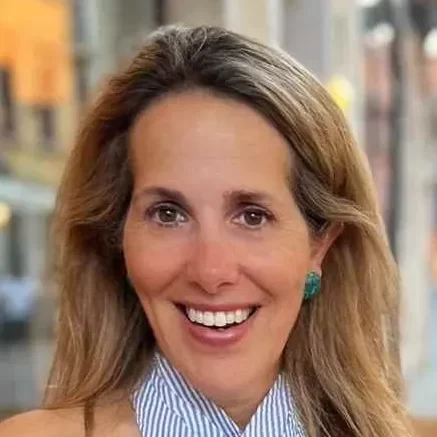
Susan L. Schwartz
Susan L. Schwartz is the award-winning creator of A Lush Life Manual and host of the Lush Life Podcast. She writes widely on drinks and travel, leads London and Venice Cocktail Tours, and has been recognised with multiple industry awards.