


Where writers drank
3 hotel bars behind literary history
Writers in the early 1900s didn’t just happen to gather in hotel bars—it made perfect sense given how they lived, worked, and socialized at the time. Whether traveling for assignment, chasing inspiration, or avoiding distraction at home, hotels provided a home base complete with a room, meals, and mail service. And the hotel bar became the living room. The conversations, collaborations, and characters in a handful of these hotel bars left a lasting imprint on literary history.
Hemingway and the Ritz Paris bar
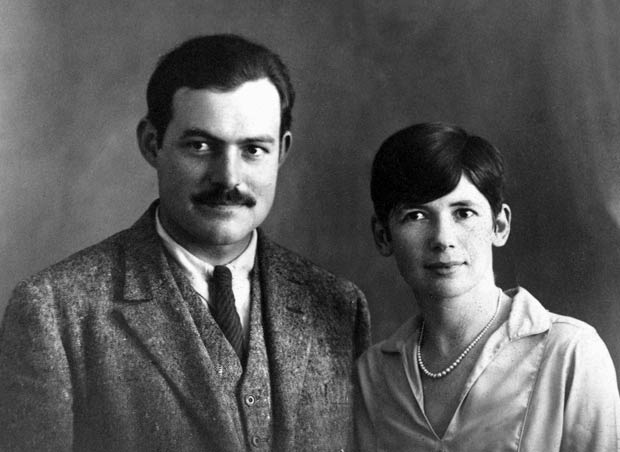
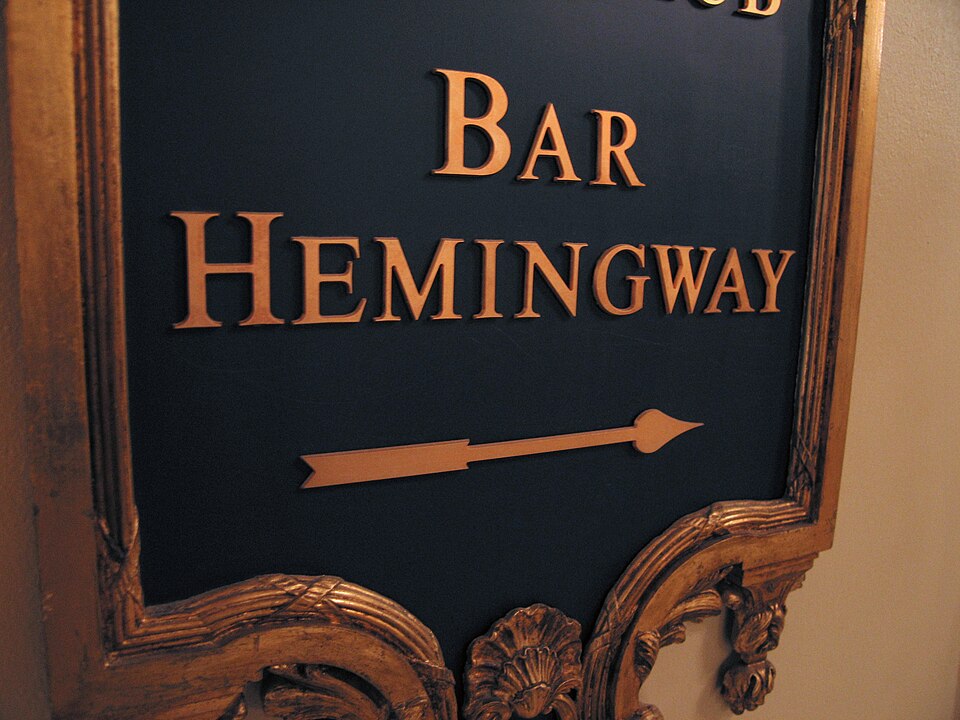
Hemingway and the Ritz Paris bar
Hemingway began writing his posthumously published memoir, A Moveable Feast, based on notes he found tucked away in valises he had left at the Ritz years earlier. Titles like Black Ass at the Cross Roads, Indian Country and the White Army, The Monument, and The Bubble Reputation were reportedly inspired by Hemingway’s later visits to the Ritz. Hemingway was so fond of the establishment, he once wrote, “When I dream of an afterlife in heaven, the action always takes place at the Ritz Paris”. Today, Hemingway’s love for the Ritz is memorialized through Bar Hemingway, Le Petit Bar renamed and revived in his honor.
Capote, Williams, Faulkner and the Carousel Bar
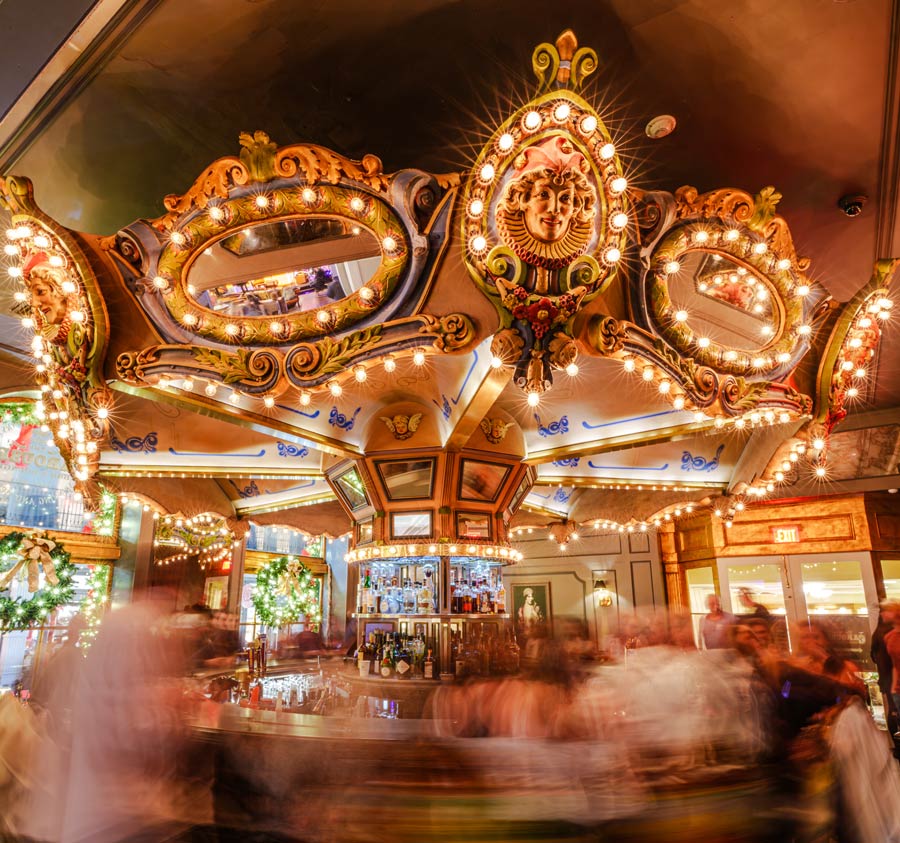
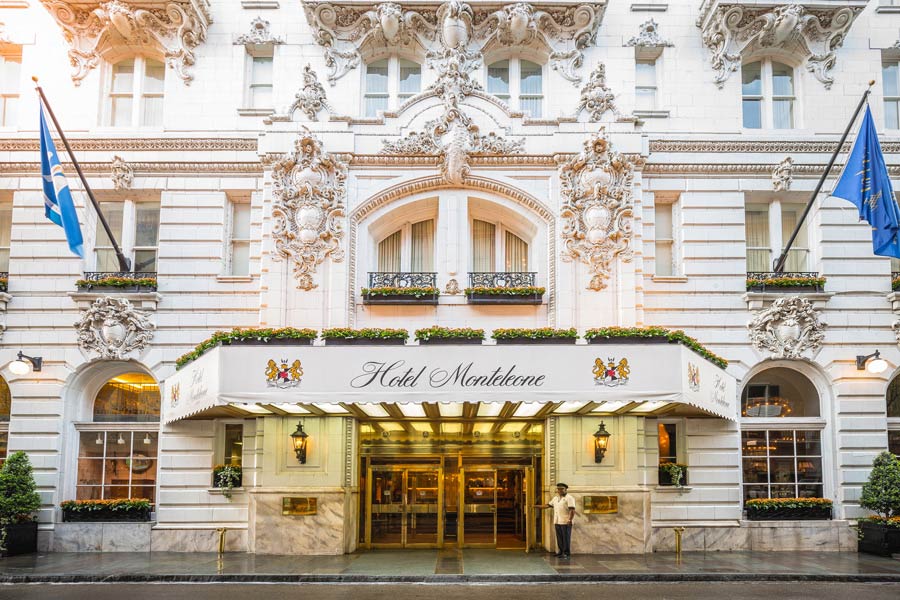
Capote, Williams, Faulkner and the Carousel Bar
William Faulkner first visited Hotel Monteleone for his 1929 honeymoon—before the Carousel Bar existed—and he wrote The Sound and the Fury, one of his most famous novels, during this stay. Faulkner returned to the hotel repeatedly over the next few decades and was known to enjoy drinks at the Carousel. While the bar is famous for the Vieux Carré cocktail, Faulkner was known to prefer a mint julep (light on sugar). Today, guests at Hotel Monteleone can choose to overnight in literary suites dedicated to the likes of Capote, Williams, Faulkner, and other famous writers.
‘The Vicious Circle’ and the Algonquin Hotel
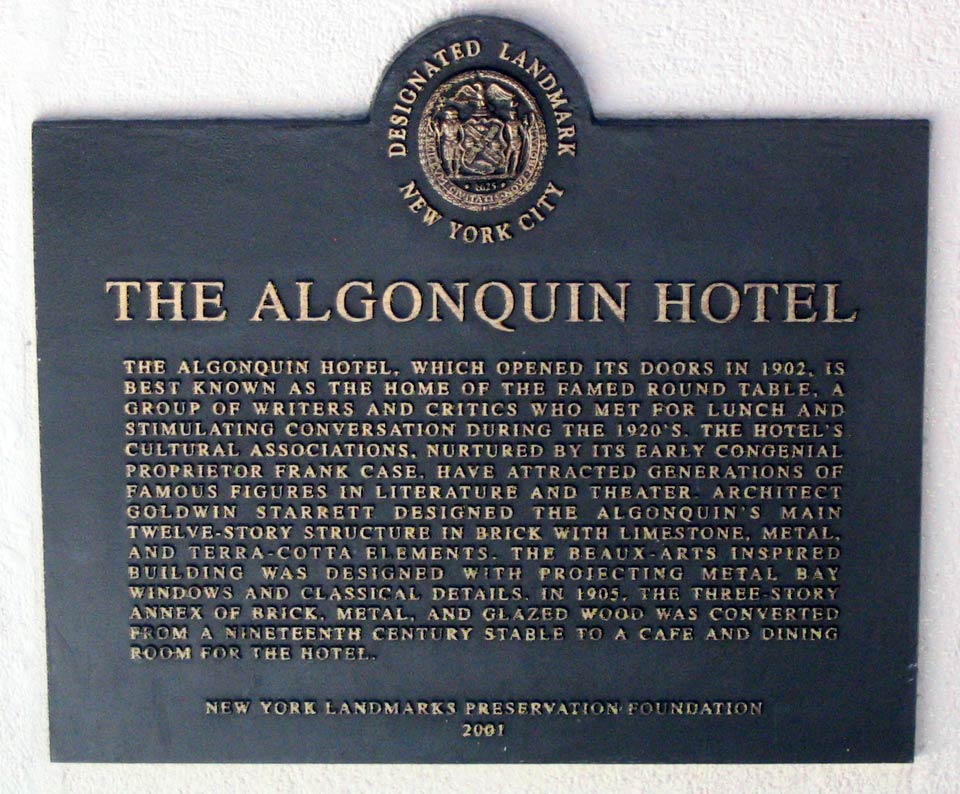
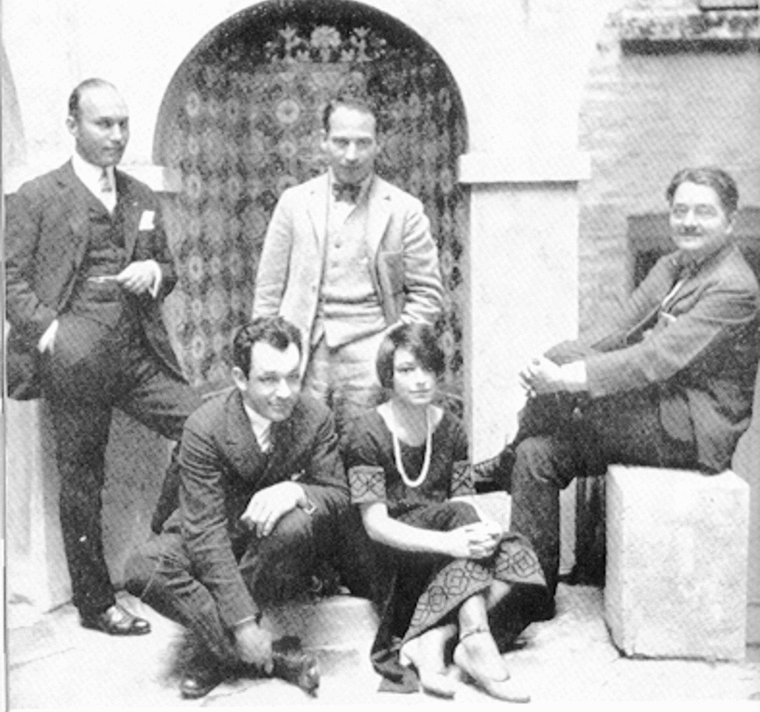
Colleagues dubbed the group the Algonquin Round Table, due to where the group sat in the Pergola Room (subsequently renamed the Oak Room). The group met daily for over a decade, often drawing spectators, and witticisms from these lunches were widely published. Round Table discussions helped galvanize careers of several members—Harold Ross, for instance, launched The New Yorker in 1925, often hiring Dorothy Parker for contributions. As America entered the Depression, the Vicious Circle largely disbanded. But like the Carousel Bar at Hotel Monteleone, the Oak Room at The Algonquin Hotel was designated a National Literary Landmark, and a painting of the group hangs there today.
‘The Vicious Circle’ and the Algonquin Hotel
Colleagues dubbed the group the Algonquin Round Table, due to where the group sat in the Pergola Room (subsequently renamed the Oak Room). The group met daily for over a decade, often drawing spectators, and witticisms from these lunches were widely published. Round Table discussions helped galvanize careers of several members—Harold Ross, for instance, launched The New Yorker in 1925, often hiring Dorothy Parker for contributions. As America entered the Depression, the Vicious Circle largely disbanded. But like the Carousel Bar at Hotel Monteleone, the Oak Room at The Algonquin Hotel was designated a National Literary Landmark, and a painting of the group hangs there today.
Literature still lingers
Across Paris, New Orleans, and New York, these hotel bars offered more than a place to drink. They created the conditions for creative life to happen. Writers found community, conversation, and character within their walls, often blurring the line between observation and participation.
Today, the settings remain—polished, preserved, and in some cases, reimagined—but the stories linger as much as the cocktails. Pull up a seat, and you’re not just ordering a drink. You’re stepping into the same rooms where infamous pieces of literature once took shape.
Literature still lingers
Across Paris, New Orleans, and New York, these hotel bars offered more than a place to drink. They created the conditions for creative life to happen. Writers found community, conversation, and character within their walls, often blurring the line between observation and participation.
Today, the settings remain—polished, preserved, and in some cases, reimagined—but the stories linger as much as the cocktails. Pull up a seat, and you’re not just ordering a drink. You’re stepping into the same rooms where infamous pieces of literature once took shape.
Photo Credits
Bar Hemingway Ritz2 – Author: Pablo Sanchez
Ernest and Pauline Hemingway, Paris, 1927 – Wikimedia Commons – Author: unattributed
Algonquin Round Table – Wikimedia Commons – Author: unattributed
Algonquin Hotel Landmark Sign – New York Landmarks Preservation Foundation at the Algonquin Hotel in Manhattan – Author: NoTalkMan
Carousel Bar – Courtesy of Carousel Bar & Lounge in Hotel Monteleone
Hotel Monteleone Exterior – Courtesy of Carousel Bar & Lounge in Hotel Monteleone

Nicole Bump
Nicole is a seasoned content strategist and writer with 15+ years of experience turning complex ideas into compelling stories. As founder of Bump Inbound, she helps brands connect with audiences through thoughtful strategy, sharp planning, and standout writing.