


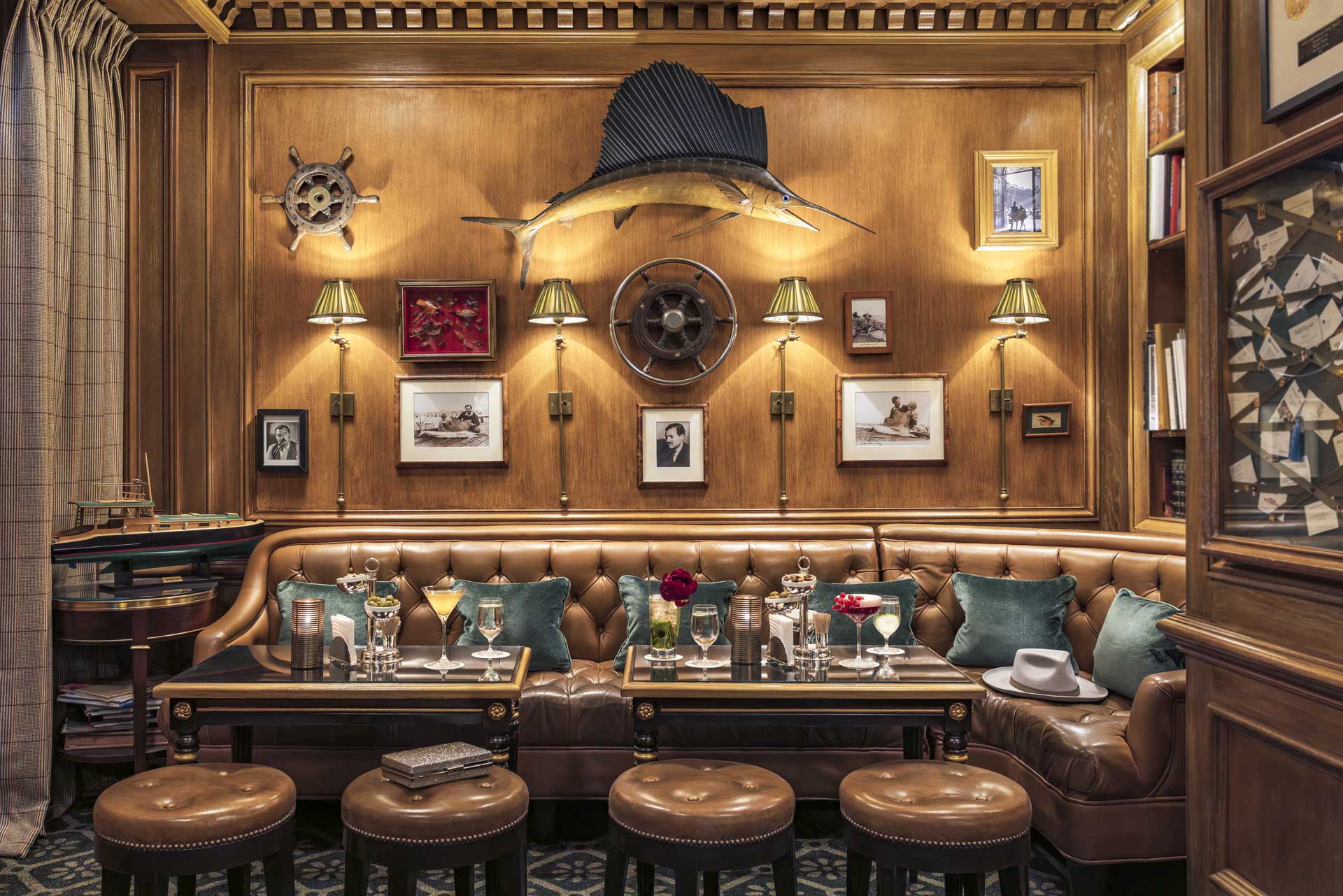
Bar Hemingway: History, myth and the making of a legend
Bar Hemingway
Bar Hemingway:
History, myth and the making of a legend
Ernest Hemingway’s name, spirit, and stories are stitched into every corner of this eponymous bar. To understand why, you have to trace the evolution of the Hotel Ritz Paris’s bars—through reinvention, wartime drama, and the vision of one of the greatest bartenders of our time.
Bar Hemingway history: The origin
The Ritz Paris opened its doors in 1898, instantly setting a new standard for luxury hospitality. The hotel added the Le Café Parisien bar in 1921, but per social norms of the era, women weren’t welcome.
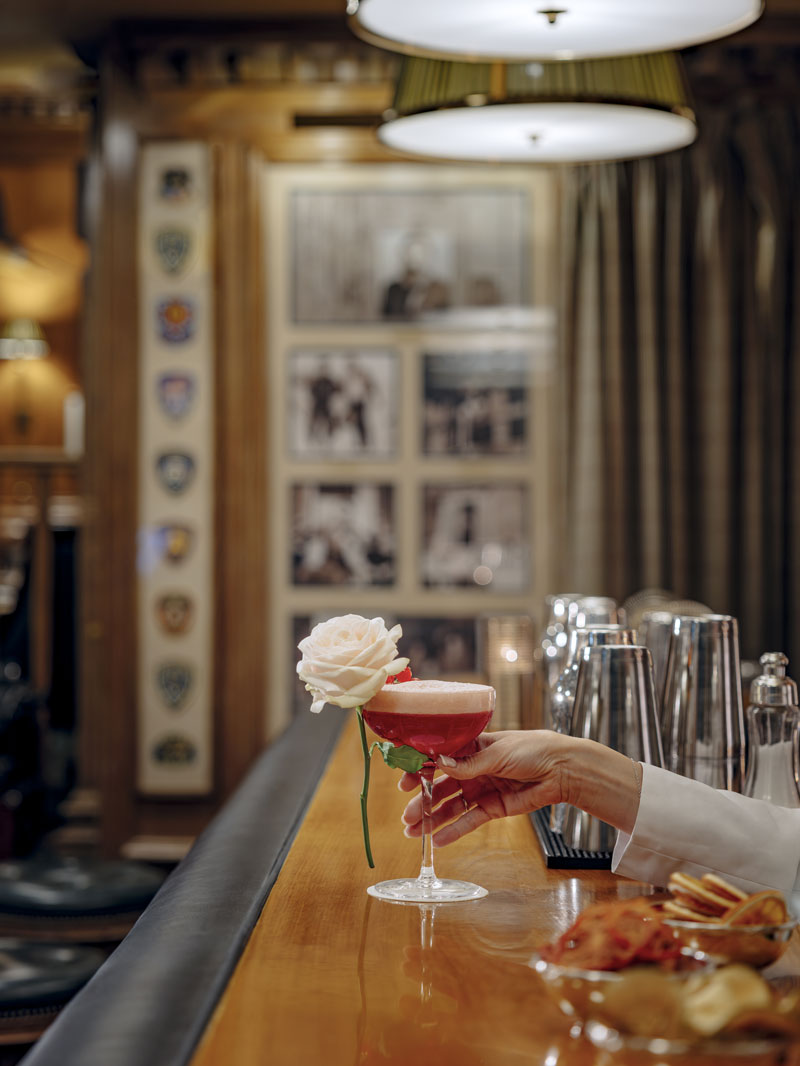
Instead, César Ritz created a ladies bar at the Ritz, just off the main lounge—a daring innovation at the time—to accommodate women while their husbands drank across the hall. Drinks here were often adorned with roses or orchids, a flourish meant to appeal to its fashionable female clientele.
About fifteen years later, the mood shifted. In 1936, as social rules loosened, the Ritz Hotel reinvented this waiting room as Le Petit Bar. No longer off-limits, it welcomed both men and women into its intimate space.
Ernest Hemingway became a regular, using the bar both as a place to drink and as a perch for writing. He was known to stretch tabs beyond his means, often relying on friends like F. Scott Fitzgerald and his wife Zelda to cover the bill.
Bertin’s Bar
As Le Petit Bar found its stride in the 1930s, it became defined not just by its guests but by its barman: Bernard Azimont (affectionately known as Bertin). Charismatic and attentive, Bertin tended the Ritz bar for an astonishing 48 years. His warmth made the snug bar a home for regulars, to the point that it was widely known simply as Bertin’s Bar.
Guests came not only for cocktails but for Bertin himself—a bartender whose personality was as essential to the room as its wood-paneled walls.
Bertin’s tenure stretched through decades of social change, from the glamorous prewar years to the darker days of the occupation. When he finally retired in 1974, an era ended with him, and the bar’s energy drained away.
By 1979, in a last-ditch attempt to revive business, the Ritz rebranded its Le Petit Bar as Bar Hemingway with the blessing of the Hemingway family. Unfortunately, it didn’t take. By 1982, the bar was shuttered.
Colin Peter Field revives Bar Hemingway
The revival came in 1994, when the Ritz entrusted a young Englishman named Colin Field, bartender, to reopen the forgotten room. Starting with just four tables, Field reinvented Bar Hemingway as something entirely new: a jewel box of a bar that blended high craft with warm conversation.
Demand quickly grew, and by 1997 the bar expanded into the neighboring concierge quarters, today holding nine tables and just 35 seats.
Field didn’t just put Bar Hemingway back on the map; he made it a global destination. Named “Best Head Bartender in the World” by the likes of Forbes and Travel & Leisure, he attracted celebrities, diplomats, and aspiring bartenders alike.
“People are my total influence. It’s not about the cocktail—it’s about the person.”
Colin Peter Field, Former Head Bartender
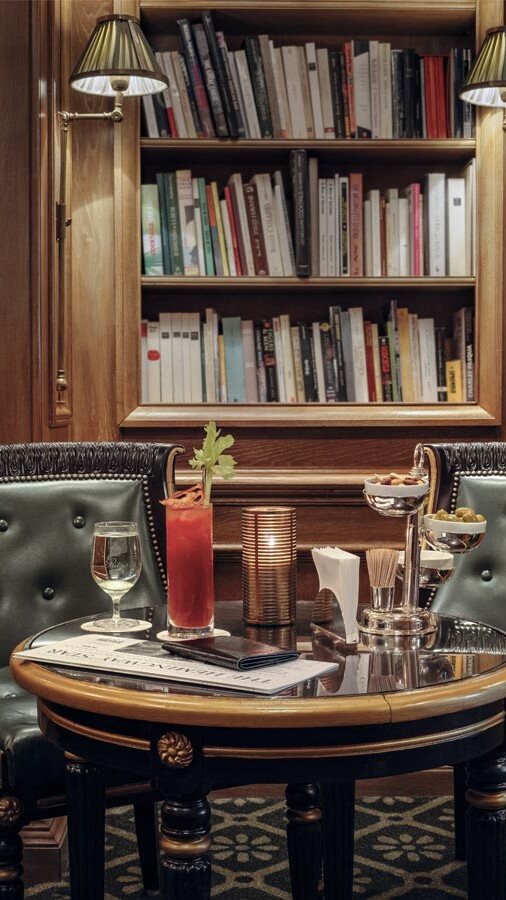
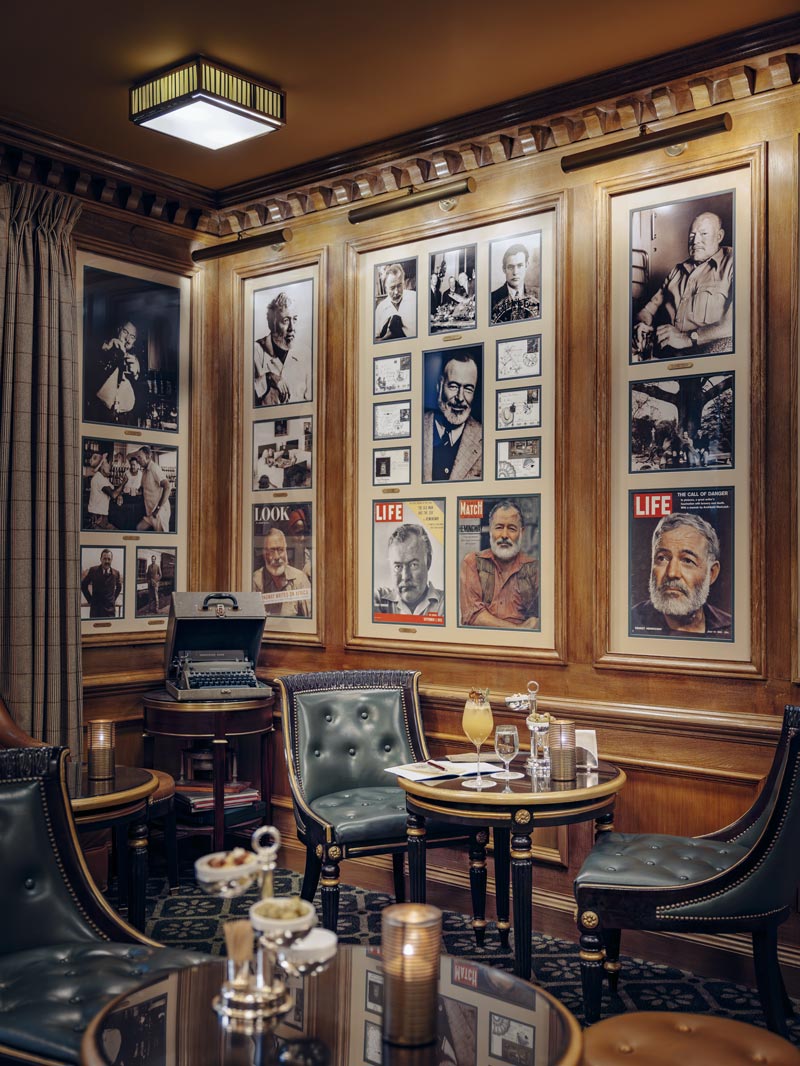
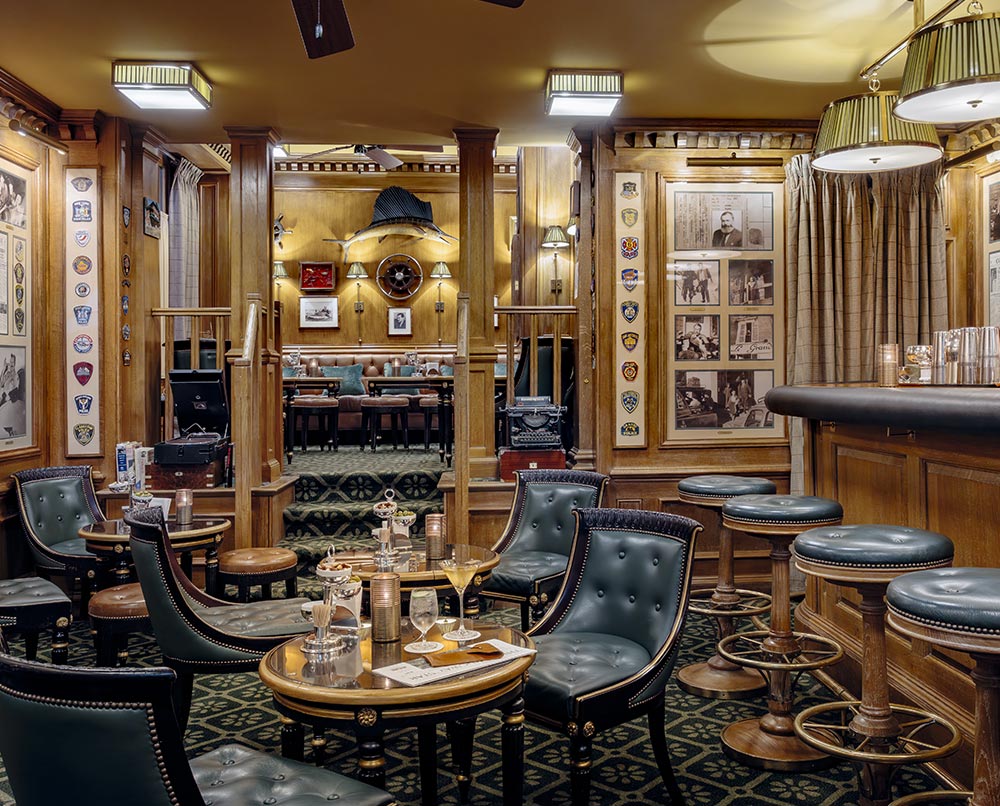
Field is also responsible for much of the ambiance at the Hemingway Bar. While many visitors assume the myriad historical items adorning the space belonged to Hemingway, most came from Field’s personal collection—including fishing rods and reels, a World War I biplane propeller, as well as photographs, letters, and memorabilia tied to Hemingway. Kate Moss even donated a vintage typewriter in homage to Hemingway.
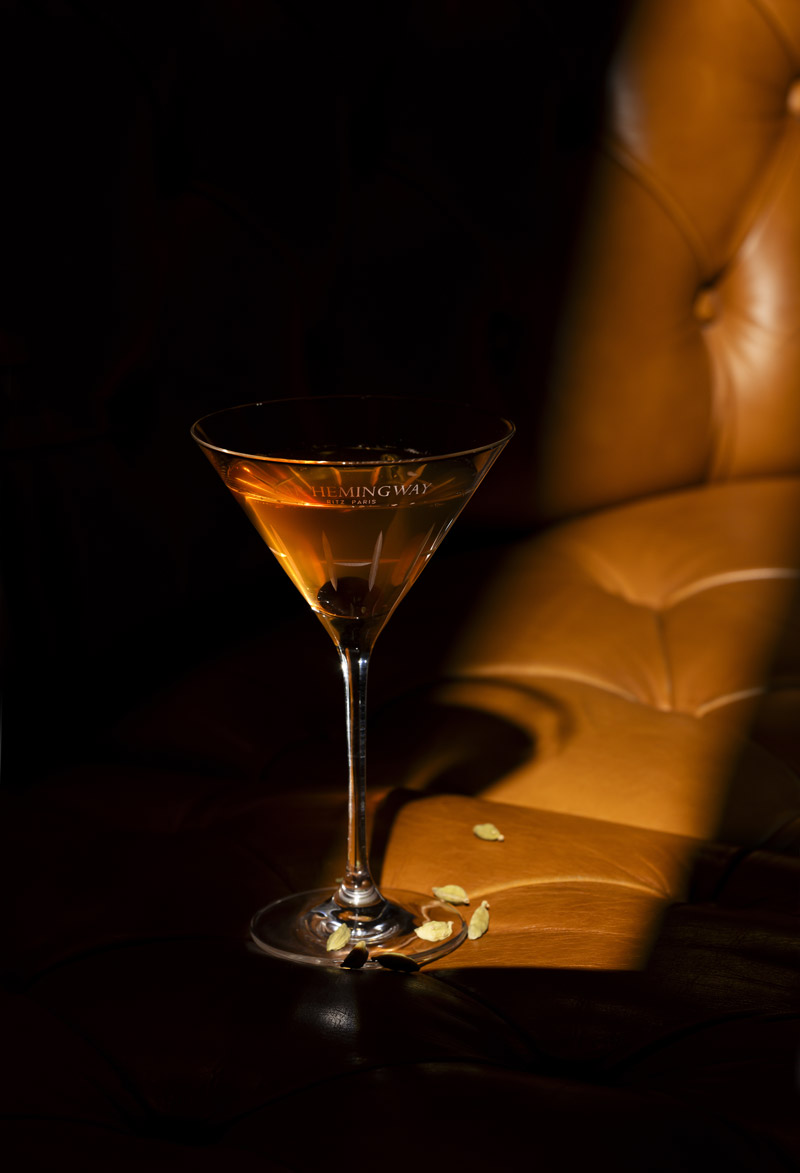
Bar Hemingway’s storied cocktails
Field’s two most famous creations became synonymous with Bar Hemingway.
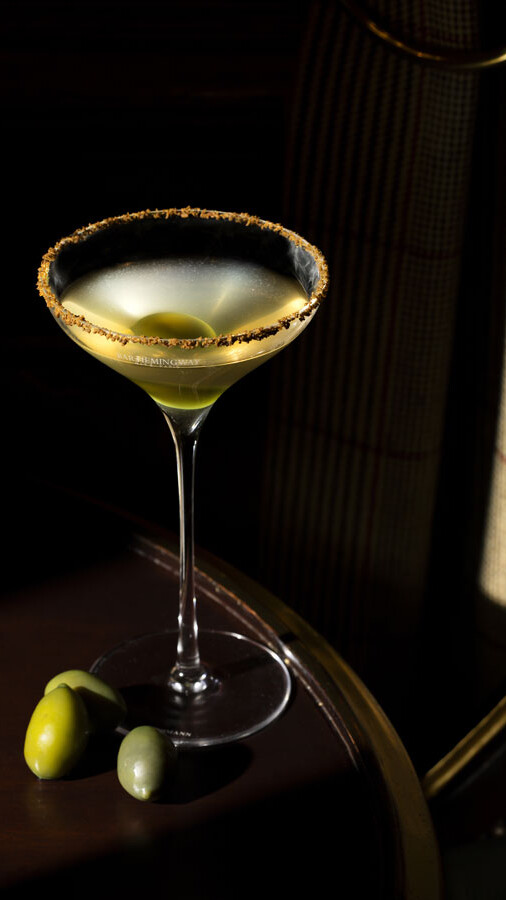
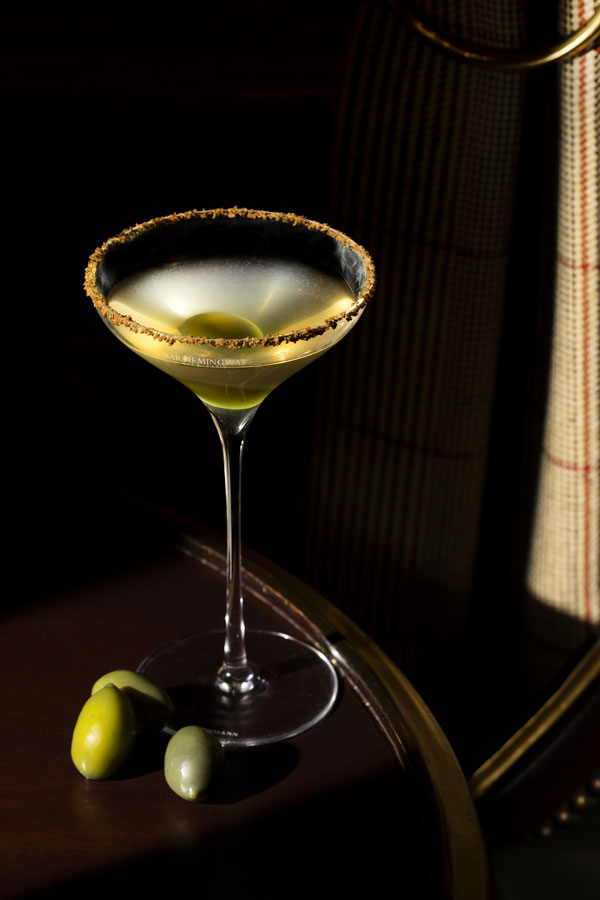
The Clean Dirty Martini, served at –24°C in custom-designed crystal, tastes intensely of picoline olives, thanks to an ice cube made of olive juice. The exact recipe, however, remains a closely guarded secret. “How I make it, I’m not telling,” Field once teased. “It’s a secret”.
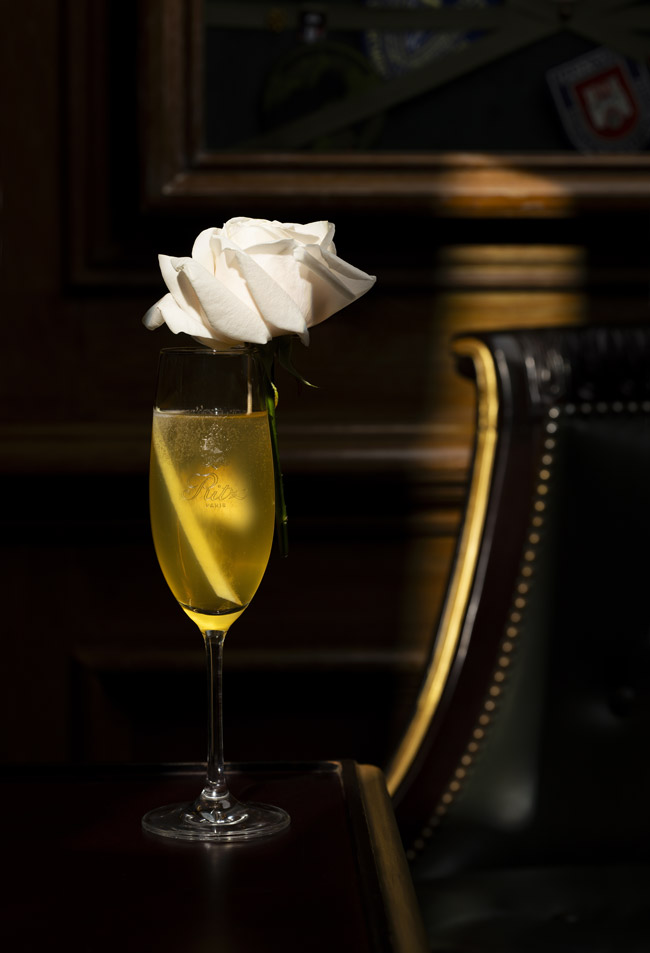
Field’s personal favorite, however, is the Serendipity, a refreshing mix of Calvados, fresh mint, apple juice, and Champagne.
“My desert island cocktail would be the Serendipity… probably my all-round favorite.”
Colin Peter Field
Former Head Bartender
A legacy passed on
When the Ritz underwent a $400 million renovation in the 2010s, Bar Hemingway alone remained untouched, its charm too sacred to disturb.
What bartenders can take away
Bar Hemingway is a lesson in intimacy, storytelling, and service. Its reputation isn’t built on square footage or showmanship, but on the way a bartender can make a room—no matter how small—feel like the center of the world.
As Field explained: “I want you to go out of the bar and say, I just had a good time. That’s really what we’re doing.”
Bar Hemingway’s history shows that legends aren’t inherited; they’re made behind the bar, one guest and one glass at a time.
History, myth and the making of a legend
Ernest Hemingway’s name, spirit, and stories are stitched into every corner of this eponymous bar. To understand why, you have to trace the evolution of the Hotel Ritz Paris’s bars—through reinvention, wartime drama, and the vision of one of the greatest bartenders of our time.
Bar Hemingway history: The origin
The Ritz Paris opened its doors in 1898, instantly setting a new standard for luxury hospitality. The hotel added the Le Café Parisien bar in 1921, but per social norms of the era, women weren’t welcome.
Instead, César Ritz created a ladies bar at the Ritz, just off the main lounge—a daring innovation at the time—to accommodate women while their husbands drank across the hall. Drinks here were often adorned with roses or orchids, a flourish meant to appeal to its fashionable female clientele.
About fifteen years later, the mood shifted. In 1936, as social rules loosened, the Ritz Hotel reinvented this waiting room as Le Petit Bar. No longer off-limits, it welcomed both men and women into its intimate space.
Ernest Hemingway became a regular, using the bar both as a place to drink and as a perch for writing. He was known to stretch tabs beyond his means, often relying on friends like F. Scott Fitzgerald and his wife Zelda to cover the bill.
Hemingway’s “liberation” of the Ritz
The Ritz fell under Nazi control during World War II, and its bars became watering holes for German officers. Legend has it that as Paris was liberated in 1944, Hemingway—then a war correspondent—drove up to the Ritz in a jeep mounted with a machine gun. He burst into the hotel and declared he was there to liberate the Ritz. Upon learning the Germans had already fled, he promptly ordered 51 dry martinis for himself and the men with him.
The image of Hemingway famously “liberating” the bar is one of hospitality’s most enduring tales (even if parts of it may veer into myth).
Bertin’s Bar
As Le Petit Bar found its stride in the 1930s, it became defined not just by its guests but by its barman: Bernard Azimont (affectionately known as Bertin). Charismatic and attentive, Bertin tended the Ritz bar for an astonishing 48 years. His warmth made the snug bar a home for regulars, to the point that it was widely known simply as Bertin’s Bar.
Guests came not only for cocktails but for Bertin himself—a bartender whose personality was as essential to the room as its wood-paneled walls.
Bertin’s tenure stretched through decades of social change, from the glamorous prewar years to the darker days of the occupation. When he finally retired in 1974, an era ended with him, and the bar’s energy drained away.
By 1979, in a last-ditch attempt to revive business, the Ritz rebranded its Le Petit Bar as Bar Hemingway with the blessing of the Hemingway family. Unfortunately, it didn’t take. By 1982, the bar was shuttered.
The image of Hemingway famously “liberating” the bar is one of hospitality’s most enduring tales (even if parts of it may veer into myth).
Colin Peter Field revives Bar Hemingway
Colin Peter Field revives Bar Hemingway
The revival came in 1994, when the Ritz entrusted a young Englishman named Colin Field, bartender, to reopen the forgotten room. Starting with just four tables, Field reinvented Bar Hemingway as something entirely new: a jewel box of a bar that blended high craft with warm conversation.
Demand quickly grew, and by 1997 the bar expanded into the neighboring concierge quarters, today holding nine tables and just 35 seats.
Field didn’t just put Bar Hemingway back on the map; he made it a global destination. Named “Best Head Bartender in the World” by the likes of Forbes and Travel & Leisure, he attracted celebrities, diplomats, and aspiring bartenders alike.
“People are my total influence. It’s not about the cocktail—it’s about the person.”
Colin Peter Field, Former Head Bartender
Field is also responsible for much of the ambiance at the Hemingway Bar. While many visitors assume the myriad historical items adorning the space belonged to Hemingway, most came from Field’s personal collection—including fishing rods and reels, a World War I biplane propeller, as well as photographs, letters, and memorabilia tied to Hemingway. Kate Moss even donated a vintage typewriter in homage to Hemingway.
Bar Hemingway’s storied cocktails
Field’s two most famous creations became synonymous with Bar Hemingway.
The Clean Dirty Martini, served at –24°C in custom-designed crystal, tastes intensely of picoline olives, thanks to an ice cube made of olive juice. The exact recipe, however, remains a closely guarded secret. “How I make it, I’m not telling,” Field once teased. “It’s a secret”.
Field’s personal favorite, however, is the Serendipity, a refreshing mix of Calvados, fresh mint, apple juice, and Champagne.
“My desert island cocktail would be the Serendipity… probably my all-round favorite.”
Colin Peter Field, Former Head Bartender
A legacy passed on
When the Ritz underwent a $400 million renovation in the 2010s, Bar Hemingway alone remained untouched, its charm too sacred to disturb.
What bartenders can take away
Bar Hemingway is a lesson in intimacy, storytelling, and service. Its reputation isn’t built on square footage or showmanship, but on the way a bartender can make a room—no matter how small—feel like the center of the world. As Field explained:
“I want you to go out of the bar and say, I just had a good time. That’s really what we’re doing.”
Bar Hemingway’s history shows that legends aren’t inherited; they’re made behind the bar, one guest and one glass at a time.

Nicole Bump
Nicole is a seasoned content strategist and writer with 15+ years of experience turning complex ideas into compelling stories. As founder of Bump Inbound, she helps brands connect with audiences through thoughtful strategy, sharp planning, and standout writing.

The Upper House - Hong Kong
The Upper House
This year, in association with Altamura Distilleries, I’ll be exploring some of the world’s most legendary bars—uncovering what makes them the beating heart of the hotel. Our next stop is Hong Kong!
#Episode 8
If you’ve ever watched Let’s Make a Deal, the long-running American game show, you’ll know the anticipation of finding out what lies behind Curtain #1, Curtain #2 or Curtain #3 — will it be everything the eager contestant has dreamt of? At The Upper House Hong Kong, there is no need for suspense. I can assure you that something irresistible lies behind every curtain.
#Episode 8
If you’ve ever watched Let’s Make a Deal, the long-running American game show, you’ll know the anticipation of finding out what lies behind Curtain #1, Curtain #2 or Curtain #3 — will it be everything the eager contestant has dreamt of? At The Upper House Hong Kong, there is no need for suspense. I can assure you that something irresistible lies behind every curtain.
You might miss The Upper House without even realizing it was there. This was done entirely on purpose. The cleverly designed Stone Curtain façade conceals the hotel from its busy surroundings.
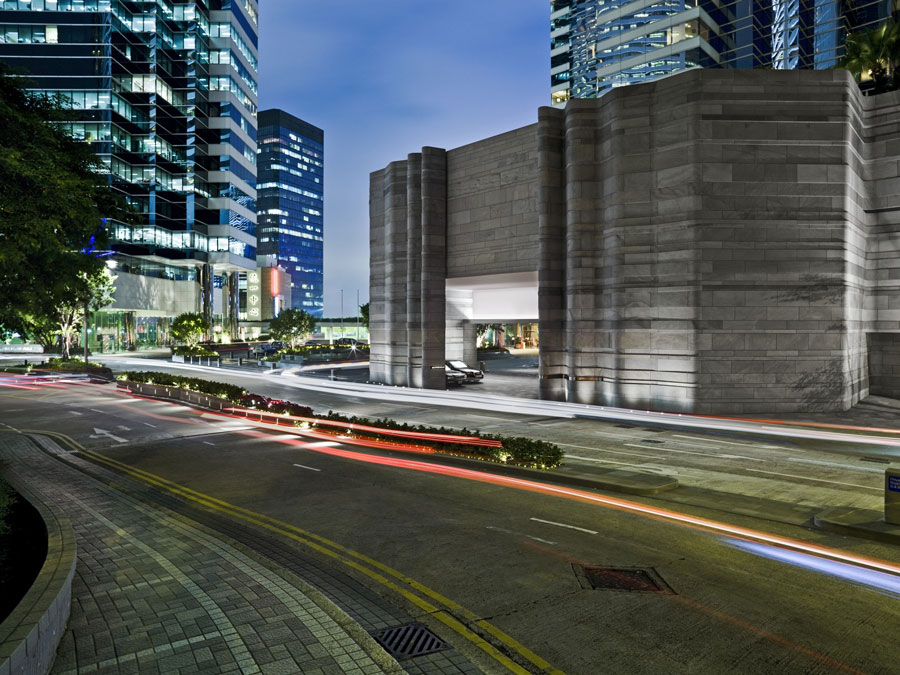
When I say busy, I mean it — Hong Kong is one of the most densely populated places in the world. Finding a sense of calm in this urban landscape dominated by skyscrapers can sometimes feel impossible.
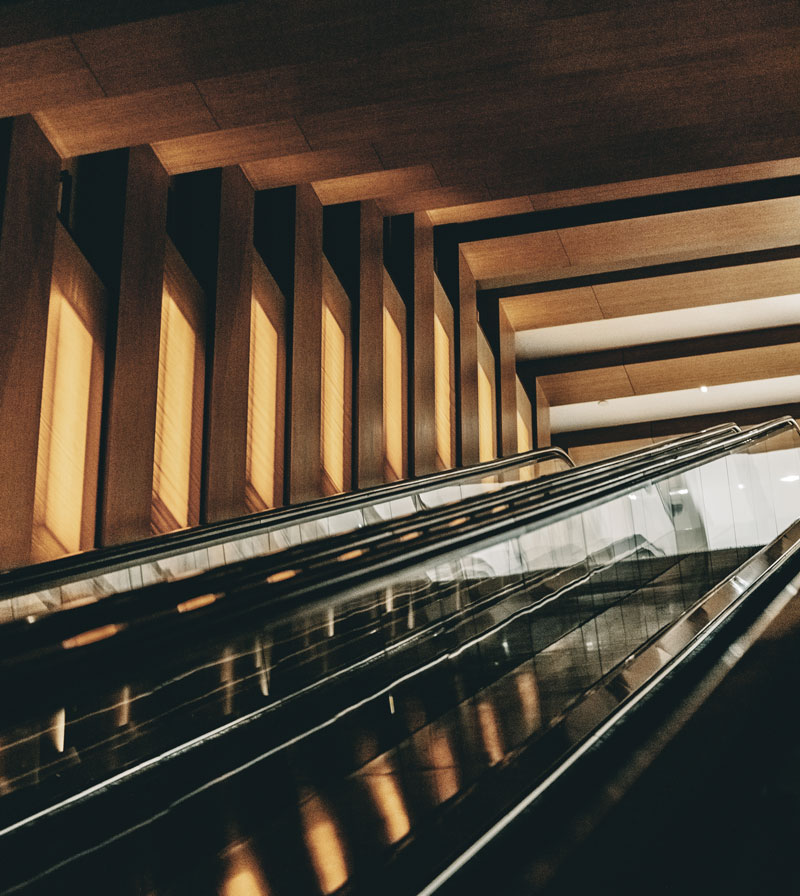
Step behind The Upper House’s Curtain #1 and you are unlikely to recognize it as a hotel lobby at all. Its floor-to-ceiling glass entrance feels more like a front door, with its small team welcoming you in like house guests. Once inside, you are led to an escalator waiting to transport you upward to parts unknown.
The Upper House was the first hotel created by Hong Kong-born, Cambridge-educated architect and designer André Fu in 2009. His inspiration for this dramatic entrance was the Japanese torii — gates traditionally found at Shinto shrines, acting as a threshold to the divine.
You might miss The Upper House without even realizing it was there. This was done entirely on purpose. The cleverly designed Stone Curtain façade conceals the hotel from its busy surroundings. When I say busy, I mean it — Hong Kong is one of the most densely populated places in the world. Finding a sense of calm in this urban landscape dominated by skyscrapers can sometimes feel impossible.
Step behind The Upper House’s Curtain #1 and you are unlikely to recognize it as a hotel lobby at all. Its floor-to-ceiling glass entrance feels more like a front door, with its small team welcoming you in like house guests. Once inside, you are led to an escalator waiting to transport you upward to parts unknown.
The Upper House was the first hotel created by Hong Kong-born, Cambridge-educated architect and designer André Fu in 2009. His inspiration for this dramatic entrance was the Japanese torii — gates traditionally found at Shinto shrines, acting as a threshold to the divine. Every aspect of the design is meant to create a sense of calm as you make the journey from the hustle and bustle of the Hong Kong streets to the discovery of what lies behind Curtain #2.
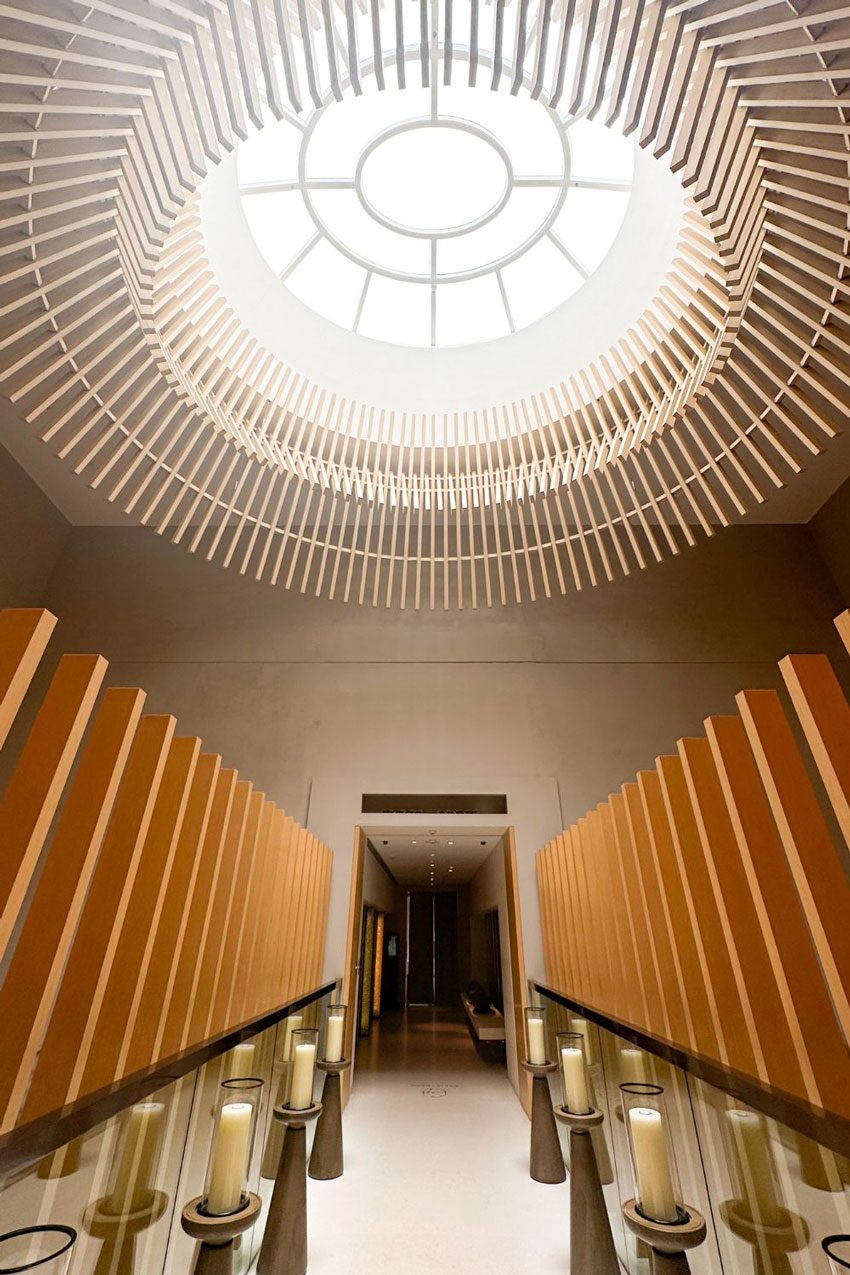
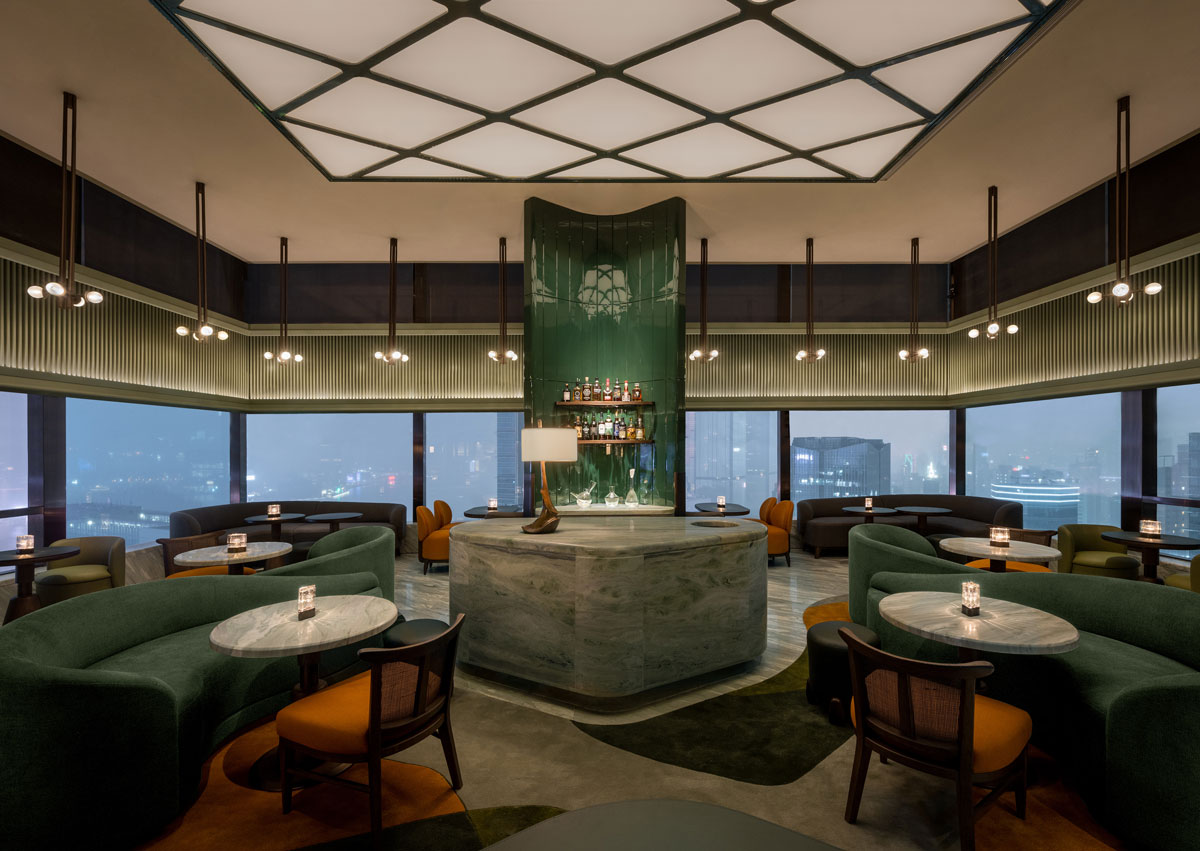
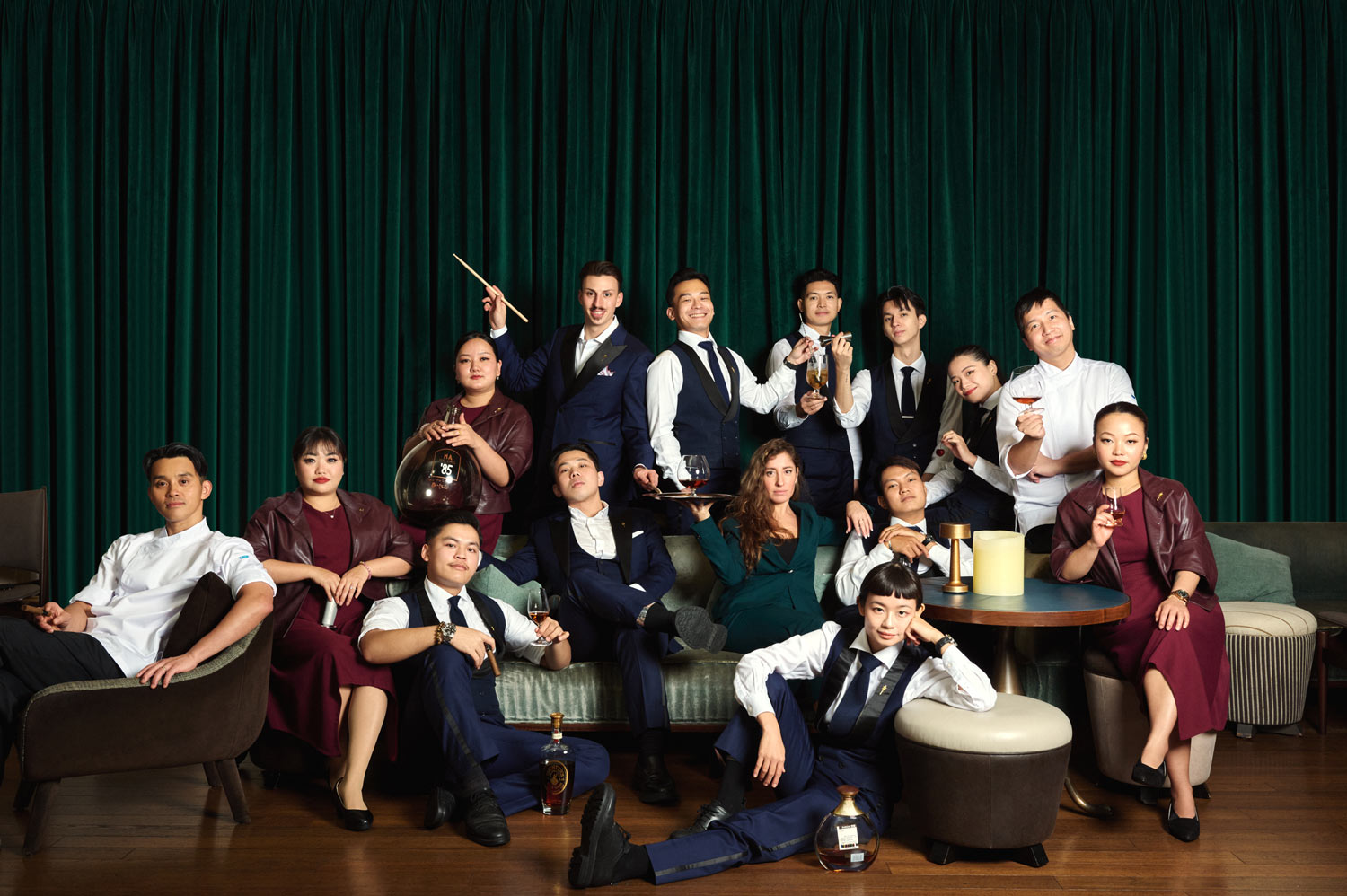
Atop the 49th floor and found behind a dark green curtain, usually left open, The Green Room, The Upper House’s intimate bar, not only feels worlds away from the aforementioned energy of the city below, it is! Acting as the hotel’s snug, the bar’s comfy banquettes and cushy armchairs encourage guests to converse over beautifully crafted cocktails.
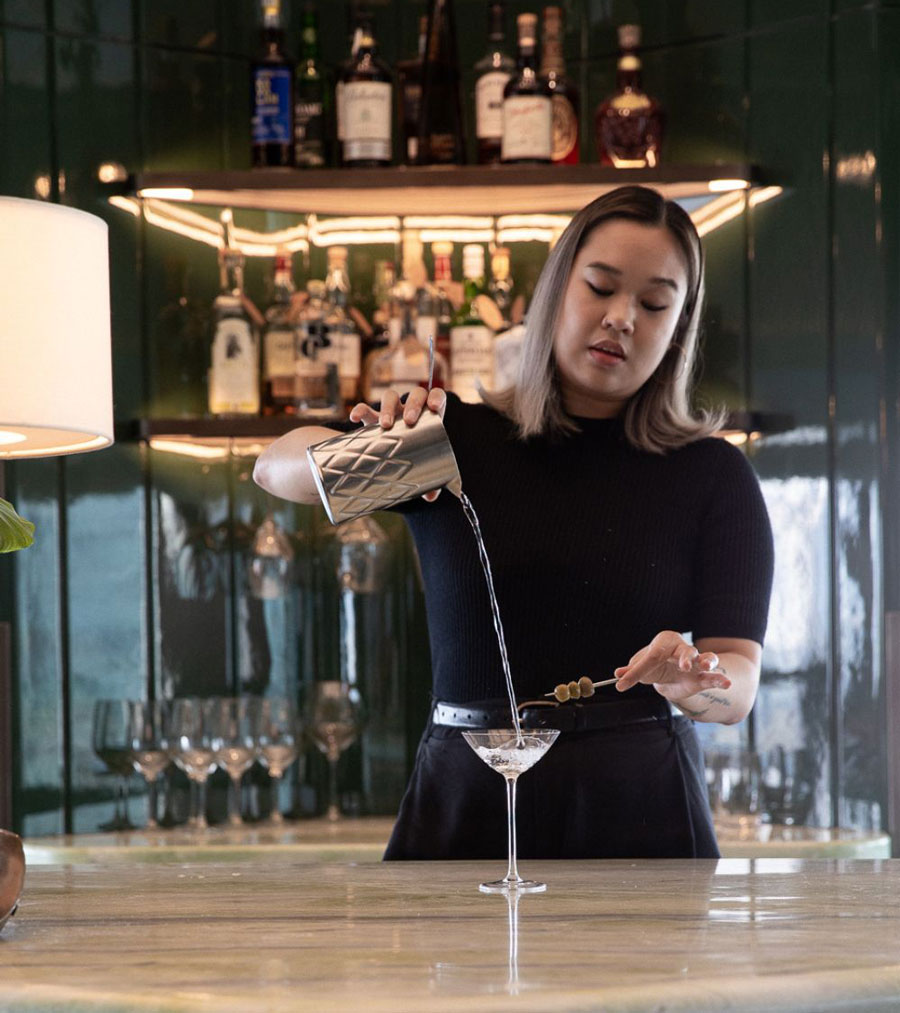
When Gail Lanorias joined as Bar Operations Manager, the bar was part of Salisterra, the hotel’s Mediterranean restaurant. A former ballet dancer, Gail found herself loving the world of hospitality. After years spent in such an insular world, she couldn’t help feeling that there was so much more life to live when stepping behind a bar.
Even before she began working here, she loved the bar, especially its Martinis. How fortuitous to find herself at the helm a few years later. Once here, she felt the bar she loved deserved its own identity and set about to make it happen.
Since it was known internally simply as “the green room” because of its color palette, the name stuck. Gail knew from her own experience that the green room is where performers retreat when they are not needed on stage, a place to decompress, reflect and to socialize. That was the exact vibe she hoped for the Upper House’s Green Room – “a classic hotel bar, somewhere to come to relax, have a drink, meet friends, just be with people, with, of course, a great view.”
While creating her first menu, she leaned into the Green Room theme, playfully naming each cocktail after a classic movie archetypes, e.g. The Everyman, Con Artist, and Fall Guy.
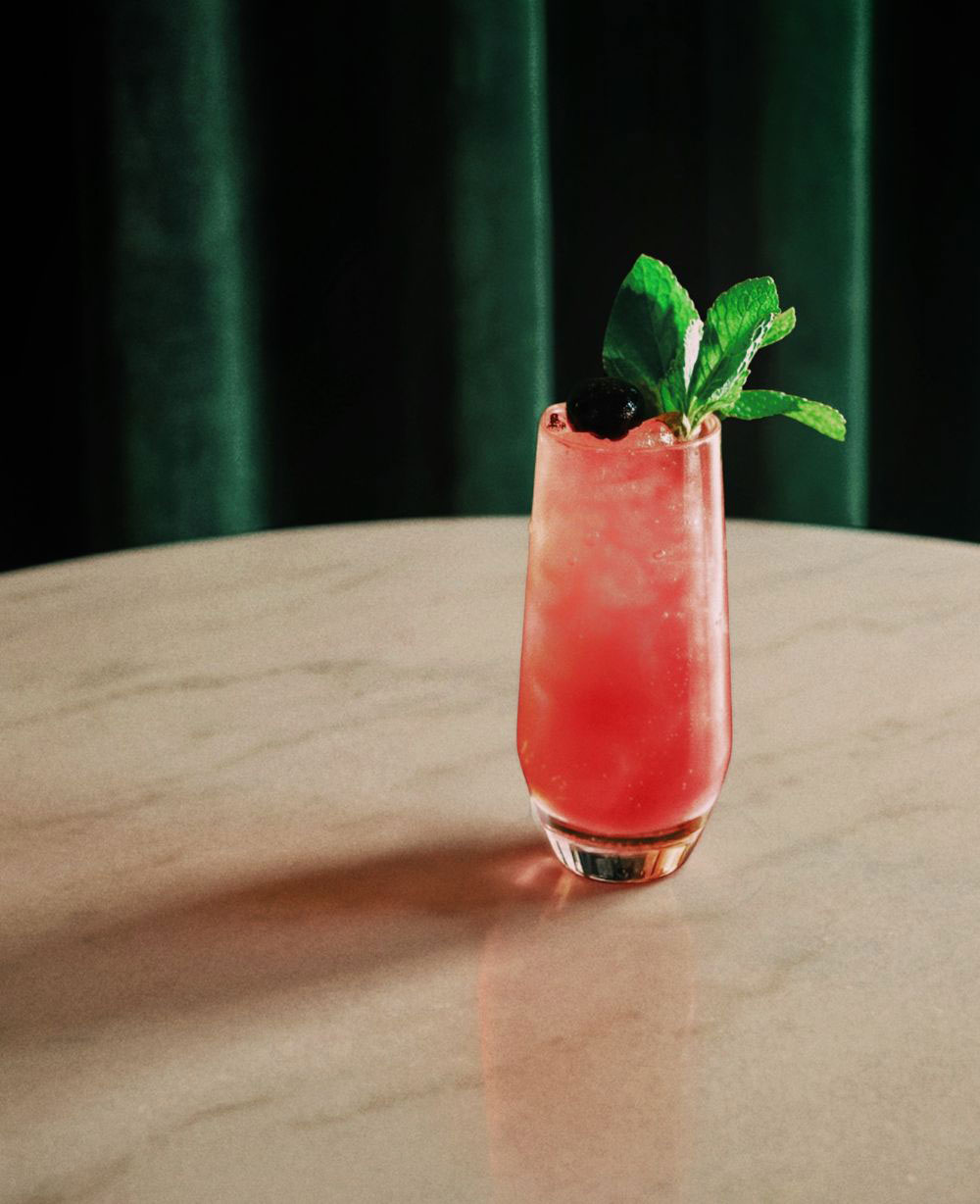
The Girl Next Door, a tequila based cocktail, was inspired by one of the chefs, whose cherry tart he garnished with tarragon. Gail fell for that flavor combination and knew it would make a great cocktail. “It took months to actually put it together, because it was a balance of acidity, sweetness, and we finally found this wonderful Three Cents cherry soda and it all came together.” The tequila and the tarragon are sous vided together for around two hours at 50° C, before the cocktail is built in the glass.
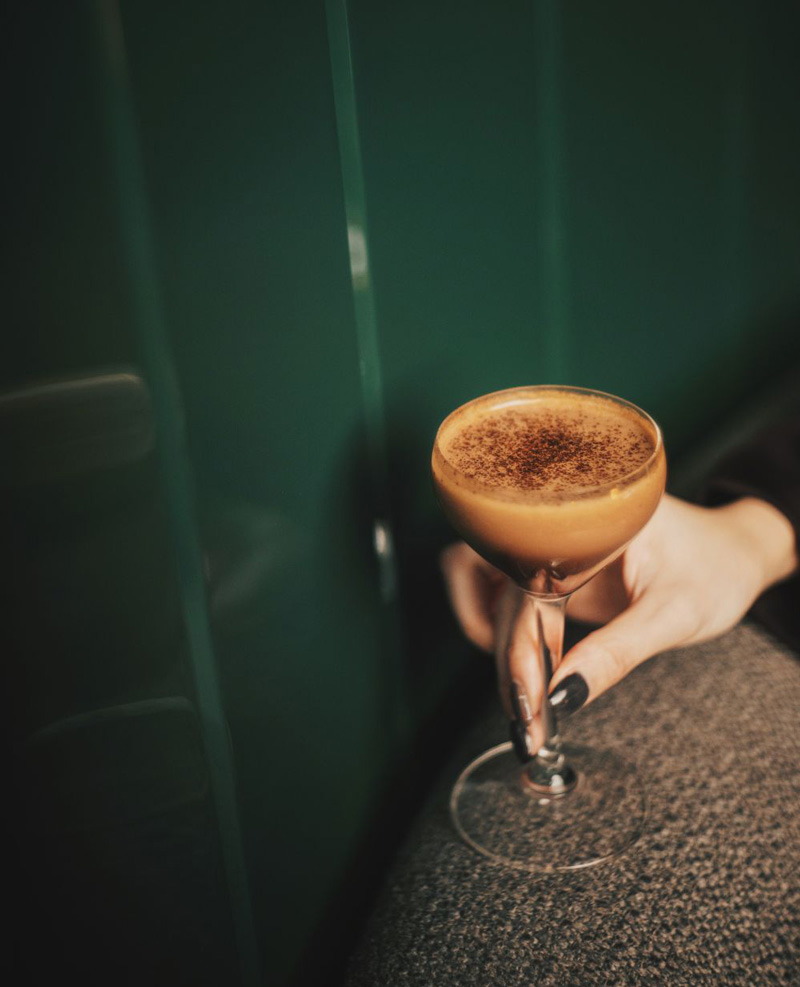
Padding onto the menu is the Cat Lady which combined Gail’s interest in the use of olive oil as an ingredient in cocktails and desserts and a hotel regular’s standing order of a Chocolate Martini. Shaken hard, the olive oil emulsifies into the chocolate, and then Gail adds a spot of coffee to boost the chocolate taste even more. A little bourbon rounds it out. Why call it the Cat Lady? Gail claims because it’s light, creamy, and a little crazy!
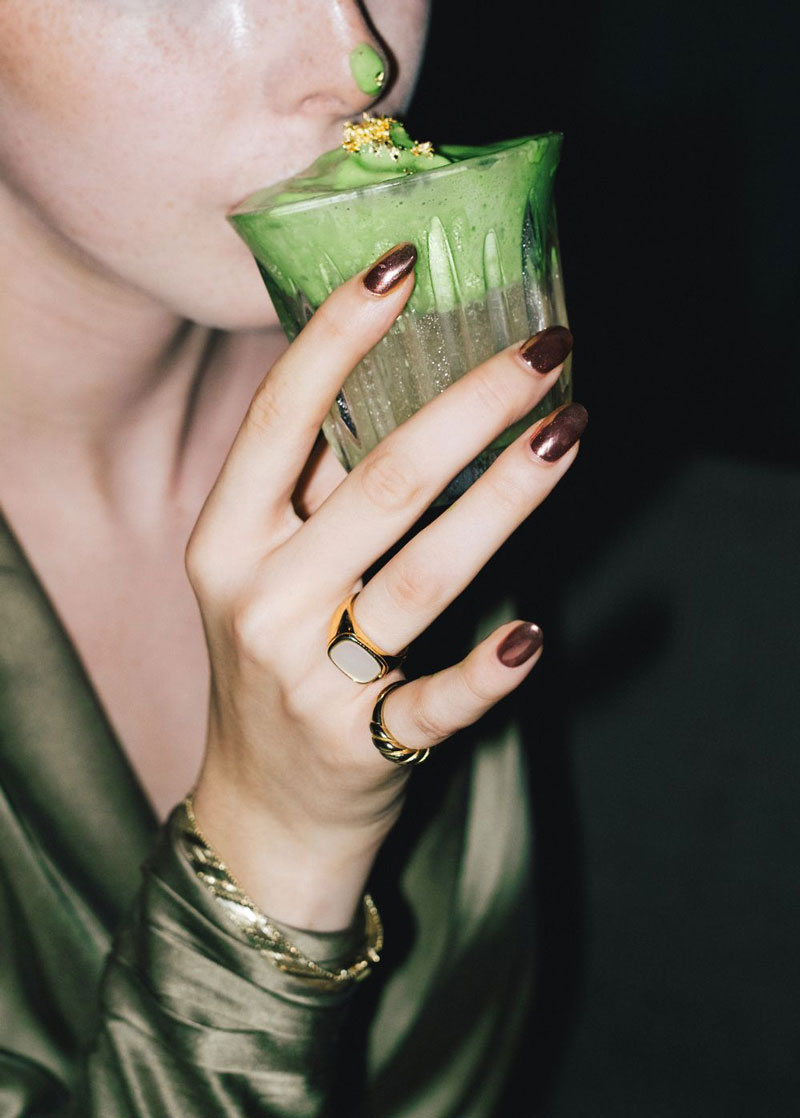
Inspired by a local dessert made with red bean, rose, yuzu, and matcha, one of her teammates conceived the Star-Crossed Lovers. Since all of the ingredients were Japanese, they decided to use shochu as the base spirit. “The earthiness of the shochu really grounds the red bean, yuzu can sometimes be perceived as sweet even though it’s sour.” The rose syrup adds to the sweetness and then it is topped up with a little soy cream.
Inspired by a local dessert made with red bean, rose, yuzu, and matcha, one of her teammates conceived the Star-Crossed Lovers. Since all of the ingredients were Japanese, they decided to use shochu as the base spirit. “The earthiness of the shochu really grounds the red bean, yuzu can sometimes be perceived as sweet even though it’s sour.” The rose syrup adds to the sweetness and then it is topped up with a little soy cream.
In this Green Room, both locals and visitors to Hong Kong settle back and let themselves be slowly seduced by the cocktails, the conversation, and what’s behind Curtain #3 (Did you think I had forgotten to mention Curtain #3!?).
That incredible skyline – from the aerie of the Green Room’s 49th floor, the view over Hong Kong across the shimmering Victoria Harbour and over to the Kowloon side, as far as the eye can see! All a reminder of why it’s the heart of the hotel and The Upper House is considered one of the world’s best hotels.
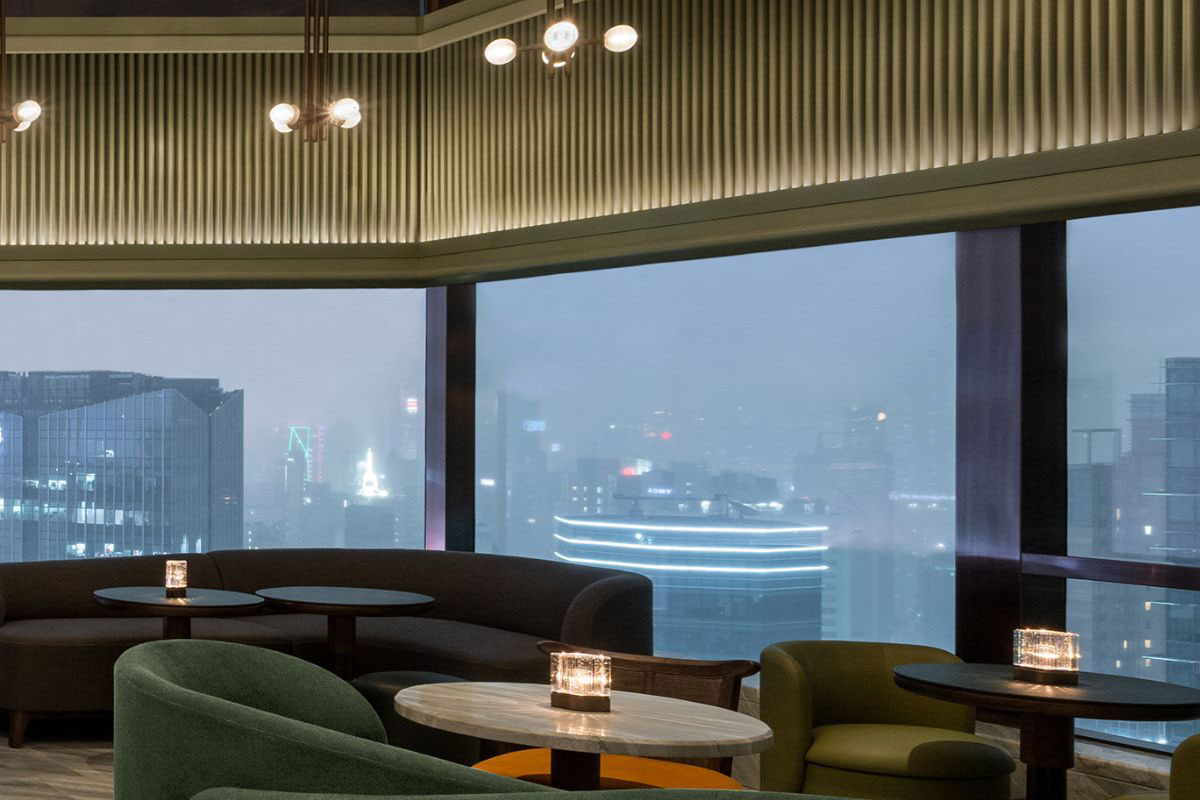
“The Green Room has a strong magnetic pull. I noticed it immediately when I arrived at the House. It has always been the most highly sought after seating within the outlets of our hotel. It is a jewel box of a design without being too precious and invokes a feeling that you are exactly where you are supposed to be. There are places to see and be seen and others for complete privacy including a back hallway direct to the lift where you can escape without walking past the main entrance. There’s a coziness to the space from the rich velvet curtain to the boucle fabric on the sofa seating with gorgeous green marble and emerald-lacquered walls not to mention the panoramic views of the iconic HK skyline. The room does a lot of the heavy lifting. As a team, we designed a menu that was decidedly complex yet not complicated. We didn’t want the menu have to come with an instruction manual or extreme garnishes for show. We still showcase modern techniques but stay true to layering flavors around the spirits to balance flavors of bitterness, herbaceous, brightness and sweetness.”
Nick Moore, Director of Restaurants
Atop the 49th floor and found behind a dark green curtain, usually left open, The Green Room, The Upper House’s intimate bar, not only feels worlds away from the aforementioned energy of the city below, it is! Acting as the hotel’s snug, the bar’s comfy banquettes and cushy armchairs encourage guests to converse over beautifully crafted cocktails.
When Gail Lanorias joined as Bar Operations Manager, the bar was part of Salisterra, the hotel’s Mediterranean restaurant. A former ballet dancer, Gail found herself loving the world of hospitality. After years spent in such an insular world, she couldn’t help feeling that there was so much more life to live when stepping behind a bar.
Even before she began working here, she loved the bar, especially its Martinis. How fortuitous to find herself at the helm a few years later. Once here, she felt the bar she loved deserved its own identity and set about to make it happen.
Since it was known internally simply as “the green room” because of its color palette, the name stuck. Gail knew from her own experience that the green room is where performers retreat when they are not needed on stage, a place to decompress, reflect and to socialize. That was the exact vibe she hoped for the Upper House’s Green Room – “a classic hotel bar, somewhere to come to relax, have a drink, meet friends, just be with people, with, of course, a great view.”
While creating her first menu, she leaned into the Green Room theme, playfully naming each cocktail after a classic movie archetypes, e.g. The Everyman, Con Artist, and Fall Guy. The Girl Next Door, a tequila based cocktail, was inspired by one of the chefs, whose cherry tart he garnished with tarragon. Gail fell for that flavor combination and knew it would make a great cocktail. “It took months to actually put it together, because it was a balance of acidity, sweetness, and we finally found this wonderful Three Cents cherry soda and it all came together.” The tequila and the tarragon are sous vided together for around two hours at 50° C, before the cocktail is built in the glass.
Padding onto the menu is the Cat Lady which combined Gail’s interest in the use of olive oil as an ingredient in cocktails and desserts and a hotel regular’s standing order of a Chocolate Martini. Shaken hard, the olive oil emulsifies into the chocolate, and then Gail adds a spot of coffee to boost the chocolate taste even more. A little bourbon rounds it out. Why call it the Cat Lady? Gail claims because it’s light, creamy, and a little crazy!
Inspired by a local dessert made with red bean, rose, yuzu, and matcha, one of her teammates conceived the Star-Crossed Lovers. Since all of the ingredients were Japanese, they decided to use shochu as the base spirit.
“The earthiness of the shochu really grounds the red bean, yuzu can sometimes be perceived as sweet even though it’s sour.”
The rose syrup adds to the sweetness and then it is topped up with a little soy cream.
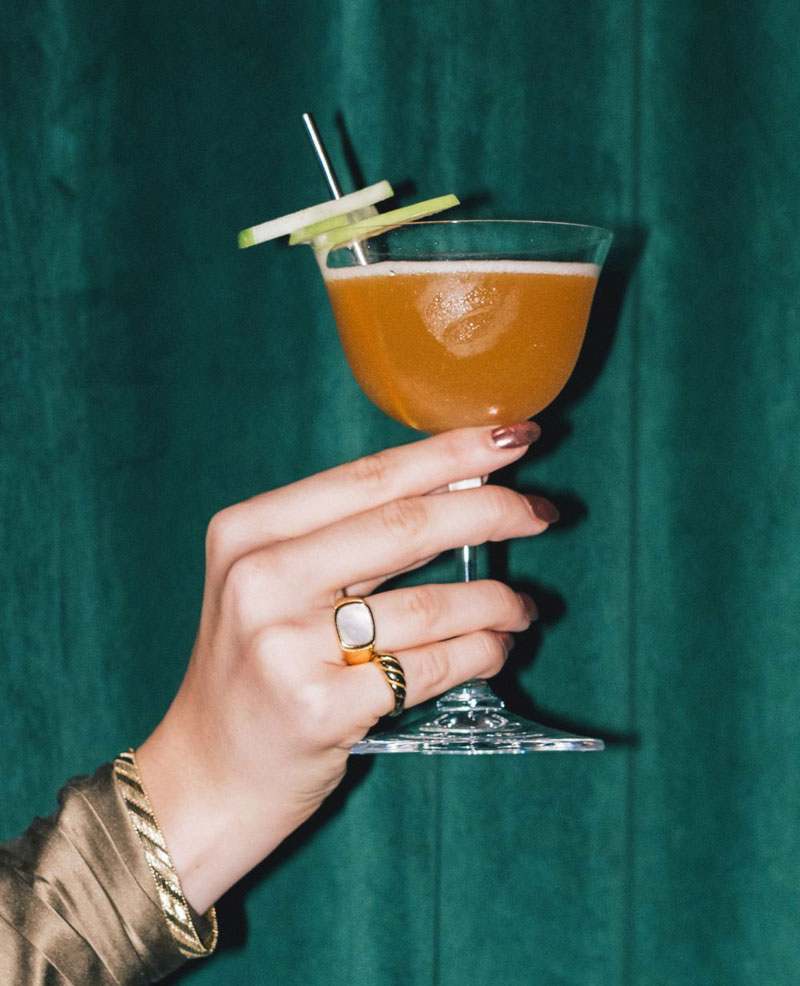
Their most popular cocktail is the Southern Belle, an adult take on the Apple-tini – so called for its association with the USA, apples, and apple pie. Avallen Calvados, a little cheeky green apple liqueur, lemon, and their house champagne, which also has notes of apple, all come together to make it an Upper House favorite.
Given Gail’s history, a Martini was guaranteed to appear on any menu she would create. Alongside the Classic (Dry, Wet or Dirty), the Vesper and the Tuxedo are on show with Altamura Distilleries Vodka or Widges Gin at the ready, depending on what you fancy.
In this Green Room, both locals and visitors to Hong Kong settle back and let themselves be slowly seduced by the cocktails, the conversation, and what’s behind Curtain #3 (Did you think I had forgotten to mention Curtain #3!?). That incredible skyline – from the aerie of the Green Room’s 49th floor, the view over Hong Kong across the shimmering Victoria Harbour and over to the Kowloon side, as far as the eye can see! All a reminder of why it’s the heart of the hotel and The Upper House is considered one of the world’s best hotels.
The Green Room has a strong magnetic pull. I noticed it immediately when I arrived at the House. It has always been the most highly sought after seating within the outlets of our hotel. It is a jewel box of a design without being too precious and invokes a feeling that you are exactly where you are supposed to be. There are places to see and be seen and others for complete privacy including a back hallway direct to the lift where you can escape without walking past the main entrance. There’s a coziness to the space from the rich velvet curtain to the boucle fabric on the sofa seating with gorgeous green marble and emerald-lacquered walls not to mention the panoramic views of the iconic HK skyline. The room does a lot of the heavy lifting. As a team, we designed a menu that was decidedly “complex yet not complicated”. We didn’t want the menu have to come with an instruction manual or extreme garnishes for show. We still showcase modern techniques but stay true to layering flavors around the spirits to balance flavors of bitterness, herbaceous, brightness and sweetness.
Nick Moore, Director of Restaurants

Susan L. Schwartz
Susan L. Schwartz is the award-winning creator of A Lush Life Manual and host of the Lush Life Podcast. She writes widely on drinks and travel, leads London and Venice Cocktail Tours, and has been recognised with multiple industry awards.

Manhattan Bar Singapore: Bringing NYC to Southeast Asia
Manhattan Bar Singapore
Manhattan Bar Singapore:
Bringing NYC to Southeast Asia
Virtù Bar brings Paris to Tokyo.
BKK Social Club transports Latin America to Bangkok.
And Manhattan Bar Singapore exudes the glamor of New York City’s golden age in Southeast Asia. Set in one of the world’s most international cities, the concept feels less like import and more like alignment.
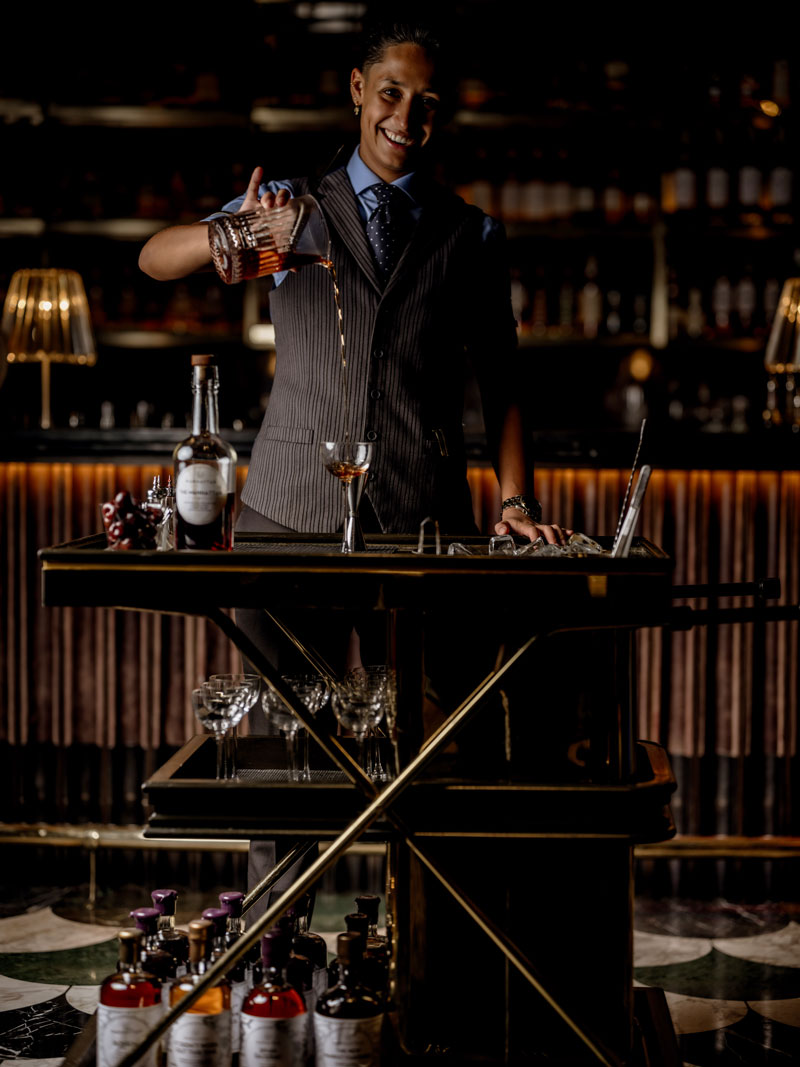
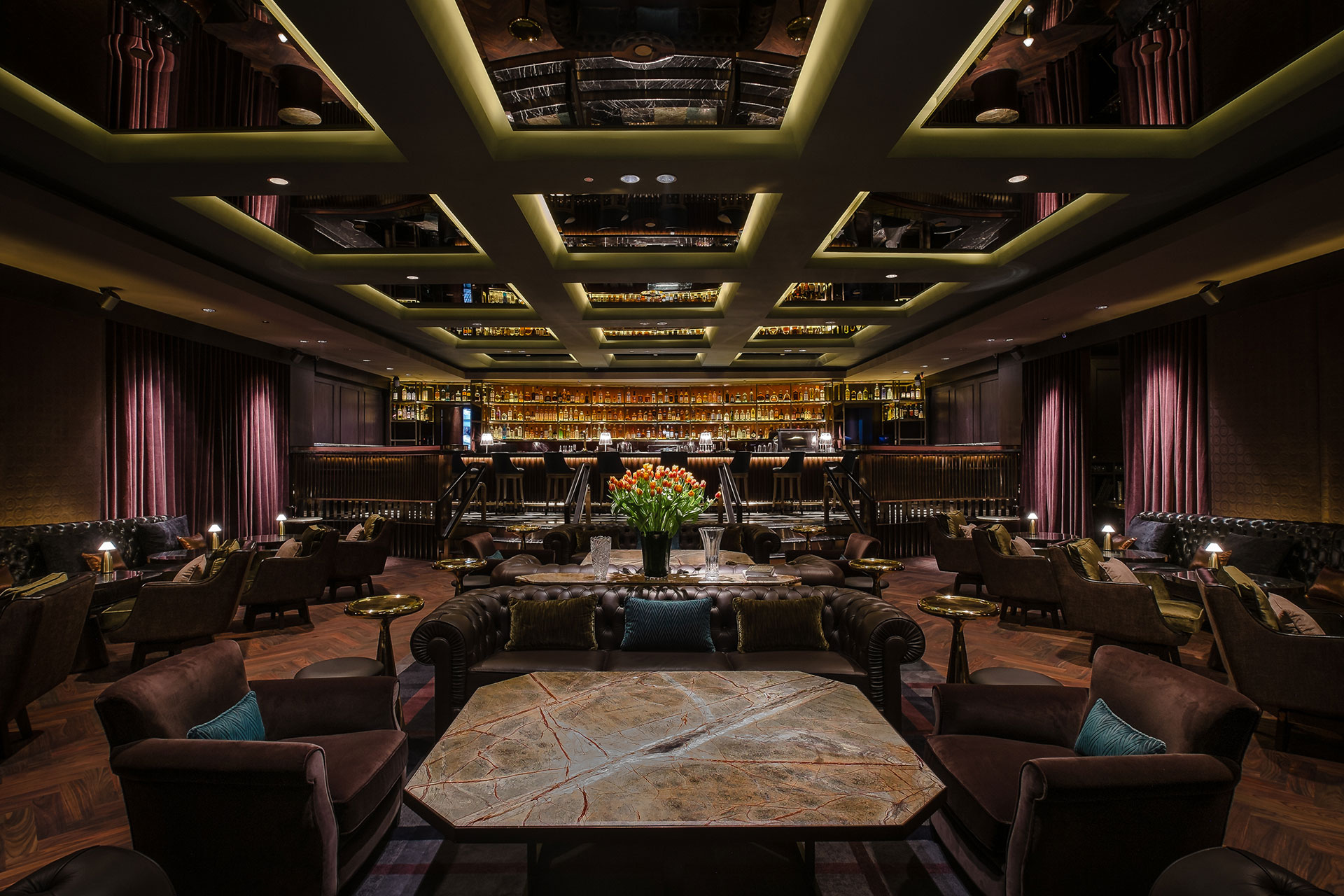
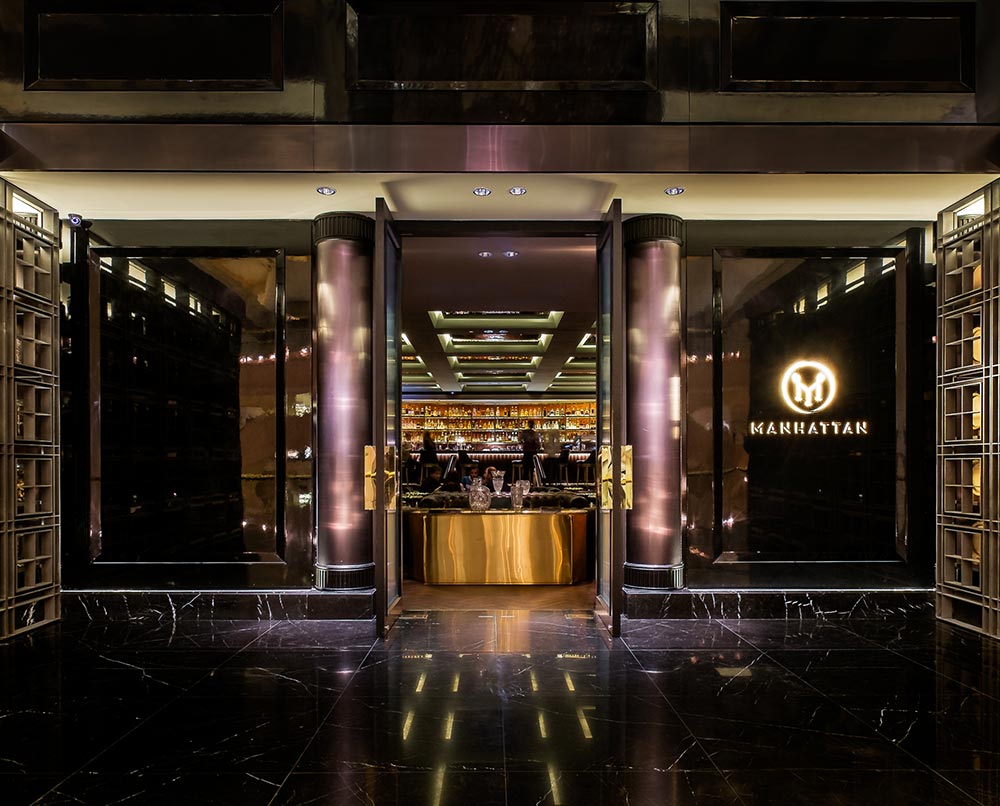
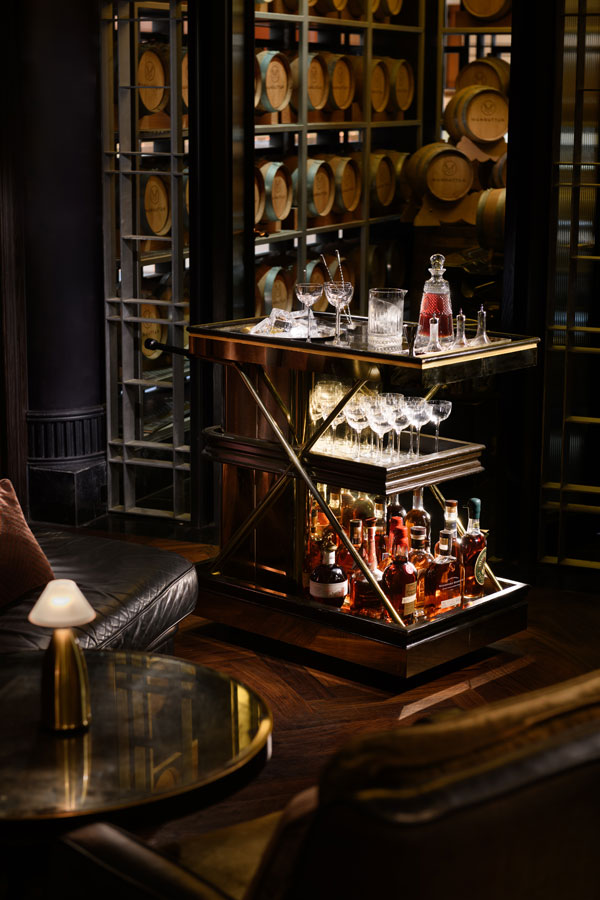
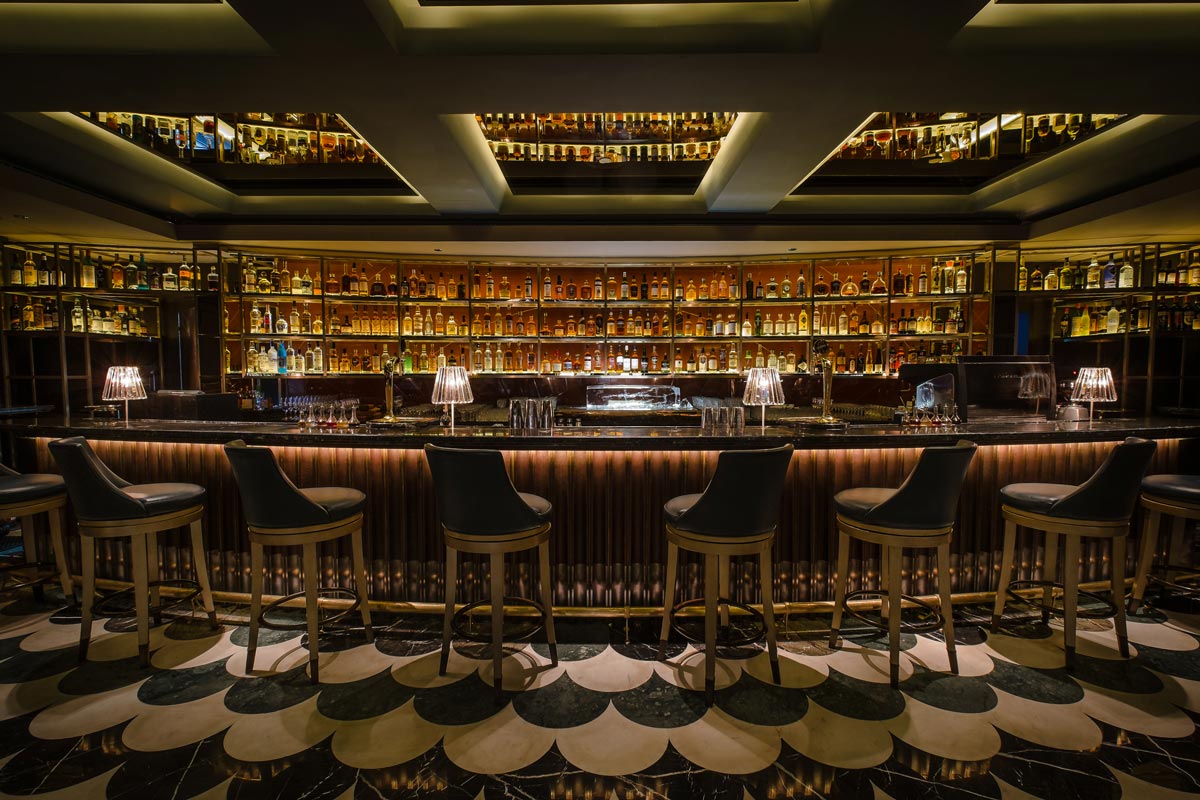
Located in the Conrad Singapore Orchard, Manhattan Bar channels the spirit of a 19th-century New York hotel bar—rich dark wood, polished brass, and plush leather setting the stage for a cocktail program rooted in American heritage.
Known for its in-house rickhouse and a menu that reimagines classic cocktails, Manhattan delivers both spectacle and substance. The result is a transportive experience, where every detail feels like a love letter to old New York.
“The concept of Manhattan bar pays homage to the golden era of cocktails and fine drinking in Manhattan.”
David Nguyen-Luu
Former Bar Manager, Manhattan
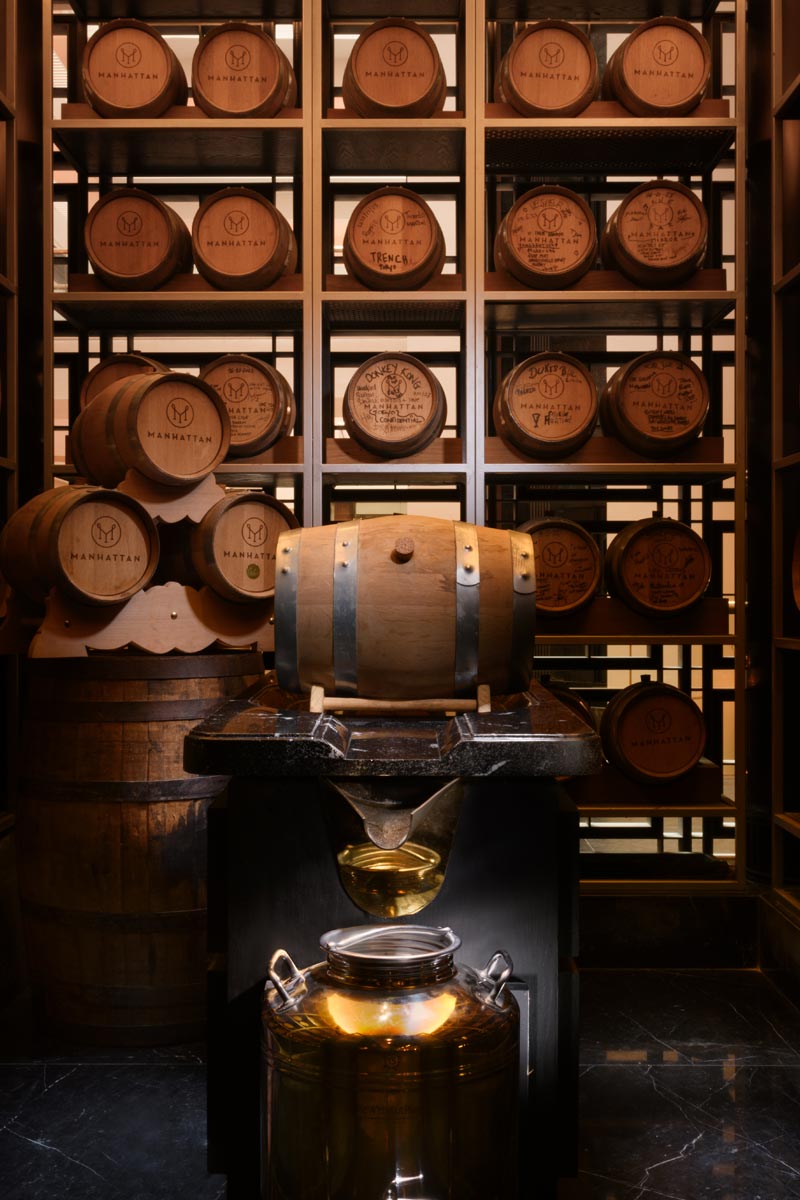
World’s first in-hotel rickhouse
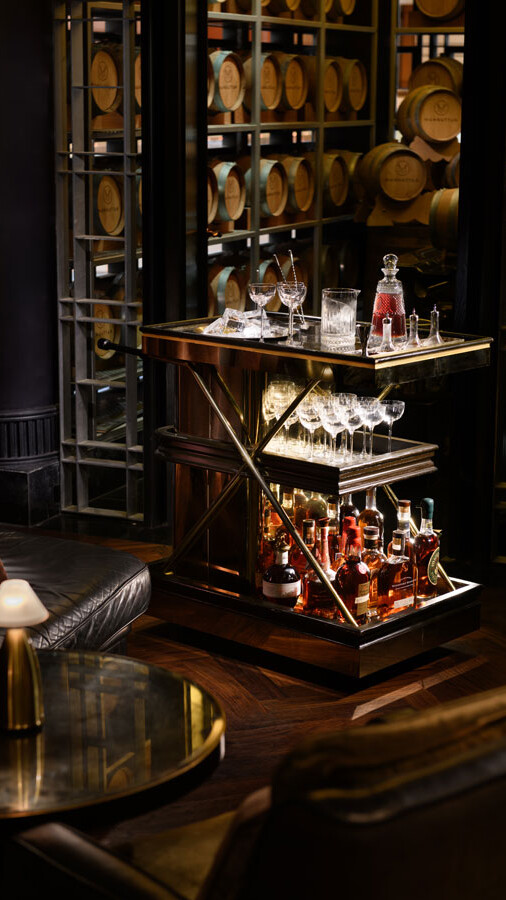
The rickhouse is one of Manhattan Bar’s defining features and one of the most distinctive elements of any cocktail bar in the world. Traditionally, a rickhouse is where whiskey barrels are stored and aged, often in large, climate-influenced warehouses. Manhattan takes that concept and brings it inside the bar, creating a working aging room that’s both functional and theatrical.
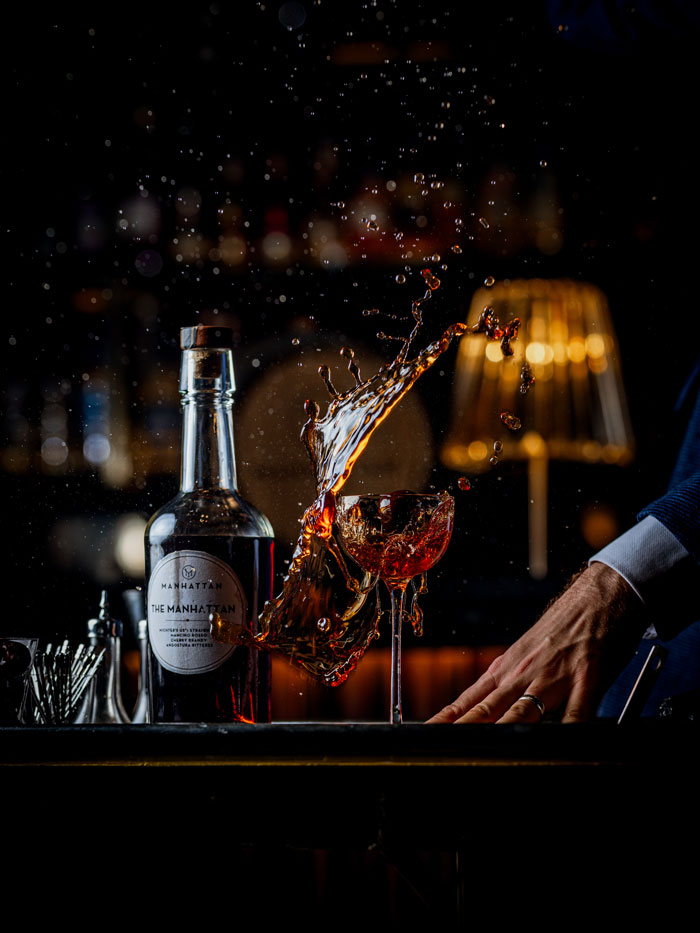
Here, rows of small oak barrels are used to age cocktails, spirits, and custom blends on-site. Instead of simply mixing drinks to order, the team pre-batches certain cocktails and lets them mature over time, allowing flavors to integrate, soften, and deepen—much like a fine whiskey. Unsurprisingly, the Manhattan cocktail is obviously a signature offering from the rickhouse.
“The Manhattan that we have utilized Michter’s Rye Whiskey vermouth, and our house-made cherry liqueur. We finish it off with Angostura bitters. We place the whole cocktail in the barrel and we let it age for a certain amount of time.”
Gabriel Carlos
Former Assistant Bar Manager
Beyond the barrels, much of what’s poured at Manhattan is built in-house—custom blends, infusions, and components designed to give each drink a distinct point of view.
Located in the Conrad Singapore Orchard, Manhattan Bar channels the spirit of a 19th-century New York hotel bar—rich dark wood, polished brass, and plush leather setting the stage for a cocktail program rooted in American heritage. Known for its in-house rickhouse and a menu that reimagines classic cocktails, Manhattan delivers both spectacle and substance. The result is a transportive experience, where every detail feels like a love letter to old New York.
“The concept of Manhattan bar pays homage to the golden era of cocktails and fine drinking in Manhattan.”
David Nguyen-Luu
Former Bar Manager, Manhattan
Seasons of Manhattan cocktail menu
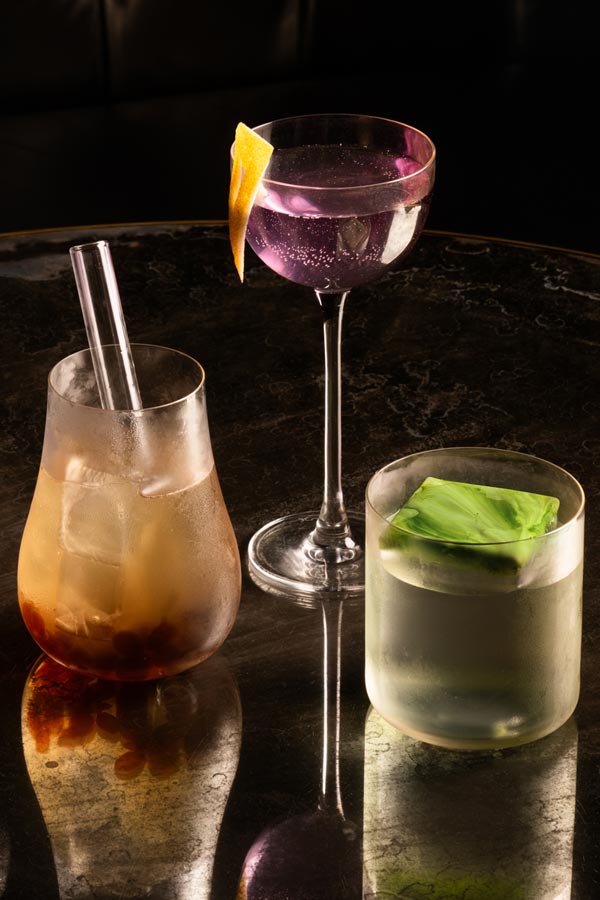
The current Manhattan Bar Singapore menu is inspired by New York City’s four seasons. The menu itself is styled as a desk calendar and features 31 drinks categorized by spring, summer, fall, and winter, as well as special barrel-aged cocktails from the rickhouse.
“Manhattan moves in seasons you can feel. Through New York’s defining culture. Climate. The moments that set the city in motion. At the bar, it all comes together.”
Manhattan Bar
World’s first in-hotel rickhouse
The rickhouse is one of Manhattan Bar’s defining features and one of the most distinctive elements of any cocktail bar in the world. Traditionally, a rickhouse is where whiskey barrels are stored and aged, often in large, climate-influenced warehouses. Manhattan takes that concept and brings it inside the bar, creating a working aging room that’s both functional and theatrical.
Here, rows of small oak barrels are used to age cocktails, spirits, and custom blends on-site. Instead of simply mixing drinks to order, the team pre-batches certain cocktails and lets them mature over time, allowing flavors to integrate, soften, and deepen—much like a fine whiskey. Unsurprisingly, the Manhattan cocktail is obviously a signature offering from the rickhouse.
“The Manhattan that we have utilized Michter’s Rye Whiskey vermouth, and our house-made cherry liqueur. We finish it off with Angostura bitters. We place the whole cocktail in the barrel and we let it age for a certain amount of time.”
Gabriel Carlos
Former Assistant Bar Manager
Beyond the barrels, much of what’s poured at Manhattan is built in-house—custom blends, infusions, and components designed to give each drink a distinct point of view.
Seasons of Manhattan cocktail menu
The current Manhattan Bar Singapore menu is inspired by New York City’s four seasons. The menu itself is styled as a desk calendar and features 31 drinks categorized by spring, summer, fall, and winter, as well as special barrel-aged cocktails from the rickhouse.
“Manhattan moves in seasons you can feel. Through New York’s defining culture. Climate. The moments that set the city in motion. At the bar, it all comes together.”
Manhattan Bar
- In an ode to the all-American rite of spring break, for example, the Seasons of Manhattan menu features a Spring cocktail called Where the Boys Are. Codigo Blanco tequila and Siete Misterios Doba Yej mezcal meet plum, melon, blackberry and citrus. Manhattan describes it as “…a riot of red, a burst of juicy brightness, and a melon splash that recalls the playful chaos of beer pong and coming-of-age rituals.”
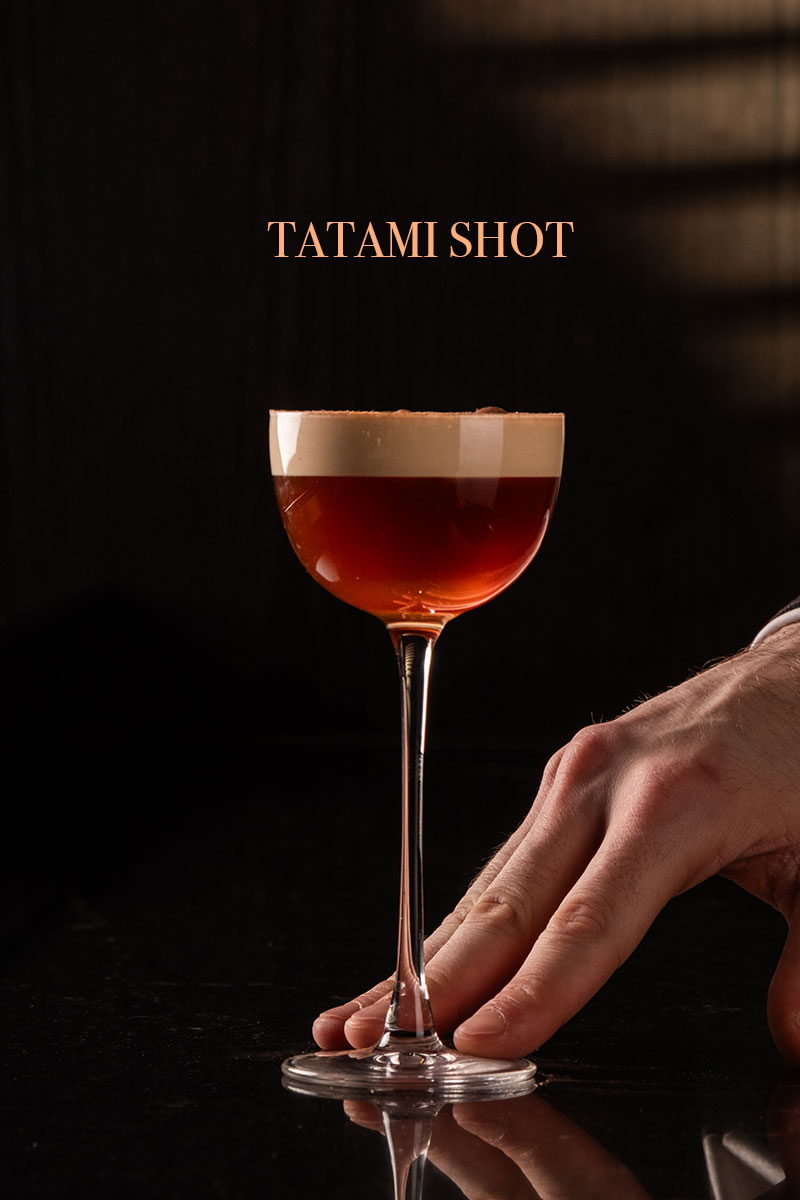
- The Tatami Shot sits in Autumn, honoring Japanese filmmaker Yasujirō Ozu, whose An Autumn Afternoon was screened in New York’s first Film Festival (September, 1963). Sakurao Single Malt Whisky and baijiu meet lemon, mushroom oleo, spiced pear, and bitters beneath espresso foam. Per Manhattan, it’s “…a cocktail that mirrors Ozu’s lens: layered, balanced, gently expressive.”
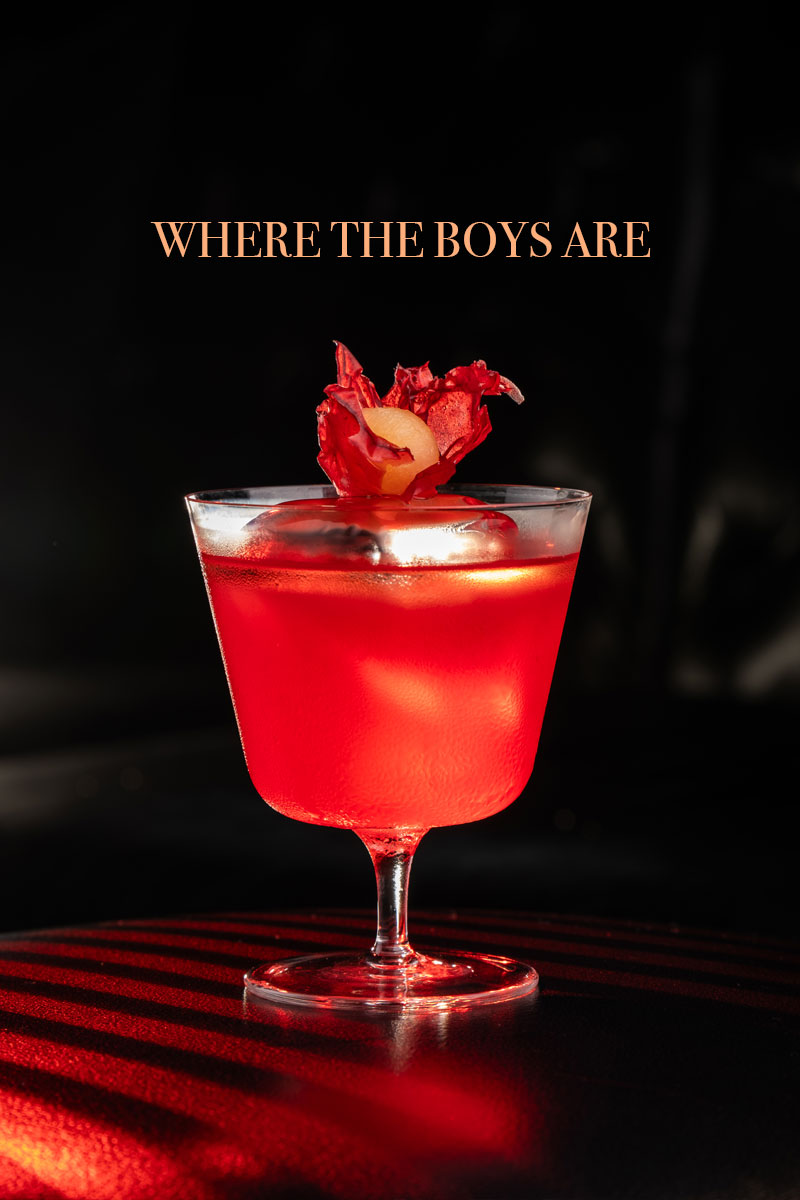
- In an ode to the all-American rite of spring break, for example, the Seasons of Manhattan menu features a Spring cocktail called Where the Boys Are. Codigo Blanco tequila and Siete Misterios Doba Yej mezcal meet plum, melon, blackberry and citrus. Manhattan describes it as “…a riot of red, a burst of juicy brightness, and a melon splash that recalls the playful chaos of beer pong and coming-of-age rituals.”
- The Tatami Shot sits in Autumn, honoring Japanese filmmaker Yasujirō Ozu, whose An Autumn Afternoon was screened in New York’s first Film Festival (September, 1963). Sakurao Single Malt Whisky and baijiu meet lemon, mushroom oleo, spiced pear, and bitters beneath espresso foam. Per Manhattan, it’s “…a cocktail that mirrors Ozu’s lens: layered, balanced, gently expressive.”
Global inspiration from Friends of Manhattan
At Manhattan Bar, the story of New York doesn’t stop at its own menu. Through its Friends of Manhattan series, the bar invites some of the world’s most celebrated bartenders to step behind the bar, transforming it into a rotating stage for global talent.
A few of the celebrated guest bartenders have hailed from:
- The Cocktail Club (Jakarta)
- Long Bar (Shanghai)
- Monkey Thief (New York City)
- To Infinity & Beyond, Vender, Bar Without (Taiwan)
- Happy Accidents Bar (Albuquerque)
- Bar Leone (Hong Kong)
Each collaboration blends Manhattan’s signature, old-world elegance with the distinct style of its guests—resulting in menus that feel both rooted in New York’s cocktail heritage and expanded by international influence. It’s less a takeover and more a dialogue, where techniques, flavors, and perspectives collide.
From global collaboration to cohesive vision
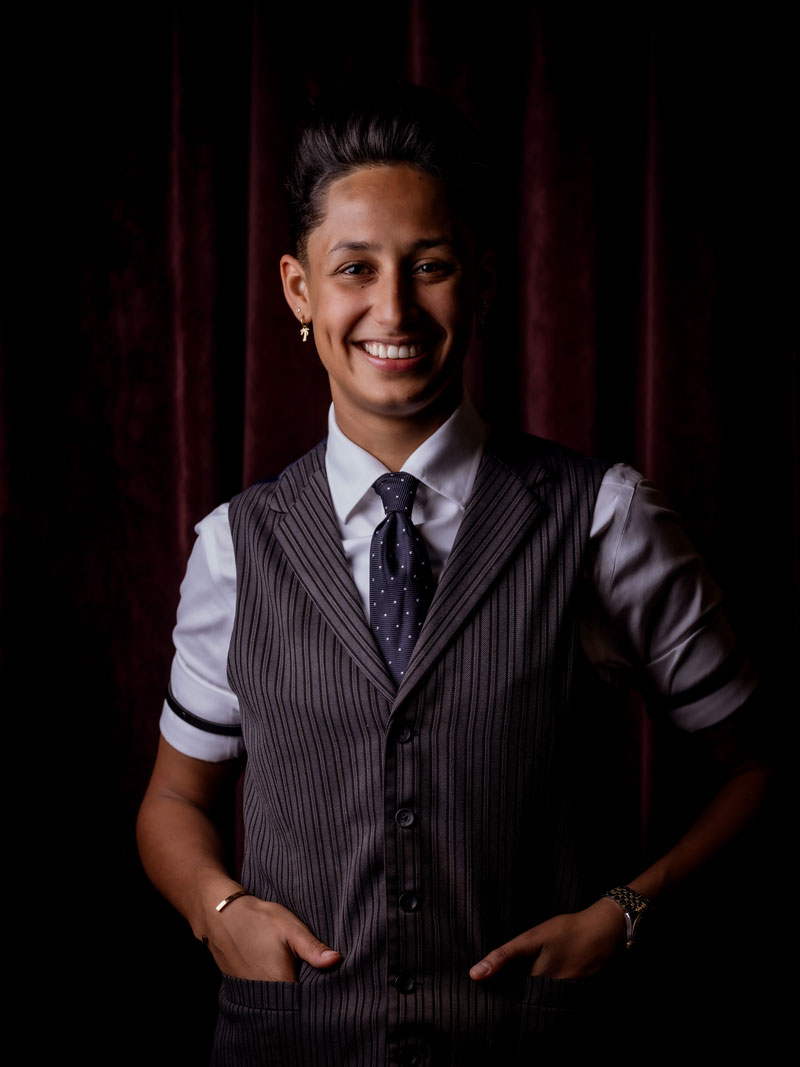
If Friends of Manhattan brings the world into the bar, Zana Möhlmann is the one shaping what it becomes once it’s there. Winner of the 2023 World Young Mixologist Award, Möhlmann became Manhattan Bar’s head bartender in 2024.
With experience across some of Asia’s most respected cocktail programs, Möhlmann brings both technical precision and a global perspective to Manhattan Bar.
Under Möhlmann’s direction, the bar’s many moving parts—the rickhouse, the collaborations, the deep well of American cocktail history—come together into something cohesive. The drinks feel intentional, the experience seamless, and the identity unmistakable.
“I believe that every craft starts with intention. From the way that you present yourself, to how you speak to people, and how you create.”
Zana Mohlmann, Head Bartender, Manhattan
Each collaboration blends Manhattan’s signature, old-world elegance with the distinct style of its guests—resulting in menus that feel both rooted in New York’s cocktail heritage and expanded by international influence. It’s less a takeover and more a dialogue, where techniques, flavors, and perspectives collide.
From global collaboration to cohesive vision
If Friends of Manhattan brings the world into the bar, Zana Möhlmann is the one shaping what it becomes once it’s there. Winner of the 2023 World Young Mixologist Award, Möhlmann became Manhattan Bar’s head bartender in 2024. With experience across some of Asia’s most respected cocktail programs, Möhlmann brings both technical precision and a global perspective to Manhattan Bar. Under Möhlmann’s direction, the bar’s many moving parts—the rickhouse, the collaborations, the deep well of American cocktail history—come together into something cohesive. The drinks feel intentional, the experience seamless, and the identity unmistakable.
“I believe that every craft starts with intention. From the way that you present yourself, to how you speak to people, and how you create.”
Zana Mohlmann, Head Bartender, Manhattan
Nicole Bump
Nicole is a seasoned content strategist and writer with 15+ years of experience turning complex ideas into compelling stories. As founder of Bump Inbound, she helps brands connect with audiences through thoughtful strategy, sharp planning, and standout writing.
Aleph Rome Hotel, Curio Collection by Hilton, Italy
Aleph Rome Hotel, Curio Collection by Hilton
This year, in association with Altamura Distilleries, I’ll be exploring some of the world’s most legendary bars—uncovering what makes them the beating heart of the hotel. Our next stop is Rome!
Now come and heed.
The Natural Gifts that Jupiter himself
apportioned to the bees
I will set forth.
Virgil, Georgics IV, 149–50
#Episode 7
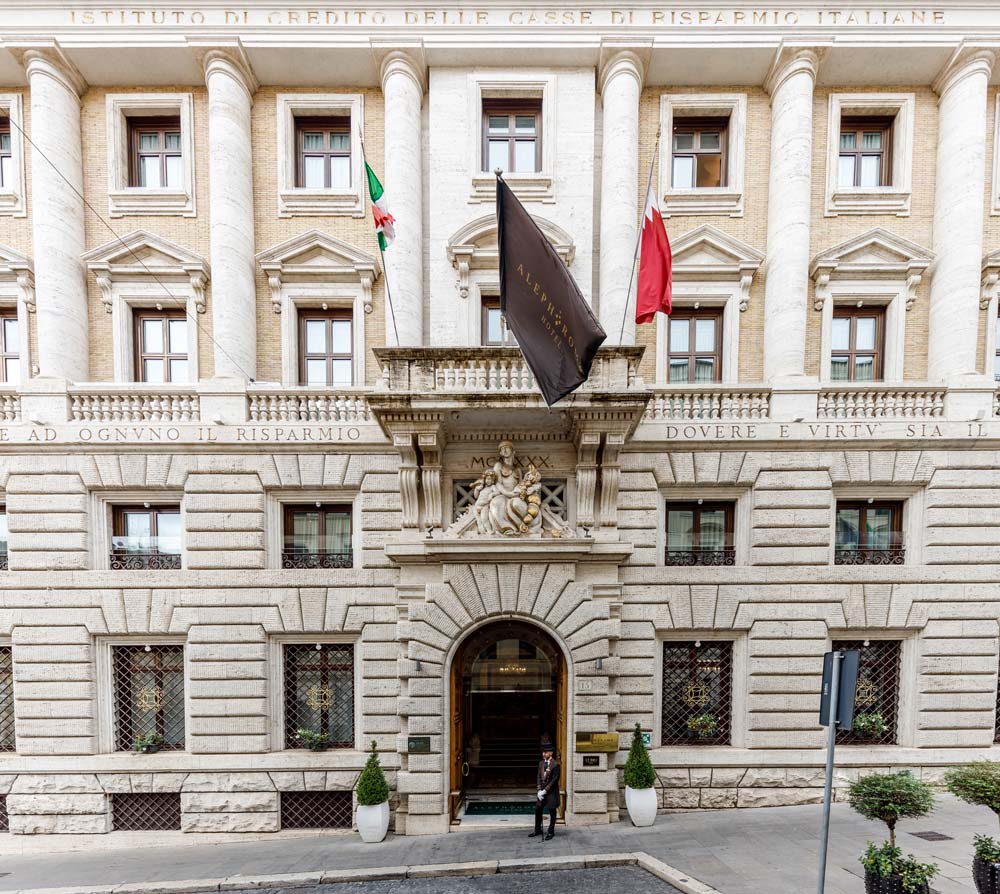
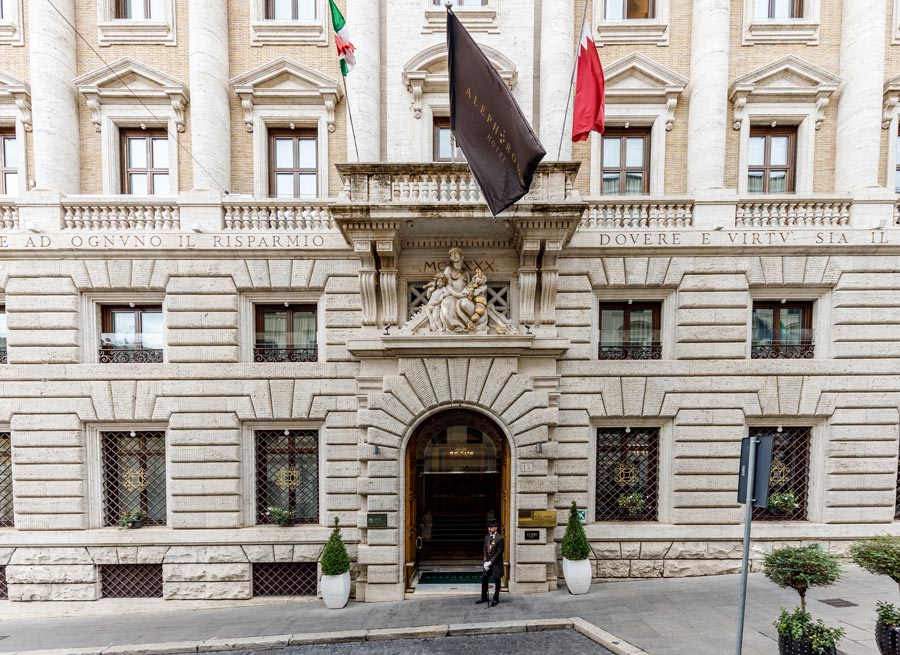
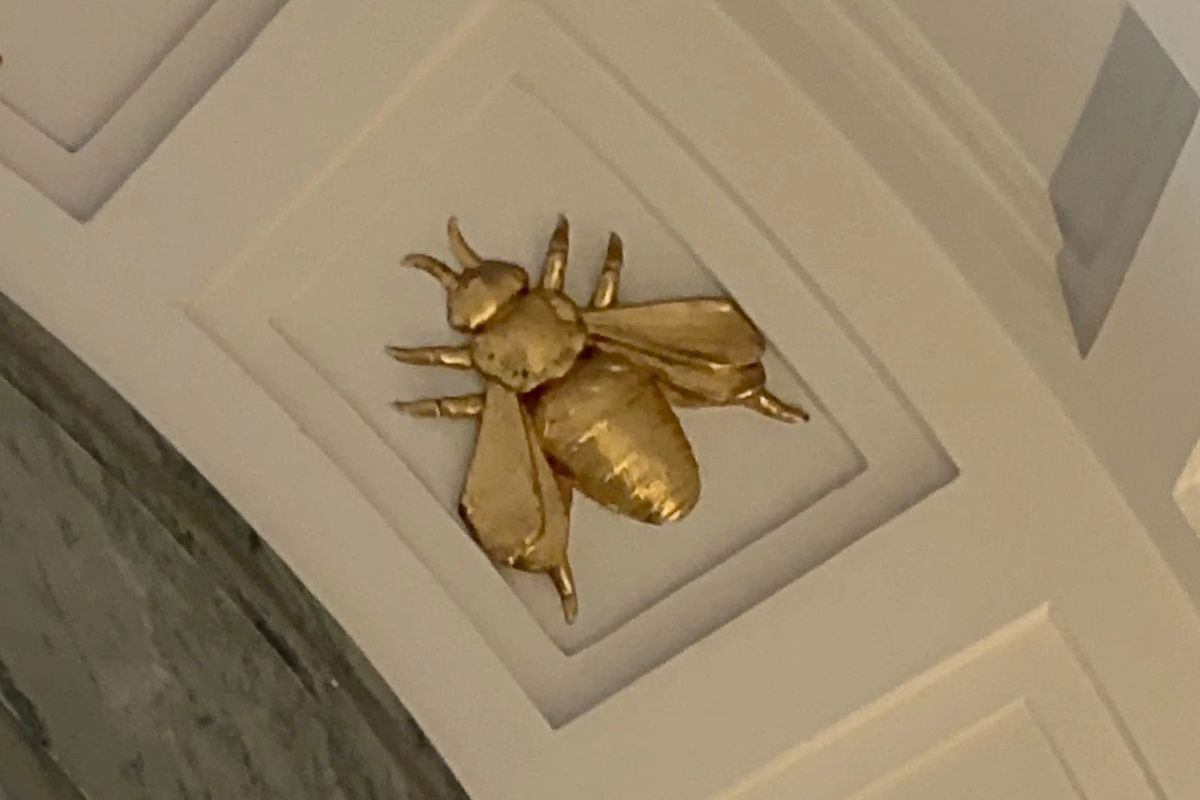
You might miss them if you aren’t looking. Above the archway door of the Aleph Rome Hotel, Curio Collection by Hilton, buzzes a semicircle of gilded bees, ready to fly out into the street. They would find they were among friends. Bees are found all throughout Rome, most of them the symbol of the Barberini family, whose palazzo, now a museum, is a five-minute walk from the hotel.
#Episode 7
You might miss them if you aren’t looking. Above the archway door of the Aleph Rome Hotel, Curio Collection by Hilton, buzzes a semicircle of gilded bees, ready to fly out into the street. They would find they were among friends. Bees are found all throughout Rome, most of them the symbol of the Barberini family, whose palazzo, now a museum, is a five-minute walk from the hotel.
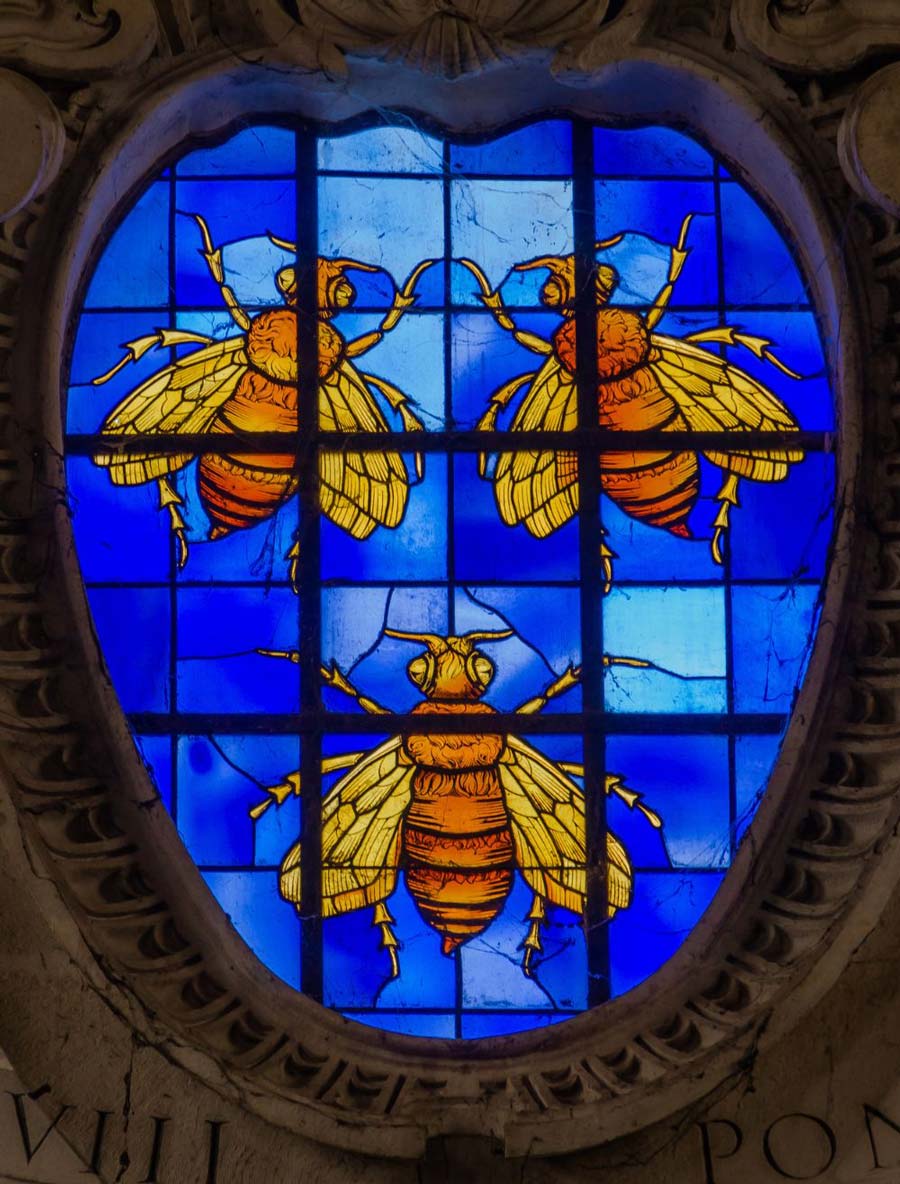
Pope Urban VIII, born into the Barberini family, literally stamped Rome with his family’s emblem, the bumblebee. He had the good fortune to be elected Pope during a golden era of Roman Baroque architecture and was quick to commission the three great masters of the age, Carlo Maderno, Francesco Borromini, and Gian Lorenzo Bernini, to construct fountains, churches, and statues all around the city, with the bumblebee prominently displayed.
Bees toiling away in their hives have represented industry and harmony in equal measure since ancient times. The reward for that hard work is honey, which Pliny the Elder, writing in AD 77–79, described as “dew fallen from the stars.”
So why are bees buzzing around the door of the Aleph Hotel? The building that is now the Aleph Hotel was constructed in the 1930s as the headquarters of the Central Savings Bank – a veritable hive of activity, thus a natural choice.
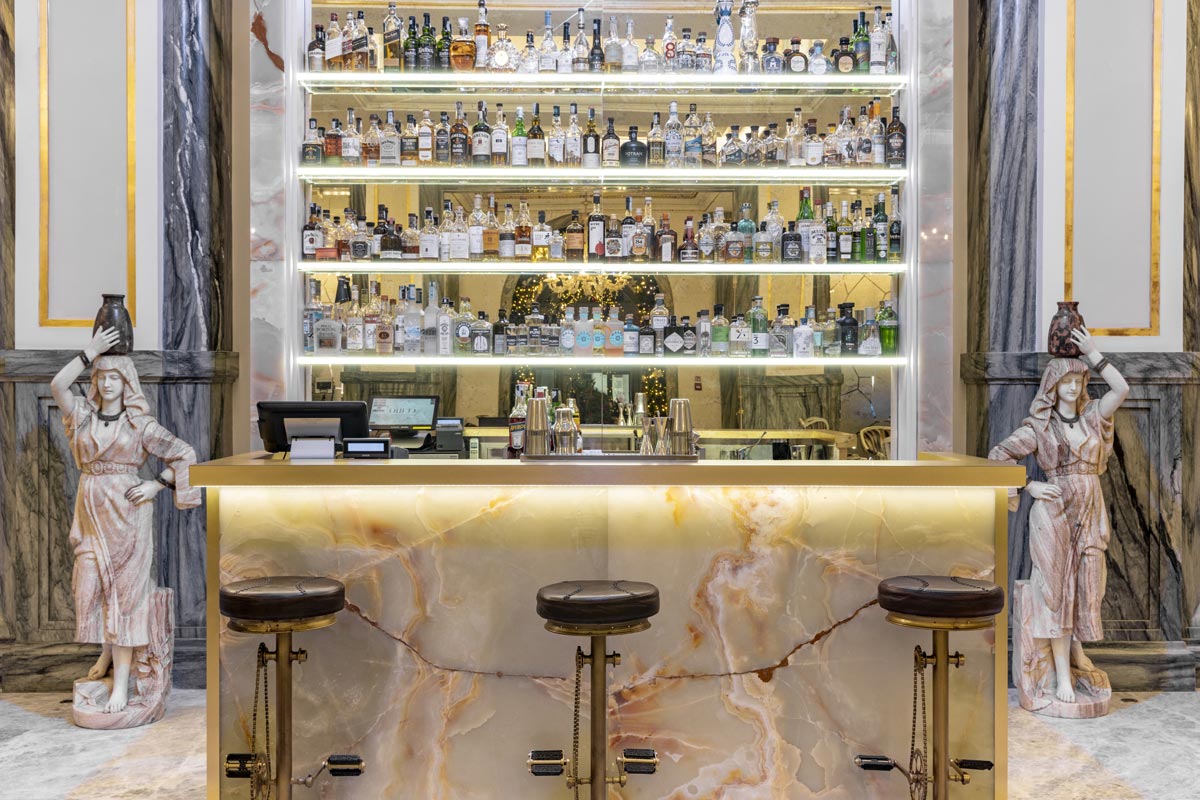
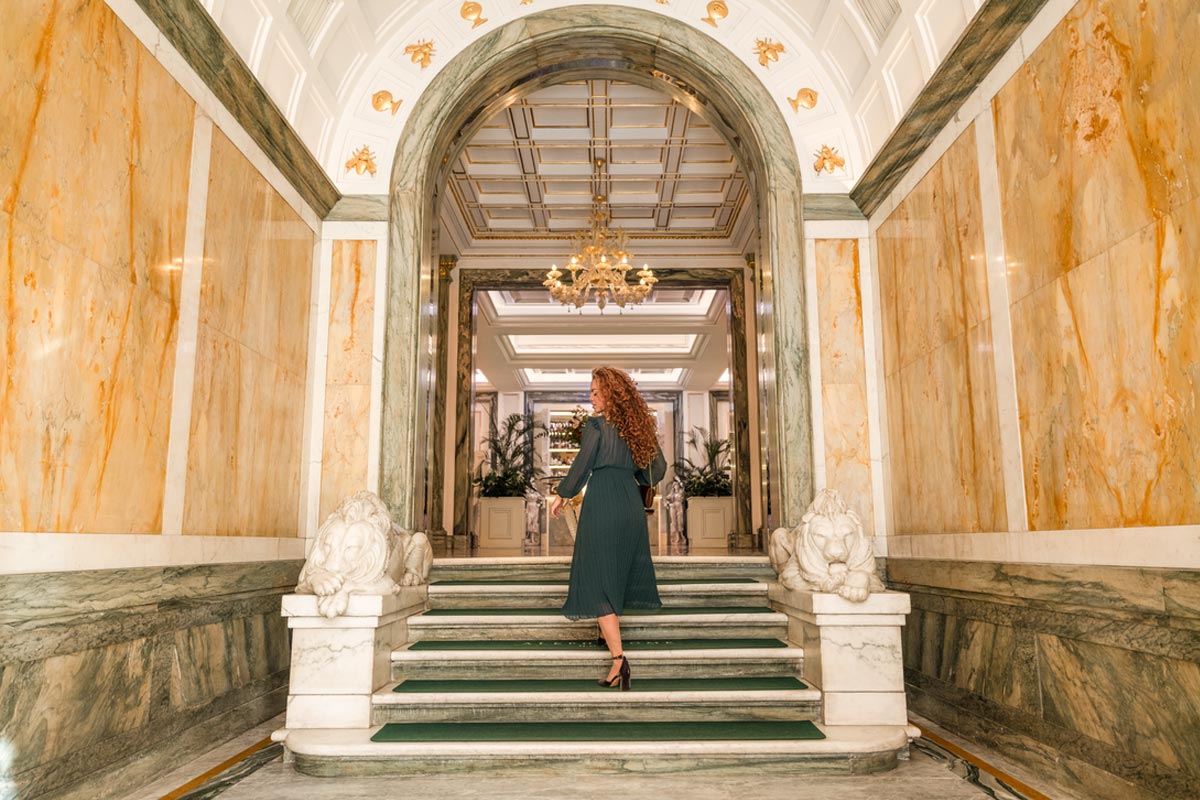
Follow the bees inside and the first thing that greets you is the Lobby Bar with its restored marble floors, columns, and onyx detailing that transports you back to La Dolce Vita, when Via Veneto, just steps away, was the centre of 1950’s Rome.
Pope Urban VIII, born into the Barberini family, literally stamped Rome with his family’s emblem, the bumblebee. He had the good fortune to be elected Pope during a golden era of Roman Baroque architecture and was quick to commission the three great masters of the age, Carlo Maderno, Francesco Borromini, and Gian Lorenzo Bernini, to construct fountains, churches, and statues all around the city, with the bumblebee prominently displayed.
Bees toiling away in their hives have represented industry and harmony in equal measure since ancient times. The reward for that hard work is honey, which Pliny the Elder, writing in AD 77–79, described as “dew fallen from the stars.”
So why are bees buzzing around the door of the Aleph Hotel? The building that is now the Aleph Hotel was constructed in the 1930s as the headquarters of the Central Savings Bank – a veritable hive of activity, thus a natural choice. Follow the bees inside and the first thing that greets you is the Lobby Bar with its restored marble floors, columns, and onyx detailing that transports you back to La Dolce Vita, when Via Veneto, just steps away, was the centre of 1950’s Rome.
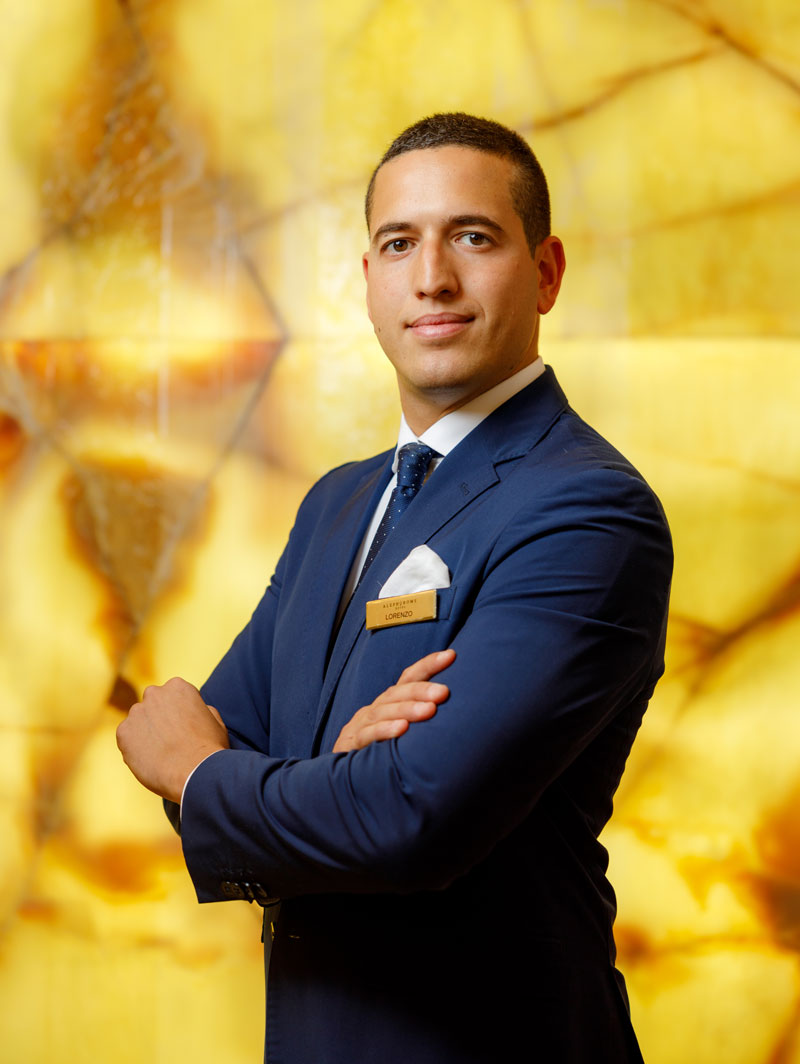
Open all day from seven in the morning until midnight. Its menu is overseen by Restaurants & Bars Manager, Lorenzo Politano, a Roman by birth who has been with the Aleph since 2018. His career began in his grandfather’s bar near Rome’s Termini train station, then took him to London to gain international experience, and then his hometown called him back again. Alongside him are Head Bartender Francesco Ramacciati and bartender Sergio Ditrano. All working together to create the bar’s signature menu, built around their individuals takes on the classics.
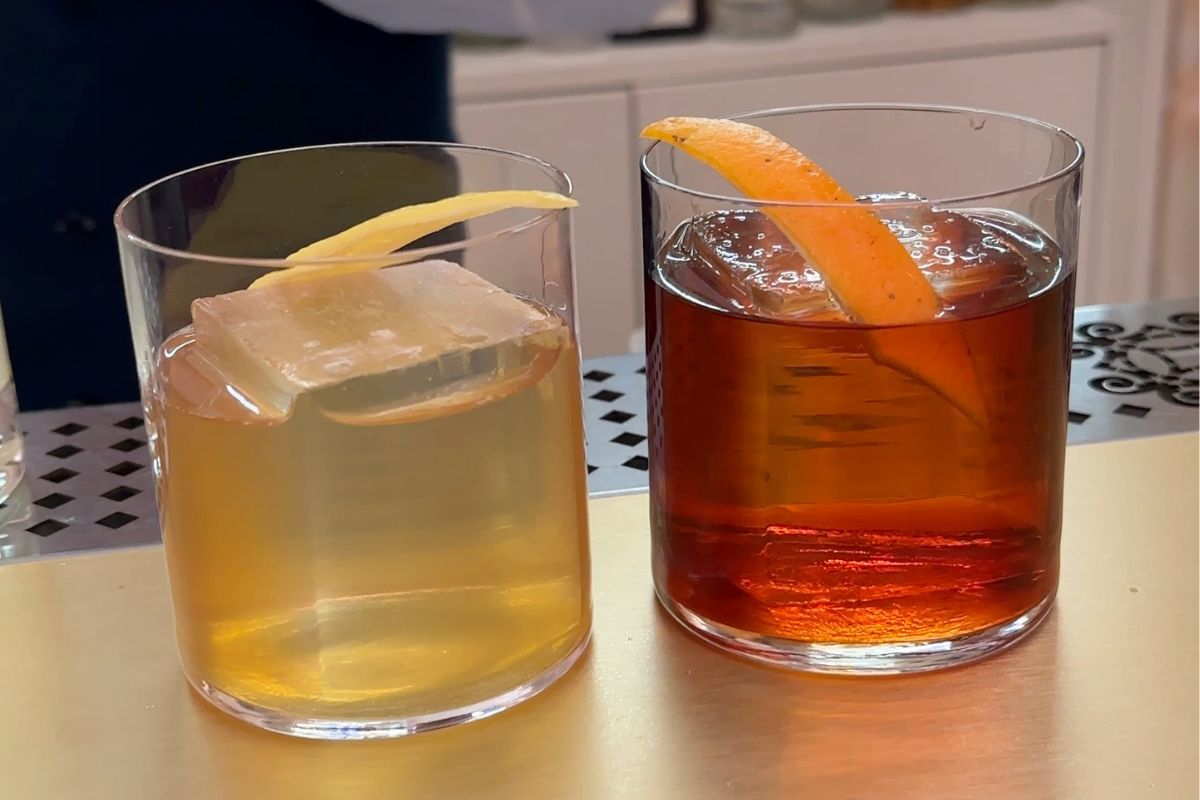
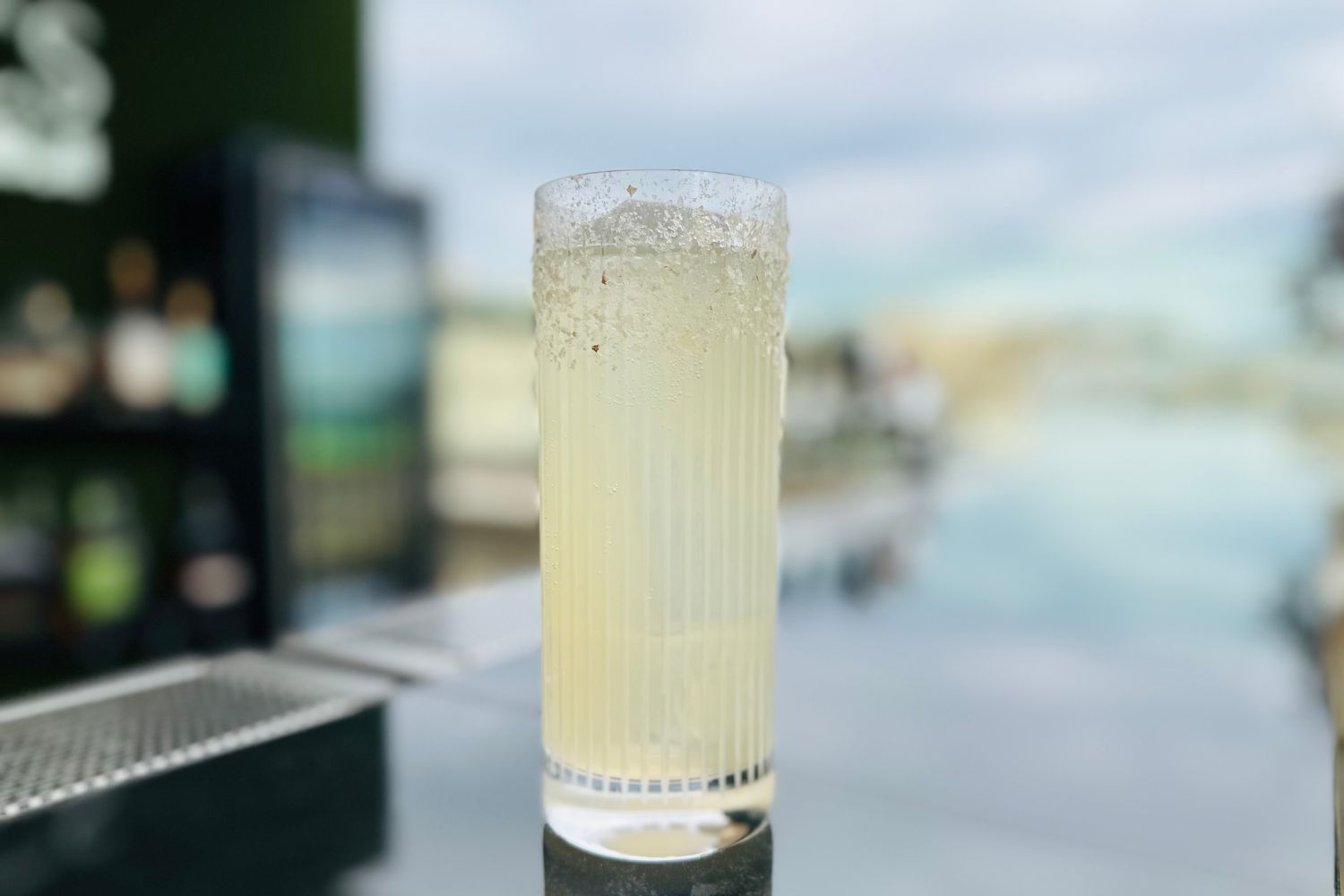
The Heritage Twist is a Gimlet-style cocktail using Altamura Distilleries Vodka and a homemade ciliegini (cherry tomato) and mint cordial, finished with basil and parsley oil. The Plum Old Fashioned made with Woodford Rye, plum bitters, and sugar looks straightforward enough until you learn of the secret ingredient: lager. A touch of Ichnusa Non Filtrata from Sardinia gives it that special something you would never guess. The Gentle & Sparkle is a highball of Gin Mare and Three Cents Fig Leaf Soda, brought to life with their own cucumber cordial.
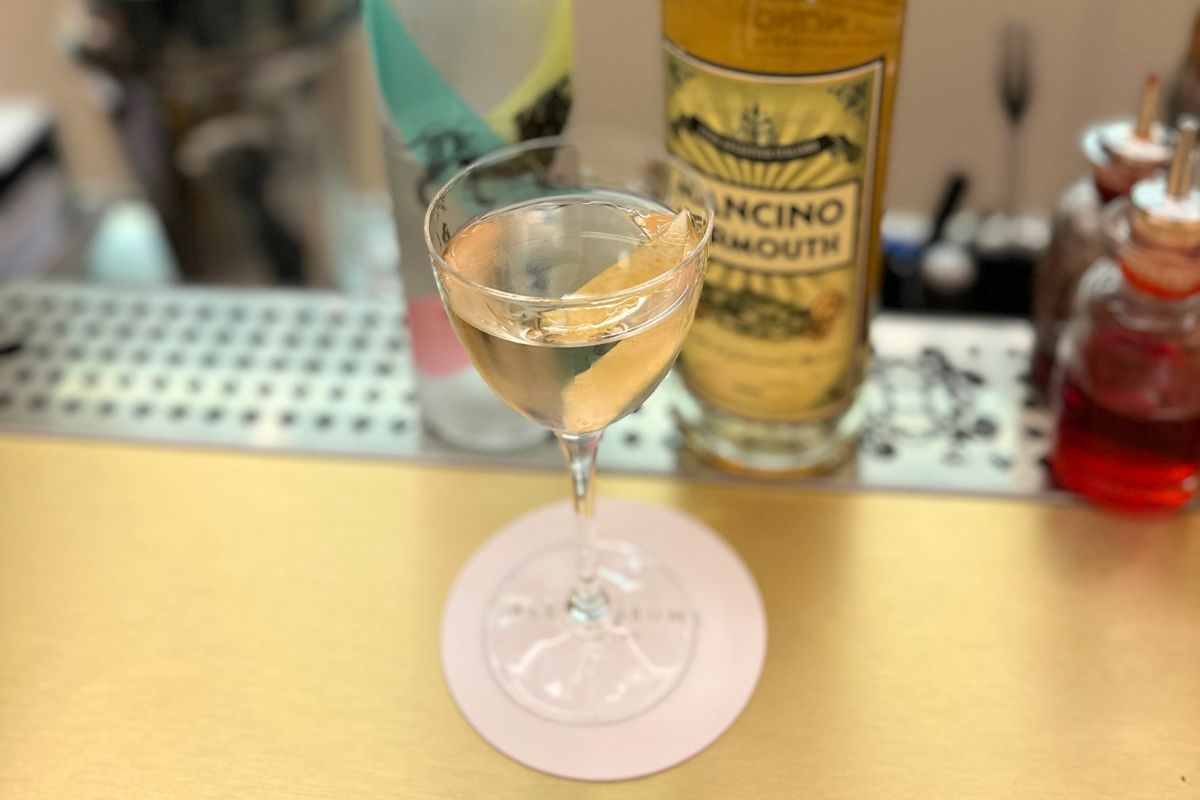
For those new to Martinis, or simply not wanting the same thing twice, the Martini menu offers the dry, the dirty, and the Gibson, plus their special Altamura Martini made with Altamura Distilleries Vodka, Mancino Secco, and orange bitters. For the genuinely curious, there’s also the Martini Cocktail Experience, a tasting of all of them.
Open all day from seven in the morning until midnight. Its menu is overseen by Restaurants & Bars Manager, Lorenzo Politano, a Roman by birth who has been with the Aleph since 2018. His career began in his grandfather’s bar near Rome’s Termini train station, then took him to London to gain international experience, and then his hometown called him back again.
Alongside him are Head Bartender Francesco Ramacciati and bartender Sergio Ditrano. All working together to create the bar’s signature menu, built around their individuals takes on the classics.
The Heritage Twist is a Gimlet-style cocktail using Altamura Distilleries Vodka and a homemade ciliegini (cherry tomato) and mint cordial, finished with basil and parsley oil. The Plum Old Fashioned made with Woodford Rye, plum bitters, and sugar looks straightforward enough until you learn of the secret ingredient: lager. A touch of Ichnusa Non Filtrata from Sardinia gives it that special something you would never guess. The Gentle & Sparkle is a highball of Gin Mare and Three Cents Fig Leaf Soda, brought to life with their own cucumber cordial.
For those new to Martinis, or simply not wanting the same thing twice, the Martini menu offers the dry, the dirty, and the Gibson, plus their special Altamura Martini made with Altamura Distilleries Vodka, Mancino Secco, and orange bitters. For the genuinely curious, there’s also the Martini Cocktail Experience, a tasting of all of them.
The Aleph bar represents a professional life project for me. I have been working here for eight years, witnessing its evolution day by day, growing alongside the team and the venue itself, up to the role I hold today. It is a place that has taught me the value of continuity, listening, and responsibility. The Aleph bars embodies the meeting point between an international identity and a strong Roman soul, where product quality goes hand in hand with the quality of human relationships. Today, my role is to provide direction, maintain high standards, and at the same time create a solid, inclusive working environment focused on people’s growth.
Lorenzo Politano, Restaurants & Bars Manager
The Aleph bar represents a professional life project for me. I have been working here for eight years, witnessing its evolution day by day, growing alongside the team and the venue itself, up to the role I hold today. It is a place that has taught me the value of continuity, listening, and responsibility. The Aleph bars embodies the meeting point between an international identity and a strong Roman soul, where product quality goes hand in hand with the quality of human relationships. Today, my role is to provide direction, maintain high standards, and at the same time create a solid, inclusive working environment focused on people’s growth.
Lorenzo Politano
Restaurants & Bars Manager
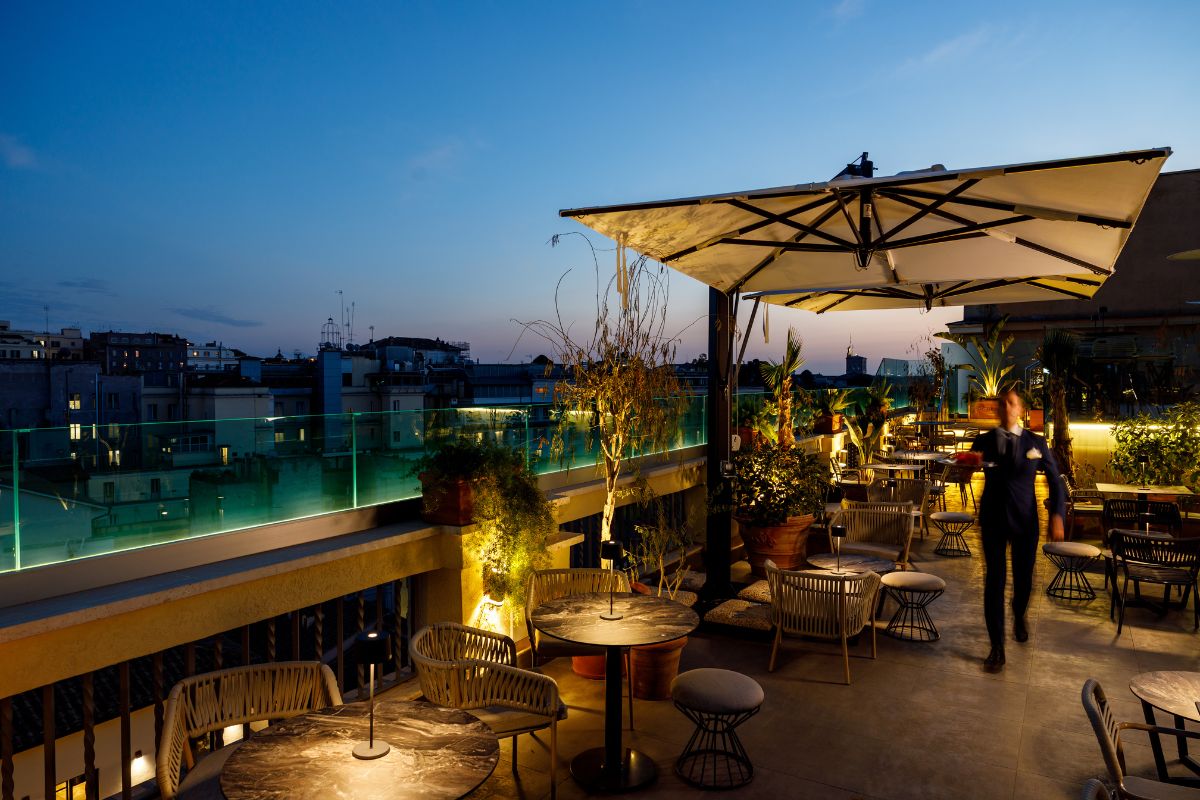
Still, that’s not the only hive in town. Like bees themselves, which shelter through winter and emerge when sun returns, the hotel’s rooftop Organics Sky Bar reawakens each spring. During the day, there are more refurbed classics: e.g. the Crushed Espresso Martini with Altamura Distilleries Vodka, Kyma Amaro al Caffè, and espresso or the Negroni D’Amare made with Gin Mare, Mancino Rosso, and Campari. Evening is when the team invites us to delight in a tour of the city, flying high above the Roman terracotta rooftops and church domes without leaving the terrace. Taking a cue from our yellow and black striped friends, we are introduced to Rome’s many neighborhoods (rione) and bumblebees through the bar’s signature cocktail menu.
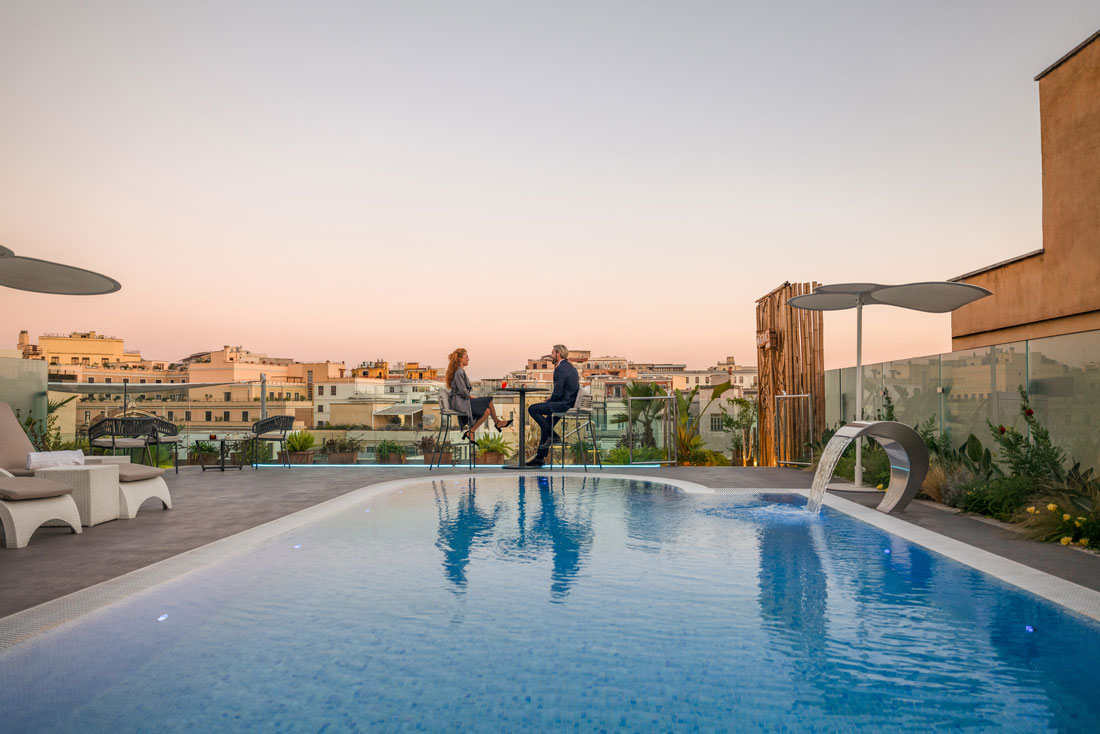
Still, that’s not the only hive in town. Like bees themselves, which shelter through winter and emerge when sun returns, the hotel’s rooftop Organics Sky Bar reawakens each spring. During the day, there are more refurbed classics: e.g. the Crushed Espresso Martini with Altamura Distilleries Vodka, Kyma Amaro al Caffè, and espresso or the Negroni D’Amare made with Gin Mare, Mancino Rosso, and Campari. Evening is when the team invites us to delight in a tour of the city, flying high above the Roman terracotta rooftops and church domes without leaving the terrace. Taking a cue from our yellow and black striped friends, we are introduced to Rome’s many neighborhoods (rione) and bumblebees through the bar’s signature cocktail menu.
As for the recipes, our intention was to pair ingredients that, thanks to their characteristics, could evoke the sensations and aromas one might experience while strolling through the streets of each Roman neighborhood. The idea is to create a sensory connection, evoking the atmosphere, scents, and impressions that both locals and visitors experience as they explore these neighborhoods and admire their iconic monuments”
explains Lorenzo.
As for the recipes, our intention was to pair ingredients that, thanks to their characteristics, could evoke the sensations and aromas one might experience while strolling through the streets of each Roman neighborhood. The idea is to create a sensory connection, evoking the atmosphere, scents, and impressions that both locals and visitors experience as they explore these neighborhoods and admire their iconic monuments,”
explains Lorenzo.
With one sip of the Rione Trevi, a heady mix of Jack Daniel’s Tennessee Apple, with touches of mango and lime, salt solution and The Organics Ginger Beer, we are transported to La Fontana delle Api (Fountain of the Bees) sitting at the corner of Piazza Barberini and Via Veneto.
Explore the Rione Pigna, home of the Pantheon, where a tiny carved bee, symbol of the Barberini, is hidden on a column capital of the ancient portico, which blends Campari, Kyma Amaro al Caffè, and The Organics Black Orange. The Rione Monti with its Nordes Gin, grapefruit syrup, sage, sugar and The Organics Bitter Lemon, sends us to the church of Santa Maria in Ara Coeli near Colosseum, where the Barberini bees swarm its gorgeous stained glass windows.
Leading us to St Peter’s Basilica down the Via Giulia and across the Tevere River, where the bees dance on their most glorious perch, Bernini’s Baldacchino, the canopy above the altar, is the Rione Regola created with Altamura Distilleries Vodka, violet liqueur, raspberry shrub and The Organics Tonic Water. Of all those bees that have found a home in Rome, the gilded ones above the Aleph’s door are the ones that welcome us in to share the sweet rewards of Lorenzo and his team’s hard work – crafting cocktails that are, as Pliny described so eloquently, “dew fallen from the stars” and make their bars the heart of the hotel.
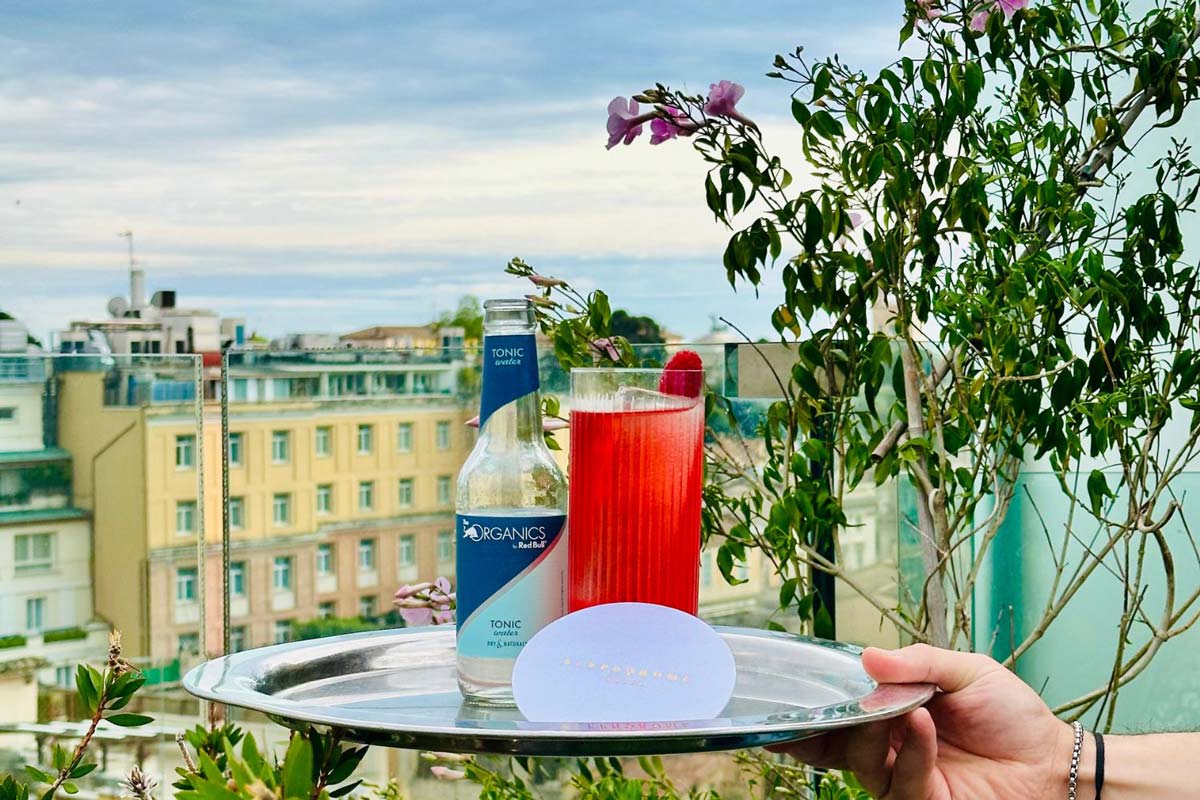
With one sip of the Rione Trevi, a heady mix of Jack Daniel’s Tennessee Apple, with touches of mango and lime, salt solution and The Organics Ginger Beer, we are transported to La Fontana delle Api (Fountain of the Bees) sitting at the corner of Piazza Barberini and Via Veneto.
Explore the Rione Pigna, home of the Pantheon, where a tiny carved bee, symbol of the Barberini, is hidden on a column capital of the ancient portico, which blends Campari, Kyma Amaro al Caffè, and The Organics Black Orange. The Rione Monti with its Nordes Gin, grapefruit syrup, sage, sugar and The Organics Bitter Lemon, sends us to the church of Santa Maria in Ara Coeli near Colosseum, where the Barberini bees swarm its gorgeous stained glass windows. Leading us to St Peter’s Basilica down the Via Giulia and across the Tevere River, where the bees dance on their most glorious perch, Bernini’s Baldacchino, the canopy above the altar, is the Rione Regola created with Altamura Distilleries Vodka, violet liqueur, raspberry shrub and The Organics Tonic Water.
Of all those bees that have found a home in Rome, the gilded ones above the Aleph’s door are the ones that welcome us in to share the sweet rewards of Lorenzo and his team’s hard work – crafting cocktails that are, as Pliny described so eloquently, “dew fallen from the stars” and make their bars the heart of the hotel.
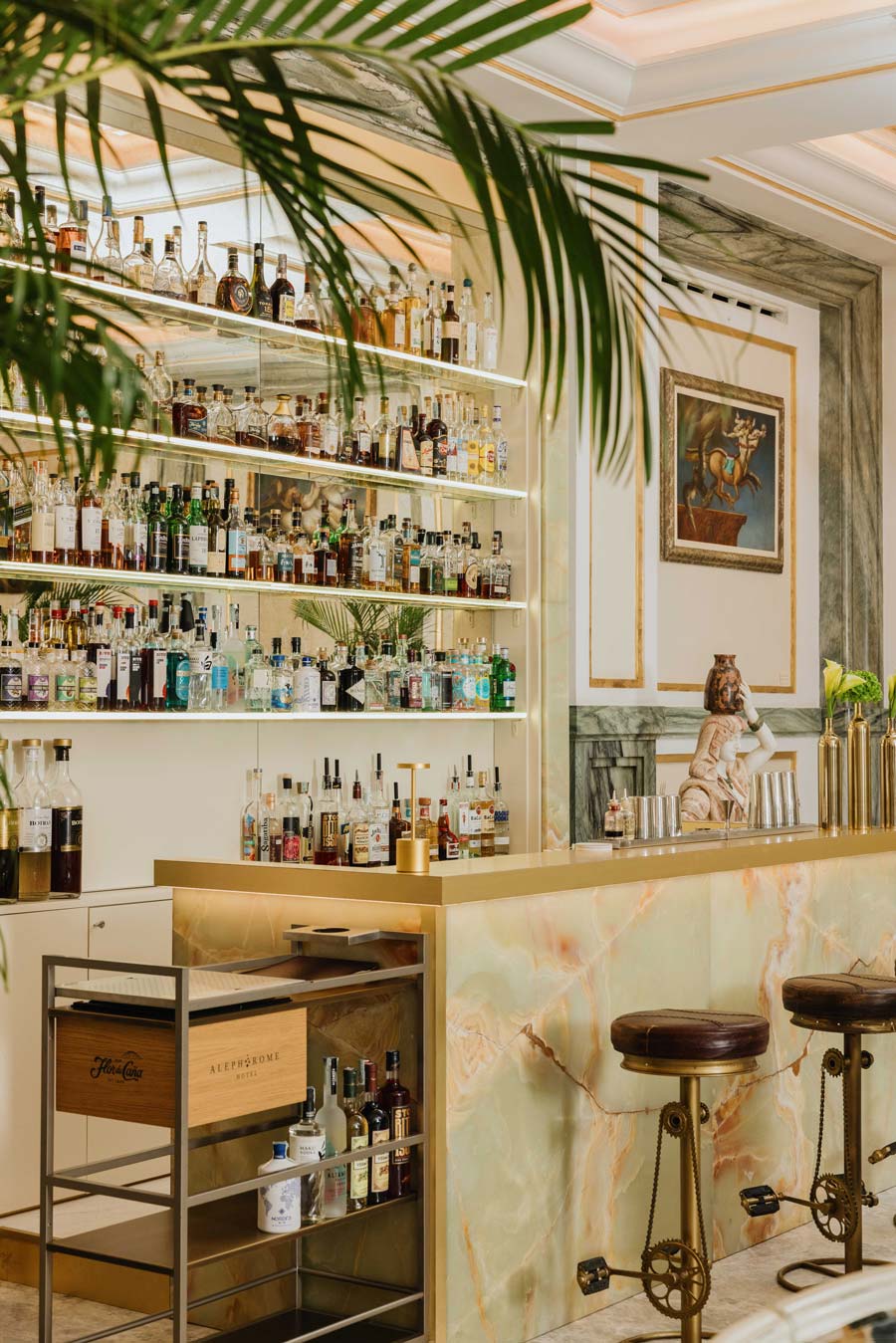
At Aleph Rome, the bar is more than a place it is a feeling, a window on the world, where different cultures, stories, and energies meet in a single moment – space of exchange between bartender and guest, between those who listen and those who tell. Every interaction is a dialogue, not just through words, but through gestures, flavors, and shared time. Behind the bar, I don’t just serve drinks I connect with people. For me, the bar is alive. It breathes through the people who sit at it and the hands that work behind it – where hospitality becomes personal, and where every drink is the beginning of a conversation.
Gaetano Cacialli, Operations Manager
At Aleph Rome, the bar is more than a place it is a feeling, a window on the world, where different cultures, stories, and energies meet in a single moment – space of exchange between bartender and guest, between those who listen and those who tell. Every interaction is a dialogue, not just through words, but through gestures, flavors, and shared time. Behind the bar, I don’t just serve drinks I connect with people. For me, the bar is alive. It breathes through the people who sit at it and the hands that work behind it – where hospitality becomes personal, and where every drink is the beginning of a conversation.
Gaetano Cacialli, Operations Manager
Susan L. Schwartz
Susan L. Schwartz is the award-winning creator of A Lush Life Manual and host of the Lush Life Podcast. She writes widely on drinks and travel, leads London and Venice Cocktail Tours, and has been recognised with multiple industry awards.
DarkSide Hong Kong—Rosewood’s timeless yet innovative jazz bar
Darkside Hong Kong
DarkSide Hong Kong—Rosewood’s timeless yet innovative jazz bar
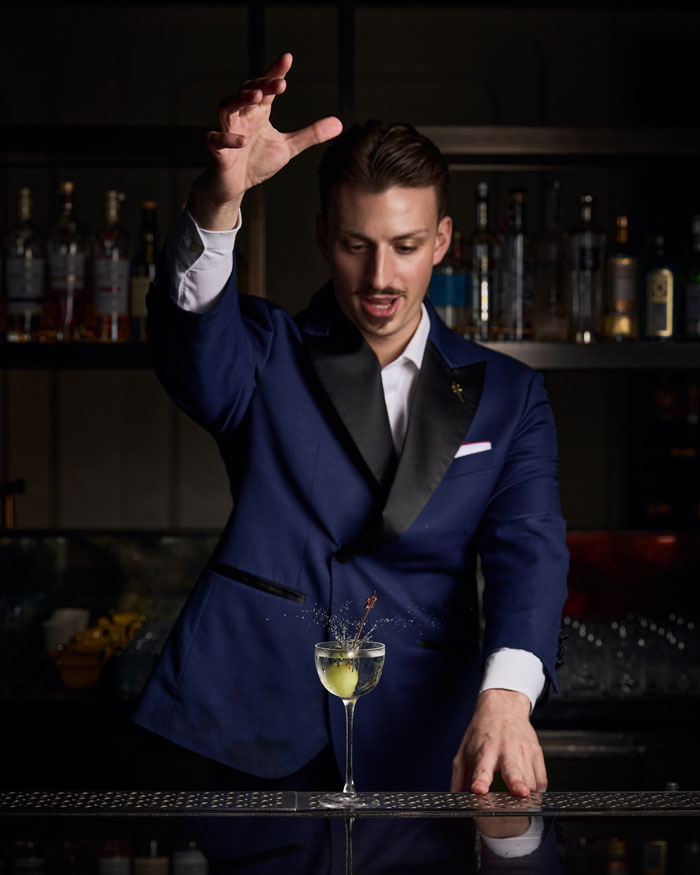
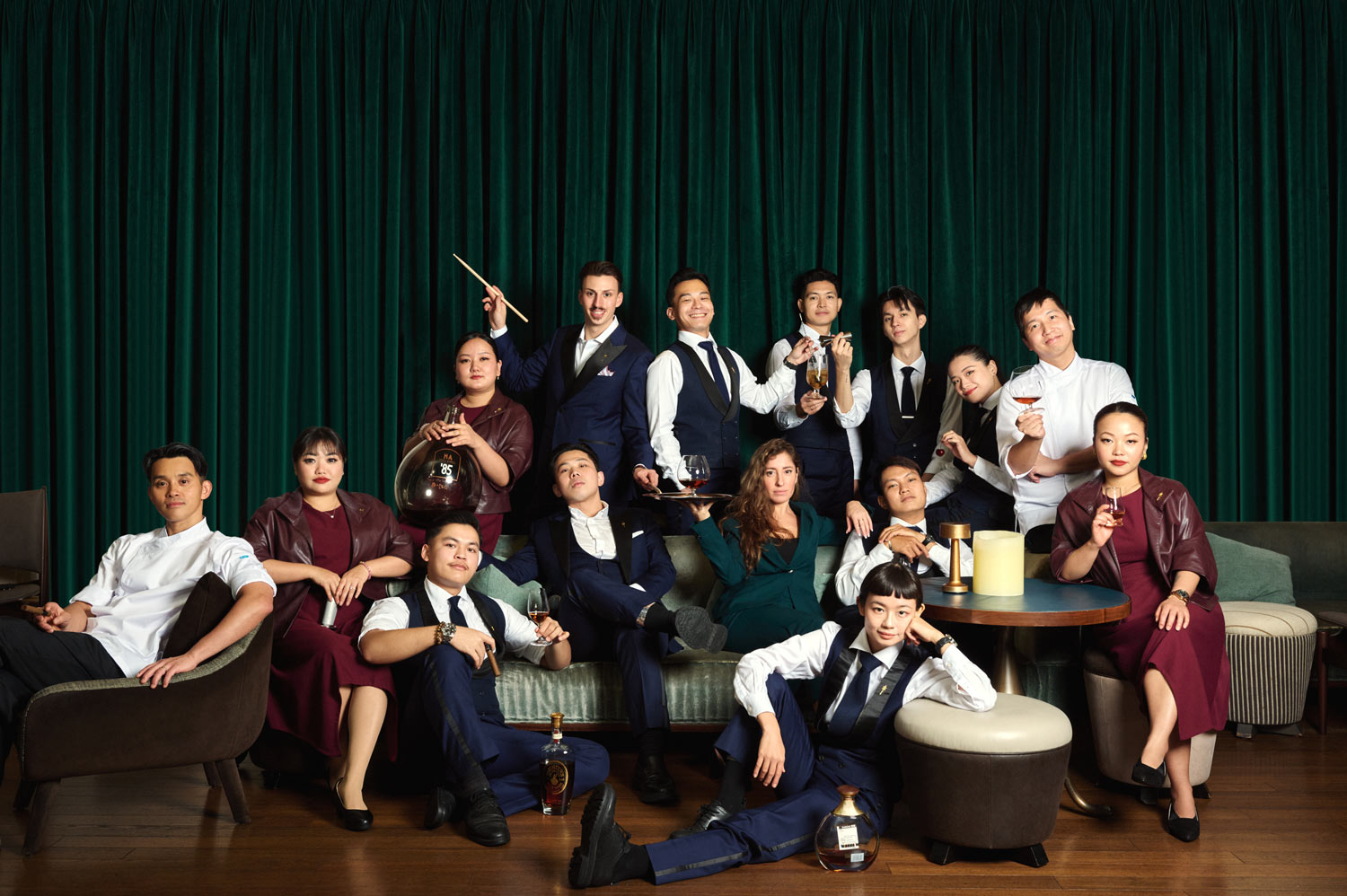
Keys are checked, strings adjusted, and a quiet nod exchanged among the team. As the live band steps onto the small stage, music fills the room at DarkSide, the sophisticated jazz bar inside the Rosewood Hong Kong in Tsim Sha Tsui, Kowloon.
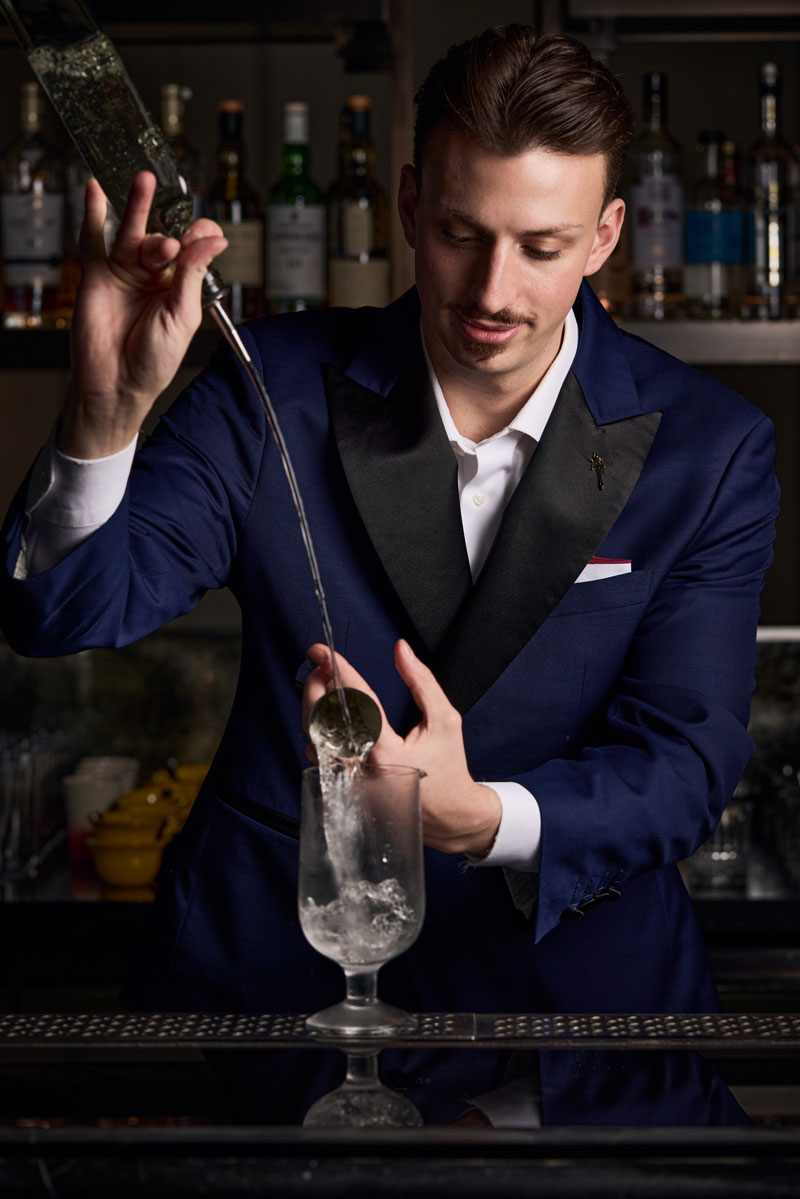
The bar’s name nods to Kowloon’s historic identity as the “dark side” of Victoria Harbor—a district shaped by maritime trade, cultural exchange, and a nightlife once known for its shadowed glamour. DarkSide channels that layered past, blending East and West much like Kowloon has for generations.
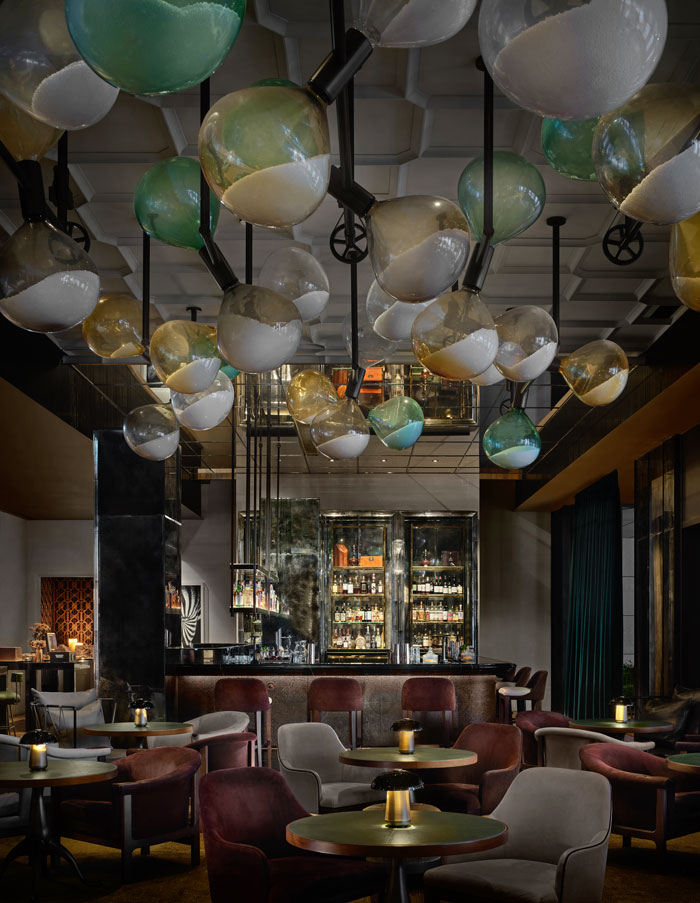
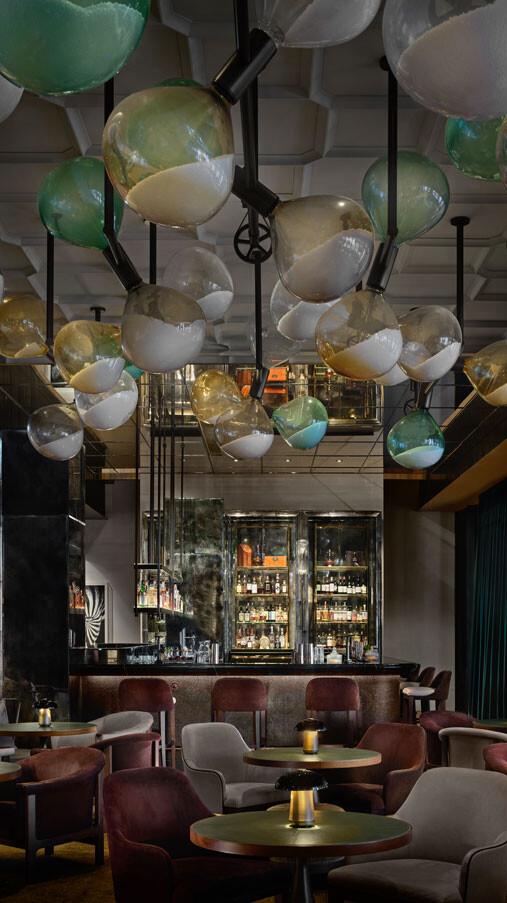
“We capture Kowloon’s spirit through design and ritual rather than a literal theme. Guests encounter black and white Hong Kong portraiture, an artwork of glass hours in motion on the ceiling symbolizing the importance of time, and a mood that feels timeless and cinematic,”
Marco Maiorano
Bar Manager
Cocktails with a soundscape
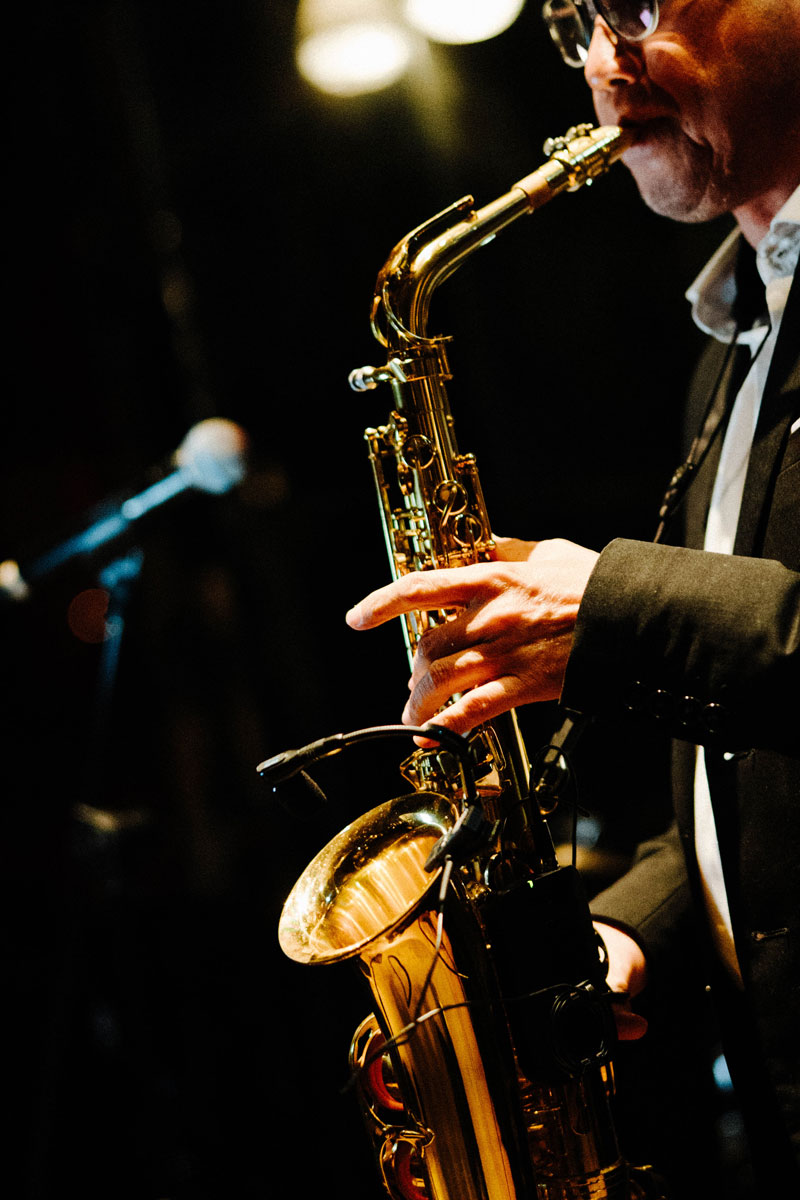
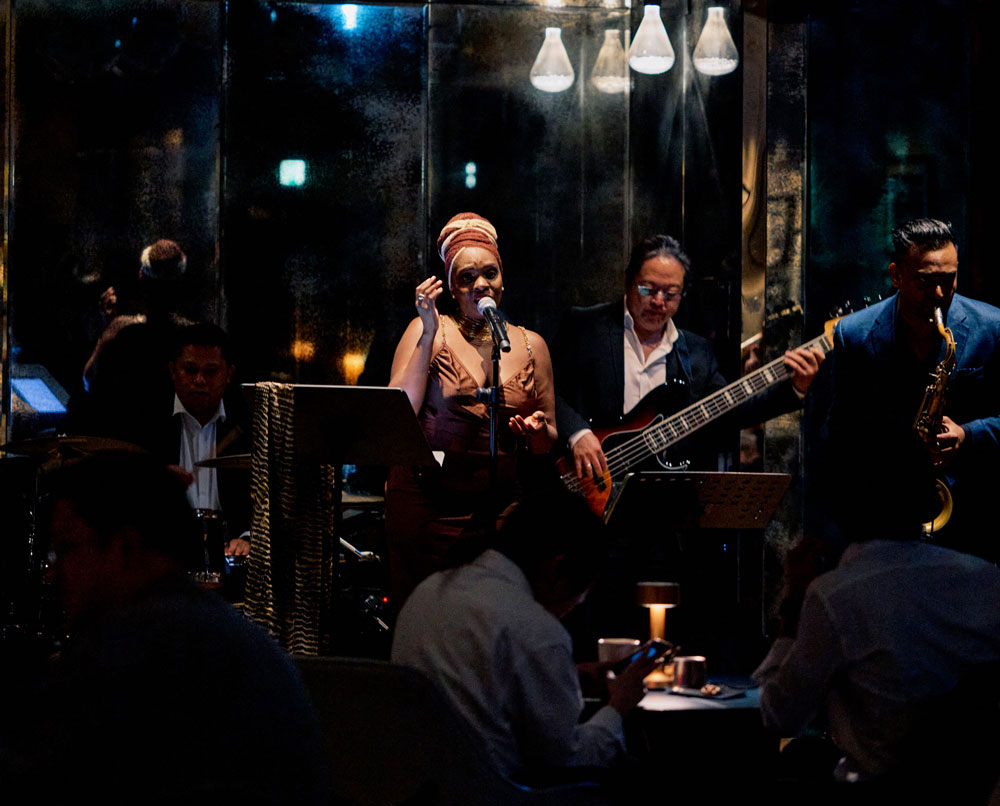
DarkSide Hong Kong is known for its sultry jazz performances, creating an immersive soundscape that shapes the guest experience and reinforces a sense of old-world sophistication. The venue features live shows most evenings, typically performed by a resident ensemble and often featuring guest musicians—like vocalist Mirella Toussaint, a standout talent from The Voice France.
DarkSide’s decadent interior is also jazz-era-inspired, interpreted through a modern luxury hotel lens. Guests enjoy plush, club-style seating, low, ambient lighting, and a dark, intimate palette—all paying atmospheric homage to the spirit of the 1920s jazz age.
“The music becomes part of the storytelling—it adds a sense of timeless elegance, and it helps guests feel relaxed from the moment they arrive, like they’ve entered a private world where everything moves at a comfortable pace” says Maiorano.
The bar’s name nods to Kowloon’s historic identity as the “dark side” of Victoria Harbor—a district shaped by maritime trade, cultural exchange, and a nightlife once known for its shadowed glamour. DarkSide channels that layered past, blending East and West much like Kowloon has for generations.
“We capture Kowloon’s spirit through design and ritual rather than a literal theme. Guests encounter black and white Hong Kong portraiture, an artwork of glass hours in motion on the ceiling symbolizing the importance of time, and a mood that feels timeless and cinematic,”
Marco Maiorano
Bar Manager
Bespoke selection of rare spirts
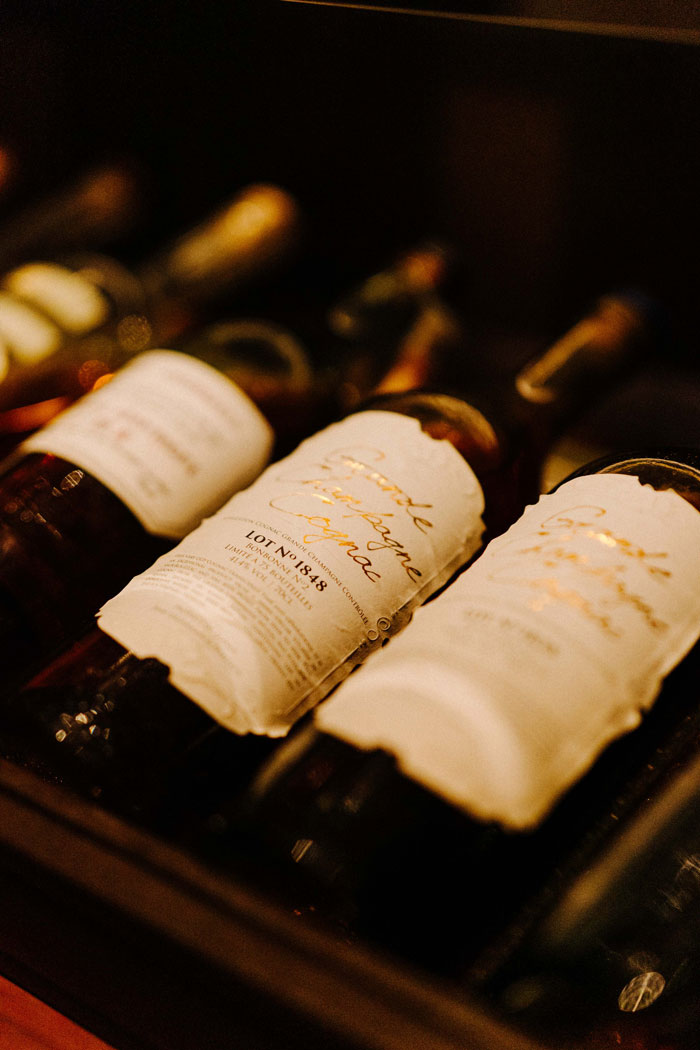
The jazz-age concept isn’t just about live music and velvet banquettes. It’s about a time when cognac was king, fortified wines were standard pre-dinner fare, and whisky was sipped slowly (not shot).
The DarkSide bar boasts an extensive library of rare, aged spirits, including exclusive casks of single-harvest tawny port from 1969 and Grande Champagne cognac aged in oak. These rare spirits aren’t just a luxury flex—they anchor DarkSide in a period when drinking was deliberate, musical, and steeped in ritual.
Cocktails with a soundscape
DarkSide Hong Kong is known for its sultry jazz performances, creating an immersive soundscape that shapes the guest experience and reinforces a sense of old-world sophistication. The venue features live shows most evenings, typically performed by a resident ensemble and often featuring guest musicians—like vocalist Mirella Toussaint, a standout talent from The Voice France.
DarkSide’s decadent interior is also jazz-era-inspired, interpreted through a modern luxury hotel lens. Guests enjoy plush, club-style seating, low, ambient lighting, and a dark, intimate palette—all paying atmospheric homage to the spirit of the 1920s jazz age.
“The music becomes part of the storytelling—it adds a sense of timeless elegance, and it helps guests feel relaxed from the moment they arrive, like they’ve entered a private world where everything moves at a comfortable pace” says Maiorano.
Bespoke selection of rare spirts
The jazz-age concept isn’t just about live music and velvet banquettes. It’s about a time when cognac was king, fortified wines were standard pre-dinner fare, and whisky was sipped slowly (not shot).
The DarkSide bar boasts an extensive library of rare, aged spirits, including exclusive casks of single-harvest tawny port from 1969 and Grande Champagne cognac aged in oak. These rare spirits aren’t just a luxury flex—they anchor DarkSide in a period when drinking was deliberate, musical, and steeped in ritual.
New life for forgotten favorites
DarkSide’s cocktail program also complements the bar’s old-world glamour with a menu that often revolves around classics from bygone eras. The current Forgotten Classics menu, for example, features eight drinks guests may have missed out on by a few decades (or more).
Maiorano and team revitalize these Forgotten Classics with modern techniques and local ingredients. In doing so, they reflect the same exchange of ideas that has long defined Kowloon itself—global influences interpreted through a distinctly local lens. A few guest favorites include:
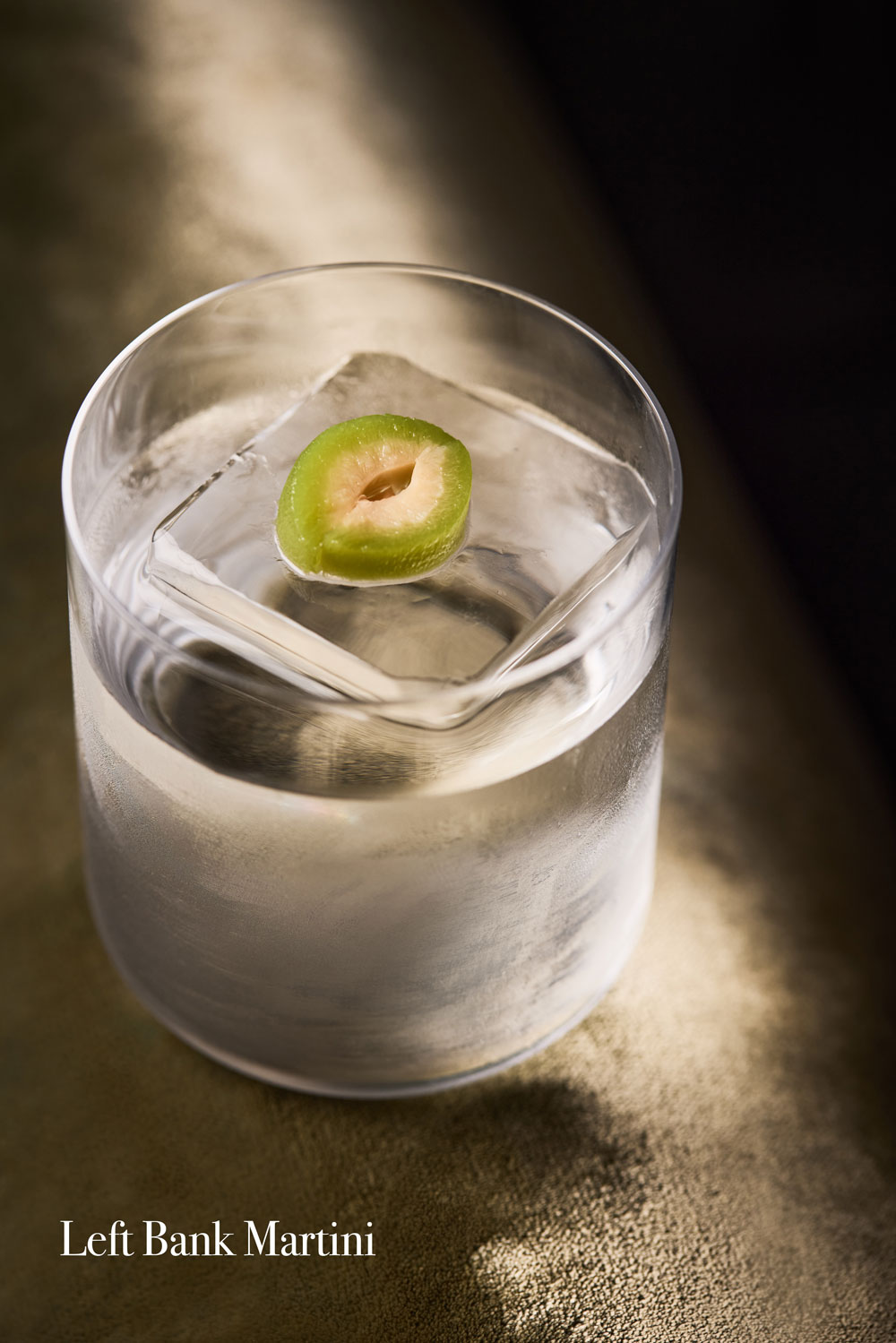
- Left Bank Martini—A twist on the classic Martini, created at London’s Cabinet Room in 2006. DarkSide Bar’s Left Bank Martini balances gin, St. Germain, and chardonnay.
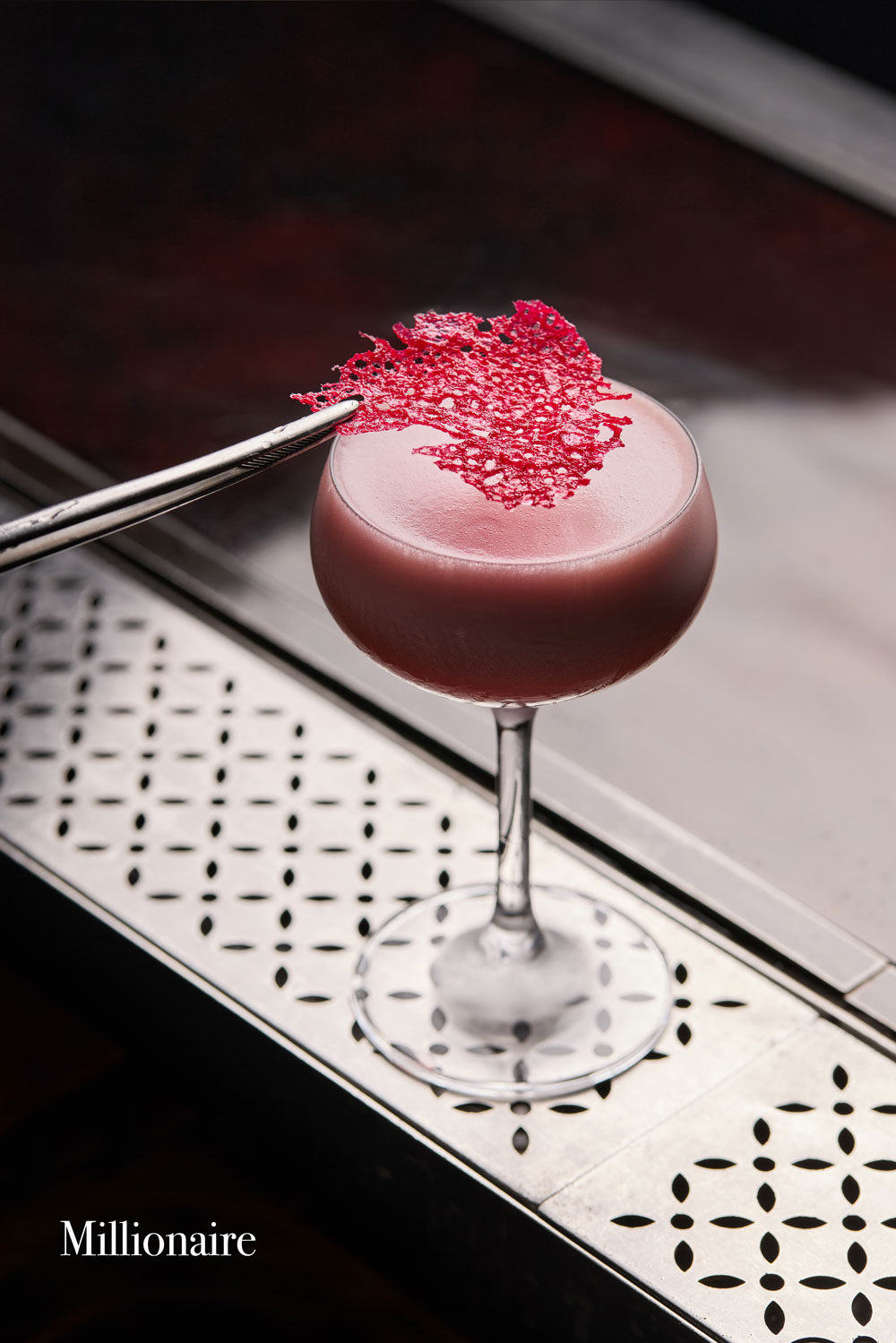
- Millionaire—First appearing in 1914 within the pages of Jacques Straub’s Manual of Mixed Drinks, DarkSide’s modern take on the Millionaire is a tribute to the golden age of cocktails. It artfully blends whisky, orange liqueur, berries, and a hint of nutmeg.
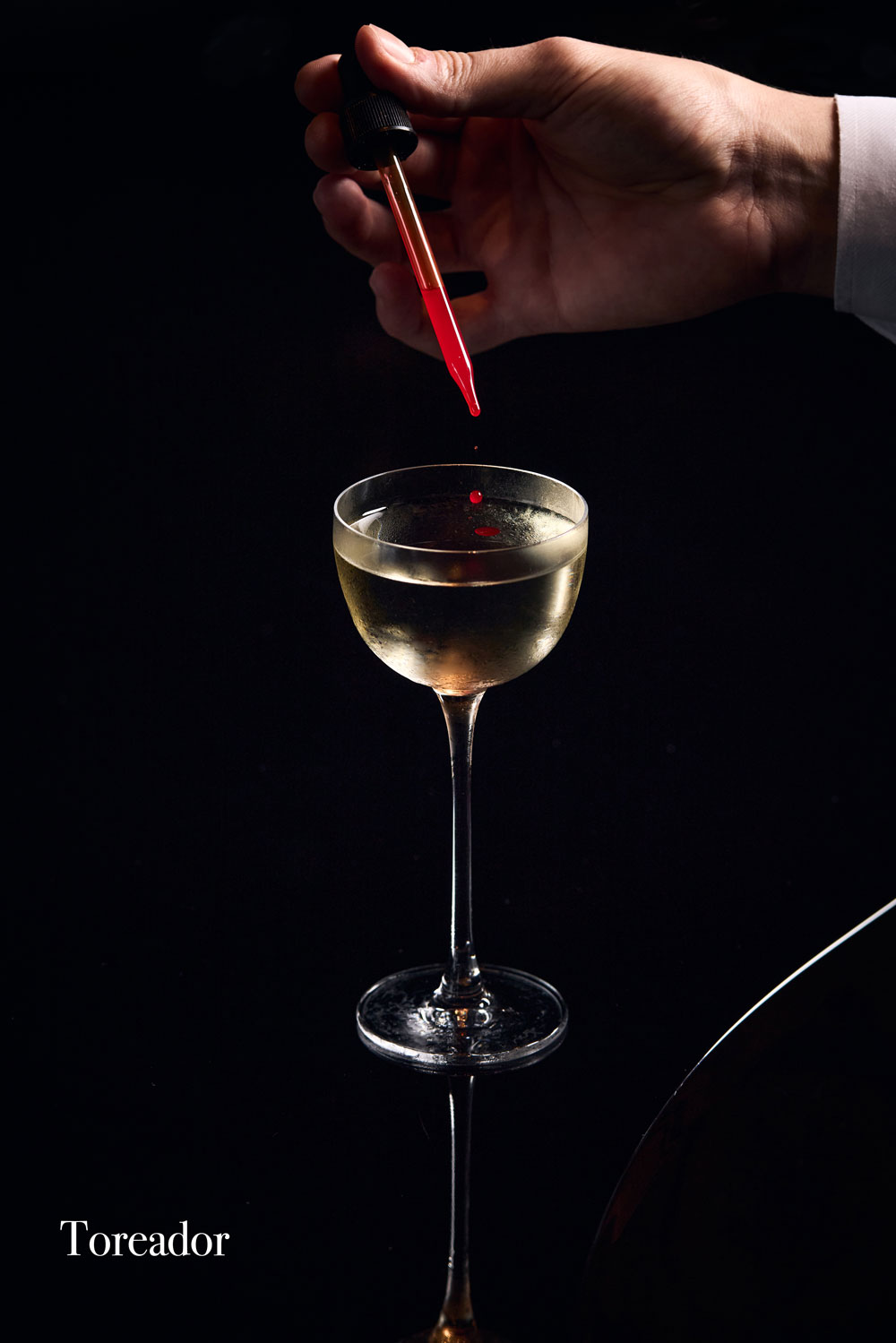
- Toreador—Originally created in the early 1900s as a nod to Spain’s legendary bullfighters, DarkSide reimagined the Toreador cocktail with tequila, apricot, verjus and saline. It’s finished with a drop of saffron oil.
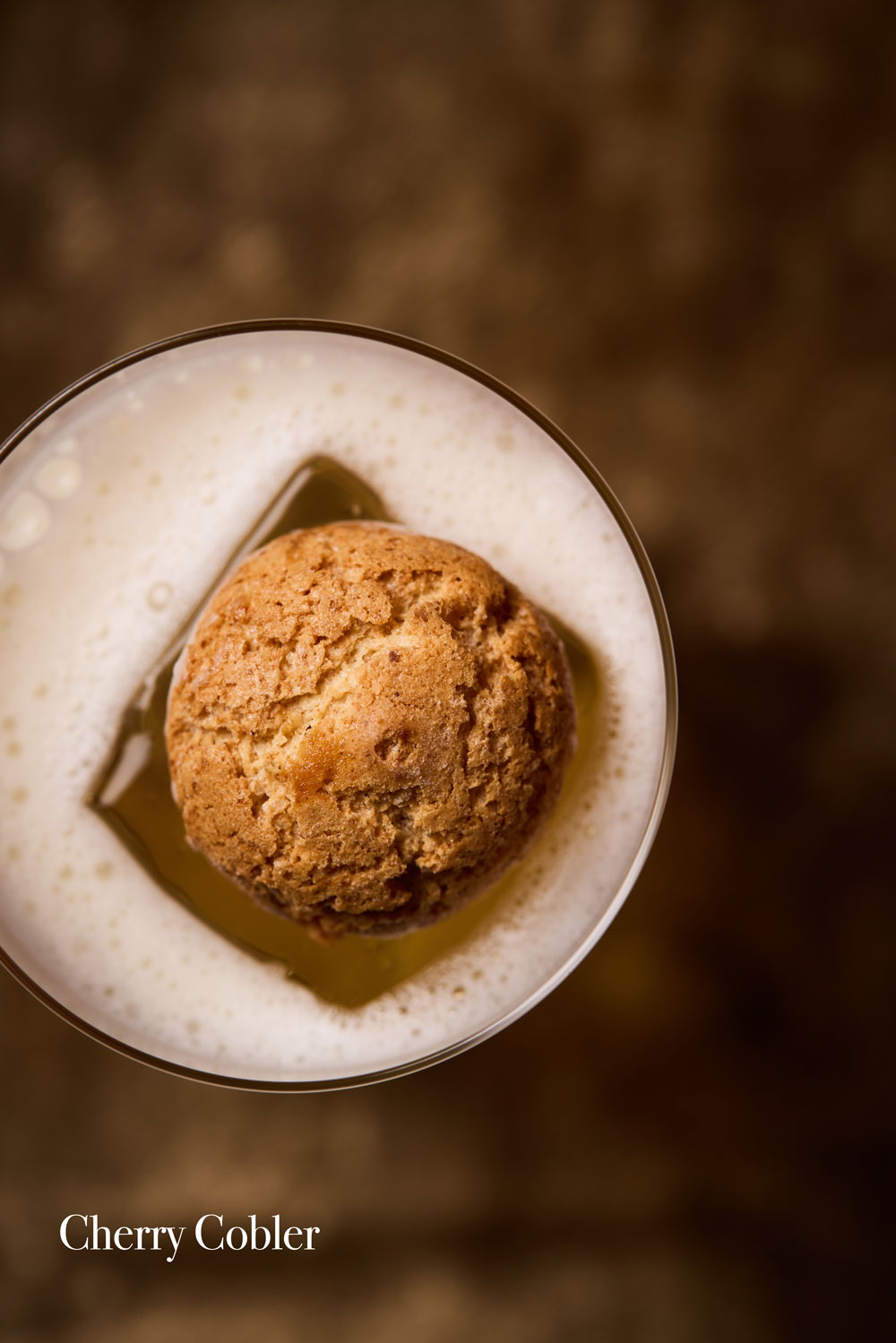
Maiorano’s favorite Forgotten Classic is the Sherry Cobbler:
“Our modern take focuses on structure and texture while keeping the soul of the original. We prepare it in a shaken style using Oloroso sherry, PX, Macallan 12 Year Old, and a touch of fresh pineapple juice to create a lighter, fluffier texture. We also use clear ice to help maintain body and temperature for longer. Finally, we garnish with amaretto, which beautifully complements the cocktail’s nutty notes.”
- Left Bank Martini—A twist on the classic Martini, created at London’s Cabinet Room in 2006. DarkSide Bar’s Left Bank Martini balances gin, St. Germain, and chardonnay.
- Millionaire—First appearing in 1914 within the pages of Jacques Straub’s Manual of Mixed Drinks, DarkSide’s modern take on the Millionaire is a tribute to the golden age of cocktails. It artfully blends whisky, orange liqueur, berries, and a hint of nutmeg.
- Toreador—Originally created in the early 1900s as a nod to Spain’s legendary bullfighters, DarkSide reimagined the Toreador cocktail with tequila, apricot, verjus and saline. It’s finished with a drop of saffron oil.
Maiorano’s favorite Forgotten Classic is the Sherry Cobbler:
“Our modern take focuses on structure and texture while keeping the soul of the original. We prepare it in a shaken style using Oloroso sherry, PX, Macallan 12 Year Old, and a touch of fresh pineapple juice to create a lighter, fluffier texture. We also use clear ice to help maintain body and temperature for longer. Finally, we garnish with amaretto, which beautifully complements the cocktail’s nutty notes.”
Earning a standing ovation
DarkSide has earned acclaim on the international bar scene, including long-standing placements on Asia’s 50 Best Bars list and awards from local critics for its cocktail program and overall experience. But DarkSide’s acclaim is not built on atmosphere alone—Maiorano explains it’s the result of consistency.
He says the biggest contributors for DarkSide have been:
- Strong service culture and genuine hospitality
- Creativity and innovation in the bar program
- A clear identity that feels authentic, not generic
- Team discipline and collaboration, from training to execution
“Our focus is to continue raising the bar with both product and experience, while staying true to the DarkSide vision,” Maiorano explains. “I truly believe our return to the list should be a consequence of our hard work, not a target to pursue.”
Success through harmony
In the end, DarkSide’s success is about harmony. Jazz sets the tempo, rare spirits add depth, Forgotten Classics provide structure. And at the center of it all is a team attuned to the subtle shifts of the room. In a district long defined by movement—of ships, of cultures, of ideas—DarkSide finds its rhythm. It blends history and modernity as seamlessly as the city that surrounds it. And like any great performance, what guests remember isn’t just what was played. It’s how it made them feel.
Nicole Bump
Nicole is a seasoned content strategist and writer with 15+ years of experience turning complex ideas into compelling stories. As founder of Bump Inbound, she helps brands connect with audiences through thoughtful strategy, sharp planning, and standout writing.
Martini service: why luxury hotel bars serve tableside
Martini Service
Martini service: why luxury hotel bars serve tableside
Long before craft cocktails became trendy again, luxury hotels in the early 1900s turned drink service into a form of theater. Bartenders wheeled ornate carts through dining rooms, mixing cocktails tableside as guests watched the ritual unfold. The martini—clean, elegant, and endlessly customizable—was perfectly suited to this style of service. Today, some of the world’s most luxurious hotel bars are reviving that tradition with martini trolleys that bring the cocktail directly to the guest. Equal parts hospitality, ritual, and visual spectacle, tableside martini service blends old-world glamour with modern mixology—creating an experience that feels as timeless as the drink itself.
Which hotel bars serve tableside martinis?
Several luxury hotel bars offer theatrical, tableside martini service, often crafted and served from customized bar carts or martini trolleys. Some of these renowned spots include:
- The Connaught Bar at The Connaught Hotel (London)
- Martini Lounge at The Knickerbocker (New York City)
- The Aman Bar at Aman Venice (Venice)
- DUKES Bar at DUKES Hotel (London)
- Bar Longhi and the Riva Lounge at The Gritti Palace (Venice)
- The Penrose Room at The Broadmoor (Colorado Springs)
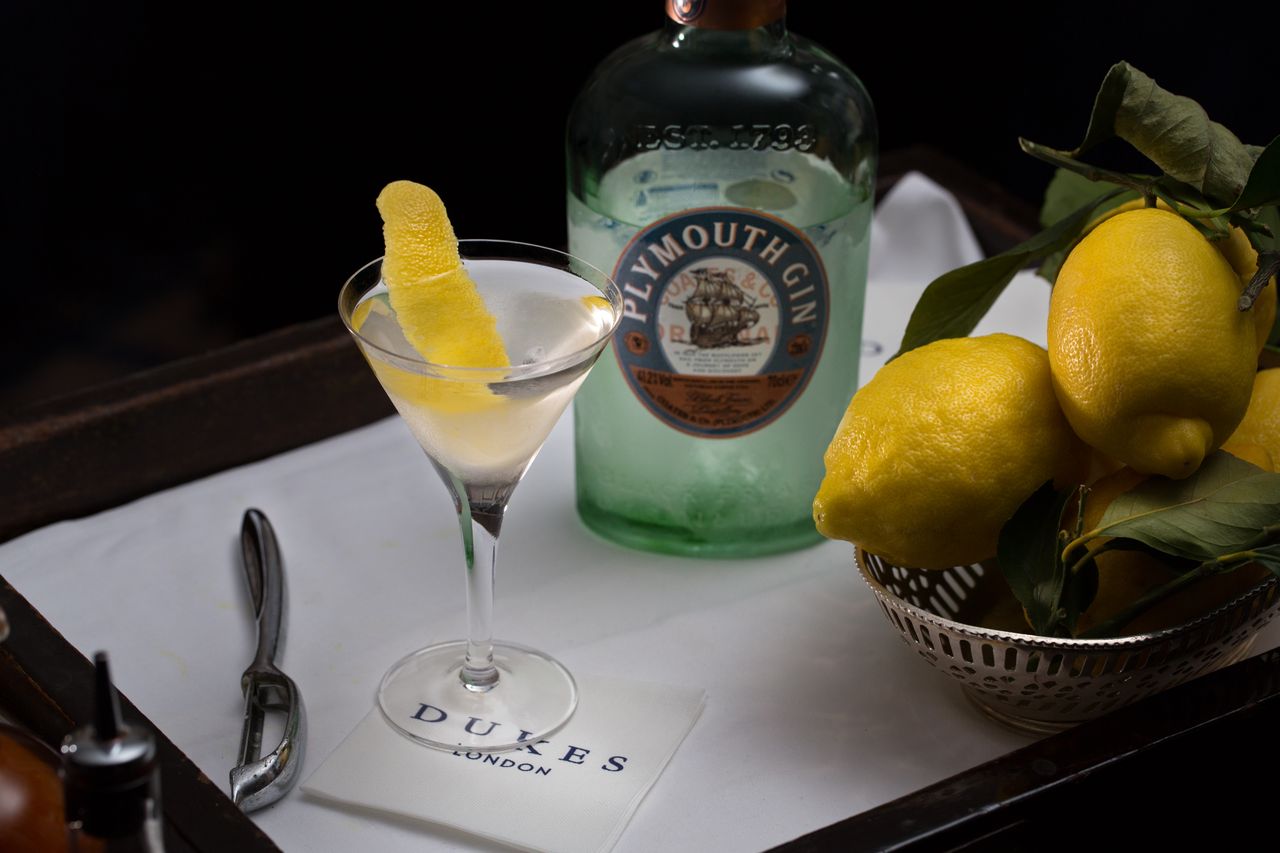
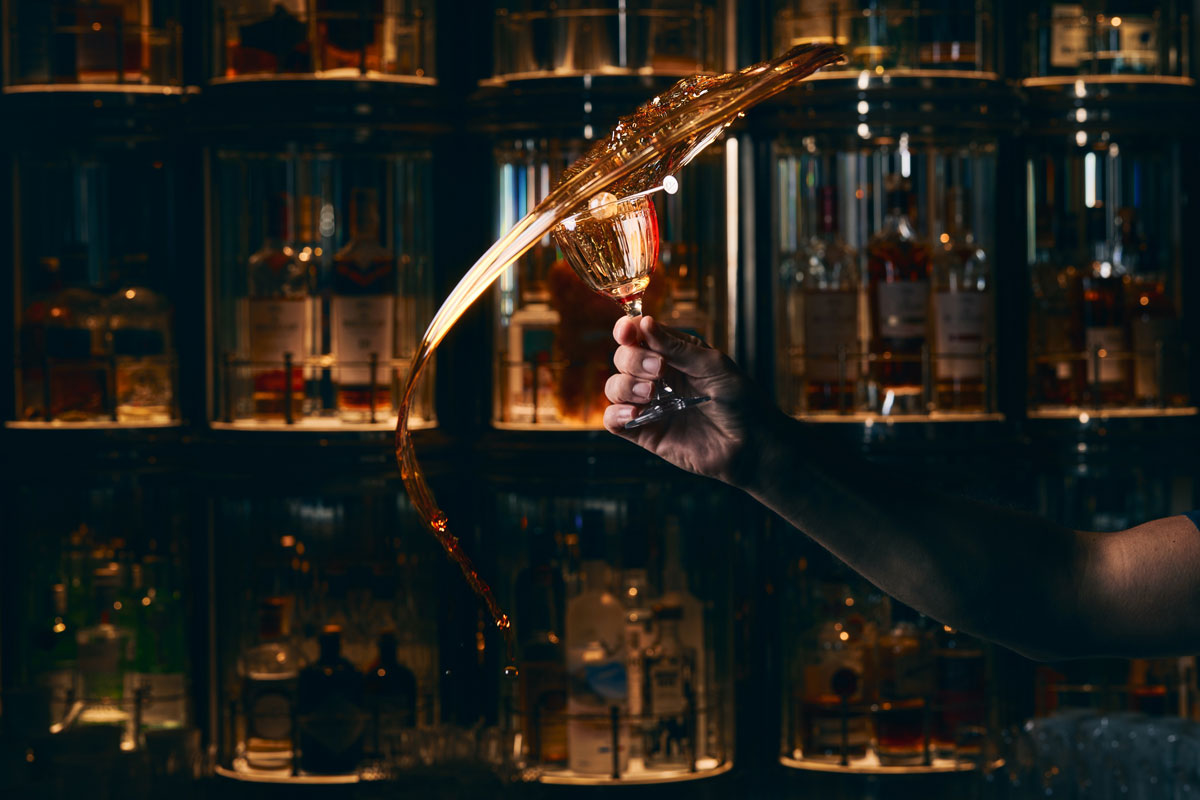
The Connaught Bar is particularly famous for its sleek, black martini trolley, which allows guests to build a martini exactly to their tastes. Gin or vodka? Dry, wet, or somewhere in between? Connaught guests choose from bitters like lavender, tonka bean, and Dr. Ago (a signature blend of ginseng and bergamot, named for Head Bartender Ago Perrone). The bartender then gently stirs the cocktail in the air, raising the mixing glass high above the rim and letting the stream cascade into a chilled coupe.
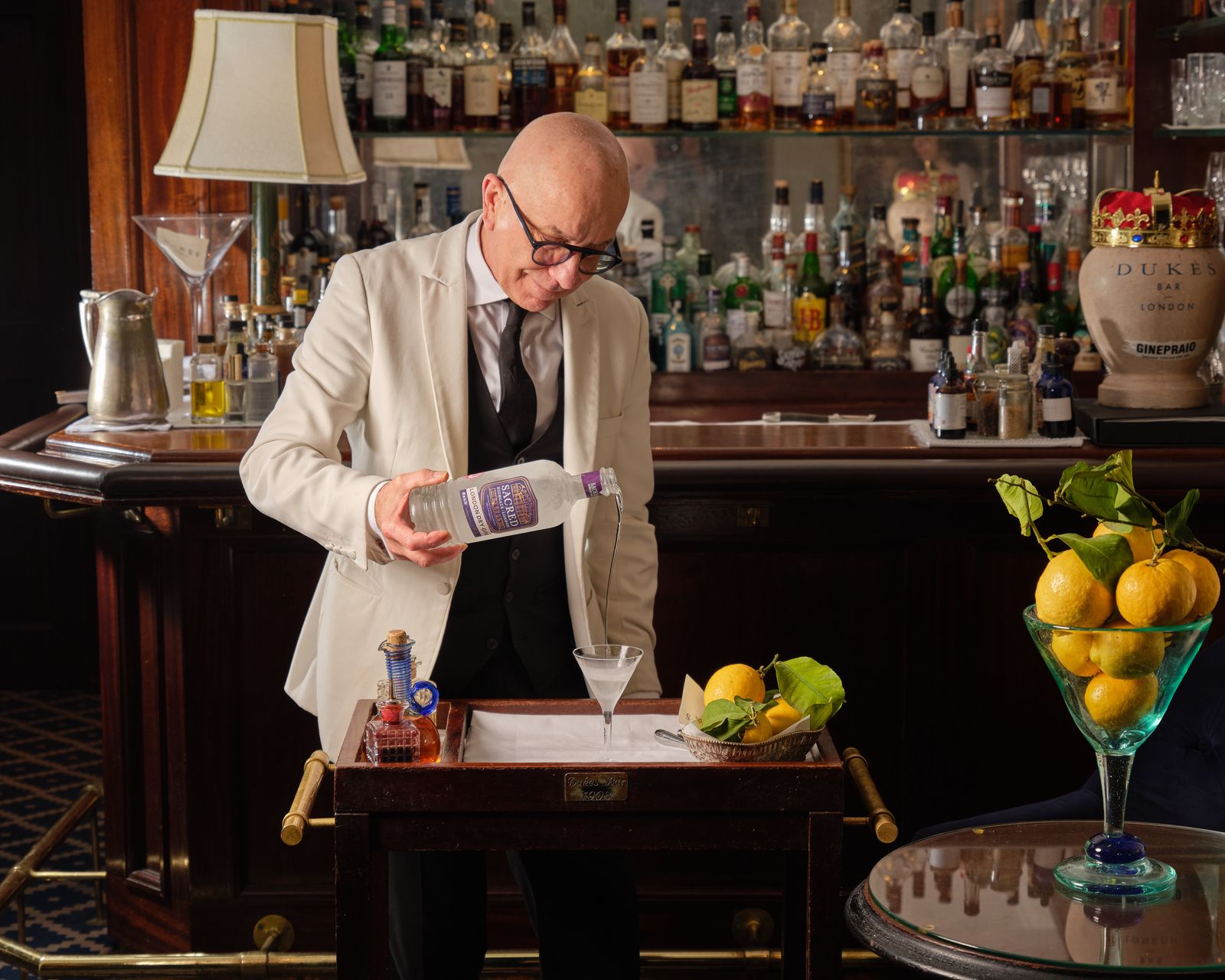
DUKES Bar is also well known for its custom-designed rosewood trolley. The bartender rinses a chilled glass with vermouth, adds gin straight from the freezer, and garnishes with an organic Amalfi lemon twist for a burst of essential oils. The resulting martini is so potent that DUKES is also known for its two-martini limit.
The Aman Bar does not have a martini trolley but instead provides a curated experience where cocktails are shaken or stirred directly at the table, offering a dramatic and interactive start to the evening. Guests enjoy classic martinis with a twist—like the Wild Fennel Martini—or fully customized cocktails.
“Our idea is to replicate our philosophy of ‘feeling at home’,” explains Antonio Ferrara Bar Manager at Aman. “We imagine creating the same atmosphere in your home, with our tray bar, together with your friends or partner, to enjoy an aperitivo. The location may be different, but the feeling remains the same.”
The Connaught Bar is particularly famous for its sleek, black martini trolley, which allows guests to build a martini exactly to their tastes. Gin or vodka? Dry, wet, or somewhere in between? Connaught guests choose from bitters like lavender, tonka bean, and Dr. Ago (a signature blend of ginseng and bergamot, named for Head Bartender Ago Perrone). The bartender then gently stirs the cocktail in the air, raising the mixing glass high above the rim and letting the stream cascade into a chilled coupe.
DUKES Bar is also well known for its custom-designed rosewood trolley. The bartender rinses a chilled glass with vermouth, adds gin straight from the freezer, and garnishes with an organic Amalfi lemon twist for a burst of essential oils. The resulting martini is so potent that DUKES is also known for its two-martini limit.
The Aman Bar does not have a martini trolley but instead provides a curated experience where cocktails are shaken or stirred directly at the table, offering a dramatic and interactive start to the evening. Guests enjoy classic martinis with a twist—like the Wild Fennel Martini—or fully customized cocktails.
“Our idea is to replicate our philosophy of ‘feeling at home’,” explains Antonio Ferrara Bar Manager at Aman. “We imagine creating the same atmosphere in your home, with our tray bar, together with your friends or partner, to enjoy an aperitivo. The location may be different, but the feeling remains the same.”
Why the martini trolley works
For hotel bars already defined by high-touch service, the martini trolley and other methods of tableside service add a layer of luxury. It is interactive, highly personal, and visually compelling enough to turn one guest’s drink order into a moment the whole room notices.
It creates a personal connection
Tableside martini service gives bartenders and guests a rare one-on-one exchange. Rather than simply placing a finished cocktail on the table, the bartender guides the guest through the experience in real time.
“In order to be memorable, the guest needs to feel [like] the protagonist of the moment,” says Giorgio Bargiani, Assistant Director of Mixology at The Connaught. “The guest is not just the spectator. It’s not just a chef’s table situation. [We] provide them choices, [and] put them in charge of what they’re drinking.”
It allows true personalization
That interaction also makes customization feel more meaningful. The guest is not just selecting from a menu but helping shape the drink in front of them, choosing the base spirit, level of dryness, bitters, or garnish.
Mariantonietta Varamo, Bar and Restaurant Manager at DUKES London hotel, explains, “…you enter a ‘Martini bubble’ once the trolley is beside your table, with a skilled bartender guiding you through the varied choices, carefully listening to your preferences, much like a tailor measuring you for a suit or dress.”
It delivers the ideal temperature
A martini trolley is not just about presentation. Many carts are equipped with heavy-duty chillers that keep both glassware and spirits at extremely low temperatures, helping bars achieve a level of cold that is difficult to replicate during fast-paced service behind the bar.
Alessandro Palazzi, Head Bartender at DUKES, explains, “The martini, wherever you drink, however you drink it, temperature is the most important because it’s all alcohol. So we freeze the glass and we freeze the spirits. So the first note that will come to your nose is the citrus.”
It gives the bar a built-in spectacle
There is also the undeniable visual appeal. Martini service by trolley creates a sense of drama that guests naturally want to photograph, film, and share. That visibility can become a draw in itself.
Evan Sewell, beverage director at Capolinea at Signia by Hilton, explains, “The martini cart has actually brought people in on its own—several guests have visited specifically because they saw it on Instagram.”
How hotel bars make tableside service succeed
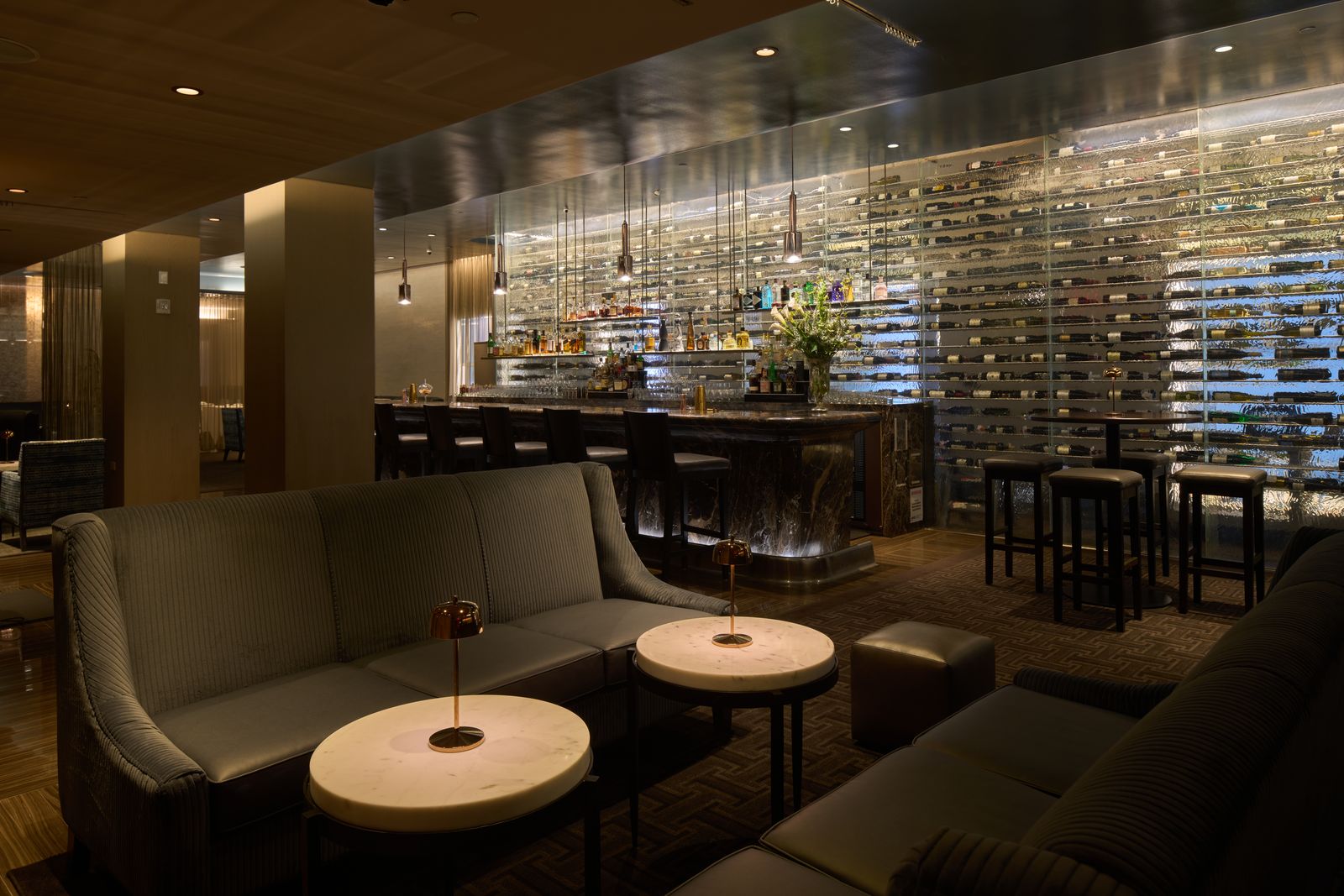
Of course, successful martini trolley service takes more than a beautiful cart. The trolley may be the centerpiece, but execution depends on staffing, logistics, and a concept that feels true to the bar itself. The Knickerbocker’s Martini Lounge leans into this especially well. Its martini cart features a plaque declaring, “The original dry martini was first crafted at the Knickerbocker Hotel in 1912,” tying the service directly to the property’s own lore. That kind of connection helps the experience feel rooted in something more meaningful than mere trend.
How hotel bars make tableside service succeed
Of course, successful martini trolley service takes more than a beautiful cart. The trolley may be the centerpiece, but execution depends on staffing, logistics, and a concept that feels true to the bar itself. The Knickerbocker’s Martini Lounge leans into this especially well. Its martini cart features a plaque declaring, “The original dry martini was first crafted at the Knickerbocker Hotel in 1912,” tying the service directly to the property’s own lore. That kind of connection helps the experience feel rooted in something more meaningful than mere trend.
Start with the right team
Not every bartender is suited to tableside service. The role requires technical skill, polish, and a sense of timing. The best trolley bartenders can personalize the drink, answer questions, and share details that enrich the experience without overwhelming the guest. “Your team is key,” says Varamo. “You must find the right bartenders who have the skills of a maître d’ and the ability to move a trolley with grace.”
Think through the logistics
The romance of tableside service also requires careful operational planning. How will the trolley move through a full room? What happens when several tables request it at once? Busy bars may need multiple carts, backup glassware, and a clear service system to keep the experience smooth rather than slow.
Make it your own
The strongest martini trolleys do not feel copied from somewhere else. When Perrone created the Connaught martini trolley, he drew inspiration from DUKES as well as The Dorchester’s tableside gin and tonic service, but he emphasizes the importance of adaptation over imitation. “Finding inspiration doesn’t mean to copy and paste what other people do,” he says. “It works for them, but take bits and bobs. Translate it, iterating what works for you, for your guest, and keep the pillar of authenticity very strong. Make it relevant to the style of the bar.”
Why tableside martini service endures
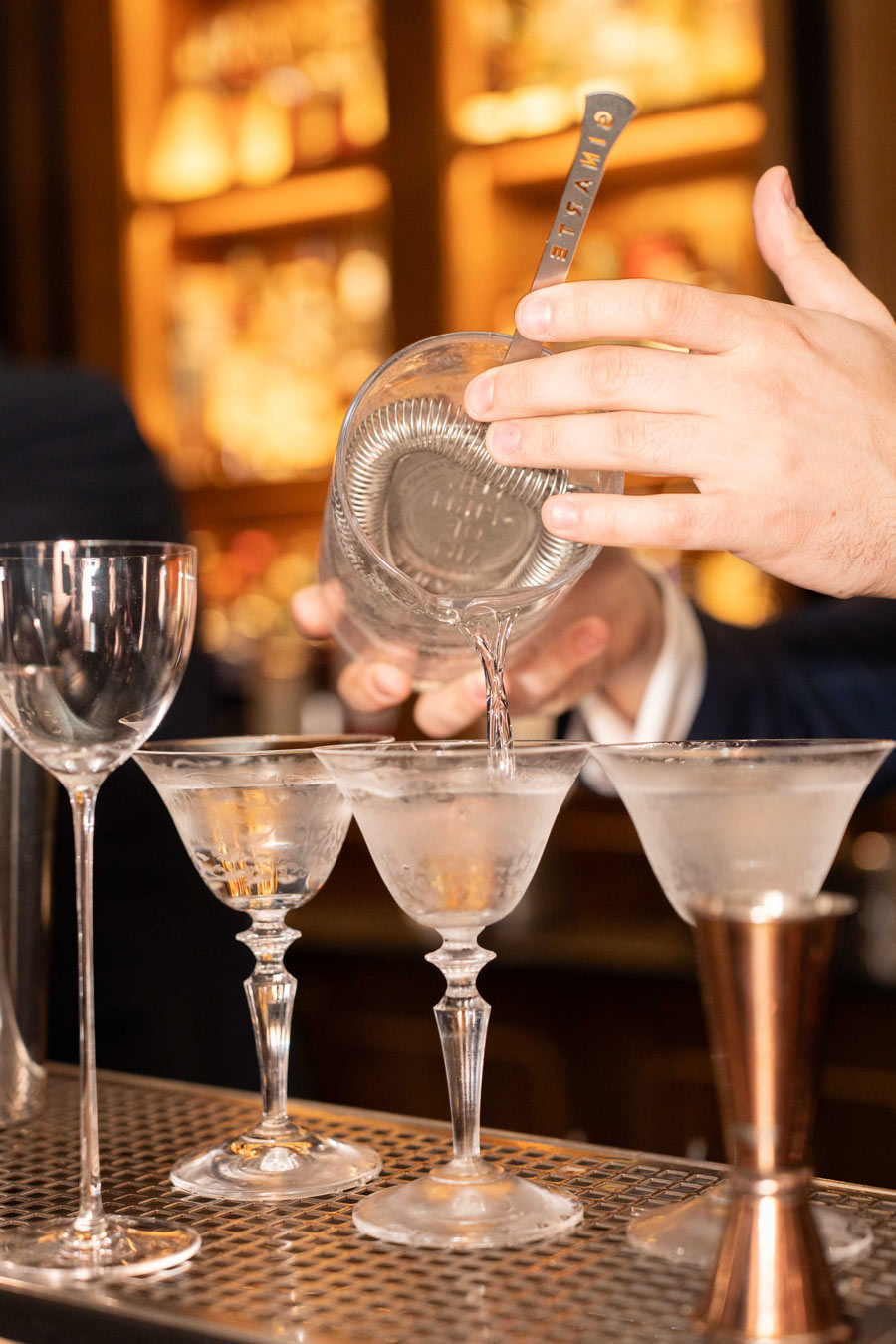
At its core, the martini trolley is about more than convenience. It’s about ceremony. By bringing the mixing glass, frozen spirits, and personalization directly to the table, luxury hotels recreate the sense of occasion that defined cocktail culture in the early 20th century. In an era when so many drinks are ordered quickly and consumed just as fast, the martini cart slows things down. It turns a simple cocktail into a ritual—and gives today’s hotel bars a compelling way to revive the glamour, theater, and deliberate hospitality that first made them legendary.
Why tableside martini service endures
At its core, the martini trolley is about more than convenience. It’s about ceremony. By bringing the mixing glass, frozen spirits, and personalization directly to the table, luxury hotels recreate the sense of occasion that defined cocktail culture in the early 20th century. In an era when so many drinks are ordered quickly and consumed just as fast, the martini cart slows things down. It turns a simple cocktail into a ritual—and gives today’s hotel bars a compelling way to revive the glamour, theater, and deliberate hospitality that first made them legendary.
Nicole Bump
Nicole is a seasoned content strategist and writer with 15+ years of experience turning complex ideas into compelling stories. As founder of Bump Inbound, she helps brands connect with audiences through thoughtful strategy, sharp planning, and standout writing.
Get Inspired
Be the first to learn about our exclusive events and updates you’ll actually want to read.
Get Inspired
Be the first to learn about our exclusive events and updates you’ll actually want to read
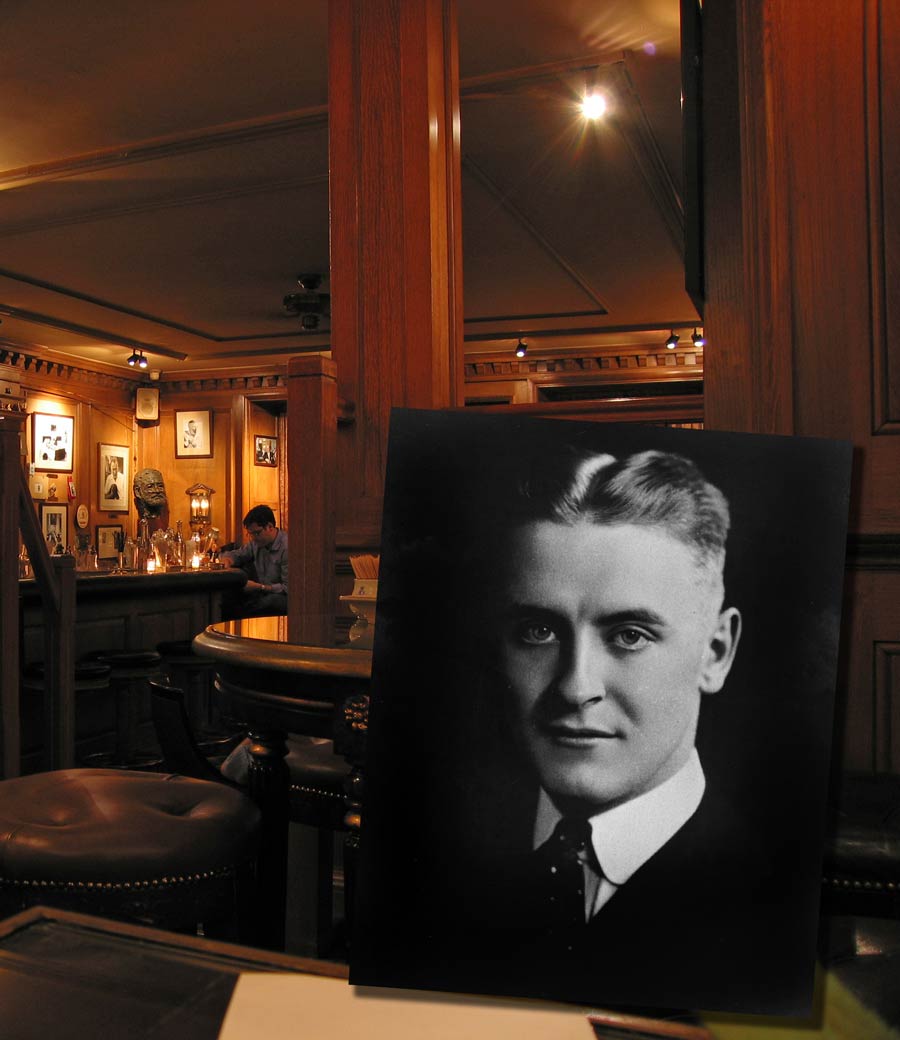
Where writers drank: 3 hotel bars behind literary history
Where writers drank
Where writers drank
3 hotel bars behind literary history
Writers in the early 1900s didn’t just happen to gather in hotel bars—it made perfect sense given how they lived, worked, and socialized at the time. Whether traveling for assignment, chasing inspiration, or avoiding distraction at home, hotels provided a home base complete with a room, meals, and mail service. And the hotel bar became the living room. The conversations, collaborations, and characters in a handful of these hotel bars left a lasting imprint on literary history.
Hemingway and the Ritz Paris bar
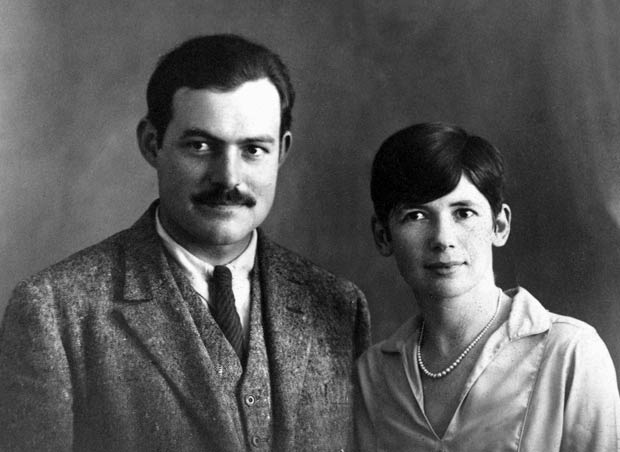
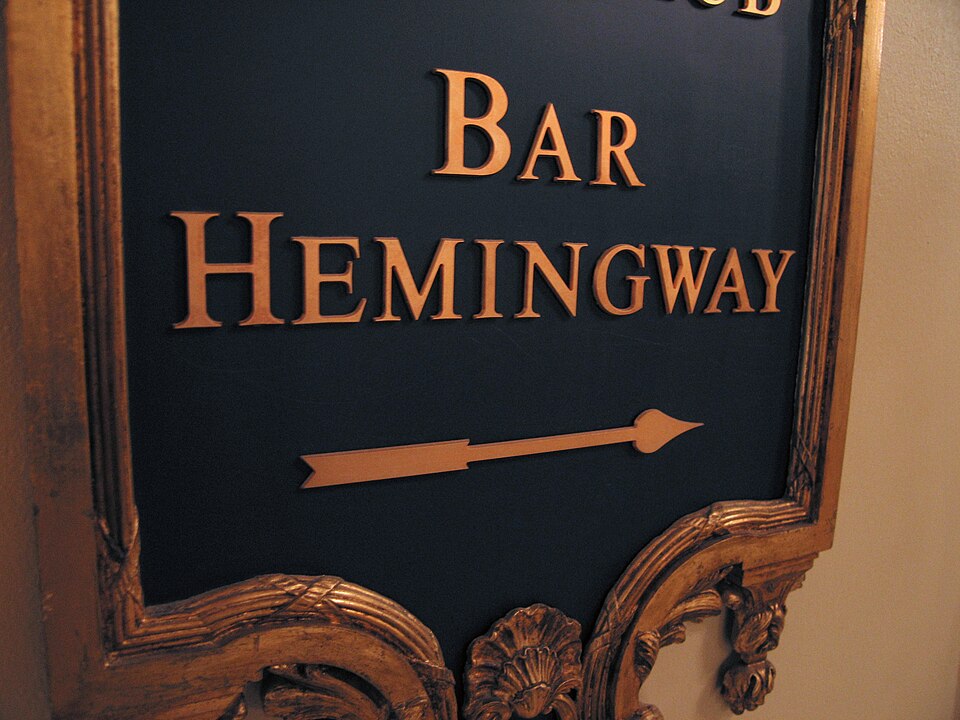
Hemingway and the Ritz Paris bar
Hemingway began writing his posthumously published memoir, A Moveable Feast, based on notes he found tucked away in valises he had left at the Ritz years earlier. Titles like Black Ass at the Cross Roads, Indian Country and the White Army, The Monument, and The Bubble Reputation were reportedly inspired by Hemingway’s later visits to the Ritz. Hemingway was so fond of the establishment, he once wrote, “When I dream of an afterlife in heaven, the action always takes place at the Ritz Paris”. Today, Hemingway’s love for the Ritz is memorialized through Bar Hemingway, Le Petit Bar renamed and revived in his honor.
Capote, Williams, Faulkner and the Carousel Bar
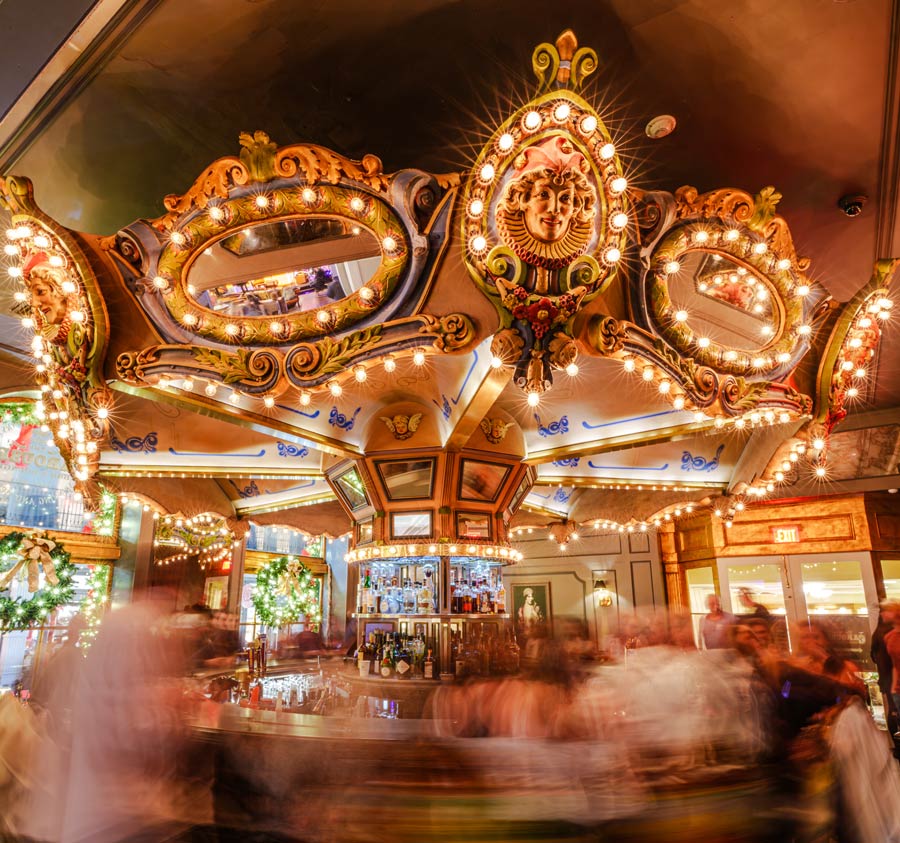
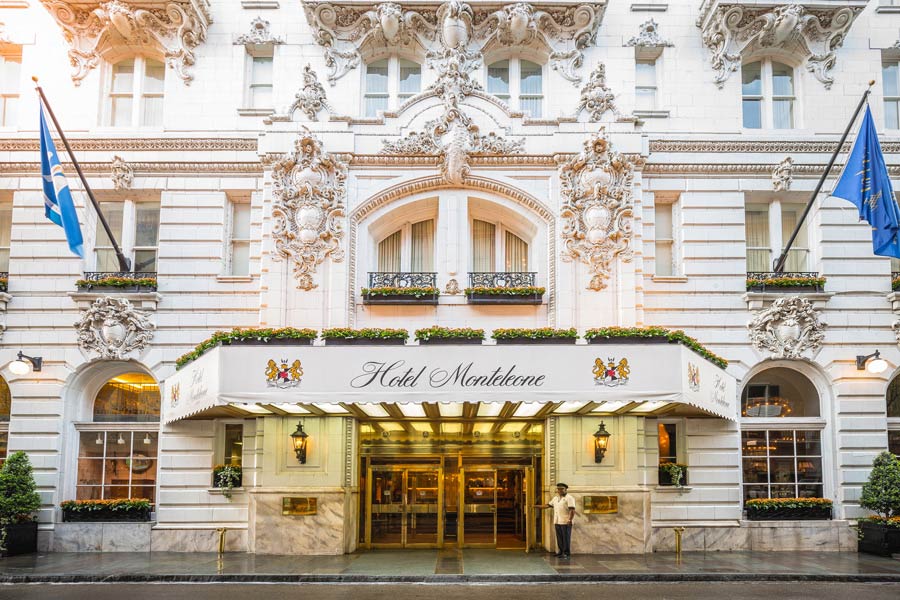
Capote, Williams, Faulkner and the Carousel Bar
William Faulkner first visited Hotel Monteleone for his 1929 honeymoon—before the Carousel Bar existed—and he wrote The Sound and the Fury, one of his most famous novels, during this stay. Faulkner returned to the hotel repeatedly over the next few decades and was known to enjoy drinks at the Carousel. While the bar is famous for the Vieux Carré cocktail, Faulkner was known to prefer a mint julep (light on sugar). Today, guests at Hotel Monteleone can choose to overnight in literary suites dedicated to the likes of Capote, Williams, Faulkner, and other famous writers.
‘The Vicious Circle’ and the Algonquin Hotel
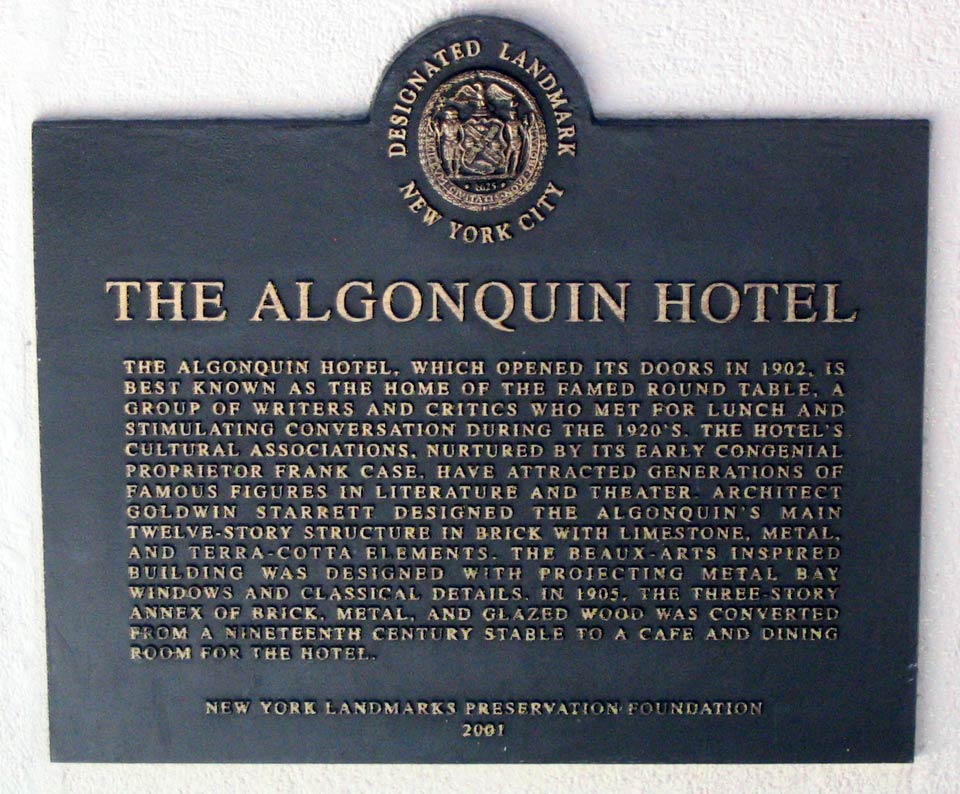
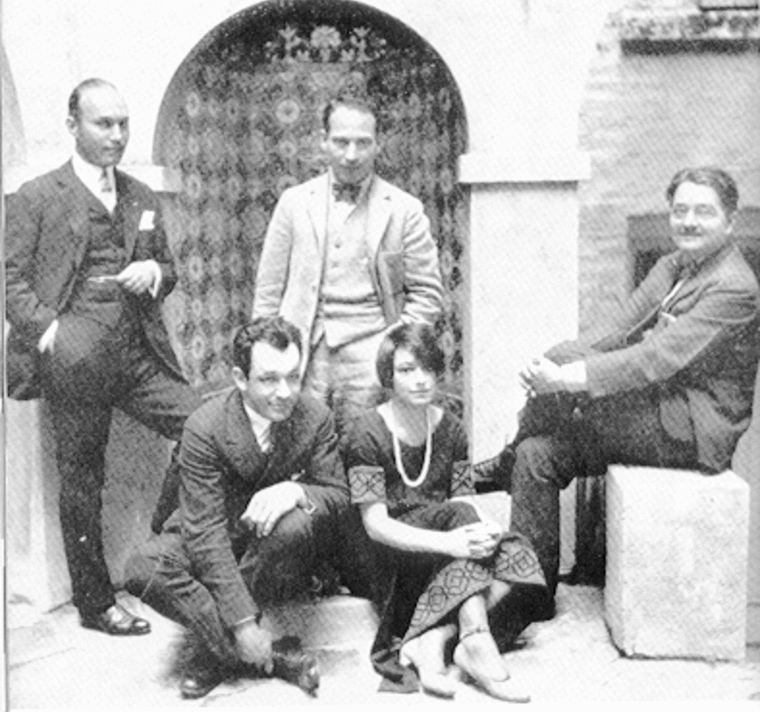
Colleagues dubbed the group the Algonquin Round Table, due to where the group sat in the Pergola Room (subsequently renamed the Oak Room). The group met daily for over a decade, often drawing spectators, and witticisms from these lunches were widely published. Round Table discussions helped galvanize careers of several members—Harold Ross, for instance, launched The New Yorker in 1925, often hiring Dorothy Parker for contributions. As America entered the Depression, the Vicious Circle largely disbanded. But like the Carousel Bar at Hotel Monteleone, the Oak Room at The Algonquin Hotel was designated a National Literary Landmark, and a painting of the group hangs there today.
‘The Vicious Circle’ and the Algonquin Hotel
Colleagues dubbed the group the Algonquin Round Table, due to where the group sat in the Pergola Room (subsequently renamed the Oak Room). The group met daily for over a decade, often drawing spectators, and witticisms from these lunches were widely published. Round Table discussions helped galvanize careers of several members—Harold Ross, for instance, launched The New Yorker in 1925, often hiring Dorothy Parker for contributions. As America entered the Depression, the Vicious Circle largely disbanded. But like the Carousel Bar at Hotel Monteleone, the Oak Room at The Algonquin Hotel was designated a National Literary Landmark, and a painting of the group hangs there today.
Literature still lingers
Across Paris, New Orleans, and New York, these hotel bars offered more than a place to drink. They created the conditions for creative life to happen. Writers found community, conversation, and character within their walls, often blurring the line between observation and participation.
Today, the settings remain—polished, preserved, and in some cases, reimagined—but the stories linger as much as the cocktails. Pull up a seat, and you’re not just ordering a drink. You’re stepping into the same rooms where infamous pieces of literature once took shape.
Literature still lingers
Across Paris, New Orleans, and New York, these hotel bars offered more than a place to drink. They created the conditions for creative life to happen. Writers found community, conversation, and character within their walls, often blurring the line between observation and participation.
Today, the settings remain—polished, preserved, and in some cases, reimagined—but the stories linger as much as the cocktails. Pull up a seat, and you’re not just ordering a drink. You’re stepping into the same rooms where infamous pieces of literature once took shape.
Photo Credits
Bar Hemingway Ritz2 – Author: Pablo Sanchez
Ernest and Pauline Hemingway, Paris, 1927 – Wikimedia Commons – Author: unattributed
Algonquin Round Table – Wikimedia Commons – Author: unattributed
Algonquin Hotel Landmark Sign – New York Landmarks Preservation Foundation at the Algonquin Hotel in Manhattan – Author: NoTalkMan
Carousel Bar – Courtesy of Carousel Bar & Lounge in Hotel Monteleone
Hotel Monteleone Exterior – Courtesy of Carousel Bar & Lounge in Hotel Monteleone
Nicole Bump
Nicole is a seasoned content strategist and writer with 15+ years of experience turning complex ideas into compelling stories. As founder of Bump Inbound, she helps brands connect with audiences through thoughtful strategy, sharp planning, and standout writing.
Argo Bar Hong Kong: Winning acclaim for the Four Seasons
Argo Bar Hong Kong
Argo Bar Hong Kong: Winning acclaim for the Four Seasons
Only four years old—and already renowned as one of the world’s best bars. How has an establishment as young as Argo Bar Hong Kong already drawn such levels of international acclaim? The perfect mix of atmosphere, experience, and innovation.
Lush textures,
whimsical touches
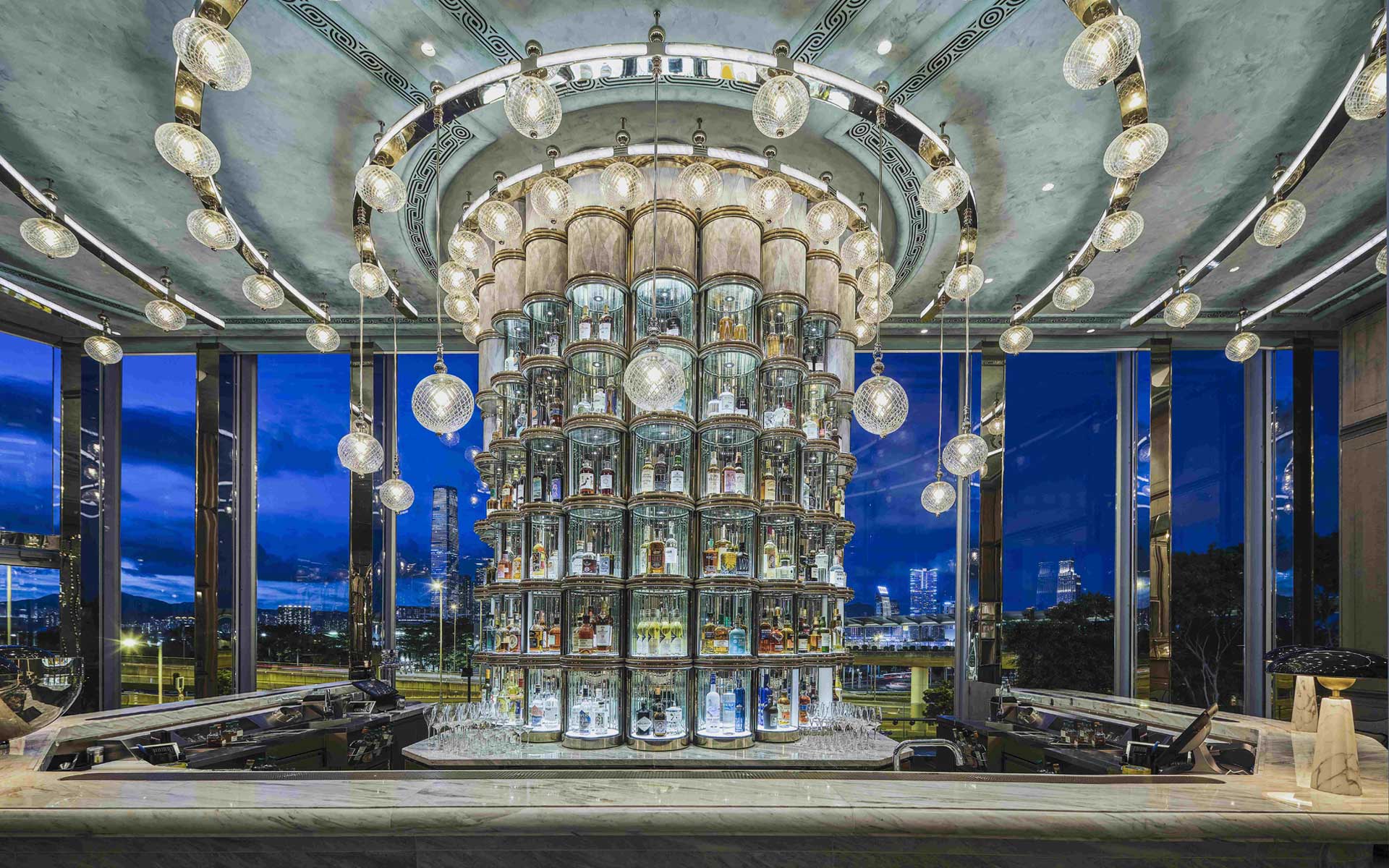
Argo Bar Hong Kong, situated in the Four Seasons, is designed like a modern conservatory or lifesize terrarium, with floor-to-ceiling glass windows, mirrored surfaces, pastel hues, and lush, layered textures. The focal point is a dramatic central column of spirits—almost a tree-like display of bottles. Critics have called the space a “visual triumph”, amplifying the stunning harbor view with mirrored reflections. But the designers also included whimsical touches, such as hand-crafted paper insects to add artistry and surprise.
More fun than formal
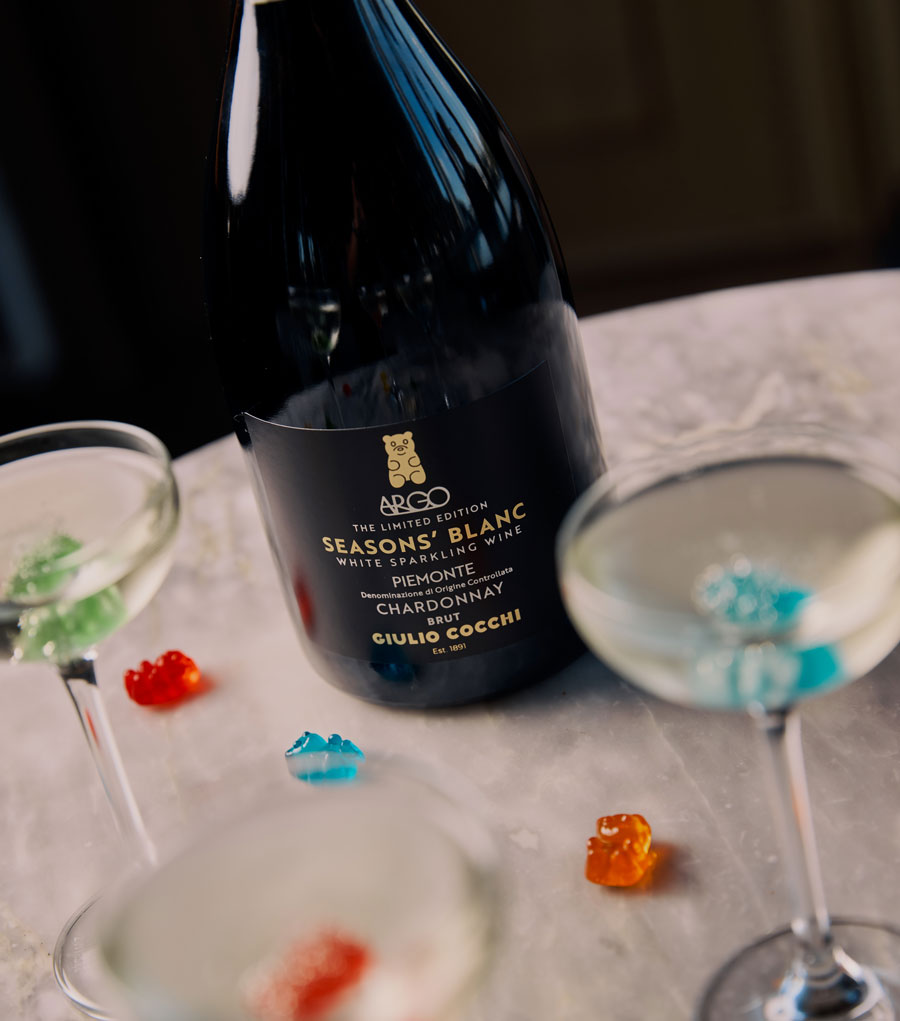
The vibe of the Argo Bar is intended to evolve from a relaxed lobby bar in the daytime to a more dramatic cocktail lounge by night. Regardless of the time of day, former Beverage Manager Federico Balzarini said the staff aims to make the experience more fun than formal. A perfect example is the Argo Bar’s welcome beverage—a champagne cocktail garnished with colorful gummy bears.
“[I] can safely say there is no bar like Argo… if you told me a few years ago I’d be craving bubbles and gummy bears, I’d have raised an eyebrow or three. Mixing fun and formal in a Four Seasons is no easy feat. Well done to the team creating such an experience.”
Sam Gilani
The London Boozehound &
Founder of the Bartender’s Edit
Lush textures, whimsical touches
Argo Bar Hong Kong, situated in the Four Seasons, is designed like a modern conservatory or lifesize terrarium, with floor-to-ceiling glass windows, mirrored surfaces, pastel hues, and lush, layered textures. The focal point is a dramatic central column of spirits—almost a tree-like display of bottles. Critics have called the space a “visual triumph”, amplifying the stunning harbor view with mirrored reflections. But the designers also included whimsical touches, such as hand-crafted paper insects to add artistry and surprise.
More fun than formal
The vibe of the Argo Bar is intended to evolve from a relaxed lobby bar in the daytime to a more dramatic cocktail lounge by night. Regardless of the time of day, former Beverage Manager Federico Balzarini said the staff aims to make the experience more fun than formal.
A perfect example is the Argo Bar’s welcome beverage—a champagne cocktail garnished with colorful gummy bears.
“[I] can safely say there is no bar like Argo… if you told me a few years ago I’d be craving bubbles and gummy bears, I’d have raised an eyebrow or three. Mixing fun and formal in a Four Seasons is no easy feat. Well done to the team creating such an experience.”
Sam Gilani
The London Boozehound &
Founder of the Bartender’s Edit
Innovation and boundary-pushing mixology
Argo Bar Hong Kong was named after the mythical Greek ship that sailed Jason and the Argonauts to the Golden Fleece, a nod to the bar’s quest for the extraordinary. The name evokes a sense of adventure and discovery, representing the bar’s goal of sourcing and creating innovative beverages.
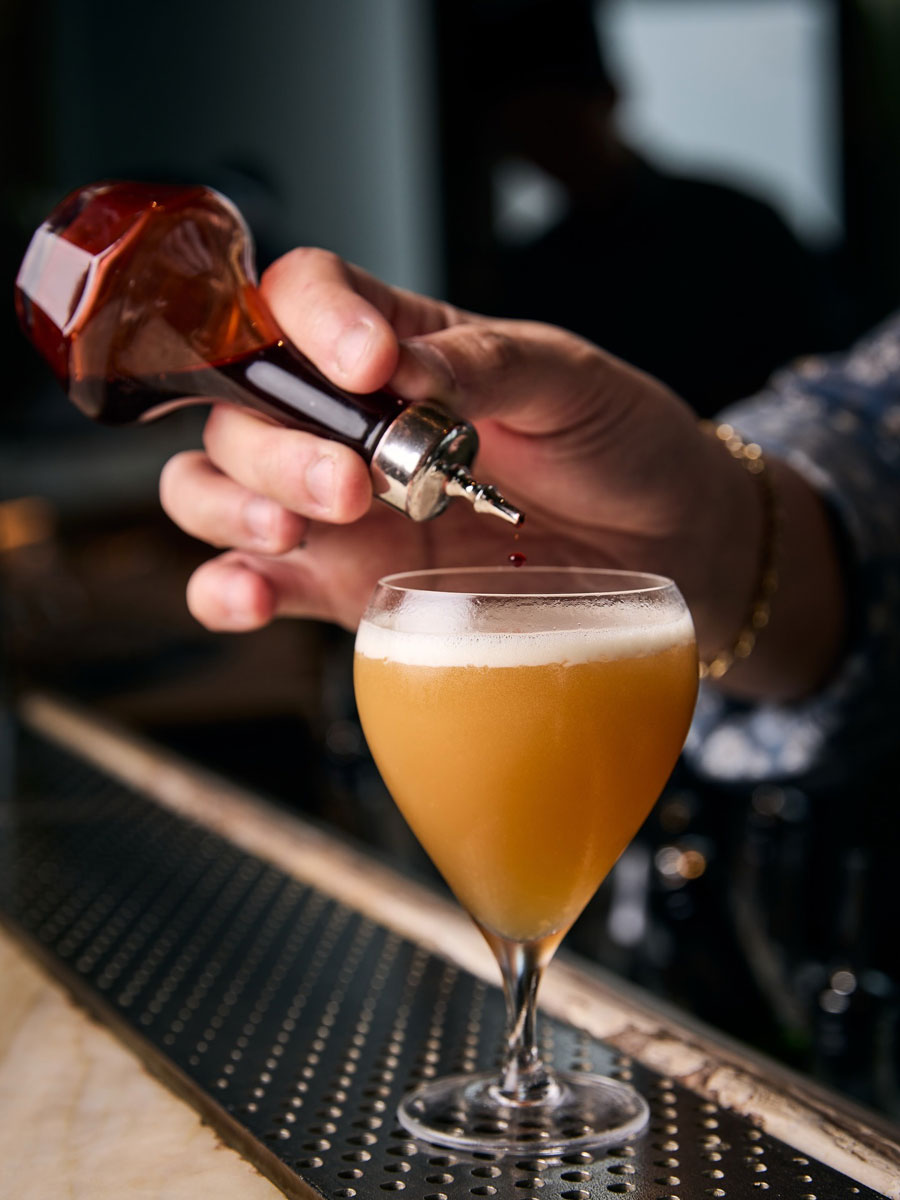
One such innovation is a series of unique cocktails featuring Asian-sourced ingredients which risk becoming a luxury thanks to climate change. Centering ingredients like cacao and kumquat, this line of libations begs patrons to consider the question: ‘What will we be sipping on when scarcity impacts future cocktail crafting?’
Other Argo innovations include their own twists on classic cocktails. For example, the “Not A Vieux Carré” offers a “boldly sweet, tropical, and raisin-forward” alternative to the modern cognac sour-style Vieux Carré, a signature drink from the Carousel Bar in Hotel Monteleone.
Innovation and boundary-pushing mixology
Argo Bar Hong Kong was named after the mythical Greek ship that sailed Jason and the Argonauts to the Golden Fleece, a nod to the bar’s quest for the extraordinary. The name evokes a sense of adventure and discovery, representing the bar’s goal of sourcing and creating innovative beverages.
One such innovation is a series of unique cocktails featuring Asian-sourced ingredients which risk becoming a luxury thanks to climate change. Centering ingredients like cacao and kumquat, this line of libations begs patrons to consider the question: ‘What will we be sipping on when scarcity impacts future cocktail crafting?’
Other Argo innovations include their own twists on classic cocktails. For example, the “Not A Vieux Carré” offers a “boldly sweet, tropical, and raisin-forward” alternative to the modern cognac sour-style Vieux Carré, a signature drink from the Carousel Bar in Hotel Monteleone.
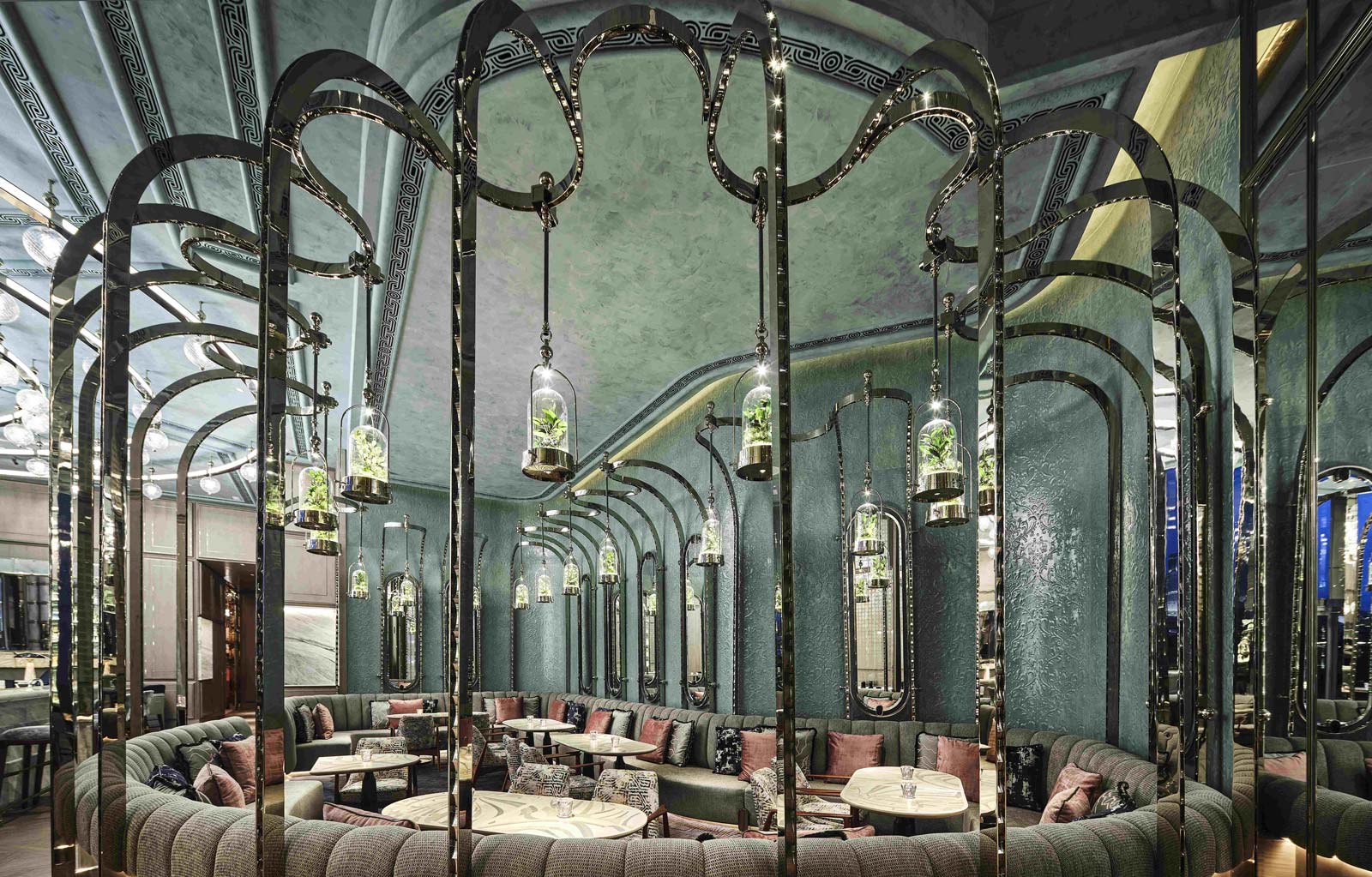
Racking up global recognition
Argo’s atmosphere, experience, and innovation have not gone unnoticed. The establishment has been collecting commendations since it opened in 2021 under Beverage Manager Lorenzo Antinori. Before joining Argo Bar, Antinori helped lead the Caprice Bar’s cocktail program—also situated in Four Seasons Hong Kong—to #10 in Asia’s 50 Best Bars (2021).
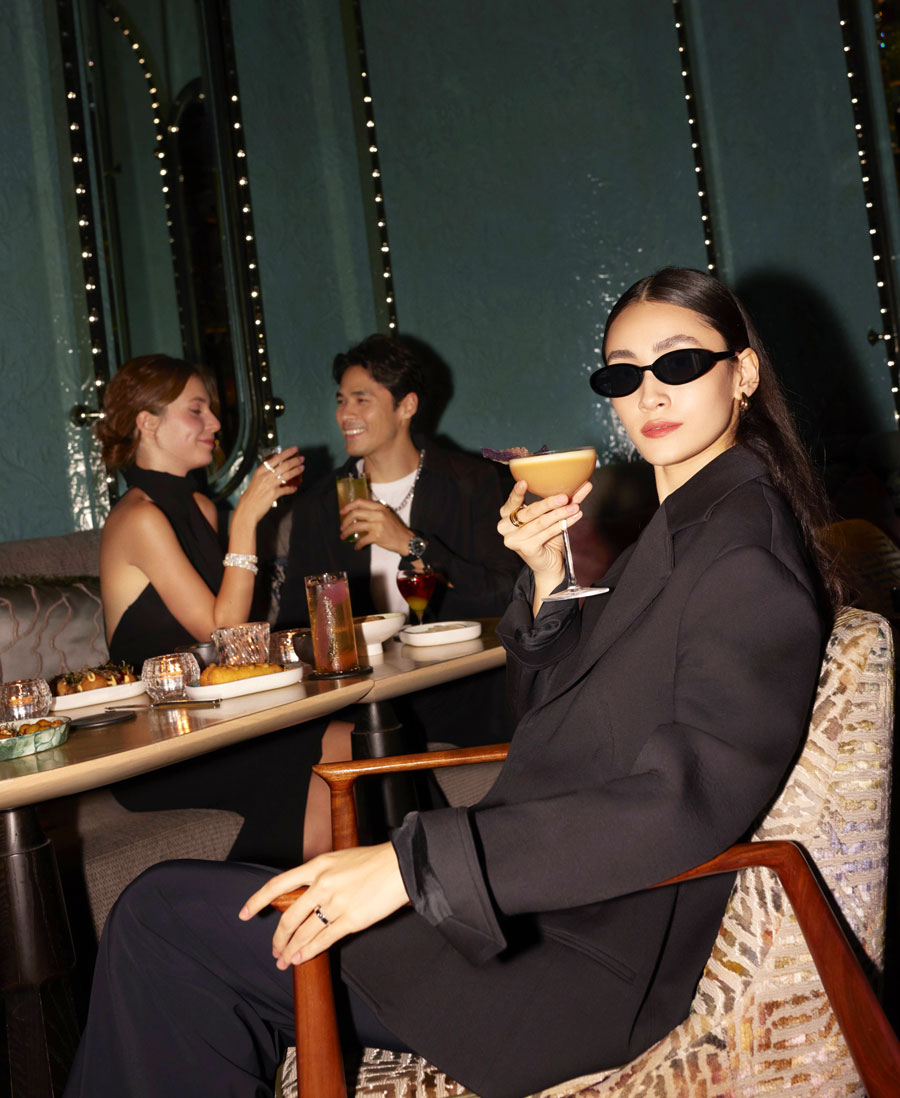
Racking up global recognition
Argo’s atmosphere, experience, and innovation have not gone unnoticed. The establishment has been collecting commendations since it opened in 2021 under Beverage Manager Lorenzo Antinori. Before joining Argo Bar, Antinori helped lead the Caprice Bar’s cocktail program—also situated in Four Seasons Hong Kong—to #10 in Asia’s 50 Best Bars (2021).
Thanks to both Antinori’s and Balzarini’s leadership, Argo Bar has been repeatedly recognized as one of Asia’s 50 Best Bars from 2022 onward, most recently earning #11 in 2025. The establishment has even been named one of the World’s Best Bars, coming in at #56 this year.
When Federico Balzarini took over as Beverage Manager in 2023, he also brought experience with accolades. Balzarini was part of the award-winning team that earned the American Bar at The Savoy first place in The World’s 50 Best Bars (2017).
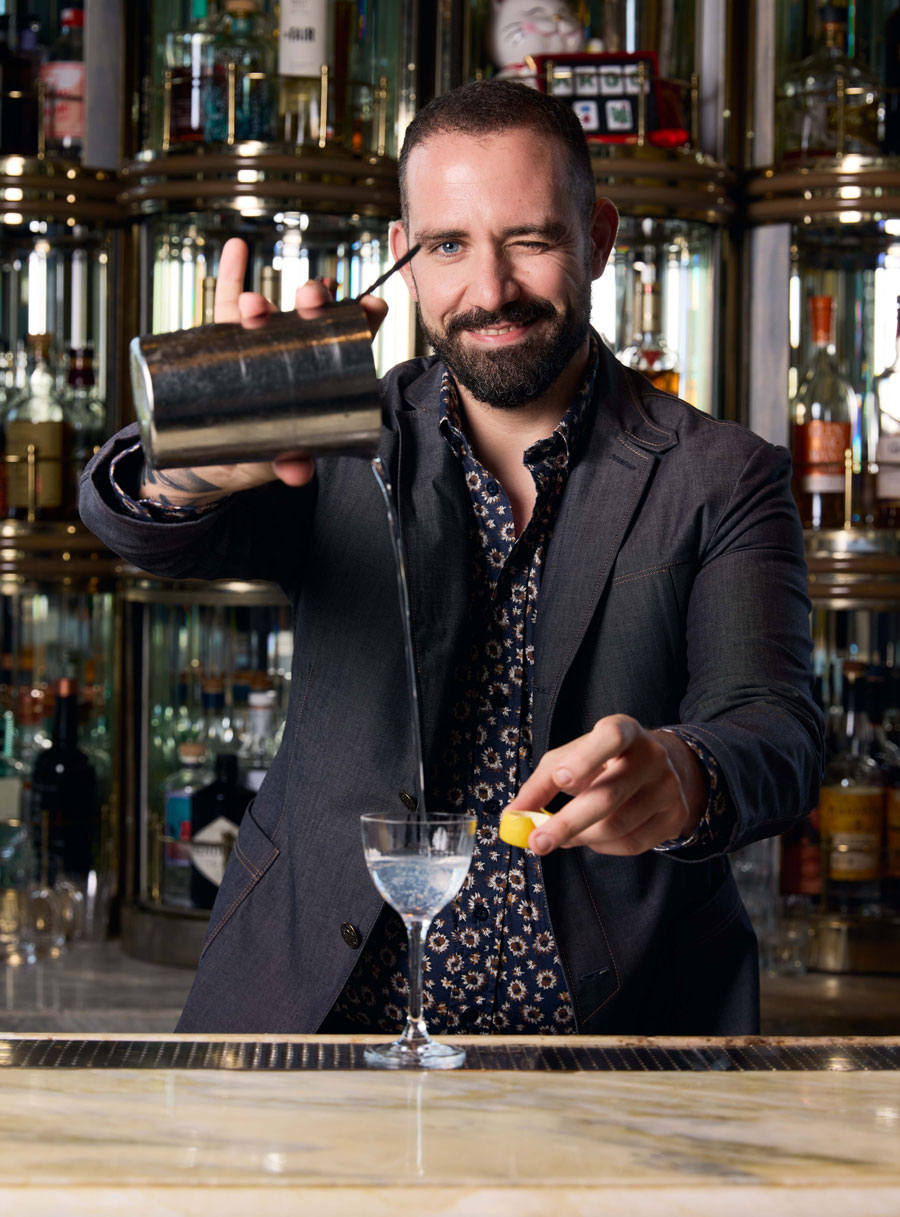
John Gabbay, who made his name at The Champagne Bar (Four Seasons, Miami), was recently announced as Argo Bar’s latest beverage lead. Will he help Argo Bar continue to climb the World’s Best list?
“Argo is already in a fantastic place. The team has been together for years and they execute their craft beautifully. I’m not here to reinvent the bar, but to become part of the machine, to help carry the legacy forward, support the team, maintain high standards, and be a strong host. My role is to elevate what already works, not to replace it.”
John Gabbay, who made his name at The Champagne Bar (Four Seasons, Miami), was recently announced as Argo Bar’s latest beverage lead. Will he help Argo Bar continue to climb the World’s Best list?
“Argo is already in a fantastic place. The team has been together for years and they execute their craft beautifully. I’m not here to reinvent the bar, but to become part of the machine, to help carry the legacy forward, support the team, maintain high standards, and be a strong host. My role is to elevate what already works, not to replace it.”
Nicole Bump
Nicole is a seasoned content strategist and writer with 15+ years of experience turning complex ideas into compelling stories. As founder of Bump Inbound, she helps brands connect with audiences through thoughtful strategy, sharp planning, and standout writing.
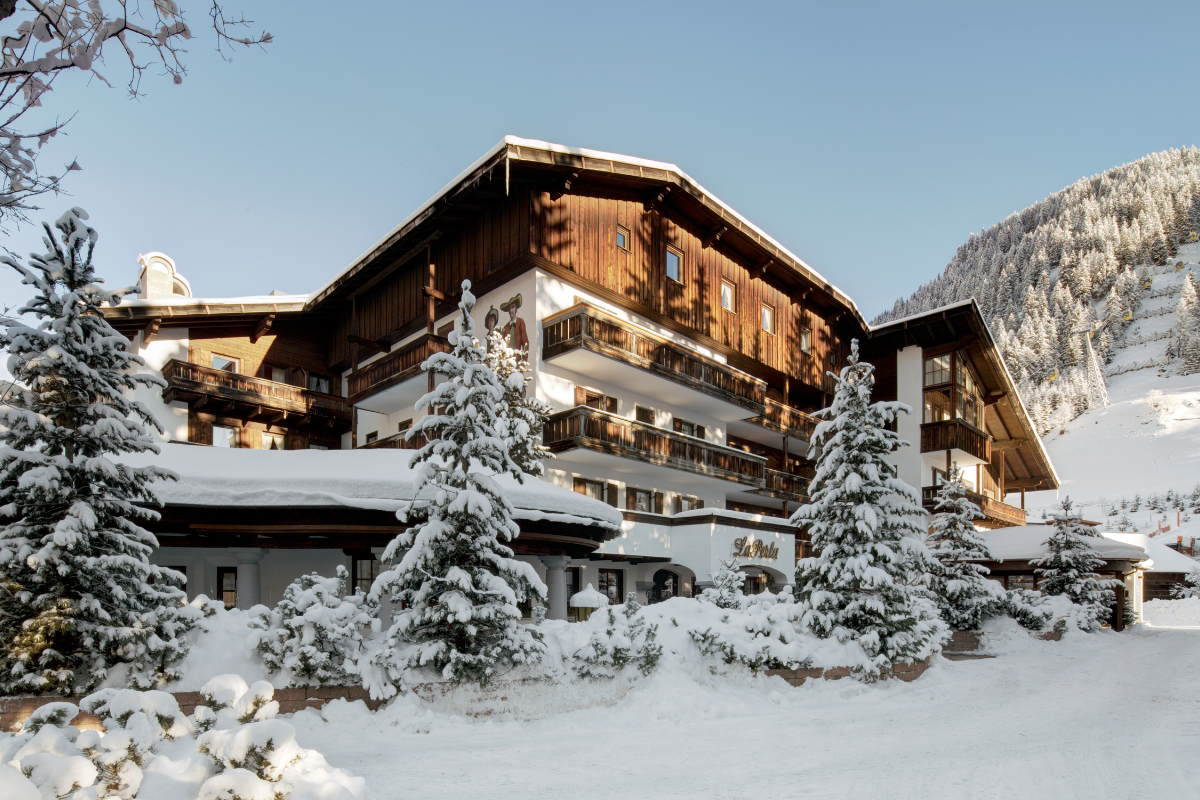
The Heart of the Hotel: La Perla, Corvara
La Perla, Corvara
This year, in association with Altamura Distilleries, I’ll be exploring some of the world’s most legendary bars—uncovering what makes them the beating heart of the hotel. Our next stop is Corvara!
#Episode 6
It’s no surprise this small, sumptuous hotel is called La Perla. Pearls worn close to the heart, reveal their natural luster. Like every pearl, this one was formed by a precious speck of sand – its bar, the true heart of the hotel. Founders Ernesto and Anni Costa inherently understood that a great bar makes a great hotel. When they opened La Perla in 1956, the bar was built even before the restaurant. That original bar still anchors the hotel, inviting one and all to partake in the party that is the Bistrot Music Club & Bar.
#Episode 6
It’s no surprise this small, sumptuous hotel is called La Perla. Pearls worn close to the heart, reveal their natural luster. Like every pearl, this one was formed by a precious speck of sand – its bar, the true heart of the hotel. Founders Ernesto and Anni Costa inherently understood that a great bar makes a great hotel. When they opened La Perla in 1956, the bar was built even before the restaurant. That original bar still anchors the hotel, inviting one and all to partake in the party that is the Bistrot Music Club & Bar.
Working as both a plumber and ski instructor in Corvara, one of the cosy villages that dot Northern Italy’s famous South Tyrolean mountain range, Ernesto watched the Dolomites becoming more and more popular as a ski destination. Instrumental in building the town’s first ski lift in 1947, he knew those seeking to schuss would need sustenance and shelter, plus a few Sidecars after the cable cars closed for the evening.
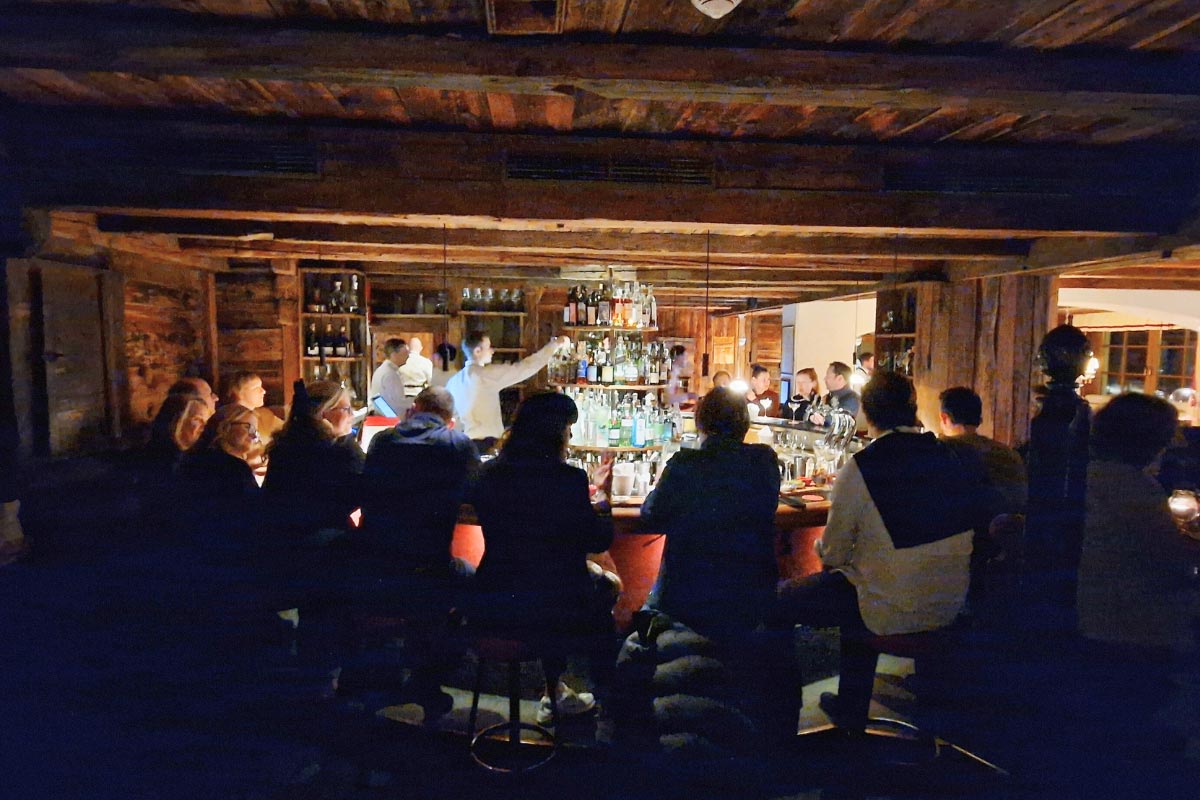
So less than a decade later, he built a home for himself, adding a few additional apartments upstairs for those who’d braved the trip. Those few rooms grew into what is now La Perla or, as those in the know call it, La Casa Costa.
Friends and guests alike had an open invitation to be serenaded by Ernesto and his band downstairs in the bar. Their philosophy was that hospitality should be about having a great time and that welcome extended to not only hotel guests but to anyone who wanted to join in.
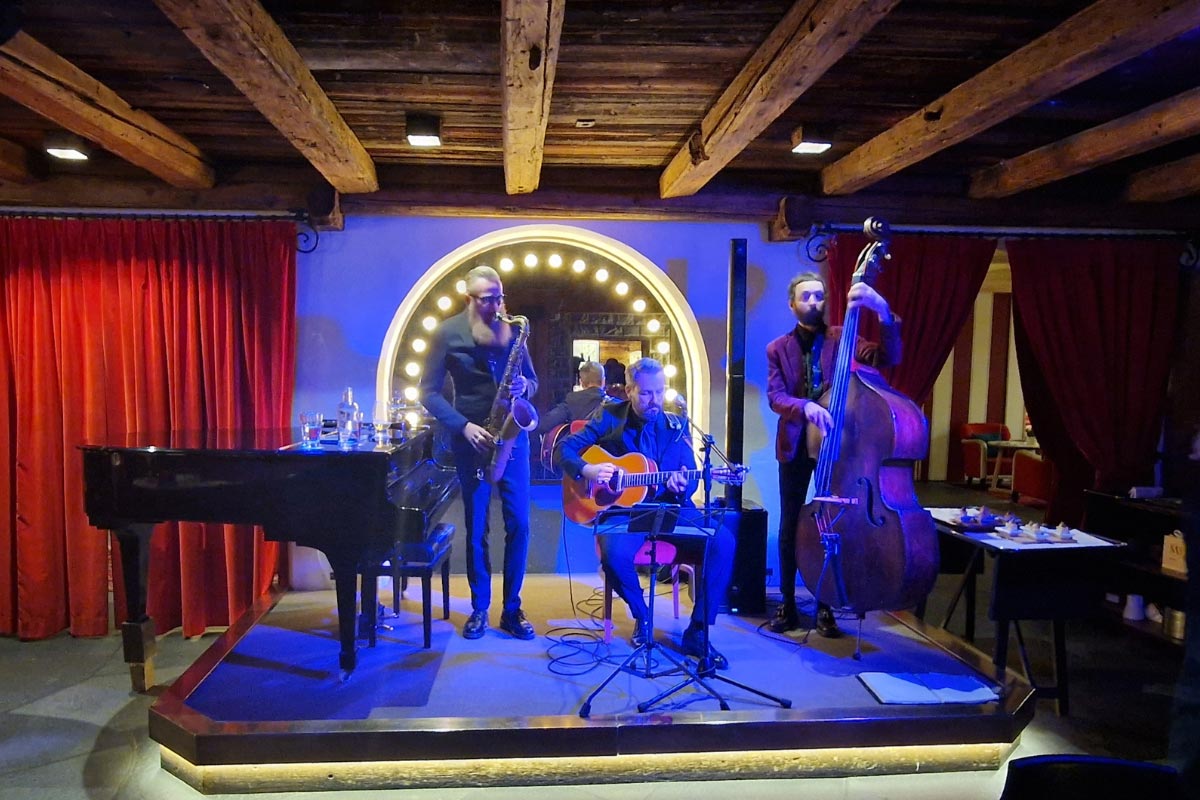
As soon as you walk into the hotel, it’s hard not to be pulled into La Perla’s iconic Bistrot Music Club & Bar. The doors are always open, and the bar’s circular design is key to its success. Conversations strike up spontaneously between not only those next to each other, but also across the bar, as passionate bartenders slalom past playful parley all night.
Working as both a plumber and ski instructor in Corvara, one of the cosy villages that dot Northern Italy’s famous South Tyrolean mountain range, Ernesto watched the Dolomites becoming more and more popular as a ski destination. Instrumental in building the town’s first ski lift in 1947, he knew those seeking to schuss would need sustenance and shelter, plus a few Sidecars after the cable cars closed for the evening.
So less than a decade later, he built a home for himself, adding a few additional apartments upstairs for those who’d braved the trip. Those few rooms grew into what is now La Perla or, as those in the know call it, La Casa Costa.
Friends and guests alike had an open invitation to be serenaded by Ernesto and his band downstairs in the bar. Their philosophy was that hospitality should be about having a great time and that welcome extended to not only hotel guests but to anyone who wanted to join in.
As soon as you walk into the hotel, it’s hard not to be pulled into La Perla’s iconic Bistrot Music Club & Bar. The doors are always open, and the bar’s circular design is key to its success. Conversations strike up spontaneously between not only those next to each other, but also across the bar, as passionate bartenders slalom past playful parley all night.
“The Hotel La Perla bar is the heart of the house: a meeting point for guests and the local community. The atmosphere, enlivened by live music, creates a relaxed and fun environment, ideal for aperitifs and after-dinner drinks accompanied by classic cocktails. Fun, comfort, and taste are its essence.”
Michele Albertelli, General Manager
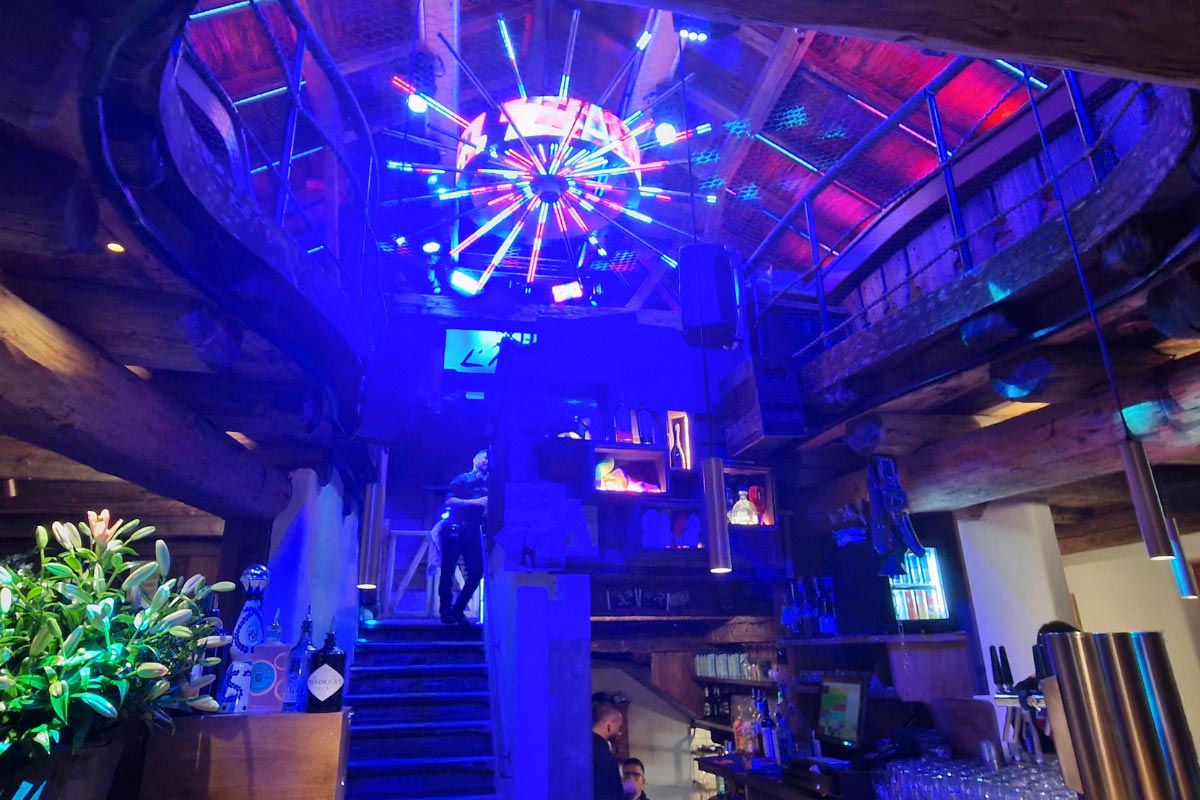
Then there’s the music, which was so important to Ernesto, adding that something special. Every night brings live music – different musicians, different styles – so no night is ever the same. Locals pop in to see if their favorites have returned. Even now, 95-year-old Ernesto often sits with his Anni at the bar, catching a tune or two.
Still family run, each of their sons has had a hand in reshaping the current hotel. Mathias oversees day-to-day operations, receiving guests as they arrive.
Then there’s the music, which was so important to Ernesto, adding that something special. Every night brings live music – different musicians, different styles – so no night is ever the same. Locals pop in to see if their favorites have returned. Even now, 95-year-old Ernesto often sits with his Anni at the bar, catching a tune or two.
Still family run, each of their sons has had a hand in reshaping the current hotel. Mathias oversees day-to-day operations, receiving guests as they arrive.
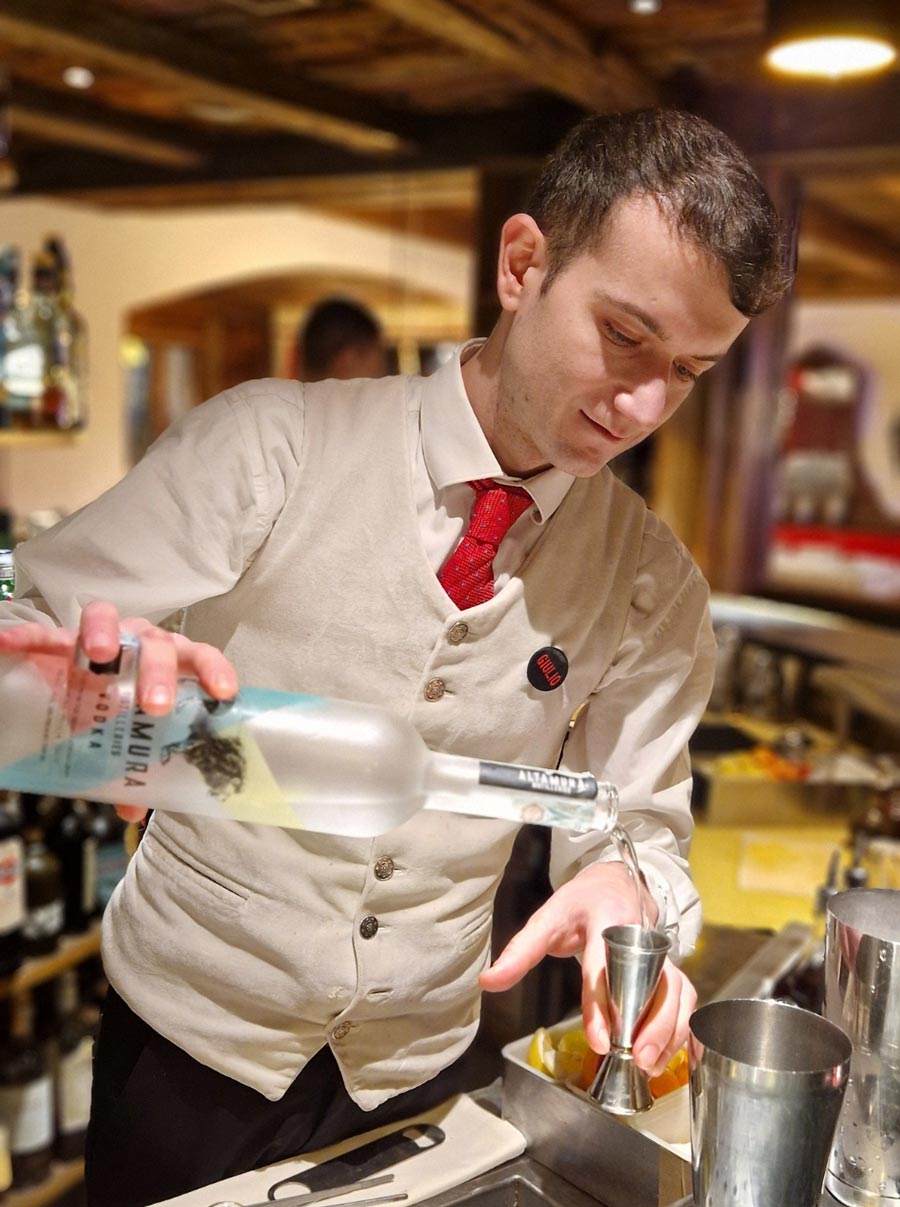
The third son, Michil, recognized that a cocktail revolution was underway and set about bringing La Perla into the future, rethinking their entire bar experience including the glassware, ice, and most importantly the cocktails. His direction was to concentrate on the classics. Guests were to drink the best Martinis and Manhattans of their lives with no frills or furbelows.
On hand to lead the charge are the dynamic duo of Giulio Pagani and Mario Gambino. Originally from Le Marche region of Italy, Giulio arrived at La Perla seven years ago with a passion for mixology, born from watching the barmen before him.
“The Bistrot Music Club, together with its bar, is the true heart of the hotel. We don’t just serve cocktails – we aim to make you feel the warmth and welcome that only home can offer”
Giulio Pagani, Barman
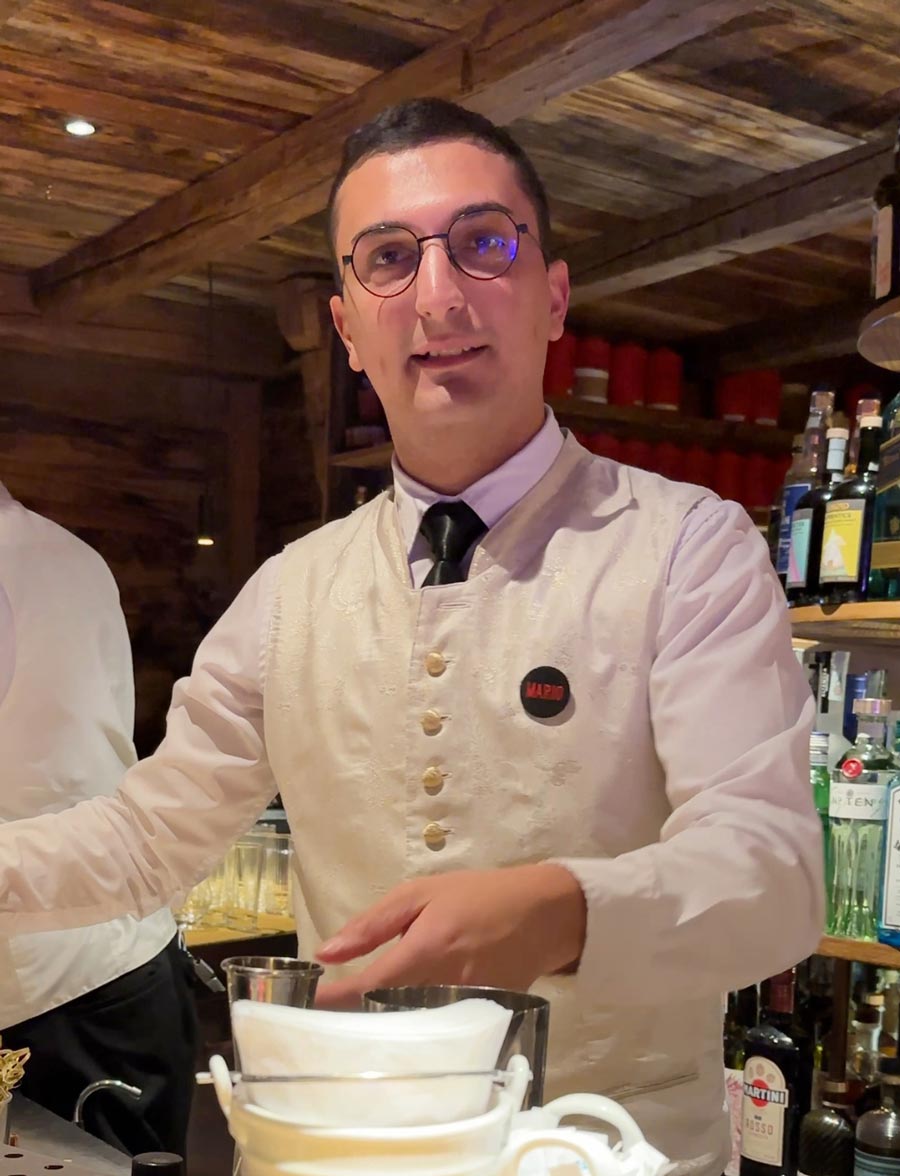
Mario Gambino, a transplant from Sicily, joined Giulio just three years ago. Starting his career at a smaller hotel, he used to visit the Bistrot Music Club & Bar as a guest, longing to work there one day, entranced by La Perla’s “great music, and great cocktails.”
The bar is the heart of the hotel because it reflects the soul of Casa Costa: a harmonious balance of elegance, warmth, tradition, and innovation.”
Mario Gambino, Barman
Now like the Costa brothers, they work as a team, upholding the direction of the new menu they created, with an approach they like to call “evolving tradition” or innovation without destruction.
“The hotel bar is the silent, beating heart of the establishment. Here, behind the bar counter, the bartender is both historian and healer, offering not just a drink, but a bespoke story for the soul, and transforming the day’s scattered stress into a steady, sip by sip calm.”
Alex Gkountopoulous
Assistant Bar Manager
The third son, Michil, recognized that a cocktail revolution was underway and set about bringing La Perla into the future, rethinking their entire bar experience including the glassware, ice, and most importantly the cocktails. His direction was to concentrate on the classics. Guests were to drink the best Martinis and Manhattans of their lives with no frills or furbelows.
On hand to lead the charge are the dynamic duo of Giulio Pagani and Mario Gambino. Originally from Le Marche region of Italy, Giulio arrived at La Perla seven years ago with a passion for mixology, born from watching the barmen before him.
“The Bistrot Music Club, together with its bar, is the true heart of the hotel. We don’t just serve cocktails – we aim to make you feel the warmth and welcome that only home can offer”
Giulio Pagani, Barman
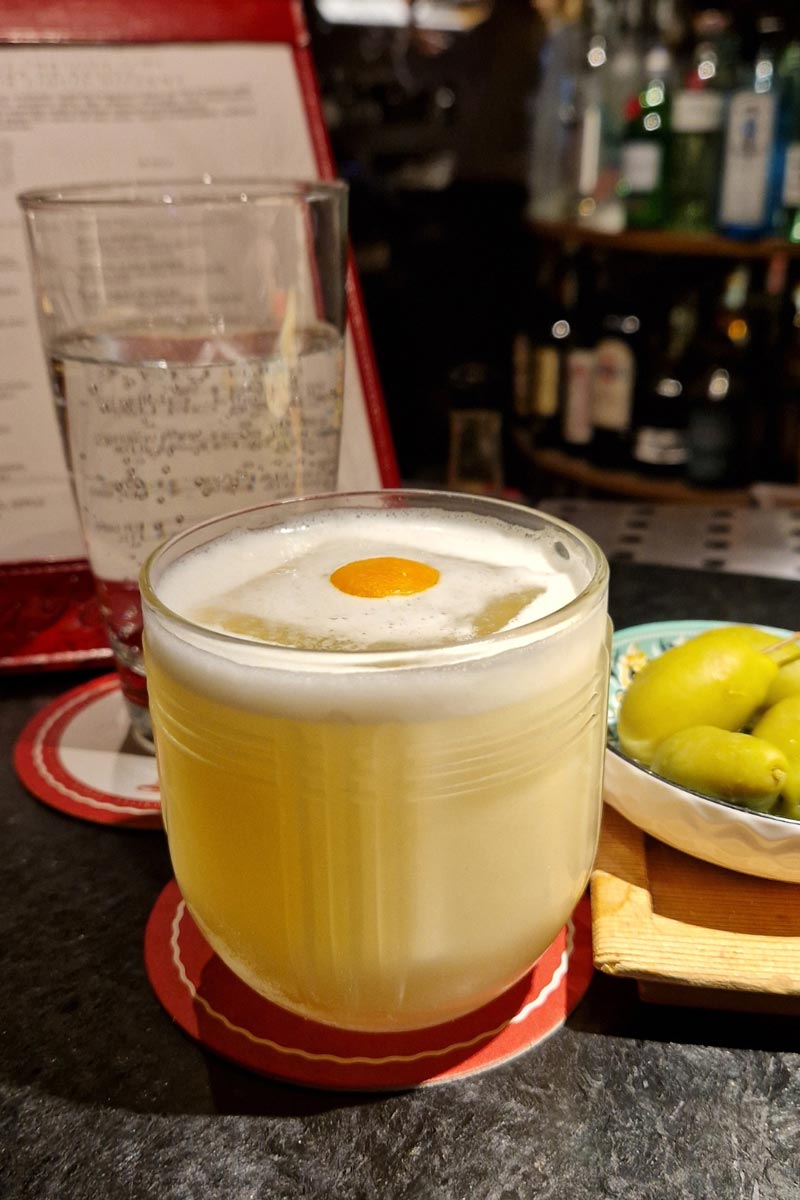
Journey Through Time explores the dilemma that both travelers and cocktail lovers share – the pull to discover something new or relive what has already been experienced. As the menu asks: “Will you revisit the past and uncover cocktails unfairly forgotten..or perhaps even step into eternity with timeless classics reimagined?”
The menu is divided into categories – Past, Present, Future and Eternity. The Past is made of pre-Prohibition cocktails you might not be so familiar with. The Lucien Gaudin is represented, named for the 1920’s French Olympic medal-winning fencer with its mix of London Dry Gin, red and dry Vermouth, Triple Sec, and Campari. The Tipperary also makes the list. Prepared here with Irish whiskey, red vermouth, Green Chartreuse, and a dash or two of Angostura bitters, this cocktail appears in Harry MacElhone’s 1922 ABC of Mixing Cocktails as well as Harry Craddock’s famous The Savoy Cocktail Book!
Leading the Future is the tantalizing Melinda, a perfect expression of their forward-thinking philosophy. The traditional Paloma is a simple mix of grapefruit soda and tequila. Mario and Giulio make their own soda, keeping tequila as the base and combining it with homemade ginger syrup, citric acid, and Melinda apples. A nod to this area of Italy being the largest apple-producing region in Europe, with Melinda and Marlene apples the most prevalent varieties.
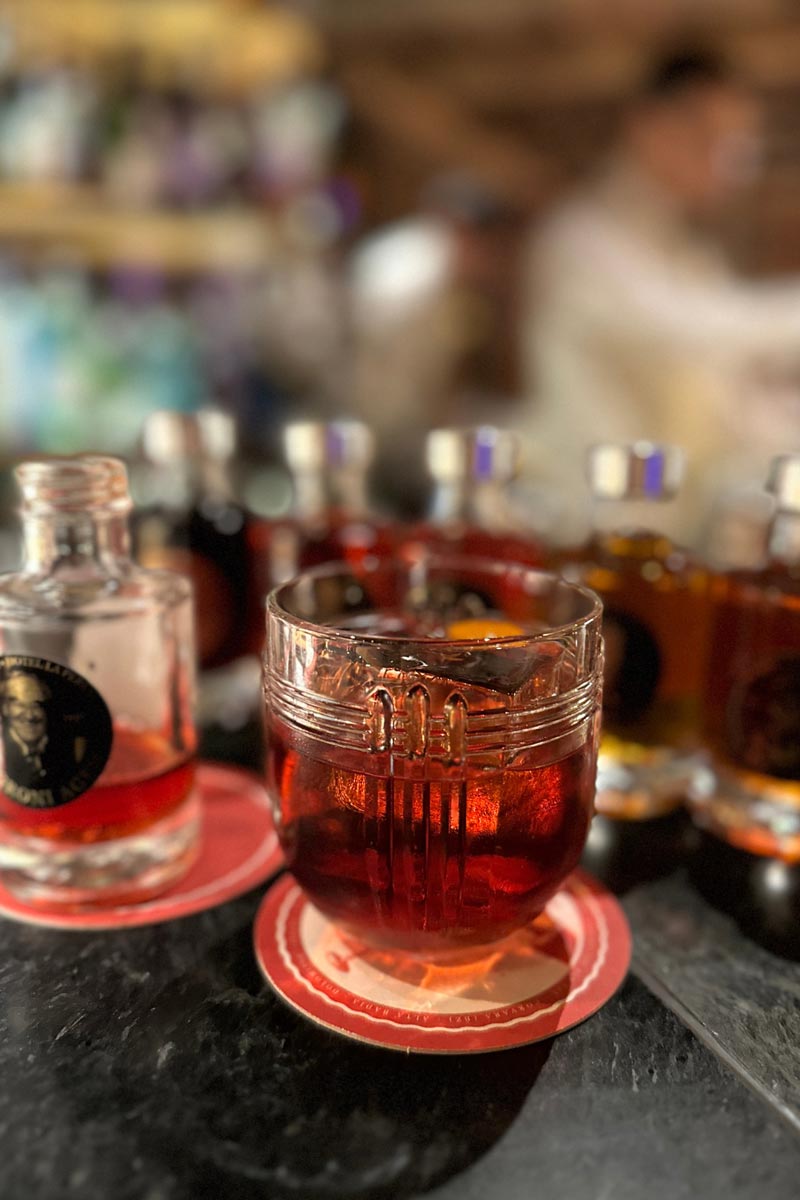
Eternity pays reverence to the classics. The Martini Casa Costa made with their own signature La Perla gin distilled in Milan or Puglia’s Altamura Distilleries Vodka is as clear and crystal as the icicles outside. Their Aged Negroni begins with Campari and gin, and then surprises with four different types of vermouth aged in a barrel for two months.
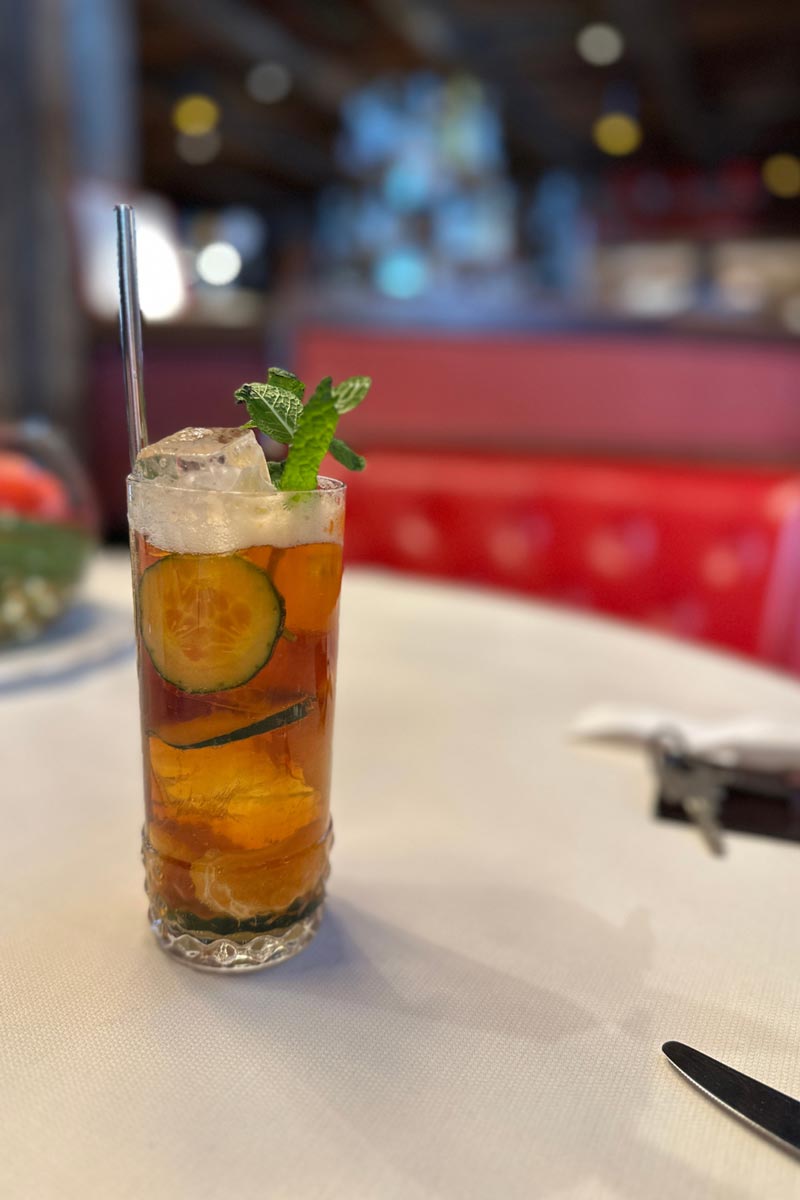
The Present is a nod to seasonality. Don’t expect to find the strawberries in your Pimm’s Cup. In inclement weather, clementines will greet you instead. The Rocky Balboa is a blend of bourbon, sugar and the wintery pear. Likewise, forget that orange garnish in your Old Fashioned after a long summer’s hike. No one has complained so far.
The proceeds of a few items on both the drinks and food menu go directly to the family’s own charity, the Costa Family Foundation, which has supported over 56 projects worldwide since 2007. The Safe Zone cocktail is one of those. Either served alcohol-free or with Altamura Distilleries vodka, it’s their Moscow Mule made with homemade ginger beer and jasmine. As Giulio and Marco say…
“Whichever path you choose, either discover or relive, you’ll taste the spirit of our casa: warm hospitality, refined elegance, and enjoy a touch of creative audacity.”
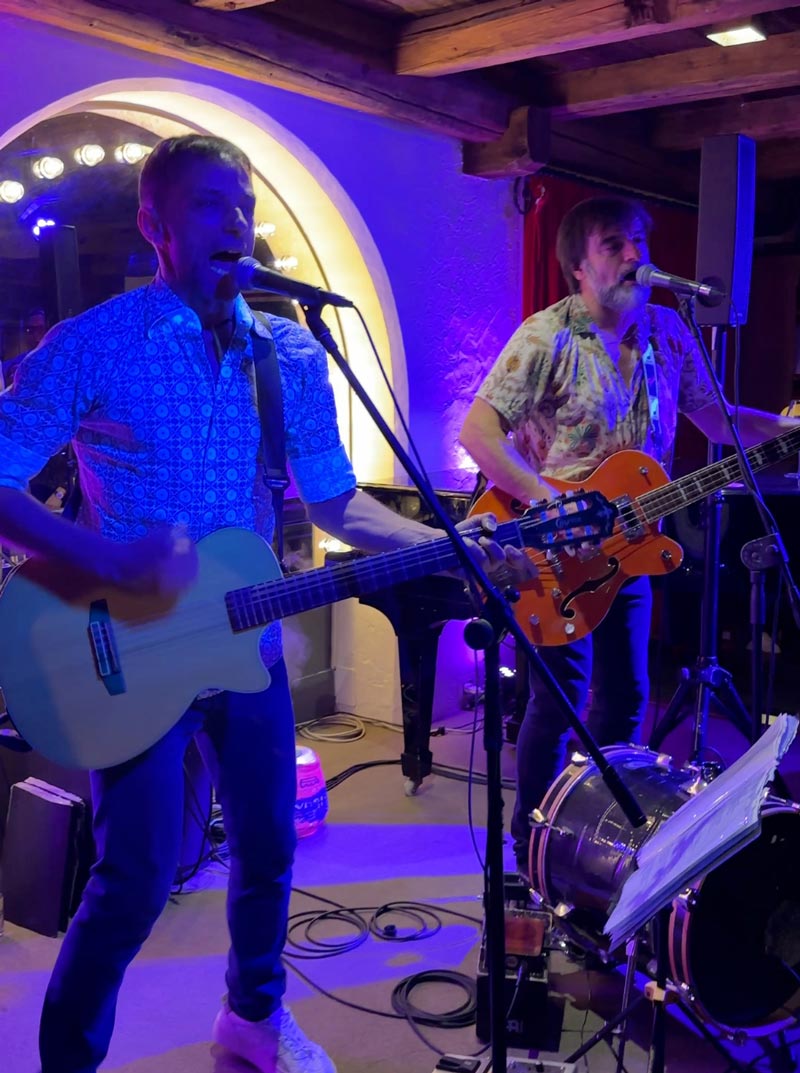
Creative audacity is what Ernesto and Anni possessed from the beginning – building a ski lift where there was none, growing La Perla from a few apartments atop their home, and creating a space where music plays, songs are sung, and the sound of Vives! can be heard (cheers in Ladino, the local lingo) above the clink of cocktail glasses.
Mario Gambino, a transplant from Sicily, joined Giulio just three years ago. Starting his career at a smaller hotel, he used to visit the Bistrot Music Club & Bar as a guest, longing to work there one day, entranced by La Perla’s “great music, and great cocktails.”
“The bar is the heart of the hotel because it reflects the soul of Casa Costa: a harmonious balance of elegance, warmth, tradition, and innovation”
Mario Gambino, Barman
Now like the Costa brothers, they work as a team, upholding the direction of the new menu they created, with an approach they like to call “evolving tradition” or innovation without destruction.
Journey Through Time explores the dilemma that both travelers and cocktail lovers share – the pull to discover something new or relive what has already been experienced. As the menu asks: “Will you revisit the past and uncover cocktails unfairly forgotten..or perhaps even step into eternity with timeless classics reimagined?”
The menu is divided into categories – Past, Present, Future and Eternity. The Past is made of pre-Prohibition cocktails you might not be so familiar with. The Lucien Gaudin is represented, named for the 1920’s French Olympic medal-winning fencer with its mix of London Dry Gin, red and dry Vermouth, Triple Sec, and Campari. The Tipperary also makes the list. Prepared here with Irish whiskey, red vermouth, Green Chartreuse, and a dash or two of Angostura bitters, this cocktail appears in Harry MacElhone’s 1922 ABC of Mixing Cocktails as well as Harry Craddock’s famous The Savoy Cocktail Book!
Leading the Future is the tantalizing Melinda, a perfect expression of their forward-thinking philosophy. The traditional Paloma is a simple mix of grapefruit soda and tequila. Mario and Giulio make their own soda, keeping tequila as the base and combining it with homemade ginger syrup, citric acid, and Melinda apples. A nod to this area of Italy being the largest apple-producing region in Europe, with Melinda and Marlene apples the most prevalent varieties.
Eternity pays reverence to the classics. The Martini Casa Costa made with their own signature La Perla gin distilled in Milan or Puglia’s Altamura Distilleries Vodka is as clear and crystal as the icicles outside. Their Aged Negroni begins with Campari and gin, and then surprises with four different types of vermouth aged in a barrel for two months.
The Present is a nod to seasonality. Don’t expect to find the strawberries in your Pimm’s Cup. In inclement weather, clementines will greet you instead. The Rocky Balboa is a blend of bourbon, sugar and the wintery pear. Likewise, forget that orange garnish in your Old Fashioned after a long summer’s hike. No one has complained so far.
The proceeds of a few items on both the drinks and food menu go directly to the family’s own charity, the Costa Family Foundation, which has supported over 56 projects worldwide since 2007. The Safe Zone cocktail is one of those. Either served alcohol-free or with Altamura Distilleries vodka, it’s their Moscow Mule made with homemade ginger beer and jasmine. As Giulio and Mario say…
“Whichever path you choose, either discover or relive, you’ll taste the spirit of our casa: warm hospitality, refined elegance, and enjoy a touch of creative audacity.”
Creative audacity is what Ernesto and Anni possessed from the beginning – building a ski lift where there was none, growing La Perla from a few apartments atop their home, and creating a space where music plays, songs are sung, and the sound of Vives! can be heard (cheers in Ladino, the local lingo) above the clink of cocktail glasses.
This spirit not only permeates the bar, but fills La Perla. It was never clearer than when Giulio and Marco emerged from behind the bar, grabbed my hand and pulled me onto the make-shift dance floor in the middle of the bar saying…
“You know you asked me why I think the bar is the heart of the hotel…well, this is it!”
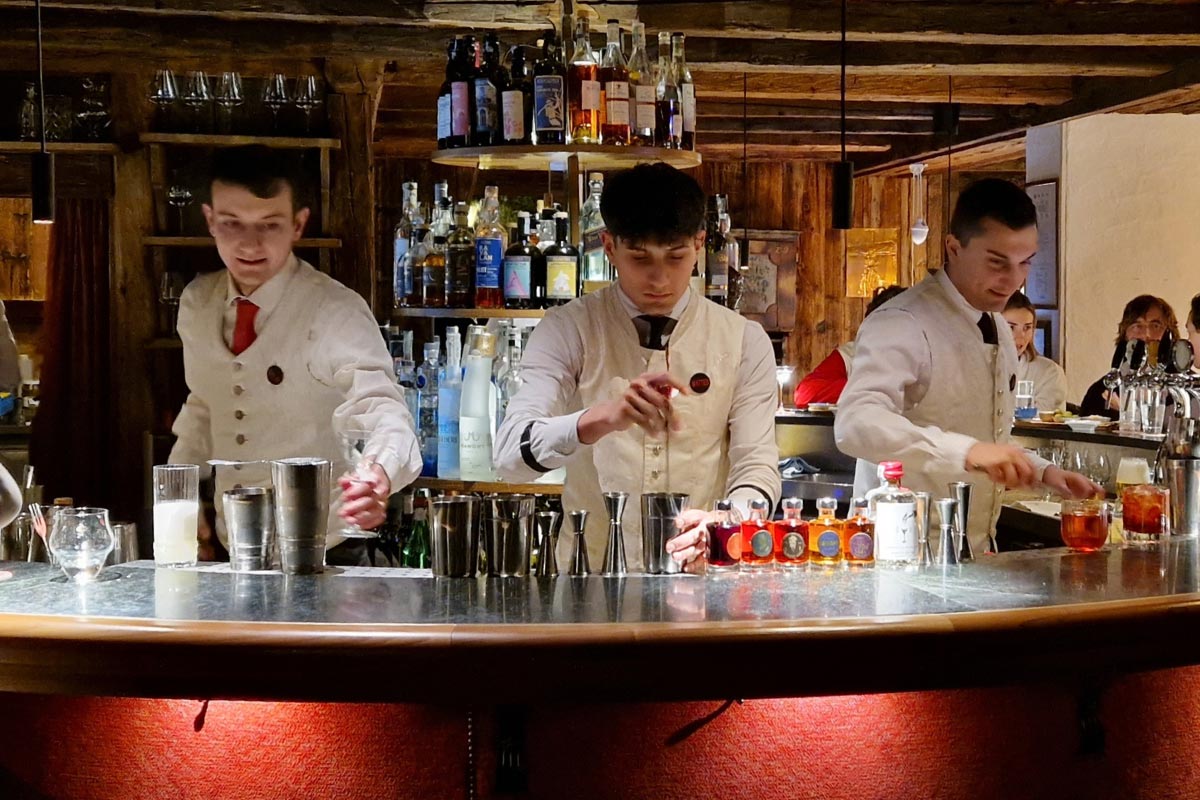
This spirit not only permeates the bar, but fills La Perla. It was never clearer than when Giulio and Marco emerged from behind the bar, grabbed my hand and pulled me onto the make-shift dance floor in the middle of the bar saying, “You know you asked me why I think the bar is the heart of the hotel…well, this is it!”
A point of gravity, shaped in a circle, that draws you in and makes it hard to leave. A place where, whether you arrive alone or with others, you naturally become part of the atmosphere. Resistance is futile: you let yourself be guided by Giulio and Mario, by the music that invites you to sing and dance, by the smiles exchanged with the person sitting opposite you. The bar at Hotel La Perla is a round table. Here, you are never alone. Here, you meet many people – and perhaps, you come to know yourself a little better too.
Marlene Zanotti, Marketing Manager
A point of gravity, shaped in a circle, that draws you in and makes it hard to leave. A place where, whether you arrive alone or with others, you naturally become part of the atmosphere.
Resistance is futile: you let yourself be guided by Giulio and Mario, by the music that invites you to sing and dance, by the smiles exchanged with the person sitting opposite you.
The bar at Hotel La Perla is a round table. Here, you are never alone. Here, you meet many people – and perhaps, you come to know yourself a little better too.
Marlene Zanotti, Marketing Manager
Susan L. Schwartz
Susan L. Schwartz is the award-winning creator of A Lush Life Manual and host of the Lush Life Podcast. She writes widely on drinks and travel, leads London and Venice Cocktail Tours, and has been recognised with multiple industry awards.
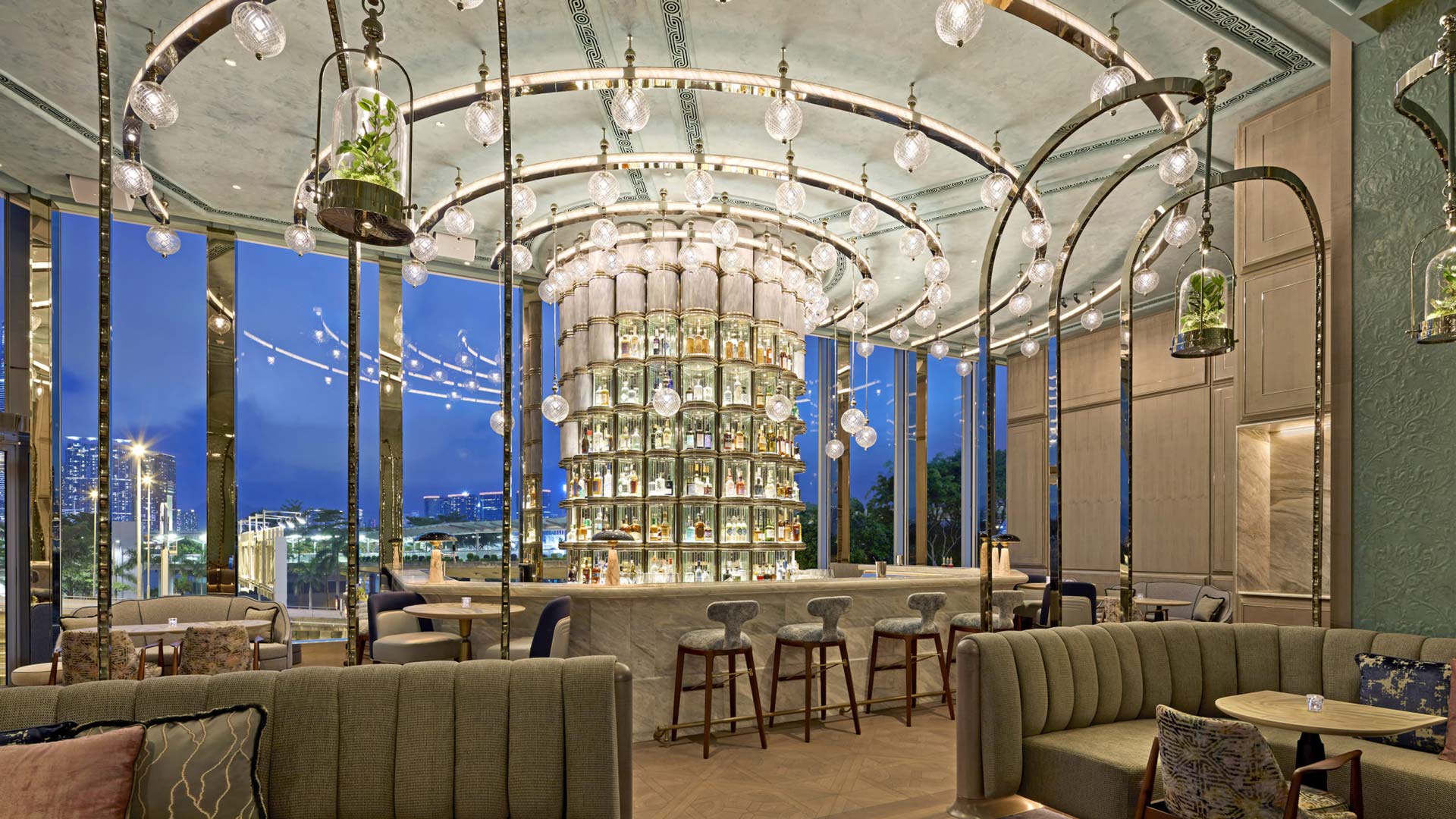
12 of the world’s most famous hotel bars
Famous Hotel Bars
12 of the world’s most famous hotel bars
Hotel bars have always been more than a convenient place for a nightcap. At their best, they’re cultural landmarks—places where cocktails are invented, legends linger, and bartenders quietly shape the future of drinking.
From century-old institutions to boundary-pushing newcomers, these are 12 of the most famous hotel cocktail bars in the world, each with a story worth savoring.
American Bar at The Savoy (London)
Why it stands out: It’s where cocktail history never stopped being written.

American Bar at The Savoy (London)
Why it stands out: It’s where cocktail history never stopped being written.
Argo Bar (Hong Kong)
Why it stands out: Playful, futuristic, and wildly imaginative.
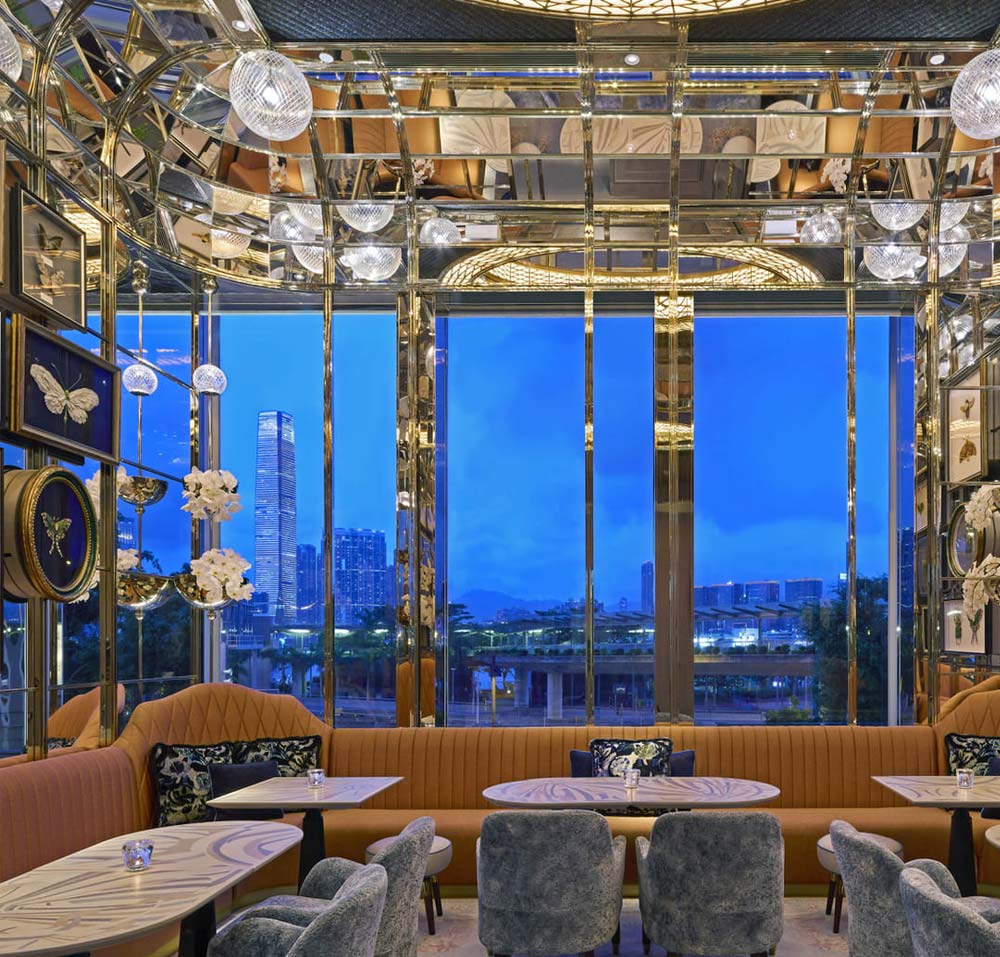
Argo Bar (Hong Kong)
Why it stands out: Playful, futuristic, and wildly imaginative.
Bar Hemingway (Paris)
Why it stands out: Tiny, legendary, and built on myth.
Ernest Hemingway may never have officially imbibed here—but his spirit defines it. Revived by master bartender Colin Field, Bar Hemingway at the Ritz Paris became famous for its intimate scale, the ultra-cold Clean Dirty Martini, and a philosophy that puts people before drinks. Proof that a bar doesn’t need size to achieve immortality.
Artesian Bar (London)
Why it stands out: The bar that dominated the world’s cocktail rankings for four straight years.
Located inside The Langham Hotel, Artesian Bar has redefined modern hotel cocktail culture with concept-driven menus, inventive ingredients, and exceptional hospitality. Named the World’s Best Bar four years in a row (2012–2015), Artesian became famous for imaginative drinks developed in its underground Cocktail Lab, proving that innovation and luxury can thrive behind a hotel bar.
Bar Hemingway (Paris)
Why it stands out: Tiny, legendary, and built on myth.
Ernest Hemingway may never have officially imbibed here—but his spirit defines it. Revived by master bartender Colin Field, Bar Hemingway at the Ritz Paris became famous for its intimate scale, the ultra-cold Clean Dirty Martini, and a philosophy that puts people before drinks. Proof that a bar doesn’t need size to achieve immortality.
Artesian Bar (London)
Why it stands out: The bar that dominated the world’s cocktail rankings for four straight years.
Located inside The Langham Hotel, Artesian Bar has redefined modern hotel cocktail culture with concept-driven menus, inventive ingredients, and exceptional hospitality. Named the World’s Best Bar four years in a row (2012–2015), Artesian became famous for imaginative drinks developed in its underground Cocktail Lab, proving that innovation and luxury can thrive behind a hotel bar.
BKK Social Club (Bangkok)
Why it stands out: Latin American glamour, halfway around the world.
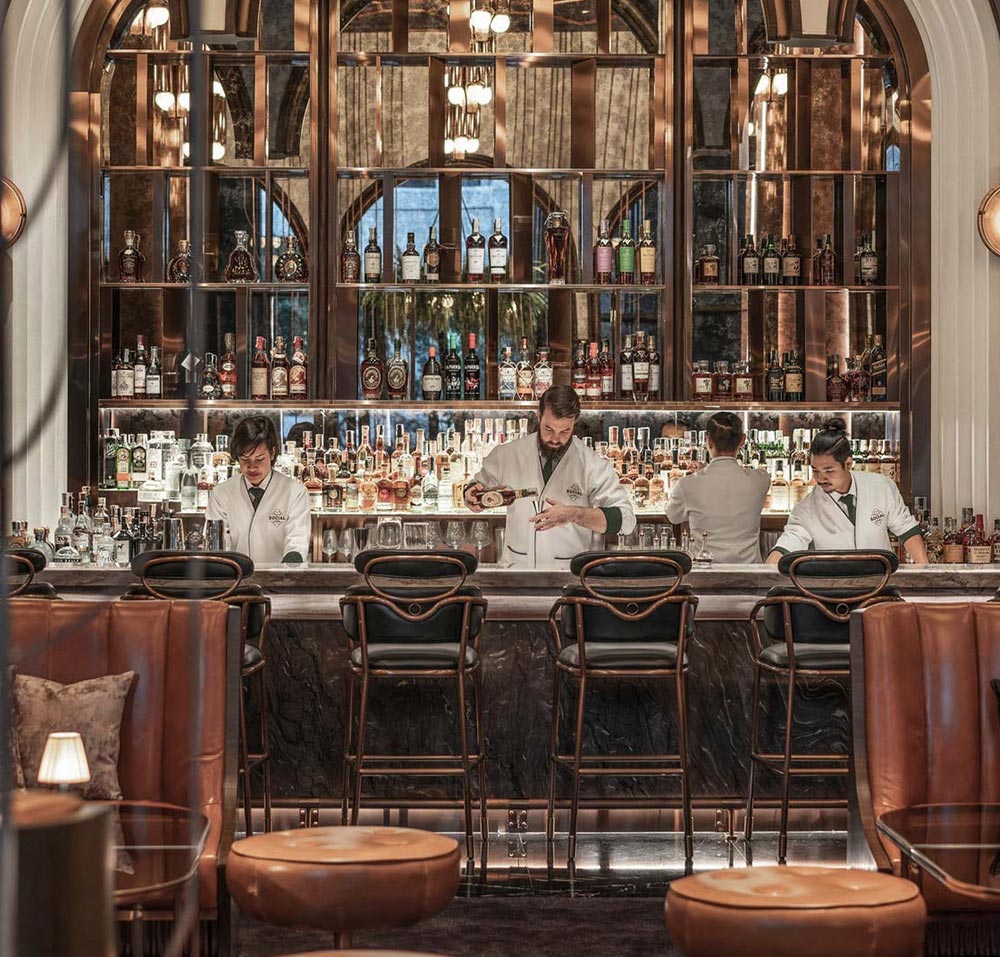
BKK Social Club (Bangkok)
Why it stands out: Latin American glamour, halfway around the world.
Botanist Bar (Vancouver)
Why it stands out: A cocktail lab that changed what a hotel bar could be.
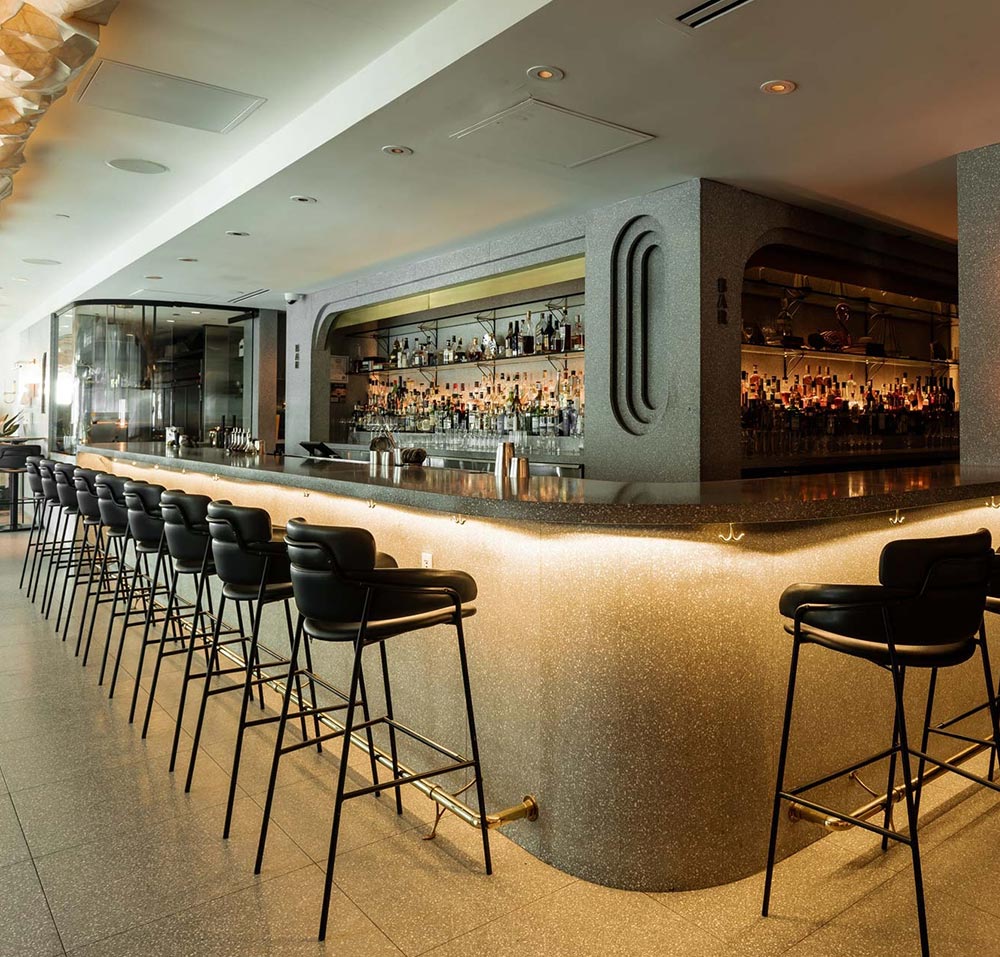
Botanist Bar (Vancouver)
Why it stands out: A cocktail lab that changed what a hotel bar could be.
King Cole Bar (New York City)
Why it stands out: The birthplace of the Bloody Mary—and a mural with a scandalous secret.
Hidden inside The St. Regis New York, the King Cole Bar pairs old-world elegance with quiet mischief. Beneath Maxfield Parrish’s legendary mural, Fernand Petiot introduced the Red Snapper cocktail (now known worldwide as the Bloody Mary), forever changing brunch culture. It’s a bar where nearly a century of deals, art, and cocktails still hum softly in the background.
King Cole Bar (New York City)
Why it stands out: The birthplace of the Bloody Mary—and a mural with a scandalous secret.
Hidden inside The St. Regis New York, the King Cole Bar pairs old-world elegance with quiet mischief. Beneath Maxfield Parrish’s legendary mural, Fernand Petiot introduced the Red Snapper cocktail (now known worldwide as the Bloody Mary), forever changing brunch culture. It’s a bar where nearly a century of deals, art, and cocktails still hum softly in the background.
Carousel Bar (New Orleans)
Why it stands out: The only bar that literally spins.
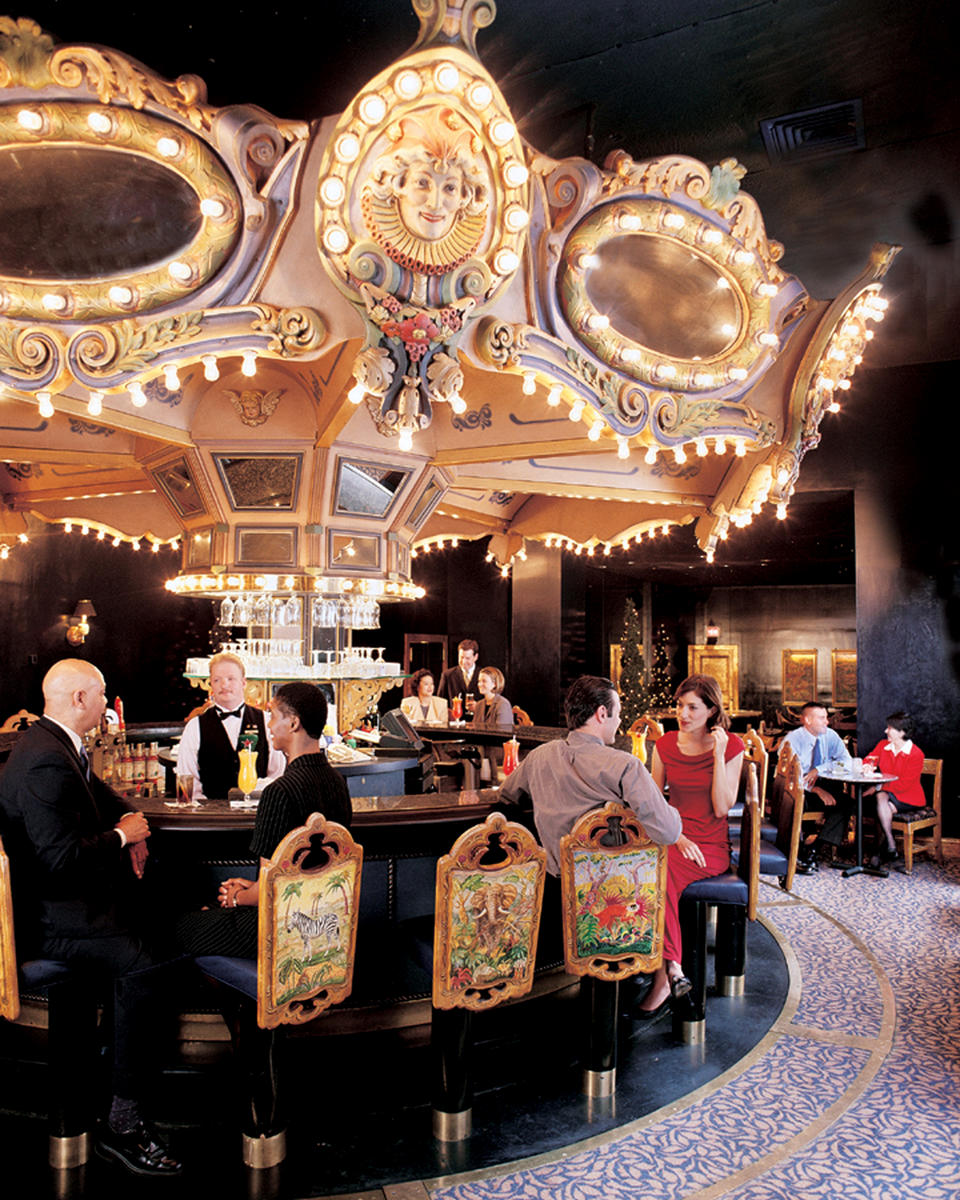
Carousel Bar (New Orleans)
Why it stands out: The only bar that literally spins.
The Connaught Bar (London)
Why it stands out: A martini turned into a performance.
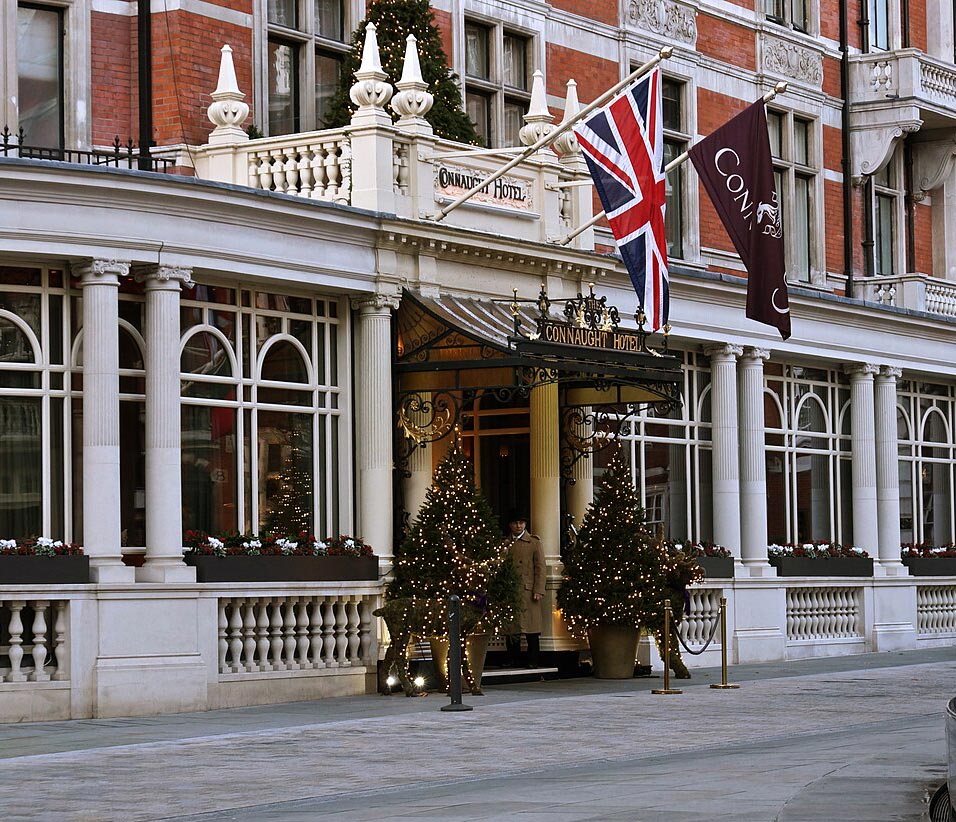
The Connaught Bar (London)
Why it stands out: A martini turned into a performance.
Peacock Alley (New York City)
Why it stands out: It began as a runway for high society—and still is.
Peacock Alley was once a marble promenade where New York’s elite paraded their status. Today, inside the restored Waldorf Astoria, it remains a stage for ritual and elegance. From the iconic clock (“Meet me at the clock”) to Cole Porter’s piano and heritage cocktails like the Ginger Collins, Peacock Alley proves that spectacle and substance can coexist beautifully.
Peacock Alley (New York City)
Why it stands out: It began as a runway for high society—and still is.
Peacock Alley was once a marble promenade where New York’s elite paraded their status. Today, inside the restored Waldorf Astoria, it remains a stage for ritual and elegance. From the iconic clock (“Meet me at the clock”) to Cole Porter’s piano and heritage cocktails like the Ginger Collins, Peacock Alley proves that spectacle and substance can coexist beautifully.
Stravinskij Bar (Rome)
Why it stands out: A secret garden for serious cocktails.
Tucked inside Hotel de Russie, the Stravinskij Bar offers a rare Roman luxury: space.
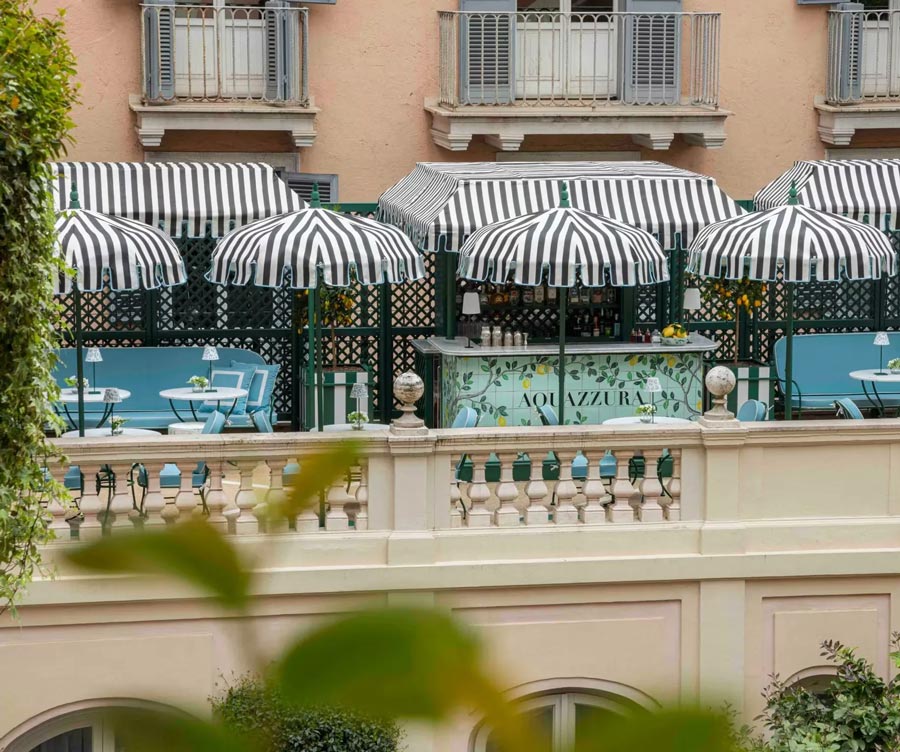
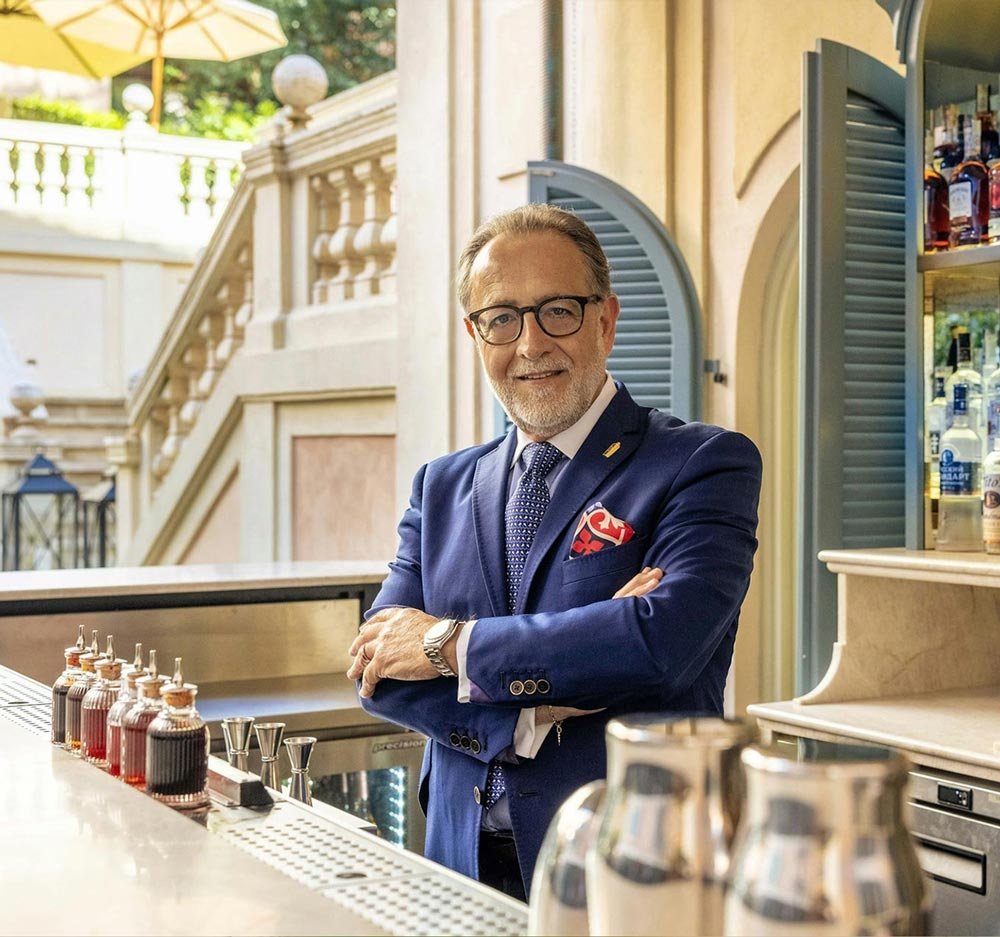
Set within a lush garden courtyard, the bar pairs nature-inspired cocktails with Salvatore Calabrese’s refined touch. The Negroni Svegliato—part Negroni, part coffee ritual—has already earned cult status.
Stravinskij Bar (Rome)
Why it stands out: A secret garden for serious cocktails.
Tucked inside Hotel de Russie, the Stravinskij Bar offers a rare Roman luxury: space.
Set within a lush garden courtyard, the bar pairs nature-inspired cocktails with Salvatore Calabrese’s refined touch. The Negroni Svegliato—part Negroni, part coffee ritual—has already earned cult status.
Virtu Bar (Tokyo)
Why it stands out: Parisian elegance meets Japanese precision.
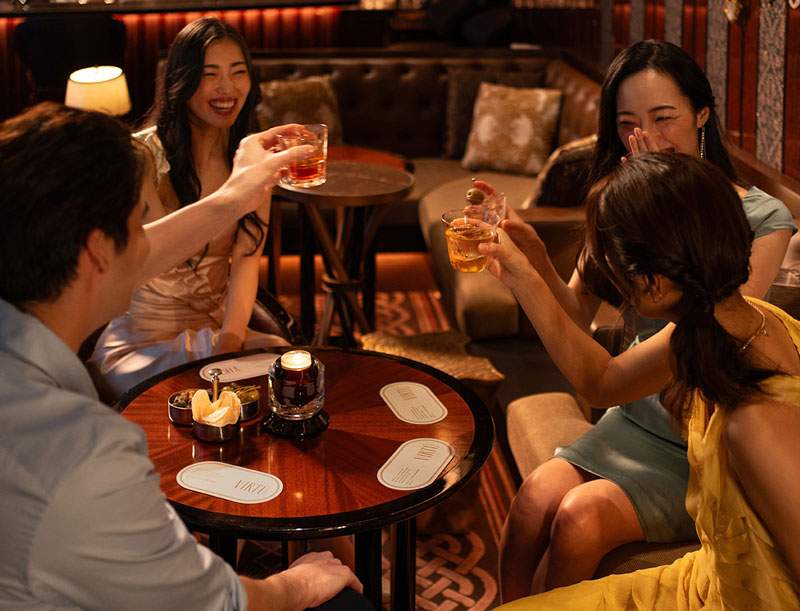
Virtu Bar (Tokyo)
Why it stands out: Parisian elegance meets Japanese precision.
Why the best hotel cocktail bars matter
Together, these bars show why hotels remain the guardians and innovators of cocktail culture. Some preserve tradition. Others challenge it. All of them remind us that the best drinks are inseparable from the places—and people—who create them.
Why the best hotel cocktail bars matter
Together, these bars show why hotels remain the guardians and innovators of cocktail culture. Some preserve tradition. Others challenge it. All of them remind us that the best drinks are inseparable from the places—and people—who create them.
Nicole Bump
Nicole is a seasoned content strategist and writer with 15+ years of experience turning complex ideas into compelling stories. As founder of Bump Inbound, she helps brands connect with audiences through thoughtful strategy, sharp planning, and standout writing.