


The Knickerbocker Martini: Recipe and Origin Story
The Knickerbocker Martini, created at New York City’s Knickerbocker Hotel, is often hailed as the first dry martini. Whether that claim is true depends on whom you ask. Few cocktails have inspired so much debate over so few ingredients, and the dry martini’s origin story is packed with competing recipes, rival bartenders, and strong opinions. While the Knickerbocker may not have been the first to mix gin and dry vermouth, it helped define a cocktail that would become one of the most enduring drinks in history.

Who invented the dry martini?
By the time the Knickerbocker Martini appeared in 1912, bartenders had already spent a decade experimenting with drier combinations of gin and vermouth. To understand how the modern dry martini came to be, it helps to trace the cocktail’s evolution through a handful of influential recipes.
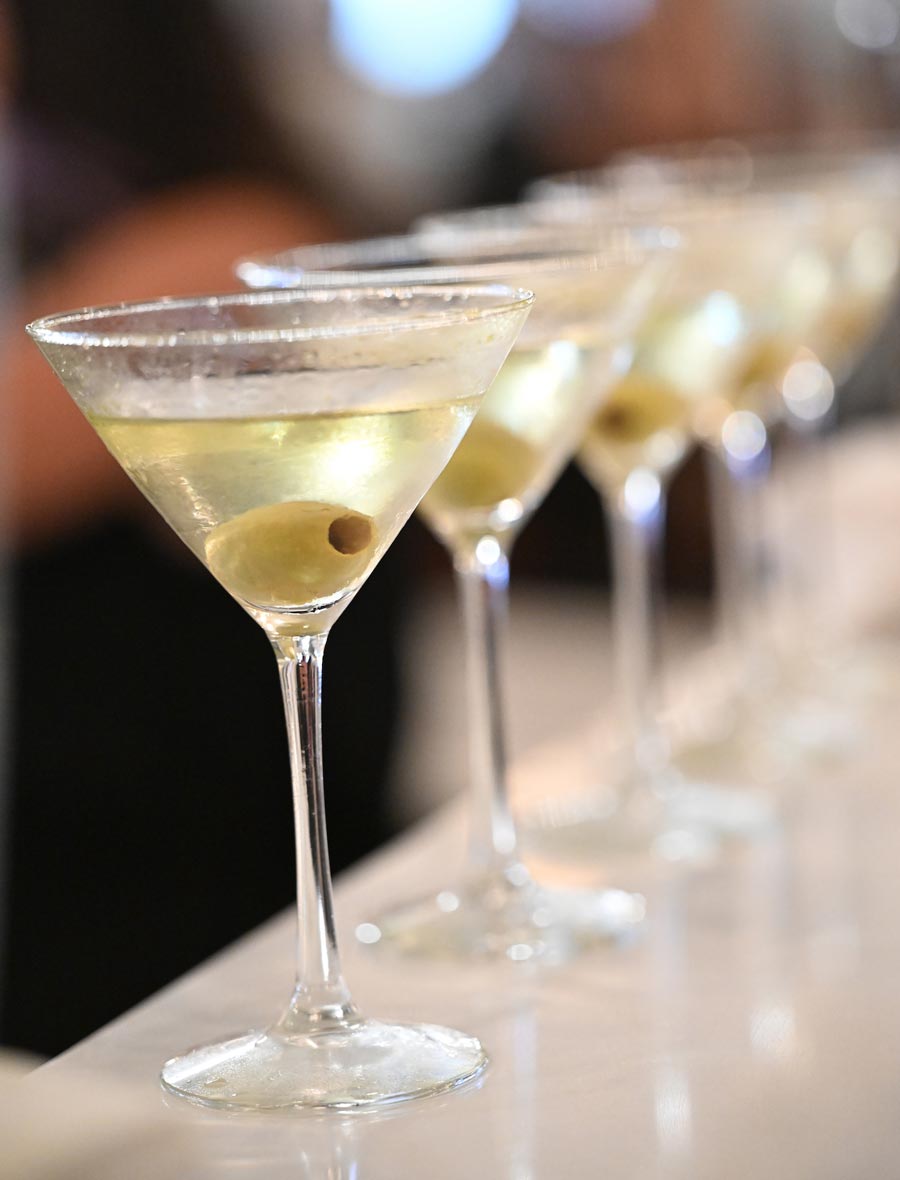
- 1880s: About 30 years prior in the, cocktail enthusiasts enjoyed the Martinez Cocktail, a sweeter cousin to the martini, made with Old Tom gin, sweet vermouth, and maraschino liqueur.
- 1900: Around the turn of the century, American bartender Harry Johnson published Bartender’s Manual. The manual included the Marguerite Cocktail, the first-recorded recipe using Plymouth gin and dry French vermouth. This recipe served as the blueprint for the modern dry martini.
- 1904: Frank Newman, a bartender at the Ritz Paris, published the book American-Bar, which contained the first-recorded recipe explicitly titled Dry Martini Cocktail.
- 1912: Bartender Martini di Arma di Taggia at New York’s Knickerbocker Hotel mixed what is often called the first dry martini, combining gin, dry vermouth, and bitters. The recipe came to be known as the Knickerbocker Martini—or the Knickerbocker Dry Martini.
Knickerbocker Martini to modern day
Regardless of which came first, none of these earlier recipes quite resembles what we’ve come to expect from a dry martini today. The modern, almost pure-gin versions are very different from the original proportions, which leaned closer to a 2:1 or even 50/50 ratio. The following historical versions of the dry martini track its evolution from a smooth, equal-parts drink to an ultra-dry classic.
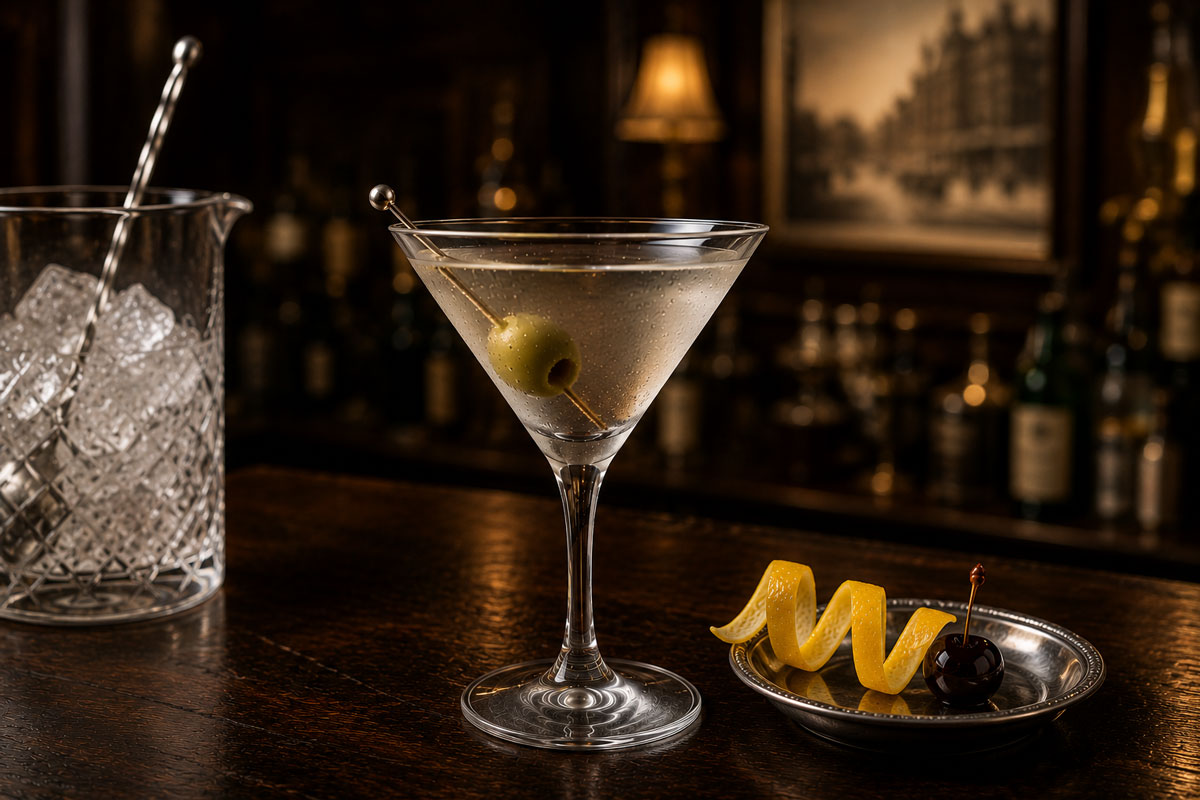
1. Frank Newman’s 1904 dry martini cocktail
This early French recipe relies on a high volume of vermouth and a splash of citrus liqueur to balance the spirit.
Ingredients:
- 1.5 oz London dry gin
- 1.5 oz dry vermouth
- 3 dashes Angostura or orange bitters
- Lemon twist, cherry, or olive for garnish
Preparation:
- Stir all ingredients with ice until freezing cold.
- Strain into a chilled glass.
- Garnish as desired.
1. Frank Newman’s 1904 dry martini cocktail
This early French recipe relies on a high volume of vermouth and a splash of citrus liqueur to balance the spirit.
Ingredients:
- 1.5 oz London dry gin
- 1.5 oz dry vermouth
- 3 dashes Angostura or orange bitters
- Lemon twist, cherry, or olive for garnish
Preparation:
- Stir all ingredients with ice until freezing cold.
- Strain into a chilled glass.
- Garnish as desired.
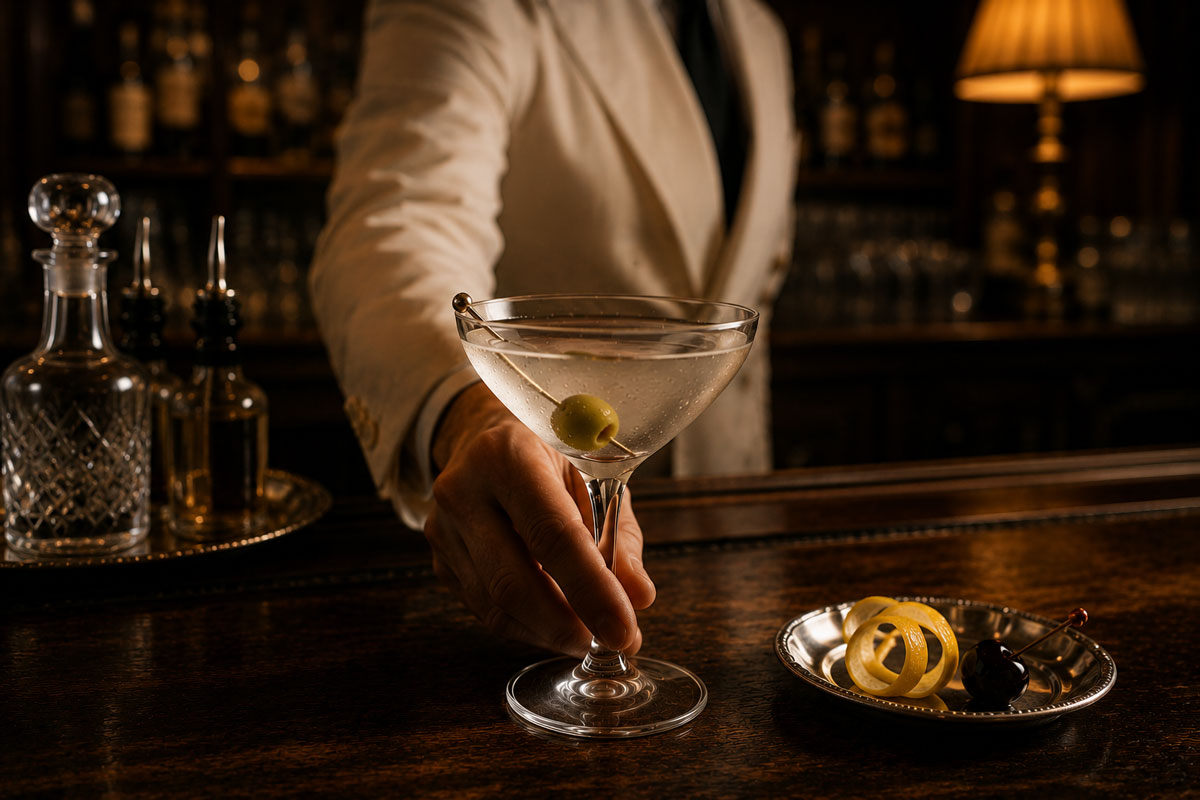
2. The 1912 Knickerbocker Martini recipe
While the Knickerbocker Hotel was one of the hottest bars in New York City at the time, the original Knickerbocker Martini recipe is hard to come by. The strongest historical evidence points to a 50/50 gin-to-dry-vermouth ratio with orange bitters, which is much closer to Frank Newman’s 1904 recipe than to the ultra-dry martinis that came later.
Ingredients:
- 1.5 oz London dry gin
- 1.5 oz dry vermouth
- 2 dashes orange bitters
- Lemon twist or olive for garnish
Preparation:
- Stir thoroughly with cracked ice.
- Strain into a coupe glass.
- Garnish with a single green olive.
2. The 1912 Knickerbocker Martini recipe
While the Knickerbocker Hotel was one of the hottest bars in New York City at the time, the original Knickerbocker Martini recipe is hard to come by. The strongest historical evidence points to a 50/50 gin-to-dry-vermouth ratio with orange bitters, which is much closer to Frank Newman’s 1904 recipe than to the ultra-dry martinis that came later.
Ingredients:
- 1.5 oz London dry gin
- 1.5 oz dry vermouth
- 2 dashes orange bitters
- Lemon twist or olive for garnish
Preparation:
- Stir thoroughly with cracked ice.
- Strain into a coupe glass.
- Garnish with a single green olive.
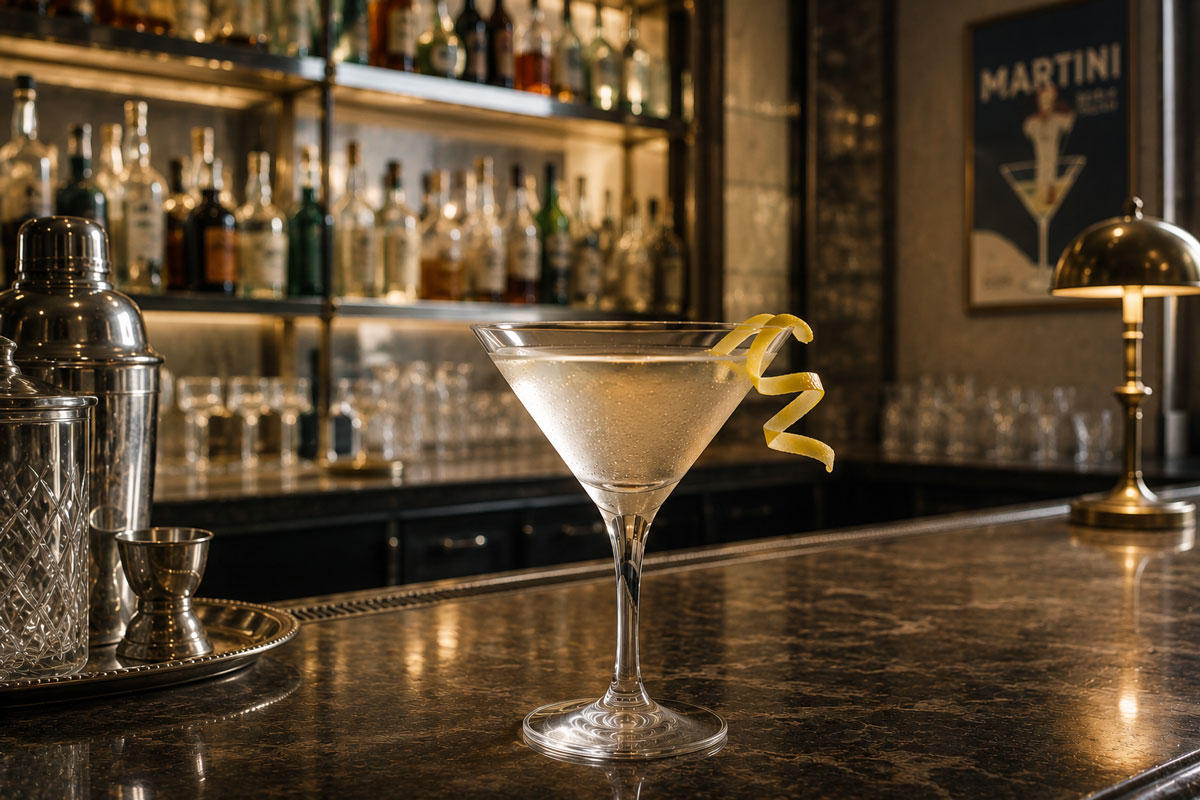
3. The modern “bone dry” martini
The bone dry martini arrived in the around the 1950s, reflecting evolving tastes in mid-century America. This dry martini recipe reduces vermouth to a whisper, letting the gin completely dominate.
Ingredients:
- 2.5 oz high-proof London dry gin
- 1 splash dry French vermouth
Preparation:
- Coat the inside of a chilled martini glass with vermouth and discard the excess liquid.
- Shake or stir the gin rapidly with ice until ice-cold.
- Strain into the rinsed glass.
- Garnish with an olive or a lemon twist.
3. The modern “bone dry” martini
The bone dry martini arrived in the around the 1950s, reflecting evolving tastes in mid-century America. This dry martini recipe reduces vermouth to a whisper, letting the gin completely dominate.
Ingredients:
- 2.5 oz high-proof London dry gin
- 1 splash dry French vermouth
Preparation:
- Coat the inside of a chilled martini glass with vermouth and discard the excess liquid.
- Shake or stir the gin rapidly with ice until ice-cold.
- Strain into the rinsed glass.
- Garnish with an olive or a lemon twist.
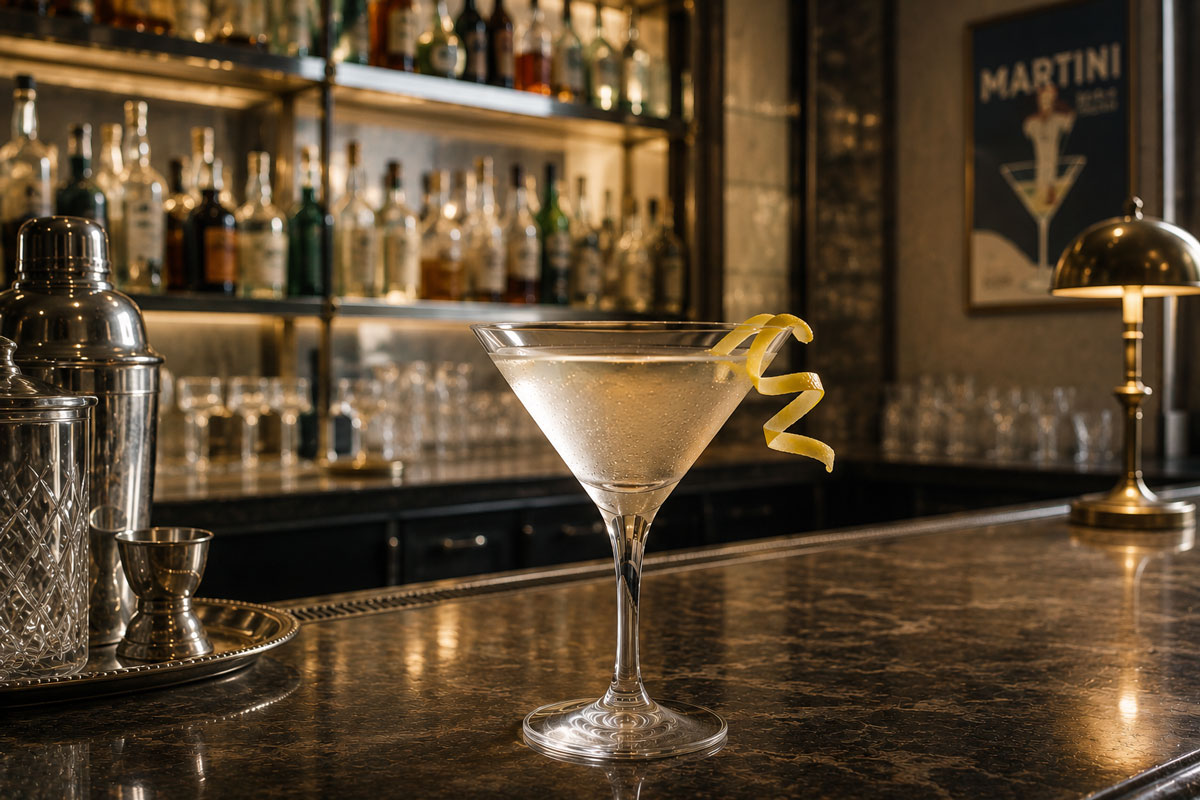
4. The Knickerbocker Martini recipe today
Today, the Knickerbocker hotel serves what is essentially a Perfect Martini—using both dry and sweet vermouth—which bridges the gap between the sweeter pre-martini cocktails and the ultra-dry versions that became popular later.
Ingredients:
- 2 oz London dry or Tanqueray No. Ten gin
- 3/4 oz dry vermouth
- 1/2 oz sweet vermouth
- 1 dash orange bitters
- 1 dash citrus bitters
- Lemon peel for garnish
Preparation:
- Add all ingredients to a mixing glass with ice.
- Stir until thoroughly chilled.
- Strain into a chilled martini glass.
- Garnish with a lemon peel.
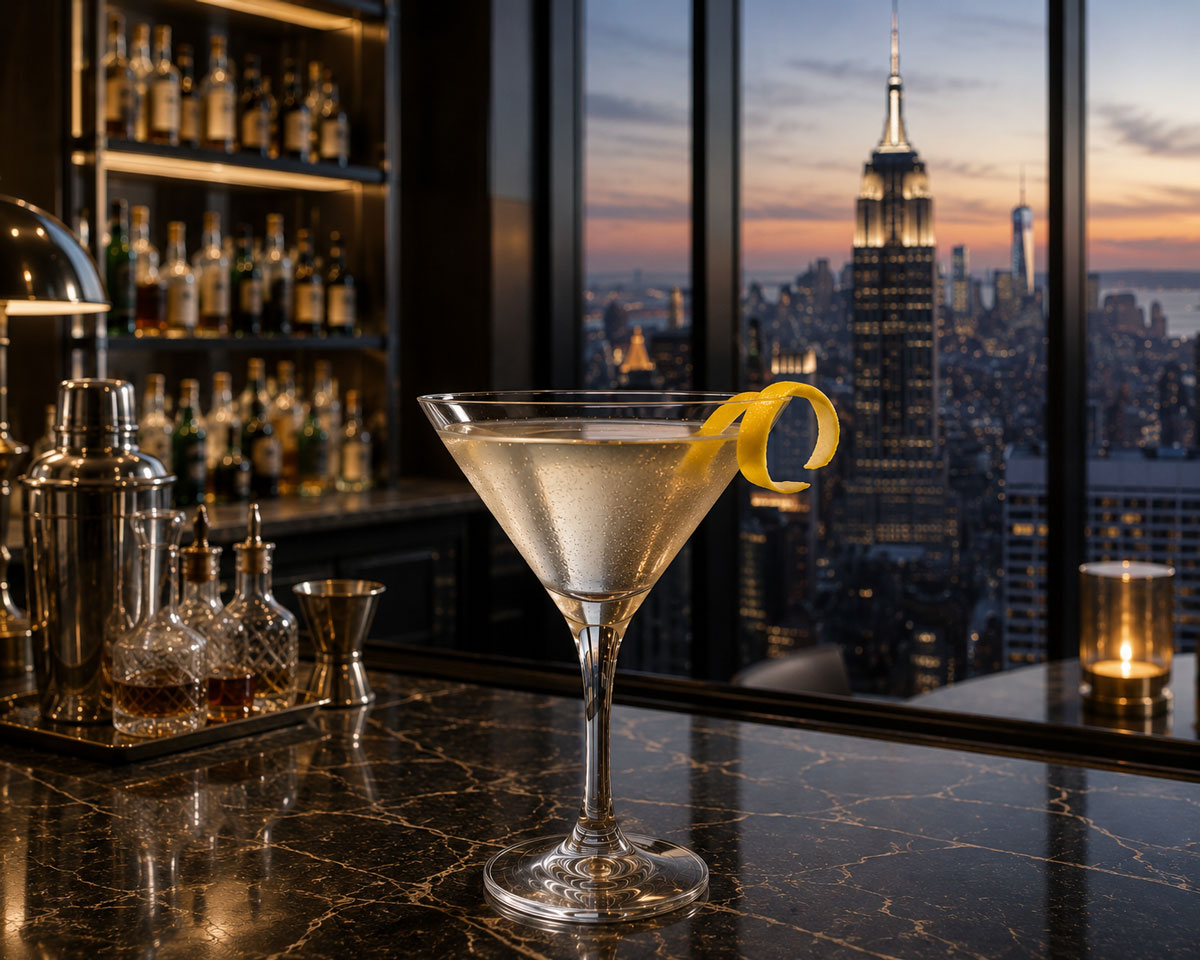
4. The Knickerbocker Martini recipe today
Today, the Knickerbocker hotel serves what is essentially a Perfect Martini—using both dry and sweet vermouth—which bridges the gap between the sweeter pre-martini cocktails and the ultra-dry versions that became popular later.
Ingredients:
- 2 oz London dry or Tanqueray No. Ten gin
- 3/4 oz dry vermouth
- 1/2 oz sweet vermouth
- 1 dash orange bitters
- 1 dash citrus bitters
- Lemon peel for garnish
Preparation:
- Add all ingredients to a mixing glass with ice.
- Stir until thoroughly chilled.
- Strain into a chilled martini glass.
- Garnish with a lemon peel.
The Knickerbocker Martini, tableside
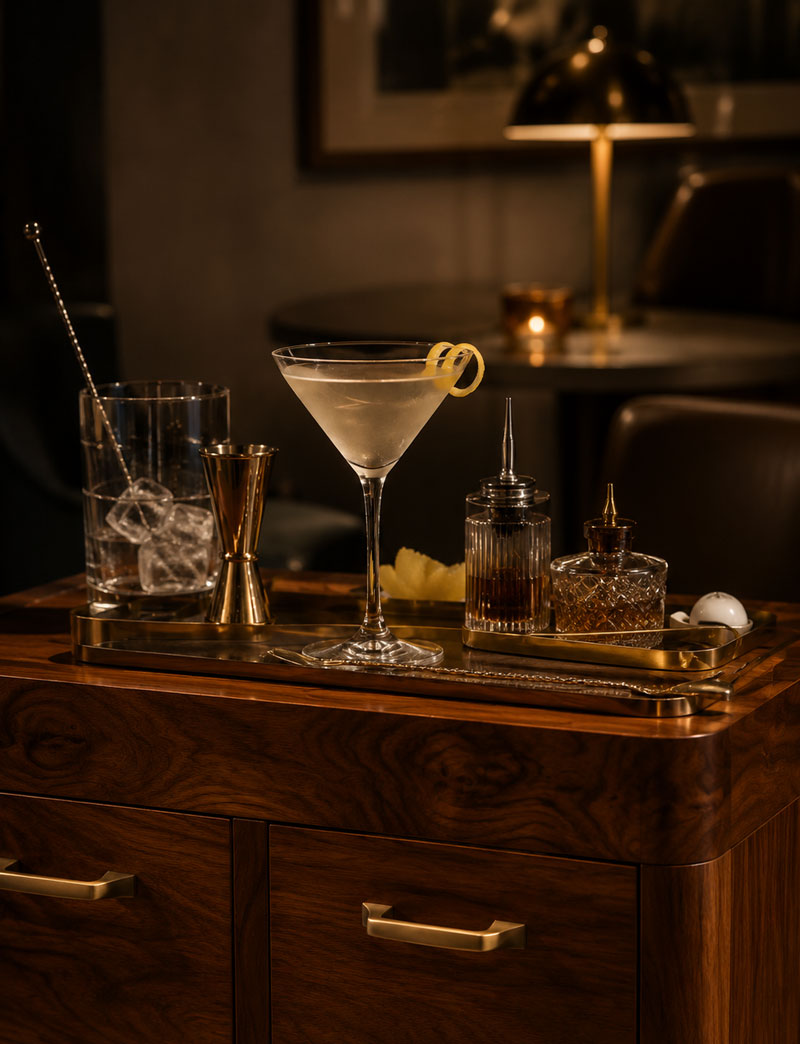
More than a century after helping define the dry martini, the Knickerbocker Hotel continues to celebrate the cocktail with its signature tableside martini service at the Martini Lounge.
Rather than arriving pre-made from behind the bar, each martini is prepared and finished beside the guest, turning a simple cocktail into a memorable ritual.
The experience emphasizes the details that martini enthusiasts appreciate most: ice-cold glassware, carefully measured ingredients, and a personalized garnish.
The result is equal parts theater and craftsmanship. It’s a fitting tribute to a cocktail whose history has been shaped by generations of bartenders obsessed with perfecting every ounce of gin and vermouth.
A century of refinement
The Knickerbocker Martini reminds us that the dry martini wasn’t born dry—it got there one ounce of vermouth at a time.
While historians may continue to argue over who deserves credit, martini lovers can raise a glass to the generations of bartenders who kept refining the recipe (including our own Altamura Martini).
The Knickerbocker Martini, tableside
More than a century after helping define the dry martini, the Knickerbocker Hotel continues to celebrate the cocktail with its signature tableside martini service at the Martini Lounge. Rather than arriving pre-made from behind the bar, each martini is prepared and finished beside the guest, turning a simple cocktail into a memorable ritual. The experience emphasizes the details that martini enthusiasts appreciate most: ice-cold glassware, carefully measured ingredients, and a personalized garnish. The result is equal parts theater and craftsmanship. It’s a fitting tribute to a cocktail whose history has been shaped by generations of bartenders obsessed with perfecting every ounce of gin and vermouth.
A century of refinement
The Knickerbocker Martini reminds us that the dry martini wasn’t born dry—it got there one ounce of vermouth at a time.
While historians may continue to argue over who deserves credit, martini lovers can raise a glass to the generations of bartenders who kept refining the recipe (including our own Altamura Martini).
Photo Credits
Knickerbocker Hotel, New York:
Epicgenius, via Wikimedia Commons
licensed under CC BY-SA 4.0

Nicole Bump
Nicole is a seasoned content strategist and writer with 15+ years of experience turning complex ideas into compelling stories. As founder of Bump Inbound, she helps brands connect with audiences through thoughtful strategy, sharp planning, and standout writing.