


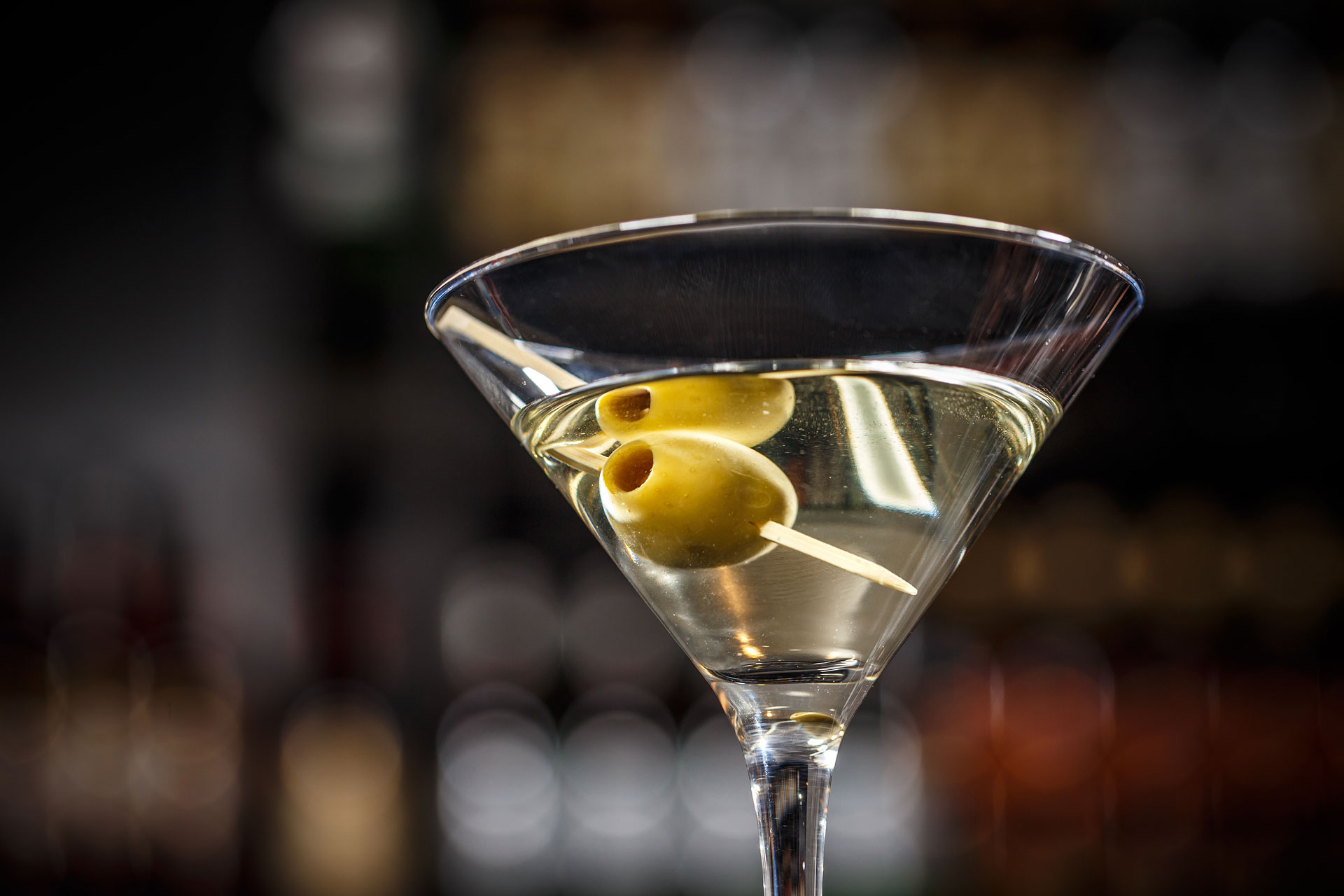
The Knickerbocker Martini: Recipe and Origin Story
The Knickerbocker Martini
The Knickerbocker Martini: Recipe and Origin Story
The Knickerbocker Martini, created at New York City’s Knickerbocker Hotel, is often hailed as the first dry martini. Whether that claim is true depends on whom you ask. Few cocktails have inspired so much debate over so few ingredients, and the dry martini’s origin story is packed with competing recipes, rival bartenders, and strong opinions. While the Knickerbocker may not have been the first to mix gin and dry vermouth, it helped define a cocktail that would become one of the most enduring drinks in history.

Who invented the dry martini?
By the time the Knickerbocker Martini appeared in 1912, bartenders had already spent a decade experimenting with drier combinations of gin and vermouth. To understand how the modern dry martini came to be, it helps to trace the cocktail’s evolution through a handful of influential recipes.
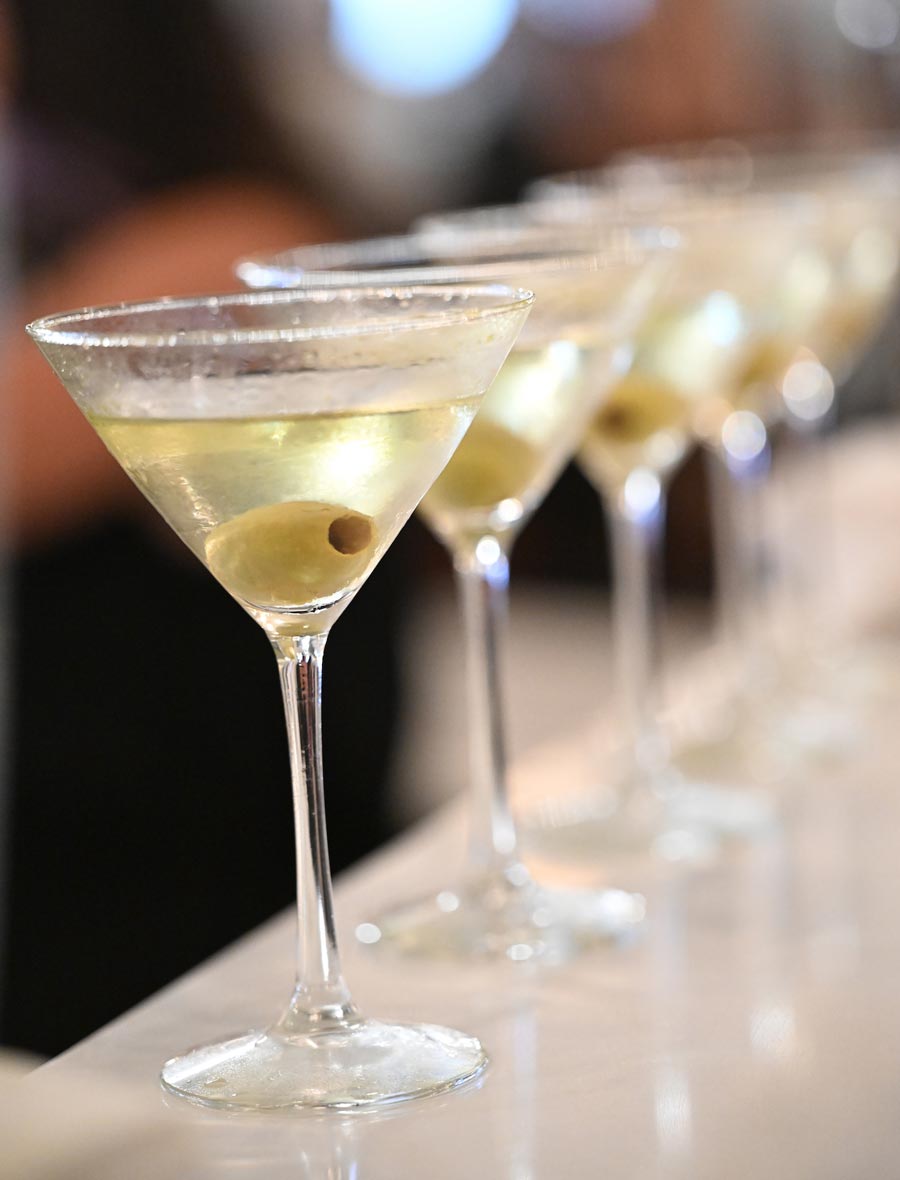
- 1880s: About 30 years prior in the, cocktail enthusiasts enjoyed the Martinez Cocktail, a sweeter cousin to the martini, made with Old Tom gin, sweet vermouth, and maraschino liqueur.
- 1900: Around the turn of the century, American bartender Harry Johnson published Bartender’s Manual. The manual included the Marguerite Cocktail, the first-recorded recipe using Plymouth gin and dry French vermouth. This recipe served as the blueprint for the modern dry martini.
- 1904: Frank Newman, a bartender at the Ritz Paris, published the book American-Bar, which contained the first-recorded recipe explicitly titled Dry Martini Cocktail.
- 1912: Bartender Martini di Arma di Taggia at New York’s Knickerbocker Hotel mixed what is often called the first dry martini, combining gin, dry vermouth, and bitters. The recipe came to be known as the Knickerbocker Martini—or the Knickerbocker Dry Martini.
Knickerbocker Martini to modern day
Regardless of which came first, none of these earlier recipes quite resembles what we’ve come to expect from a dry martini today. The modern, almost pure-gin versions are very different from the original proportions, which leaned closer to a 2:1 or even 50/50 ratio. The following historical versions of the dry martini track its evolution from a smooth, equal-parts drink to an ultra-dry classic.
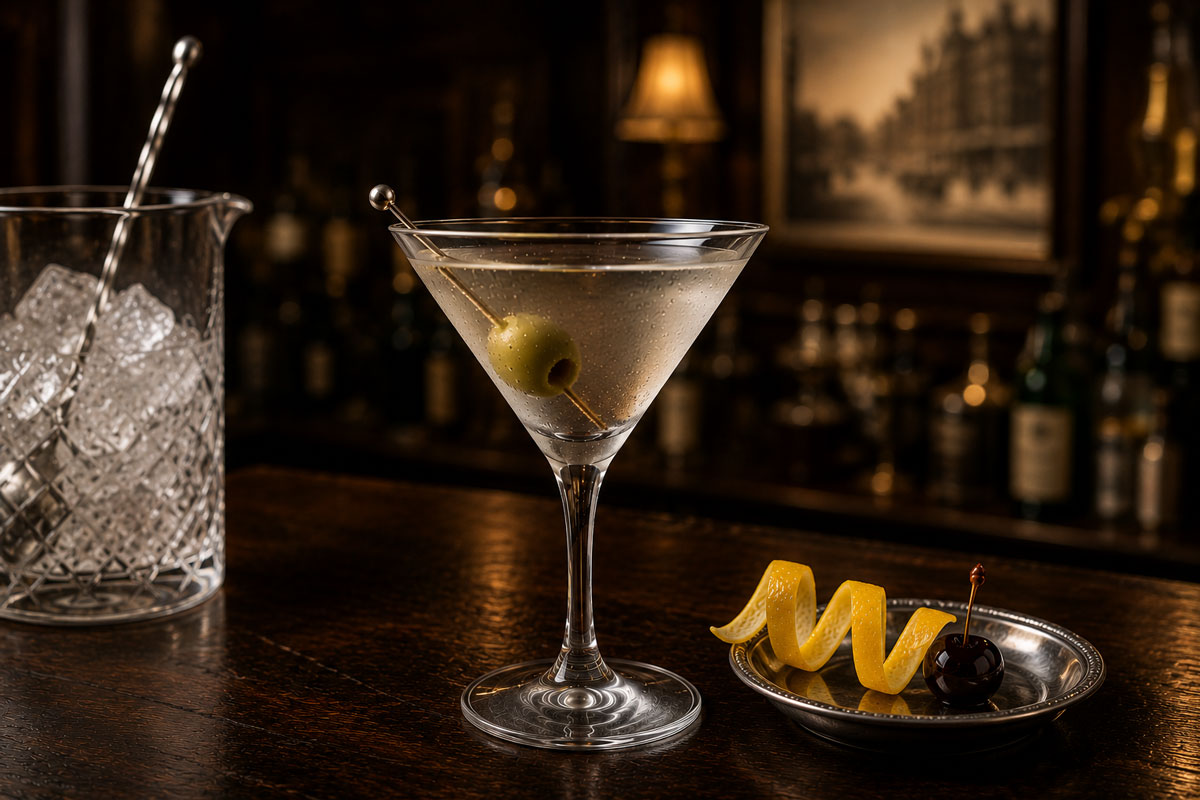
1. Frank Newman’s 1904 dry martini cocktail
This early French recipe relies on a high volume of vermouth and a splash of citrus liqueur to balance the spirit.
Ingredients:
- 1.5 oz London dry gin
- 1.5 oz dry vermouth
- 3 dashes Angostura or orange bitters
- Lemon twist, cherry, or olive for garnish
Preparation:
- Stir all ingredients with ice until freezing cold.
- Strain into a chilled glass.
- Garnish as desired.
1. Frank Newman’s 1904 dry martini cocktail
This early French recipe relies on a high volume of vermouth and a splash of citrus liqueur to balance the spirit.
Ingredients:
- 1.5 oz London dry gin
- 1.5 oz dry vermouth
- 3 dashes Angostura or orange bitters
- Lemon twist, cherry, or olive for garnish
Preparation:
- Stir all ingredients with ice until freezing cold.
- Strain into a chilled glass.
- Garnish as desired.
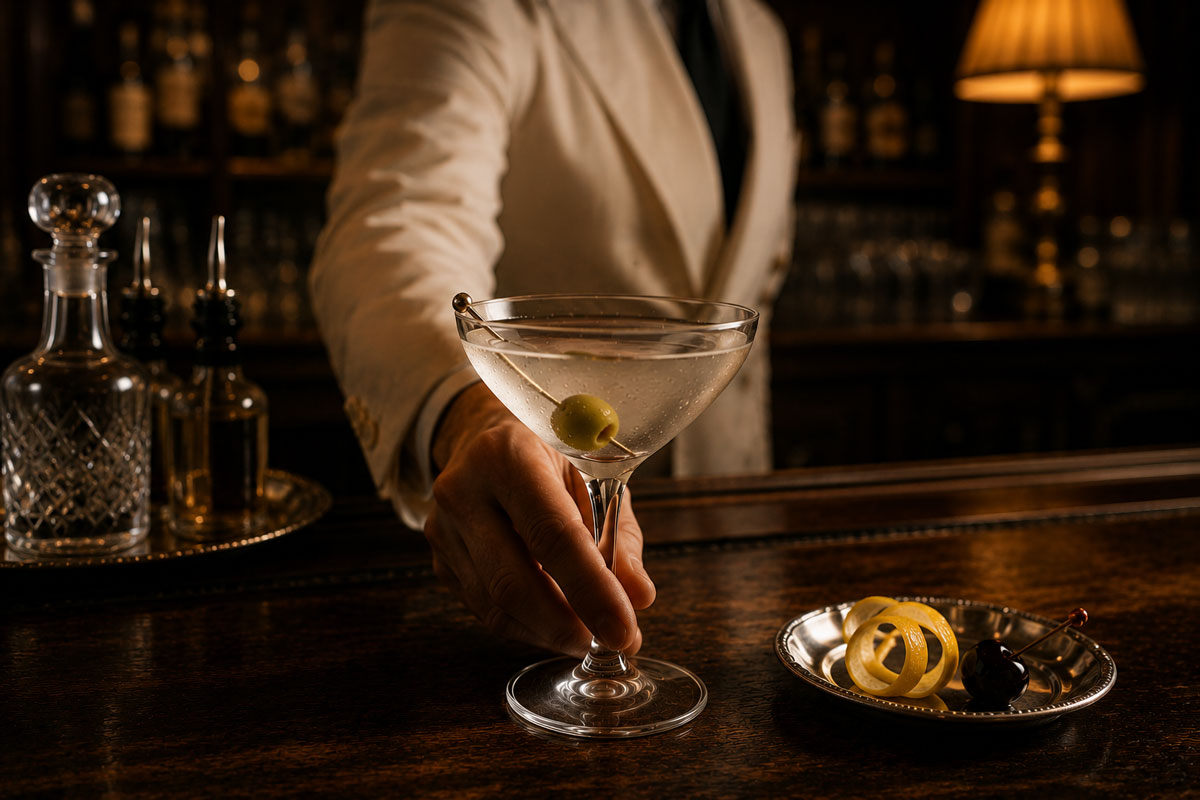
2. The 1912 Knickerbocker Martini recipe
While the Knickerbocker Hotel was one of the hottest bars in New York City at the time, the original Knickerbocker Martini recipe is hard to come by. The strongest historical evidence points to a 50/50 gin-to-dry-vermouth ratio with orange bitters, which is much closer to Frank Newman’s 1904 recipe than to the ultra-dry martinis that came later.
Ingredients:
- 1.5 oz London dry gin
- 1.5 oz dry vermouth
- 2 dashes orange bitters
- Lemon twist or olive for garnish
Preparation:
- Stir thoroughly with cracked ice.
- Strain into a coupe glass.
- Garnish with a single green olive.
2. The 1912 Knickerbocker Martini recipe
While the Knickerbocker Hotel was one of the hottest bars in New York City at the time, the original Knickerbocker Martini recipe is hard to come by. The strongest historical evidence points to a 50/50 gin-to-dry-vermouth ratio with orange bitters, which is much closer to Frank Newman’s 1904 recipe than to the ultra-dry martinis that came later.
Ingredients:
- 1.5 oz London dry gin
- 1.5 oz dry vermouth
- 2 dashes orange bitters
- Lemon twist or olive for garnish
Preparation:
- Stir thoroughly with cracked ice.
- Strain into a coupe glass.
- Garnish with a single green olive.
3. The modern “bone dry” martini
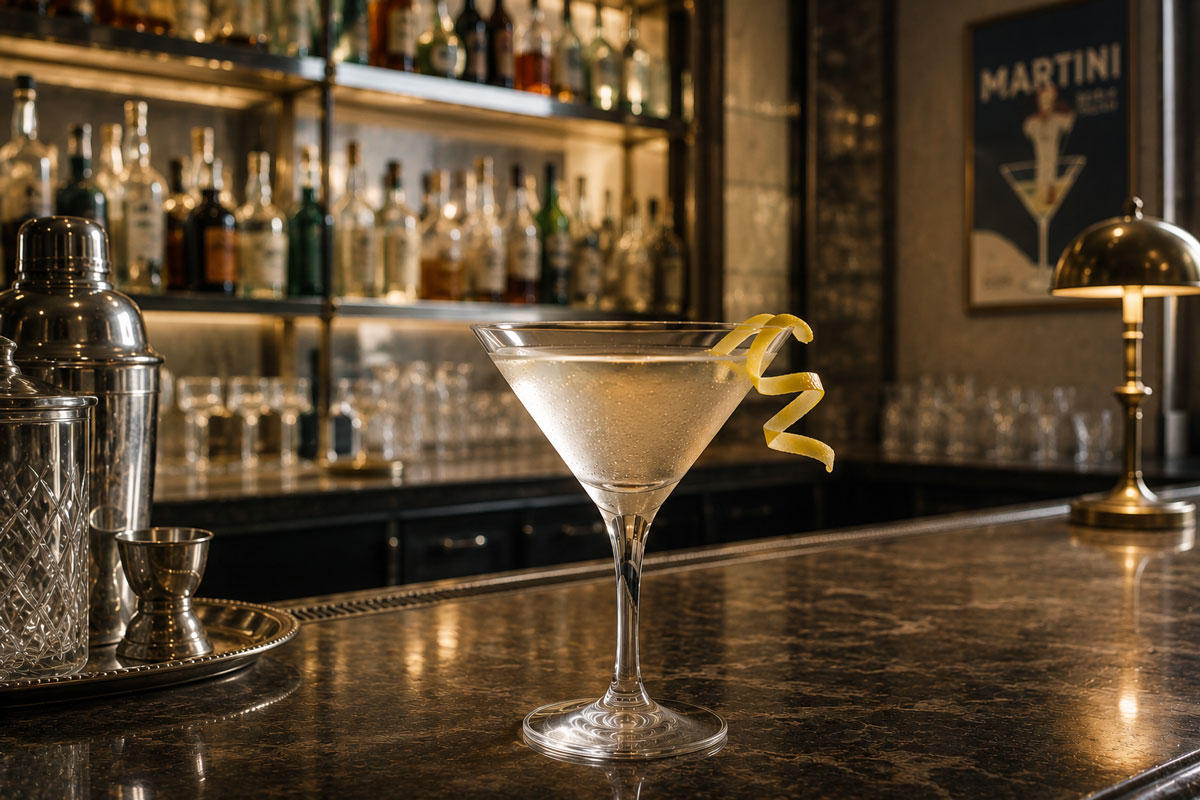
The bone dry martini arrived in the around the 1950s, reflecting evolving tastes in mid-century America. This dry martini recipe reduces vermouth to a whisper, letting the gin completely dominate.
Ingredients:
- 2.5 oz high-proof London dry gin
- 1 splash dry French vermouth
Preparation:
- Coat the inside of a chilled martini glass with vermouth and discard the excess liquid.
- Shake or stir the gin rapidly with ice until ice-cold.
- Strain into the rinsed glass.
- Garnish with an olive or a lemon twist.
3. The modern “bone dry” martini
The bone dry martini arrived in the around the 1950s, reflecting evolving tastes in mid-century America. This dry martini recipe reduces vermouth to a whisper, letting the gin completely dominate.
Ingredients:
- 2.5 oz high-proof London dry gin
- 1 splash dry French vermouth
Preparation:
- Coat the inside of a chilled martini glass with vermouth and discard the excess liquid.
- Shake or stir the gin rapidly with ice until ice-cold.
- Strain into the rinsed glass.
- Garnish with an olive or a lemon twist.
4. The Knickerbocker Martini recipe today
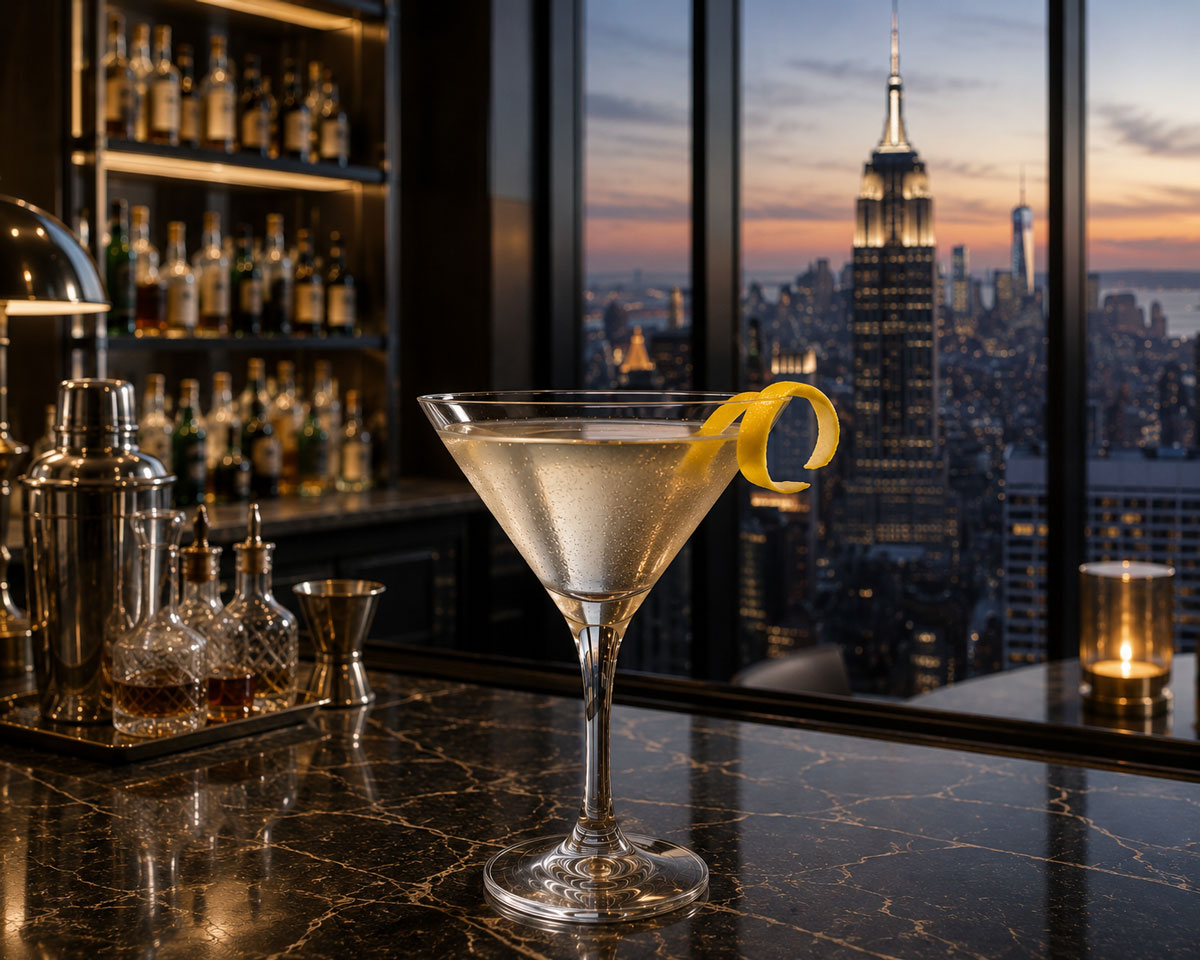
Today, the Knickerbocker hotel serves what is essentially a Perfect Martini—using both dry and sweet vermouth—which bridges the gap between the sweeter pre-martini cocktails and the ultra-dry versions that became popular later.
Ingredients:
- 2 oz London dry or Tanqueray No. Ten gin
- 3/4 oz dry vermouth
- 1/2 oz sweet vermouth
- 1 dash orange bitters
- 1 dash citrus bitters
- Lemon peel for garnish
Preparation:
- Add all ingredients to a mixing glass with ice.
- Stir until thoroughly chilled.
- Strain into a chilled martini glass.
- Garnish with a lemon peel.
4. The Knickerbocker Martini recipe today
Today, the Knickerbocker hotel serves what is essentially a Perfect Martini—using both dry and sweet vermouth—which bridges the gap between the sweeter pre-martini cocktails and the ultra-dry versions that became popular later.
Ingredients:
- 2 oz London dry or Tanqueray No. Ten gin
- 3/4 oz dry vermouth
- 1/2 oz sweet vermouth
- 1 dash orange bitters
- 1 dash citrus bitters
- Lemon peel for garnish
Preparation:
- Add all ingredients to a mixing glass with ice.
- Stir until thoroughly chilled.
- Strain into a chilled martini glass.
- Garnish with a lemon peel.
The Knickerbocker Martini, tableside
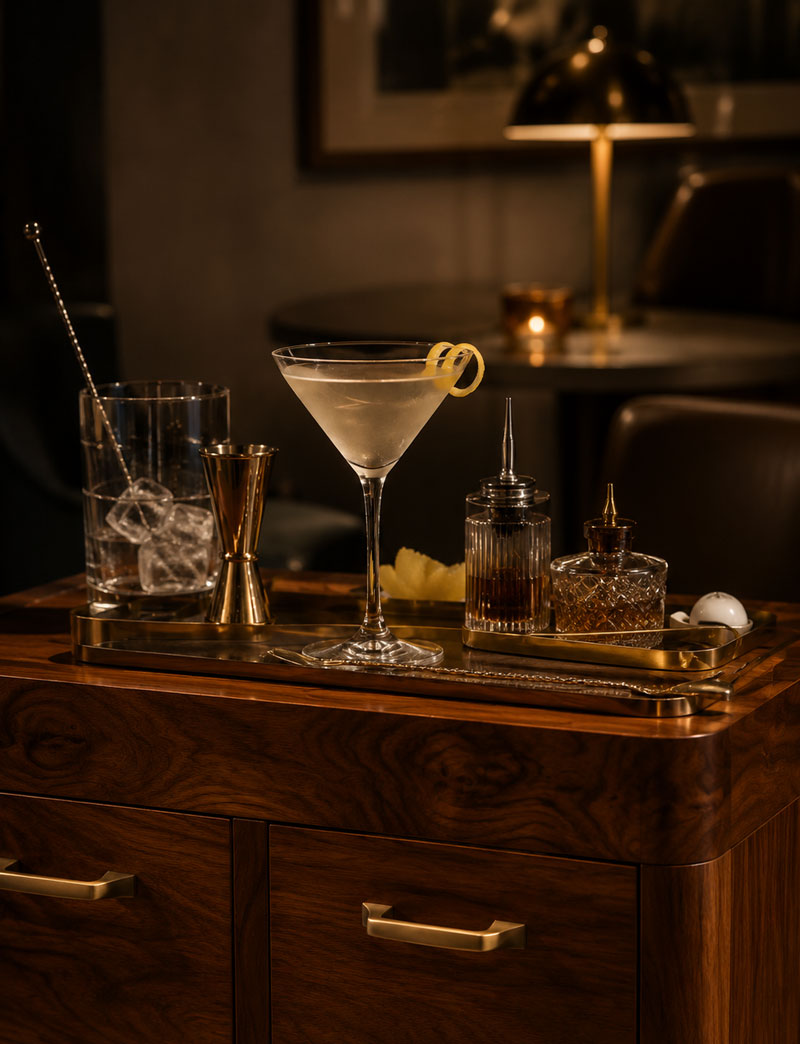
More than a century after helping define the dry martini, the Knickerbocker Hotel continues to celebrate the cocktail with its signature tableside martini service at the Martini Lounge.
Rather than arriving pre-made from behind the bar, each martini is prepared and finished beside the guest, turning a simple cocktail into a memorable ritual.
The experience emphasizes the details that martini enthusiasts appreciate most: ice-cold glassware, carefully measured ingredients, and a personalized garnish.
The result is equal parts theater and craftsmanship. It’s a fitting tribute to a cocktail whose history has been shaped by generations of bartenders obsessed with perfecting every ounce of gin and vermouth.
A century of refinement
The Knickerbocker Martini reminds us that the dry martini wasn’t born dry—it got there one ounce of vermouth at a time.
While historians may continue to argue over who deserves credit, martini lovers can raise a glass to the generations of bartenders who kept refining the recipe (including our own Altamura Martini).
The Knickerbocker Martini, tableside
More than a century after helping define the dry martini, the Knickerbocker Hotel continues to celebrate the cocktail with its signature tableside martini service at the Martini Lounge. Rather than arriving pre-made from behind the bar, each martini is prepared and finished beside the guest, turning a simple cocktail into a memorable ritual. The experience emphasizes the details that martini enthusiasts appreciate most: ice-cold glassware, carefully measured ingredients, and a personalized garnish. The result is equal parts theater and craftsmanship. It’s a fitting tribute to a cocktail whose history has been shaped by generations of bartenders obsessed with perfecting every ounce of gin and vermouth.
A century of refinement
The Knickerbocker Martini reminds us that the dry martini wasn’t born dry—it got there one ounce of vermouth at a time.
While historians may continue to argue over who deserves credit, martini lovers can raise a glass to the generations of bartenders who kept refining the recipe (including our own Altamura Martini).
Photo Credits
Knickerbocker Hotel, New York:
Epicgenius, via Wikimedia Commons
licensed under CC BY-SA 4.0

Nicole Bump
Nicole is a seasoned content strategist and writer with 15+ years of experience turning complex ideas into compelling stories. As founder of Bump Inbound, she helps brands connect with audiences through thoughtful strategy, sharp planning, and standout writing.

6 sophisticated Champagne cocktails from luxury hotel bars
Champagne cocktails
6 sophisticated Champagne cocktails from luxury hotel bars
Looking for a Champagne cocktail with a little more pizzazz than the traditional mimosa? Look no further. Around the turn of the 20th century, many luxury hotel bars crafted their own Champagne cocktails to celebrate the era’s opulence. These beverages boosted revenue by mixing expensive Champagne with spirits and modifiers to suit refined tastes while setting the standard for modern glamour. Choose one or more of the following sophisticated Champagne cocktails to elevate your next menu.
The Ritz 75 (Ritz Paris)
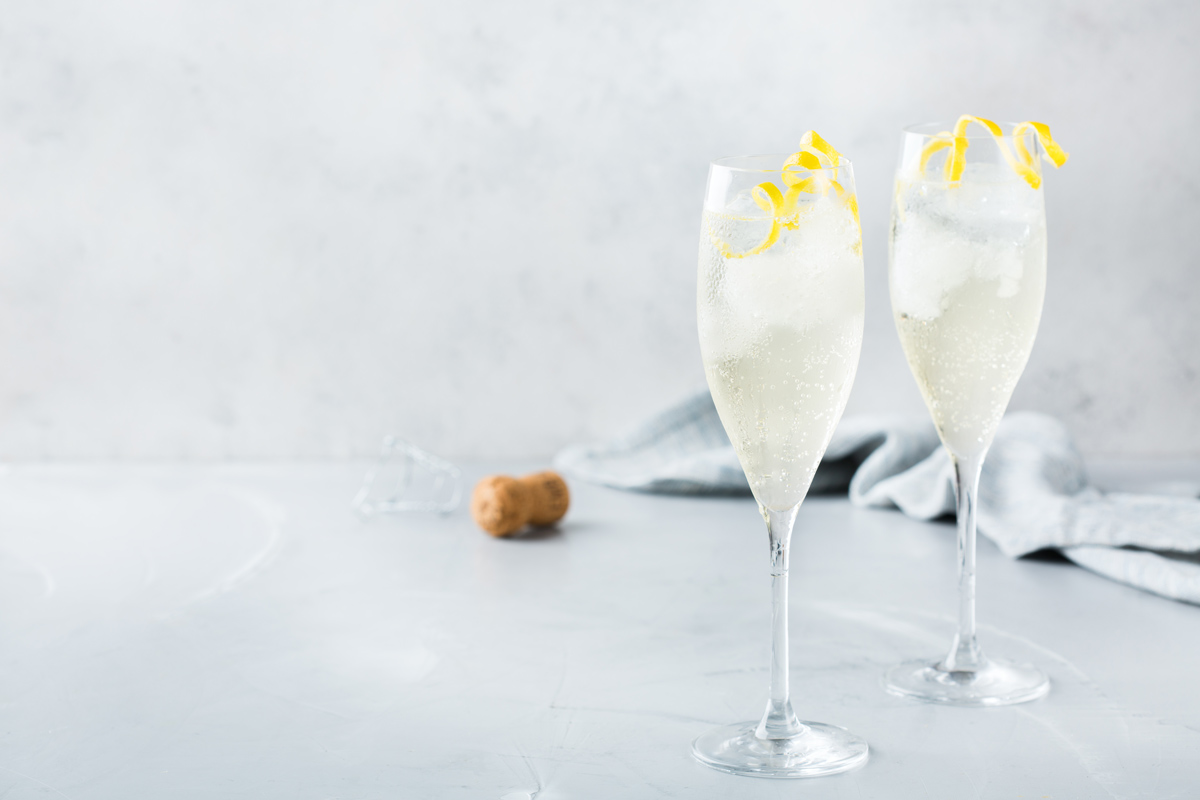
Like the mimosa, the Ritz 75 cocktail originated at the Ritz Paris. The beverage is a signature, citrus-forward variation of the classic French 75 cocktail, refined by bartender Colin Peter Field at Bar Hemingway inside the Ritz. While the original French 75 was invented in Paris around 1915, this specific, modern variation was popularized at the Ritz in the late 20th century.
Ingredients:
- 1.5 oz gin
- 1.5 oz fresh lemon juice
- 1.5 oz fresh mandarin juice
- 1 tsp simple syrup or sugar
- Top with Champagne
- Lime and mandarin wheels/rinds for garnish
Preparation:
- Combine the lemon juice, mandarin juice, and simple syrup in a cocktail shaker.
- Add ice and the gin to the shaker, and shake vigorously.
- Pour the mixture into two Champagne flutes.
- Top with Champagne.
- Garnish with lime and mandarin slices.
The Ritz 75 (Ritz Paris)
Like the mimosa, the Ritz 75 cocktail originated at the Ritz Paris. The beverage is a signature, citrus-forward variation of the classic French 75 cocktail, refined by bartender Colin Peter Field at Bar Hemingway inside the Ritz. While the original French 75 was invented in Paris around 1915, this specific, modern variation was popularized at the Ritz in the late 20th century.
Ingredients:
- 1.5 oz gin
- 1.5 oz fresh lemon juice
- 1.5 oz fresh mandarin juice
- 1 tsp simple syrup or sugar
- Top with Champagne
- Lime and mandarin wheels/rinds for garnish
Preparation:
- Combine the lemon juice, mandarin juice, and simple syrup in a cocktail shaker.
- Add ice and the gin to the shaker, and shake vigorously.
- Pour the mixture into two Champagne flutes.
- Top with Champagne.
- Garnish with lime and mandarin slices.
Death in the Afternoon (Bar Hemingway)
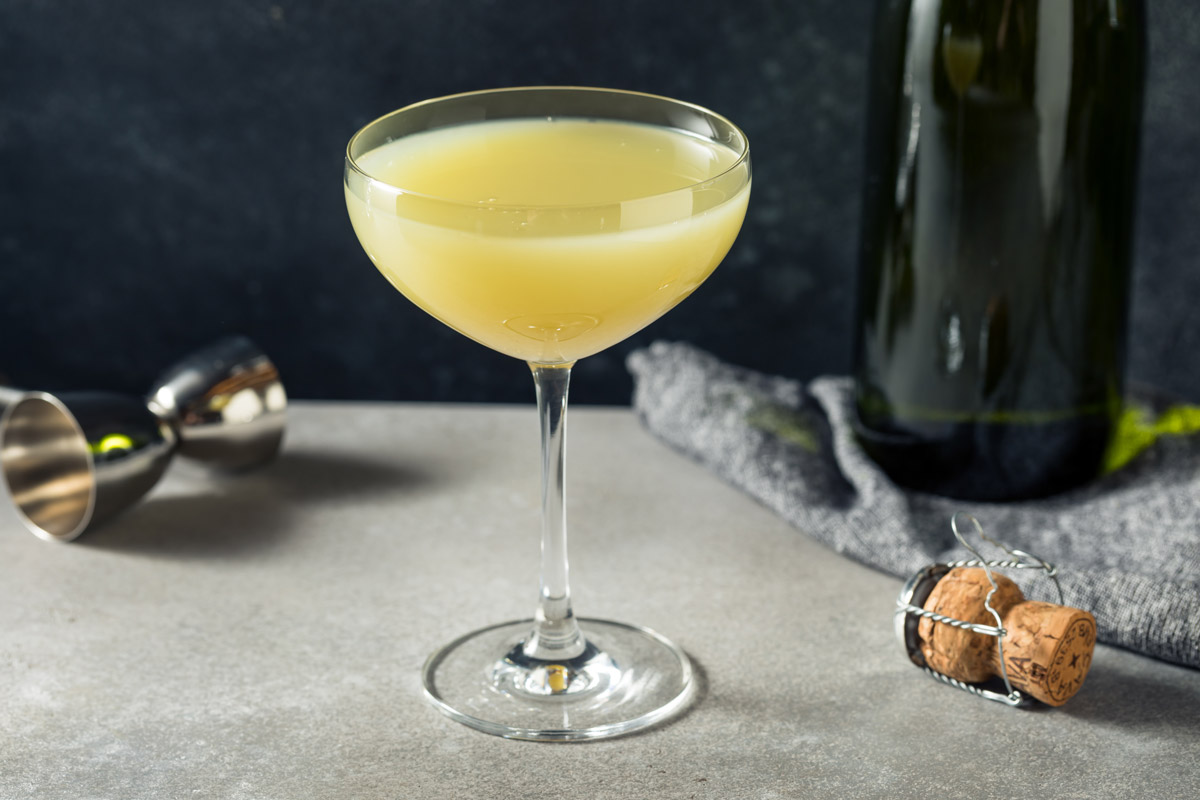
Bar Hemingway is well known for the Ritz 75, but fewer are familiar with Death in the Afternoon—a concoction from Ernest Hemingway himself. Created by Hemingway in 1932, this Champagne cocktail is often called “The Hemingway” or “Hemingway Champagne”, and it turns opalescent as the Champagne mixes with absinthe.
Ingredients:
- 1.5 oz absinthe
- 4.5 oz chilled Champagne
- Lemon twist garnish (optional)
Preparation:
- Pour the absinthe into a chilled champagne flute or coupe glass.
- Slowly top with the cold Champagne.
- Per Hemingway, “Drink three to five of these slowly.”
Death in the Afternoon (Bar Hemingway)
Bar Hemingway is well known for the Ritz 75, but fewer are familiar with Death in the Afternoon—a concoction from Ernest Hemingway himself. Created by Hemingway in 1932, this Champagne cocktail is often called “The Hemingway” or “Hemingway Champagne”, and it turns opalescent as the Champagne mixes with absinthe.
Ingredients:
- 1.5 oz absinthe
- 4.5 oz chilled Champagne
- Lemon twist garnish (optional)
Preparation:
- Pour the absinthe into a chilled champagne flute or coupe glass.
- Slowly top with the cold Champagne.
- Per Hemingway, “Drink three to five of these slowly.”
The King’s Champagne Cocktail (King Cole Bar)
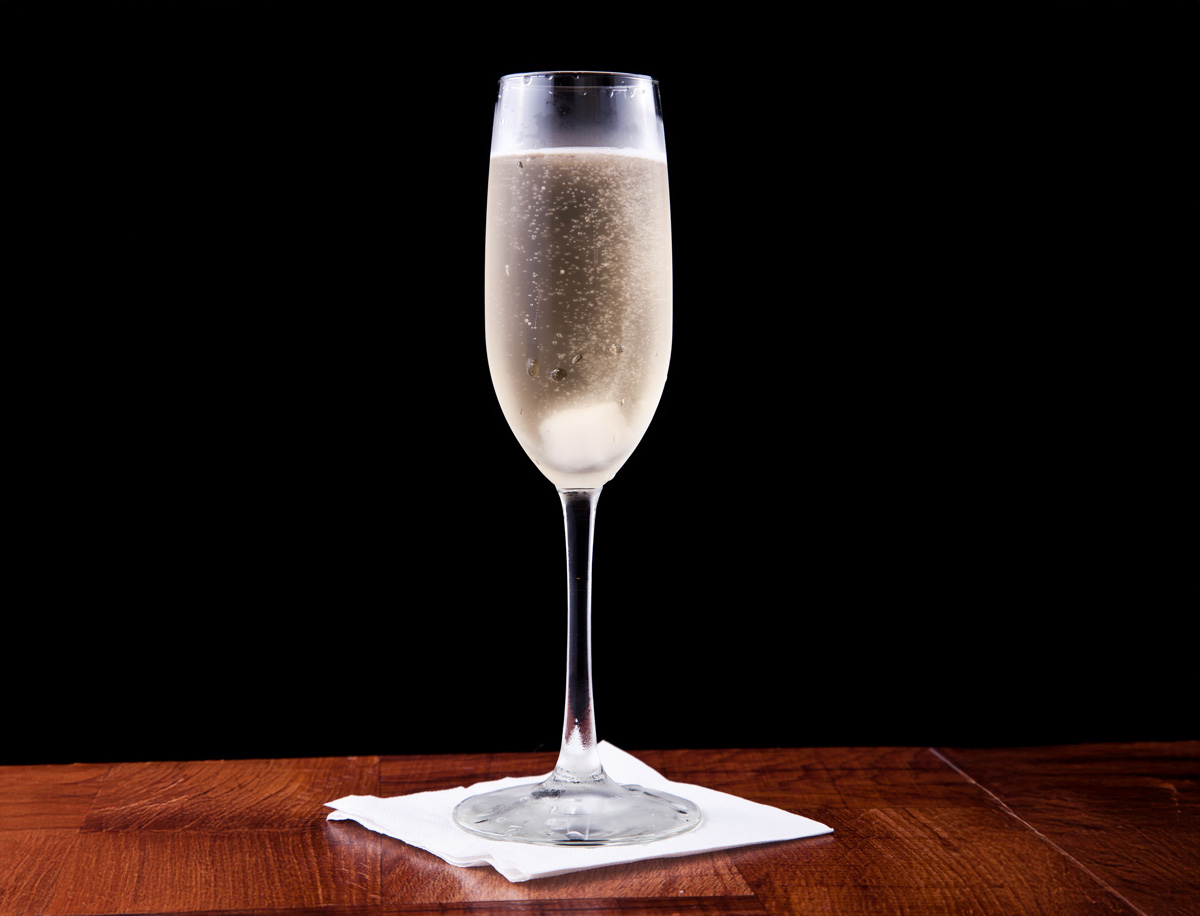
The King’s Champagne Cocktail from the King Cole Bar at the St. Regis (New York) is a staple of the historic Manhattan venue, often served alongside their famous Red Snapper Bloody Mary.
Ingredients:
- 1 oz Carpano Antica sweet vermouth
- 1 sugar cube
- Angostura bitters
- 4 oz Champagne
Preparation:
- Soak the sugar cube in Angostura bitters.
- Drop the cube into a champagne flute.
- Add the sweet vermouth.
- Top with chilled Champagne.
The King’s Champagne Cocktail (King Cole Bar)
The King’s Champagne Cocktail from the King Cole Bar at the St. Regis (New York) is a staple of the historic Manhattan venue, often served alongside their famous Red Snapper Bloody Mary.
Ingredients:
- 1 oz Carpano Antica sweet vermouth
- 1 sugar cube
- Angostura bitters
- 4 oz Champagne
Preparation:
- Soak the sugar cube in Angostura bitters.
- Drop the cube into a champagne flute.
- Add the sweet vermouth.
- Top with chilled Champagne.
Fleurissimo (Connaught Bar)
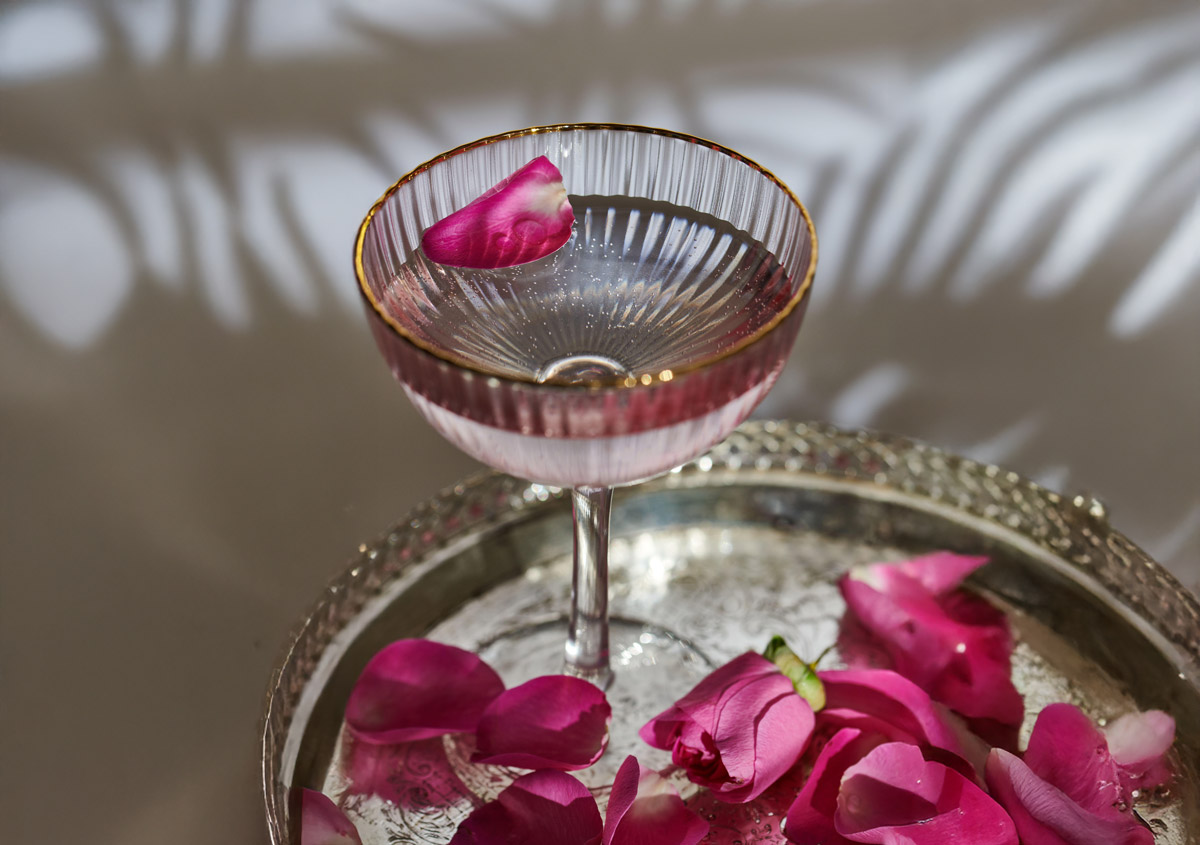
The Fleurissimo cocktail was created at the renowned Connaught Bar at the Connaught Hotel (London). A tribute to Grace Kelly, the drink was inspired by Creed Fleurissimo, the perfume commissioned by Prince Rainier for Grace to wear on her wedding day in 1956. Floral, elegant and unmistakably luxurious, the cocktail combines Champagne with violet liqueur for a delicate, perfumed profile that feels tailor-made for grand occasions.
Ingredients:
- .5 oz Rémy Martin VSOP Cognac
- 1 tsp Crème de Violette
- 1 white sugar cube
- 5 dashes Peychaud’s bitters
- Top with Champagne
- 1 rose petal for garnish
Preparation:
- Soak the sugar cube in Angostura bitters.
- Drop the cube into a champagne flute.
- Add the sweet vermouth.
- Top with chilled Champagne.
Fleurissimo (Connaught Bar)
The Fleurissimo cocktail was created at the renowned Connaught Bar at the Connaught Hotel (London). A tribute to Grace Kelly, the drink was inspired by Creed Fleurissimo, the perfume commissioned by Prince Rainier for Grace to wear on her wedding day in 1956. Floral, elegant and unmistakably luxurious, the cocktail combines Champagne with violet liqueur for a delicate, perfumed profile that feels tailor-made for grand occasions.
Ingredients:
- .5 oz Rémy Martin VSOP Cognac
- 1 tsp Crème de Violette
- 1 white sugar cube
- 5 dashes Peychaud’s bitters
- Top with Champagne
- 1 rose petal for garnish
Preparation:
- Soak the sugar cube in Angostura bitters.
- Drop the cube into a champagne flute.
- Add the sweet vermouth.
- Top with chilled Champagne.
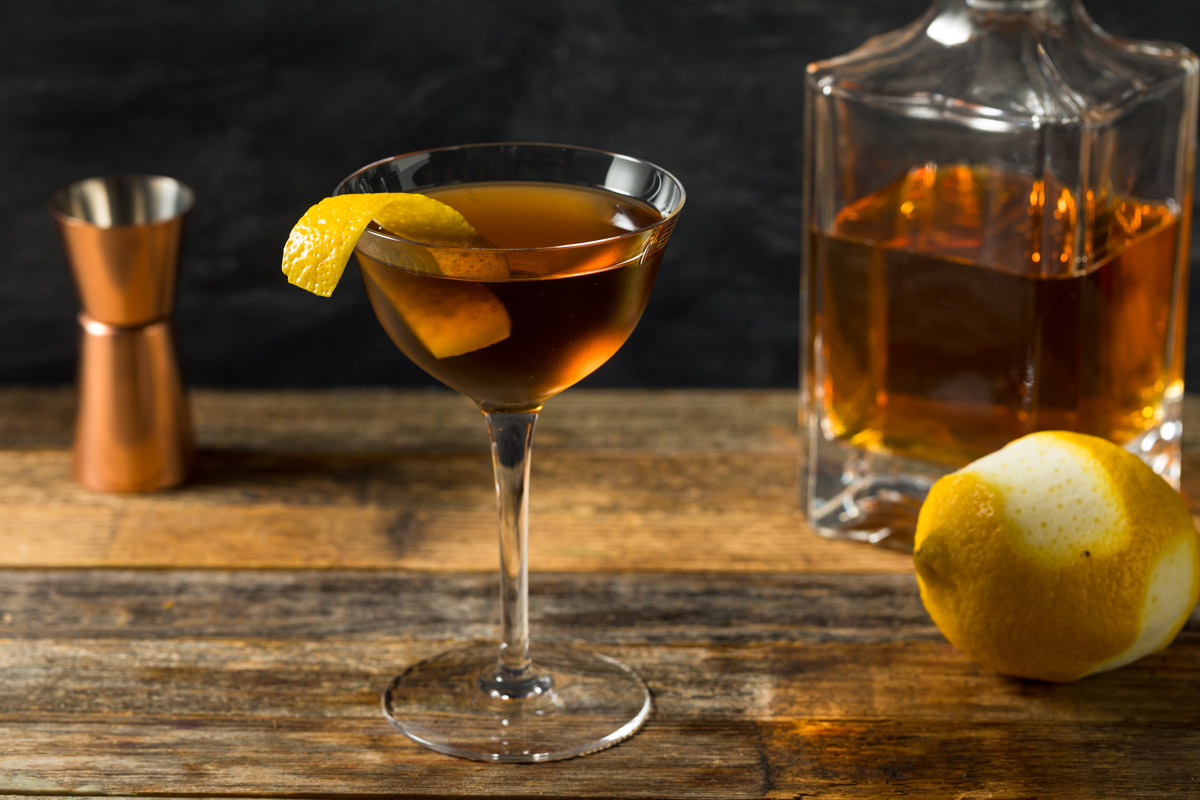
The Boothby (Pied Piper Bar)
The Boothby cocktail was created in the early 1900s by famed bartender William “Cocktail Bill” Boothby at the Pied Piper Bar in the Palace Hotel (San Francisco). Richer and more spirit-forward than many Champagne cocktails, it quickly became a favorite in San Francisco’s grand hotel bar scene during the city’s post-earthquake revival.
Ingredients:
- 1 oz rye whiskey
- 1 oz sweet vermouth
- 2 dashes Angostura bitters
- 2 dashes orange bitters
- Champagne to top
- Lemon twist garnish
Directions
- Combine the rye whiskey, sweet vermouth and bitters in a mixing glass with ice.
- Stir until well chilled.
- Strain into a chilled flute or coupe.
- Top with Champagne.
- Garnish with a lemon twist.
The Boothby (Pied Piper Bar)
The Boothby cocktail was created in the early 1900s by famed bartender William “Cocktail Bill” Boothby at the Pied Piper Bar in the Palace Hotel (San Francisco). Richer and more spirit-forward than many Champagne cocktails, it quickly became a favorite in San Francisco’s grand hotel bar scene during the city’s post-earthquake revival.
Ingredients:
- 1 oz rye whiskey
- 1 oz sweet vermouth
- 2 dashes Angostura bitters
- 2 dashes orange bitters
- Champagne to top
- Lemon twist garnish
Directions
- Combine the rye whiskey, sweet vermouth and bitters in a mixing glass with ice.
- Stir until well chilled.
- Strain into a chilled flute or coupe.
- Top with Champagne.
- Garnish with a lemon twist.
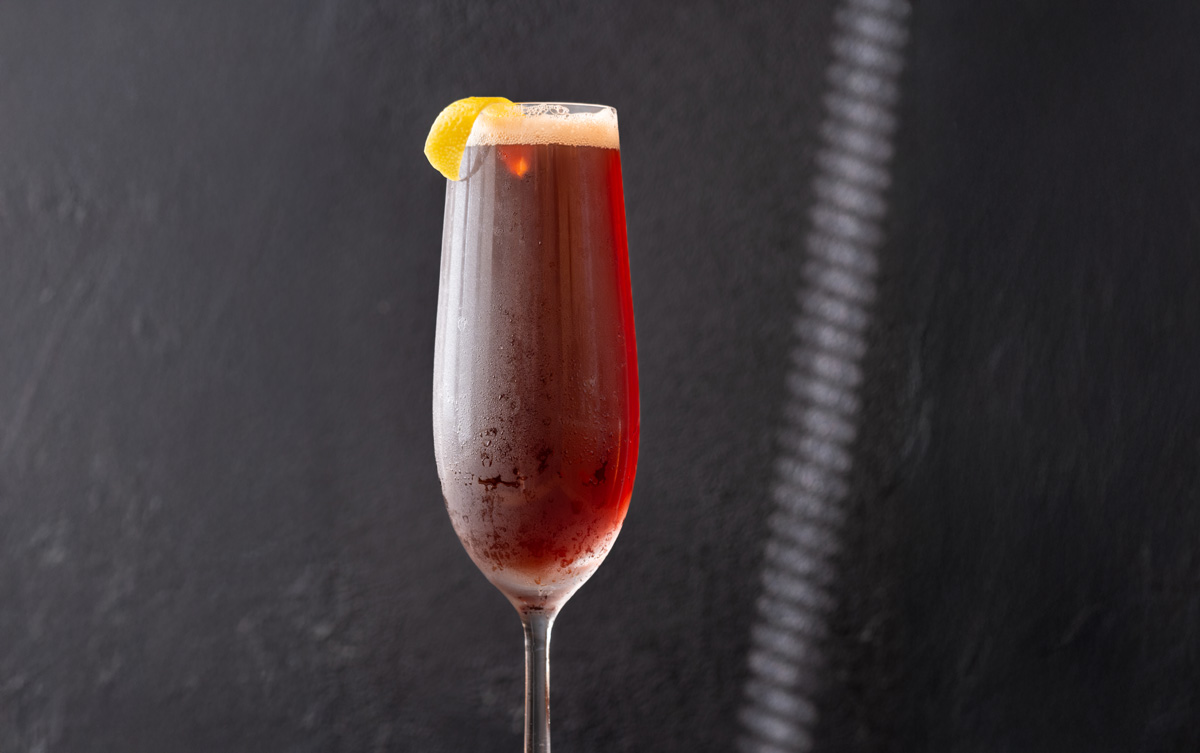
The Seelbach (Seelbach Hilton)
As the story goes, the Seelbach cocktail originated at The Seelbach Hotel (Louisville) in the early 1900s. Rumor had it that in 1917, a bartender accidentally spilled Champagne into a guest’s Manhattan, creating a perfect mixture—but this story is pure fiction. In reality, the Seelbach was created in 1995 by bartender Adam Seger and marketed as a pre-Prohibition recipe to intrigue guests and boost the hotel’s reputation. Despite its dubious origins, the Seelbach still brings together both Kentucky heritage and luxury hotel sophistication in a single glass.
Ingredients:
- 1 oz. bourbon
- .5 oz. triple sec
- 7 dashes Peychaud’s bitters
- 3 dashes of Angostura bitters
- 5 oz. Champagne
- Orange peel garnish
Preparation:
- Fill a mixing glass with ice.
- Add bourbon, triple sec, and bitters.
- Stir for 30 seconds until well-chilled.
- Strain into a champagne flute.
- Top with sparkling wine.
- Express oils from an orange twist, then add as garnish.
The Seelbach (Seelbach Hilton)
As the story goes, the Seelbach cocktail originated at The Seelbach Hotel (Louisville) in the early 1900s. Rumor had it that in 1917, a bartender accidentally spilled Champagne into a guest’s Manhattan, creating a perfect mixture—but this story is pure fiction. In reality, the Seelbach was created in 1995 by bartender Adam Seger and marketed as a pre-Prohibition recipe to intrigue guests and boost the hotel’s reputation. Despite its dubious origins, the Seelbach still brings together both Kentucky heritage and luxury hotel sophistication in a single glass.
Ingredients:
- 1 oz. bourbon
- .5 oz. triple sec
- 7 dashes Peychaud’s bitters
- 3 dashes of Angostura bitters
- 5 oz. Champagne
- Orange peel garnish
Preparation:
- Fill a mixing glass with ice.
- Add bourbon, triple sec, and bitters.
- Stir for 30 seconds until well-chilled.
- Strain into a champagne flute.
- Top with sparkling wine.
- Express oils from an orange twist, then add as garnish.
Want to branch beyond Champagne?
Luxury hotel bars have also been the birthplace of cocktails like the Vieux Carré, Rob Roy, Hank Panky, and Singapore Sling.
Nicole Bump
Nicole is a seasoned content strategist and writer with 15+ years of experience turning complex ideas into compelling stories. As founder of Bump Inbound, she helps brands connect with audiences through thoughtful strategy, sharp planning, and standout writing.
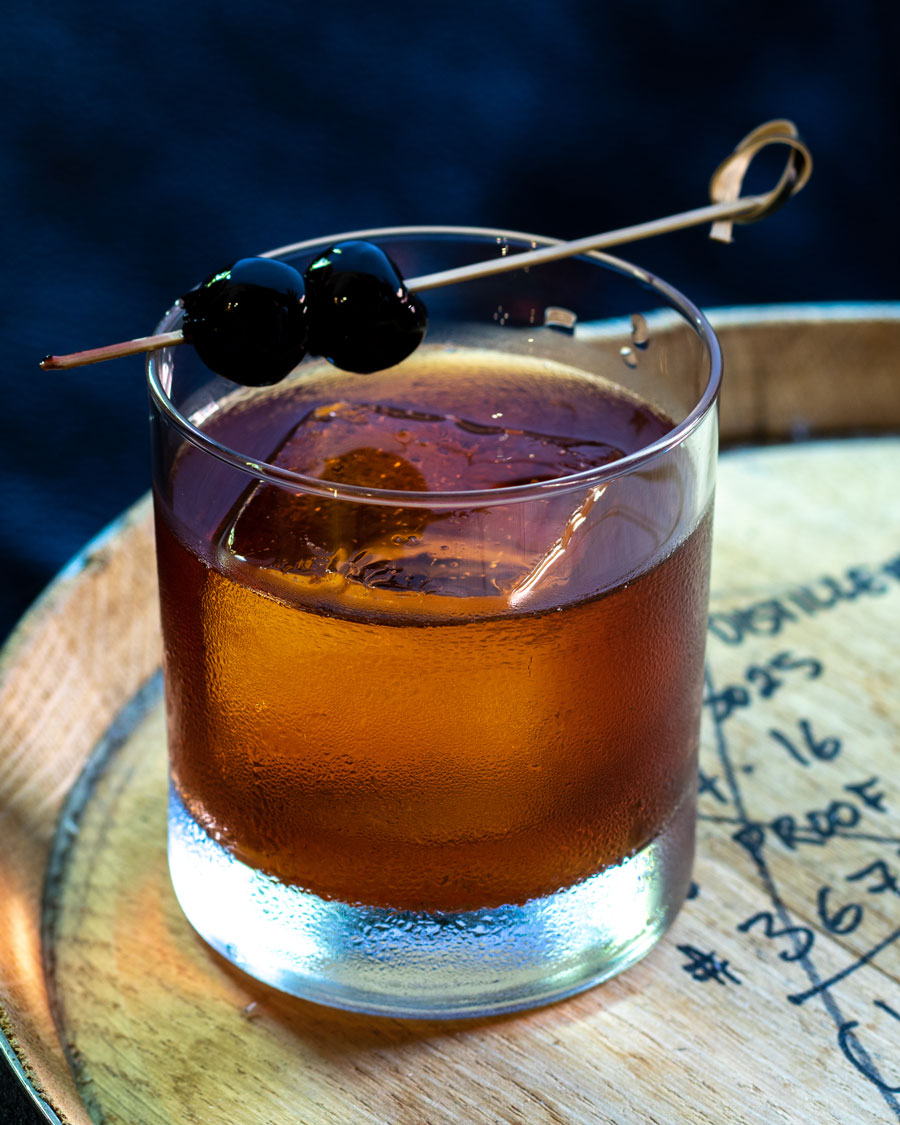
The Vieux Carré: Meaning, history & cocktail recipe
The Vieux Carré
Meaning, history & cocktail recipe
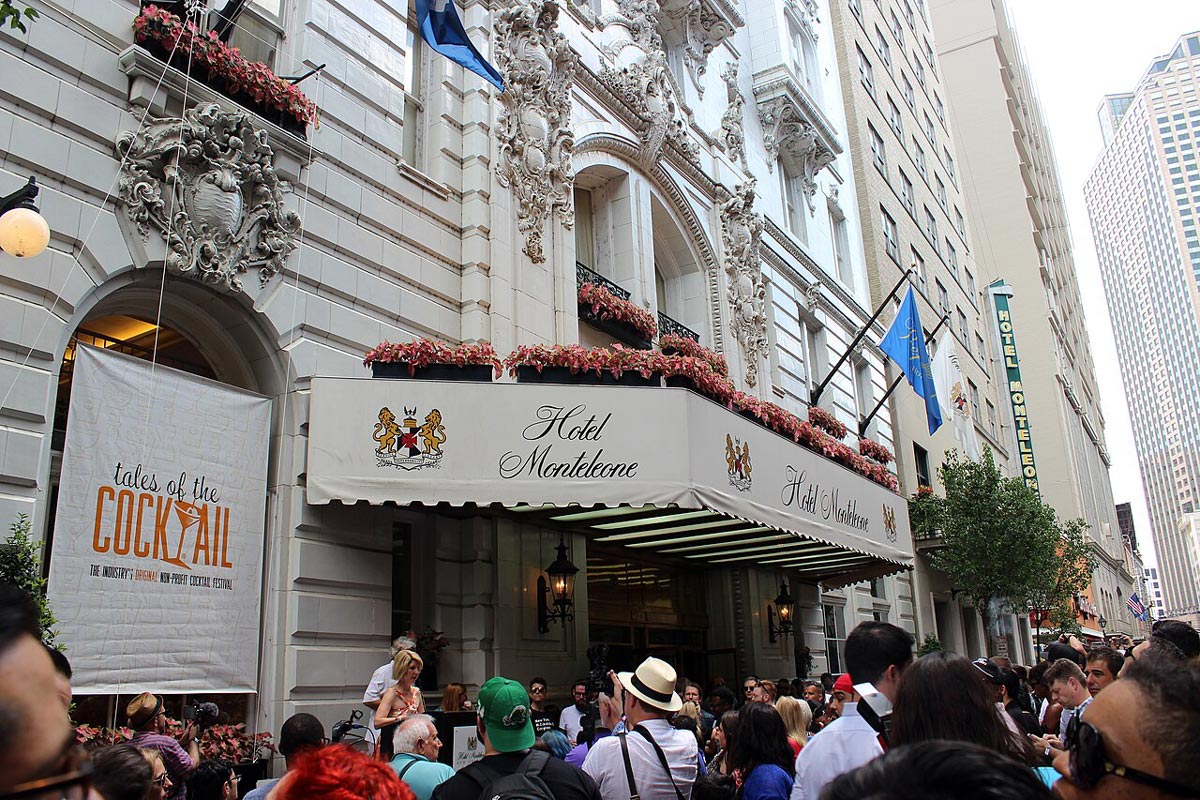
New Orleans’ Hotel Monteleone is famous for its revolving Carousel Bar. History also remembers the Monteleone for its Swan Room. This swanky supper club headlined the likes of Liberace and Andy Griffith. But before either of these venues existed, the Hotel Monteleone’s bar was already a hub of New Orleans cocktail culture—a more intimate, old-world lounge than the lively, spectacle-driven establishments that would follow.
And this is where the Vieux Carré cocktail was born.
Vieux Carré cocktail history
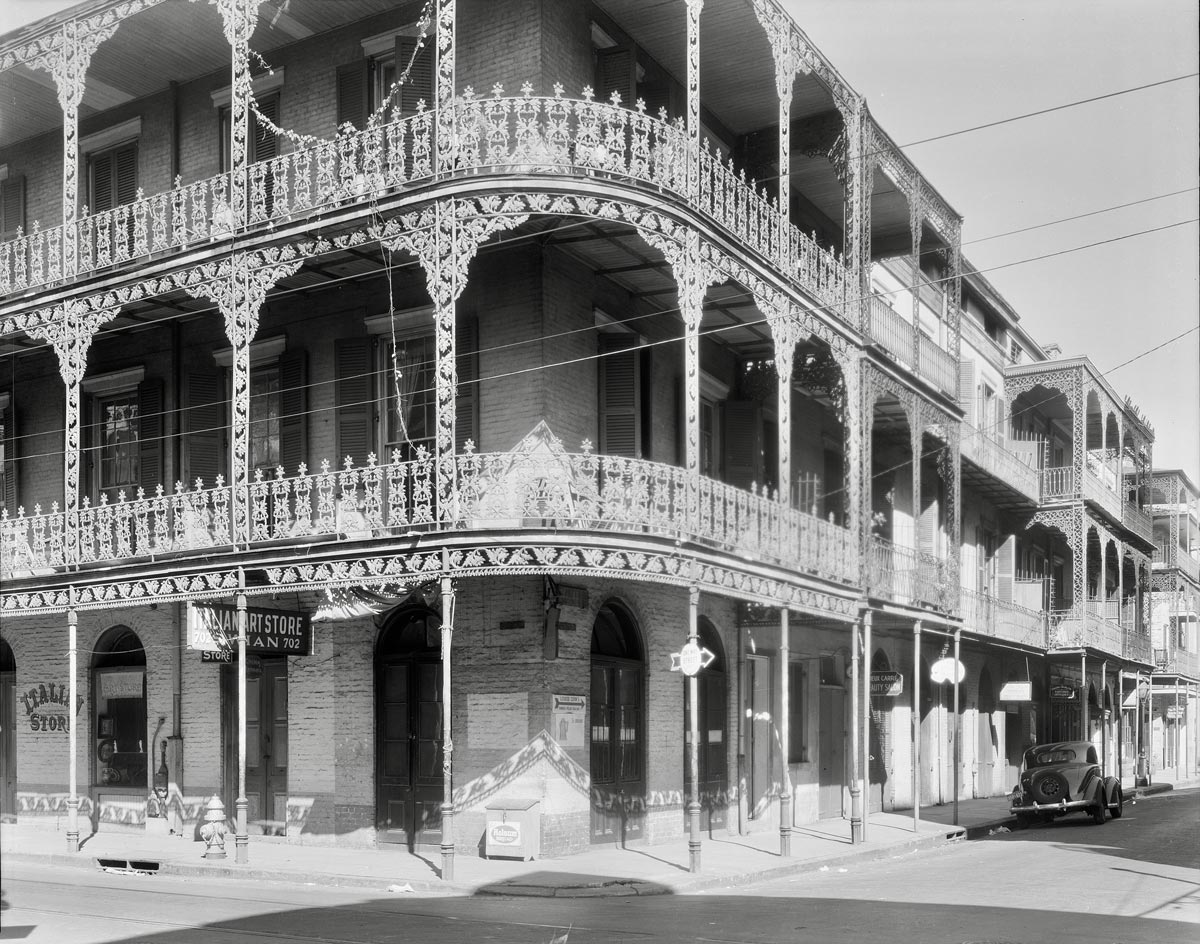
Picture narrow streets lined with wrought-iron balconies, hidden courtyards, and centuries-old Creole townhouses. Brass bands and piano riffs spill out of clubs at all hours. Artists, writers, and musicians of numerous nationalities abound, drawn by cheap rents and the area’s lively character. This was New Orleans’ French Quarter in the 1930s—and Walter Bergeron, head bartender at Hotel Monteleone, created the Vieux Carré cocktail to capture its essence. Bergeron sought to represent the diverse cultural groups that made up the city’s historic French Quarter at the time.
In mixing his invention, he used rye whiskey to represent Americans, cognac and Bénédictine to represent the French, sweet Vermouth for the Italians, and bitters the Caribbean community. Bergeron named the cocktail for the French Quarter, too. In French, ‘Vieux Carré’ means ‘Old Square’—another name for the original heart of New Orleans.
During her tenure at the American Bar, Coleman mentored her successor Harry Craddock, who later authored the legendary Savoy Cocktail Book. While Craddock is often remembered as the cocktail authority, it’s Coleman’s legacy that laid the foundation for the modern classic hotel bar.
Vieux Carré recipe
Bergeron’s recipe, a close cousin to the Manhattan, was first published in the 1937 book Famous New Orleans Drinks and How to Mix ‘Em by Stanley Clisby Arthur.
Ingredients:
- .75 oz Rémy Martin V.S.O.P. cognac
- .75 oz Strucchi Rosso vermouth (sweet vermouth)
- .33 oz Bénédictine
- 2 dashes Peychaud’s bitters
- 1 dash Angostura bitters
- Lemon twist (for garnish)
- Pineapple slice and cherry (optional garnish)
Directions
- Fill a mixing glass with ice.
- Add the bitters, rye, cognac, sweet vermouth, and Bénédictine.
- Stir until the mixture is well-chilled.
- Twist a slice of lemon peel over the drink to express its oils.
- Strain into a chilled glass.
- Garnish with a slice of pineapple and a cherry.
Tips for mixing the perfect Vieux Carré
Balance is everything with this cocktail. It’s rich, layered, and complex, but if one ingredient dominates, the whole beverage tips out of harmony.
-
1. Choose the right rye.
Go for a bold, spicy rye (like Sazerac, Rittenhouse, or Wild Turkey 101). You need something assertive enough to stand up to the sweetness of vermouth and Bénédictine.
-
2. Less is more on the Bénédictine.
It’s potent and sweet. A bar spoon is enough to give the drink complexity without overwhelming.
-
3. Bitters in balance.
Both Peychaud’s and Angostura are essential. One without the other throws the cocktail off. Peychaud’s gives brightness, while Angostura gives grounding spice.
Wondering how to pronounce ‘Vieux Carré’?
Vieux Carré is pronounced view kah-RAY. In New Orleans, you’ll sometimes hear locals with more of a Creole accent flatten it to voo kah-RAY. Both are understood, but if you want to sound closer to the French, go with the former.
Wondering how to pronounce ‘Vieux Carré’?
Vieux Carré is pronounced view kah-RAY. In New Orleans, you’ll sometimes hear locals with more of a Creole accent flatten it to voo kah-RAY. Both are understood, but if you want to sound closer to the French, go with the former.
Nicole Bump
Nicole is a seasoned content strategist and writer with 15+ years of experience turning complex ideas into compelling stories. As founder of Bump Inbound, she helps brands connect with audiences through thoughtful strategy, sharp planning, and standout writing.
5 refined holiday drinks from the world’s best hotel bars
Holiday drinks from the world’s best hotel bars
Holiday Drinks
Searching for festive yet refined holiday cocktail ideas to celebrate this season? Look no further—we’ve collected the best holiday drinks (and recipes) to elevate your end-of-year libations. From London’s Connaught Bar to New Orleans’ Hotel Monteleone, these signature cocktails bring together artistry, atmosphere, and the unmistakable joy of the season.
1. Gingerbread Hanky Panky
“My favorite Christmas sweet is gingerbread, which reconnects a lot with my childhood memories.”
Federico Balzarini
Former Beverage Manager
Argo Bar Hong Kong
Gingerbread Hanky Panky
The original Hanky Panky cocktail hailed from the American Bar at The Savoy (London) and is essentially a variation of a Sweet Martini (with the addition of Fernet-Branca). However, the holiday version of this cocktail was crafted by Federico Balzarini, who was Beverage Manager at the renowned Argo Bar Hong Kong.
To make a gingerbread hanky panky, you first need to infuse sweet vermouth with gingerbread cookies. This cookie-infused vermouth is used in place of the standard sweet vermouth for a holiday drink with a rich, festive flavor.
“My favorite Christmas sweet is gingerbread, which reconnects a lot with my childhood memories.”
Federico Balzarini
Former Beverage Manager
Argo Bar Hong Kong
How to make Gingerbread Hanky Panky
Chill a cocktail glass, such as a coupe or martini glass, in the freezer. Fill a mixing glass with ice. Add the gin, gingerbread-infused vermouth, and Fernet-Branca. Stir until the mixture is well-chilled. Strain into the chilled cocktail glass. Express the oil from the orange peel over the drink by pinching it, then drop the peel into the glass for garnish.
Ingredients:
- 1.5 oz London dry gin
- 1.5 oz gingerbread-infused sweet vermouth
- 2 dashes Fernet-Branca
- Orange peel, for garnish
The original Hanky Panky cocktail hailed from the American Bar at The Savoy (London) and is essentially a variation of a Sweet Martini (with the addition of Fernet-Branca). However, the holiday version of this cocktail was crafted by Federico Balzarini, who was Beverage Manager at the renowned Argo Bar Hong Kong.
To make a gingerbread hanky panky, you first need to infuse sweet vermouth with gingerbread cookies. This cookie-infused vermouth is used in place of the standard sweet vermouth for a holiday drink with a rich, festive flavor.
Ingredients:
- 1.5 oz London dry gin
- 1.5 oz gingerbread-infused sweet vermouth
- 2 dashes Fernet-Branca
- Orange peel, for garnish
Make the cocktail
- Chill a cocktail glass, such as a coupe or martini glass, in the freezer.
- Fill a mixing glass with ice.
- Add the gin, gingerbread-infused vermouth, and Fernet-Branca.
- Stir until the mixture is well-chilled.
- Strain into the chilled cocktail glass.
- Express the oil from the orange peel over the drink by pinching it, then drop the peel into the glass for garnish.
2. Santa Nog
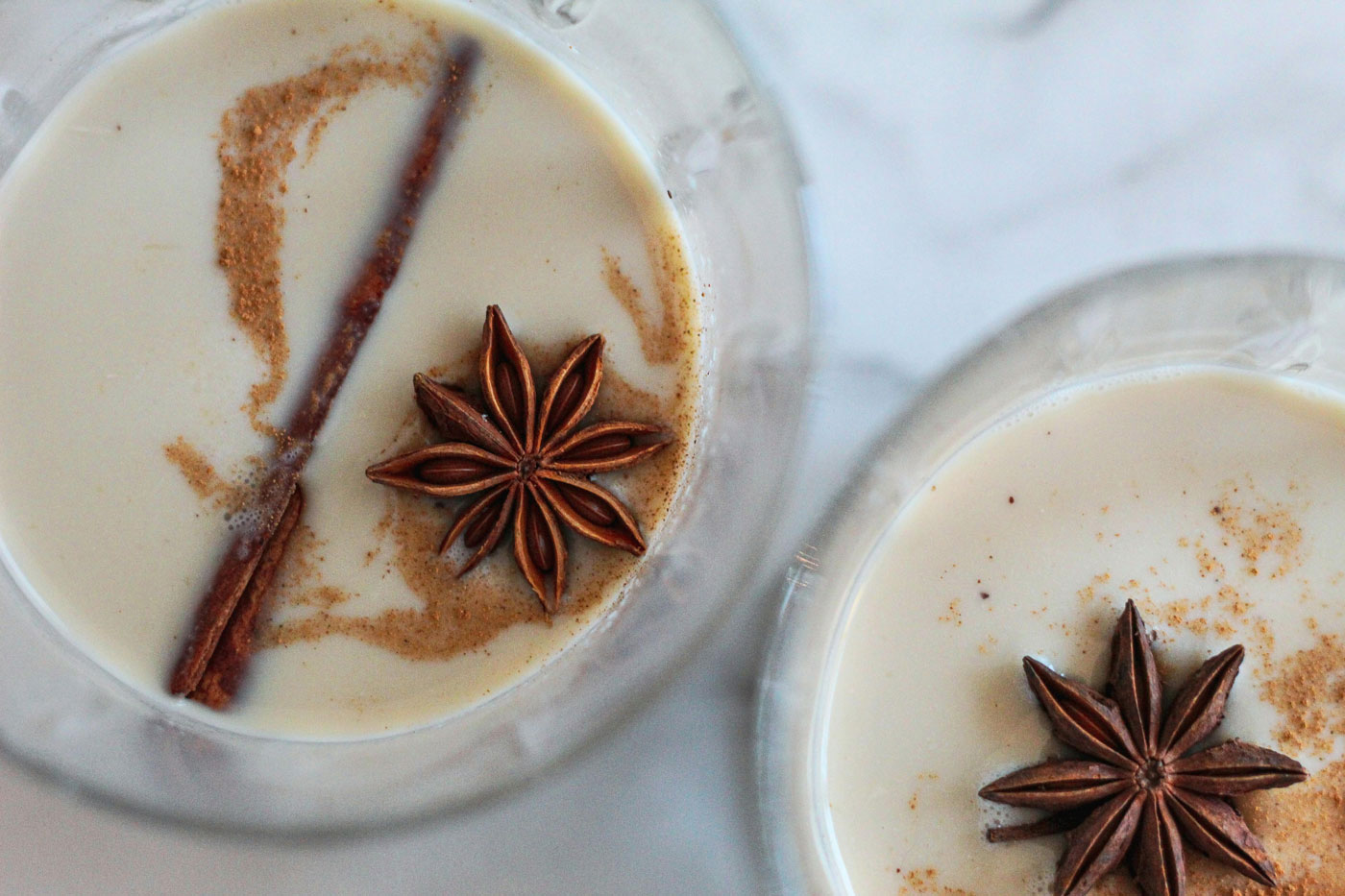
2. Santa Nog
Famous for its rotating Carousel Bar and Vieux Carré cocktail, Hotel Monteleone (New Orleans) is also home to Santa Nog—a creamy, dessert-like cocktail spiked with Scotch and Drambuie. This holiday drink is indulgent and carries the familiar comfort of holiday egg-nog, but with adult sophistication.
Santa Nog ingredients:
- 1 oz Drambuie
- 1/2 oz Scotch
- 3–4 dashes chocolate bitters
- 1 tsp vanilla extract or 3–4 drops vanilla bitters
- 4–5 oz half-and-half
- Freshly grated nutmeg
Make the cocktail
- Pour all liquids into an ice-filled shaker and shake until well blended and chilled.
- Strain into an ice-filled rocks glass.
- Garnish with a dusting of nutmeg.
3. Ginger Cuvée
The Ginger Cuvée is the kind of cocktail that feels like celebration in a glass—refined, aromatic, and just a little bit indulgent. Created at the award-winning Connaught Bar in the Connaught Hotel (London) for their Christmas menu, this holiday drink blends whisky’s fruit notes with warm spices and an effervescent champagne finish.
Ginger Cuvée cocktail ingredients:
- 1 oz Glenfiddich Grand Cru Whisky
- 1 oz Belsazar Riesling Vermouth
- 0.25 oz Nonino GingerSpirit
- 0.5 oz sugar syrup
- 3 dashes Hendrick’s Absinthe
- 2 oz Laurent-Perrier Champagne
- Wild carrot essence for garnish
Make the holiday cocktail
- Combine all ingredients except the champagne in a mixing glass with ice.
- Stir until well-chilled.
- Strain into a champagne flute.
- Top with the chilled Laurent-Perrier Champagne.
- Garnish with a crystallized ginger cube on a stick and a spray of wild carrot essence.
4. Mulled Wine
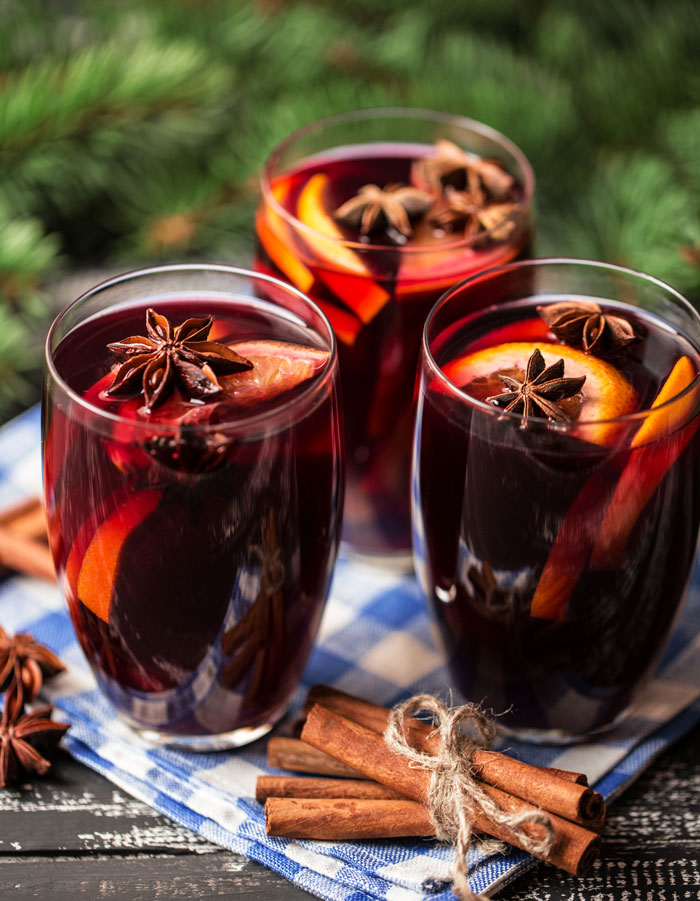
“Mulled wine is the ultimate winter elixir, where spices and red wine blend in perfect harmony to warm both body and soul.”
Philip Bischoff, Beverage Manager at Four Seasons Hotel Bangkok at Chao Phraya River
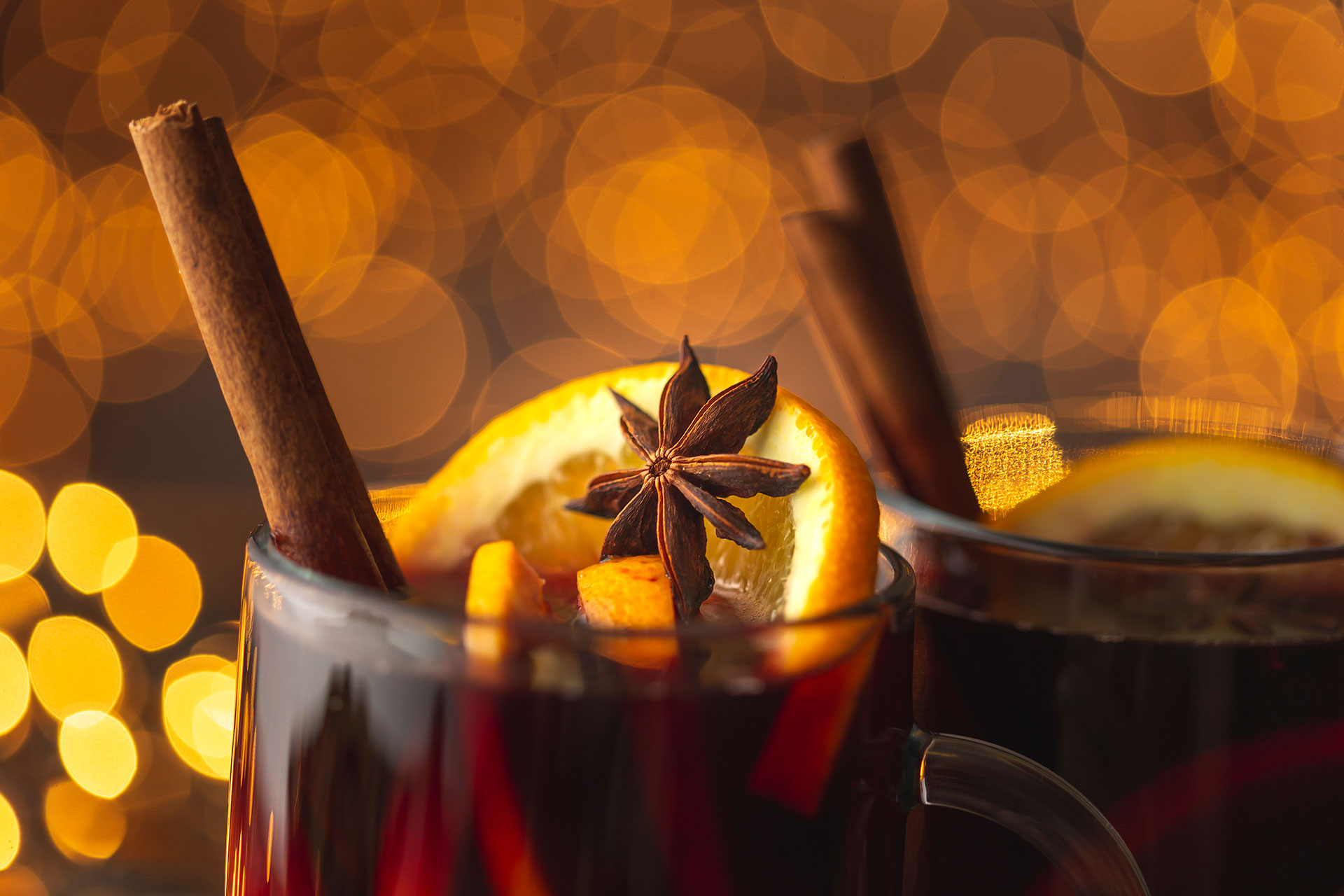
On a cold winter day, mulled wine will warm you up from the inside out. This version of the cocktail recipe has been perfected at the BKK Social Club within the Four Seasons Hotel Bangkok. Customize it to your liking by adding fresh red apples, pears, cranberries, or raisins while warming all ingredients.
Ingredients:
- 25 oz (one bottle) full-bodied red wine
- 0.75 cup white sugar
- Half orange
- 10 pieces cloves
- 3 pieces star anise
- 3.5 oz brandy (e.g. Pierre Ferrand 1840 Cognac)
- Cinnamon, star anise, and dried orange slices
Make the Mulled wine
- Mix all ingredients together.
- Heat mixture and keep it warm.
- Serve in a mulled wine glass garnished with cinnamon, star anise and dehydrated orange slices.
5. Winter Old Fashioned
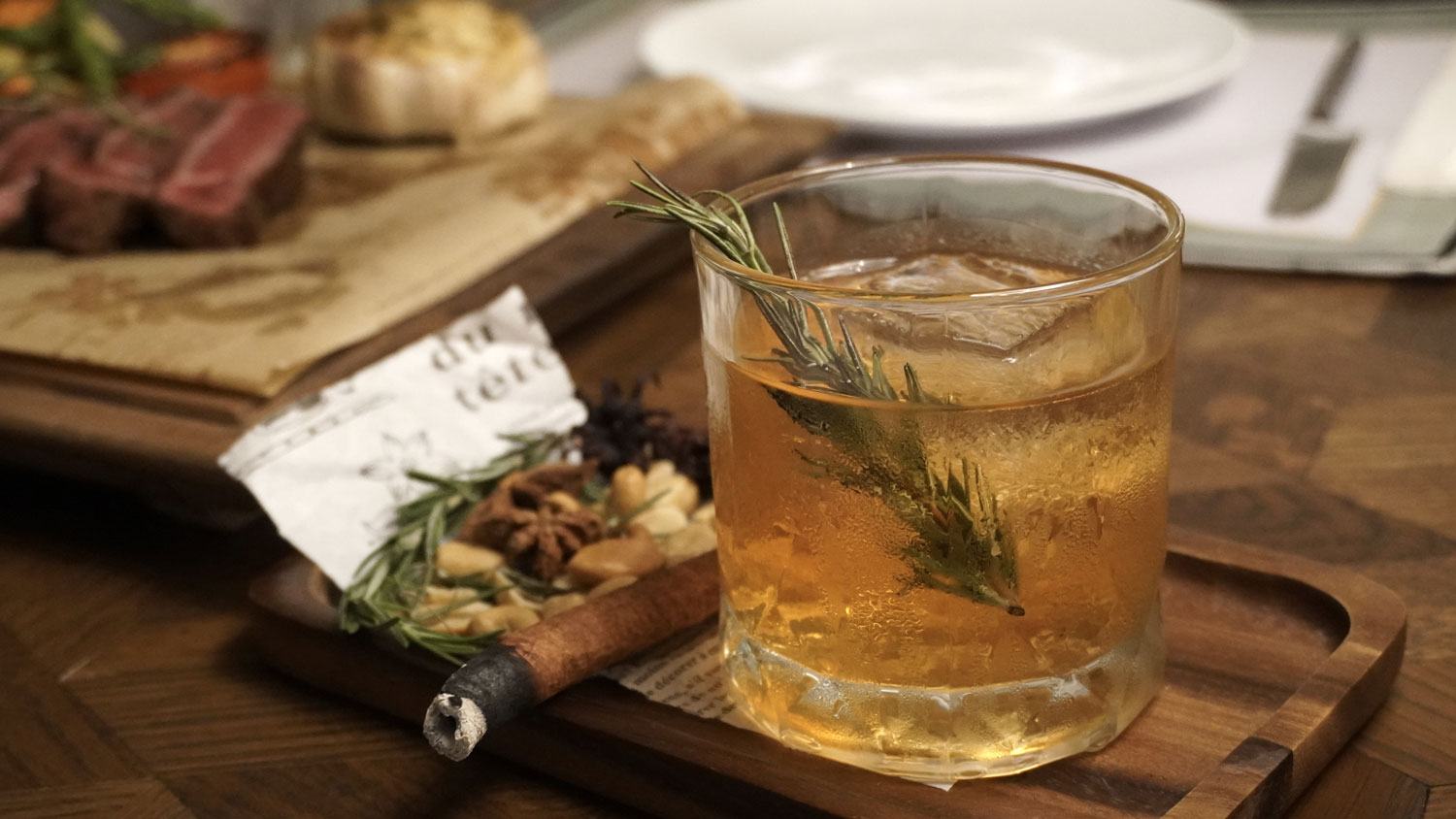
5. Winter Old Fashioned
This seasonal evolution of a timeless classic is familiar yet festive. The Winter Old Fashioned from The Roosevelt New Orleans, A Waldorf Astoria Hotel, captures a cozy sophistication of the holidays while honoring the cocktail’s deep New Orleans roots. The rye provides the signature bold backbone, while the apple-clove syrup and cranberry bitters infuse it with winter warmth.
Winter Old Fashioned ingredients:
- 2 oz Sazerac Rye
- 0.5 oz apple-clove syrup
- 3 dashes orange bitters
- 3 dashes cranberry bitters
- Orange peel, for preparation
- Cinnamon stick, for garnish
Make the cocktail
- Wipe the inside of a rocks glass with an expressed orange peel.
- Fill the glass with all ingredients, then pour fresh ice on top of the mixture.
- Garnish with a cinnamon stick.
“Fresh cranberries or a cinnamon stick really make a cocktail pop—adding not only the flavors and aromas that you associate with a winter holiday but the colors as well. You can also tie a bow on the glass!”
—Jonah Tidyman, Bartender at the Sazerac Bar, at The Roosevelt New Orleans
“Fresh cranberries or a cinnamon stick really make a cocktail pop—adding not only the flavors and aromas that you associate with a winter holiday but the colors as well. You can also tie a bow on the glass!”
—Jonah Tidyman, Bartender at the Sazerac Bar, at The Roosevelt New Orleans
Nicole Bump
Nicole is a seasoned content strategist and writer with 15+ years of experience turning complex ideas into compelling stories. As founder of Bump Inbound, she helps brands connect with audiences through thoughtful strategy, sharp planning, and standout writing.

Singapore Sling cocktail: History, recipe, and more
Singapore Sling cocktail
Singapore Sling cocktail
History, recipe, and more
In the early 1900s, women were discouraged from drinking in public. Of course, they didn’t let a little discouragement stop them. Bartenders quietly catered to their female clientele with drinks that appeared to be non-alcoholic—often resembling bright-colored fruit juices. The British colonial era in southeast Asia was no different. Enter bartender Ngiam Tong Boon and his Singapore Sling cocktail.
History of the Singapore Sling
Singapore was a bustling port city, playing a key role in Britain’s global empire and serving as a bit of a playground for colonial elites. The Long Bar in the Raffles Hotel was considered a social hub for the likes of colonial officials, plantation owners from nearby Malaysia, as well as European and American tourists. And Ngiam Tong Boon, a Hainanese-Chinese bartender, had worked his way up to bar captain at the Long Bar.
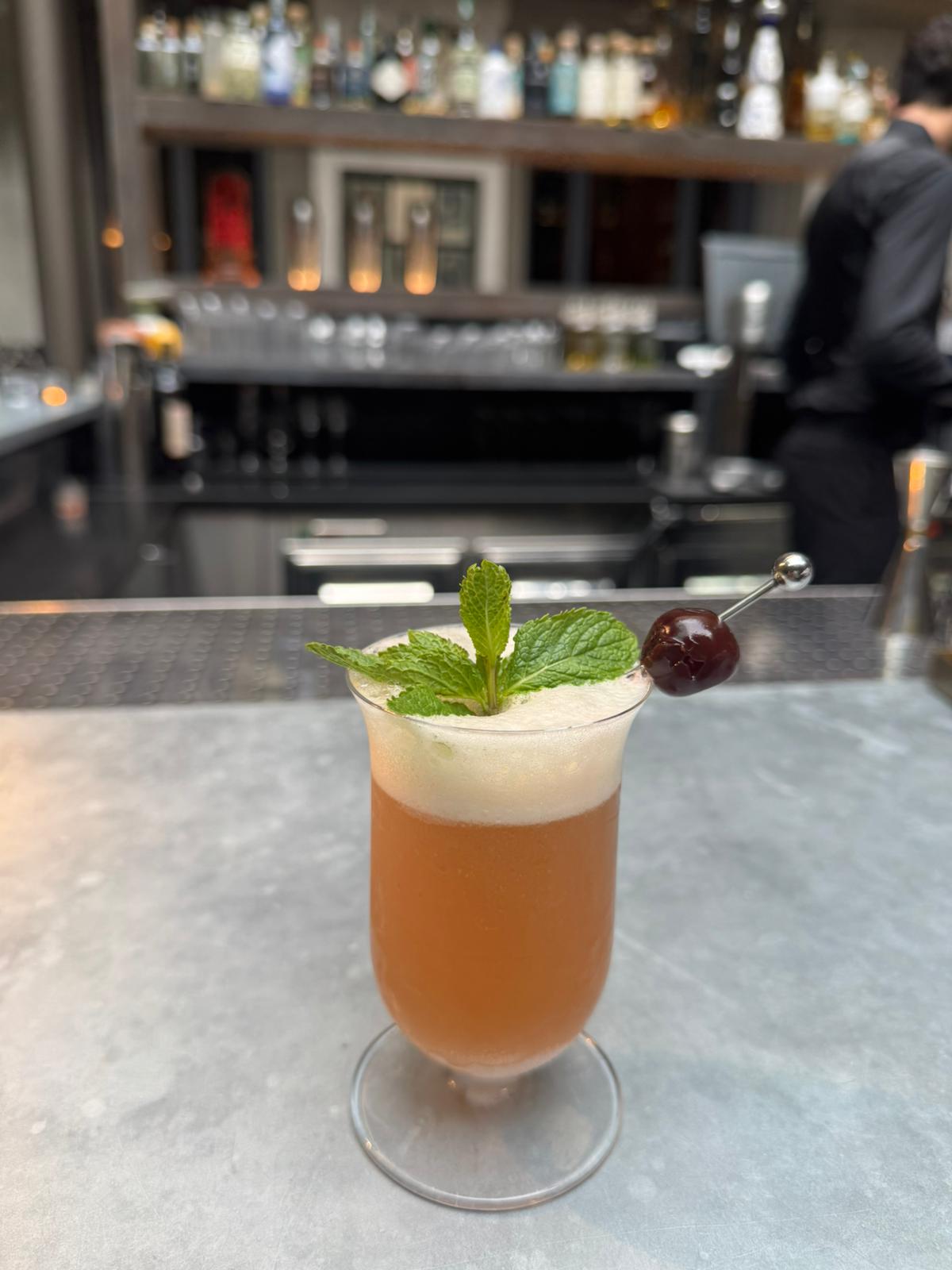
While the exact details are hazy (and even Ngiam’s own family is unclear on the truth), Raffles gives Ngiam credit for the creation of the Singapore Sling around 1915. The hotel explains that Ngiam cleverly gave the cocktail a pretty pink hue, which made it look like a fruit juice and attracted everyone’s attention. While the history of the Sling may be imprecise, one thing is clear: once Raffles proclaimed the Long Bar as its birthplace, patrons couldn’t get enough.
History of the Singapore Sling
Singapore was a bustling port city, playing a key role in Britain’s global empire and serving as a bit of a playground for colonial elites. The Long Bar in the Raffles Hotel was considered a social hub for the likes of colonial officials, plantation owners from nearby Malaysia, as well as European and American tourists. And Ngiam Tong Boon, a Hainanese-Chinese bartender, had worked his way up to bar captain at the Long Bar.
While the exact details are hazy (and even Ngiam’s own family is unclear on the truth), Raffles gives Ngiam credit for the creation of the Singapore Sling around 1915. The hotel explains that Ngiam cleverly gave the cocktail a pretty pink hue, which made it look like a fruit juice and attracted everyone’s attention. While the history of the Sling may be imprecise, one thing is clear: once Raffles proclaimed the Long Bar as its birthplace, patrons couldn’t get enough.
Original Singapore Sling recipe
Unfortunately, the exact recipe for the original Sling was lost (none of Boon’s original recipes survived). But the Long Bar was able to recreate its signature cocktail with a 1936 note that resurfaced from a visitor to the bar. This patron had asked one of the bartenders how to make the Singapore Sling—and thankfully scrawled down the recipe. Raffles currently describes the Singapore Sling as a delightful combination of gin, pineapple juice, lime juice, curaçao, Benedictine, grenadine, and cherry liqueur.
Ingredients:
- 1.5 oz London dry gin
- .5 oz Heering cherry liqueur
- .25 oz Bénédictine liqueur
- .25 oz Cointreau
- 4 oz pineapple juice
- .5 oz fresh lime juice
- .33 oz grenadine
- 1 dash bitters
Directions
- Combine ingredients in a cocktail shaker and shake.
- Pour into a hurricane glass.
- Garnish with a pineapple wedge and maraschino cherry.
Our favourite twist
If the original sling recipe is a tad too sweet, we recommend Dale DeGroff’s take. DeGroff’s version emphasizes balance and freshness, reducing the sweetness often found in other variations. Thanks to fresh pineapple juice and precise measurements, this rendition offers a more refined and approachable take on the classic.
Ingredients:
- 1.5 oz Gin
- .5 oz cherry Heering
- .25 oz Bénédictine
- .25 oz Cointreau
- 2 oz fresh pineapple juice
- .5 oz fresh lime juice
- Dash of Angostura Bitters
- Soda Water (to top)
Tips to make a great Sling
In our experience, you’ll mix the best cocktail if you:
-
Tip #1
Use fresh pineapple juice and quality cherry liqueur.
-
Tip #2
Use a dry, juniper-forward gin.
-
Tip #3
Chill everything, shake hard, and garnish generously.
Fun fact about the Singapore Sling cocktail
Ngiam is rumored to have kept his Singapore Sling cocktail recipe in a safe. When his family retrieved his safe after his death, however, it was already open and its contents gone.
Nicole Bump
Nicole is a seasoned content strategist and writer with 15+ years of experience turning complex ideas into compelling stories. As founder of Bump Inbound, she helps brands connect with audiences through thoughtful strategy, sharp planning, and standout writing.
By Jove, that’s the real Hanky Panky! The cocktail recipe
By Jove, that’s the real Hanky Panky!
Witchy sips and barmaid tricks:
how Fernet and flair birthed a classic at The Savoy
It’s early 1900s London, and a fatigued comedic actor named Sir Charles Hawtrey walks into a bar. No, this is not the start to an overused joke—it’s the start to the Hanky Panky cocktail. The bar Hawtrey walked into was The American Bar at The Savoy, where he asked the barmaid for “something with a punch”. Ada “Coley” Coleman mixed a new beverage she was working on and passed it to her eager patron. Story has it that Hawtrey took one sip and exclaimed:
“By Jove, that’s the real Hanky Panky!”
The name stuck, and the rest is Hanky Panky cocktail history.
Ada Coleman and The Savoy
Contrary to popular belief, it was common for women to tend bars in the early 20th century—but few barmaids were as famous as Coleman. Thanks to her big talent and personality, Coleman became the first female head bartender at the Savoy’s American Bar, one of the most famous bars in the world. Coleman held the position from 1903 until 1926, during which time she is rumored to have served some of the most famous figures of the day, such as:
- Mark Twain
- Marlene Dietrich
- Charlie Chaplin
- Prince of Wales (later King Edward VII)
- American millionaire “Diamond” Jim Brady
During her tenure at the American Bar, Coleman mentored her successor Harry Craddock, who later authored the legendary Savoy Cocktail Book. While Craddock is often remembered as the cocktail authority, it’s Coleman’s legacy that laid the foundation for the modern classic hotel bar.
During her tenure at the American Bar, Coleman mentored her successor Harry Craddock, who later authored the legendary Savoy Cocktail Book. While Craddock is often remembered as the cocktail authority, it’s Coleman’s legacy that laid the foundation for the modern classic hotel bar.
Tips for mixing the best Hanky Panky
It’s important to choose the right gin (for something softer, try Altamura), as well as a high-quality vermouth. Also:
-
Don’t overdo it on the Fernet
Like summer in a glass, this is the playful cousin to the original mimosa. Blend fresh strawberries with orange juice before assembling. Strain as desired. Garnish with fresh fruit, such as a whole strawberry or an orange slice.
-
Stir, don’t shake
To achieve the elegance of a Bellini but the citrus sparkle of orange juice, try a peach mimosa. Whisk peach nectar with the orange juice before assembling. Garnish with a slice of fresh peach.
-
The orange twist is essential
For a tart yet festive version of the original mimosa that’s perfect for the winter holidays, replace the orange juice with cranberry juice. Garnish with fresh cranberries and a sprig of rosemary.
The Hanky Panky recipe
Coleman essentially served Hawtrey a variation of a Sweet Martini, but the addition of Fernet-Branca, a bitter Italian amaro, added a layer of complexity.
Hanky Panky Ingredients:
- 1.5 oz London dry gin
- 1.5 oz sweet vermouth
- 2 dashes Fernet-Branca
Directions
- Combine ingredients in a mixing glass with ice.
- Stir until well-chilled.
- Strain into a chilled coupe or cocktail glass.
- Garnish with an orange twist.
Our favorite twist on the Hanky Panky
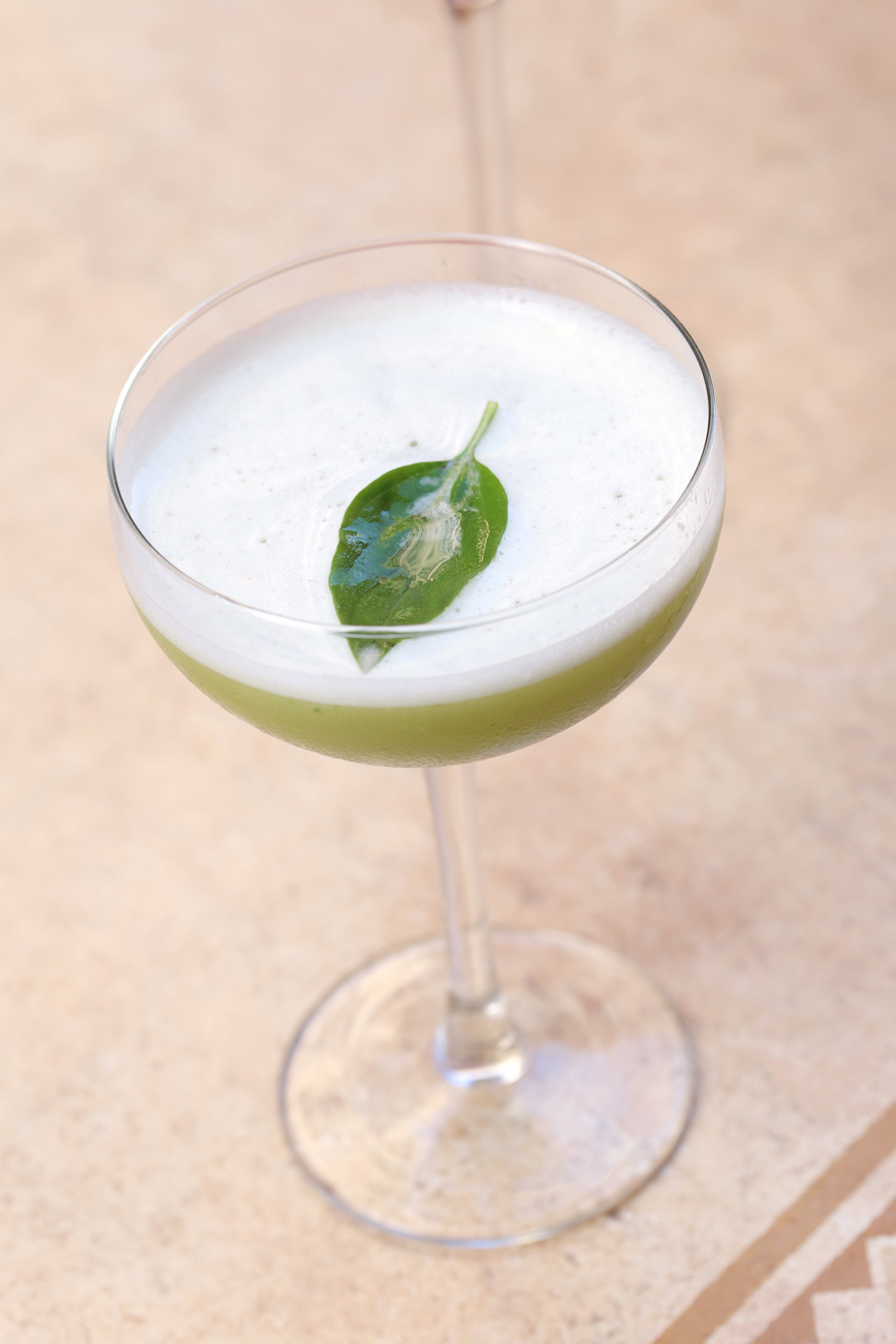
We enjoy Erik Lorincz’s take on the Hanky Panky, which he calls the Green Park Hanky Panky. Lorincz lightens the drink by using dry vermouth instead of sweet, adds freshness with basil, and retains the core bitterness from Fernet. The result is a more herbaceous and summery interpretation of the classic.
Green Park Hanky Panky
- 1.5 oz London dry gin
- 1.5 oz dry vermouth (instead of sweet vermouth)
- 2 dashes Fernet-Branca
- 3 fresh basil leaves
- Few drops of orange bitters (optional)
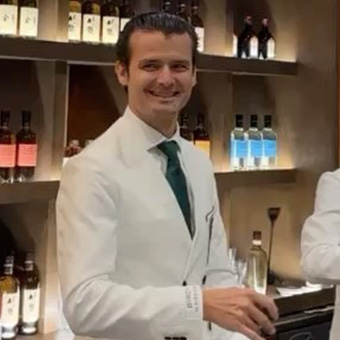
Mixologist
Fun fact about the Hanky Panky
While “hanky panky” had a more lascivious connotation in America, it referred to “a bit of trickery” or witchcraft in England. Hawtrey’s famous exclamation about the Hanky Panky can be roughly translated to mean: “That’s some real witchcraft!”
Nicole Bump
Nicole is a seasoned content strategist and writer with 15+ years of experience turning complex ideas into compelling stories. As founder of Bump Inbound, she helps brands connect with audiences through thoughtful strategy, sharp planning, and standout writing.

6 essential cocktail books from famous hotel bars
6 essential cocktail books
from famous hotel bars
6 boozy books to make your inner bartender feel very fancy
Some of the most iconic cocktails ever created have come from the world’s best hotel bars. And some of these infamous hotel bars have published cocktail books curating their signature concoctions (as well as their twists on cocktail classics). Bartenders aspiring to join the ranks of the world’s greatest mixologists can gain invaluable insights from these six iconic cocktail books, each offering timeless recipes and expert advice. Dive into the stories and techniques behind these legendary hotel bars and bartenders to elevate your craft with every page.
1. The Art of Cocktails
Written by the legendary bartender at the Ritz Paris, Frank Meier, and first published in 1936, The Art of Cocktails was once highly coveted and sought after by the high society of the time. The book is a timeless cocktail bible that offers more than just recipes—it provides a glimpse into the golden age of mixology. With over 300 meticulously crafted drinks, including classics like the Bee’s Knees and the Seapea “C.P.” fizz, the book showcases Meier’s expertise honed at the Ritz Paris.

“More and more they are becoming popular, thousands of people on every part of the globe drink them, but few have acquired the art of mixing a perfect drink. The cocktail should always be perfect: there is no reason to ever drink a bad one.”
2. Claridge’s The Cocktail Book
Claridge’s The Cocktail Book, written by Director of Bars Denis Broci, offers a unique exploration of the cocktails that have made Claridge’s a renowned destination for cocktail connoisseurs—from classics like the Tom Collins to modern favorites like The Flapper. The book’s emphasis on precision, presentation, and the sensory experience make it the perfect guide for anyone eager to mix perfect drinks with style.

“…most cocktails come and go. The ones that remain do so for a reason. As a prospective author might begin his journey in the library, so should a bartender-in-the-making look to great works of the past before picking up a shaker.”
3. The Savoy Cocktail Book
The Savoy Cocktail Book by Harry Craddock is a cornerstone of cocktail literature, offering over 700 meticulously crafted recipes that capture the essence of 1920s and ’30s mixology. The book is renowned for its comprehensive collection of classic cocktails, including the Corpse Reviver No. 2 and the White Lady. And many were created by Craddock himself during his tenure at the American Bar in London’s Savoy Hotel. Craddock’s witty commentary and practical advice, such as his recommendation to “shake the shaker as hard as you can,” offer both instruction and inspiration for aspiring greats.

“There are few people in the world who can match [Craddock’s] vast knowledge of liquid of all kinds, of how to mix them, and of how to create new cocktails for all great or state occasions, so that it is in all confidence that this book is set before you—the confidence that if anything should have been omitted it is in all probability not worth including.”
4. The St. Regis Bloody Mary Book
Born at The St. Regis New York in 1934, the Bloody Mary has evolved into a celebrated tradition across the brand’s hotels and resorts worldwide. The Bloody Mary Book is a curated collection of 46 unique Bloody Mary recipes from each of their global properties, reflecting local flavors and traditions. Each recipe is paired with stories and descriptions of the unique settings in which these drinks are served, from luxurious hotel bars to tranquil beachfront resorts. This attention to detail underscores how the environment, atmosphere, and mood contribute to the ritual of enjoying a perfectly crafted Bloody Mary.
“A premium vodka lays the foundation for the cocktail that started it all, the Red Snapper, and provides an ideal departure point for your liquor cabinet.”
5. The NoMad Cocktail Book
Prior to its closure during the Covid-19 pandemic, The NoMad Hotel in New York was renowned for its exceptional bar program. Aspiring mixologists can still enjoy a selection of The NoMad’s timeless classics and unique concoctions via The NoMad Cocktail Book, written by Bar Director Leo Robitscheck. This cocktail recipe book includes 225 of The NoMad’s favorite cocktails. While colleagues supposedly convinced Robitscheck to cut the 10 additional pages he wished to include solely on ice, the book still contains an insightful service manual.

“This was not the standard, could-be-anywhere New York hotel bar. It’s as if Leo and his crew drilled deep into the bedrock beneath the building and found the pool of residual bar juju that had lurked there untapped for a hundred years. The drinks I had that night, and in fact every drink I’ve had at the NoMad since, served to confirm that impression.”
6. The Pikes Cocktail Book
The Pikes Cocktail Book is a vibrant guide to mixing and enjoying cocktails from the Ibizan hotel best known for its luxury—and hedonism. The 65 “Rock ‘n’ Roll Cocktails” within are organized by the time of day and setting in which each beverage should be enjoyed, from a poolside Club Tropicana to a late night Leap of Faith to a Comeback Kid the morning after. The book is filled with an engaging narrative from the author as he experiences Pikes, cheeky stories from hotel founder Tony Pike, and colorful cocktail descriptions that bring the vibrant atmosphere of the hotel and its several bars to life.

“Pikes is an iconic Ibizan institution, steeped in rock ‘n’ roll history and brimming with personality—its famous aquamarine pool was the actual location for a young, tanned and toned George Michael and the infamous Club Tropicana video. And all of it was created by one man, the great, late Tony Pike…”
Nicole Bump
Nicole is a seasoned content strategist and writer with 15+ years of experience turning complex ideas into compelling stories. As founder of Bump Inbound, she helps brands connect with audiences through thoughtful strategy, sharp planning, and standout writing.
The Rob Roy cocktail: A Waldorf Astoria creation
The Rob Roy cocktail
The Rob Roy cocktail: A Waldorf Astoria creation
It may look like a Manhattan at first glance, but there’s something darker, bolder, and more storied swirling in that glass. From the Scottish Highlands to the original Waldorf Astoria hotel, the Rob Roy cocktail carries a legacy that’s anything but ordinary.

What is a Rob Roy cocktail?
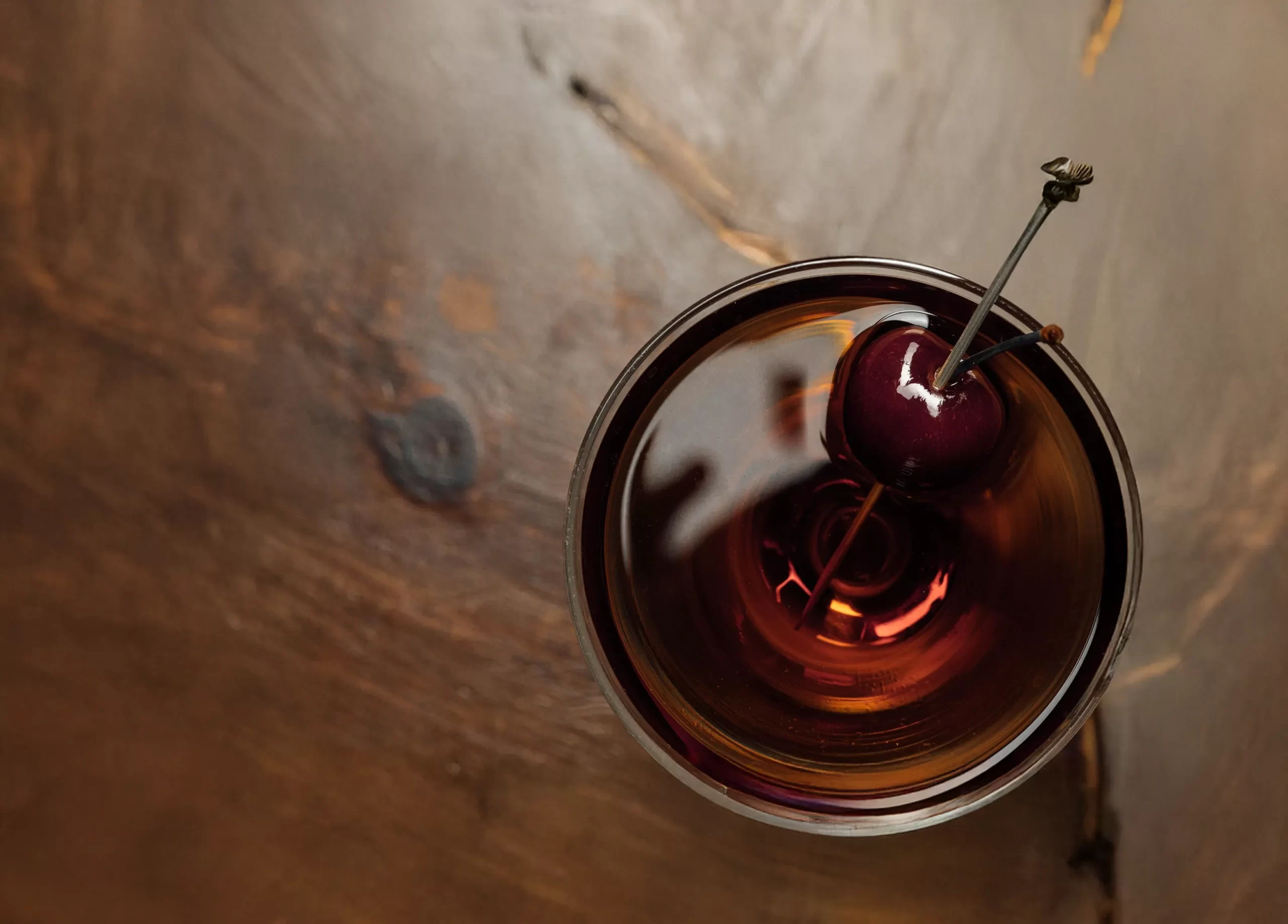
The Rob Roy is essentially a Manhattan cocktail with Scotch whisky instead of rye whiskey or bourbon. The flavor is bold, smooth, and slightly smoky, with a rich, balanced sweetness from the vermouth and a subtle herbal bitterness from the bitters.

What is a Rob Roy cocktail?
The Rob Roy is essentially a Manhattan cocktail with Scotch whisky instead of rye whiskey or bourbon. The flavor is bold, smooth, and slightly smoky, with a rich, balanced sweetness from the vermouth and a subtle herbal bitterness from the bitters.
Rob Roy cocktail history
The Rob Roy was created in a gilded New York bar to toast a swashbuckling Scottish legend.
Born in 1671 in Glyngyle, Scotland, Robert McGregor was a notorious cattle thief, often dubbed the Scottish Robin Hood, and considered a real-life Scottish folk hero. He earned the nickname ‘Rob Roy’ thanks to his fiery red hair (the Gaelic word ‘ruadh’ means red and is pronounced a bit like ‘Roy’).

Roy boasted a larger-than-life persona and a dramatic life story full of betrayal, rebellion, and resilience. Sir Walter Scott romanticized Roy’s exploits in his 1817 novel Rob Roy and helped define the popular image of a rugged, noble Highlander. By the late 1800s, Rob Roy was firmly embedded in popular culture. His story was ripe for adaptation to operetta, and Reginald De Koven (composer) and Harry B. Smith (lyricist) were up to the task. They debuted the three-act “romantic-comic opera” in Detroit in October, 1894, and it made its way to New York City a few weeks later. The operetta ran for 235 performances, with the New York Times calling it
“a thoroughly good operetta … clean, frank, manly, bright, and winsome … a right good comedy”.
Inspired by the popular operetta, a bartender at New York’s Waldorf Astoria (possibly Charles McPherson) created a new cocktail by subbing Scotch whisky for the rye used in Manhattans—and called it the Rob Roy. The drink quickly gained popularity at the Waldorf Astoria and eventually became a staple in bars and lounges around the world.
Variations of the Rob Roy
Bartenders and cocktail aficionados regard the Rob Roy as a timeless, sophisticated drink, but the cocktail also lends itself to subtle variation. By swapping the vermouth, you can dial the sweetness up or down to suit your palate. Bartenders continue to experiment with different types of scotch, vermouths, and bitters to create unique flavor profiles for the Rob Roy.
-
Dry Rob Roy
for example, uses dry vermouth instead of sweet, offering a lighter, more herbal taste with more emphasis on the scotch’s character.
-
Perfect Rob Roy
uses equal parts sweet and dry vermouth to achieve a balanced mix—less sweet than the classic with a brighter, cleaner finish.
-
Folies Bergère
It takes on the classic Rob Roy, featuring Altamura Distilleries Vodka, banana juice, smoky almonds, and Americano Bianco. Discover more
How to make a Rob Roy cocktail (recipe)
According to the 1935 edition of The Old Waldorf Astoria Bar Book, the original Rob Roy was equal parts scotch and sweet vermouth. Today, however, the drink is made with a 2:1 ratio.
Ingredients:
- 2 ounces Scotch whisky
- 1 ounce sweet vermouth
- 3 dashes bitters
- Maraschino cherry, for garnish
Directions
- Combine ingredients in a mixing glass filled with ice.
- Stir for 20 to 30 seconds until well chilled.
- Strain into a chilled cocktail coupe.
- Garnish with the cherry.
Fun fact about the Rob Roy
While it may be a classic, the Rob Roy is less commonly ordered than its cousin, the Manhattan. You’re more likely to find it on craft cocktail menus, at whisky bars, or ordered by seasoned drinkers who want something classic and spirit-forward. It has a stronger following in cities with robust whisky cultures—like Edinburgh, NYC, and Tokyo.
Nicole Bump
Nicole is a seasoned content strategist and writer with 15+ years of experience turning complex ideas into compelling stories. As founder of Bump Inbound, she helps brands connect with audiences through thoughtful strategy, sharp planning, and standout writing.
The Mimosa Cocktail: From the Ritz Paris to brunch bestie
The Mimosa Cocktail
From the Ritz Paris to brunch bestie
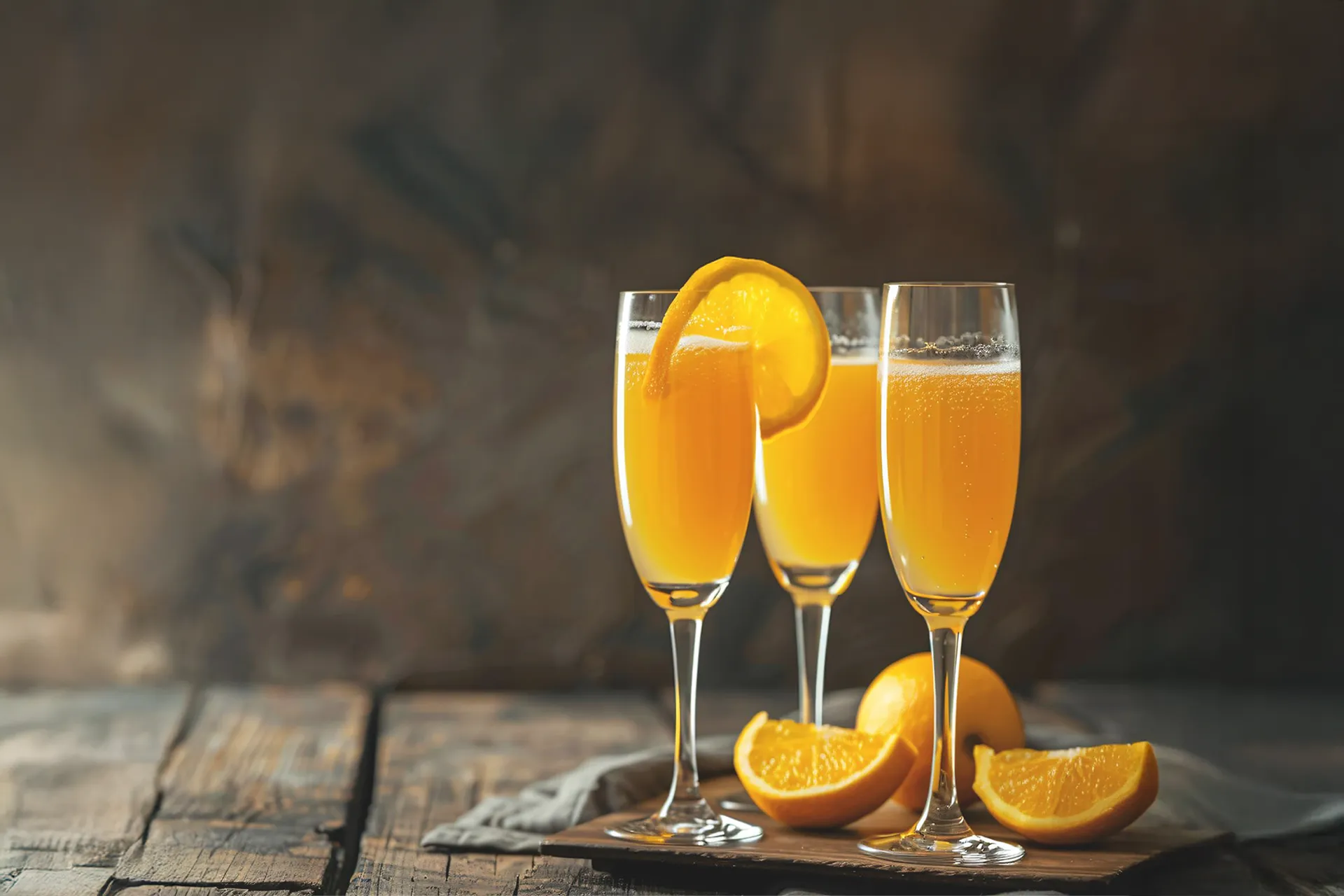
You might be used to enjoying the mimosa cocktail with eggs benedict and a side of bacon, but the original mimosa wasn’t associated with bottomless pitchers. It began not as a hangover cure or midday indulgence, but as a quiet luxury, served in crystal flutes at one of the most glamorous hotels in the world. Behind its golden fizz lies a story of rivalry, reinvention, and even wartime espionage. Yes, espionage.
Who invented the mimosa?
The mimosa cocktail is widely believed to have been invented in 1925 at the Ritz Bar at the Ritz Hotel in Paris by Frank Meier, the hotel’s head bartender. But there’s been some debate.

Who invented the mimosa?
The mimosa cocktail is widely believed to have been invented in 1925 at the Ritz Bar at the Ritz Hotel in Paris by Frank Meier, the hotel’s head bartender. But there’s been some debate.
Mimosa history: Paris or London?
In the aftermath of World War I, Paris was a cultural and social epicenter. Artists, writers, aristocrats, and the newly wealthy mingled in salons and luxury hotels, especially the Ritz. Enter Frank Meier, the Austrian-born bartender who helmed the hotel’s bar from the 1920s through World War II. He was known for his meticulous cocktails, as well as his discretion serving celebrities, spies, and royals—like Ernest Hemingway, Coco Chanel, and F. Scott Fitzgerald.
As the story goes, bartender Malachi “Pat” McGarry of London’s Buck’s Club created a drink similar to the mimosa in 1921 and called it the Buck’s Fizz. McGarry’s cocktail used more champagne than orange juice and sometimes included a dash of grenadine or a splash of orange liqueur (like Grand Marnier or curaçao).
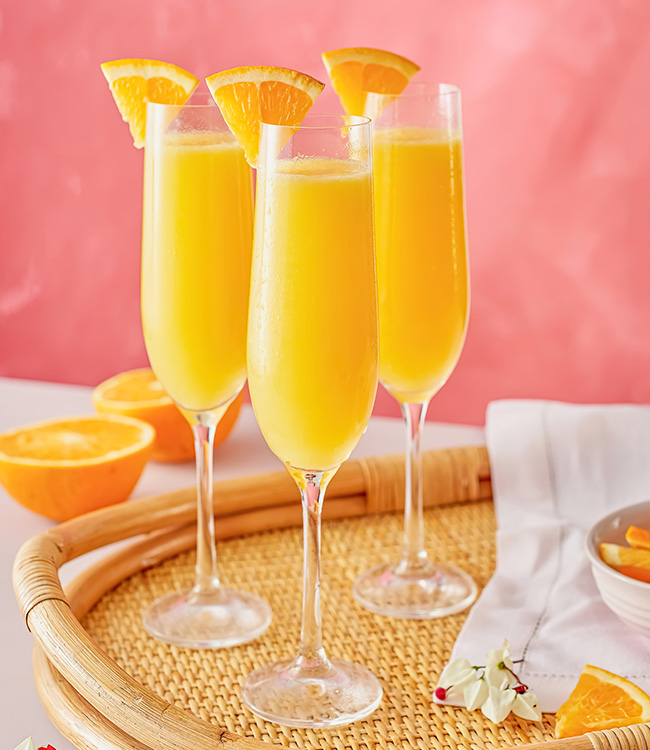
While the Buck’s Fizz may have been a precursor, the mimosa as we know it today likely owes its popularity to Meier’s 1925 refinement at the Ritz. Meier created a lighter, more simplified version of the cocktail with equalized parts champagne and orange juice—ideal for a languid hotel breakfast or other daytime indulgence.
Our favorite mimosa variations
There are endless ways to elevate classic mimosas using various fruit juices and spirits. Some of the most popular mimosa flavors include:
-
Strawberry mimosa
Like summer in a glass, this is the playful cousin to the original mimosa. Blend fresh strawberries with orange juice before assembling. Strain as desired. Garnish with fresh fruit, such as a whole strawberry or an orange slice.
-
Peach mimosa
To achieve the elegance of a Bellini but the citrus sparkle of orange juice, try a peach mimosa. Whisk peach nectar with the orange juice before assembling. Garnish with a slice of fresh peach.
-
Cranberry mimosa
For a tart yet festive version of the original mimosa that’s perfect for the winter holidays, replace the orange juice with cranberry juice. Garnish with fresh cranberries and a sprig of rosemary.
The mimosa cocktail recipe
The most basic mimosa recipe is equal parts champagne (or another dry sparkling wine—or even a high-quality Prosecco) and orange juice. If you’re hosting a brunch or serving a group, this recipe serves eight.
Ingredients:
- 1 bottle (750 ml) champagne (or prosecco)
- 3 cups orange juice
Directions
- Chill champagne flutes.
- Fill each glass half full with champagne.
- Top with orange juice.
Fun fact about the mimosa cocktail
Meier wasn’t just a bartender—he was also part of the French Resistance during World War II. He used his bar at the Ritz to gather intelligence from German officers and pass it along to the Allies. So, while sipping a mimosa today may just be a fun excuse to imbibe on a Sunday morning, its creator had a complex legacy of both hospitality and heroism.
Nicole Bump
Nicole is a seasoned content strategist and writer with 15+ years of experience turning complex ideas into compelling stories. As founder of Bump Inbound, she helps brands connect with audiences through thoughtful strategy, sharp planning, and standout writing.

Red Snapper Cocktail & the Bloody Mary origin story
The Red Snapper
Red Snapper cocktail & the Bloody Mary origin story
Whether you enjoy it as a high-end brunch accompaniment or down it as a hangover cure, most people are well acquainted with the classic Bloody Mary. But how many have heard of the Red Snapper cocktail. It’s a bit of a trick question. The Bloody Mary, as we know it today, was perfected in 1934 at the King Cole Bar in The St. Regis Hotel New York. But the story starts about a decade earlier at Harry’s New York Bar in Paris.
Harry’s bartender Fernand “Pete” Petiot created the first Bloody Mary, a simple mix of vodka and tomato juice. He later brought the drink with him when he moved to New York, but Americans found the original Bloody Mary recipe too bland. At The St. Regis, Petiot refined the recipe into what we now recognize as the classic Bloody Mary by adding:
- Worcestershire sauce
- Black pepper
- Cayenne pepper
- Lemon juice
- Tabasco
- A pinch of celery salt
This elevated and flavorful version became an instant hit.

But what’s a Red Snapper?
In Paris, the original drink was called a “Bloody Bucket”. And while the American moniker “Bloody Mary” may sound slightly less gruesome, the name was still considered too vulgar for the refined clientele of the St. Regis.The hotel therefore renamed the hearty beverage the “Red Snapper”, and it’s still featured as a signature cocktail on the King Cole Bar menu today. In fact, the Red Snapper’s storied past is so integral to the St. Regis brand, each hotel and resort in the portfolio has crafted its own locally inspired interpretation, including:
-
SHOGUN MARY
Osaka
-
CANTO MARY
Hong Kong
-
SANTA MARIA
Venice
Red Snapper cocktail recipe
The Red Snapper cocktail recipe, according to the St. Regis, consists of premium vodka, Bloody Mary mix, and lemon wedge for garnish. The tomato juice plays a leading role in this cocktail, so invest in a quality juice.
And in our opinion, an extra dash of tabasco is always a smart idea.
Red Snapper Cocktail
Ingredients:
- 2 OZ Altamura Distilleries Vodka
- 4 OZ Tomato juice
- 1/2 OZ Lemon juice
- 1 OZ Bloody Mary Mix
Blood Mary Mix
- 1 OZ Soy sauce
- 2 OZ Fino Cherry
- 5 OZ Worcestershire sauce
- 10 Dashes Tabasco sauce
- 2 Tbsp freshly ground black pepper
- 2 Tbsp ground cayenne pepper
- 1 Tbsp ground celery salt
- 2 Tbsp whole black peppercorns
Directions
-
1.
Fill a 12 OZ glass with ice and add Altamura Distilleries Vodka.
-
2.
Strain peppercorns from the Bloody Mary mix and fill the glass with mix.
-
3.
Pour contents into a cocktail shaker and shake.
-
4.
Return to glass and use immediately or seal and refrigerate.
-
5.
Garnish with lemon.
Our favorite twist on the Red Snapper
Our favorite twist on the Red Snapper is the Santa Maria, the signature cocktail at the St. Regis Venice. This Italian interpretation of the Bloody Mary features:
- Horseradish infused Altamura Distilleries Vodka
- Clarified tomato juice
- Verjus
- House-made salt solution
- House-made spicy tincture
- Grappa
The Santa Maria is smooth, savory—and the perfect namesake for the Basilica di Santa Maria.
Mixologists
Nicole Bump
Nicole is a seasoned content strategist and writer with 15+ years of experience turning complex ideas into compelling stories. As founder of Bump Inbound, she helps brands connect with audiences through thoughtful strategy, sharp planning, and standout writing.