


The Upper House - Hong Kong
The Upper House
This year, in association with Altamura Distilleries, I’ll be exploring some of the world’s most legendary bars—uncovering what makes them the beating heart of the hotel. Our next stop is Hong Kong!
#Episode 8
If you’ve ever watched Let’s Make a Deal, the long-running American game show, you’ll know the anticipation of finding out what lies behind Curtain #1, Curtain #2 or Curtain #3 — will it be everything the eager contestant has dreamt of? At The Upper House Hong Kong, there is no need for suspense. I can assure you that something irresistible lies behind every curtain.
#Episode 8
If you’ve ever watched Let’s Make a Deal, the long-running American game show, you’ll know the anticipation of finding out what lies behind Curtain #1, Curtain #2 or Curtain #3 — will it be everything the eager contestant has dreamt of? At The Upper House Hong Kong, there is no need for suspense. I can assure you that something irresistible lies behind every curtain.
You might miss The Upper House without even realizing it was there. This was done entirely on purpose. The cleverly designed Stone Curtain façade conceals the hotel from its busy surroundings.
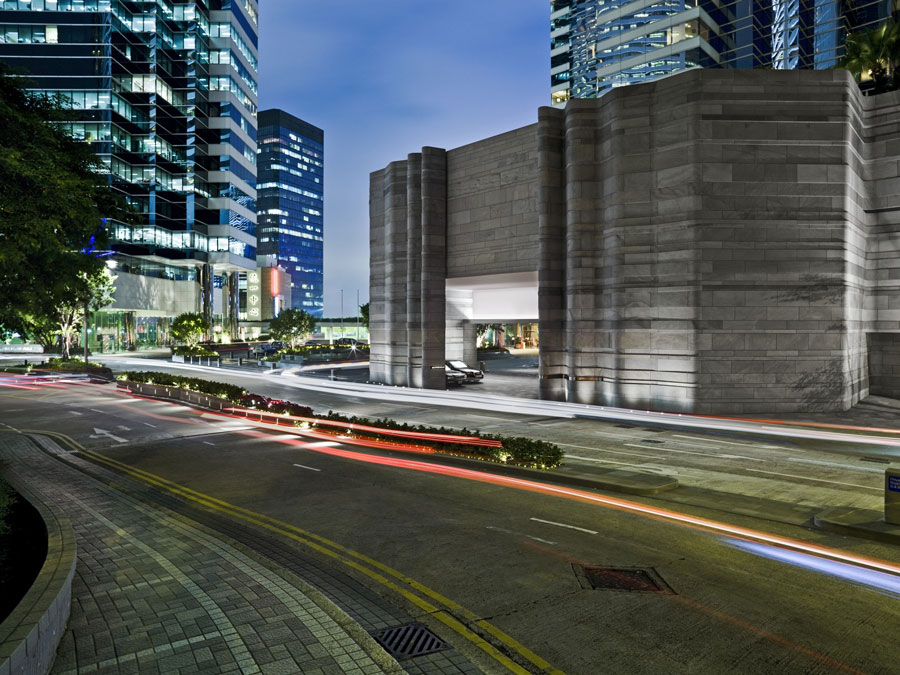
When I say busy, I mean it — Hong Kong is one of the most densely populated places in the world. Finding a sense of calm in this urban landscape dominated by skyscrapers can sometimes feel impossible.
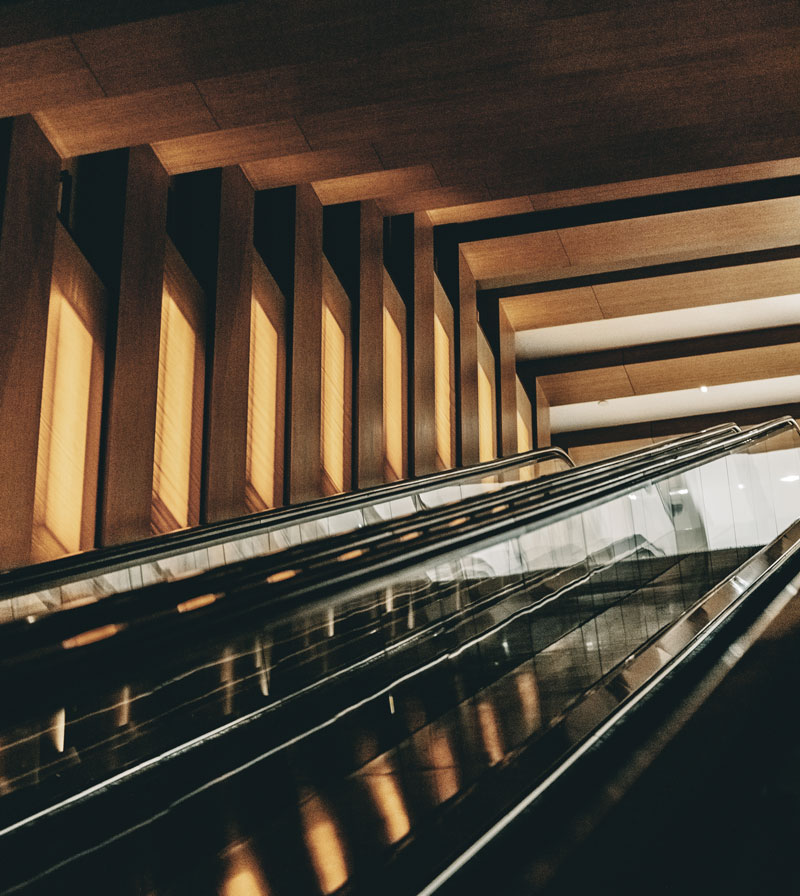
Step behind The Upper House’s Curtain #1 and you are unlikely to recognize it as a hotel lobby at all. Its floor-to-ceiling glass entrance feels more like a front door, with its small team welcoming you in like house guests. Once inside, you are led to an escalator waiting to transport you upward to parts unknown.
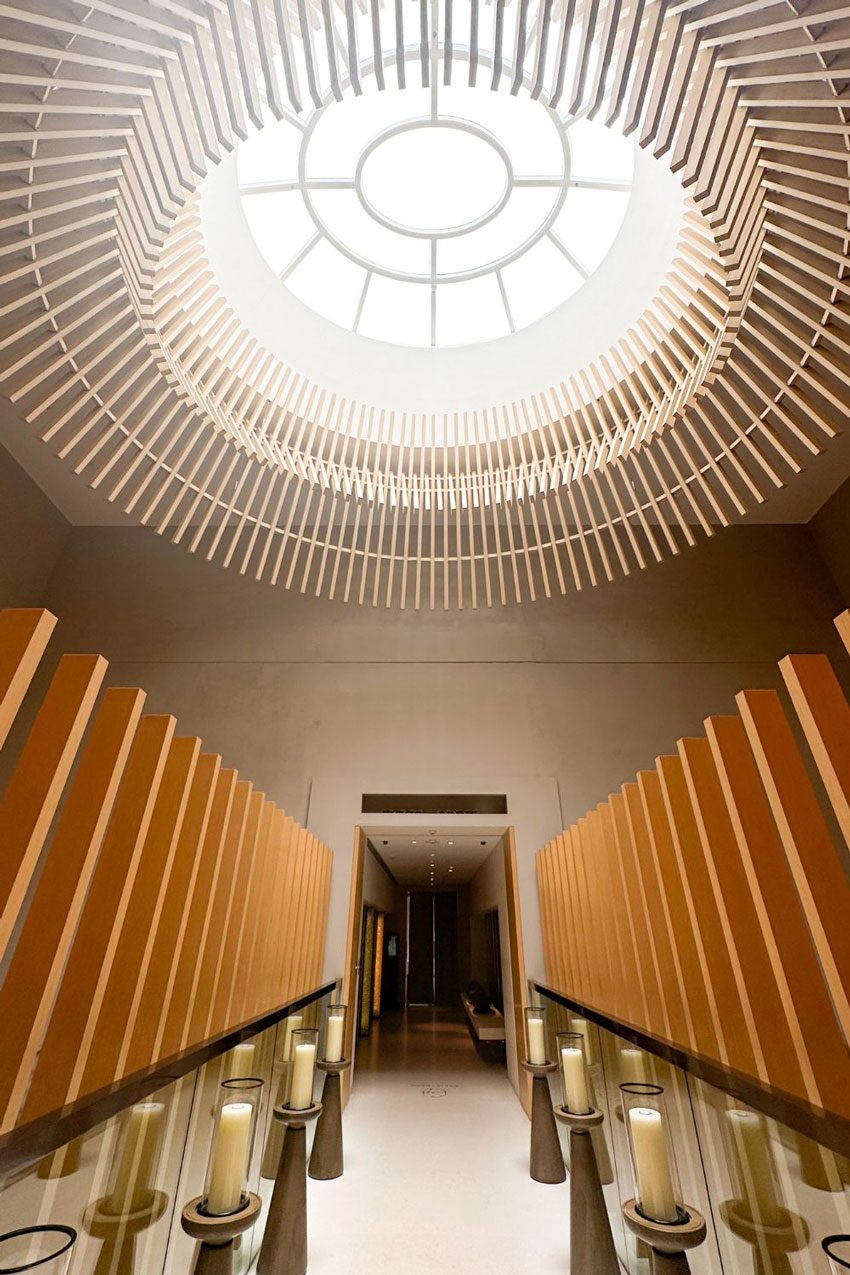
The Upper House was the first hotel created by Hong Kong-born, Cambridge-educated architect and designer André Fu in 2009. His inspiration for this dramatic entrance was the Japanese torii — gates traditionally found at Shinto shrines, acting as a threshold to the divine.
You might miss The Upper House without even realizing it was there. This was done entirely on purpose. The cleverly designed Stone Curtain façade conceals the hotel from its busy surroundings. When I say busy, I mean it — Hong Kong is one of the most densely populated places in the world. Finding a sense of calm in this urban landscape dominated by skyscrapers can sometimes feel impossible.
Step behind The Upper House’s Curtain #1 and you are unlikely to recognize it as a hotel lobby at all. Its floor-to-ceiling glass entrance feels more like a front door, with its small team welcoming you in like house guests. Once inside, you are led to an escalator waiting to transport you upward to parts unknown.
The Upper House was the first hotel created by Hong Kong-born, Cambridge-educated architect and designer André Fu in 2009. His inspiration for this dramatic entrance was the Japanese torii — gates traditionally found at Shinto shrines, acting as a threshold to the divine. Every aspect of the design is meant to create a sense of calm as you make the journey from the hustle and bustle of the Hong Kong streets to the discovery of what lies behind Curtain #2.
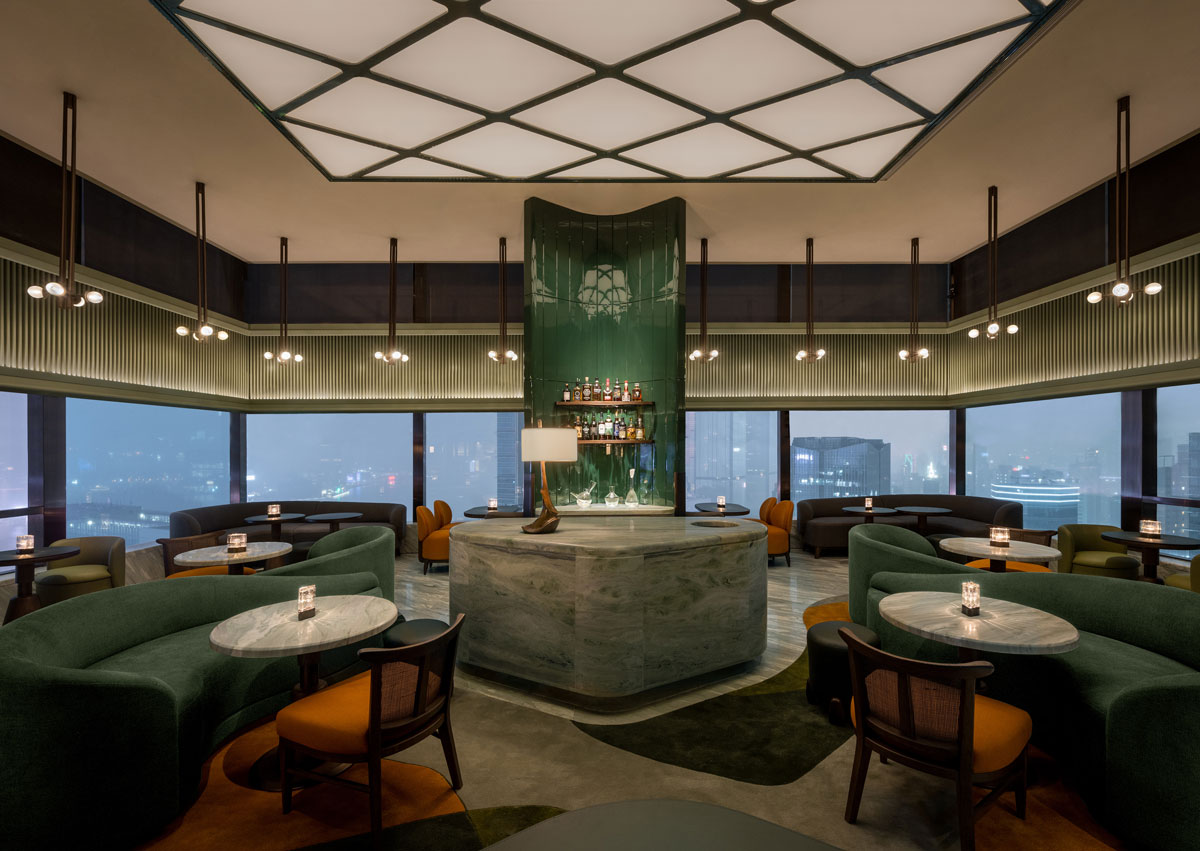
Atop the 49th floor and found behind a dark green curtain, usually left open, The Green Room, The Upper House’s intimate bar, not only feels worlds away from the aforementioned energy of the city below, it is! Acting as the hotel’s snug, the bar’s comfy banquettes and cushy armchairs encourage guests to converse over beautifully crafted cocktails.
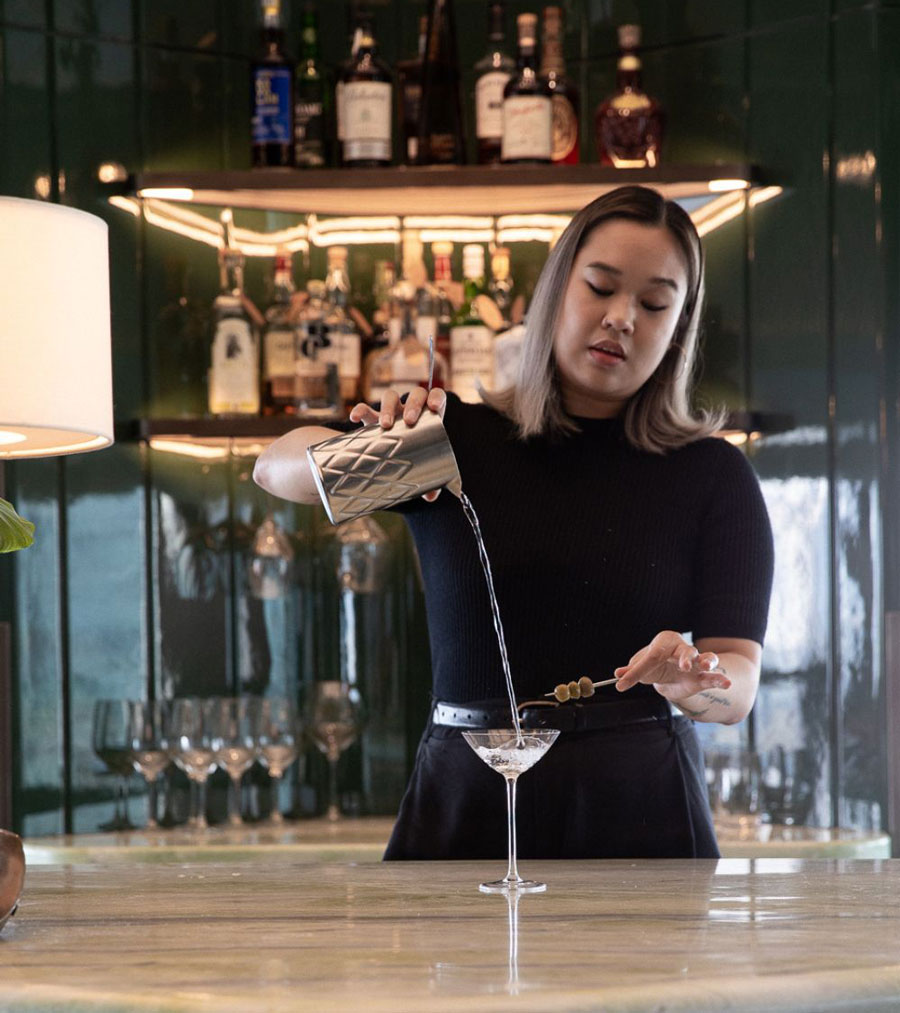
When Gail Lanorias joined as Bar Operations Manager, the bar was part of Salisterra, the hotel’s Mediterranean restaurant. A former ballet dancer, Gail found herself loving the world of hospitality. After years spent in such an insular world, she couldn’t help feeling that there was so much more life to live when stepping behind a bar.
Even before she began working here, she loved the bar, especially its Martinis. How fortuitous to find herself at the helm a few years later. Once here, she felt the bar she loved deserved its own identity and set about to make it happen.
Since it was known internally simply as “the green room” because of its color palette, the name stuck. Gail knew from her own experience that the green room is where performers retreat when they are not needed on stage, a place to decompress, reflect and to socialize. That was the exact vibe she hoped for the Upper House’s Green Room – “a classic hotel bar, somewhere to come to relax, have a drink, meet friends, just be with people, with, of course, a great view.”
While creating her first menu, she leaned into the Green Room theme, playfully naming each cocktail after a classic movie archetypes, e.g. The Everyman, Con Artist, and Fall Guy.
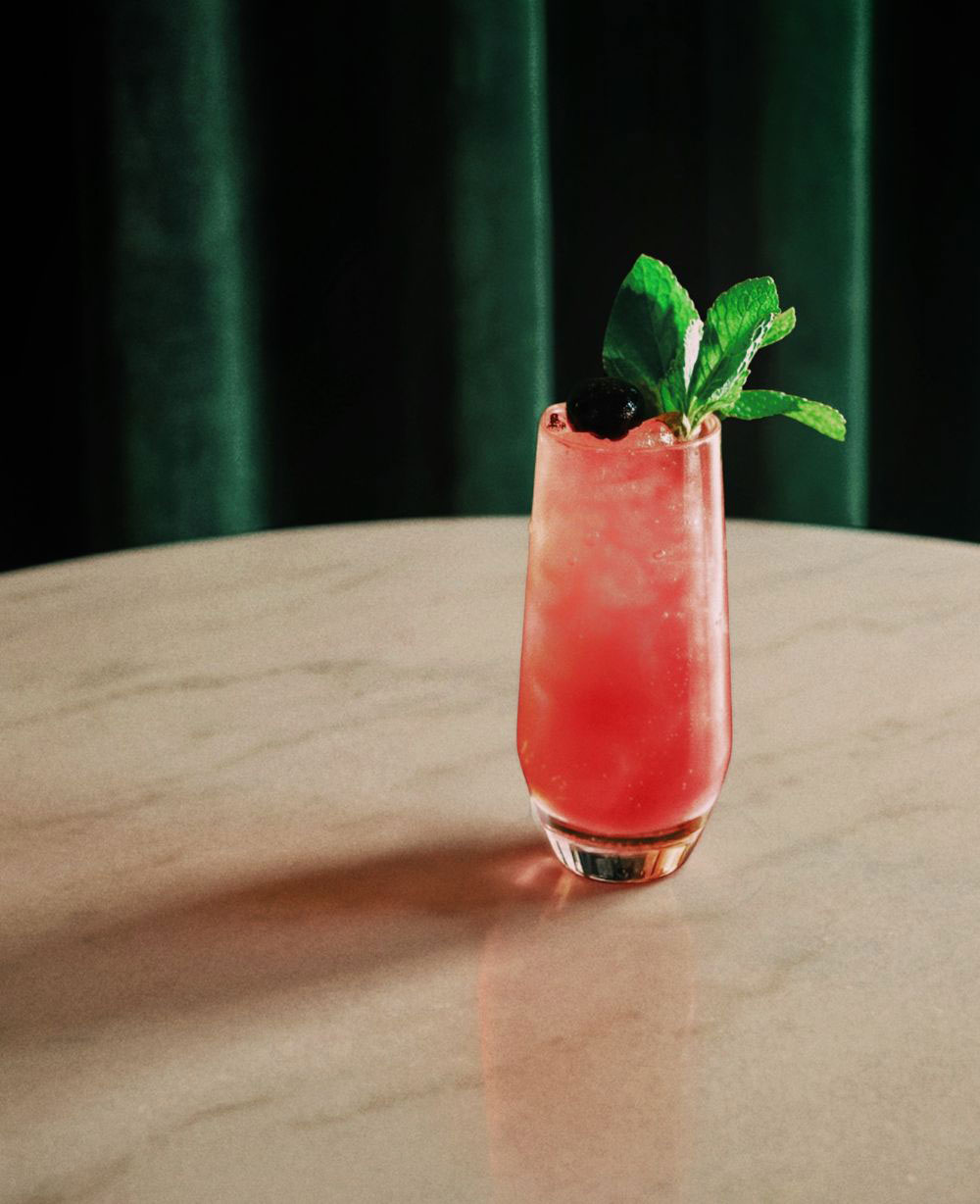
The Girl Next Door, a tequila based cocktail, was inspired by one of the chefs, whose cherry tart he garnished with tarragon. Gail fell for that flavor combination and knew it would make a great cocktail. “It took months to actually put it together, because it was a balance of acidity, sweetness, and we finally found this wonderful Three Cents cherry soda and it all came together.” The tequila and the tarragon are sous vided together for around two hours at 50° C, before the cocktail is built in the glass.
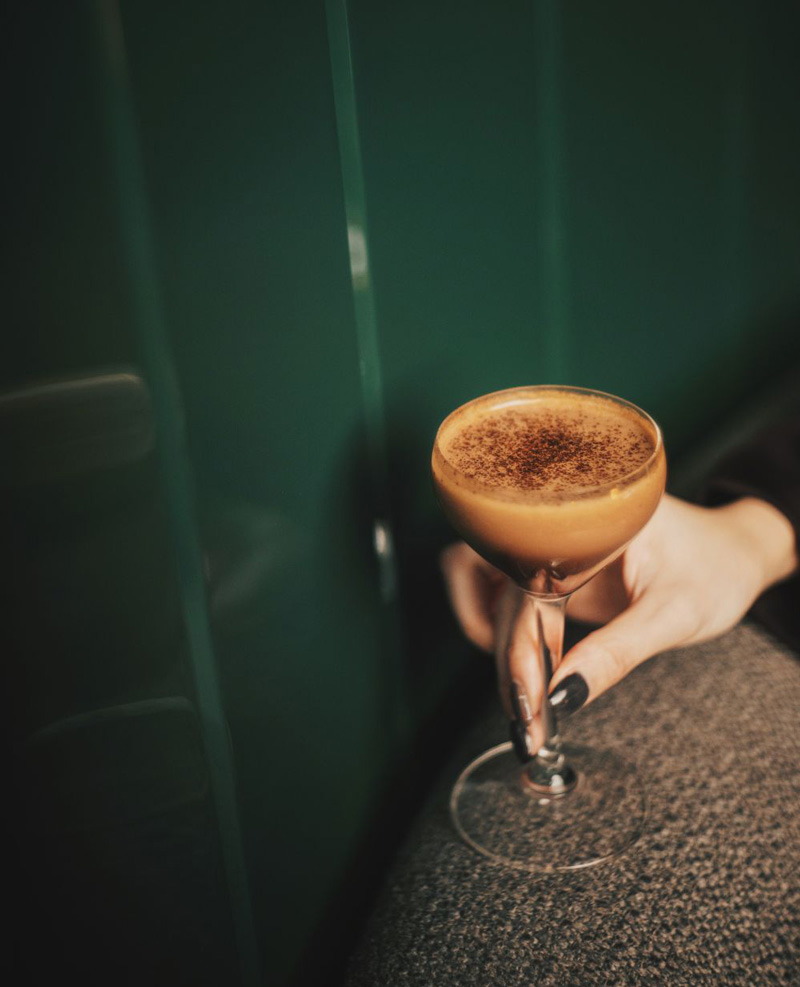
Padding onto the menu is the Cat Lady which combined Gail’s interest in the use of olive oil as an ingredient in cocktails and desserts and a hotel regular’s standing order of a Chocolate Martini. Shaken hard, the olive oil emulsifies into the chocolate, and then Gail adds a spot of coffee to boost the chocolate taste even more. A little bourbon rounds it out. Why call it the Cat Lady? Gail claims because it’s light, creamy, and a little crazy!
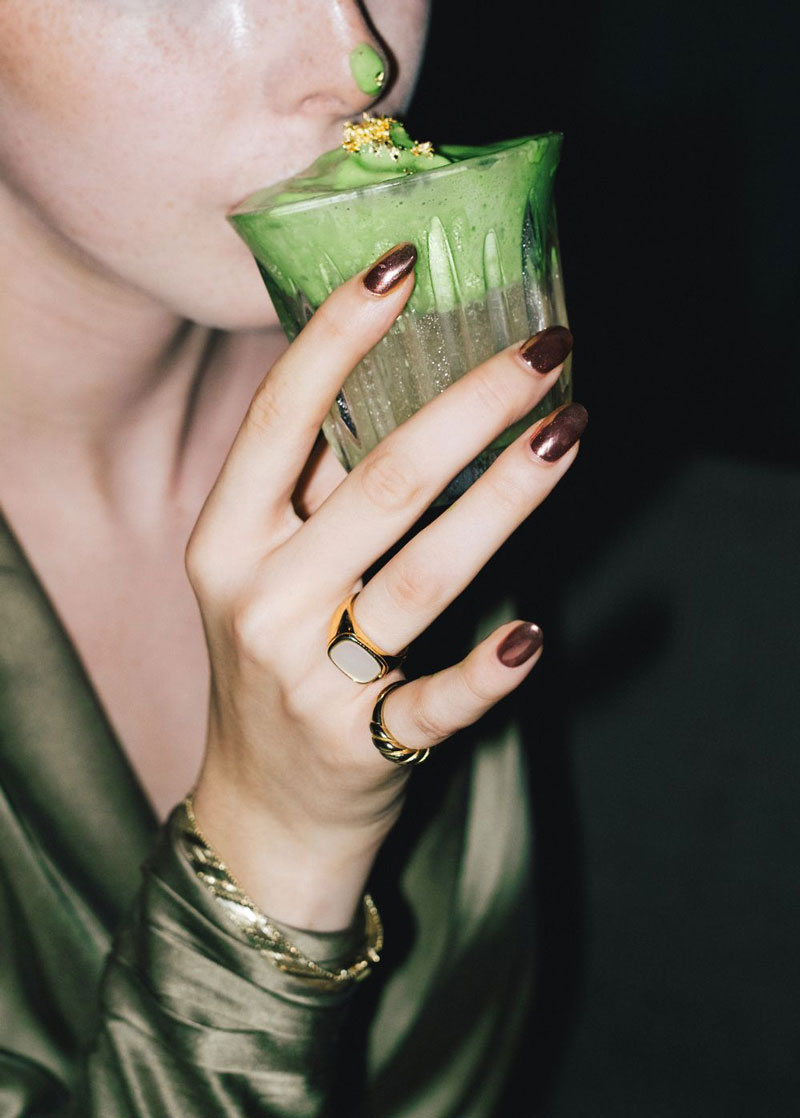
Inspired by a local dessert made with red bean, rose, yuzu, and matcha, one of her teammates conceived the Star-Crossed Lovers. Since all of the ingredients were Japanese, they decided to use shochu as the base spirit. “The earthiness of the shochu really grounds the red bean, yuzu can sometimes be perceived as sweet even though it’s sour.” The rose syrup adds to the sweetness and then it is topped up with a little soy cream.
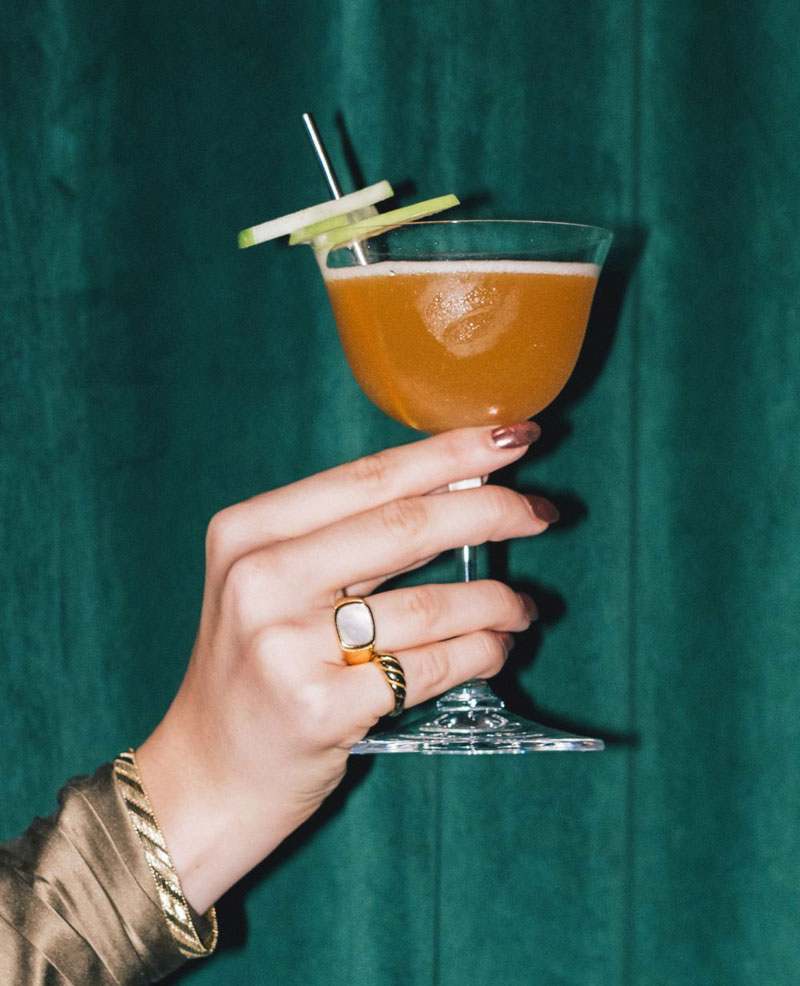
Inspired by a local dessert made with red bean, rose, yuzu, and matcha, one of her teammates conceived the Star-Crossed Lovers. Since all of the ingredients were Japanese, they decided to use shochu as the base spirit. “The earthiness of the shochu really grounds the red bean, yuzu can sometimes be perceived as sweet even though it’s sour.” The rose syrup adds to the sweetness and then it is topped up with a little soy cream.
In this Green Room, both locals and visitors to Hong Kong settle back and let themselves be slowly seduced by the cocktails, the conversation, and what’s behind Curtain #3 (Did you think I had forgotten to mention Curtain #3!?).
That incredible skyline – from the aerie of the Green Room’s 49th floor, the view over Hong Kong across the shimmering Victoria Harbour and over to the Kowloon side, as far as the eye can see! All a reminder of why it’s the heart of the hotel and The Upper House is considered one of the world’s best hotels.
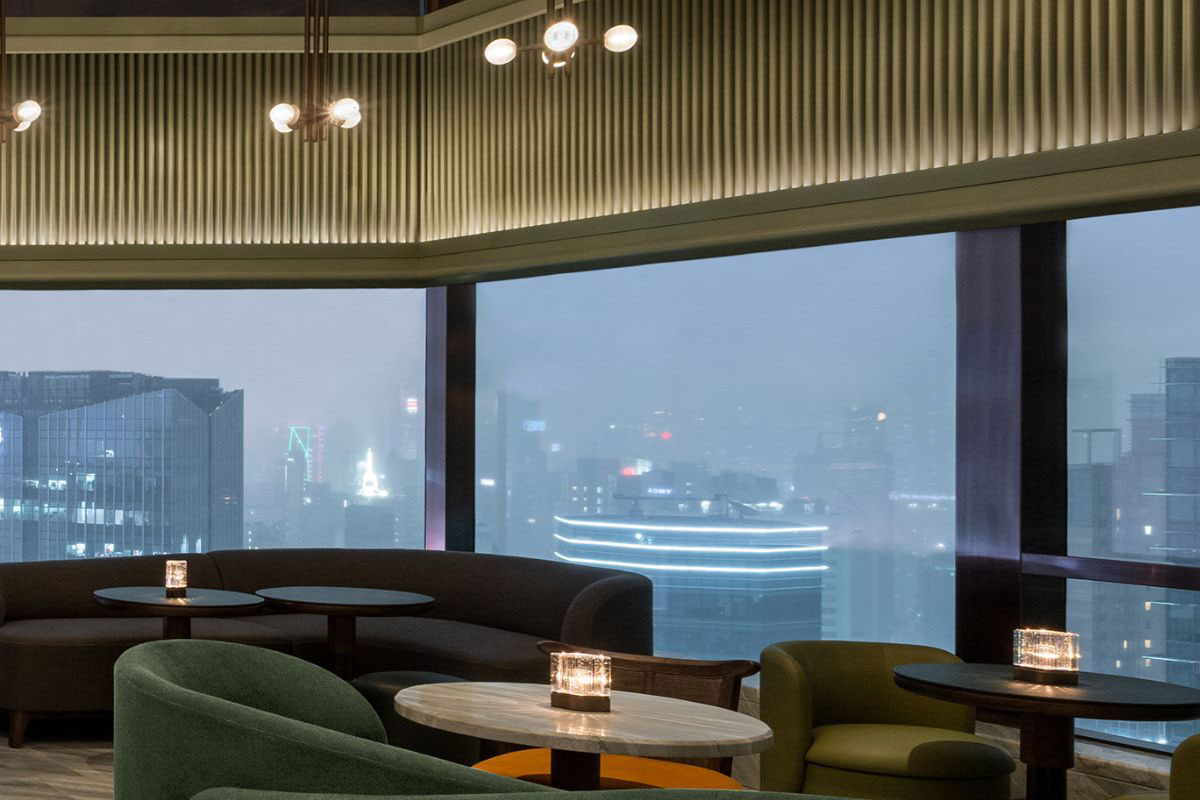
“The Green Room has a strong magnetic pull. I noticed it immediately when I arrived at the House. It has always been the most highly sought after seating within the outlets of our hotel. It is a jewel box of a design without being too precious and invokes a feeling that you are exactly where you are supposed to be. There are places to see and be seen and others for complete privacy including a back hallway direct to the lift where you can escape without walking past the main entrance. There’s a coziness to the space from the rich velvet curtain to the boucle fabric on the sofa seating with gorgeous green marble and emerald-lacquered walls not to mention the panoramic views of the iconic HK skyline. The room does a lot of the heavy lifting. As a team, we designed a menu that was decidedly complex yet not complicated. We didn’t want the menu have to come with an instruction manual or extreme garnishes for show. We still showcase modern techniques but stay true to layering flavors around the spirits to balance flavors of bitterness, herbaceous, brightness and sweetness.”
Nick Moore, Director of Restaurants
Atop the 49th floor and found behind a dark green curtain, usually left open, The Green Room, The Upper House’s intimate bar, not only feels worlds away from the aforementioned energy of the city below, it is! Acting as the hotel’s snug, the bar’s comfy banquettes and cushy armchairs encourage guests to converse over beautifully crafted cocktails.
When Gail Lanorias joined as Bar Operations Manager, the bar was part of Salisterra, the hotel’s Mediterranean restaurant. A former ballet dancer, Gail found herself loving the world of hospitality. After years spent in such an insular world, she couldn’t help feeling that there was so much more life to live when stepping behind a bar.
Even before she began working here, she loved the bar, especially its Martinis. How fortuitous to find herself at the helm a few years later. Once here, she felt the bar she loved deserved its own identity and set about to make it happen.
Since it was known internally simply as “the green room” because of its color palette, the name stuck. Gail knew from her own experience that the green room is where performers retreat when they are not needed on stage, a place to decompress, reflect and to socialize. That was the exact vibe she hoped for the Upper House’s Green Room – “a classic hotel bar, somewhere to come to relax, have a drink, meet friends, just be with people, with, of course, a great view.”
While creating her first menu, she leaned into the Green Room theme, playfully naming each cocktail after a classic movie archetypes, e.g. The Everyman, Con Artist, and Fall Guy. The Girl Next Door, a tequila based cocktail, was inspired by one of the chefs, whose cherry tart he garnished with tarragon. Gail fell for that flavor combination and knew it would make a great cocktail. “It took months to actually put it together, because it was a balance of acidity, sweetness, and we finally found this wonderful Three Cents cherry soda and it all came together.” The tequila and the tarragon are sous vided together for around two hours at 50° C, before the cocktail is built in the glass.
Padding onto the menu is the Cat Lady which combined Gail’s interest in the use of olive oil as an ingredient in cocktails and desserts and a hotel regular’s standing order of a Chocolate Martini. Shaken hard, the olive oil emulsifies into the chocolate, and then Gail adds a spot of coffee to boost the chocolate taste even more. A little bourbon rounds it out. Why call it the Cat Lady? Gail claims because it’s light, creamy, and a little crazy!
Inspired by a local dessert made with red bean, rose, yuzu, and matcha, one of her teammates conceived the Star-Crossed Lovers. Since all of the ingredients were Japanese, they decided to use shochu as the base spirit.
“The earthiness of the shochu really grounds the red bean, yuzu can sometimes be perceived as sweet even though it’s sour.”
The rose syrup adds to the sweetness and then it is topped up with a little soy cream.
Their most popular cocktail is the Southern Belle, an adult take on the Apple-tini – so called for its association with the USA, apples, and apple pie. Avallen Calvados, a little cheeky green apple liqueur, lemon, and their house champagne, which also has notes of apple, all come together to make it an Upper House favorite.
Given Gail’s history, a Martini was guaranteed to appear on any menu she would create. Alongside the Classic (Dry, Wet or Dirty), the Vesper and the Tuxedo are on show with Altamura Distilleries Vodka or Widges Gin at the ready, depending on what you fancy.
In this Green Room, both locals and visitors to Hong Kong settle back and let themselves be slowly seduced by the cocktails, the conversation, and what’s behind Curtain #3 (Did you think I had forgotten to mention Curtain #3!?). That incredible skyline – from the aerie of the Green Room’s 49th floor, the view over Hong Kong across the shimmering Victoria Harbour and over to the Kowloon side, as far as the eye can see! All a reminder of why it’s the heart of the hotel and The Upper House is considered one of the world’s best hotels.
The Green Room has a strong magnetic pull. I noticed it immediately when I arrived at the House. It has always been the most highly sought after seating within the outlets of our hotel. It is a jewel box of a design without being too precious and invokes a feeling that you are exactly where you are supposed to be. There are places to see and be seen and others for complete privacy including a back hallway direct to the lift where you can escape without walking past the main entrance. There’s a coziness to the space from the rich velvet curtain to the boucle fabric on the sofa seating with gorgeous green marble and emerald-lacquered walls not to mention the panoramic views of the iconic HK skyline. The room does a lot of the heavy lifting. As a team, we designed a menu that was decidedly “complex yet not complicated”. We didn’t want the menu have to come with an instruction manual or extreme garnishes for show. We still showcase modern techniques but stay true to layering flavors around the spirits to balance flavors of bitterness, herbaceous, brightness and sweetness.
Nick Moore, Director of Restaurants

Susan L. Schwartz
Susan L. Schwartz is the award-winning creator of A Lush Life Manual and host of the Lush Life Podcast. She writes widely on drinks and travel, leads London and Venice Cocktail Tours, and has been recognised with multiple industry awards.

Aleph Rome Hotel, Curio Collection by Hilton, Italy
Aleph Rome Hotel, Curio Collection by Hilton
This year, in association with Altamura Distilleries, I’ll be exploring some of the world’s most legendary bars—uncovering what makes them the beating heart of the hotel. Our next stop is Rome!
Now come and heed.
The Natural Gifts that Jupiter himself
apportioned to the bees
I will set forth.
Virgil, Georgics IV, 149–50
#Episode 7
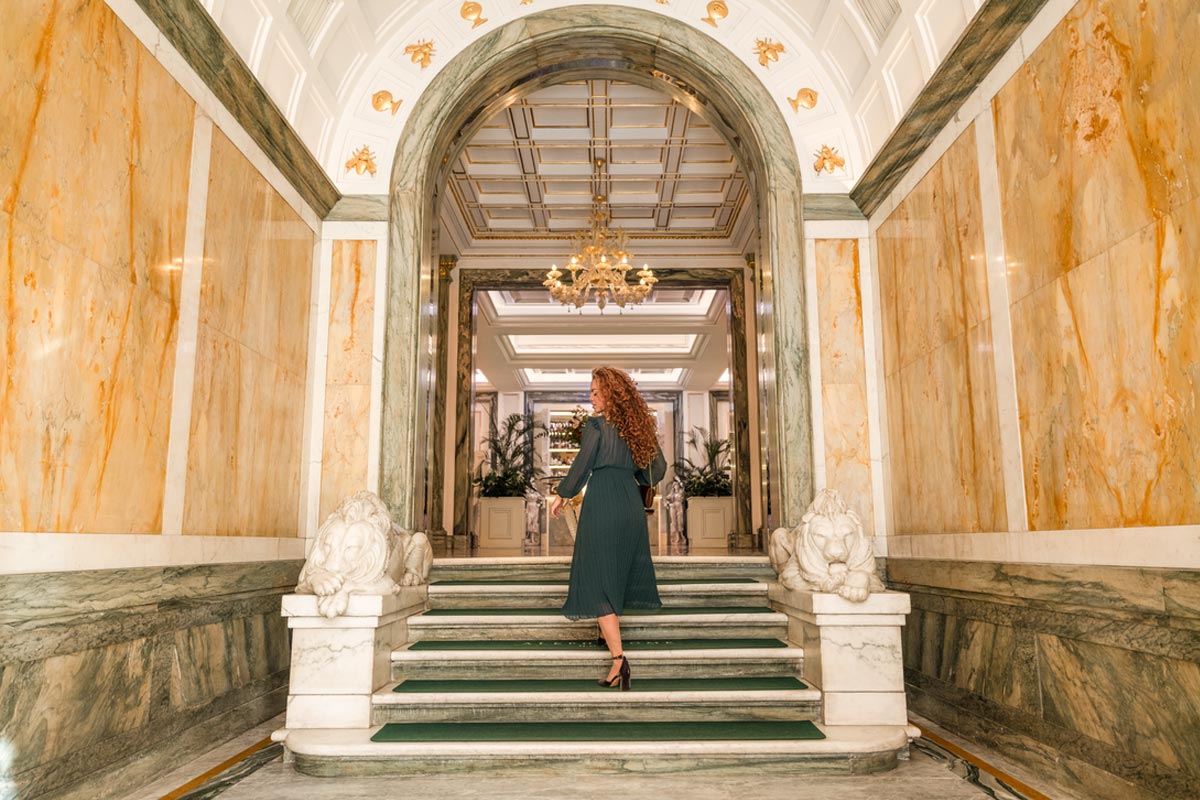
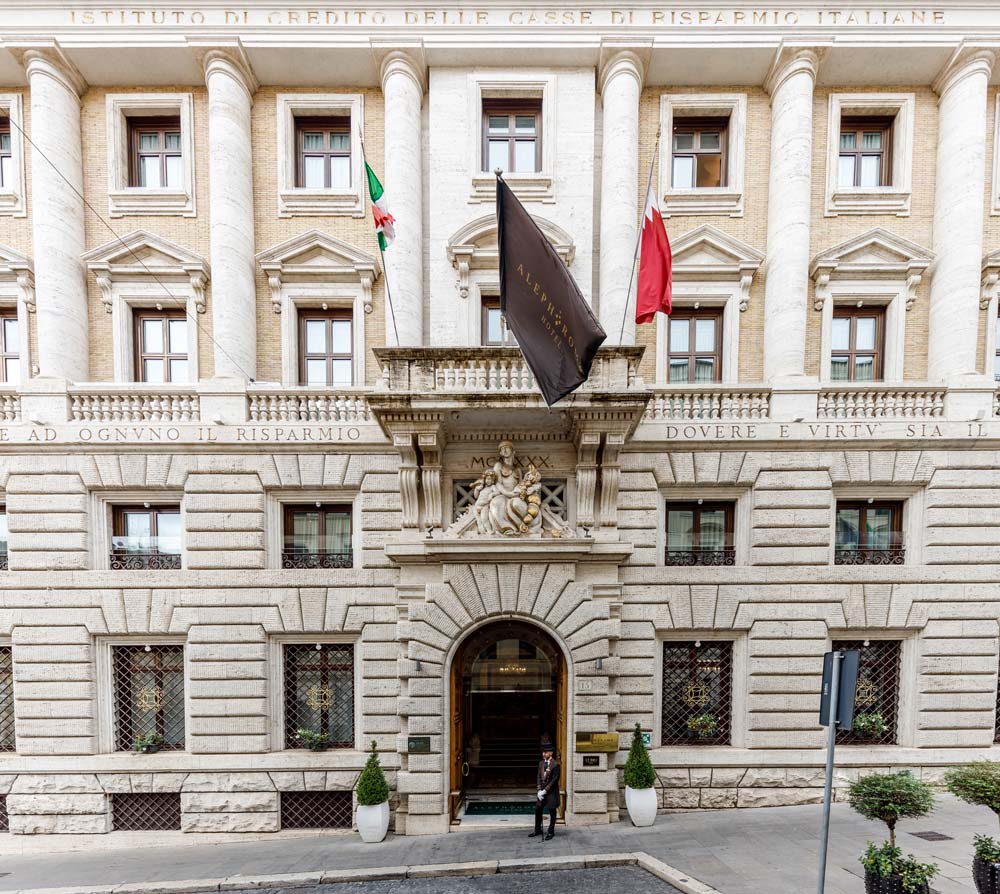
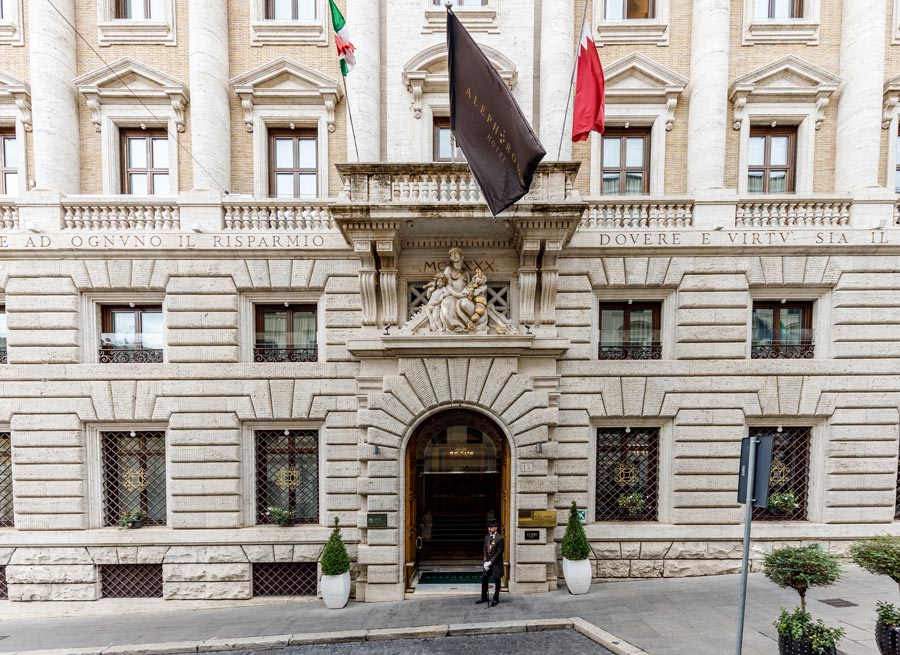
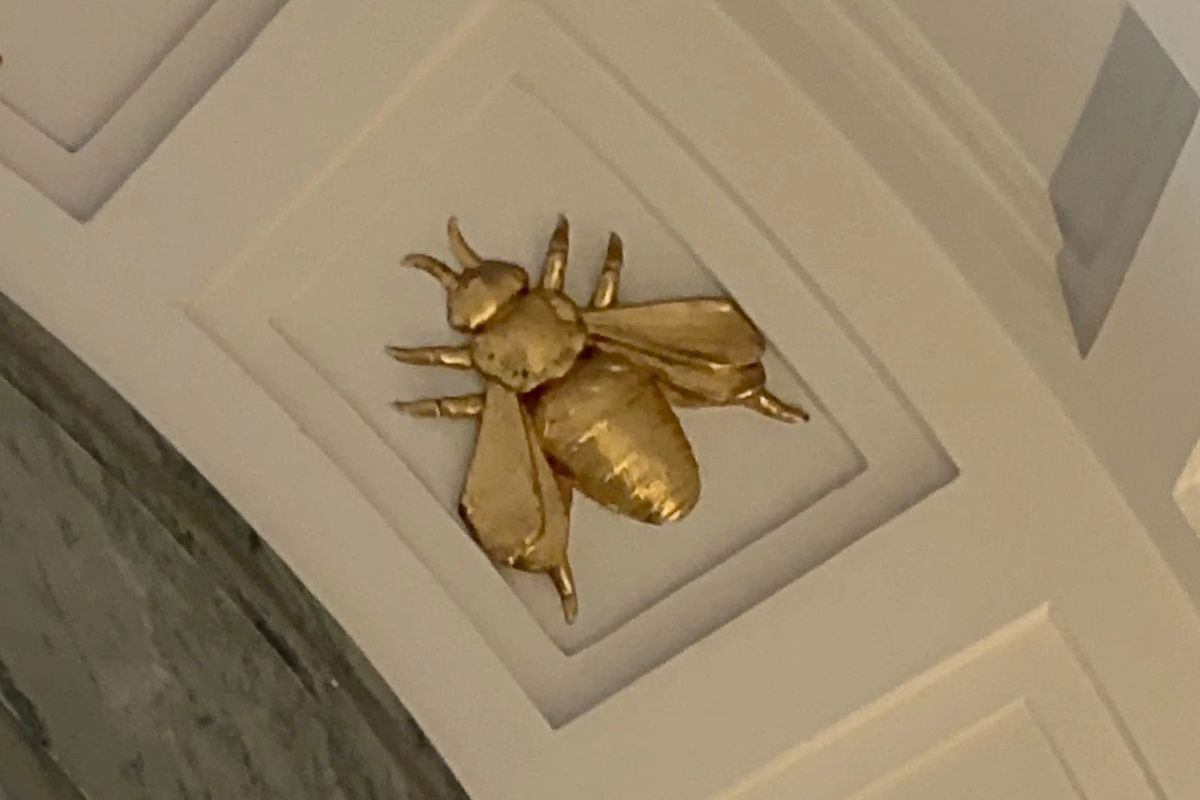
You might miss them if you aren’t looking. Above the archway door of the Aleph Rome Hotel, Curio Collection by Hilton, buzzes a semicircle of gilded bees, ready to fly out into the street. They would find they were among friends. Bees are found all throughout Rome, most of them the symbol of the Barberini family, whose palazzo, now a museum, is a five-minute walk from the hotel.
#Episode 7
You might miss them if you aren’t looking. Above the archway door of the Aleph Rome Hotel, Curio Collection by Hilton, buzzes a semicircle of gilded bees, ready to fly out into the street. They would find they were among friends. Bees are found all throughout Rome, most of them the symbol of the Barberini family, whose palazzo, now a museum, is a five-minute walk from the hotel.
Pope Urban VIII, born into the Barberini family, literally stamped Rome with his family’s emblem, the bumblebee. He had the good fortune to be elected Pope during a golden era of Roman Baroque architecture and was quick to commission the three great masters of the age, Carlo Maderno, Francesco Borromini, and Gian Lorenzo Bernini, to construct fountains, churches, and statues all around the city, with the bumblebee prominently displayed.
Bees toiling away in their hives have represented industry and harmony in equal measure since ancient times. The reward for that hard work is honey, which Pliny the Elder, writing in AD 77–79, described as “dew fallen from the stars.”
So why are bees buzzing around the door of the Aleph Hotel? The building that is now the Aleph Hotel was constructed in the 1930s as the headquarters of the Central Savings Bank – a veritable hive of activity, thus a natural choice.
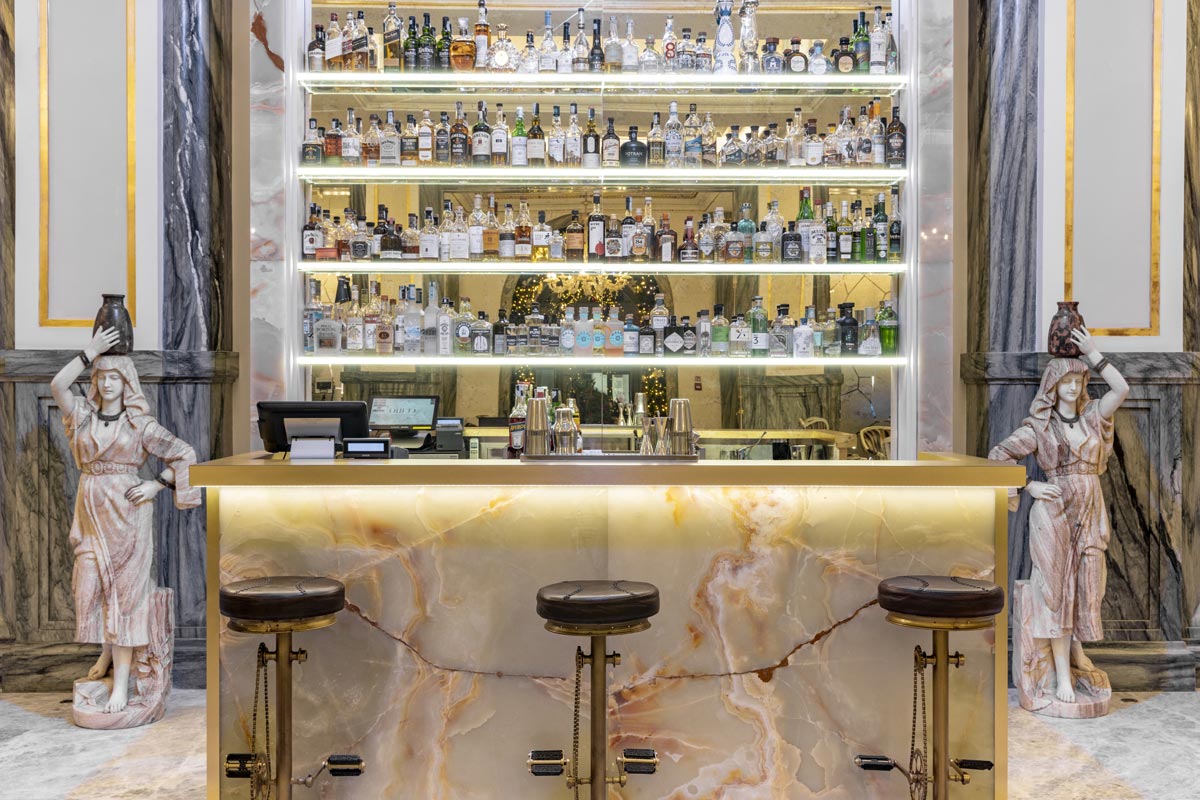
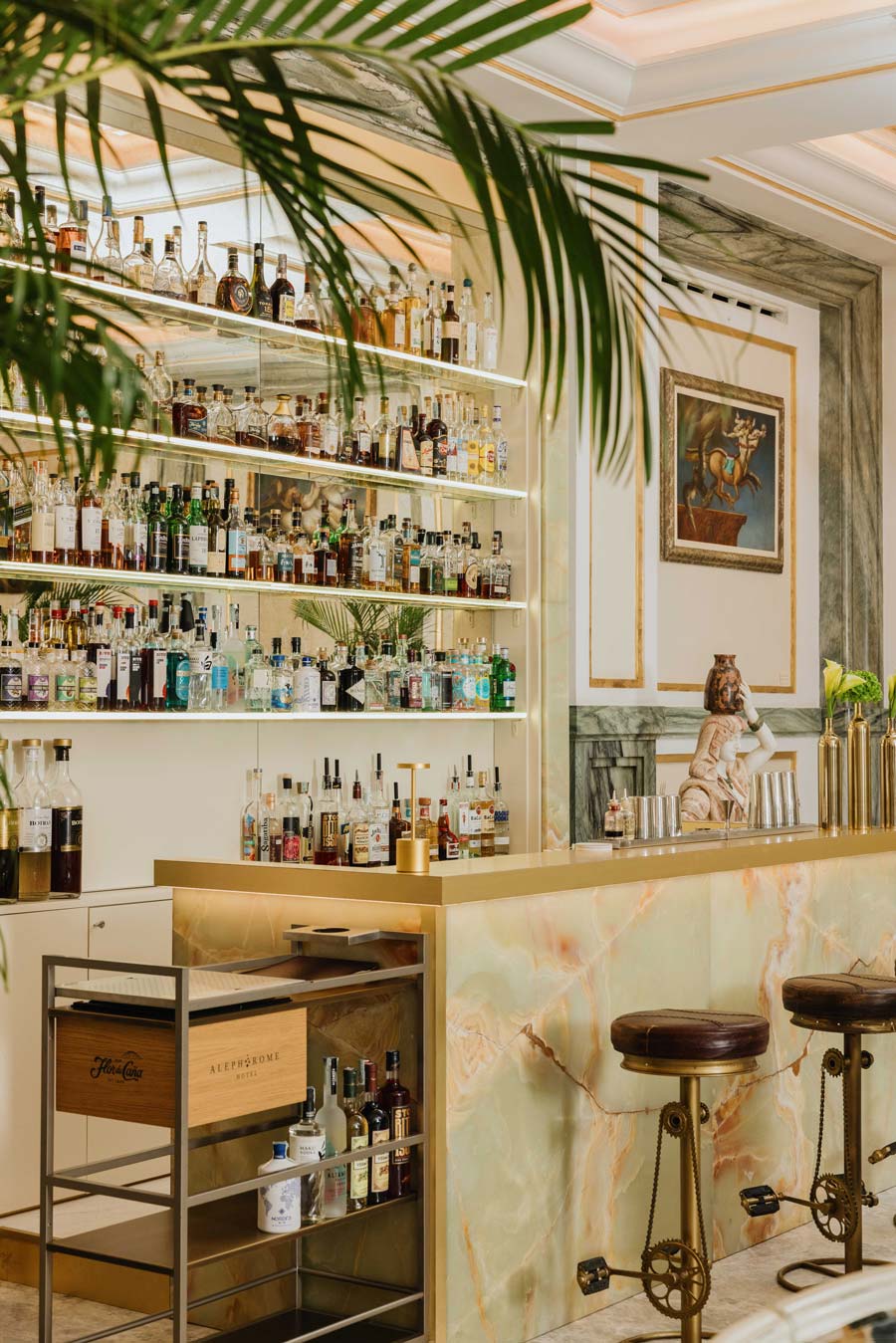
Follow the bees inside and the first thing that greets you is the Lobby Bar with its restored marble floors, columns, and onyx detailing that transports you back to La Dolce Vita, when Via Veneto, just steps away, was the centre of 1950’s Rome.
Pope Urban VIII, born into the Barberini family, literally stamped Rome with his family’s emblem, the bumblebee. He had the good fortune to be elected Pope during a golden era of Roman Baroque architecture and was quick to commission the three great masters of the age, Carlo Maderno, Francesco Borromini, and Gian Lorenzo Bernini, to construct fountains, churches, and statues all around the city, with the bumblebee prominently displayed.
Bees toiling away in their hives have represented industry and harmony in equal measure since ancient times. The reward for that hard work is honey, which Pliny the Elder, writing in AD 77–79, described as “dew fallen from the stars.”
So why are bees buzzing around the door of the Aleph Hotel? The building that is now the Aleph Hotel was constructed in the 1930s as the headquarters of the Central Savings Bank – a veritable hive of activity, thus a natural choice. Follow the bees inside and the first thing that greets you is the Lobby Bar with its restored marble floors, columns, and onyx detailing that transports you back to La Dolce Vita, when Via Veneto, just steps away, was the centre of 1950’s Rome.
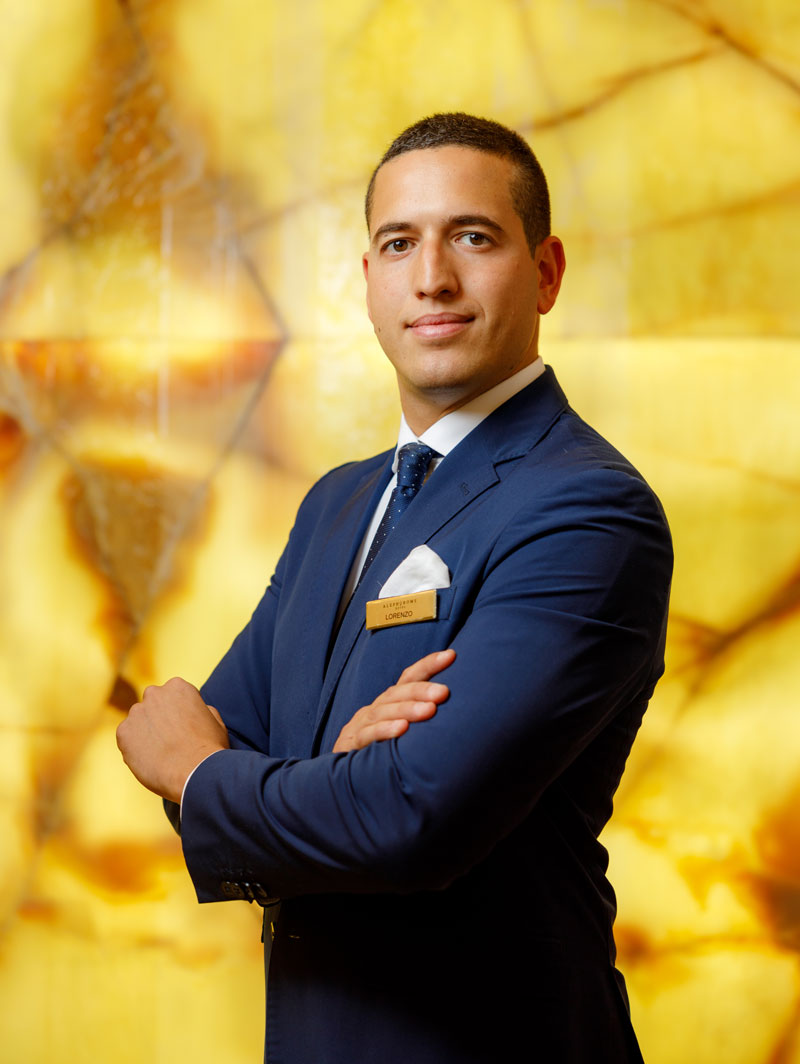
Open all day from seven in the morning until midnight. Its menu is overseen by Restaurants & Bars Manager, Lorenzo Politano, a Roman by birth who has been with the Aleph since 2018. His career began in his grandfather’s bar near Rome’s Termini train station, then took him to London to gain international experience, and then his hometown called him back again. Alongside him are Head Bartender Francesco Ramacciati and bartender Sergio Ditrano. All working together to create the bar’s signature menu, built around their individuals takes on the classics.
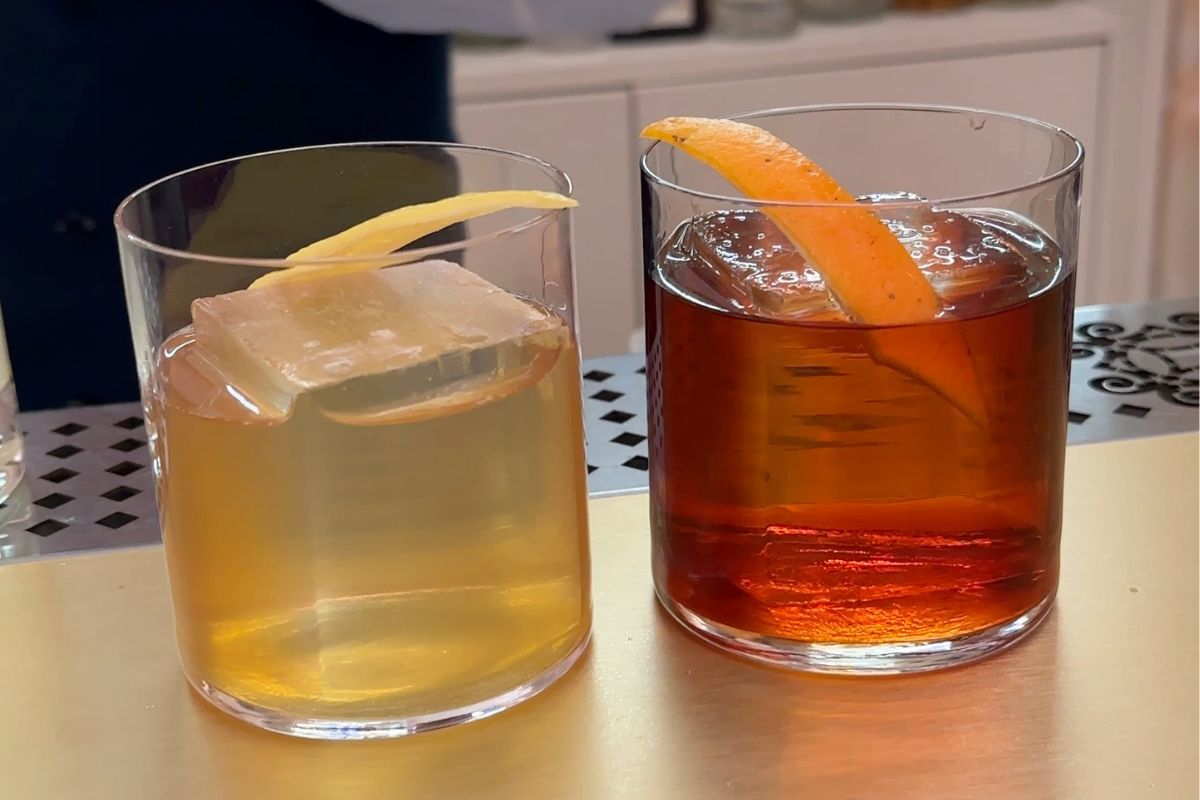
The Heritage Twist is a Gimlet-style cocktail using Altamura Distilleries Vodka and a homemade ciliegini (cherry tomato) and mint cordial, finished with basil and parsley oil. The Plum Old Fashioned made with Woodford Rye, plum bitters, and sugar looks straightforward enough until you learn of the secret ingredient: lager. A touch of Ichnusa Non Filtrata from Sardinia gives it that special something you would never guess. The Gentle & Sparkle is a highball of Gin Mare and Three Cents Fig Leaf Soda, brought to life with their own cucumber cordial.
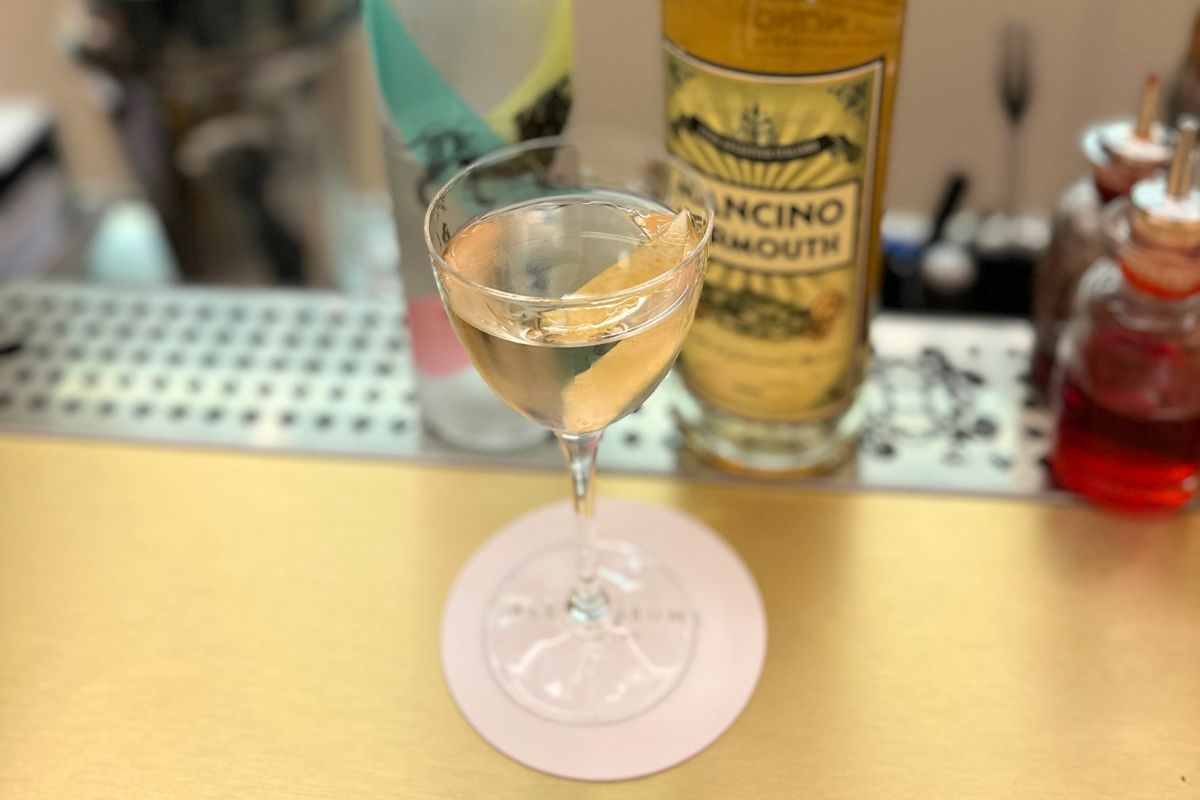
For those new to Martinis, or simply not wanting the same thing twice, the Martini menu offers the dry, the dirty, and the Gibson, plus their special Altamura Martini made with Altamura Distilleries Vodka, Mancino Secco, and orange bitters. For the genuinely curious, there’s also the Martini Cocktail Experience, a tasting of all of them.
Open all day from seven in the morning until midnight. Its menu is overseen by Restaurants & Bars Manager, Lorenzo Politano, a Roman by birth who has been with the Aleph since 2018. His career began in his grandfather’s bar near Rome’s Termini train station, then took him to London to gain international experience, and then his hometown called him back again.
Alongside him are Head Bartender Francesco Ramacciati and bartender Sergio Ditrano. All working together to create the bar’s signature menu, built around their individuals takes on the classics.
The Heritage Twist is a Gimlet-style cocktail using Altamura Distilleries Vodka and a homemade ciliegini (cherry tomato) and mint cordial, finished with basil and parsley oil. The Plum Old Fashioned made with Woodford Rye, plum bitters, and sugar looks straightforward enough until you learn of the secret ingredient: lager. A touch of Ichnusa Non Filtrata from Sardinia gives it that special something you would never guess. The Gentle & Sparkle is a highball of Gin Mare and Three Cents Fig Leaf Soda, brought to life with their own cucumber cordial.
For those new to Martinis, or simply not wanting the same thing twice, the Martini menu offers the dry, the dirty, and the Gibson, plus their special Altamura Martini made with Altamura Distilleries Vodka, Mancino Secco, and orange bitters. For the genuinely curious, there’s also the Martini Cocktail Experience, a tasting of all of them.
The Aleph bar represents a professional life project for me. I have been working here for eight years, witnessing its evolution day by day, growing alongside the team and the venue itself, up to the role I hold today. It is a place that has taught me the value of continuity, listening, and responsibility. The Aleph bars embodies the meeting point between an international identity and a strong Roman soul, where product quality goes hand in hand with the quality of human relationships. Today, my role is to provide direction, maintain high standards, and at the same time create a solid, inclusive working environment focused on people’s growth.
Lorenzo Politano, Restaurants & Bars Manager
The Aleph bar represents a professional life project for me. I have been working here for eight years, witnessing its evolution day by day, growing alongside the team and the venue itself, up to the role I hold today. It is a place that has taught me the value of continuity, listening, and responsibility. The Aleph bars embodies the meeting point between an international identity and a strong Roman soul, where product quality goes hand in hand with the quality of human relationships. Today, my role is to provide direction, maintain high standards, and at the same time create a solid, inclusive working environment focused on people’s growth.
Lorenzo Politano
Restaurants & Bars Manager
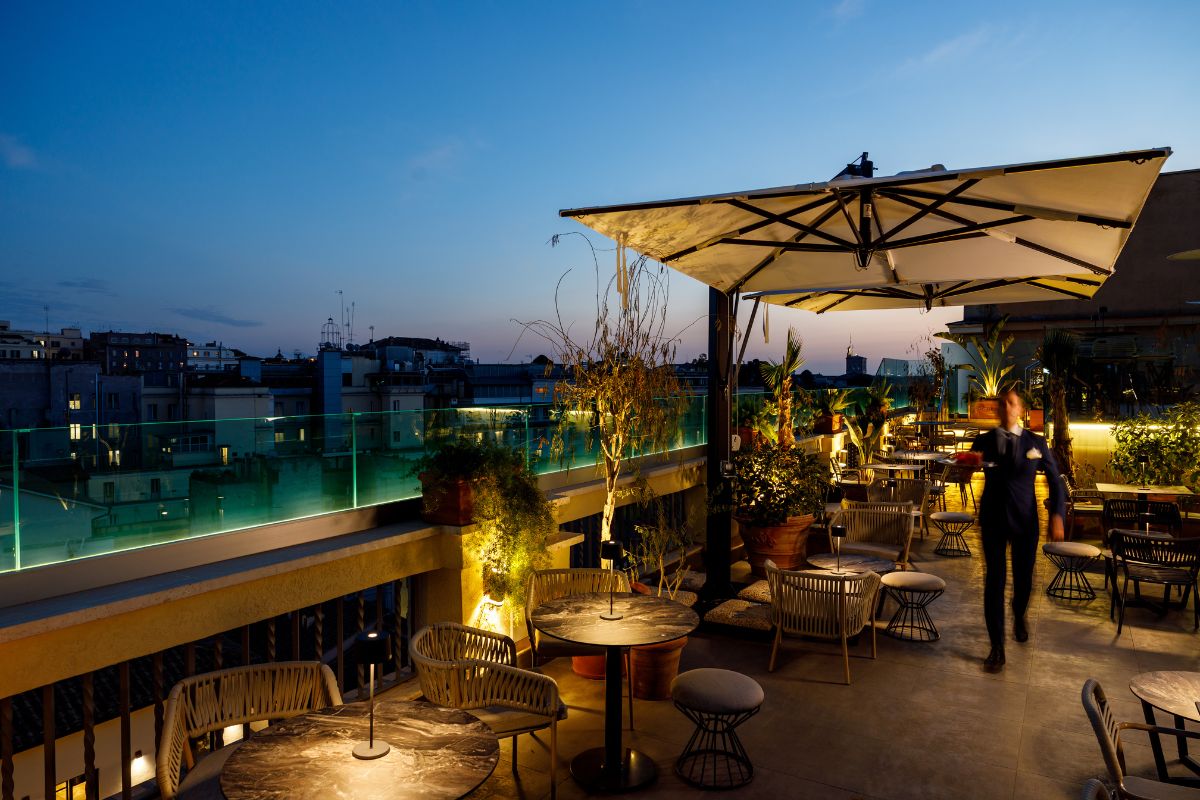
Still, that’s not the only hive in town. Like bees themselves, which shelter through winter and emerge when sun returns, the hotel’s rooftop Organics Sky Bar reawakens each spring. During the day, there are more refurbed classics: e.g. the Crushed Espresso Martini with Altamura Distilleries Vodka, Kyma Amaro al Caffè, and espresso or the Negroni D’Amare made with Gin Mare, Mancino Rosso, and Campari. Evening is when the team invites us to delight in a tour of the city, flying high above the Roman terracotta rooftops and church domes without leaving the terrace. Taking a cue from our yellow and black striped friends, we are introduced to Rome’s many neighborhoods (rione) and bumblebees through the bar’s signature cocktail menu.
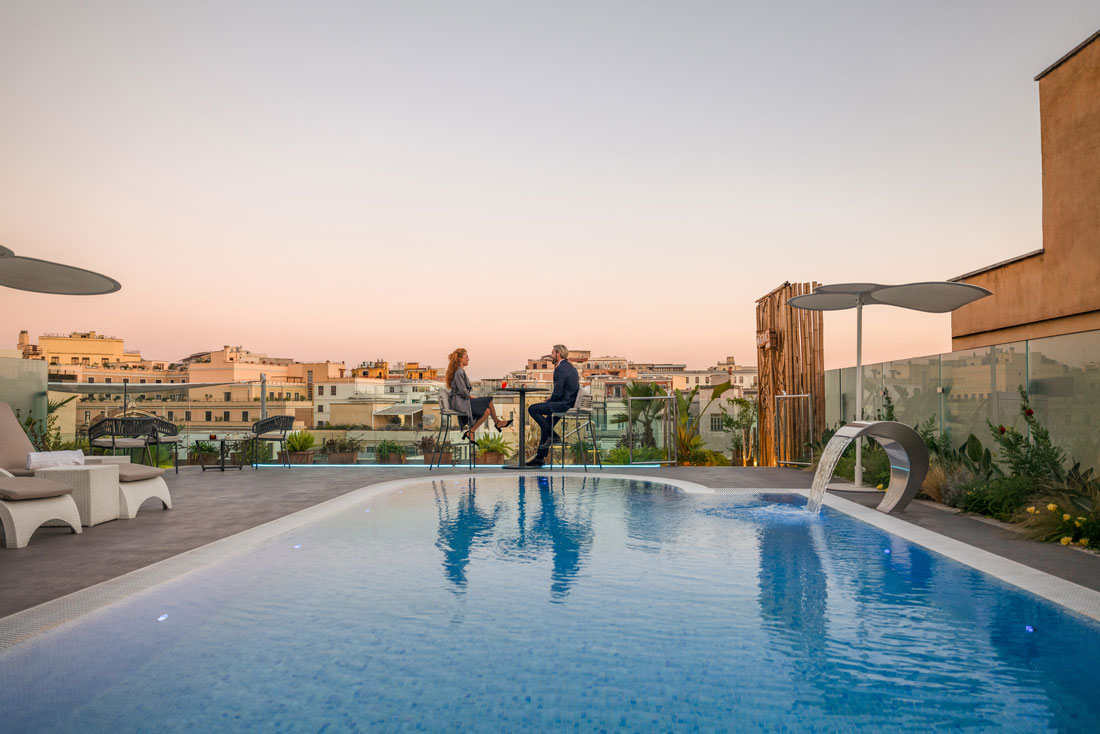
Still, that’s not the only hive in town. Like bees themselves, which shelter through winter and emerge when sun returns, the hotel’s rooftop Organics Sky Bar reawakens each spring. During the day, there are more refurbed classics: e.g. the Crushed Espresso Martini with Altamura Distilleries Vodka, Kyma Amaro al Caffè, and espresso or the Negroni D’Amare made with Gin Mare, Mancino Rosso, and Campari. Evening is when the team invites us to delight in a tour of the city, flying high above the Roman terracotta rooftops and church domes without leaving the terrace. Taking a cue from our yellow and black striped friends, we are introduced to Rome’s many neighborhoods (rione) and bumblebees through the bar’s signature cocktail menu.
As for the recipes, our intention was to pair ingredients that, thanks to their characteristics, could evoke the sensations and aromas one might experience while strolling through the streets of each Roman neighborhood. The idea is to create a sensory connection, evoking the atmosphere, scents, and impressions that both locals and visitors experience as they explore these neighborhoods and admire their iconic monuments”
explains Lorenzo.
As for the recipes, our intention was to pair ingredients that, thanks to their characteristics, could evoke the sensations and aromas one might experience while strolling through the streets of each Roman neighborhood. The idea is to create a sensory connection, evoking the atmosphere, scents, and impressions that both locals and visitors experience as they explore these neighborhoods and admire their iconic monuments,”
explains Lorenzo.
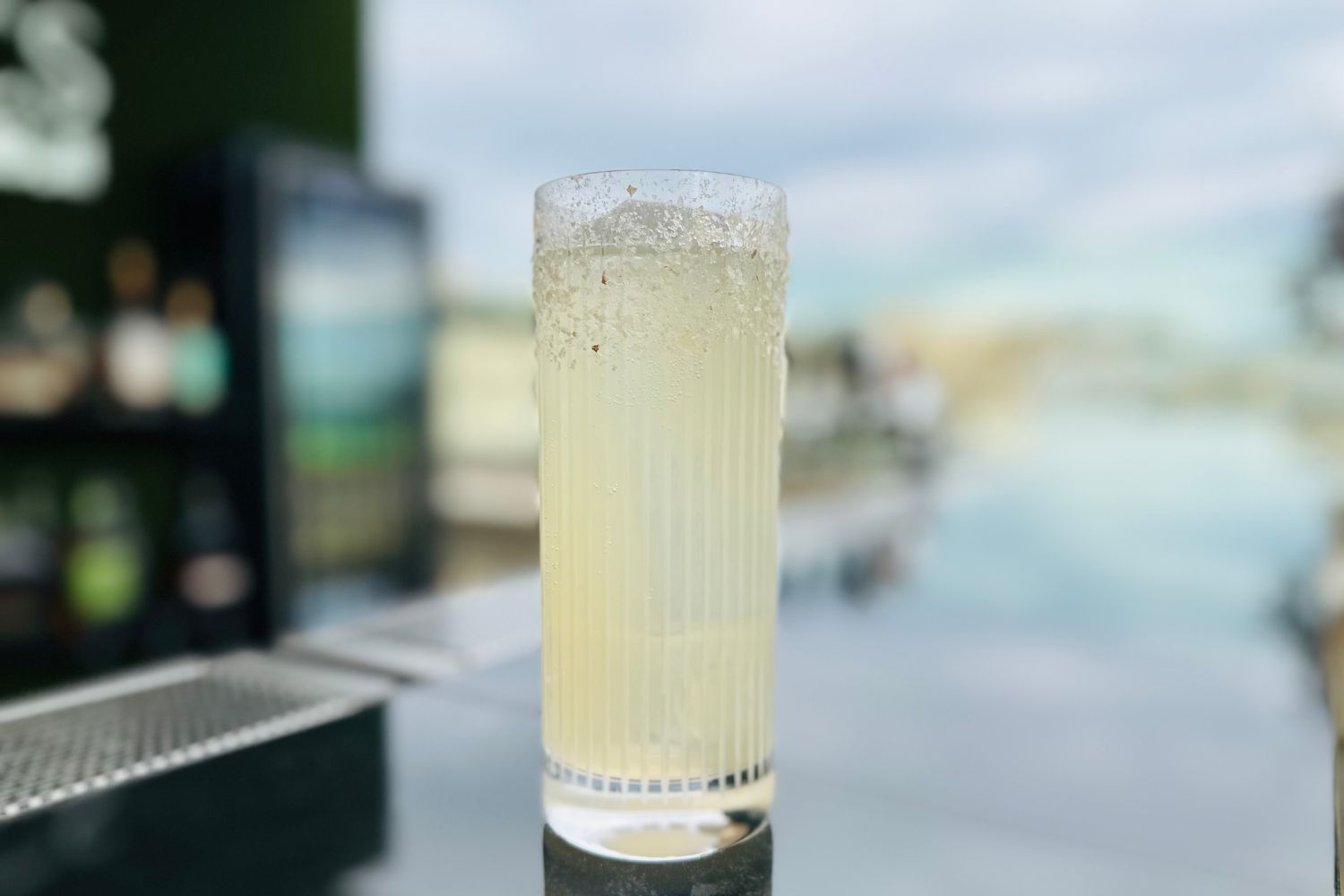
With one sip of the Rione Trevi, a heady mix of Jack Daniel’s Tennessee Apple, with touches of mango and lime, salt solution and The Organics Ginger Beer, we are transported to La Fontana delle Api (Fountain of the Bees) sitting at the corner of Piazza Barberini and Via Veneto.
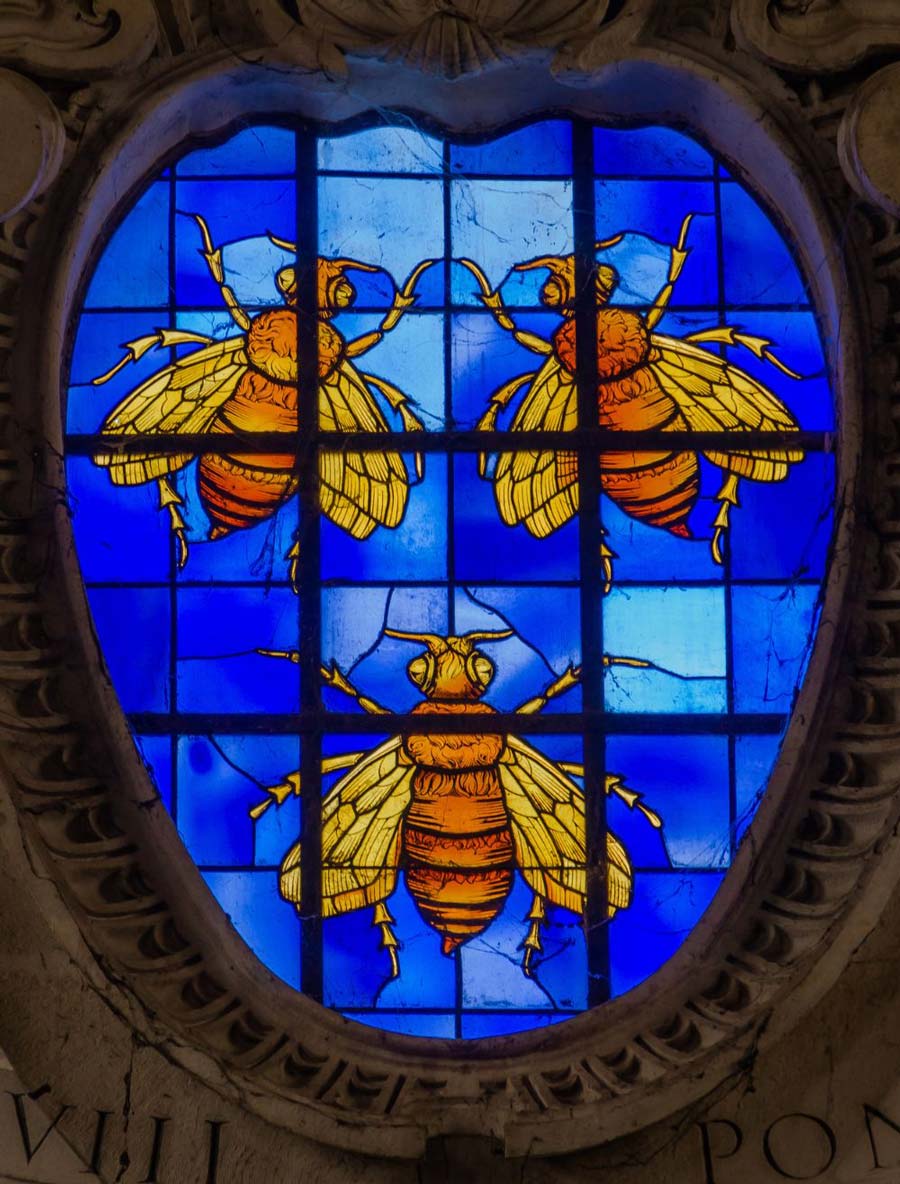
Explore the Rione Pigna, home of the Pantheon, where a tiny carved bee, symbol of the Barberini, is hidden on a column capital of the ancient portico, which blends Campari, Kyma Amaro al Caffè, and The Organics Black Orange. The Rione Monti with its Nordes Gin, grapefruit syrup, sage, sugar and The Organics Bitter Lemon, sends us to the church of Santa Maria in Ara Coeli near Colosseum, where the Barberini bees swarm its gorgeous stained glass windows.
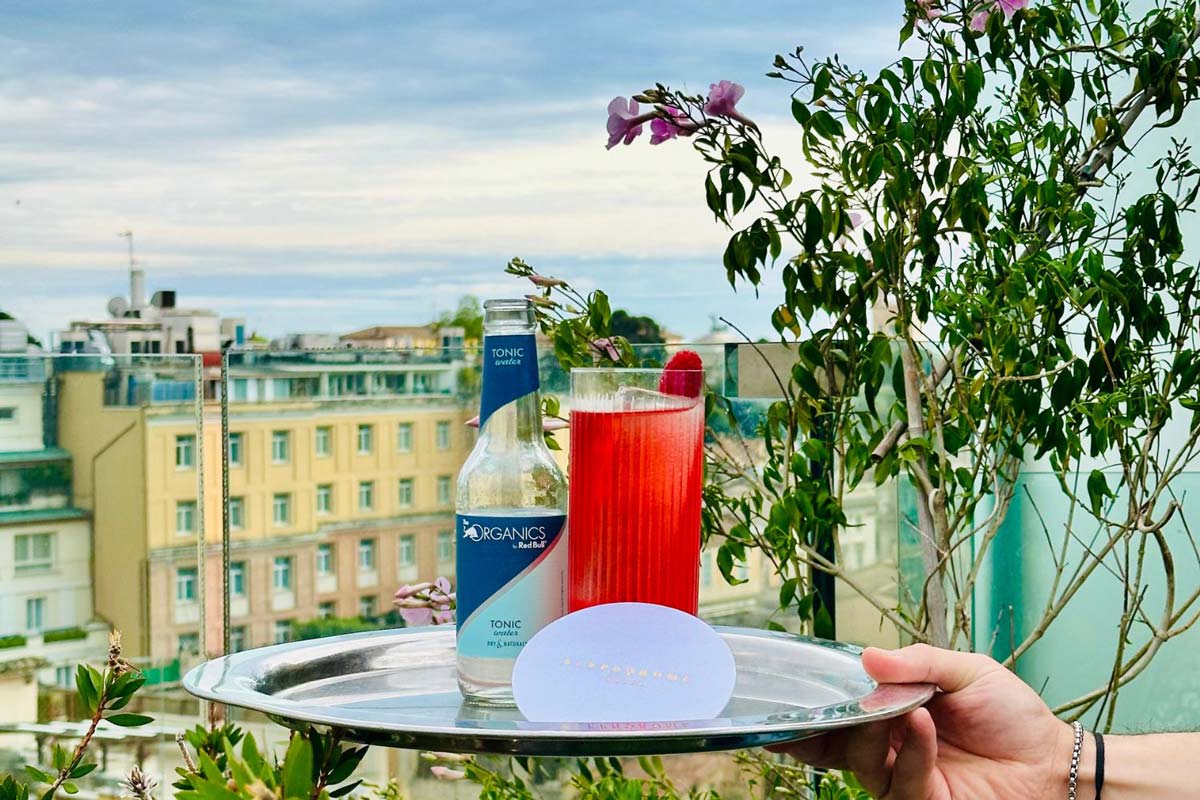
Leading us to St Peter’s Basilica down the Via Giulia and across the Tevere River, where the bees dance on their most glorious perch, Bernini’s Baldacchino, the canopy above the altar, is the Rione Regola created with Altamura Distilleries Vodka, violet liqueur, raspberry shrub and The Organics Tonic Water. Of all those bees that have found a home in Rome, the gilded ones above the Aleph’s door are the ones that welcome us in to share the sweet rewards of Lorenzo and his team’s hard work – crafting cocktails that are, as Pliny described so eloquently, “dew fallen from the stars” and make their bars the heart of the hotel.
With one sip of the Rione Trevi, a heady mix of Jack Daniel’s Tennessee Apple, with touches of mango and lime, salt solution and The Organics Ginger Beer, we are transported to La Fontana delle Api (Fountain of the Bees) sitting at the corner of Piazza Barberini and Via Veneto.
Explore the Rione Pigna, home of the Pantheon, where a tiny carved bee, symbol of the Barberini, is hidden on a column capital of the ancient portico, which blends Campari, Kyma Amaro al Caffè, and The Organics Black Orange. The Rione Monti with its Nordes Gin, grapefruit syrup, sage, sugar and The Organics Bitter Lemon, sends us to the church of Santa Maria in Ara Coeli near Colosseum, where the Barberini bees swarm its gorgeous stained glass windows. Leading us to St Peter’s Basilica down the Via Giulia and across the Tevere River, where the bees dance on their most glorious perch, Bernini’s Baldacchino, the canopy above the altar, is the Rione Regola created with Altamura Distilleries Vodka, violet liqueur, raspberry shrub and The Organics Tonic Water.
Of all those bees that have found a home in Rome, the gilded ones above the Aleph’s door are the ones that welcome us in to share the sweet rewards of Lorenzo and his team’s hard work – crafting cocktails that are, as Pliny described so eloquently, “dew fallen from the stars” and make their bars the heart of the hotel.
At Aleph Rome, the bar is more than a place it is a feeling, a window on the world, where different cultures, stories, and energies meet in a single moment – space of exchange between bartender and guest, between those who listen and those who tell. Every interaction is a dialogue, not just through words, but through gestures, flavors, and shared time. Behind the bar, I don’t just serve drinks I connect with people. For me, the bar is alive. It breathes through the people who sit at it and the hands that work behind it – where hospitality becomes personal, and where every drink is the beginning of a conversation.
Gaetano Cacialli, Operations Manager
At Aleph Rome, the bar is more than a place it is a feeling, a window on the world, where different cultures, stories, and energies meet in a single moment – space of exchange between bartender and guest, between those who listen and those who tell. Every interaction is a dialogue, not just through words, but through gestures, flavors, and shared time. Behind the bar, I don’t just serve drinks I connect with people. For me, the bar is alive. It breathes through the people who sit at it and the hands that work behind it – where hospitality becomes personal, and where every drink is the beginning of a conversation.
Gaetano Cacialli, Operations Manager
Susan L. Schwartz
Susan L. Schwartz is the award-winning creator of A Lush Life Manual and host of the Lush Life Podcast. She writes widely on drinks and travel, leads London and Venice Cocktail Tours, and has been recognised with multiple industry awards.
The Heart of the Hotel: La Perla, Corvara
La Perla, Corvara
This year, in association with Altamura Distilleries, I’ll be exploring some of the world’s most legendary bars—uncovering what makes them the beating heart of the hotel. Our next stop is Corvara!
#Episode 6
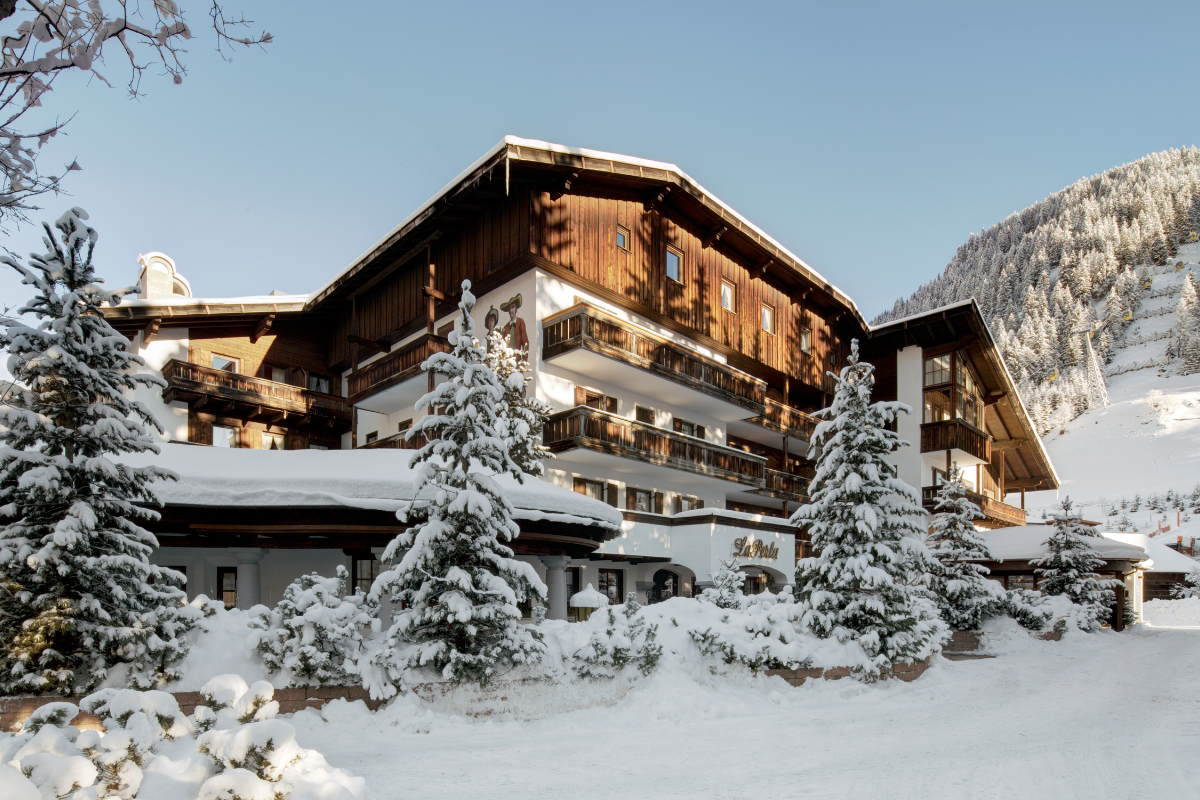
It’s no surprise this small, sumptuous hotel is called La Perla. Pearls worn close to the heart, reveal their natural luster. Like every pearl, this one was formed by a precious speck of sand – its bar, the true heart of the hotel. Founders Ernesto and Anni Costa inherently understood that a great bar makes a great hotel. When they opened La Perla in 1956, the bar was built even before the restaurant. That original bar still anchors the hotel, inviting one and all to partake in the party that is the Bistrot Music Club & Bar.
#Episode 6
It’s no surprise this small, sumptuous hotel is called La Perla. Pearls worn close to the heart, reveal their natural luster. Like every pearl, this one was formed by a precious speck of sand – its bar, the true heart of the hotel. Founders Ernesto and Anni Costa inherently understood that a great bar makes a great hotel. When they opened La Perla in 1956, the bar was built even before the restaurant. That original bar still anchors the hotel, inviting one and all to partake in the party that is the Bistrot Music Club & Bar.
Working as both a plumber and ski instructor in Corvara, one of the cosy villages that dot Northern Italy’s famous South Tyrolean mountain range, Ernesto watched the Dolomites becoming more and more popular as a ski destination. Instrumental in building the town’s first ski lift in 1947, he knew those seeking to schuss would need sustenance and shelter, plus a few Sidecars after the cable cars closed for the evening.
So less than a decade later, he built a home for himself, adding a few additional apartments upstairs for those who’d braved the trip. Those few rooms grew into what is now La Perla or, as those in the know call it, La Casa Costa.
Friends and guests alike had an open invitation to be serenaded by Ernesto and his band downstairs in the bar. Their philosophy was that hospitality should be about having a great time and that welcome extended to not only hotel guests but to anyone who wanted to join in.
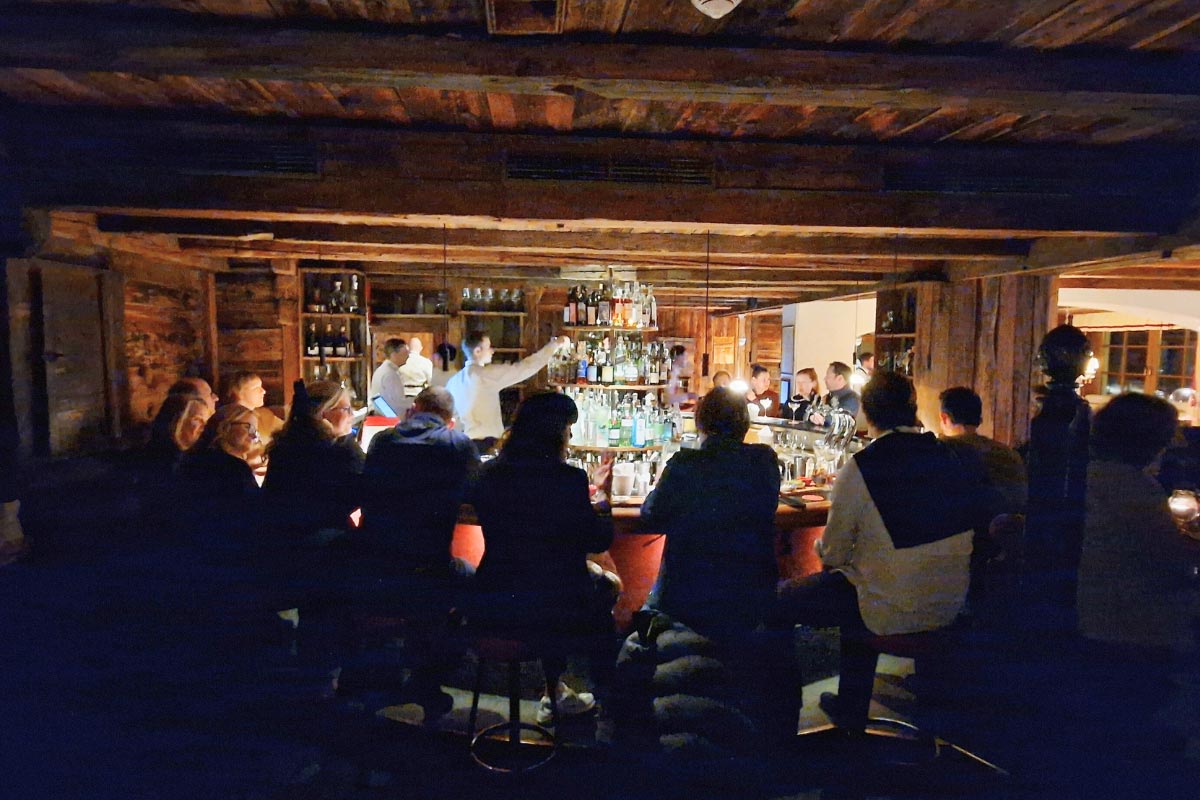
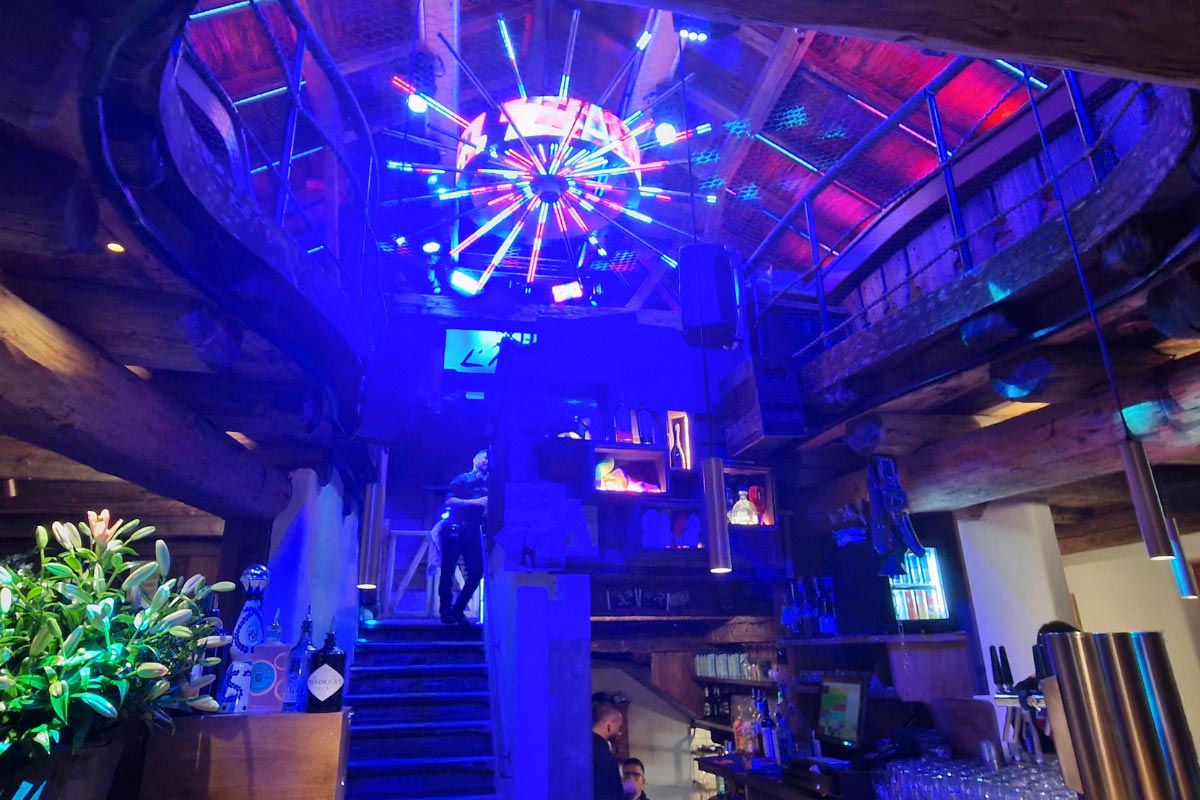
As soon as you walk into the hotel, it’s hard not to be pulled into La Perla’s iconic Bistrot Music Club & Bar. The doors are always open, and the bar’s circular design is key to its success. Conversations strike up spontaneously between not only those next to each other, but also across the bar, as passionate bartenders slalom past playful parley all night.
Working as both a plumber and ski instructor in Corvara, one of the cosy villages that dot Northern Italy’s famous South Tyrolean mountain range, Ernesto watched the Dolomites becoming more and more popular as a ski destination. Instrumental in building the town’s first ski lift in 1947, he knew those seeking to schuss would need sustenance and shelter, plus a few Sidecars after the cable cars closed for the evening.
So less than a decade later, he built a home for himself, adding a few additional apartments upstairs for those who’d braved the trip. Those few rooms grew into what is now La Perla or, as those in the know call it, La Casa Costa.
Friends and guests alike had an open invitation to be serenaded by Ernesto and his band downstairs in the bar. Their philosophy was that hospitality should be about having a great time and that welcome extended to not only hotel guests but to anyone who wanted to join in.
As soon as you walk into the hotel, it’s hard not to be pulled into La Perla’s iconic Bistrot Music Club & Bar. The doors are always open, and the bar’s circular design is key to its success. Conversations strike up spontaneously between not only those next to each other, but also across the bar, as passionate bartenders slalom past playful parley all night.
“The Hotel La Perla bar is the heart of the house: a meeting point for guests and the local community. The atmosphere, enlivened by live music, creates a relaxed and fun environment, ideal for aperitifs and after-dinner drinks accompanied by classic cocktails. Fun, comfort, and taste are its essence.”
Michele Albertelli, General Manager
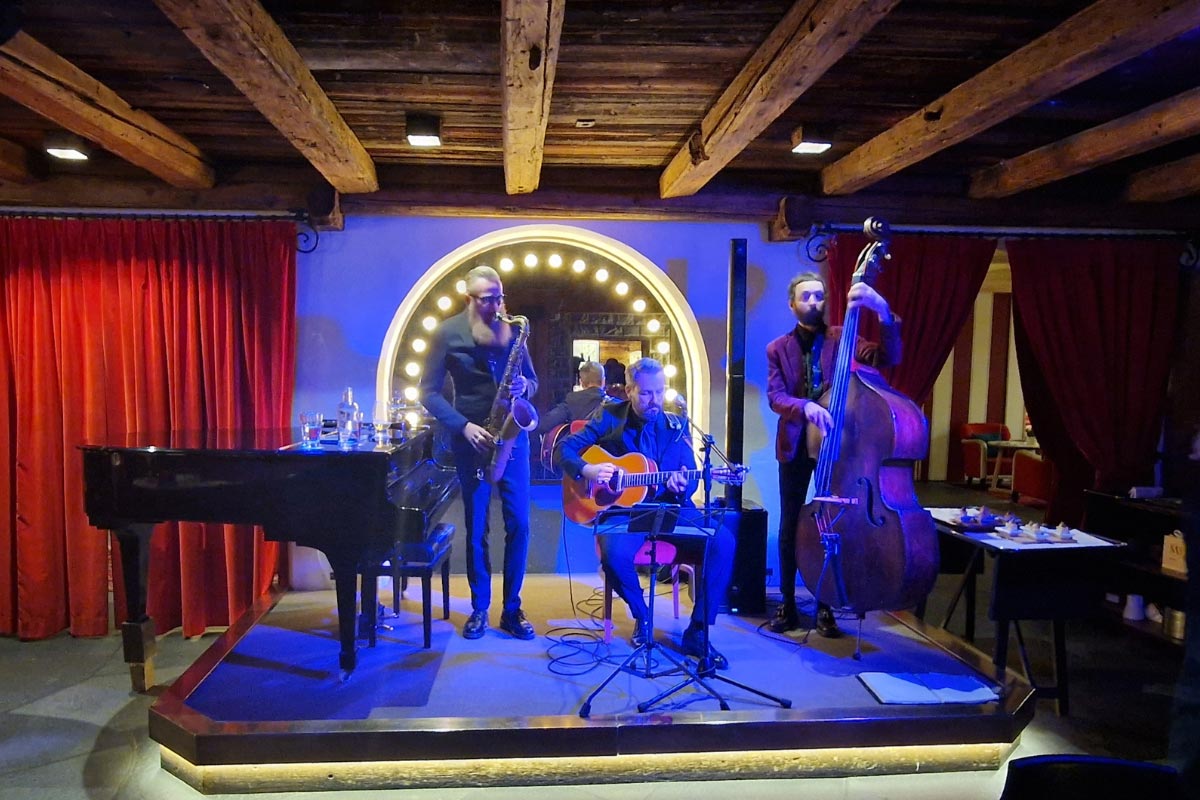
Then there’s the music, which was so important to Ernesto, adding that something special. Every night brings live music – different musicians, different styles – so no night is ever the same. Locals pop in to see if their favorites have returned. Even now, 95-year-old Ernesto often sits with his Anni at the bar, catching a tune or two.
Still family run, each of their sons has had a hand in reshaping the current hotel. Mathias oversees day-to-day operations, receiving guests as they arrive.
Then there’s the music, which was so important to Ernesto, adding that something special. Every night brings live music – different musicians, different styles – so no night is ever the same. Locals pop in to see if their favorites have returned. Even now, 95-year-old Ernesto often sits with his Anni at the bar, catching a tune or two.
Still family run, each of their sons has had a hand in reshaping the current hotel. Mathias oversees day-to-day operations, receiving guests as they arrive.
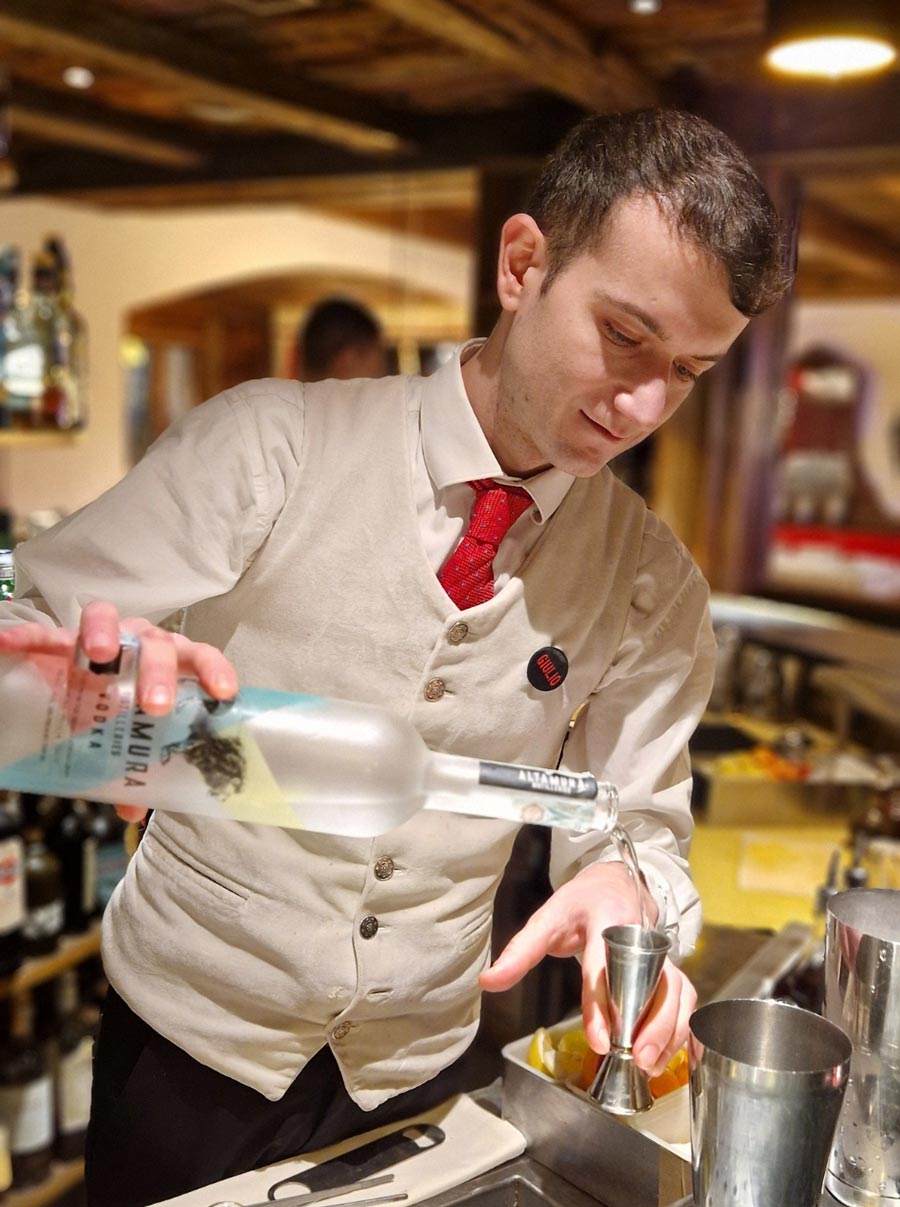
The third son, Michil, recognized that a cocktail revolution was underway and set about bringing La Perla into the future, rethinking their entire bar experience including the glassware, ice, and most importantly the cocktails. His direction was to concentrate on the classics. Guests were to drink the best Martinis and Manhattans of their lives with no frills or furbelows.
On hand to lead the charge are the dynamic duo of Giulio Pagani and Mario Gambino. Originally from Le Marche region of Italy, Giulio arrived at La Perla seven years ago with a passion for mixology, born from watching the barmen before him.
“The Bistrot Music Club, together with its bar, is the true heart of the hotel. We don’t just serve cocktails – we aim to make you feel the warmth and welcome that only home can offer”
Giulio Pagani, Barman
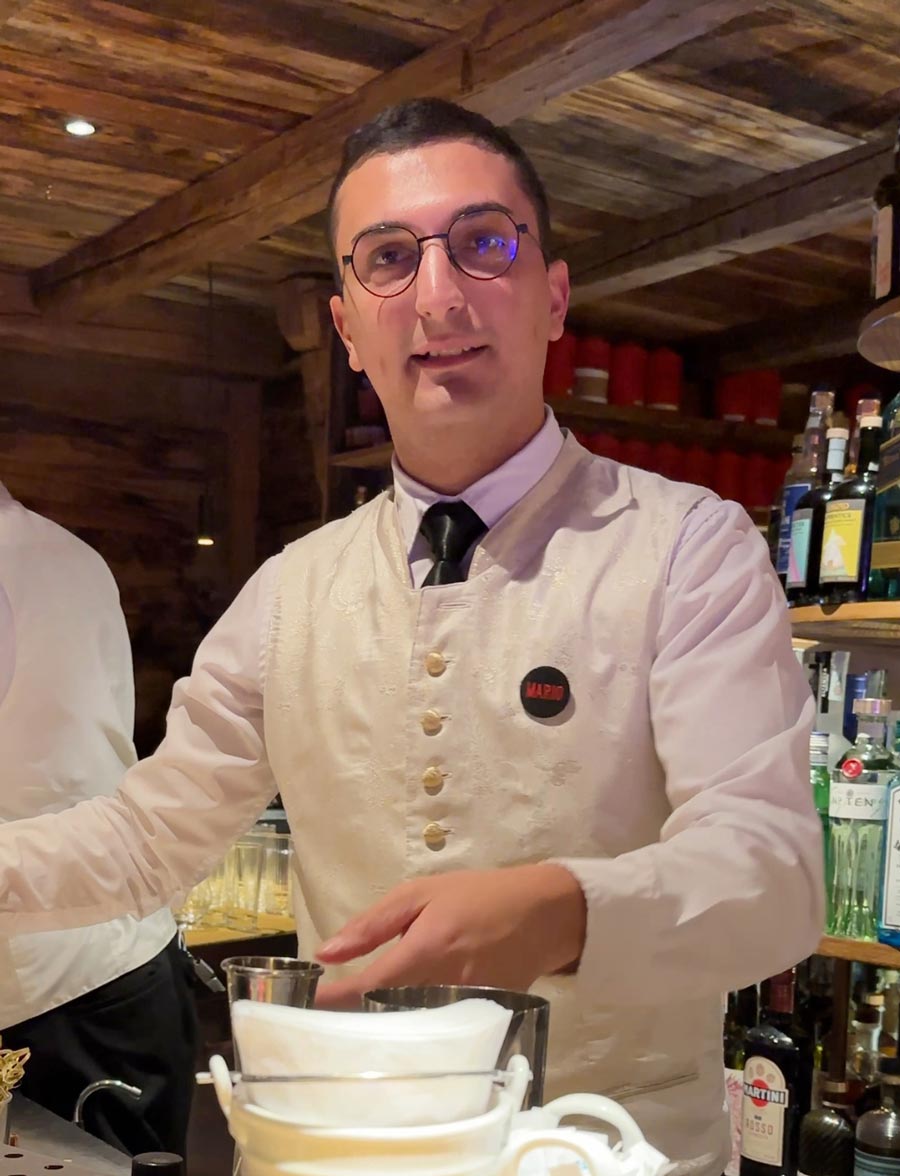
Mario Gambino, a transplant from Sicily, joined Giulio just three years ago. Starting his career at a smaller hotel, he used to visit the Bistrot Music Club & Bar as a guest, longing to work there one day, entranced by La Perla’s “great music, and great cocktails.”
The bar is the heart of the hotel because it reflects the soul of Casa Costa: a harmonious balance of elegance, warmth, tradition, and innovation.”
Mario Gambino, Barman
Now like the Costa brothers, they work as a team, upholding the direction of the new menu they created, with an approach they like to call “evolving tradition” or innovation without destruction.
“The hotel bar is the silent, beating heart of the establishment. Here, behind the bar counter, the bartender is both historian and healer, offering not just a drink, but a bespoke story for the soul, and transforming the day’s scattered stress into a steady, sip by sip calm.”
Alex Gkountopoulous
Assistant Bar Manager
The third son, Michil, recognized that a cocktail revolution was underway and set about bringing La Perla into the future, rethinking their entire bar experience including the glassware, ice, and most importantly the cocktails. His direction was to concentrate on the classics. Guests were to drink the best Martinis and Manhattans of their lives with no frills or furbelows.
On hand to lead the charge are the dynamic duo of Giulio Pagani and Mario Gambino. Originally from Le Marche region of Italy, Giulio arrived at La Perla seven years ago with a passion for mixology, born from watching the barmen before him.
“The Bistrot Music Club, together with its bar, is the true heart of the hotel. We don’t just serve cocktails – we aim to make you feel the warmth and welcome that only home can offer”
Giulio Pagani, Barman
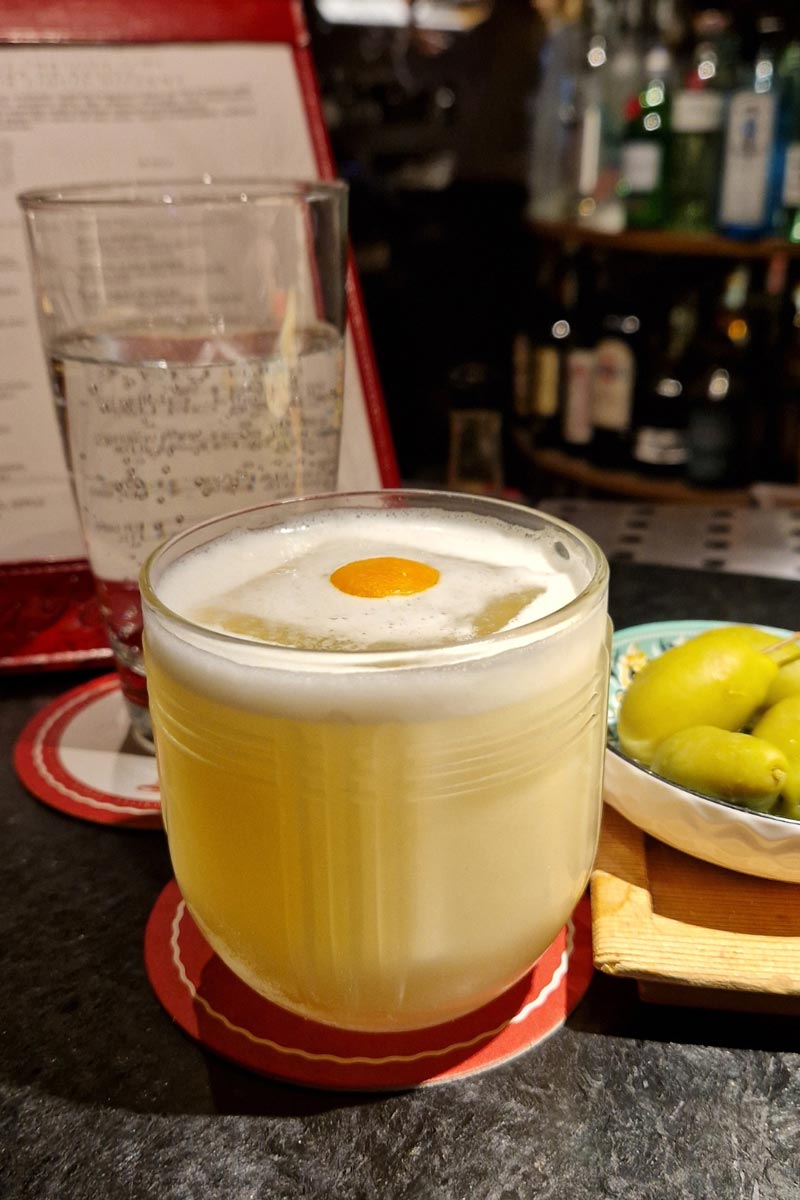
Journey Through Time explores the dilemma that both travelers and cocktail lovers share – the pull to discover something new or relive what has already been experienced. As the menu asks: “Will you revisit the past and uncover cocktails unfairly forgotten..or perhaps even step into eternity with timeless classics reimagined?”
The menu is divided into categories – Past, Present, Future and Eternity. The Past is made of pre-Prohibition cocktails you might not be so familiar with. The Lucien Gaudin is represented, named for the 1920’s French Olympic medal-winning fencer with its mix of London Dry Gin, red and dry Vermouth, Triple Sec, and Campari. The Tipperary also makes the list. Prepared here with Irish whiskey, red vermouth, Green Chartreuse, and a dash or two of Angostura bitters, this cocktail appears in Harry MacElhone’s 1922 ABC of Mixing Cocktails as well as Harry Craddock’s famous The Savoy Cocktail Book!
Leading the Future is the tantalizing Melinda, a perfect expression of their forward-thinking philosophy. The traditional Paloma is a simple mix of grapefruit soda and tequila. Mario and Giulio make their own soda, keeping tequila as the base and combining it with homemade ginger syrup, citric acid, and Melinda apples. A nod to this area of Italy being the largest apple-producing region in Europe, with Melinda and Marlene apples the most prevalent varieties.
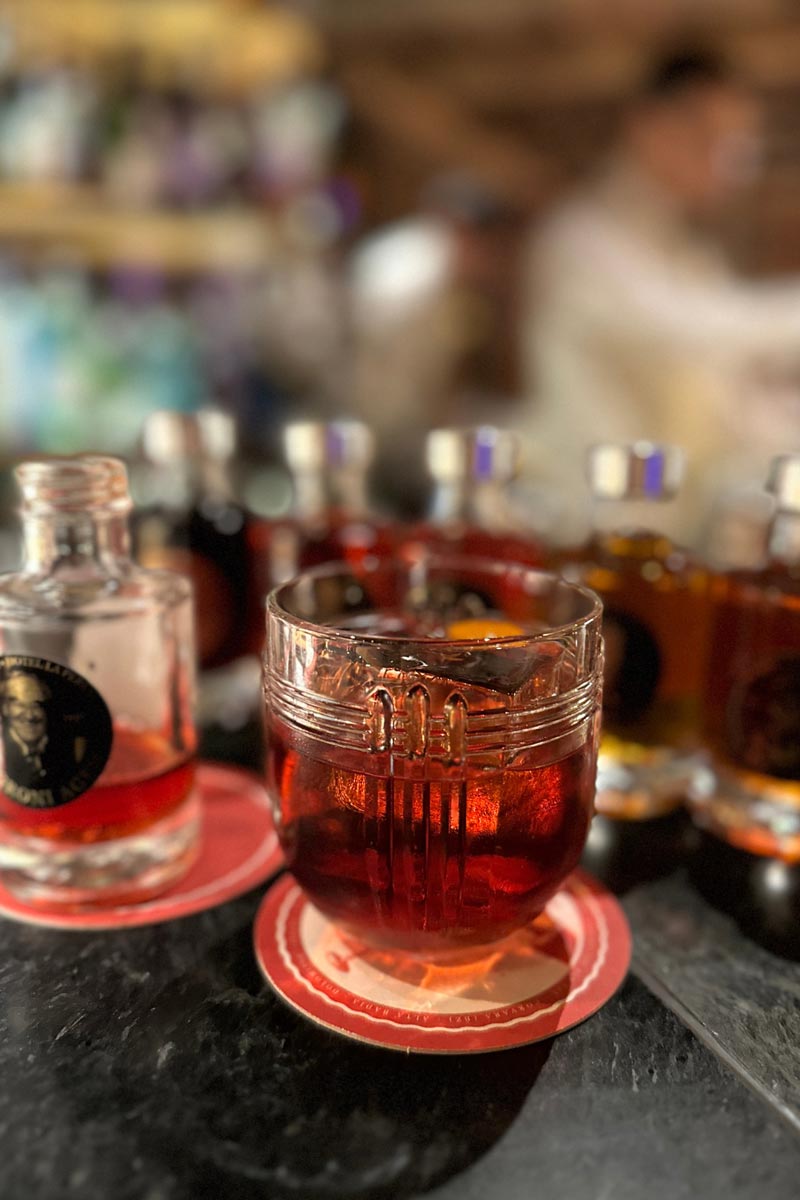
Eternity pays reverence to the classics. The Martini Casa Costa made with their own signature La Perla gin distilled in Milan or Puglia’s Altamura Distilleries Vodka is as clear and crystal as the icicles outside. Their Aged Negroni begins with Campari and gin, and then surprises with four different types of vermouth aged in a barrel for two months.
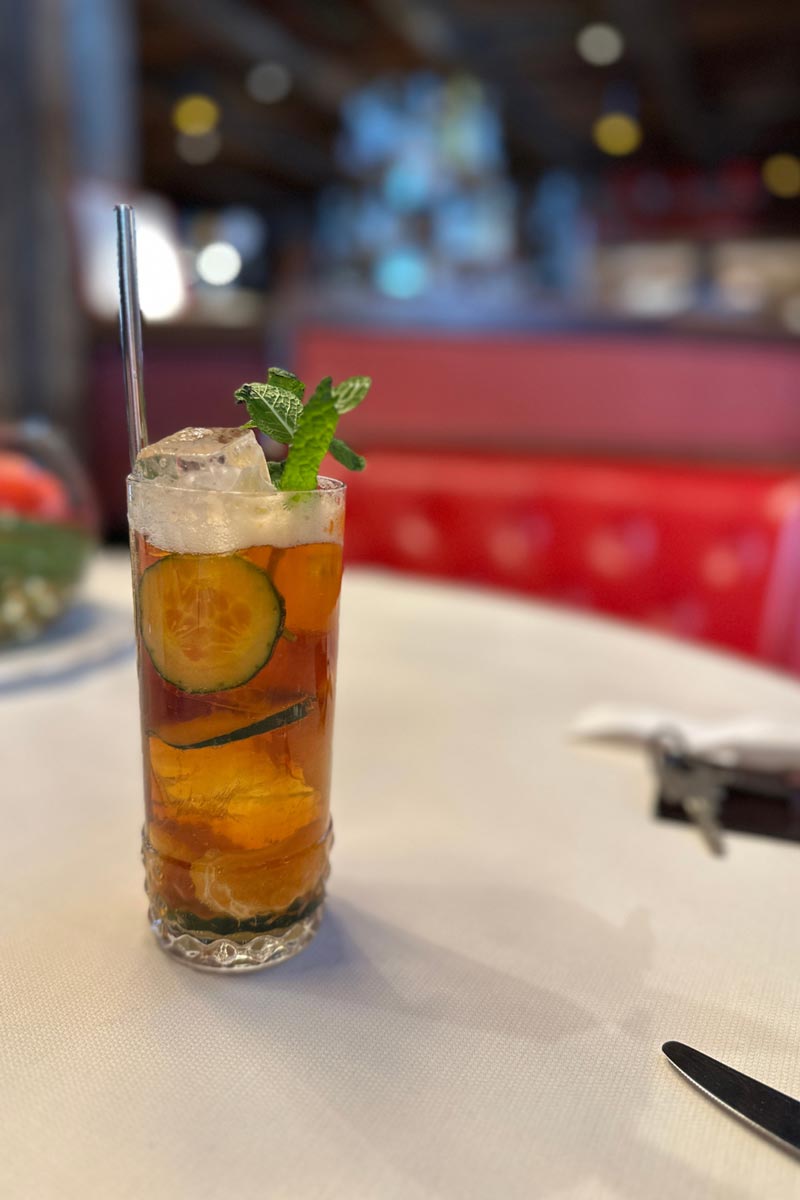
The Present is a nod to seasonality. Don’t expect to find the strawberries in your Pimm’s Cup. In inclement weather, clementines will greet you instead. The Rocky Balboa is a blend of bourbon, sugar and the wintery pear. Likewise, forget that orange garnish in your Old Fashioned after a long summer’s hike. No one has complained so far.
The proceeds of a few items on both the drinks and food menu go directly to the family’s own charity, the Costa Family Foundation, which has supported over 56 projects worldwide since 2007. The Safe Zone cocktail is one of those. Either served alcohol-free or with Altamura Distilleries vodka, it’s their Moscow Mule made with homemade ginger beer and jasmine. As Giulio and Marco say…
“Whichever path you choose, either discover or relive, you’ll taste the spirit of our casa: warm hospitality, refined elegance, and enjoy a touch of creative audacity.”
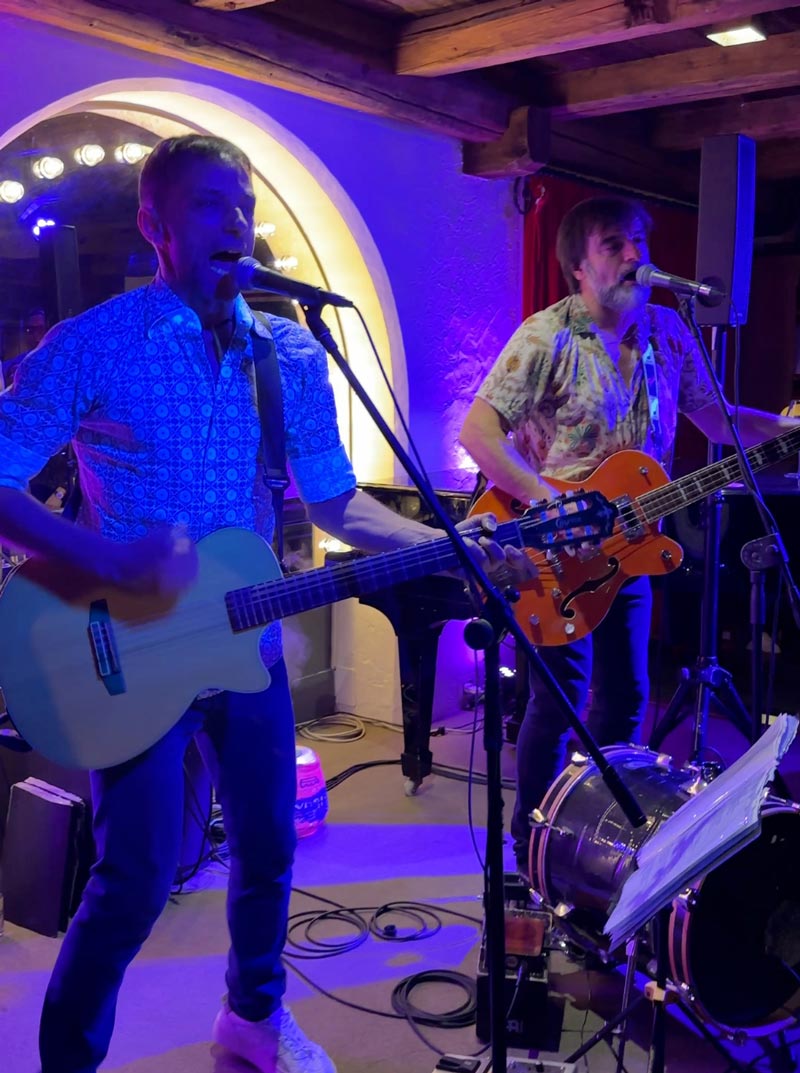
Creative audacity is what Ernesto and Anni possessed from the beginning – building a ski lift where there was none, growing La Perla from a few apartments atop their home, and creating a space where music plays, songs are sung, and the sound of Vives! can be heard (cheers in Ladino, the local lingo) above the clink of cocktail glasses.
Mario Gambino, a transplant from Sicily, joined Giulio just three years ago. Starting his career at a smaller hotel, he used to visit the Bistrot Music Club & Bar as a guest, longing to work there one day, entranced by La Perla’s “great music, and great cocktails.”
“The bar is the heart of the hotel because it reflects the soul of Casa Costa: a harmonious balance of elegance, warmth, tradition, and innovation”
Mario Gambino, Barman
Now like the Costa brothers, they work as a team, upholding the direction of the new menu they created, with an approach they like to call “evolving tradition” or innovation without destruction.
Journey Through Time explores the dilemma that both travelers and cocktail lovers share – the pull to discover something new or relive what has already been experienced. As the menu asks: “Will you revisit the past and uncover cocktails unfairly forgotten..or perhaps even step into eternity with timeless classics reimagined?”
The menu is divided into categories – Past, Present, Future and Eternity. The Past is made of pre-Prohibition cocktails you might not be so familiar with. The Lucien Gaudin is represented, named for the 1920’s French Olympic medal-winning fencer with its mix of London Dry Gin, red and dry Vermouth, Triple Sec, and Campari. The Tipperary also makes the list. Prepared here with Irish whiskey, red vermouth, Green Chartreuse, and a dash or two of Angostura bitters, this cocktail appears in Harry MacElhone’s 1922 ABC of Mixing Cocktails as well as Harry Craddock’s famous The Savoy Cocktail Book!
Leading the Future is the tantalizing Melinda, a perfect expression of their forward-thinking philosophy. The traditional Paloma is a simple mix of grapefruit soda and tequila. Mario and Giulio make their own soda, keeping tequila as the base and combining it with homemade ginger syrup, citric acid, and Melinda apples. A nod to this area of Italy being the largest apple-producing region in Europe, with Melinda and Marlene apples the most prevalent varieties.
Eternity pays reverence to the classics. The Martini Casa Costa made with their own signature La Perla gin distilled in Milan or Puglia’s Altamura Distilleries Vodka is as clear and crystal as the icicles outside. Their Aged Negroni begins with Campari and gin, and then surprises with four different types of vermouth aged in a barrel for two months.
The Present is a nod to seasonality. Don’t expect to find the strawberries in your Pimm’s Cup. In inclement weather, clementines will greet you instead. The Rocky Balboa is a blend of bourbon, sugar and the wintery pear. Likewise, forget that orange garnish in your Old Fashioned after a long summer’s hike. No one has complained so far.
The proceeds of a few items on both the drinks and food menu go directly to the family’s own charity, the Costa Family Foundation, which has supported over 56 projects worldwide since 2007. The Safe Zone cocktail is one of those. Either served alcohol-free or with Altamura Distilleries vodka, it’s their Moscow Mule made with homemade ginger beer and jasmine. As Giulio and Mario say…
“Whichever path you choose, either discover or relive, you’ll taste the spirit of our casa: warm hospitality, refined elegance, and enjoy a touch of creative audacity.”
Creative audacity is what Ernesto and Anni possessed from the beginning – building a ski lift where there was none, growing La Perla from a few apartments atop their home, and creating a space where music plays, songs are sung, and the sound of Vives! can be heard (cheers in Ladino, the local lingo) above the clink of cocktail glasses.
This spirit not only permeates the bar, but fills La Perla. It was never clearer than when Giulio and Marco emerged from behind the bar, grabbed my hand and pulled me onto the make-shift dance floor in the middle of the bar saying…
“You know you asked me why I think the bar is the heart of the hotel…well, this is it!”
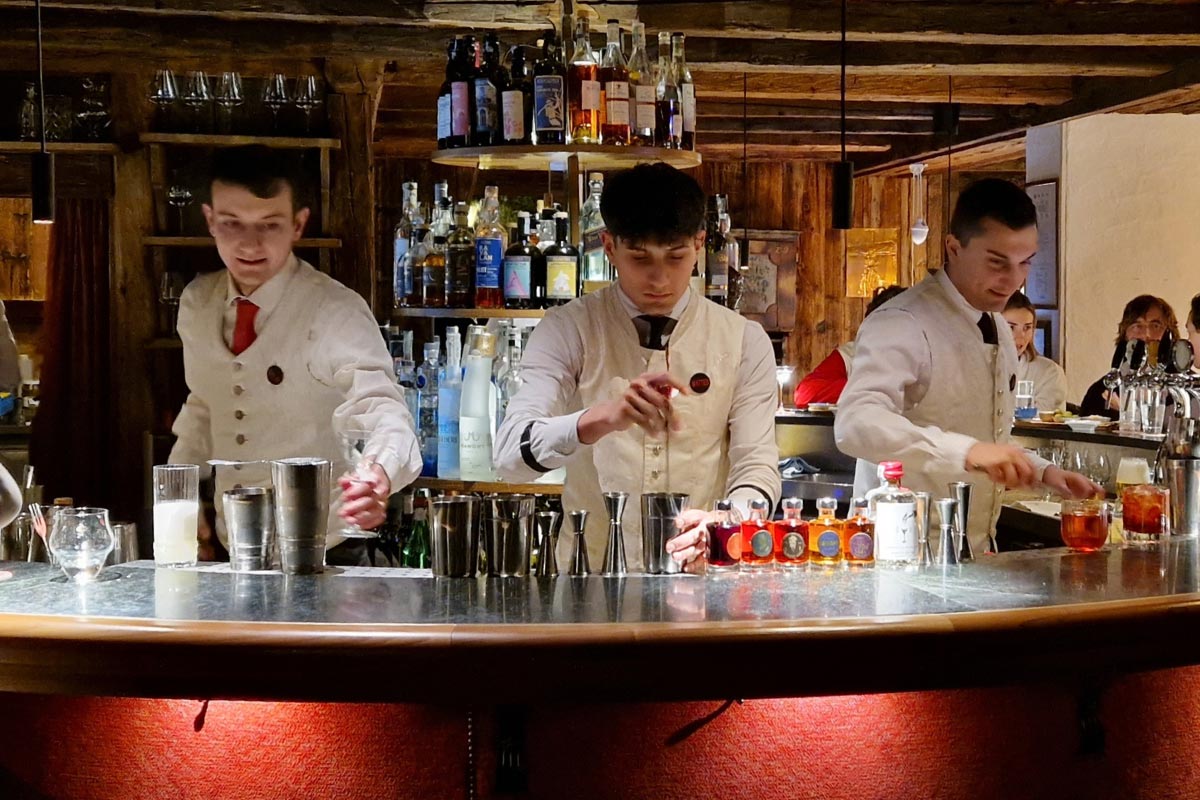
This spirit not only permeates the bar, but fills La Perla. It was never clearer than when Giulio and Marco emerged from behind the bar, grabbed my hand and pulled me onto the make-shift dance floor in the middle of the bar saying, “You know you asked me why I think the bar is the heart of the hotel…well, this is it!”
A point of gravity, shaped in a circle, that draws you in and makes it hard to leave. A place where, whether you arrive alone or with others, you naturally become part of the atmosphere. Resistance is futile: you let yourself be guided by Giulio and Mario, by the music that invites you to sing and dance, by the smiles exchanged with the person sitting opposite you. The bar at Hotel La Perla is a round table. Here, you are never alone. Here, you meet many people – and perhaps, you come to know yourself a little better too.
Marlene Zanotti, Marketing Manager
A point of gravity, shaped in a circle, that draws you in and makes it hard to leave. A place where, whether you arrive alone or with others, you naturally become part of the atmosphere.
Resistance is futile: you let yourself be guided by Giulio and Mario, by the music that invites you to sing and dance, by the smiles exchanged with the person sitting opposite you.
The bar at Hotel La Perla is a round table. Here, you are never alone. Here, you meet many people – and perhaps, you come to know yourself a little better too.
Marlene Zanotti, Marketing Manager
Susan L. Schwartz
Susan L. Schwartz is the award-winning creator of A Lush Life Manual and host of the Lush Life Podcast. She writes widely on drinks and travel, leads London and Venice Cocktail Tours, and has been recognised with multiple industry awards.
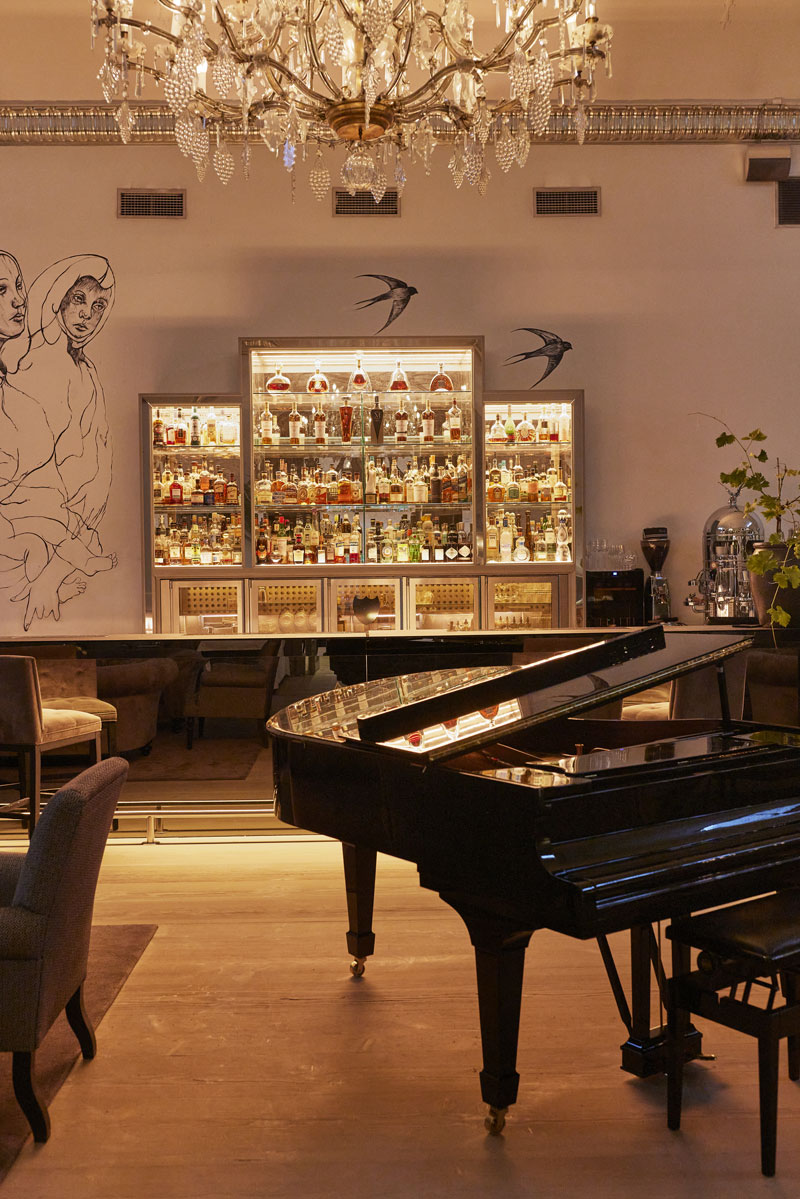
The Heart of the Hotel: Nimb Hotel, Copenhagen
Nimb Hotel, Copenhagen
This year, in association with Altamura Distilleries, I’ll be exploring some of the world’s most legendary bars—uncovering what makes them the beating heart of the hotel. Our next stop is Copenhagen!
#Episode 5
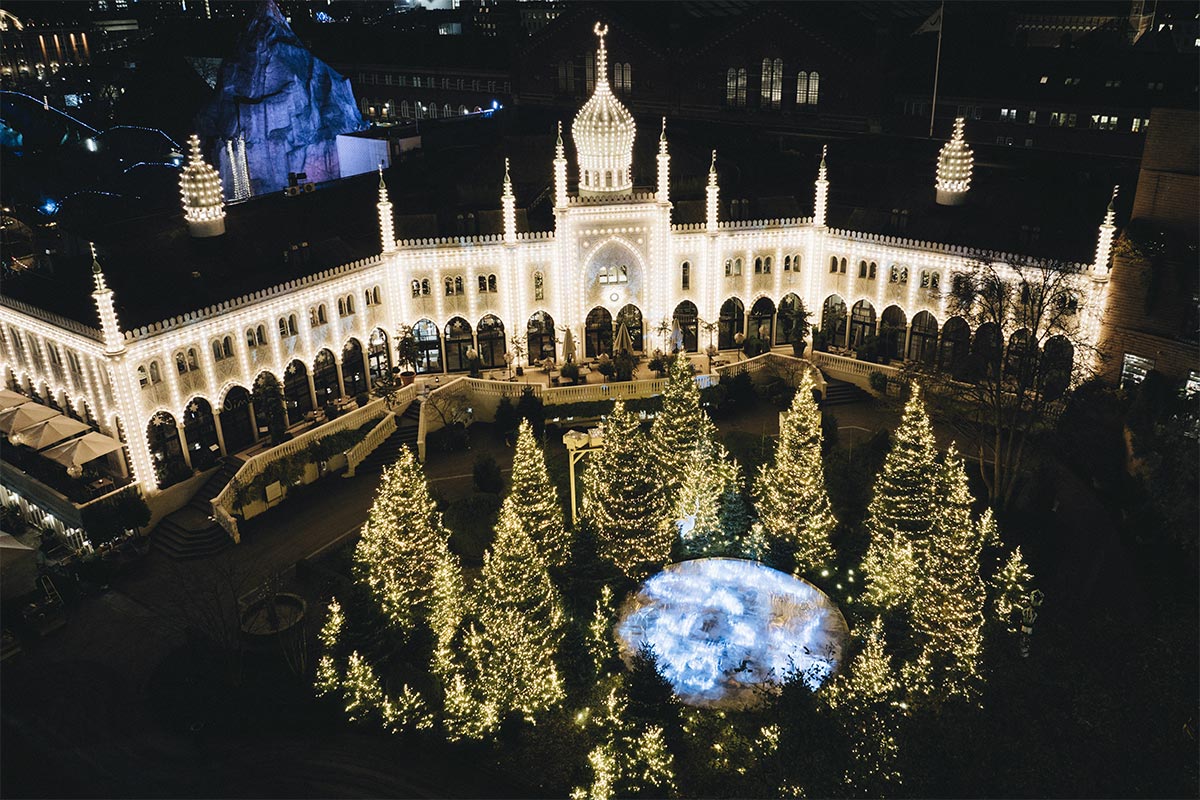
Once upon a time there was a man who dreamt of a garden so magical that it bewitched not only a nation but the world. This garden furnished splendiferous amusements, mystical architecture, and culinary concoctions, promising all who wandered its meandering paths the chance to explore other realms without leaving its magical gates. This gentleman was the famed Georg Carstensen who, after receiving a nod from King Christian VIII, constructed Tivoli Gardens right in the heart of Denmark’s capital city of Copenhagen. Upon opening on August 15, 1843, the public couldn’t help but be enchanted by its Chinese-inspired, peacock decorated Pantomime Theatre; its thrilling one-of-a-kind roller coaster, Rutschebanen; and its domed, market place, The Bazaren, rising up at the edge of the garden.
#Episode 5
Once upon a time there was a man who dreamt of a garden so magical that it bewitched not only a nation but the world. This garden furnished splendiferous amusements, mystical architecture, and culinary concoctions, promising all who wandered its meandering paths the chance to explore other realms without leaving its magical gates. This gentleman was the famed Georg Carstensen who, after receiving a nod from King Christian VIII, constructed Tivoli Gardens right in the heart of Denmark’s capital city of Copenhagen. Upon opening on August 15, 1843, the public couldn’t help but be enchanted by its Chinese-inspired, peacock decorated Pantomime Theatre; its thrilling one-of-a-kind roller coaster, Rutschebanen; and its domed, market place, The Bazaren, rising up at the edge of the garden.
Sadly, that original arched alcazar burned down in 1862, only to be rebuilt a few years later and then subsequently demolished in 1908. In 1909, designed by the Director of Tivoli and architect by trade, Knud Arne PetersenIt, it would rise again like the phoenix – an Arabesque labyrinth filled with unexpected delights.
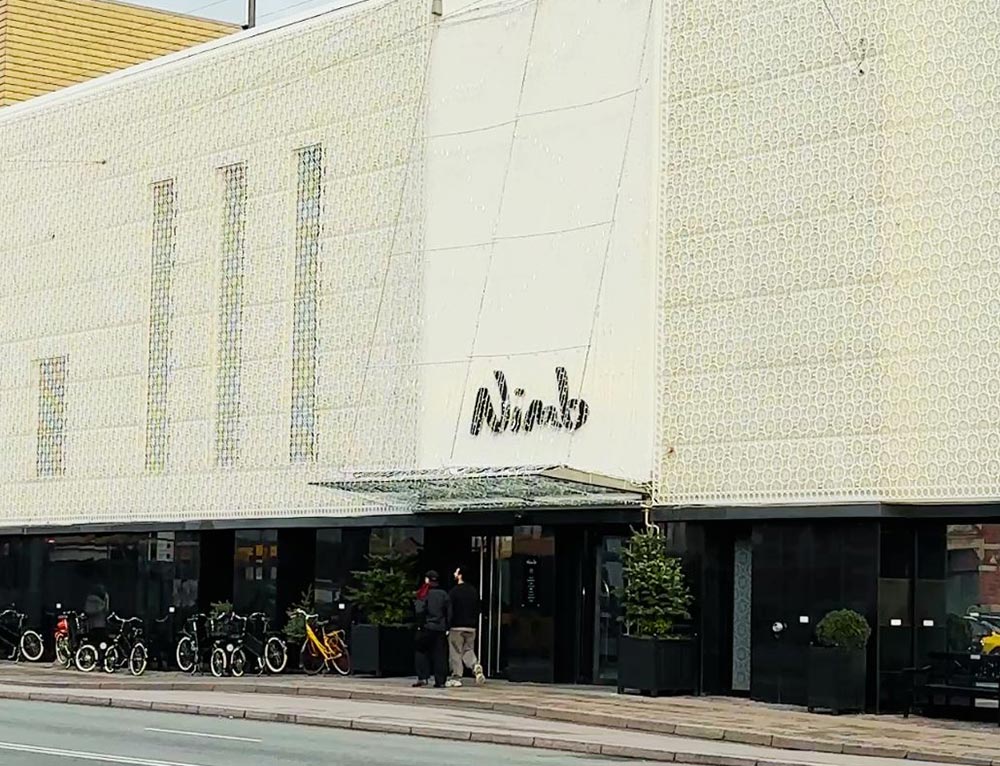
Amongst its many charms was the terrace restaurant overseen by Louisa Nimb, the doyenne of Divan 2, one of the garden’s many eating establishments. Such an impression did she leave that in the decades that followed, the Nimb family name became enmeshed within the very fabric of the building.
Fast forward more than 100 years and, much like Cinderella’s pumpkin, the Nimb has been gloriously transformed into the sumptuous Nimb Hotel, by not just one but many an international fairy godmother, including Italian architect Matteo Thun, New York-based architects Pei Cobb Freed & Partners, and designer Ian Bader. At its very heart sits the Nimb Bar, led by Damiano Pezzi, a true Wizard of Mixology.
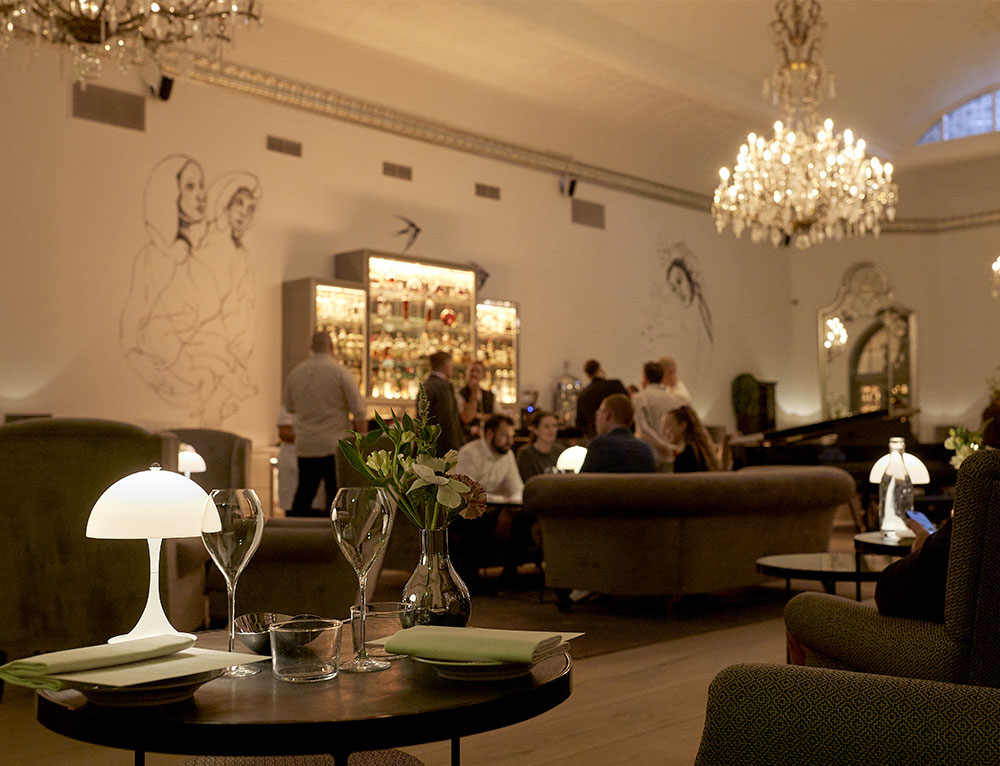
Charged with the task of transforming the Nimb Bar, his first instinct was to bring the garden outside inside. Rather than call on the usual minimalist motif that Scandinavia is famous for, Damiano wanted to infuse his cocktails with the colors of Tivoli.
Sadly, that original arched alcazar burned down in 1862, only to be rebuilt a few years later and then subsequently demolished in 1908. In 1909, designed by the Director of Tivoli and architect by trade, Knud Arne PetersenIt, it would rise again like the phoenix – an Arabesque labyrinth filled with unexpected delights.
Amongst its many charms was the terrace restaurant overseen by Louisa Nimb, the doyenne of Divan 2, one of the garden’s many eating establishments. Such an impression did she leave that in the decades that followed, the Nimb family name became enmeshed within the very fabric of the building.
Fast forward more than 100 years and, much like Cinderella’s pumpkin, the Nimb has been gloriously transformed into the sumptuous Nimb Hotel, by not just one but many an international fairy godmother, including Italian architect Matteo Thun, New York-based architects Pei Cobb Freed & Partners, and designer Ian Bader. At its very heart sits the Nimb Bar, led by Damiano Pezzi, a true Wizard of Mixology.
Charged with the task of transforming the Nimb Bar, his first instinct was to bring the garden outside inside. Rather than call on the usual minimalist motif that Scandinavia is famous for, Damiano wanted to infuse his cocktails with the colors of Tivoli.
“I want the Nimb Bar to be where the lights go lighter, the fire goes brighter, your brain runs wild & your heart gets mightier. Stepping inside our bar, exploring our menu and sipping our cocktails shows the eternal magic and wonder of Tivoli, following you even after your visit, keeping surprising and warming you.”
Damiano Pezzi, Director of Mixology
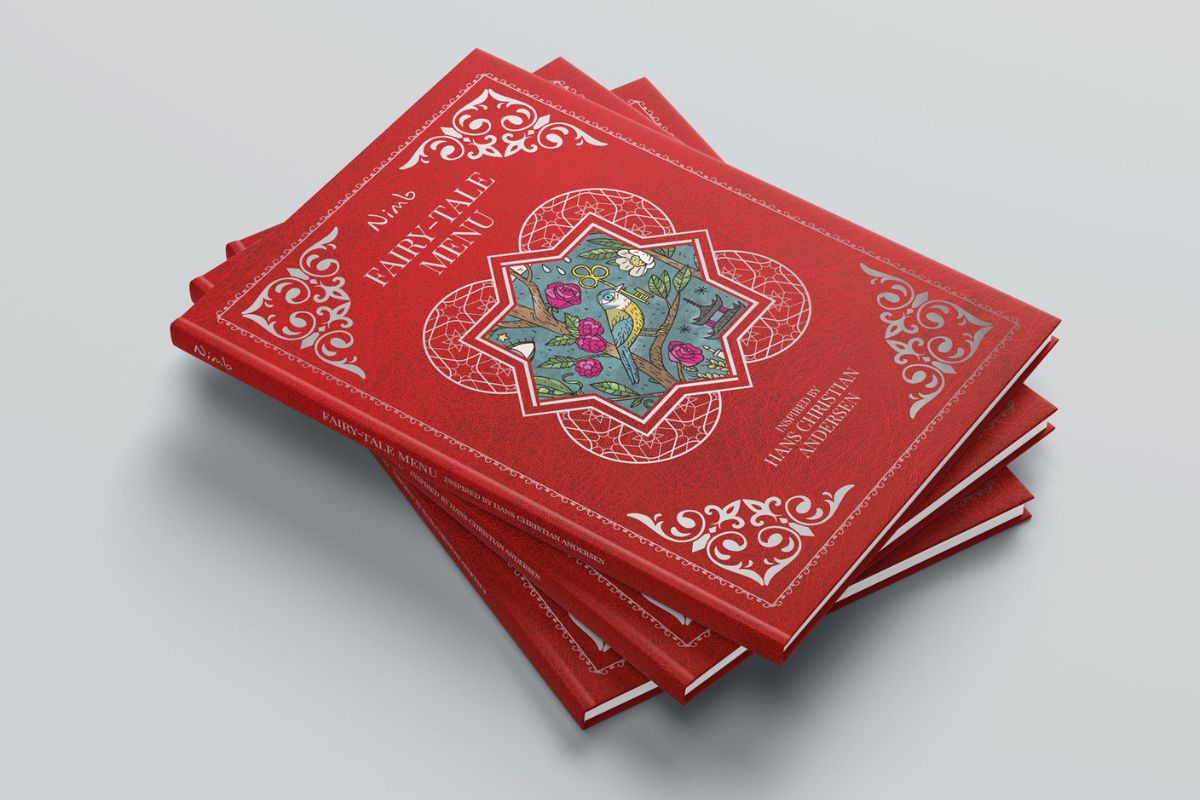
Sitting inside a fairy-tale inspired castle, he chose no other than Hans Christian Andersen, Denmark’s greatest fairy-tale teller, as inspiration for his first menu. Damiano and his team immersed themselves in Andersen’s fairy tales. Finding a plethora of ingredients among its pages – raspberries, figs, walnuts, jams, they cast their spell over those each and everyone, conjuring up cocktails unlike any that had come before.
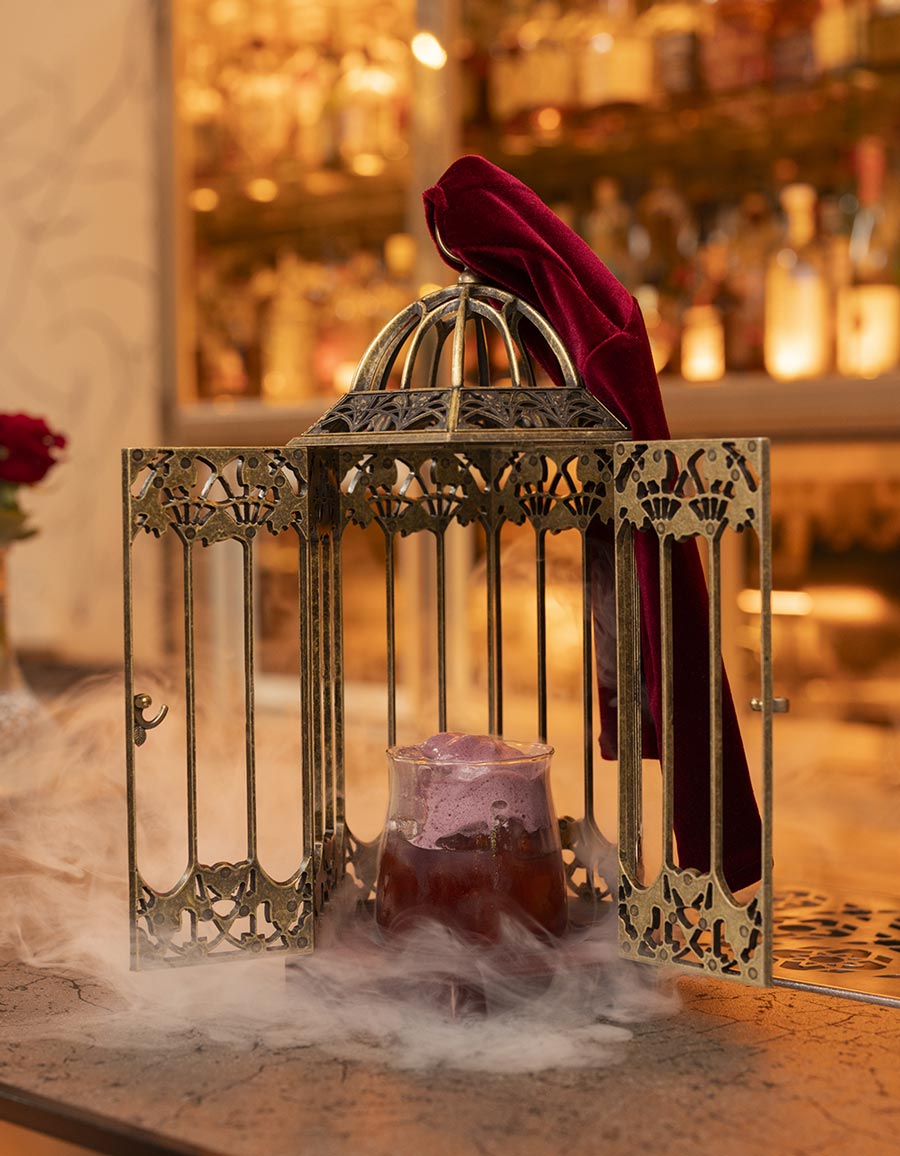
The Little Red Riding Hood
One such creation was The Nightingale, based on Andersen’s love letter to Tivoli’s Chinese Pavilion, a play on raspberry, gin, violet, pear and lemon delivered in cocktail glass shaped like a bird. The following menu was dedicated to the one and only Arabic classic, One Thousand and One Nights. Its story of The Porter and the Three Ladies served as inspiration for the rum-based cocktail The Humble Feast, with its mazj of lemon, honey, fig jam. walnuts, goat milk and vanilla.
For the third and last of the Fairy-Tale menus, they drew on classic stories, such as Snow White, Beauty and the Beast, and Peter Pan. The tragic tale of sisters Philomela and Procne, transformed into birds by the gods after they took revenge on King Tereus, led to a cocktail mired in “Innocent Blood” – a reduction of sherry and tequila. Painted by Danish artist Cathrine Raben Davidsen, murals of the two both in human form and as birds loom large over the bar.
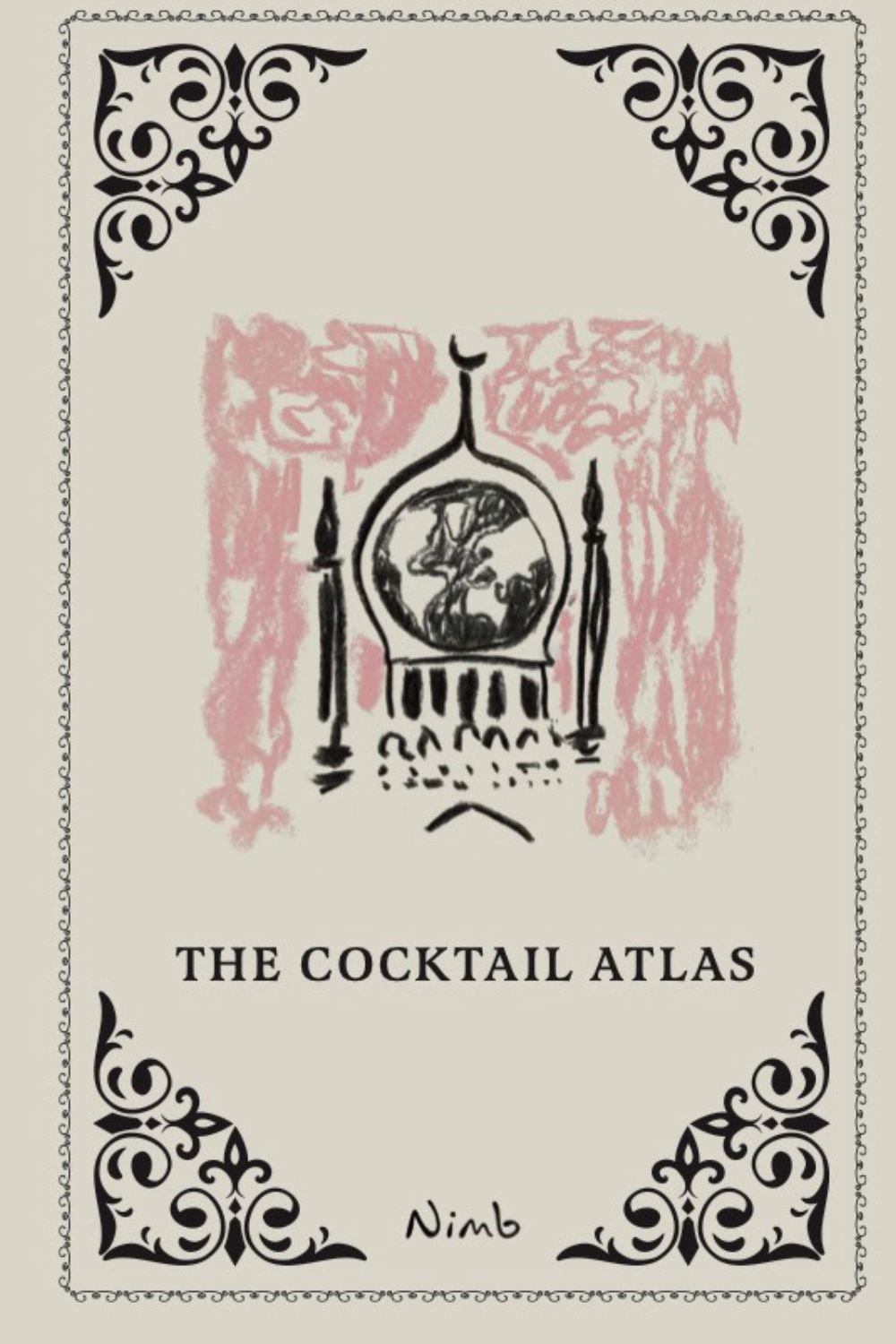
Damiano and his team took their cue from the garden itself for their most recent menu – an invitation to travel without going anywhere. In the 19th century, when few people could travel far, Carstensen brought the world to them. So they took this as a challenge to do the same – crafting The Cocktail Atlas, eighteen iconic destinations you can visit without ever leaving the bar. Hints of those destinations appear in the accompanying drawings and the story of each cocktail is revealed when the drink is served.
“The hotel bar is the silent, beating heart of the establishment. Here, behind the bar counter, the bartender is both historian and healer, offering not just a drink, but a bespoke story for the soul, and transforming the day’s scattered stress into a steady, sip by sip calm.”
Alex Gkountopoulous
Assistant Bar Manager
The Little Red Riding Hood
One of the gorgeous cocktails from the Fairy-Tale Menu
One such creation was The Nightingale, based on Andersen’s love letter to Tivoli’s Chinese Pavilion, a play on raspberry, gin, violet, pear and lemon delivered in cocktail glass shaped like a bird. The following menu was dedicated to the one and only Arabic classic, One Thousand and One Nights. Its story of The Porter and the Three Ladies served as inspiration for the rum-based cocktail The Humble Feast, with its mazj of lemon, honey, fig jam. walnuts, goat milk and vanilla.
For the third and last of the Fairy-Tale menus, they drew on classic stories, such as Snow White, Beauty and the Beast, and Peter Pan. The tragic tale of sisters Philomela and Procne, transformed into birds by the gods after they took revenge on King Tereus, led to a cocktail mired in “Innocent Blood” – a reduction of sherry and tequila. Painted by Danish artist Cathrine Raben Davidsen, murals of the two both in human form and as birds loom large over the bar.
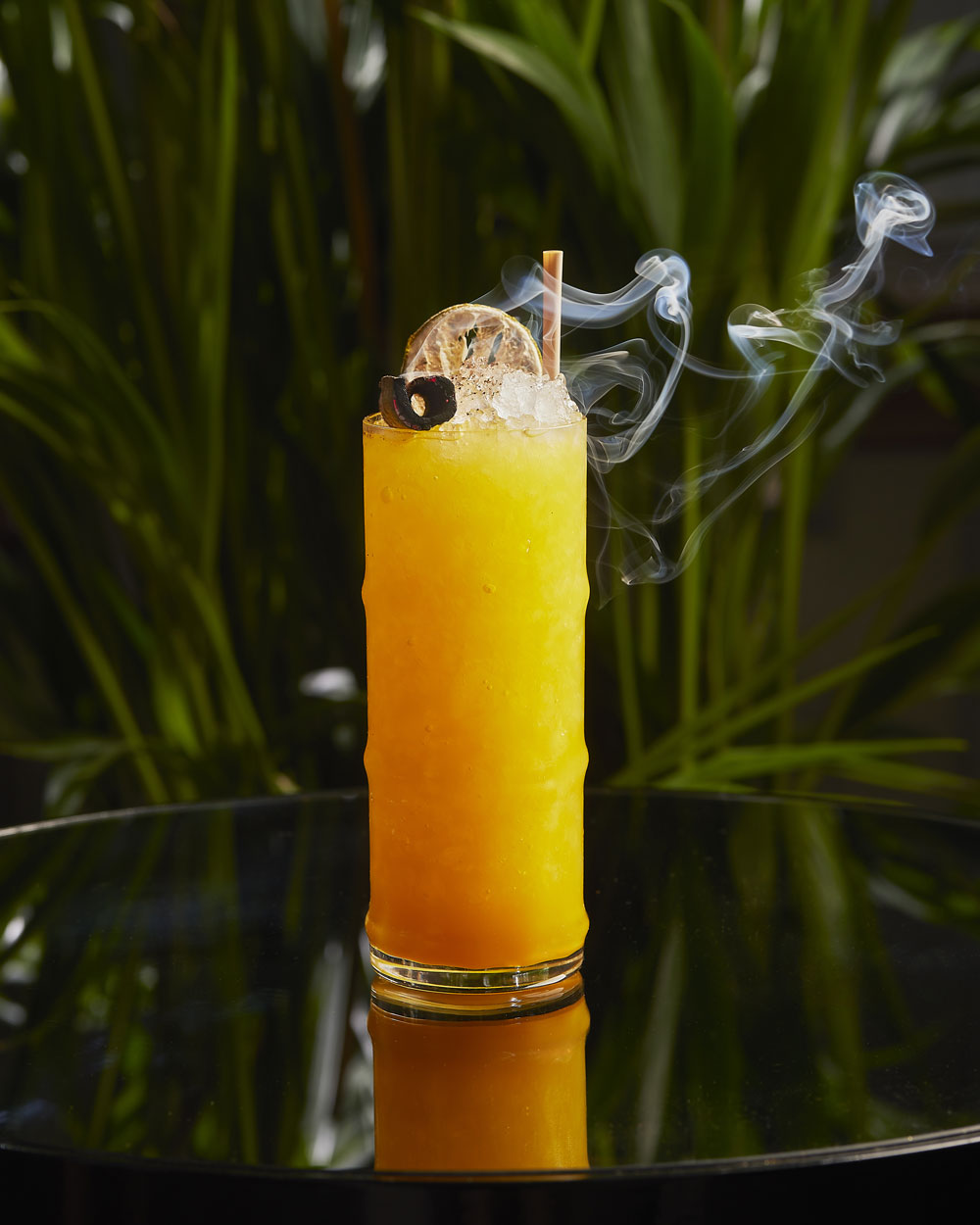
Anaconda Vodoo
There’s the Anaconda Voodoo, a fruity, boozy grog honoring the Rio Grande and Amazonian Forest with a mix of Altamura Distilleries vodka, a bit of cachaça and rum, all infused with carob and topped up with a mix of cantaloupe, melon, lime and mango.
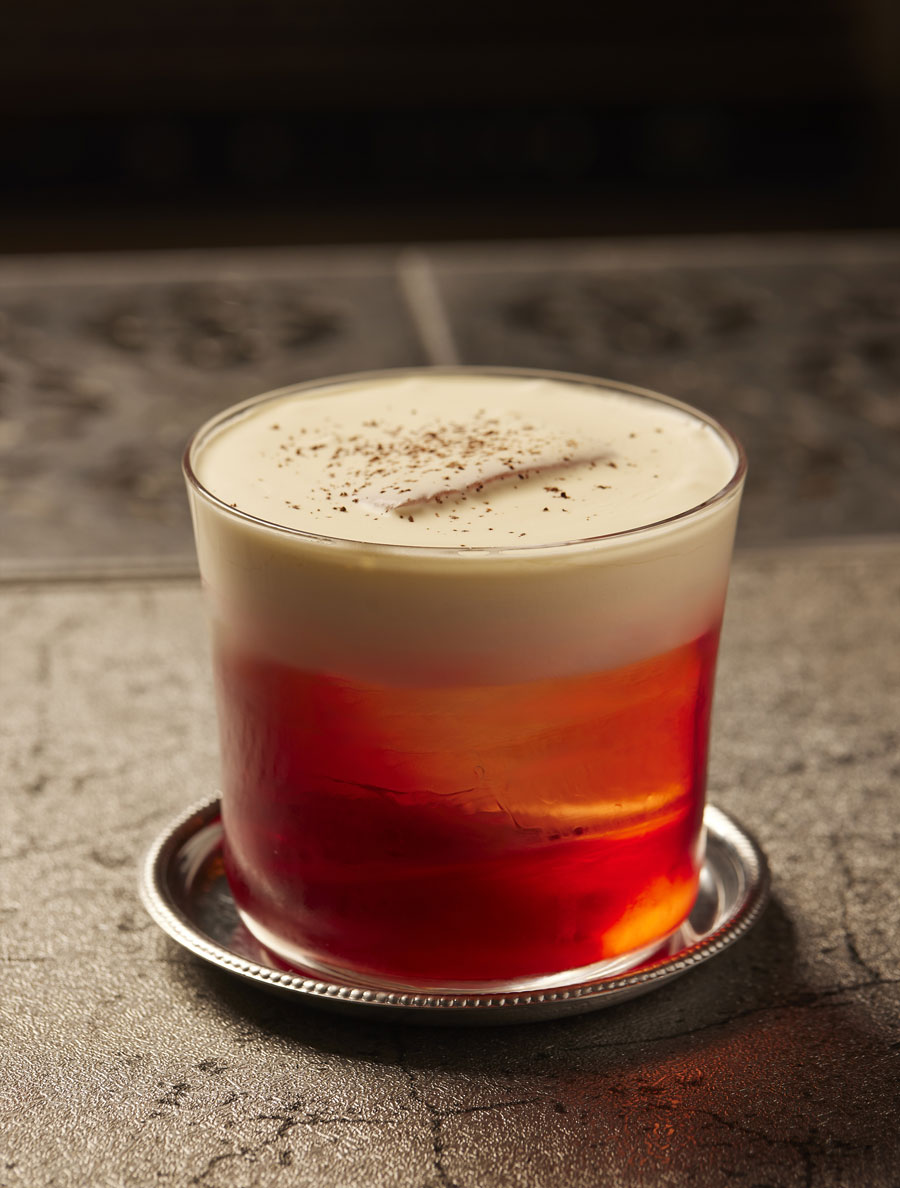
Fløde
There’s the Fløde (cream in Danish) – Damiano’s homage to his adopted home. Here he transforms the American Old Fashioned into Denmark’s favorite dessert, rødgrød med fløde (red berries with cream). Danish whiskey is cut with some bourbon and Irish whiskey, then infused with homegrown strawberries then layered with local cream.
Eclipse
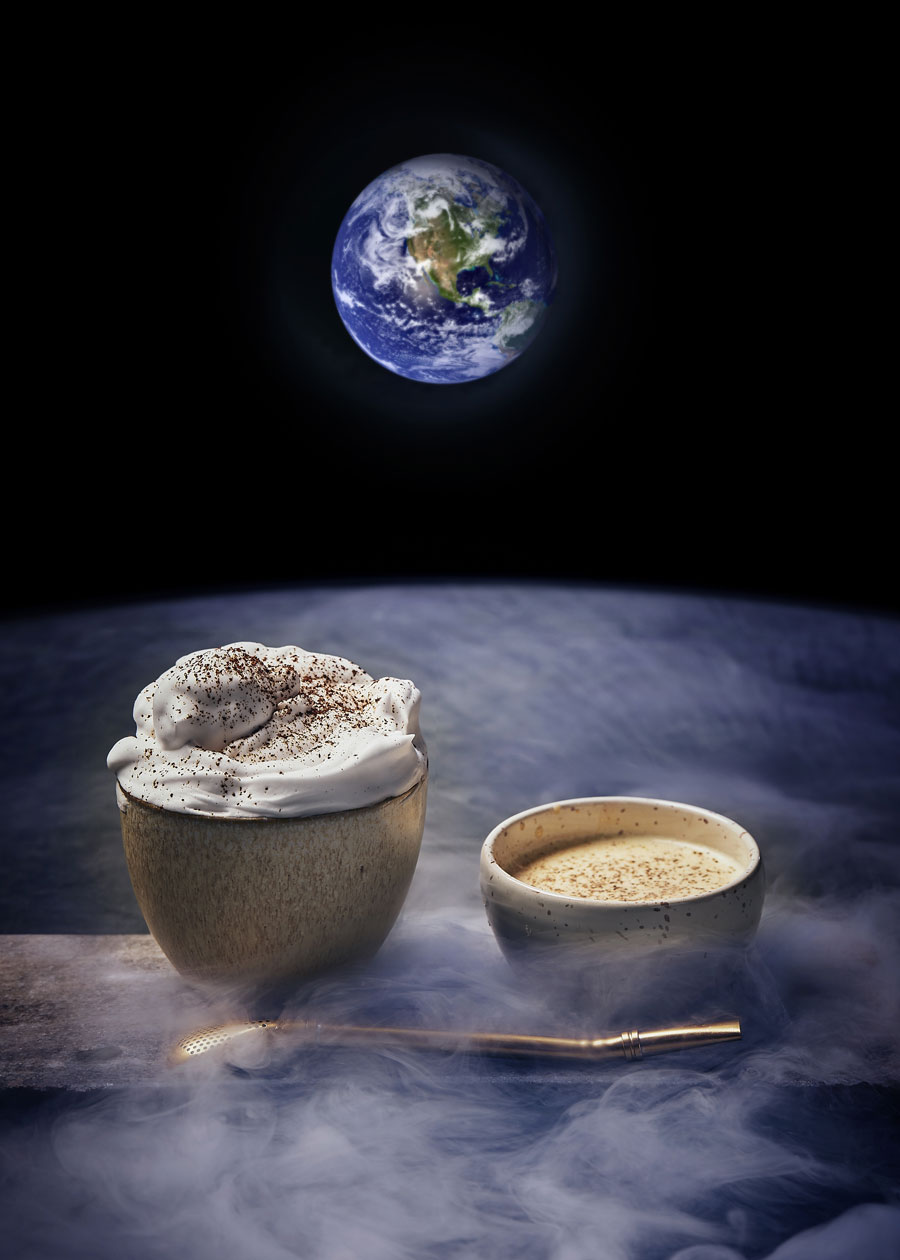
And then there’s the Eclipse, boldly going where no man has before and Damiano’s proudest creation. Inspired by travel to the moon, this cognac-based cocktail is both hot-and-cold and crafted from hotel leftovers – croissant, butter, and coffee. Two drinks appear, both made from the same recipe, but mysteriously, their texture is not the same. One represents the dark side of the moon – cold and mysterious, the other the bright side – warm and comforting.
“The Nimb Bar is the social hub of the hotel, where for a little moment you leave your problems and daily struggles at the entrance, to relax and become part of the true soul of the hotel, his workers and his guests.”
Ilias Giannoulis, Floor Manager
Each sip is a journey, a story, a fairy tale experience, surely what Georg Carstensen would have in mind. The magic begins from the moment a guest arrives at the Nimb Bar which sits at the heart of the Nimb Hotel in the heart of Tivoli Gardens in the heart of Denmark’s capital city. How does it end, you may ask, why, happily ever after of course!
Damiano and his team took their cue from the garden itself for their most recent menu – an invitation to travel without going anywhere. In the 19th century, when few people could travel far, Carstensen brought the world to them. So they took this as a challenge to do the same – crafting The Cocktail Atlas, eighteen iconic destinations you can visit without ever leaving the bar. Hints of those destinations appear in the accompanying drawings and the story of each cocktail is revealed when the drink is served.
“The hotel bar is the silent, beating heart of the establishment. Here, behind the bar counter, the bartender is both historian and healer, offering not just a drink, but a bespoke story for the soul, and transforming the day’s scattered stress into a steady, sip by sip calm.”
Alex Gkountopoulous, Assistant Bar Manager
Anaconda Vodoo
There’s the Anaconda Voodoo, a fruity, boozy grog honoring the Rio Grande and Amazonian Forest with a mix of Altamura Distilleries vodka, a bit of cachaça and rum, all infused with carob and topped up with a mix of cantaloupe, melon, lime and mango.
Fløde
There’s the Fløde (cream in Danish) – Damiano’s homage to his adopted home. Here he transforms the American Old Fashioned into Denmark’s favorite dessert, rødgrød med fløde (red berries with cream). Danish whiskey is cut with some bourbon and Irish whiskey, then infused with homegrown strawberries then layered with local cream.
Eclipse
And then there’s the Eclipse, boldly going where no man has before and Damiano’s proudest creation. Inspired by travel to the moon, this cognac-based cocktail is both hot-and-cold and crafted from hotel leftovers – croissant, butter, and coffee. Two drinks appear, both made from the same recipe, but mysteriously, their texture is not the same. One represents the dark side of the moon – cold and mysterious, the other the bright side – warm and comforting.
Nimb Bar Team
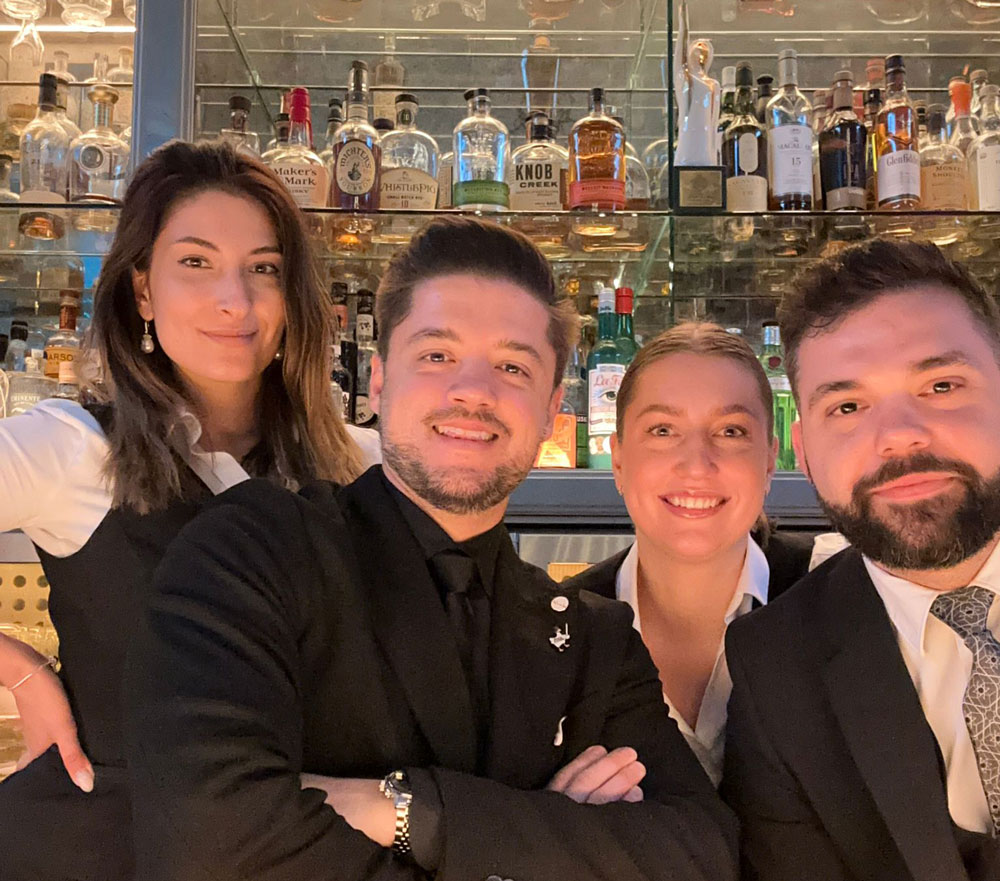
From left to right: Effrosyni Drakouli, Waitress; Damiano Pezzi, Director of Mixology; Enrika Akilanaite, Bartender; and Ilias Giannoulis, Floor Manager.
The Nimb Bar is the social hub of the hotel, where for a little moment you leave your problems and daily struggles at the entrance, to relax and become part of the true soul of the hotel, his workers and his guests.
Ilias Giannoulis, Floor ManageR
Each sip is a journey, a story, a fairy tale experience, surely what Georg Carstensen would have in mind. The magic begins from the moment a guest arrives at the Nimb Bar which sits at the heart of the Nimb Hotel in the heart of Tivoli Gardens in the heart of Denmark’s capital city. How does it end, you may ask, why, happily ever after of course!
Nimb Bar Team
From left to right: Effrosyni Drakouli, Waitress; Damiano Pezzi, Director of Mixology; Enrika Akilanaite, Bartender; and Ilias Giannoulis, Floor Manager.
Susan L. Schwartz
Susan L. Schwartz is the award-winning creator of A Lush Life Manual and host of the Lush Life Podcast. She writes widely on drinks and travel, leads London and Venice Cocktail Tours, and has been recognised with multiple industry awards.
The Heart of the Hotel: Hilton Stucky Molino Venice
Hilton Stucky Molino Venice
This year, in association with Altamura Distilleries, I’ll be exploring some of the world’s most legendary bars—uncovering what makes them the beating heart of the hotel. Our next stop is Venice!
Episode #4
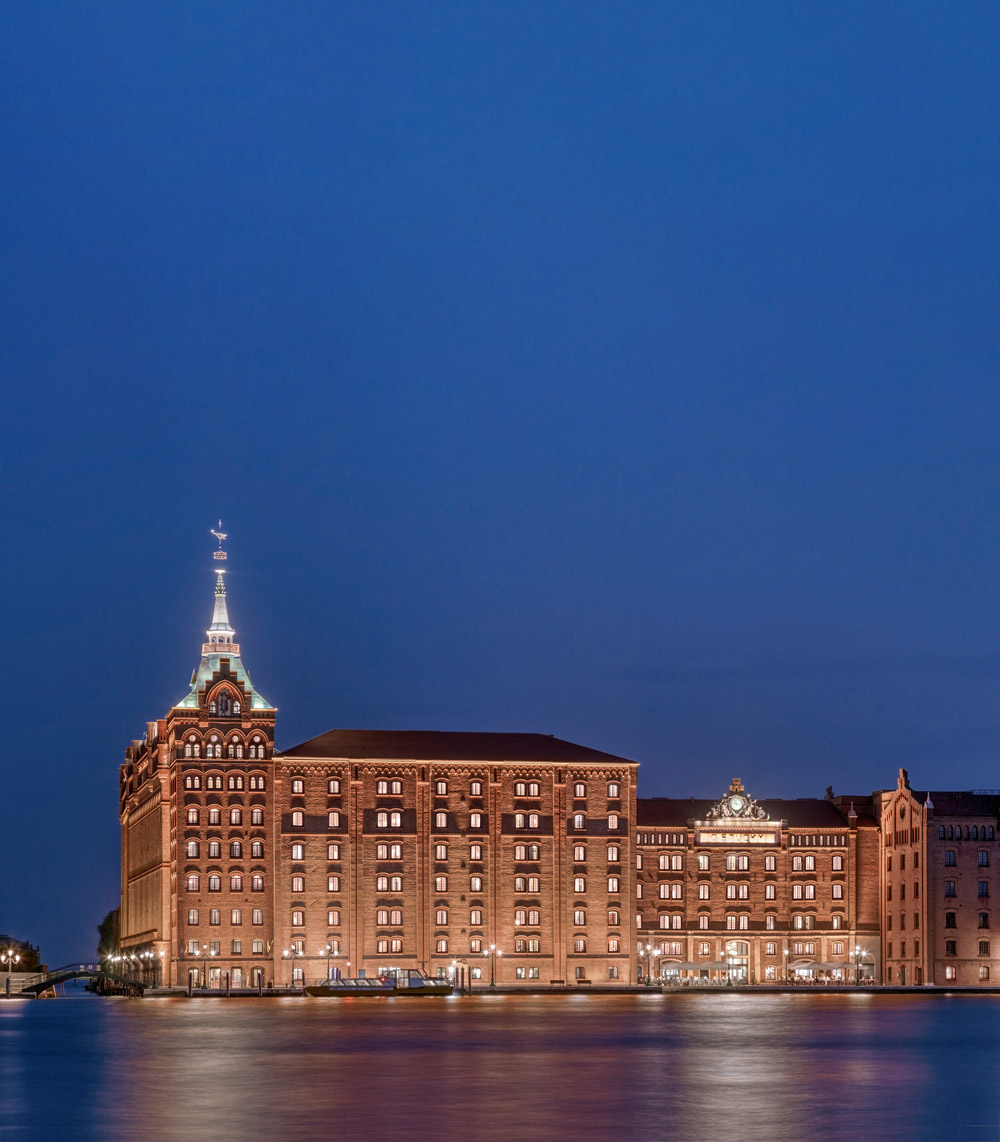
There are very few places in Venice where you can follow the sun’s entire journey from dawn to dusk. The Skyline Bar, way up on the ninth floor of the Hilton Molino Stucky, is one of those. Every day without fail, the sun awakens in the East over the Basilica of San Pietro di Castello (the city’s first official cathedral until 1807). Then it slowly waves goodbye to the lagoon as it disappears over the mainland’s western shores. All of which you can experience from this ethereal aerie.
Hilton Stucky Molino Venice
There are very few places in Venice where you can follow the sun’s entire journey from dawn to dusk. The Skyline Bar, way up on the ninth floor of the Hilton Molino Stucky, is one of those. Every day without fail, the sun awakens in the East over the Basilica of San Pietro di Castello (the city’s first official cathedral until 1807). Then it slowly waves goodbye to the lagoon as it disappears over the mainland’s western shores. All of which you can experience from this ethereal aerie.
It’s no wonder that the bar’s visionary manager, Valentina Mircea, came to ask herself when creating her first signature cocktail menu: how does this spectacular sky taste?
People usually come to Venice to be surrounded by the marvelous Gothic, Renaissance and Baroque palaces that line the Grand Canal. It’s not often that the first stop is the 19th century, brooding, former flour mill found on the neighboring island of Giudecca.
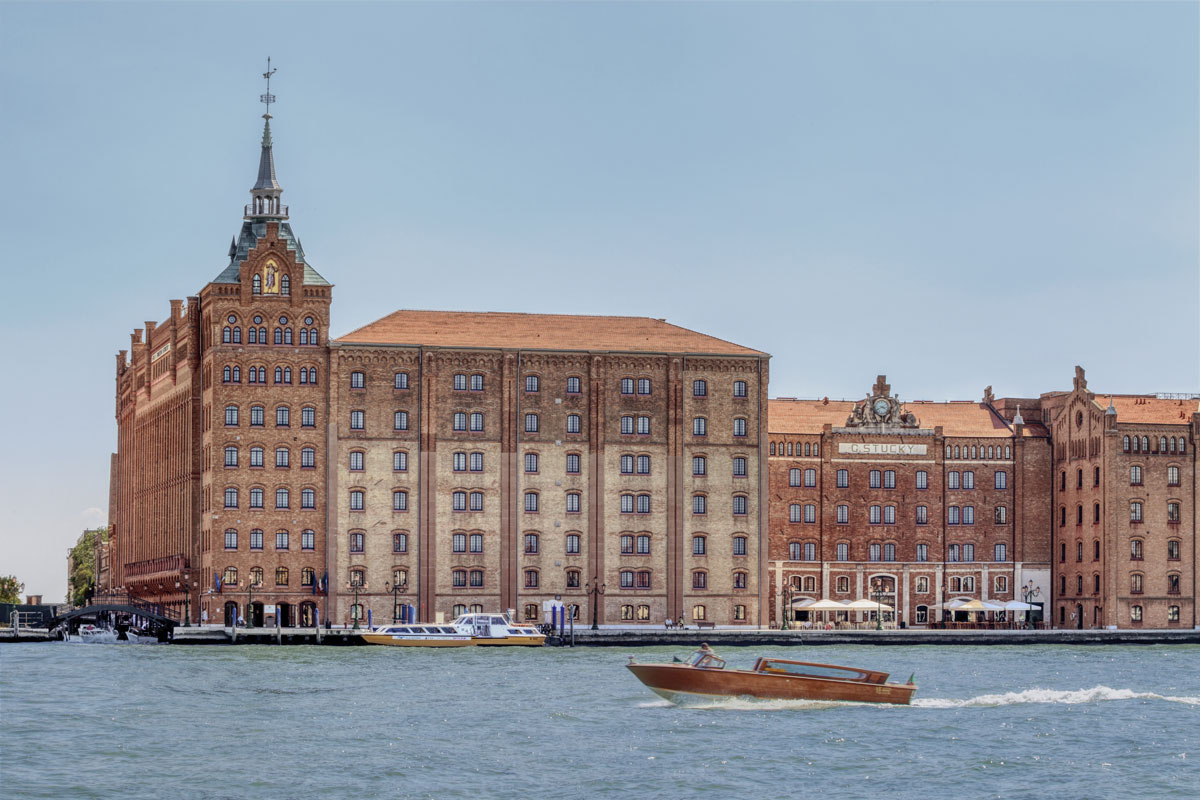
This wonder of industrial design with its state-of-the-art machines once cranking out 50 tons of flour daily was the brain child of Venetian born Giovanni Stucky. By 1895, Giovanni had carved out a slice of Guidecca with a complex of over ten buildings and more than 1500 workers producing enough Super Stucky Pasta to feed the nation. Sadly it ceased operations in 1955 and the factory lay abandoned for decades.
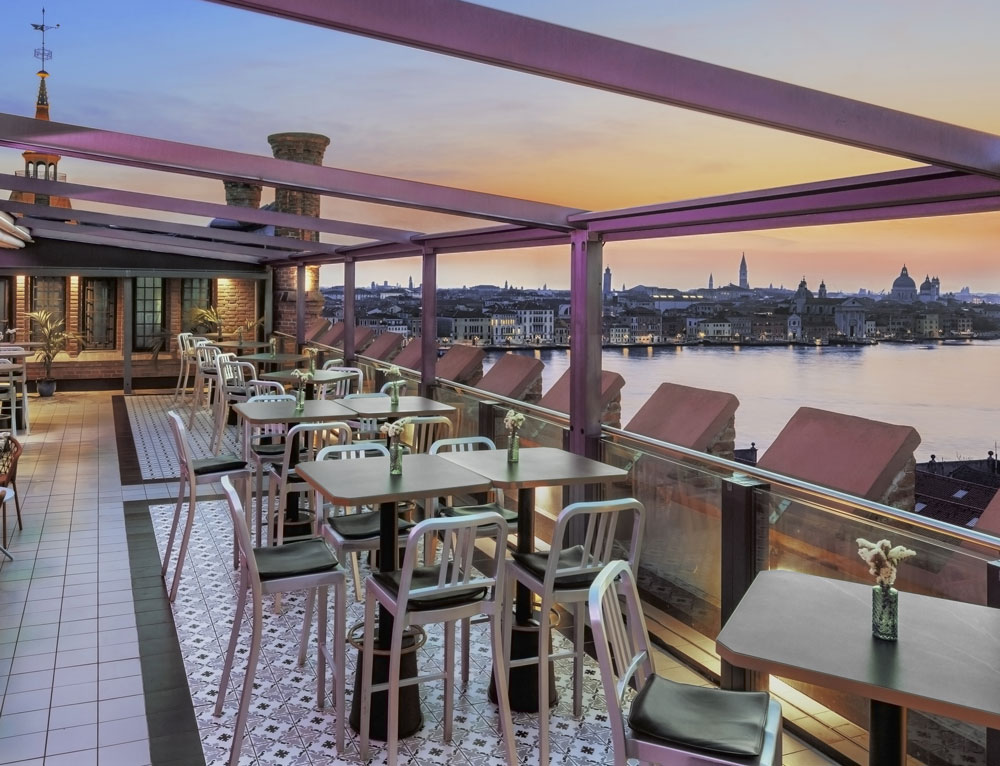
When it did reopen as the Hilton Molino Stucky hotel in 2007, the Skyline Bar did not yet exist. A ceiling had to be made with a retractable roof and glass panels for windows, all to showcase its incredible setting. Tables look out in all directions with the sky open above them. There is not a bad seat in the house.
Which brings us back to Valentina asking herself: how do I distill this marvelous view into the individual cocktails that will make up my menu – The Skies of Venice?
Valentina wanted each drink to mirror a shade of the Venetian sky, as well as have “a touch of wonder, a dash of playfulness, and, of course, sustainability at its heart.” With this set of instructions, she and her team created a collection of cocktails as captivating as the cielo veneziano.
It’s no wonder that the bar’s visionary manager, Valentina Mircea, came to ask herself when creating her first signature cocktail menu: how does this spectacular sky taste?
People usually come to Venice to be surrounded by the marvelous Gothic, Renaissance and Baroque palaces that line the Grand Canal. It’s not often that the first stop is the 19th century, brooding, former flour mill found on the neighboring island of Giudecca.
This wonder of industrial design with its state-of-the-art machines once cranking out 50 tons of flour daily was the brain child of Venetian born Giovanni Stucky. By 1895, Giovanni had carved out a slice of Guidecca with a complex of over ten buildings and more than 1500 workers producing enough Super Stucky Pasta to feed the nation. Sadly it ceased operations in 1955 and the factory lay abandoned for decades.
When it did reopen as the Hilton Molino Stucky hotel in 2007, the Skyline Bar did not yet exist. A ceiling had to be made with a retractable roof and glass panels for windows, all to showcase its incredible setting. Tables look out in all directions with the sky open above them. There is not a bad seat in the house.
Which brings us back to Valentina asking herself: how do I distill this marvelous view into the individual cocktails that will make up my menu – The Skies of Venice?
Valentina wanted each drink to mirror a shade of the Venetian sky, as well as have “a touch of wonder, a dash of playfulness, and, of course, sustainability at its heart.” With this set of instructions, she and her team created a collection of cocktails as captivating as the cielo veneziano.
“To me, the bar is the heart of the hotel — it’s where I see life happen in real time. Every cocktail, every conversation, every smile reminds me why I fell in love with hospitality. This is where emotion meets artistry.”
Valentina Mircea, Skyline Bar Manager
Venetian Lagoon
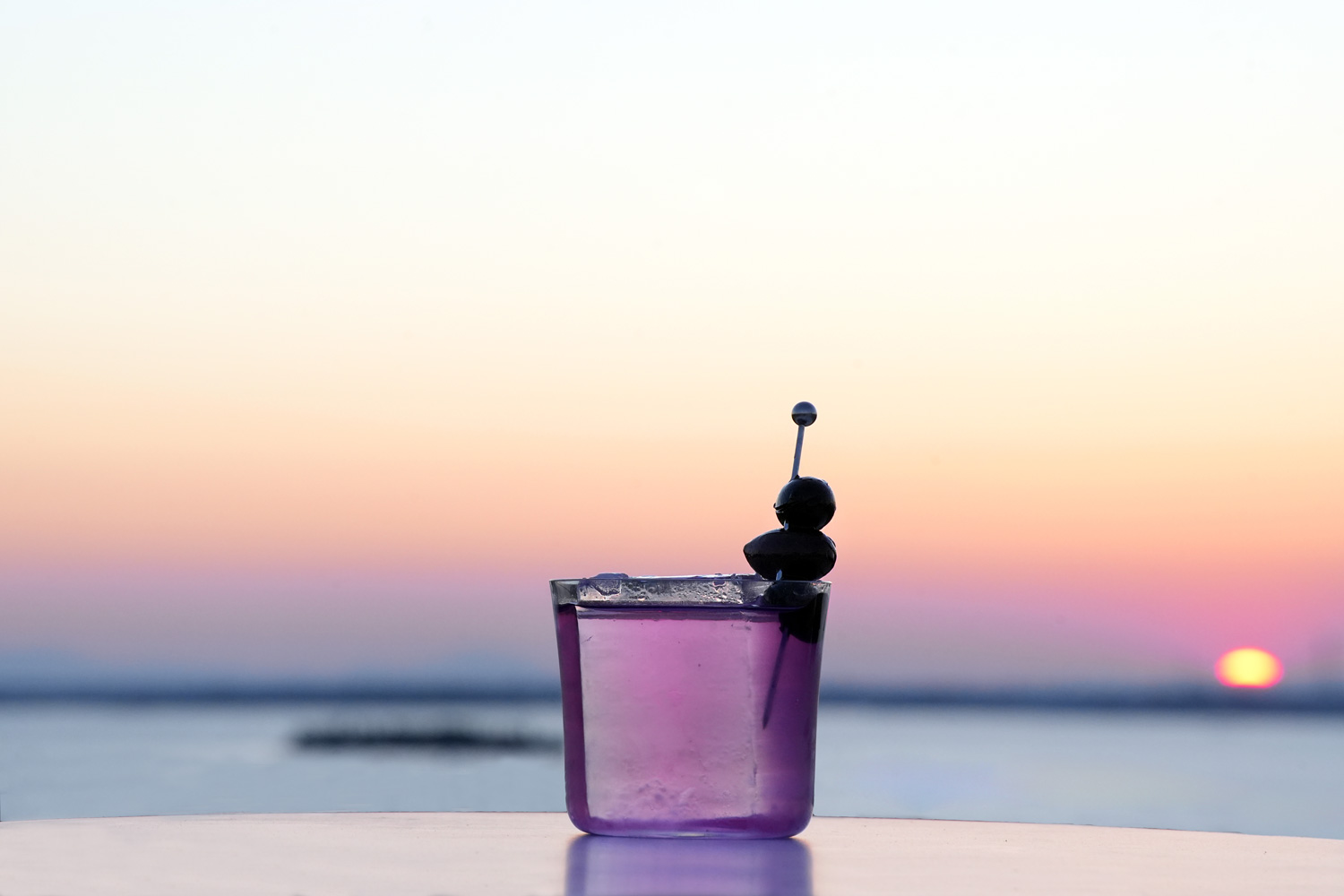
Joining Valentina were team members Alan Cesco and Arselinda Lugjaj in capturing that elusive time of day when the Venetian sky suddenly turns purple. This haunting hue happens only twice a day; first when the city is slowly awakened by the sun and when waves of purple run through the clouds bidding the sun good-night.
To Valentina, this fleeting moment was both savory and serene, reminding her of the Kalamata olives she nibbled on during childhood summers spent in Greece. Inspired by this memory and the love of her favorite cocktail, the Negroni, she and her team built the Venetian Lagoon.
They began with local Gin dei Sospiri, distilled with samphire and other botanicals found in the lagoon, added Luxardo Bianco to provide balance, and two vermouths, Lillet and Noilly Prat. To find the distinctive color they were searching for, they infused it all with purple cabbage. The result was pure Venice in violet!
Venetian Lagoon
Joining Valentina were team members Alan Cesco and Arselinda Lugjaj in capturing that elusive time of day when the Venetian sky suddenly turns purple. This haunting hue happens only twice a day; first when the city is slowly awakened by the sun and when waves of purple run through the clouds bidding the sun good-night.
To Valentina, this fleeting moment was both savory and serene, reminding her of the Kalamata olives she nibbled on during childhood summers spent in Greece. Inspired by this memory and the love of her favorite cocktail, the Negroni, she and her team built the Venetian Lagoon.
They began with local Gin dei Sospiri, distilled with samphire and other botanicals found in the lagoon, added Luxardo Bianco to provide balance, and two vermouths, Lillet and Noilly Prat. To find the distinctive color they were searching for, they infused it all with purple cabbage. The result was pure Venice in violet!
The bar is a natural meeting place. It’s where people are most likely to reveal who they truly are. Encounters between guests from all corners of the world happen every day, creating a unique space for connection. Here, customers feel pampered, and the bar can even feel a bit like their own living room. Bartenders and waiters often become the people guests confide in, sharing stories, plans, and thoughts. In many ways, we act a little like therapists—listening, engaging, and creating memorable human moments.
Alan Cesco, Head Bartender
Crimson Flame
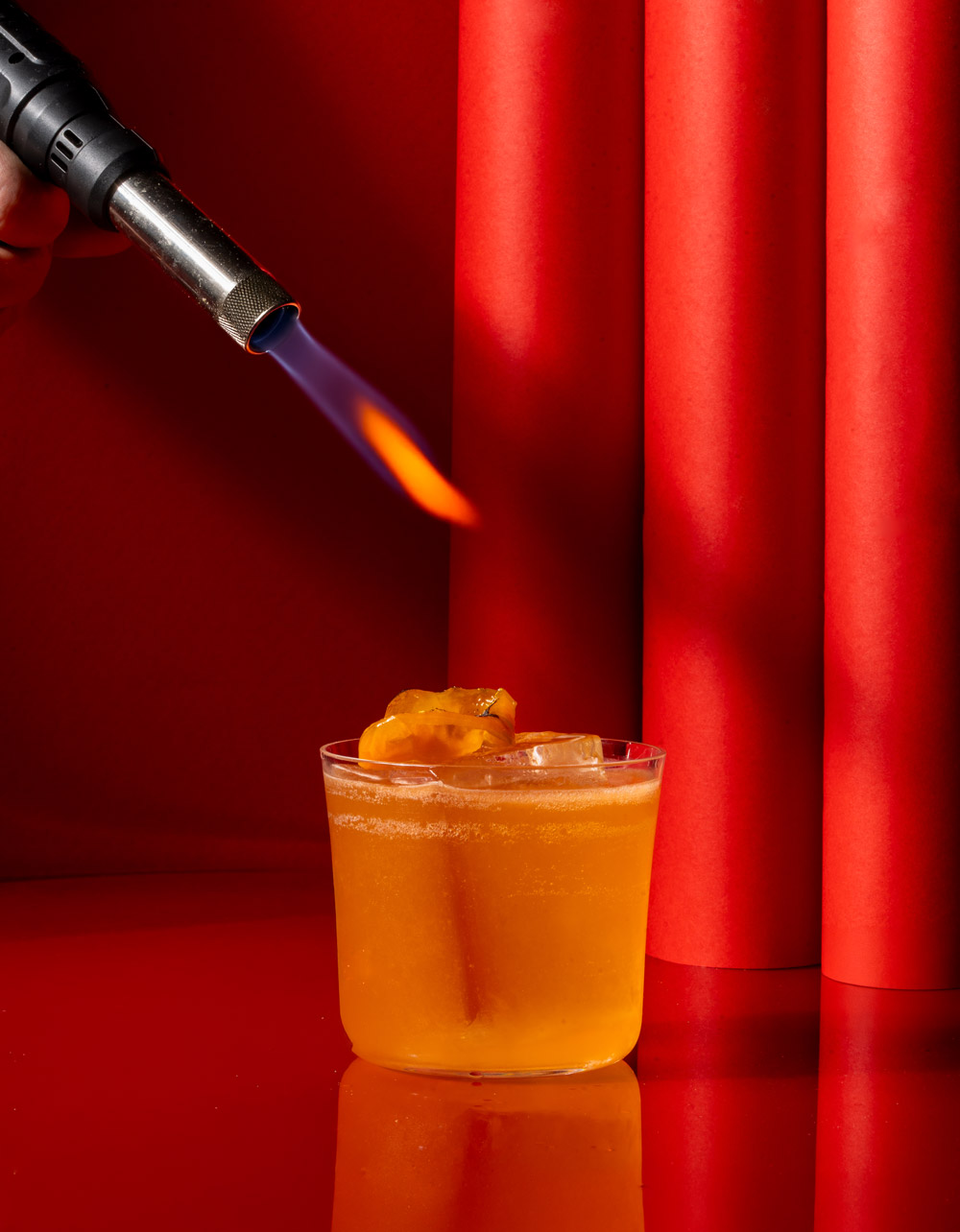
For the Crimson Flame, Arselinda was seduced by the midday sun – red hot and burning bright. Not a surprise, given that her hair is also as scarlet as the fiery ingredient she wanted to explore – pepper. Her goal was to reveal its hidden sweetness, mixing two Havana Rums, a 3 year-old with its fresh, fruity notes and the richness of the 7 year old dark rum, matured in ex-Bourbon barrels.
She also added a touch of passion fruit and freshly squeezed orange juice, plus the all important pepper syrup, made in house to extract its natural sweetness, not its usual spiciness. Still if it is a bite you are looking for, you can have a choice of garnish – a caldo candied pepper or keep it sweet with the dolce orange candy.
“In my opinion, the bar is the heart of the hotel because it’s where everything comes together. Guests relax, chat, and enjoy the view and atmosphere. You can feel the energy of the place—the service, the cocktails, the music, the team’s smiles—all of it contributes to a memorable experience. In a way, the soul of the hotel begins at the bar, because it’s where people immediately feel at ease.”
Arselinda Lugjaj, Waitress
Crimson Flame
For the Crimson Flame, Arselinda was seduced by the midday sun – red hot and burning bright. Not a surprise, given that her hair is also as scarlet as the fiery ingredient she wanted to explore – pepper. Her goal was to reveal its hidden sweetness, mixing two Havana Rums, a 3 year-old with its fresh, fruity notes and the richness of the 7 year old dark rum, matured in ex-Bourbon barrels.
She also added a touch of passion fruit and freshly squeezed orange juice, plus the all important pepper syrup, made in house to extract its natural sweetness, not its usual spiciness. Still if it is a bite you are looking for, you can have a choice of garnish – a caldo candied pepper or keep it sweet with the dolce orange candy.
“In my opinion, the bar is the heart of the hotel because it’s where everything comes together. Guests relax, chat, and enjoy the view and atmosphere. You can feel the energy of the place—the service, the cocktails, the music, the team’s smiles—all of it contributes to a memorable experience. In a way, the soul of the hotel begins at the bar, because it’s where people immediately feel at ease.”
Arselinda Lugjaj, Waitress
She also added a touch of passion fruit and freshly squeezed orange juice, plus the all important pepper syrup, made in house to extract its natural sweetness, not its usual spiciness. Still if it is a bite you are looking for, you can have a choice of garnish – a caldo candied pepper or keep it sweet with the dolce orange candy.
“In my opinion, the bar is the heart of the hotel because it’s where everything comes together. Guests relax, chat, and enjoy the view and atmosphere. You can feel the energy of the place—the service, the cocktails, the music, the team’s smiles—all of it contributes to a memorable experience. In a way, the soul of the hotel begins at the bar, because it’s where people immediately feel at ease.”
Arselinda Lugjaj, Waitress
Junior bartender Bernadetta Mele created a cocktail that pulls together the entire Venice sky in one glass. It was a cocktail inspired by tradition, both Venetian and Pugliese, the region where Bernadetta was born. She chose the humble dish of Acqua Sale (water salt) as inspiration. This fisherman’s favorite is un intreccio di cucumbers, tomatoes, onions, capers, and other leftover vegetables found at home. The star of the show is stale bread, which is dipped in olive oil and salt and eaten with the above veggies.
Lilith
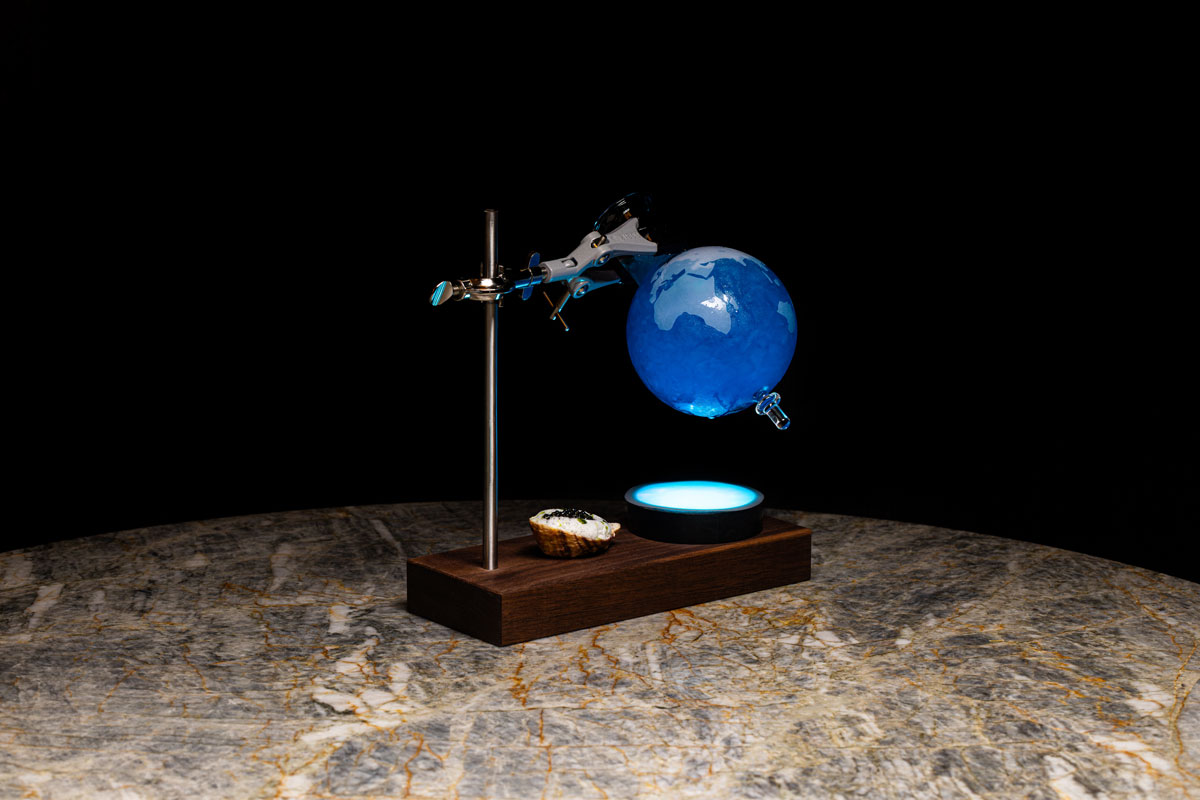
From that, she constructed a martini-style cocktail with Pugliese-born Altamura Distilleries Vodka as its base spirit. Then she macerated vermouth with bread which brought forward a subtle buttery flavor. She then strained the liquid and used the leftover bread as a foundation for the garnish, a very Venetian cicchetto of onion pickled with a cucumber shrub, a caper and a few drops of tomato oil.
Guests of the bar are invited to pick their favorite flavors and the team will match your palette with a color of the sky, actually not only the color – the seasons, the senses, and the sentiments. As Valentina puts it most eloquently, “What you taste is not just liquid in a glass, but our team’s passion, our stories and our bond with the guests who share the skies with us.”
Junior bartender Bernadetta Mele created a cocktail that pulls together the entire Venice sky in one glass. It was a cocktail inspired by tradition, both Venetian and Pugliese, the region where Bernadetta was born. She chose the humble dish of Acqua Sale (water salt) as inspiration. This fisherman’s favorite is un intreccio di cucumbers, tomatoes, onions, capers, and other leftover vegetables found at home. The star of the show is stale bread, which is dipped in olive oil and salt and eaten with the above veggies.
Lilith
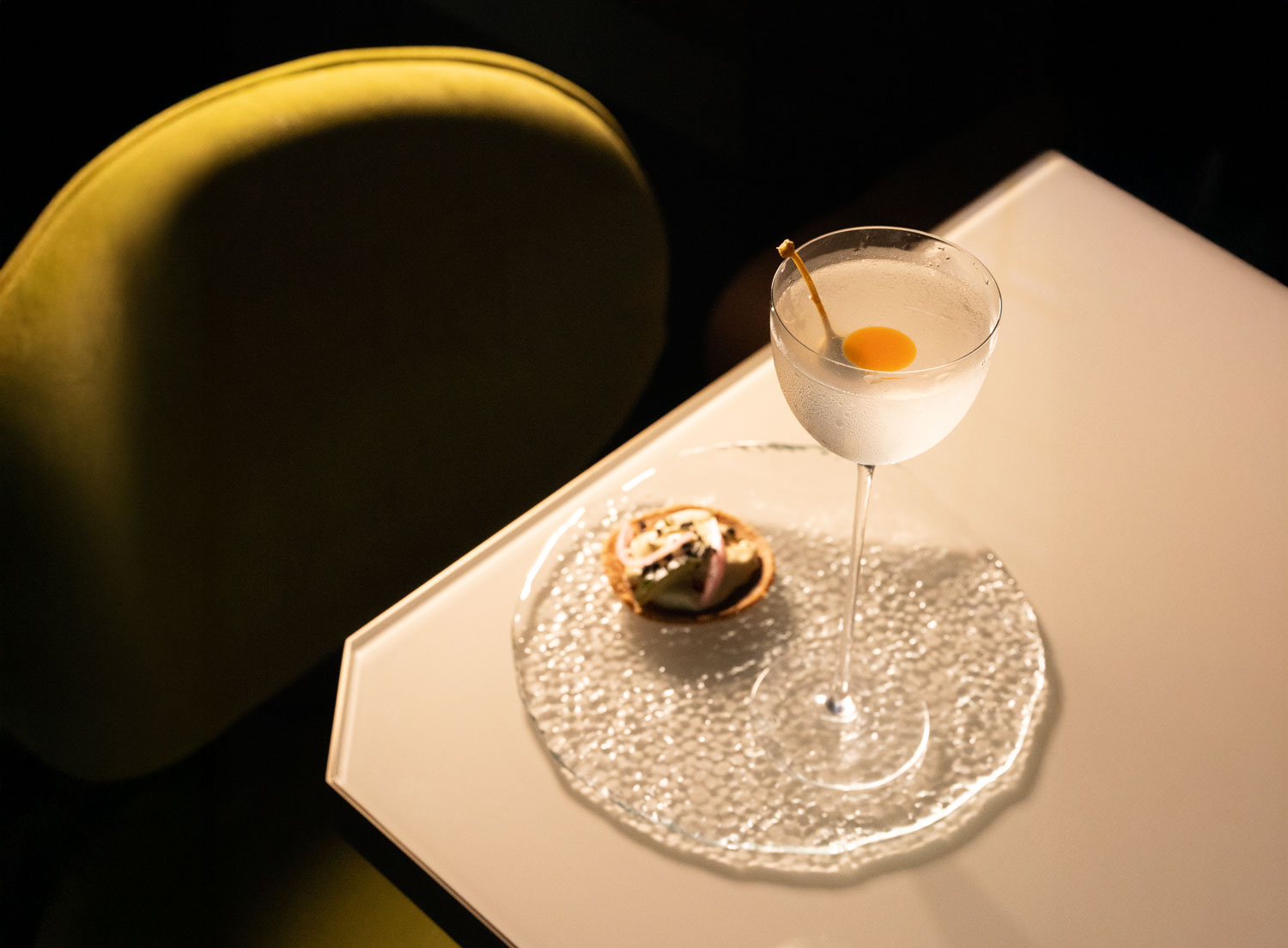
From that, she constructed a martini-style cocktail with Pugliese-born Altamura Distilleries Vodka as its base spirit. Then she macerated vermouth with bread which brought forward a subtle buttery flavor. She then strained the liquid and used the leftover bread as a foundation for the garnish, a very Venetian cicchetto of onion pickled with a cucumber shrub, a caper and a few drops of tomato oil.
Guests of the bar are invited to pick their favorite flavors and the team will match your palette with a color of the sky, actually not only the color – the seasons, the senses, and the sentiments. As Valentina puts it most eloquently, “What you taste is not just liquid in a glass, but our team’s passion, our stories and our bond with the guests who share the skies with us.”
“The bar is where hospitality becomes human. It’s where guests are greeted, listened to, and cared for—not just served. It’s a place of connection, conversation, and shared moments. Here, the hotel’s warmth and personality come alive, and guests feel seen, welcomed, and part of something memorable.”
Diego D’Angelo, Assistant Venue Manager
Although I know that the geographical centre of Venice lies closer to the Rialto Bridge, I’d argue that its heart has moved southwest to the end of the island of Giudecca. Here with the views stretching in every direction, the skies overlooking Venice’s wondrous buildings and watery lagoon, a bar team building every cocktail like the famous architects who designed this extraordinary city, all in a former mill that once produced enough pasta to feed most of Italy – I would say those are reasons enough to call the Skyline Bar, not just the heart of the Hilton Molino Sticky, but of Venice itself.
“The bar is where hospitality becomes human. It’s where guests are greeted, listened to, and cared for—not just served. It’s a place of connection, conversation, and shared moments. Here, the hotel’s warmth and personality come alive, and guests feel seen, welcomed, and part of something memorable.”
Diego D’Angelo, Assistant Venue Manager
Although I know that the geographical centre of Venice lies closer to the Rialto Bridge, I’d argue that its heart has moved southwest to the end of the island of Giudecca. Here with the views stretching in every direction, the skies overlooking Venice’s wondrous buildings and watery lagoon, a bar team building every cocktail like the famous architects who designed this extraordinary city, all in a former mill that once produced enough pasta to feed most of Italy – I would say those are reasons enough to call the Skyline Bar, not just the heart of the Hilton Molino Sticky, but of Venice itself.
The bar is where people meet and socialise. It’s a crucible of stories, experiences, and cultures, where guests discover new tastes and try new things. It’s also where most interactions with staff happen, and where new memories are made. Guests may not remember our names or faces, but they will remember how they felt, because of the bar’s intimate and welcoming nature.
Edoardo Fraioli, Senior Bartender
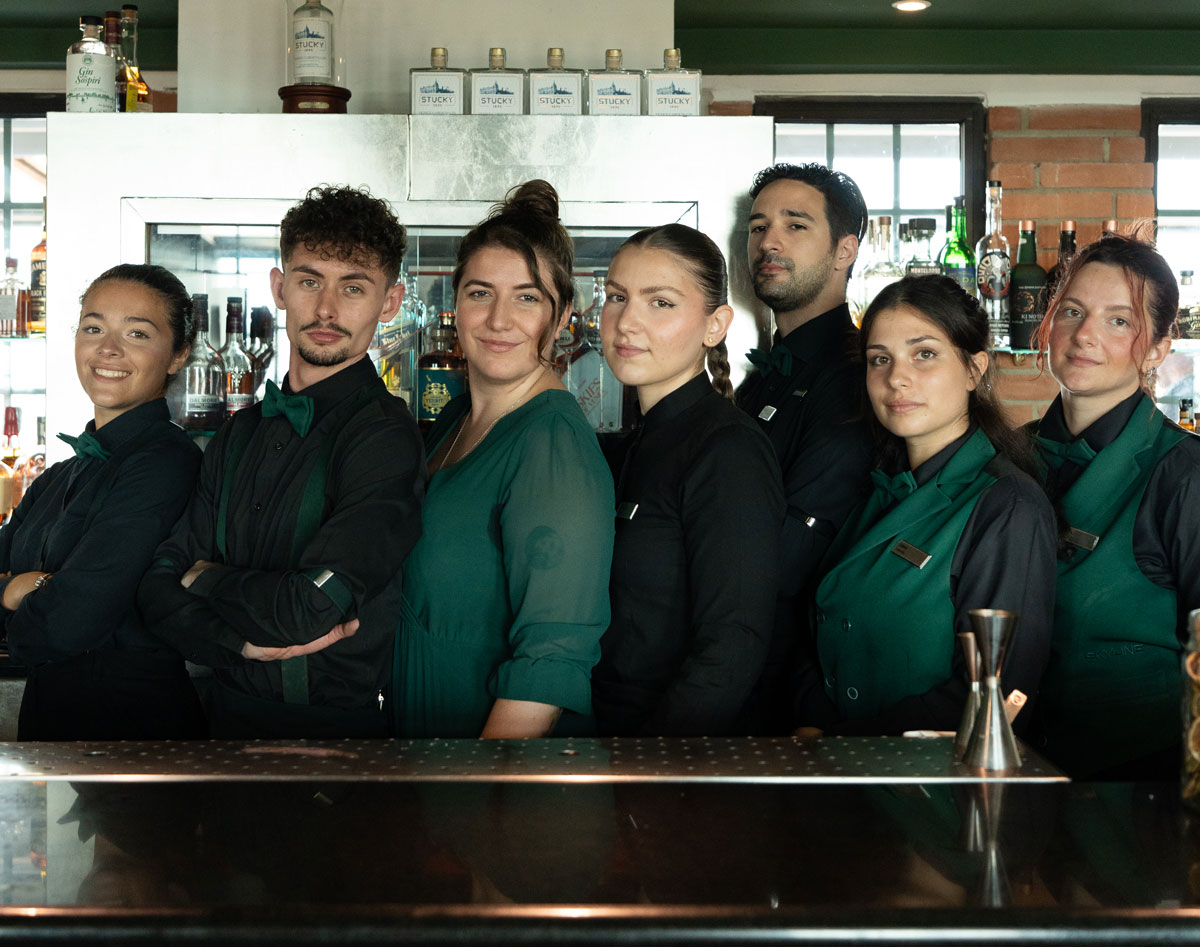
The Hilton Molino Stucky Venice Bar Team
Thank you to the whole bar team: Valentina Andrada Mircea, Bar Manager; Diego D’Angelo, Assistant Venue Manager; Alan Cescon, Head Bartender; Edoardo Fraioli, Senior Bartender; Bernardetta Mele, Junior Bartender; Mattia Latino, Host; and Arselinda Lugjaj, Waitress.
The bar is not just a place to grab a drink; but a cultural hub where people meet, share emotions, exchange ideas and celebrate everything from small wins to life’s biggest moments. Therefore, the bar makes moments to remember for its guests, and when these are paired with delicious creations and service with smile, they tend to stay for long time. And that is what we strive to do at the Skyline.
Xhuljano Nukaj, F&D Manager
The Hilton Molino Stucky Venice Bar Team
Thank you to the whole bar team: Valentina Andrada Mircea, Bar Manager; Diego D’Angelo, Assistant Venue Manager; Alan Cescon, Head Bartender; Edoardo Fraioli, Senior Bartender; Bernardetta Mele, Junior Bartender; Mattia Latino, Host; and Arselinda Lugjaj, Waitress.
The bar is not just a place to grab a drink; but a cultural hub where people meet, share emotions, exchange ideas and celebrate everything from small wins to life’s biggest moments. Therefore, the bar makes moments to remember for its guests, and when these are paired with delicious creations and service with smile, they tend to stay for long time. And that is what we strive to do at the Skyline.
Xhuljano Nukaj, F&D Manager
Susan L. Schwartz
Susan L. Schwartz is the award-winning creator of A Lush Life Manual and host of the Lush Life Podcast. She writes widely on drinks and travel, leads London and Venice Cocktail Tours, and has been recognised with multiple industry awards.
The Heart of the Hotel: 1 Hotel Mayfair
1 Hotel Mayfair
Bar is the Heart of the Hotel
This year, in association with Altamura Distilleries, I’ll be exploring some of the world’s most legendary bars—uncovering what makes them the beating heart of the hotel. Our next stop is LONDON!
Episode #3
“My Dearest Friend, I have just happened upon the most extraordinary establishment – a marvel of modernity with a touch of the outside, but inside. And the bar – oh, the bar! – serves the most contemporary of cocktails with hosts so welcoming that I found it quite impossible to tear myself away. You must visit the next time you are in London – as to omit such a delight would be quite unthinkable. Ever yours, Susan”
I can imagine that letter finding its way into a mail pouch heading west from this very corner of Berkeley Street and Piccadilly – the departure point for the coaches of the Western Mail in the 18th century. Even so, that missive hardly begins to capture what’s unfolding behind the doors of 3 Berkeley Street, London – the home of 1 Hotel Mayfair.
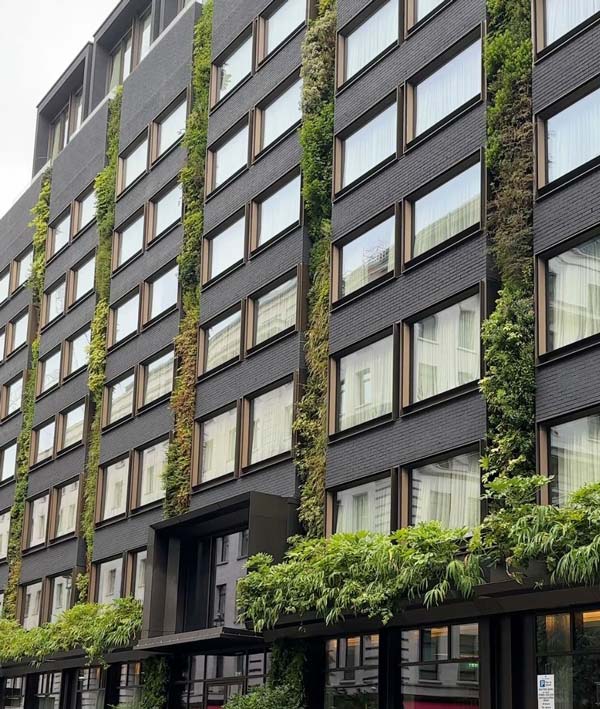
Unless you have been living under a rock, you’ll have heard that since the launch of its first property in Miami in 2015, the 1 Hotel brand has spent the past decade rewriting the rules of what a luxury hotel can be. 1 Hotel Mayfair, its first in Europe, continues that mission, proving that caring for the earth need not be an excuse.
Step inside the lobby, and you are immediately greeted by a rainforest above and a stone partition in front – a clue that you might not be in your usual city hotel. The Spanish moss-covered chandelier is actually a 4-four-meter-wide living work of art, created by Patrick Nadeau – misted daily to keep it verdant and vibrant.
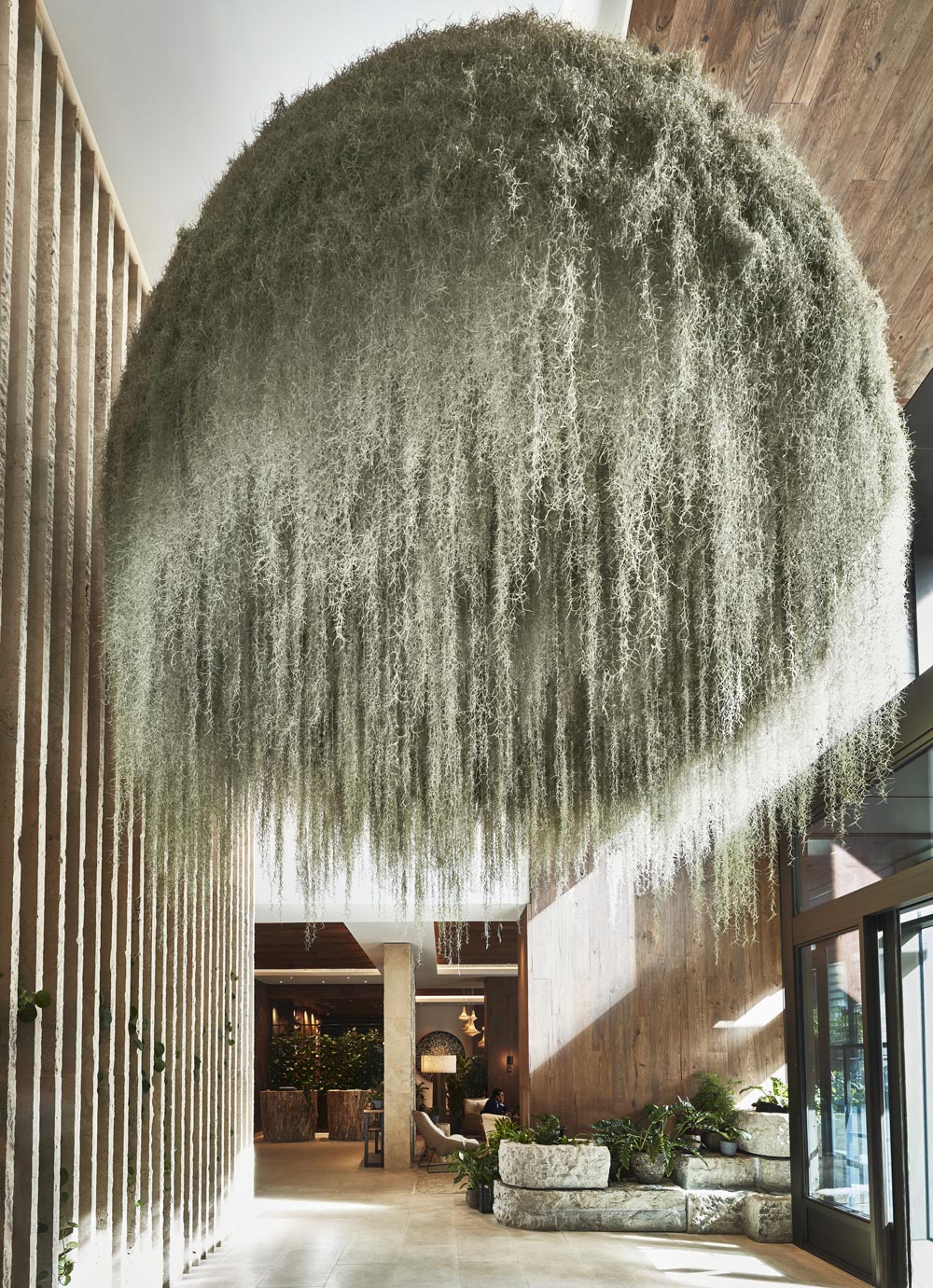
The decorative masonry, along with almost every visible stone feature, was salvaged from the former hotel. In renovating, the goal was to keep at least 80% of the original building. Even the rock you might have been living under might make an appearance here.
Sitting adjacent to reception, their bar, Dover Yard, just can’t be ignored. From its opening at 11:00 AM until late in the evening, it entices with the sounds of merriment within. Filled with the familiar elements found throughout the hotel – natural light steaming through its large windows, chic upcycled wood tables, and lush greenery – what’s happening behind the bar is truly where the hotel’s philosophy manifests in liquid form.
“The bar is where the energy flows most freely. It’s full of warmth and character but still relaxed enough for guests to truly unwind and lean into a little boozy indulgence. At Dover Yard, we make everyone feel right at home. Cozy vibes, great drinks, and just enough magic to make you want to come back for one more round (or three)”
Giulio Guarini, Director of Bars
Each cocktail is a masterpiece of reclamation and innovation. With a bar program led by Giulio Guarini, Director of Bars, it was always going to be. Before the hotel even opened, he and his team, including Bars Manager Marco Grisafi and Head Bartender Daniele Mondelli began work on a program founded on two intrinsic pillars: respecting seasonality and repurposing ingredients.
Sitting adjacent to reception, their bar, Dover Yard, just can’t be ignored. From its opening at 11:00 AM until late in the evening, it entices with the sounds of merriment within. Filled with the familiar elements found throughout the hotel – natural light steaming through its large windows, chic upcycled wood tables, and lush greenery – what’s happening behind the bar is truly where the hotel’s philosophy manifests in liquid form.
“The bar is where the energy flows most freely. It’s full of warmth and character but still relaxed enough for guests to truly unwind and lean into a little boozy indulgence. At Dover Yard, we make everyone feel right at home. Cozy vibes, great drinks, and just enough magic to make you want to come back for one more round (or three)”
Giulio Guarini, Director of Bars
Each cocktail is a masterpiece of reclamation and innovation. With a bar program led by Giulio Guarini, Director of Bars, it was always going to be. Before the hotel even opened, he and his team, including Bars Manager Marco Grisafi and Head Bartender Daniele Mondelli began work on a program founded on two intrinsic pillars: respecting seasonality and repurposing ingredients.
At its most basic, seasonality is utilizing fruit in its peak season. Here it’s much more multi-faceted. First finding fruit at its ripest and then preserving it for use later in the year. So rather than only using it at one time or during one season, it’s about not only embracing what’s available but also, more importantly, creating something new with it.
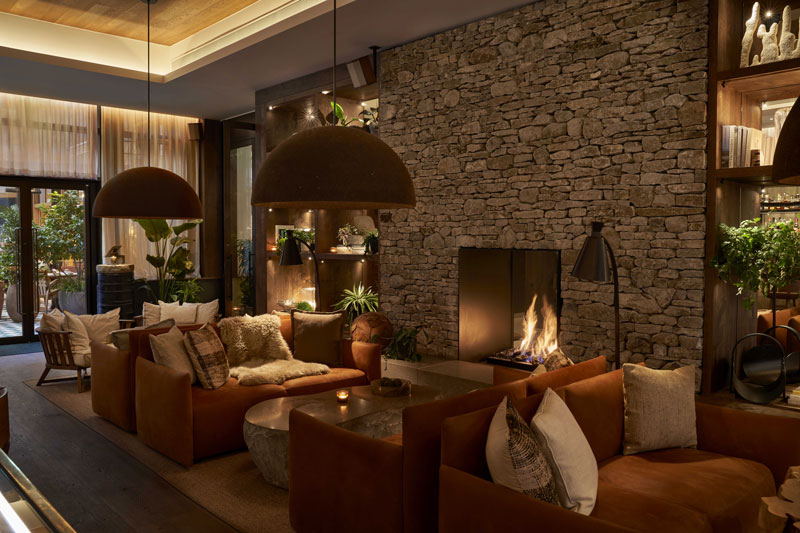
Take THE COSMOPOLITAN (Rose Current) which is sweetened with cherry mead and rose syrup, both made with cherries and roses picked at the height of their season and preserved for use in cocktails, then combined with Altamura Distilleries Vodka, Mirabeau One Day rose, Mancino Bianco Amaranto, and Silk Road Fenju Rose.
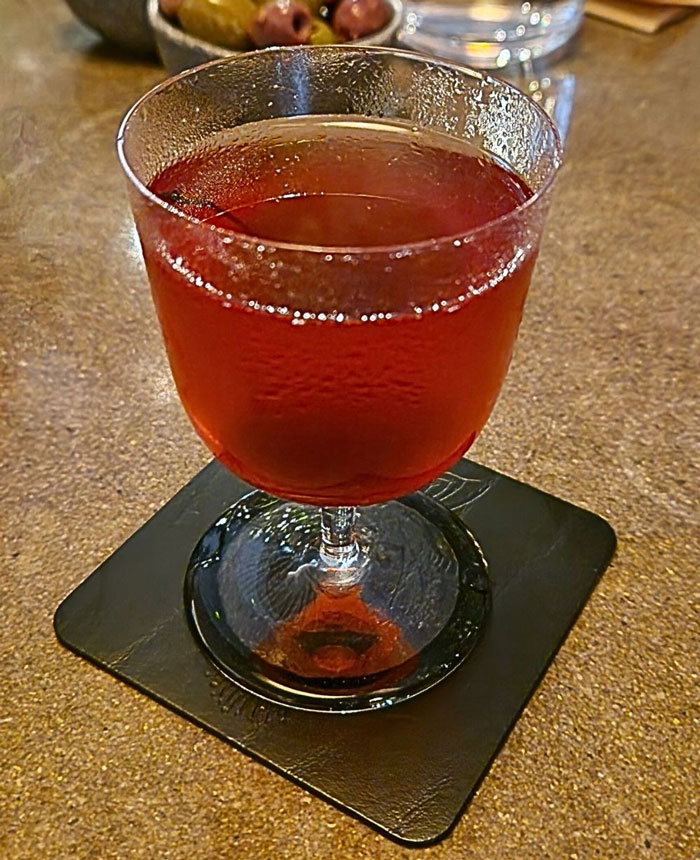
“We’re right in the middle of all the venues, welcoming everyone—from in-house guests and restaurant diners to walk-ins off the street. It’s all about the vibe we create from the beginning to the end of each shift. Early on, guests swing by for meetings or a casual drink, and then. Once the DJ kicks off. the energy shifts. The atmosphere transforms into something special, with amazing service, cool people, incredible cocktails, and our food selection tying it all together into a truly unique experience”
Marco Grisafi, Bars Manager
Making the decision to respect seasonality, also means distancing themselves from certain ingredients, like passion fruit. In the UK, the carbon footprint that comes with them is huge. Limes are not too far behind, and the team has almost eliminated the use of them entirely. Using some lime is essential, but in much smaller amounts.
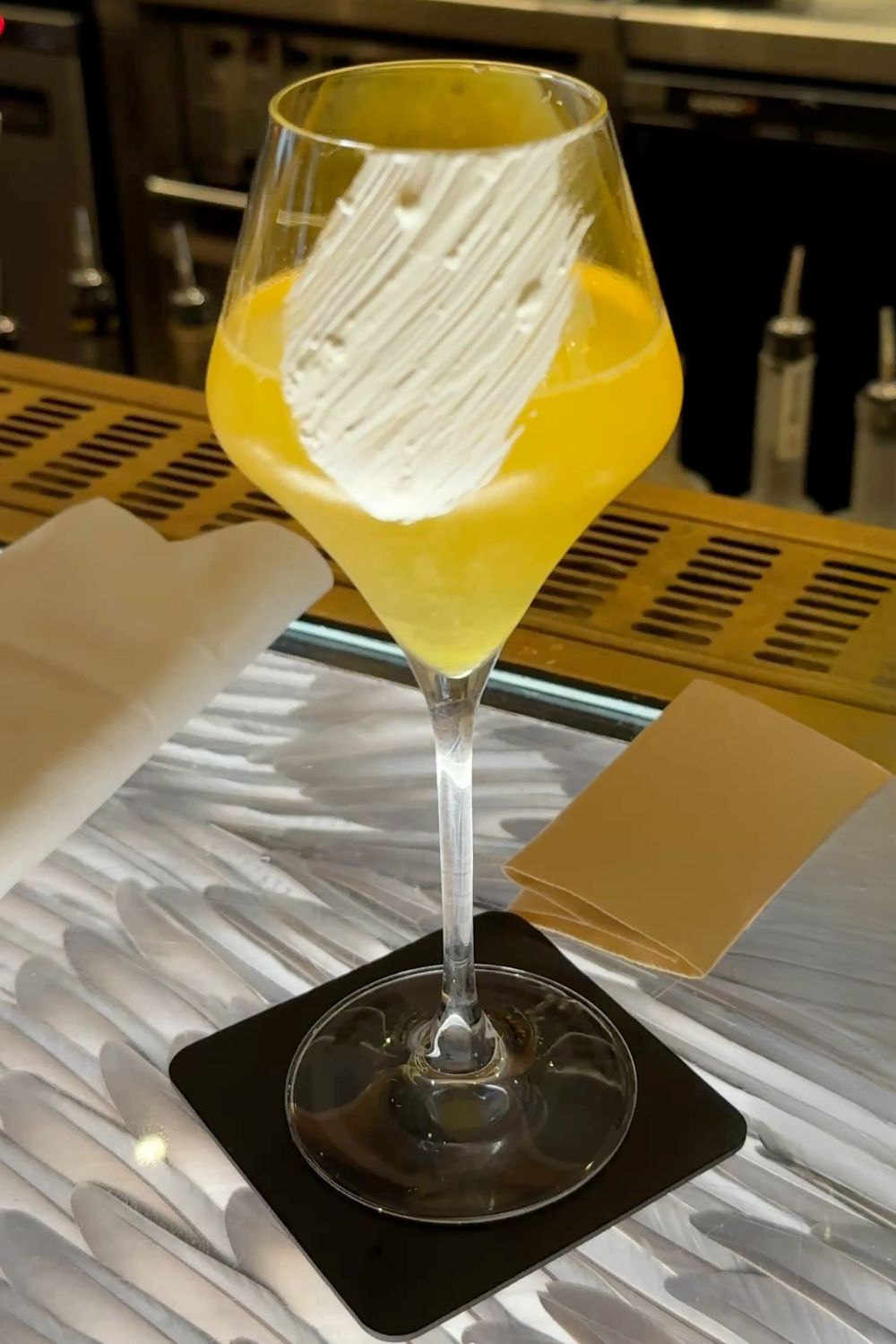
The Passionfruit Martini
In their place, they substitute verjus, aka sour grape, which is widely produced in the UK. Using their expertise in flavor profiling, they can create the same lime experience with local ingredients. So THE PASSIONFRUIT MARTINI (Sunflare) contains no passion fruit! It’s sweetened with gooseberries and apples instead, then the Eminente Claro Rum and champagne. A little bit of magic!
As for their second pillar – repurposing ingredients – it all began with a croissant! As 1 Hotel Mayfair serves breakfast, it sees its fair share of leftovers. The challenge? What to do with all those pastries? Giulio and his team’s solution was to let them harden and dissolve them, creating a mulled croissant syrup. This invention flavors THE ESPRESSO MARTINI (Breaking Grounds).
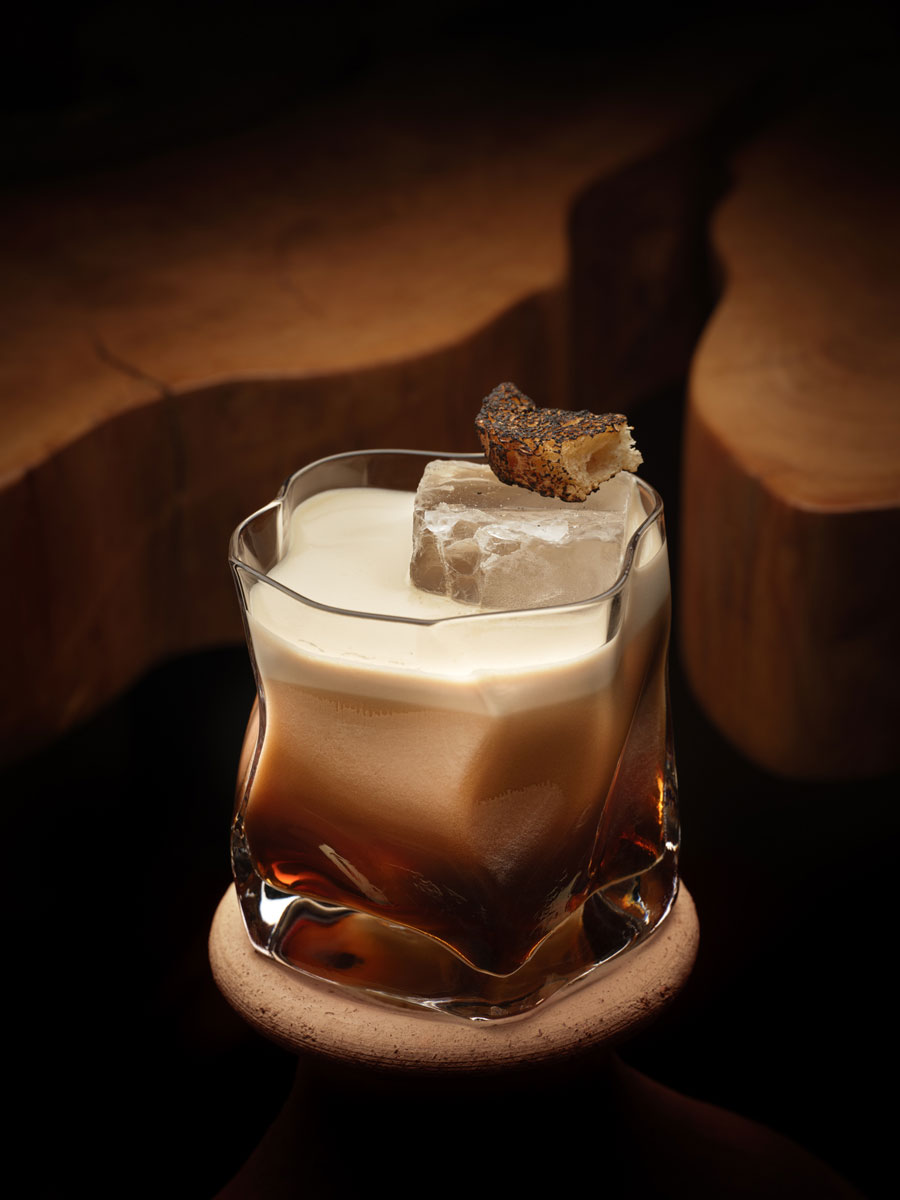
The Highball
THE HIGHBALL (Not A Guinness) is ingenuity in action. Last Christmas, with only two barrels of Guinness left in stock and none in stores, Giulio had no idea where he was going to get the rest. Later that night, he actually dreamt he had made his own Guinness. The next morning, he was determined he would make the dream a reality. After much research, he found the answer in the fermentation of bread of which the hotel had plenty! But how could you make fermented bread resemble Guinness? That’s when he discovered Kvass – an old Central European recipe for a low alcohol beverage originally made from rye bread. Most importantly, depending on the bread used, it was black in color!! Add blackberry, ginger mead, and Fielden Rye – he had his Christmas miracle! He has even invented a way for its head to rise up just like real Guinness. How does it work? That’s Giulio’s secret.
“Dover Yard is where the party finds its pulse—I get to greet everyone from suits to sneakers and watch the night bloom from chilled chats to full-on vibes. It’s not just a bar, it’s where the hotel comes alive!”
Sarah Serrai, Hostess
Every one of these cocktails fit beautifully in this year’s menu. For their first year, the Seed to Sips menu followed the journey of a plant from a seed to glass in four chapters – seeds and roots, sprouts, leaves and flowers, and, finally, fruit.
For this second year, they wanted to elevate the program. During a trip to the USA, they were introduced to regenerative farming. Inspired by the magic that happens with little human intervention, they worked to convey this message in their new menu, dedicating it to the regenerative forces in nature.
“As soon as you step into 1 Hotel Mayfair, it’s Dover Yard that welcomes you: not just a meeting point, but a crossroads of experiences where guests, travellers, and Londoners gather around a shared vision of sustainable, elegant, and vibrant hospitality”
Daniele Mondelli, Head Bartender Dover Yard
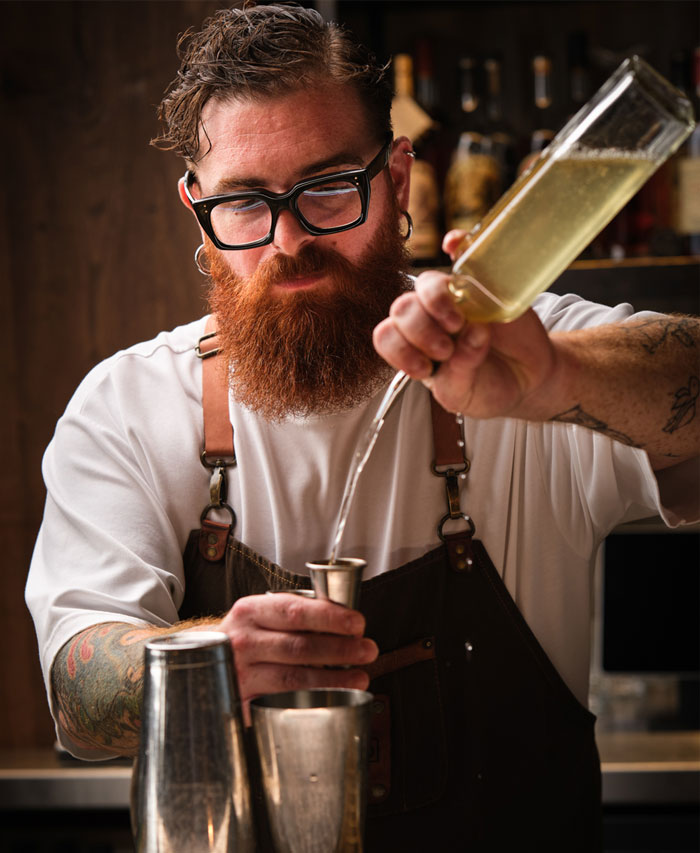
The menu begins with Elemental Flames, the force of destruction that takes place before regeneration begins. Next, Earthly Revival begins the rehealing process with new growth. Celestial Flows is dedicated to the movement of the winds which spread seeds, then Aqua Vitae, celebrating water, the source of all regenerative forces.
The whole team is 100% behind the program and as passionate as the day they began, most of whom are still in situ. Their synergy has even inspired guests to want to collaborate. One is musician Ed Sheeran. He was so taken with what they were achieving that he too wanted to join forces.
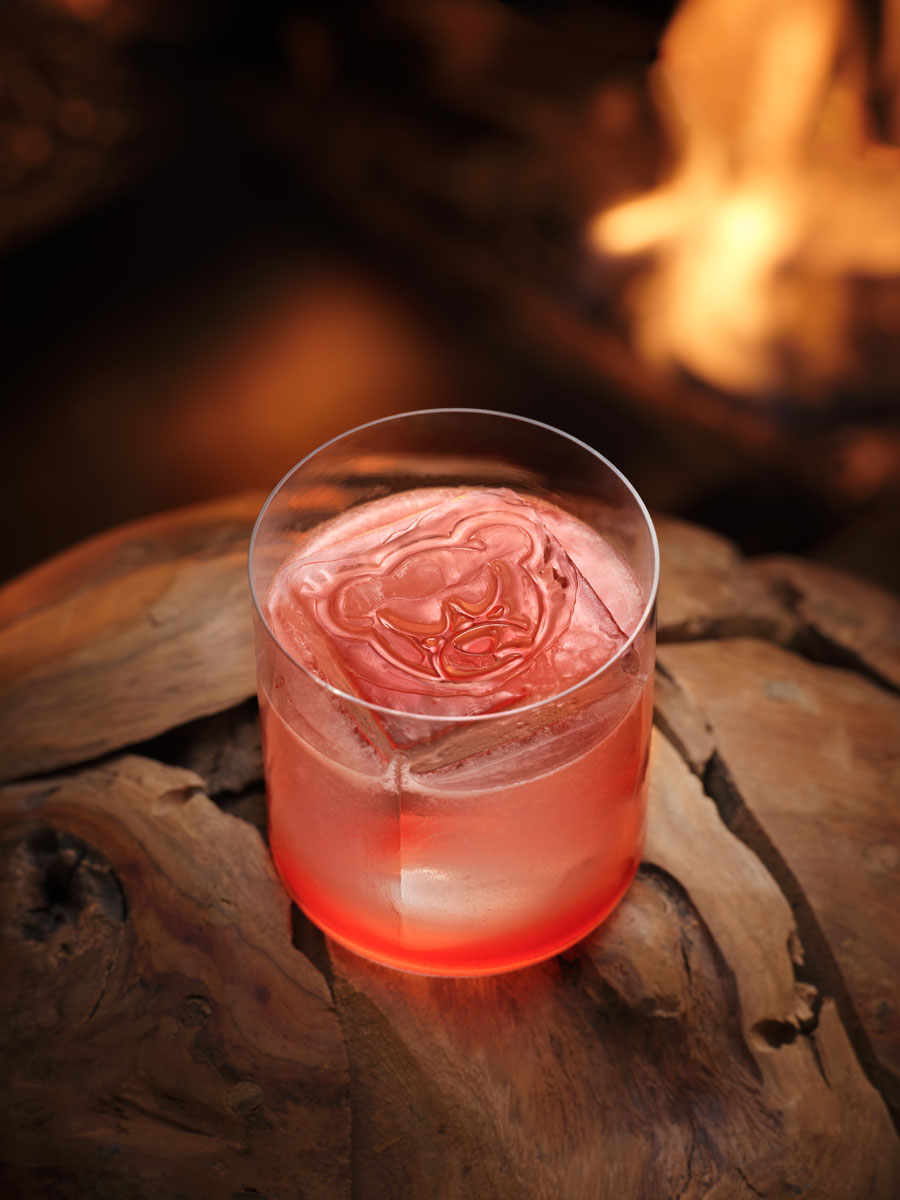
The Margarita
Their idea emerged over a plate of Dover Yard fried chicken & honey hot sauce. A discussion about what hot sauces go well with chicken led to the creation of one of their most popular cocktails on the menu, THE MARGARITA (Tingly Jam). Not only do the ingredients include Ed’s own hot sauce, Tingly Ted’s, but beurre noisette, chicken breading, poblano peppers, sour grape and Casamigos Blanco Tequila, as well.
Don’t be confused by the two names listed for each cocktail. Although the team puts a lot of effort into creating the name and the story behind each cocktail, they totally understand sometimes you just want to choose one you recognize. So first they list the classic cocktail it most represents and then its own individual name. Of course, they are always happy to share their stories if you wish.
“From day one, Dover Yard was conceived and received as Mayfair’s extended living room. Regulars and neighbours come and go, often greeting the team like old friends; thrilled to reconnect. New comers are made to feel at home very quickly, too. Led by Giulio, Marco, and Mo, the team brings warmth, creativity, and a spirit of genuine hospitality that gives the space its unmistakable charm. It’s truly special to witness the rhythm of life at Doveryard from tranquil mornings flowing into lively, energetic evenings. It’s one of my favourite spots in the hotel, and I couldn’t be prouder of what our team has accomplished over the past two years”
Francois Xavier Schoeffer (GM)
In the same vein, to simply call the Dover Yard a bar misses the point. Each cocktail represents a cell in the living breathing organism that is the 1 Hotel Mayfair, making it the literal heart of the hotel. With every cocktail shared, their story is being told.
And how is that story conveyed in today’s vernacular, maybe a bit like this?
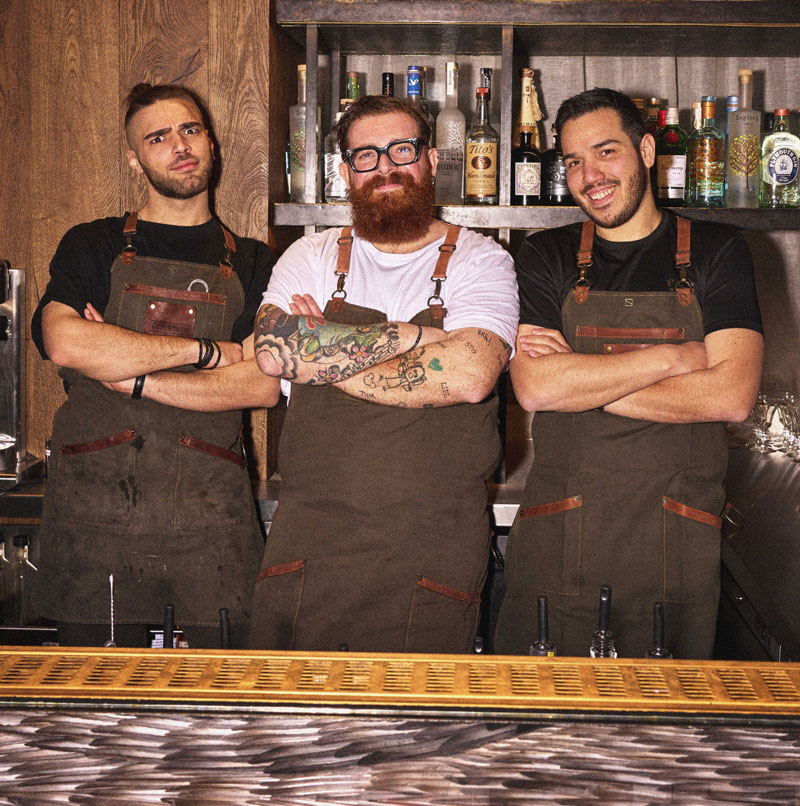
“Babe, Stop everything! I’ve just discovered the most utterly chic spot. Think effortless indoor-outdoor elegance with a seriously elevated vibe. And the bar? Serving cutting-edge cocktail – genuinely 10/10 and equally as fabulous as their mission – doing what they can to help the world. The team were absolute stars; so warm and attentive, I felt completely at home. Popped in for one and somehow never wanted to leave. You have to go next time you’re in London. Honestly, to miss it would be a crime. It’s truly next level”
🍸♥️ S x
The 1 Hotel MayFair Bar Team
Thank you to the whole bar team: Giulio Guarini, Director of Bars; Marco Grisafi, Bars Manager; Daniele Mondelli, Head Bartender Dover Yard; Mubarek Jakar, Assistant General Manager Dover Yard; Sarah Serrao, hostess; and everyone else!!
Susan L. Schwartz
Susan L. Schwartz is the award-winning creator of A Lush Life Manual and host of the Lush Life Podcast. She writes widely on drinks and travel, leads London and Venice Cocktail Tours, and has been recognised with multiple industry awards.
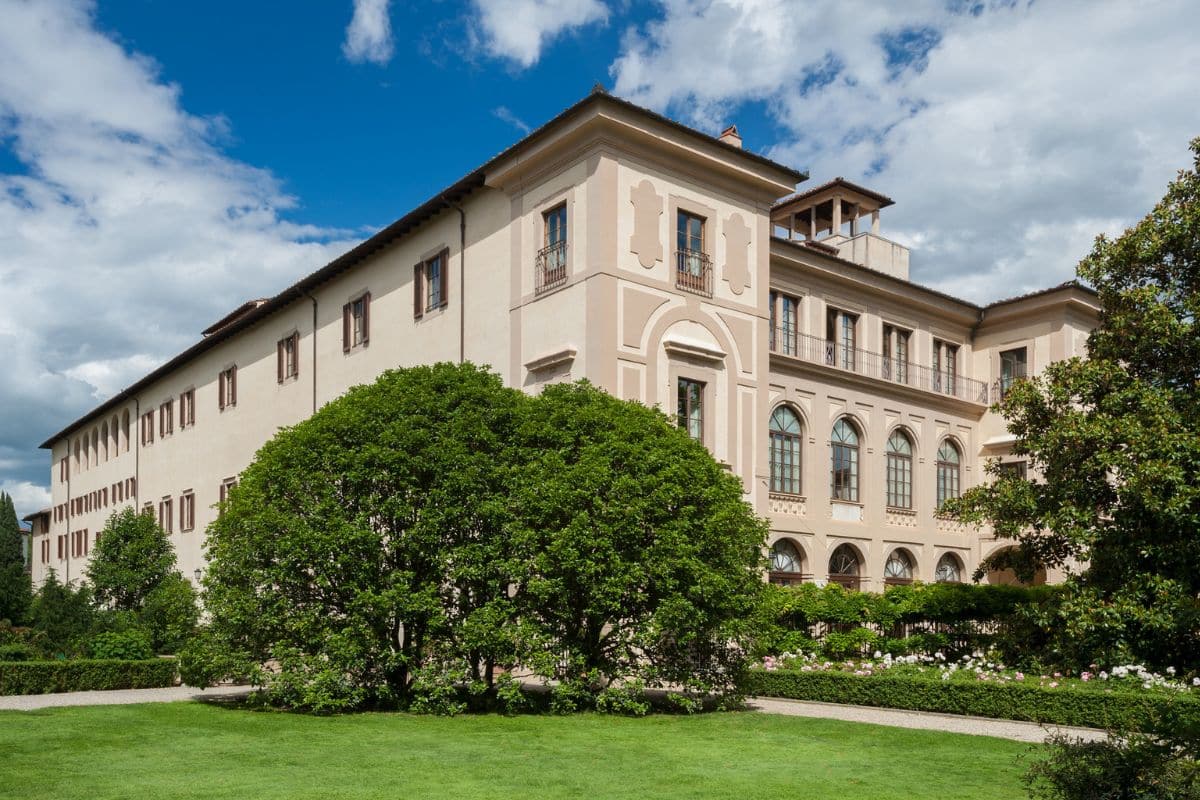
The Heart of the Hotel: Four Seasons Florence
Four Seasons Florence
Bar is the Heart of the Hotel
This year, in association with Altamura Distilleries, I’ll be exploring some of the world’s most legendary bars—uncovering what makes them the beating heart of the hotel. Our next stop is Florence!
Episode #2
Bartolomeo Scala’s motto really should have been Accomodatevi – Please, make yourself comfortable! Of course, I know it was Gradiam—”step-by-step”—literally carved in stone above the door of what was once his home and is now the magnificent Four Seasons Florence. Gradiam may well have been a clever play on his surname (scala meaning ‘ladder’ in Italian) and his remarkable rise from miller’s son to trusted advisor of Florence’s most powerful ruler, Lorenzo de’ Medici. But today, every inch of the building he designed is an invitation to accomodatevi-no more so than its two bars – the Atrium Bar and Berni’s.
It’s easy to be swept away by the sheer beauty of the Four Seasons Florence. Spanning nearly an entire block between Via Giuseppe Giusti and Piazza Donatello, its scale hints at the grandeur within—yet nothing quite prepares you for the splendor that awaits behind its historic walls.
Like many Italian cities, Florence keeps many of its treasures hidden away behind plain plastered facades and imposing doors. Unless lucky enough to be invited inside, it’s easy to feel left out. Today, the grand doors of the Four Season Florence stand wide open and beckoning you in are not one, not two, but four inspired takes on the city’s most famous cocktail, the Negroni.
One step inside and you are immediately delighted by the first of the many frescos and bas-reliefs that have survived almost 500 years. Many of these are original to Scala’s time here, while others were added by later residents—most notably the della Gherardesca family, who called this place home for more than three centuries starting in the 17th.
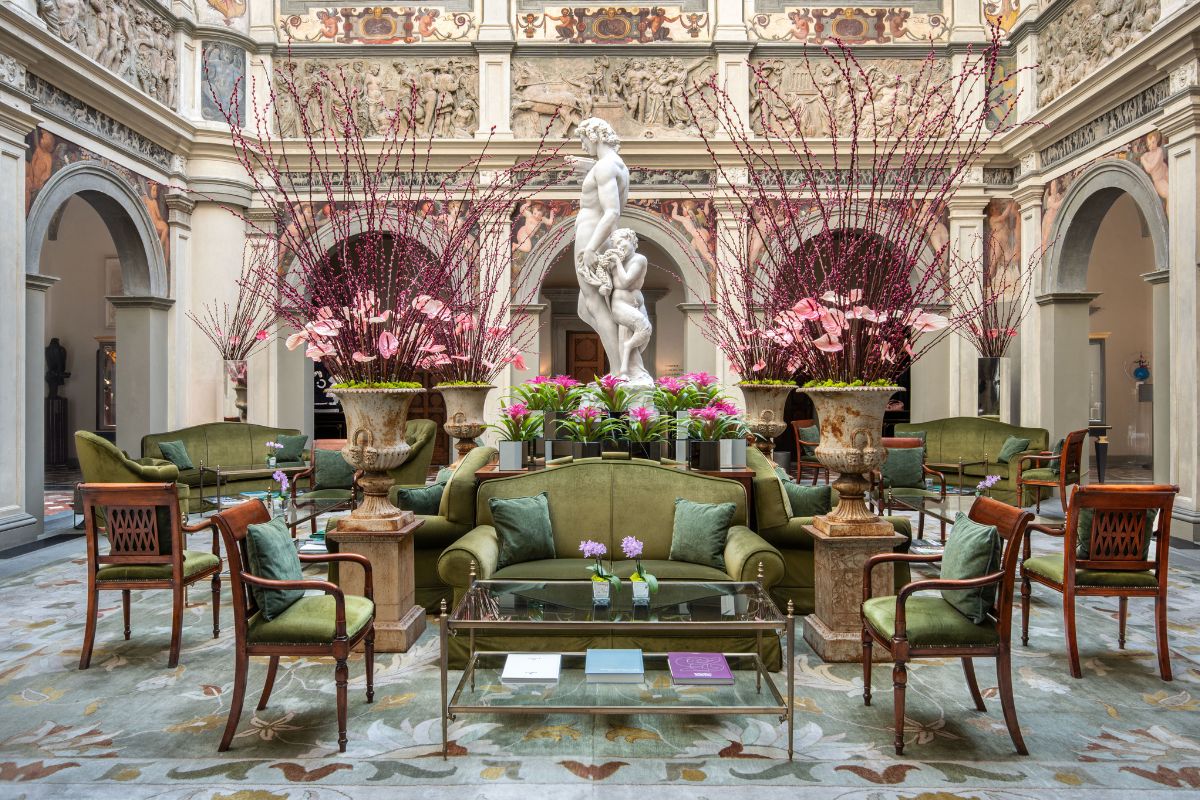
It’s hardly surprising that, living at the height of the Renaissance, Bartolomeo Scala fully embraced its ideals—especially the reverence for classical antiquity. When envisioning his own palazzo, he looked to the past for inspiration. His contemporary, scholar Leon Battista Alberti in his De re aedificatoria—On the Art of Building, wrote…
“In the interior of the villa, the “heart” or “bosom” (“sinum”) of the house, or atrium, is deemed the most important”*
He took this idea and ran with it – creating not one, but two atria. How fitting, then, that I’m now writing a series exploring the bar as the heart of the hotel—and here, the bar bears the fortuitous name of The Atrium Bar.
*Public and Private in the Writings of Leon Battista Alberti by Anne-Marie Sorrenti
It’s hardly surprising that, living at the height of the Renaissance, Bartolomeo Scala fully embraced its ideals—especially the reverence for classical antiquity. When envisioning his own palazzo, he looked to the past for inspiration. His contemporary, scholar Leon Battista Alberti in his De re aedificatoria—On the Art of Building, wrote…
“In the interior of the villa, the “heart” or “bosom” (“sinum”) of the house, or atrium, is deemed the most important”*
He took this idea and ran with it – creating not one, but two atria. How fitting, then, that I’m now writing a series exploring the bar as the heart of the hotel—and here, the bar bears the fortuitous name of The Atrium Bar.
*Public and Private in the Writings of Leon Battista Alberti by Anne-Marie Sorrenti
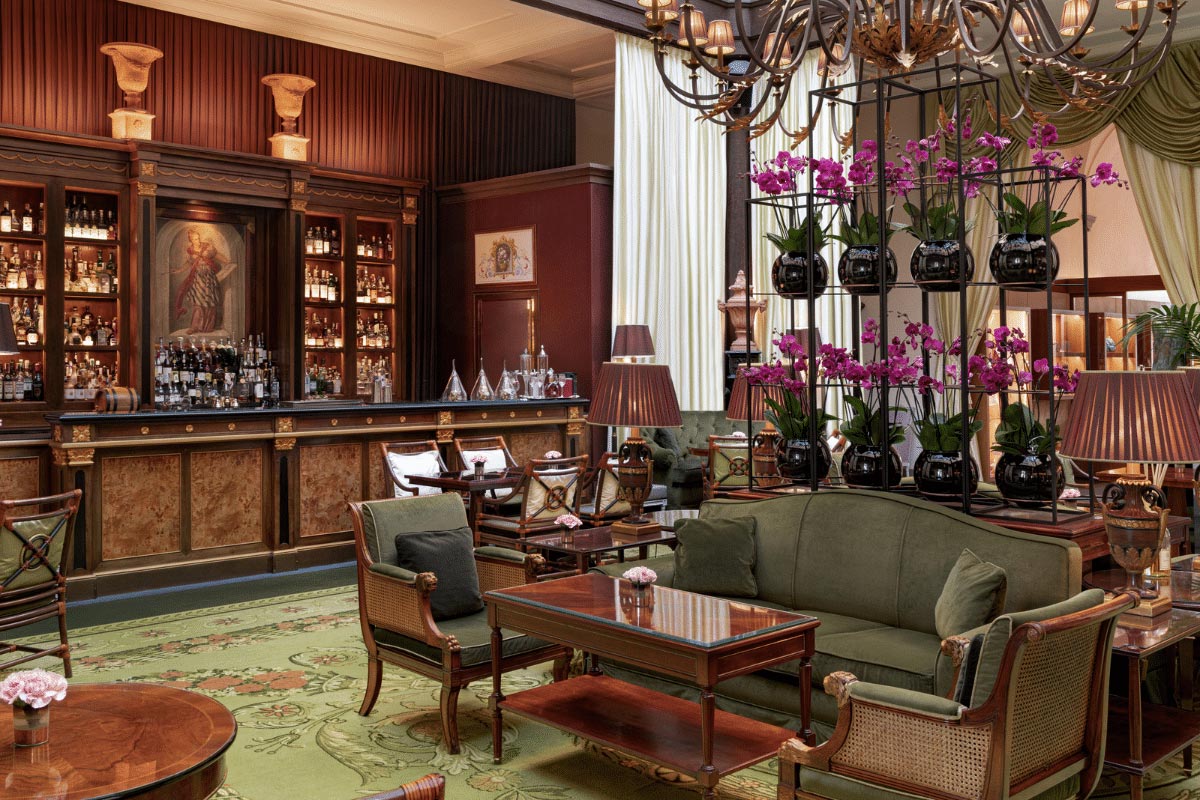
Only one step away from reception through its always open door, the Atrium Bar welcomes all from dawn to dusk—whether in the need of a morning coffee or something stronger. This year, it’s been nominated for the Oscars of the cocktail world: Tales of the Cocktail’s Spirited Award for Best International Hotel Bar 2025. Every glass raised is a toast to Head Mixologist Edoardo Sandri and his remarkable team.
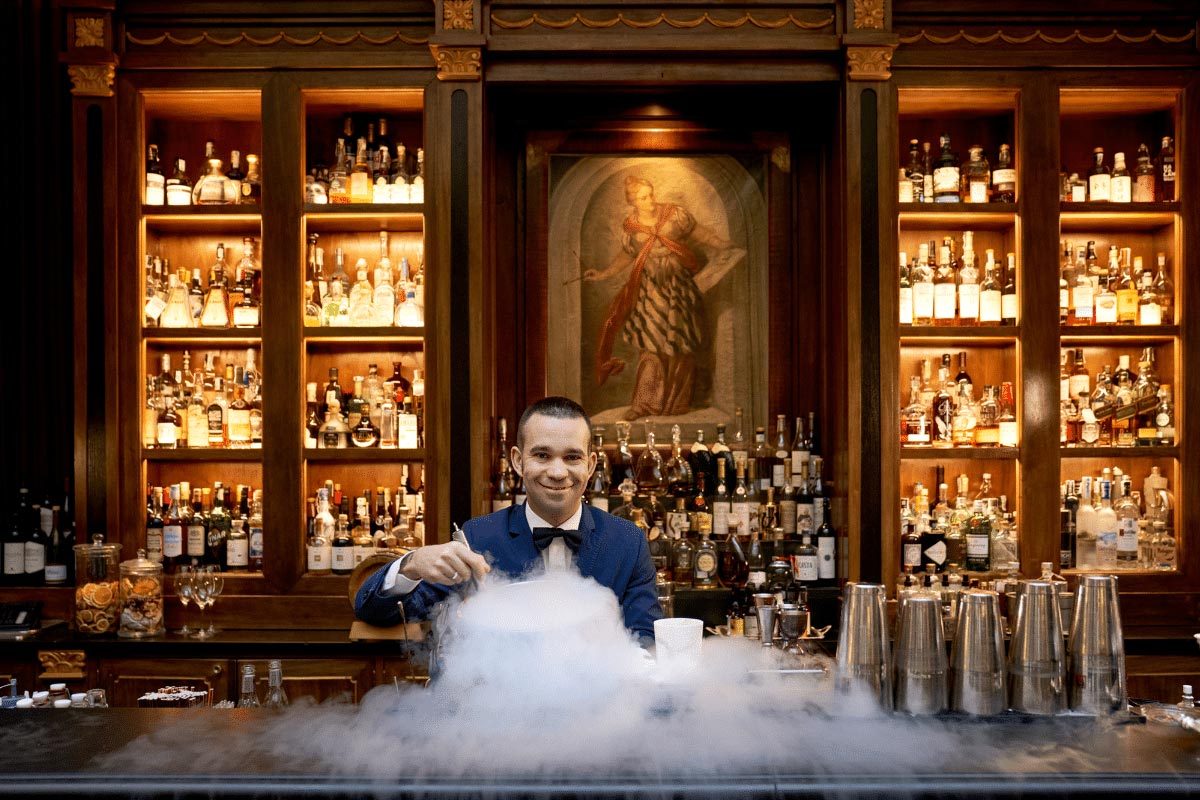
A true Florentine, Edoardo joined the team in December 2008, the same year the hotel officially opened. From the moment he walked through the doors, he knew he’d found his place in the world.
“It was like a lightning bolt. The open layout, the mirror, the ceiling—I felt at home immediately. I didn’t just want to work here. I knew I had to. There are no walls. There are no doors. Everyone is welcome inside this bar, whether you are a hotel guest or coming from outside, we welcome you and want you to feel at home.”
Edoardo Sandri, Head Mixologist, Atrium Bar
Surprisingly, in those early years, it wasn’t always easy to convince locals to step inside. People used to call and ask if they were even allowed to come in for a drink. That all changed with the introduction of Sunday brunch—although an American invention, here at the Atrium Bar it broke down barriers and introduced Fiorentini to a new kind of experience – the hotel bar. Modest though he may be, there’s no doubt the Atrium Bar laid the groundwork for the popularity that hotel bars have now in Florence. Hotel guests required little persuasion. They were lured in not only by the classics, but also by the bar’s imaginative signature cocktails—reminders of just how innovative a truly great drink can be.
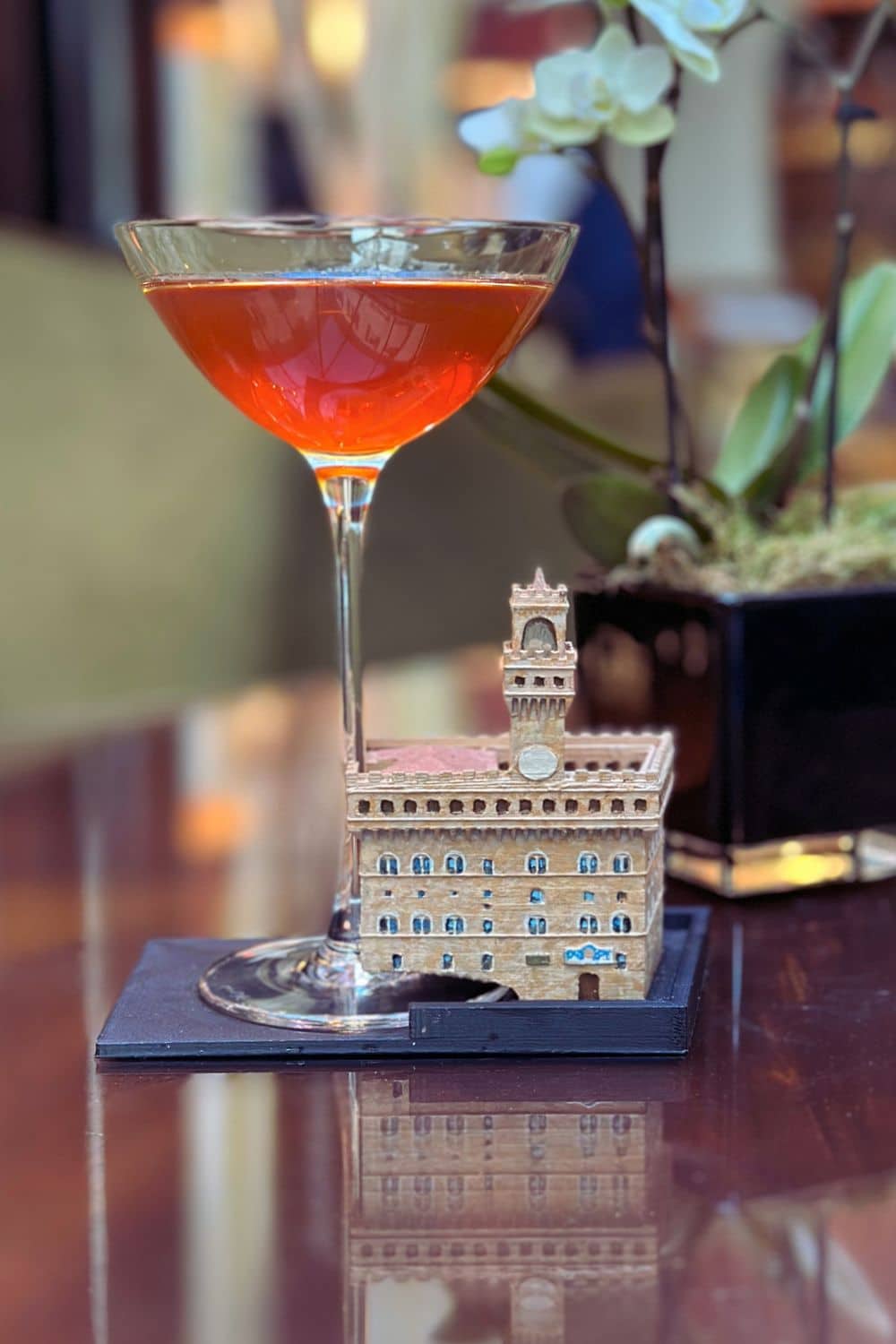
Firenze Capitale
For 2025, the menu’s inventive theme dives into the 19th century, with cocktails that reimagine classics through the lens of the era’s most defining events, figures, and cultural moments. Of course, an homage to the hometown does not go amiss. Firenze Capitale harks back to the time when Florence served as Italy’s capital for six brief years in the 1800s. A twist on the Americano and Champagne Cocktail, it captures the city’s love of coffee and saffron at that time, combining coffee-infused Italian Mancino Vermouth and house-made saffron water kefir. Amaro Santoni adds a floral note of iris—Florence’s iconic symbol. All served in a glass with a mini model of the Palazzo Vecchio taking pride of place.
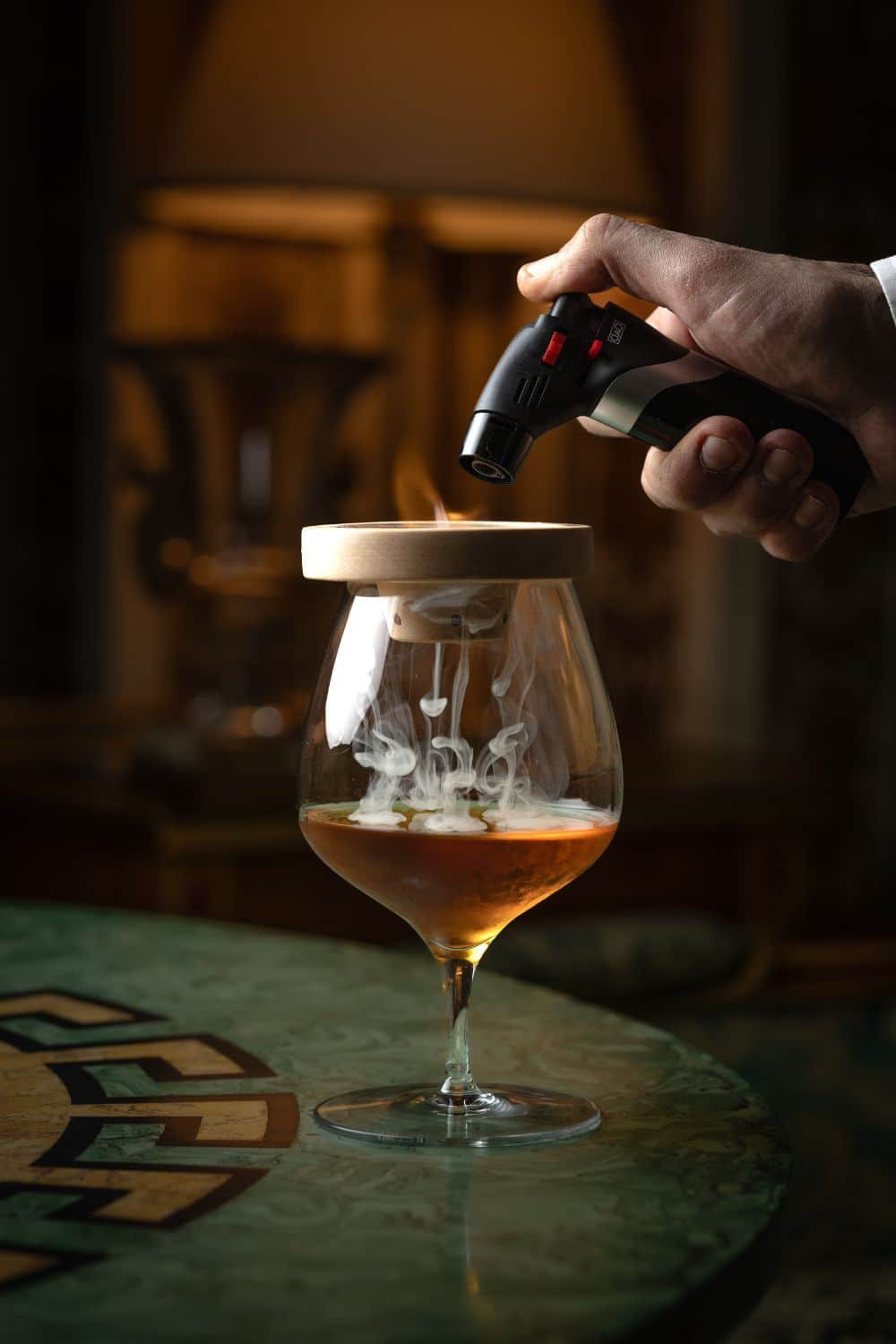
Lira
Another Italian-themed standout is the Lira, a nod to Italy’s dearly missed historic currency. A touch of the dramatic, a rice paper note shaped like the old coin is set aflame on top of the drink, sending up a mist of herbal smoke. Beneath its cognac base, barrel-aged Amaro Lucano Essenza and Artemisia hint at its inspiration – the Sazerac.
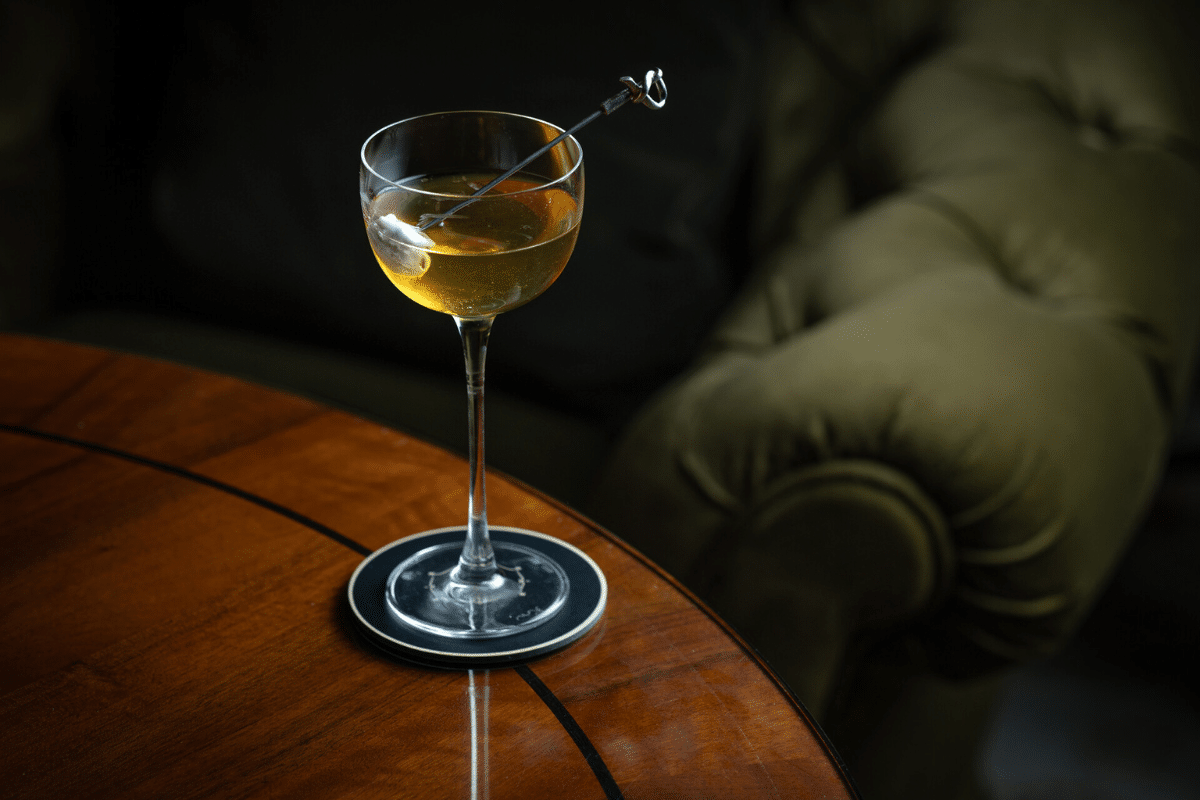
Folies Bergère
There is also a glamorous spin on the Rob Roy. The Folies Bergère pays tribute to Paris’s legendary dance theatre and its star, Josephine Baker. In a full pirouette, its profile does a 360 —Altamura Vodka takes the lead in place of the usual Scotch. A jeté of banana juice evokes her iconic skirt, while coconut oil adds a creamy glissade. Rinomato Americano White—an Italian aperitivo—is en pointe as a graceful substitute for sweet vermouth. It’s finished with a petit pas de deux: a smoky almond that recalls the peaty depth of the original.
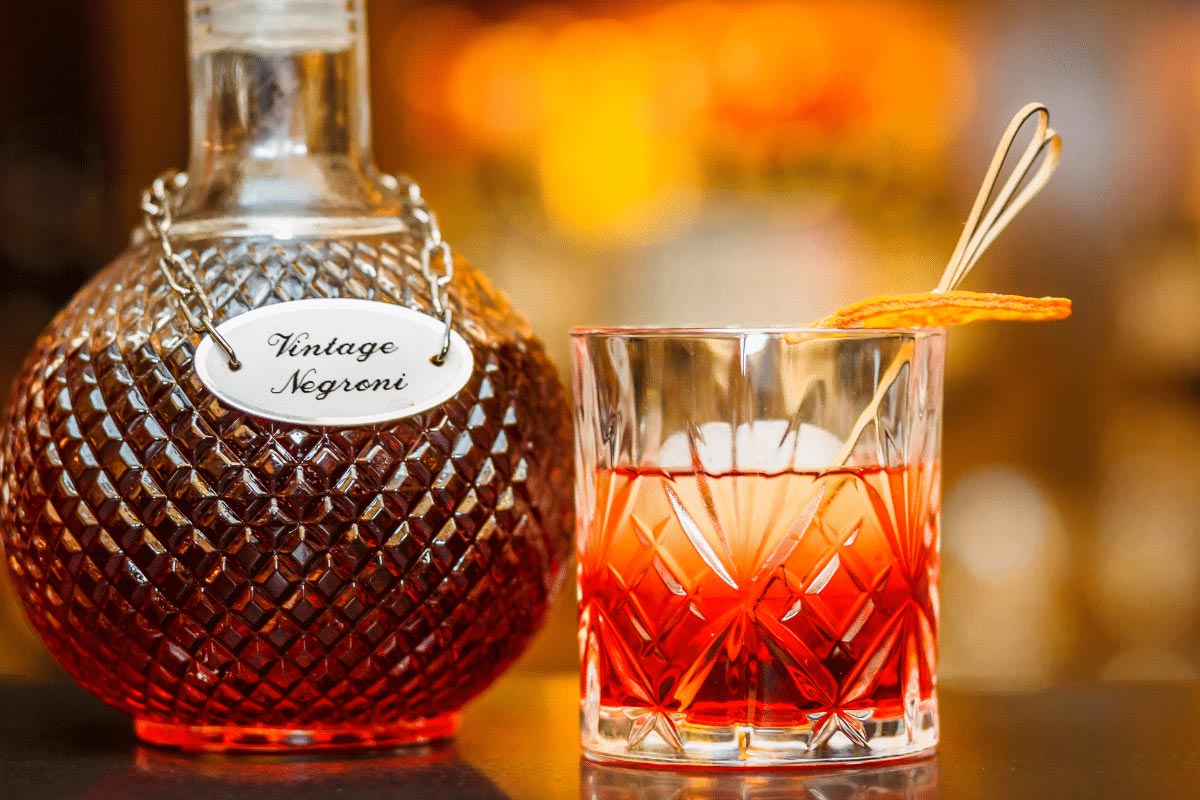
Negronis
And of course, there are the Negronis—the aforementioned four—each reinterpreted by Edoardo and his team:
Vintage: Since 2010, Edoardo has been aging these in barrels and stored at -18°C, always served over a pristine clear ice cube.
Retro: A distillate of Campari—yes, they distill the Campari—removes sugar and dials up the bitterness, balanced with white vermouth, and Plamb, an Italian orange liqueur, then aged in clay for a mineral edge.
Vanguard: Mezcal and bourbon-aged Campari meet Santa Maria Novella’s Alkermes- a favorite of Scala’s friends, the Medicis, in a smoky, spiced tribute to Florence’s most famous drugstore.
Futuro: Made with yogurt and rum, this creamy riff proves there’s no limit to how far a Negroni can go.
After a Negroni or two, you might feel the pull of the stone path leading you through one of central Florence’s largest private gardens. There you will be introduced to The Atrium’s casual cousin – Berni’s.
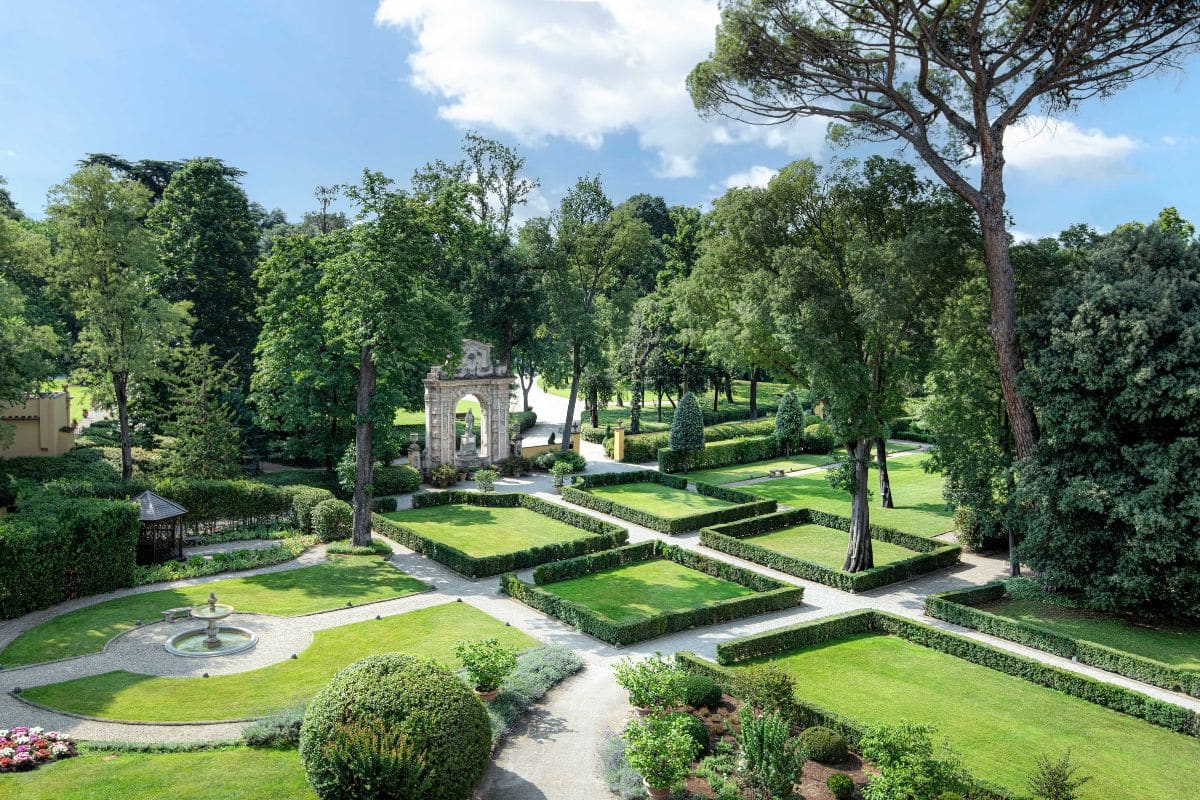
Berni’s is short for Bernardo del Nero, namesake of Palazzo del Nero-now the newest wing of the Four Seasons Florence. Sadly, unlike his neighbor Bartolomeo Scala, Bernardo wasn’t so lucky. He was beheaded after attempting to overthrow the notorious Dominican cleric Savonarola and restore Piero de’ Medici, Lorenzo’s son and sadly known as Piero the Unfortunate, to power in the late 15th century. It’s not quite a political comeback—but it’s certainly a more glamorous ending.
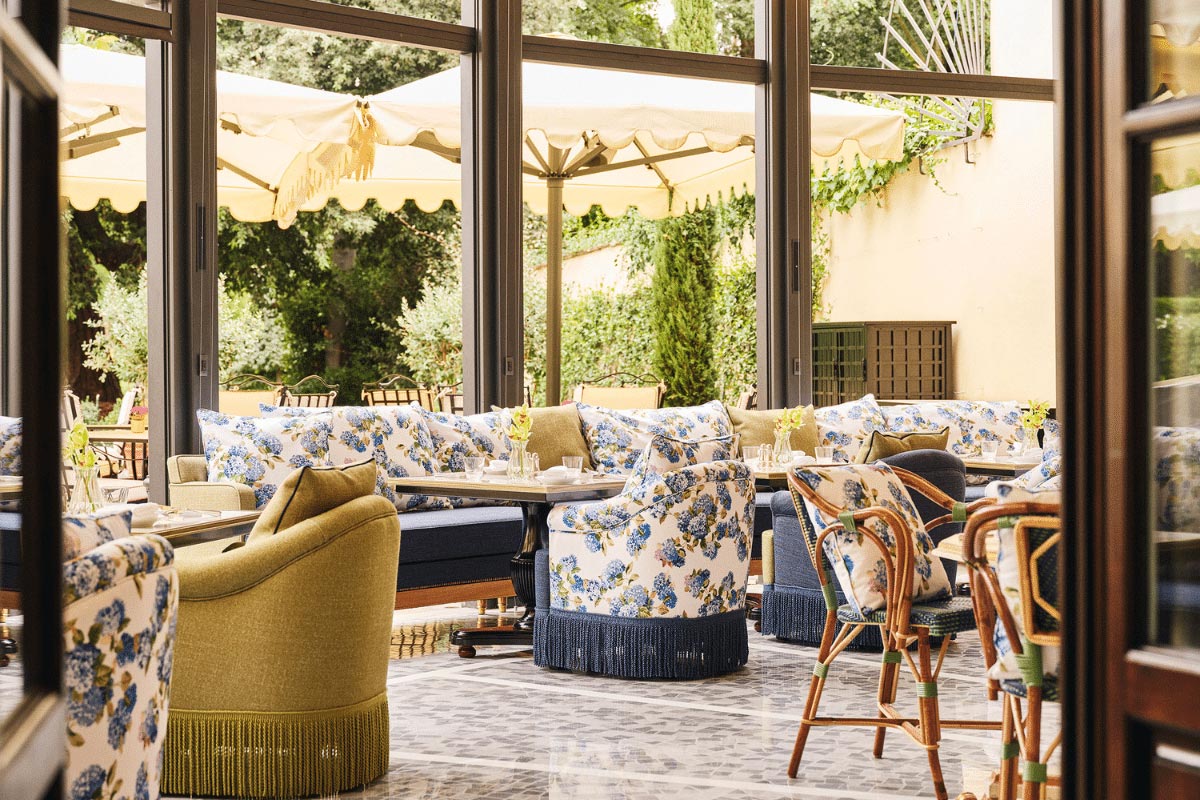
The garden at Berni’s is open year-round, both inside and out, and has an easygoing, casual vibe. The bar team wears khaki jackets and even sneakers. Once again, you can hear Bartolomeo’s battle cry, Accomodatevi!—”Make yourself comfortable.”
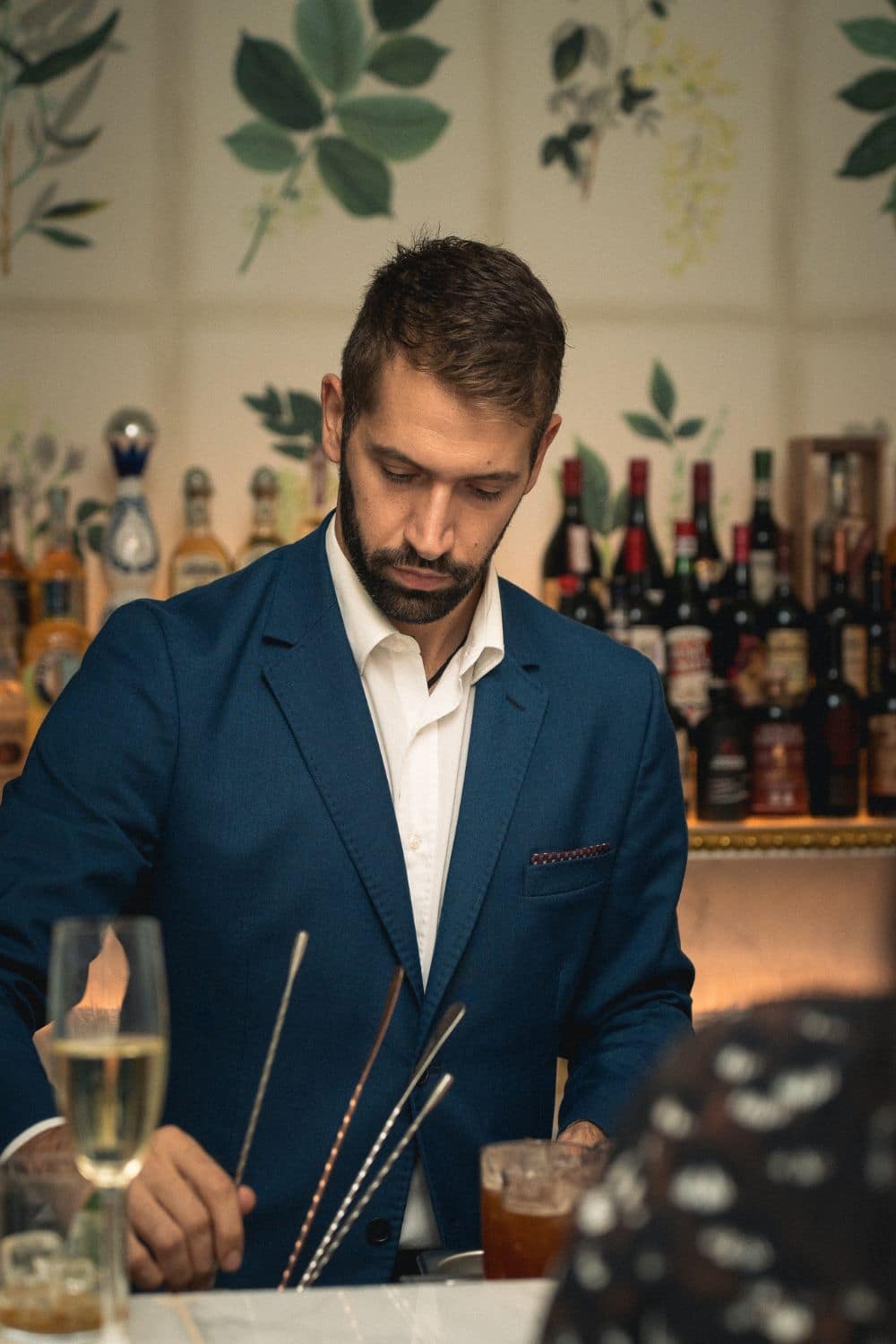
This relaxed approach is underscored by Berni’s Bar Manager, Antonello Palermo, a veteran of the Atrium Bar who was brought on to launch this second bar at the Four Seasons, which opened in September 2024. With the debut of Onde Restaurant in the same Palazzo del Nero—its menu inspired by the flavors of the Tuscan coast—Antonello proposed a cocktail program to match. His vision? Drinks rooted in the history, herbs, and ingredients of Tuscany’s seven islands: Elba, Giglio, Giannutri, Capraia, Pianosa, Montecristo, and Gorgona.
“It’s your first experience at the hotel. When you check in you are asked, “Would you like a drink while you’re waiting? That’s going to be from the bar. You might not go to the restaurant, you might not go to the spa, but for sure you’re gonna have a least a coffee at the bar. It’s a place you pass by at least once.”
Antonello Palermo, Bar Manager, Berni’s Bar
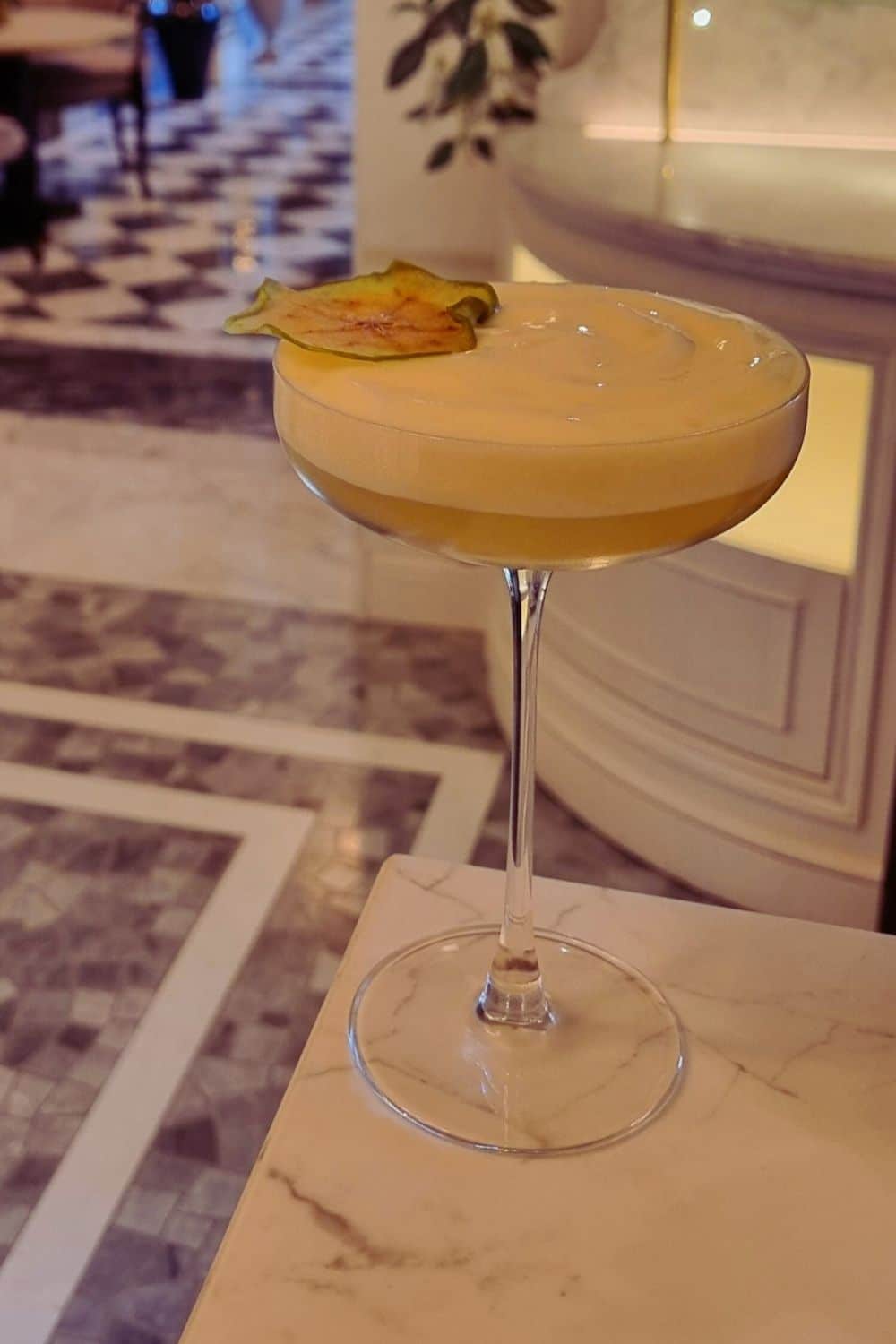
The Elba
One of the most popular drinks on the menu is The Elba, inspired by the island’s storied past. Napoleon was exiled there, and it’s known for its chestnut honey (which may have inspired his use of the bee as a royal symbol), apple orchards, and the many minerals that made it famous, like tourmaline and hematite. Antonello’s riff on a French 75 brings all of that together: chestnut honey, apple juice, and Altamura Vodka are combined with a white vermouth from Mugello, then topped with Champagne and finished with a green apple foam. It’s one of the few originals that’s carried over onto the 2025 menu, which now features cocktails inspired by all nine of Italy’s major islands—including Sardinia and Pantelleria in Sicily.
The Elba
One of the most popular drinks on the menu is The Elba, inspired by the island’s storied past. Napoleon was exiled there, and it’s known for its chestnut honey (which may have inspired his use of the bee as a royal symbol), apple orchards, and the many minerals that made it famous, like tourmaline and hematite. Antonello’s riff on a French 75 brings all of that together: chestnut honey, apple juice, and Altamura Vodka are combined with a white vermouth from Mugello, then topped with Champagne and finished with a green apple foam. It’s one of the few originals that’s carried over onto the 2025 menu, which now features cocktails inspired by all nine of Italy’s major islands—including Sardinia and Pantelleria in Sicily.
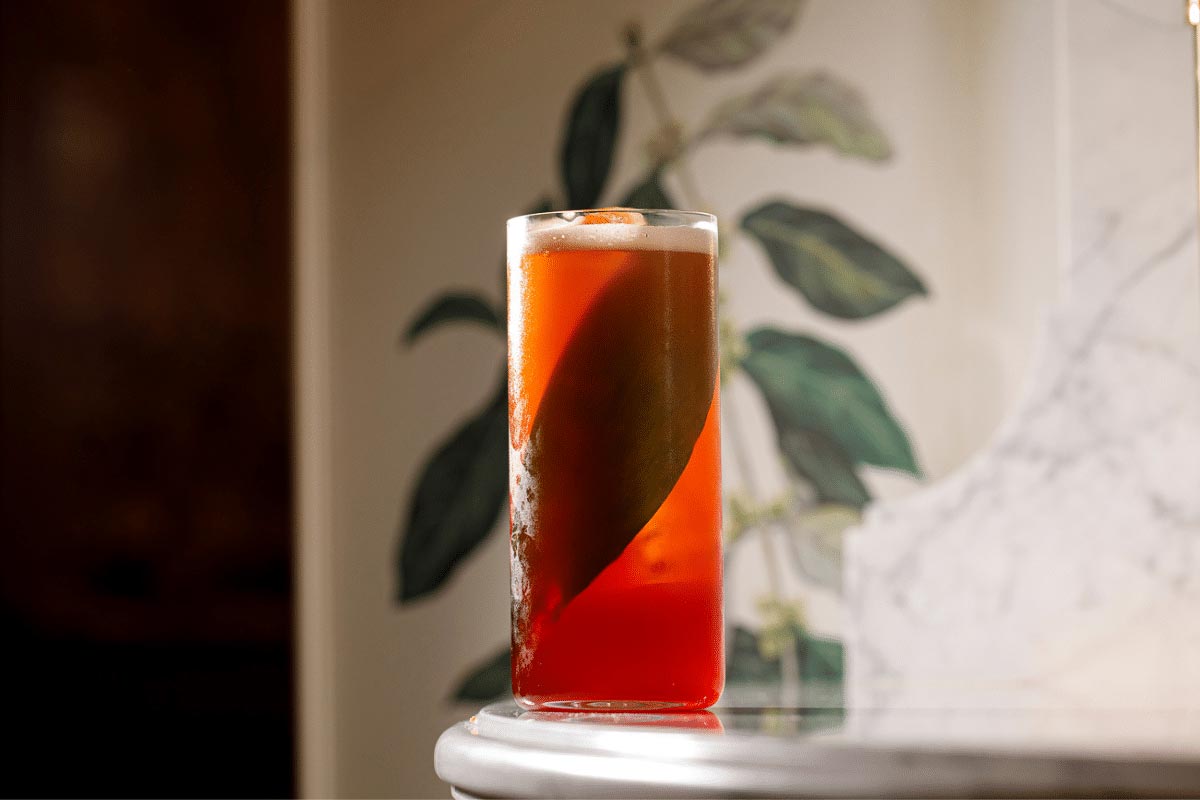
Capraia
A favorite on the original menu was the Capraia, named after the goats (capra) that once roamed the island. Capraia is the only volcanic island of the Tuscan nine. Wild mirto (myrtle) plant runs rampant and is used to make a local liqueur. A smoky take on the Negroni: mezcal replaces gin, mirto liqueur for Campari, Cocchi Dopo Teatro—fortified with Barolo Chinato—adds richness as the vermouth. Lest we forget the island’s most important denizens, it is all clarified with goat yogurt for a silky texture and a touch of salinity, then finished with a mist of basil, also found on the island.
Capraia
A favorite on the original menu was the Capraia, named after the goats (capra) that once roamed the island. Capraia is the only volcanic island of the Tuscan nine. Wild mirto (myrtle) plant runs rampant and is used to make a local liqueur. A smoky take on the Negroni: mezcal replaces gin, mirto liqueur for Campari, Cocchi Dopo Teatro—fortified with Barolo Chinato—adds richness as the vermouth. Lest we forget the island’s most important denizens, it is all clarified with goat yogurt for a silky texture and a touch of salinity, then finished with a mist of basil, also found on the island.
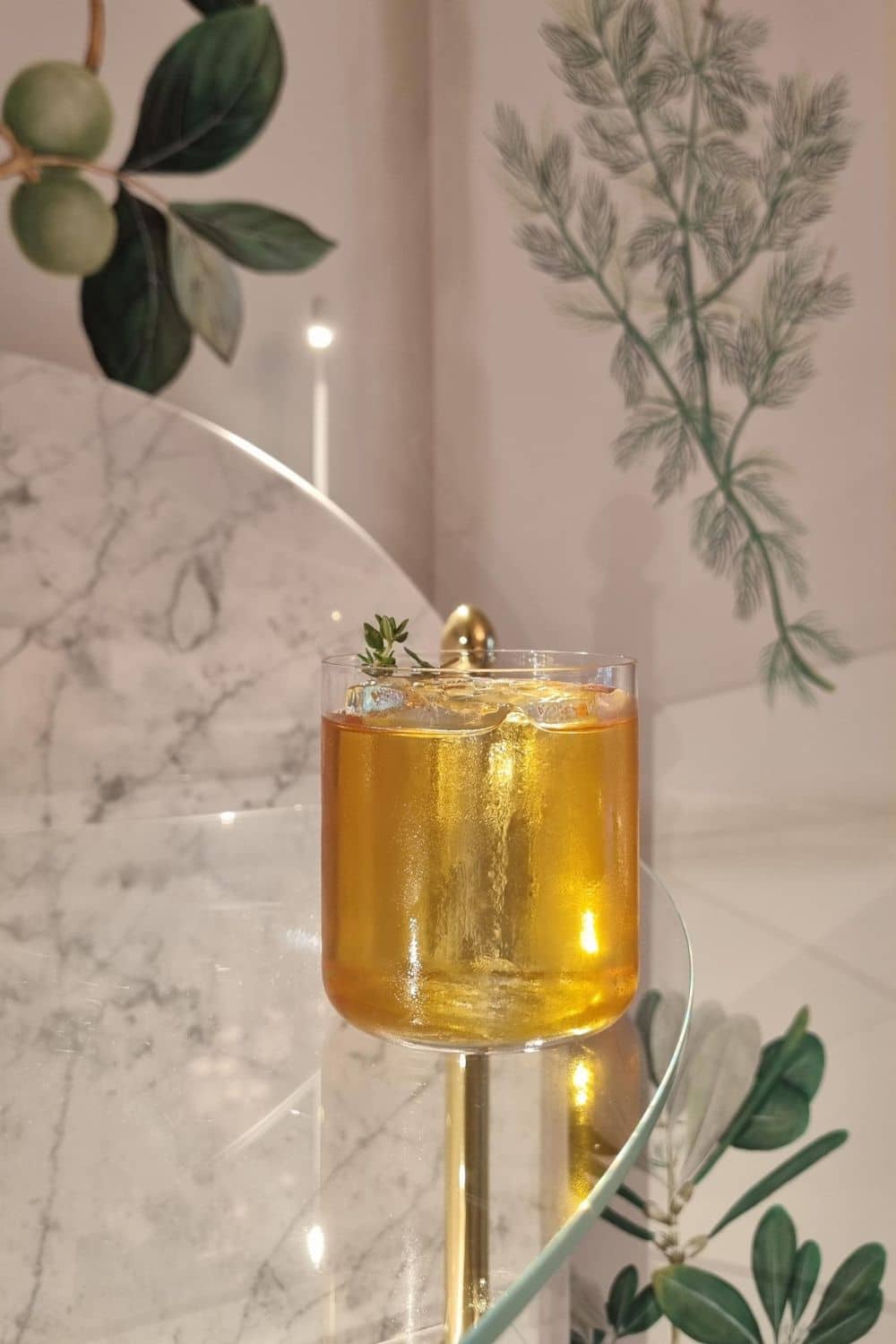
Tremiti
On the new menu, we head down Puglia. A reinterpretation of the Capraia cocktail, the Tremiti pays homage to the bishops who were sent to the islands before ascending to cardinalship. It’s not much of a leap to clock this as a twist on the classic Cardinale – traditionally a mix of gin, Campari, and dry vermouth. On the Tremiti Islands, it wasn’t goats but sheep doing the roaming, so naturally, this version is clarified with sheep’s yogurt instead. The bitter bite comes courtesy of Cynar, a nod to the wild artichokes growing across the island, rounded out with vermouth from Puglia. Oregano—a native herb of the Tremiti—is used to garnish the cocktail, the heady aroma whisks you straight to the sun-soaked heel of Italy with a single sniff.
Tremiti
On the new menu, we head down Puglia. A reinterpretation of the Capraia cocktail, the Tremiti pays homage to the bishops who were sent to the islands before ascending to cardinalship. It’s not much of a leap to clock this as a twist on the classic Cardinale – traditionally a mix of gin, Campari, and dry vermouth. On the Tremiti Islands, it wasn’t goats but sheep doing the roaming, so naturally, this version is clarified with sheep’s yogurt instead. The bitter bite comes courtesy of Cynar, a nod to the wild artichokes growing across the island, rounded out with vermouth from Puglia. Oregano—a native herb of the Tremiti—is used to garnish the cocktail, the heady aroma whisks you straight to the sun-soaked heel of Italy with a single sniff.
So yes—Bartolomeo was right with his Gradiam—step by step, his palazzo has been transformed into the Four Seasons Florence, one of the most dazzling hotels in the world. But it’s the spirit of Accomodatevi that makes the bars the true heart of the hotel. They’re where guests become regulars, locals rediscover their own city, and cocktails transport you from the streets of Florence to the shores of Elba in a single sip—no packing required.
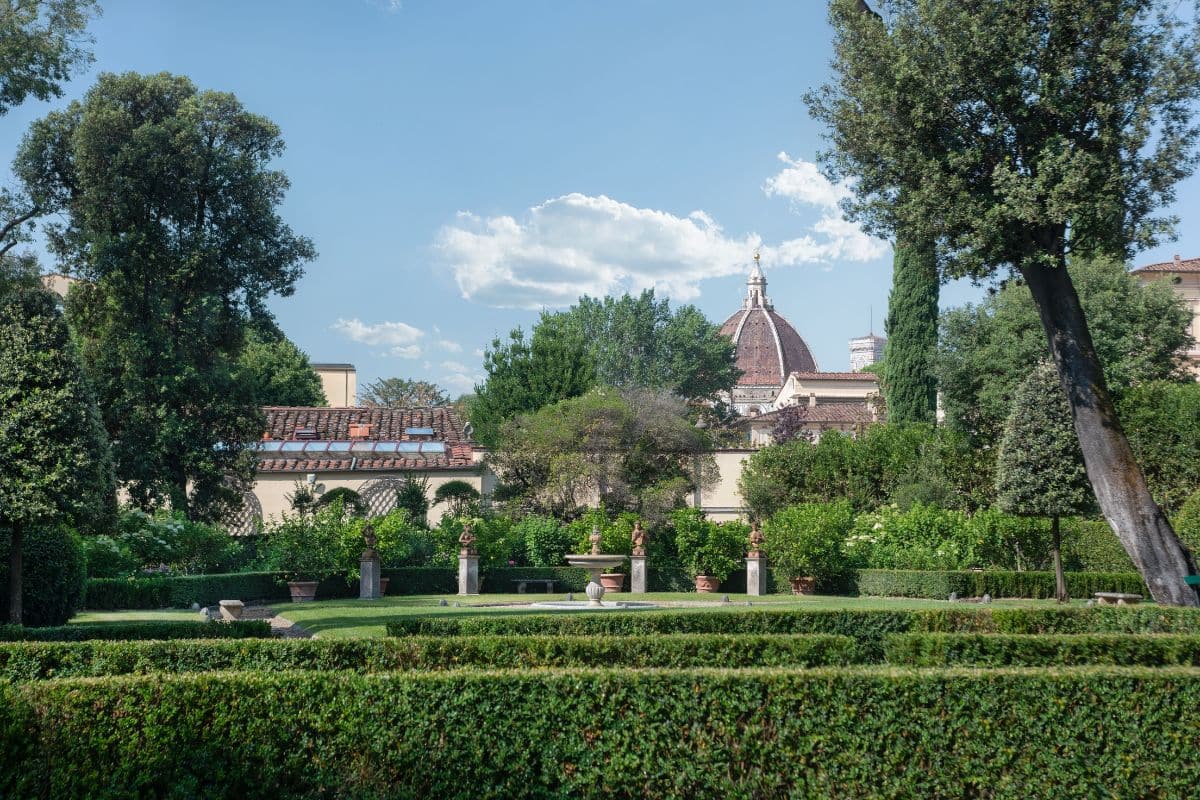
“Atrium Bar is the beating heart of the property — it welcomes and envelops guests from the moment they arrive, offering a menu that blends local flavors with an international twist to create a sense of comfort and belonging. Bar Berni, by contrast, is a niche retreat: a sun-kissed hideaway nestled in our lush garden — a true oasis in the heart of the city that comes alive during aperitivo hour with live music. Together, they play distinct roles in the hotel experience. Atrium Bar sets the tone — lively, inclusive, and vibrant — while Bar Berni invites a slower rhythm, perfect for unwinding, reconnecting, or easing into dinner in a relaxed, green setting. With both, the goal is to make guests feel not just welcomed, but truly at home, wherever they are on their journey.”
Max Musto, General Manager
The partnership between Altamura Distilleries and Four Seasons Hotel Firenze began after the first Cortina Cocktail Weekend in 2022. Since their introduction, the relationship has flourished through exclusive events and curated experiences that highlight the best of both brands.
As Edoardo elegantly describes: “Most vodkas are quite similar, but Altamura is different. It’s not just about the aromatic profile—it’s about the entire experience and what the bottle represents. Altamura feels like a family. Every time I pour Altamura into a glass, I think of Frank, Lorenzo, Steve, Justin, and the others, because I know them well. I love collaborating with them. They’re not just behind a premium brand—they’re premium
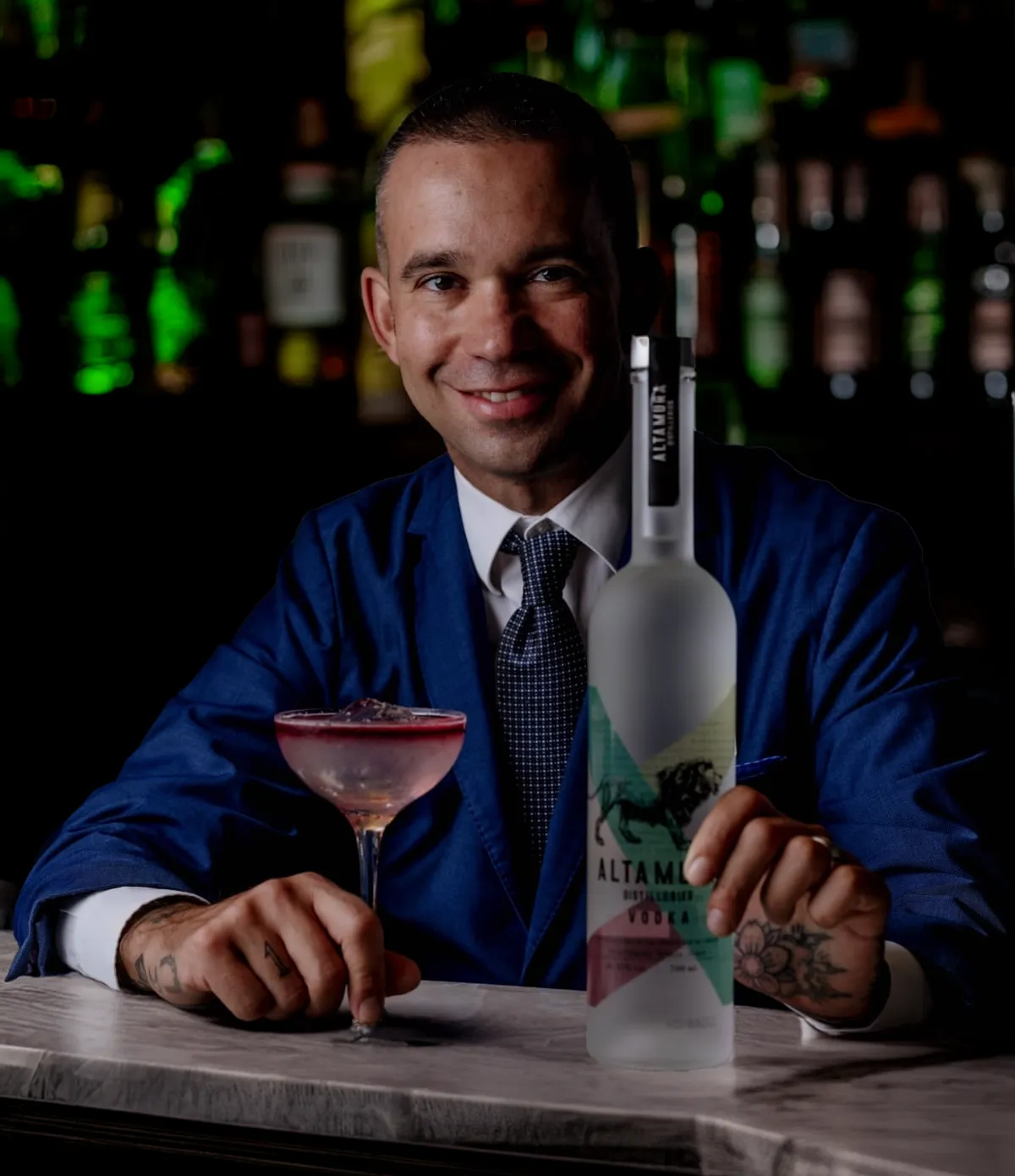
Whether you’re settled into the Atrium Bar with a perfectly aged Negroni or lounging under the trees at Berni’s with something breezy and botanical, your hosts have only one request: Accomodatevi.
The partnership between Altamura Distilleries and Four Seasons Hotel Firenze began after the first Cortina Cocktail Weekend in 2022. Since their introduction, the relationship has flourished through exclusive events and curated experiences that highlight the best of both brands.
As Edoardo elegantly describes: “Most vodkas are quite similar, but Altamura is different. It’s not just about the aromatic profile—it’s about the entire experience and what the bottle represents. Altamura feels like a family. Every time I pour Altamura into a glass, I think of Frank, Lorenzo, Steve, Justin, and the others, because I know them well. I love collaborating with them. They’re not just behind a premium brand—they’re premium
Whether you’re settled into the Atrium Bar with a perfectly aged Negroni or lounging under the trees at Berni’s with something breezy and botanical, your hosts have only one request: Accomodatevi.
Susan L. Schwartz
Susan L. Schwartz is the award-winning creator of A Lush Life Manual and host of the Lush Life Podcast. She writes widely on drinks and travel, leads London and Venice Cocktail Tours, and has been recognised with multiple industry awards.
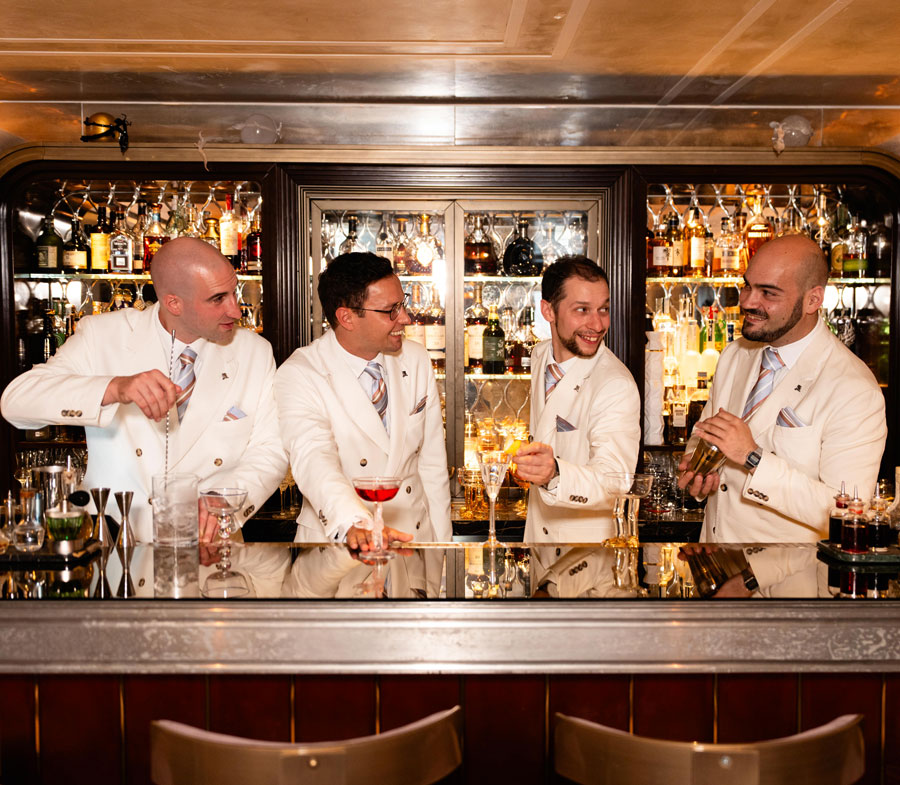
The Heart of the Hotel: St. Regis Venice
St. Regis Venice
Bar is the Heart of the Hotel
This year, in association with Altamura Distilleries, I’ll be exploring some of the world’s most legendary bars—uncovering what makes them the beating heart of the hotel. For our first, we head straight to Venice.
Episode #1
Upon arriving by boat, one can easily imagine Carlo Walther and John Jacob Astor IV kicking back in the garden of the St Regis Venice, gazing up at the truly magnificent Santa Maria della Salute Church, toasting to their own business prowess. Each man proud—even smug—that their legacies are now forever entwined, having created one of most elegant hotels on the Grand Canal.
Walther and Astor were the great hoteliers of their time—the former founding Venice’s Grand Hotel Britannia (now the St. Regis Venice) in the late 19th century and the latter opening the St. Regis New York in 1904. And what would they be drinking? The Santa Maria cocktail, of course.
Following an extensive renovation in 2019, this historic hotel, perched at the entrance to the Grand Canal, welcomes guests to the most singular of cities. When it first opened in the 1800s, it was the only hotel to offer mod cons such as elevators, private bathrooms, steam heat, a restaurant and in-room dining! Meanwhile, across the Atlantic, Astor was pioneering similar innovations, making both hotels magnets for the glitterati.
One of the hotel’s attractions was its glorious garden terrace—one of the only on the Grand Canal, and what a garden it still is. From this very spot, Claude Monet, a frequent guest of the hotel, was inspired to paint Le Grand Canal. He was not alone in setting up an easel—Whistler, Sargeant, and others were captivated by the city’s beauty.
It’s been the heart of the hotel for us, even before this interview, because, although it can be very, very busy, it’s the place where everyone comes for at least a coffee or then for some cocktails at the counter, talking with us, sharing their thoughts and the experience they had in Venice.
Ludwig Negri, Bar Manager
It is impossible not to feel the pull of that same garden terrace, now the home of the St. Regis Bar. You are really powerless in resisting its call—it’s why you are here. A visit to Venice is a chance to sit watching the day become night without a care—the water, the boats, the calm, the light, and here at the St. Regis Bar, you are also bewitched by the drink in your hand.
Guided by a mission to “cultivate the vanguard,” the team at the St. Regis Bar and the Arts Bar, the hotel’s second bar, channels the spirit of their two founders, rooted in tradition yet always innovating.
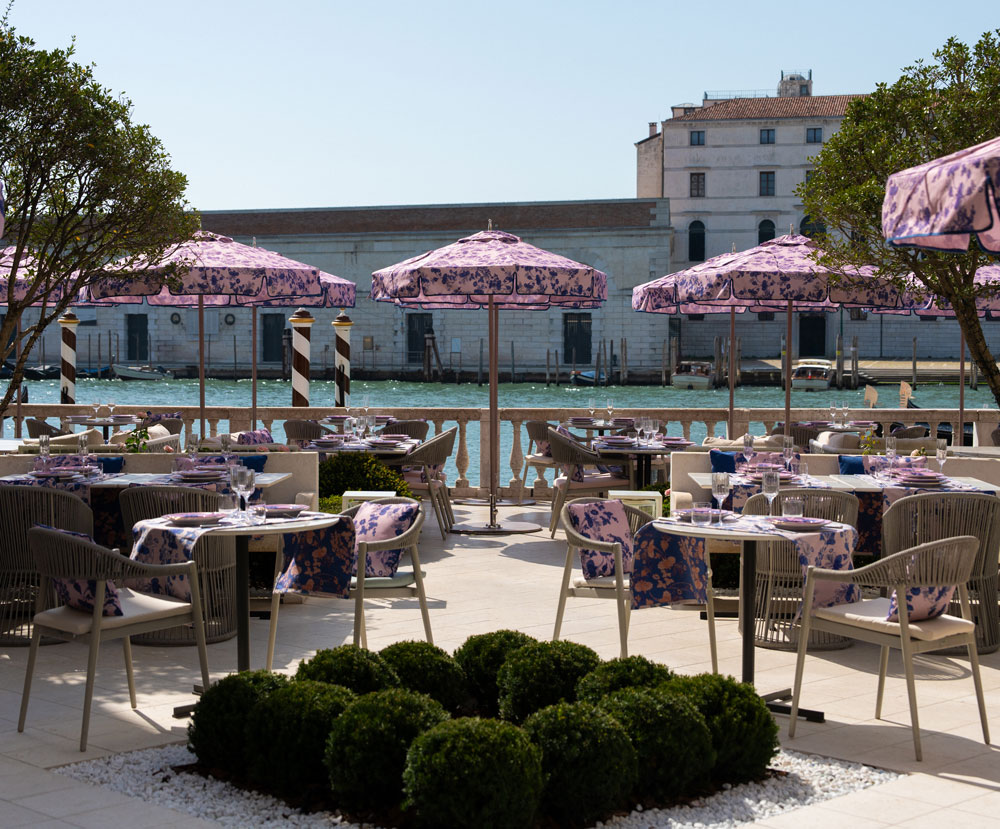
You can’t help but pass the St. Regis Bar on your way to breakfast. By afternoon, you are already old friends. Here is the bar where you will find the classics you love. Of course, there’s always the most famous of the St. Regis cocktails on offer, the St. Regis Bloody Mary, or as it’s known here, the Red Snapper. Created in 1934 by Fernand Petiot, head bartender at the King Cole Bar at the St. Regis New York, it remains the signature cocktail and every St. Regis worldwide has its own take on the classic.
“I think it’s because here is where people, make memories, the greatest memories in their lives”
Riccardo Lodovichi, Bar Team
Here in Venice, it is the aforementioned Santa Maria, inspired by the wondrous Salute Church directly across the canal. Don’t expect the cocktail to be anything less wondrous than the church itself. This clear reimagining of the usually red cocktail swaps out tomato juice for clarified Venetian-grown tomatoes with Altamura Distilleries Vodka as the base, verjus—recalling the city’s island vineyards, a horseradish tincture for heat, and a mist of grappa to honor Veneto’s traditions.
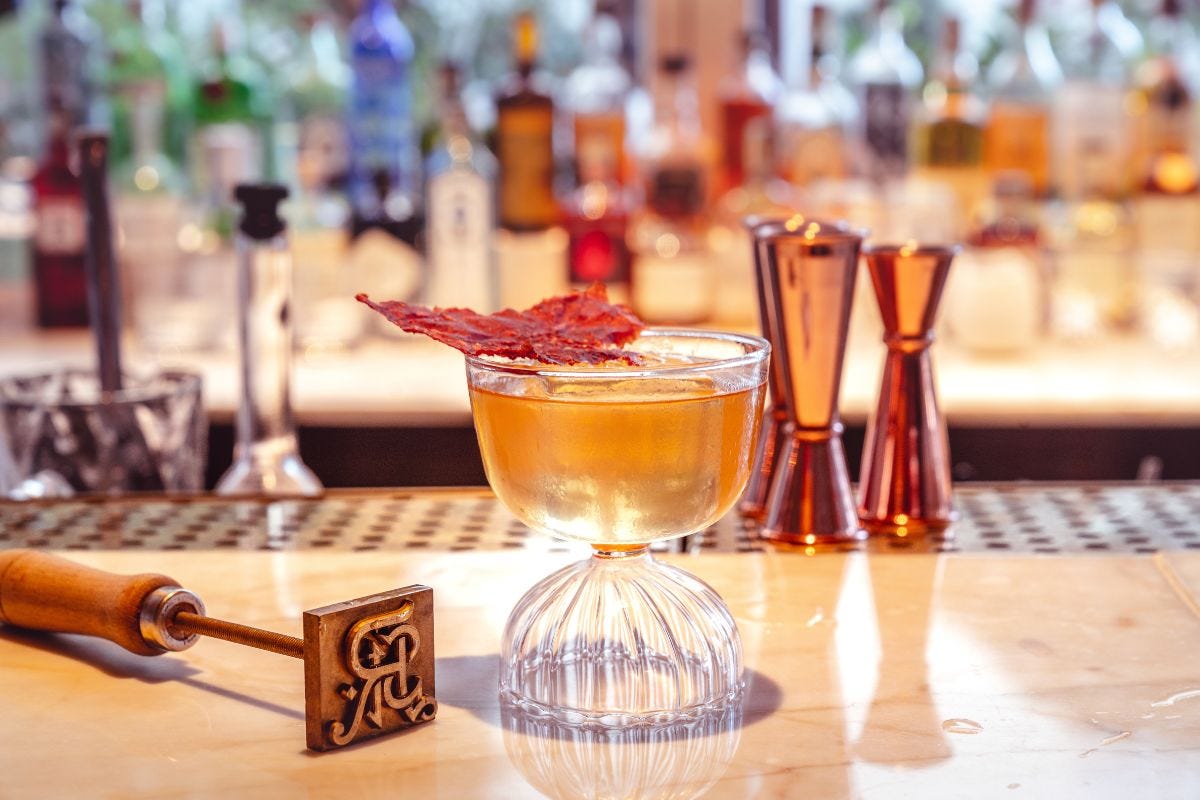
Here in Venice, it is the aforementioned Santa Maria, inspired by the wondrous Salute Church directly across the canal. Don’t expect the cocktail to be anything less wondrous than the church itself. This clear reimagining of the usually red cocktail swaps out tomato juice for clarified Venetian-grown tomatoes with Altamura Distilleries Vodka as the base, verjus—recalling the city’s island vineyards, a horseradish tincture for heat, and a mist of grappa to honor Veneto’s traditions.
“The bars are physically in the heart of the hotel, with its beautiful garden overlooking the Grand Canal, where you can watch the gondolas passing from morning until the evening. More importantly, it’s where magic things happen, special celebrations, proposals and aperitivi with friends to celebrate life.”
Facundo Gallegos, Director of Food & Beverage
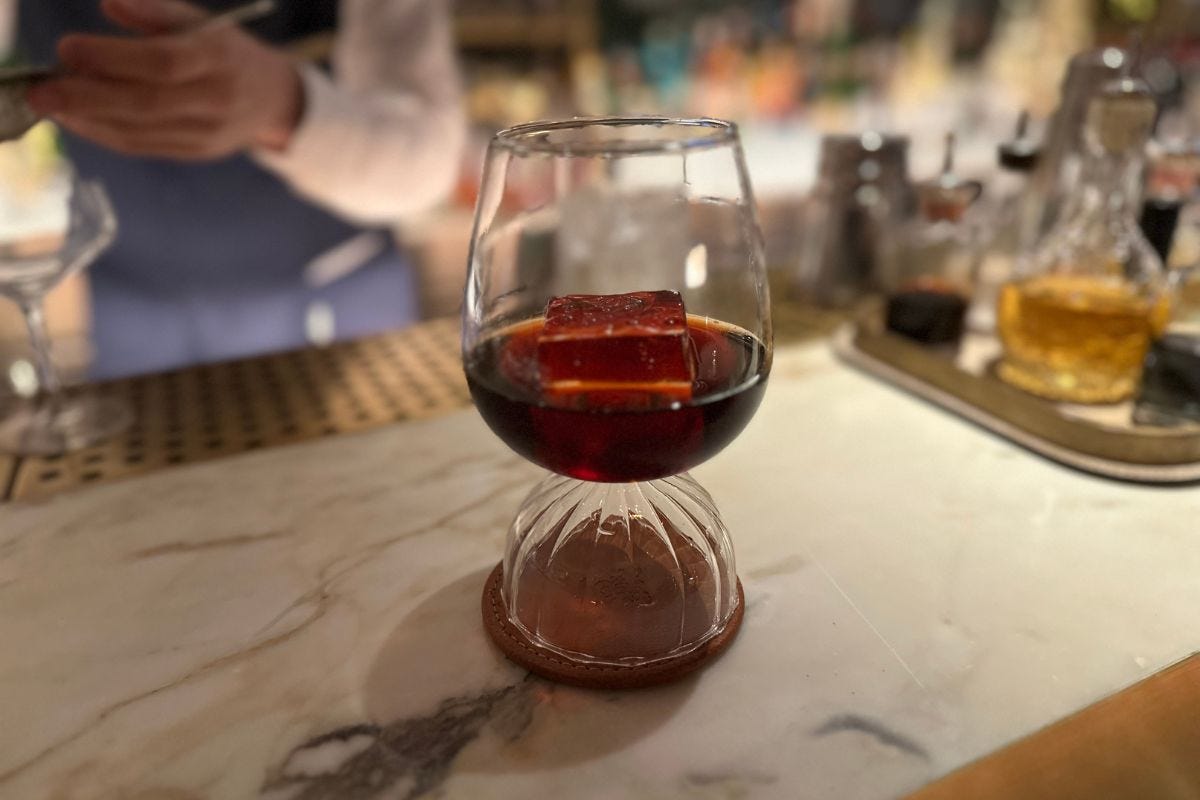
Doge’s Tipple
You might choose the very Venetian Doge’s Tipple over the classic Milano-Torino. Here the team have combined Select, the amaro founded in Venice in 1920, with vermouth infused with artichokes from neighboring Sant’Erasmo Island, and the locally crafted Amaro Venesian!
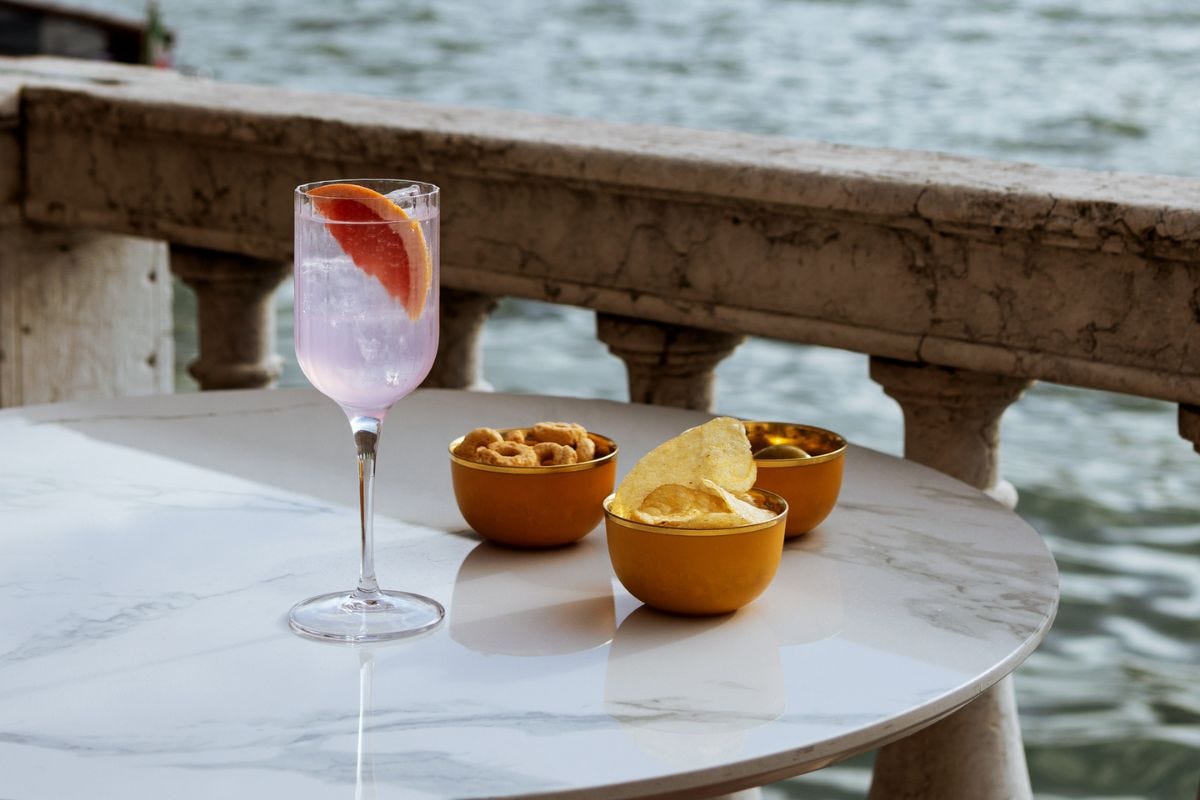
The Pink Spritz
And why go for the Spritz you find at home, when there is one much more glorious on the menu—The Pink Spritz, a blend of sparkling wine, grapefruit liqueur, soda, and rose essence whose heady pink hue matches that of the Ginori fabric-covered umbrellas dotting the terrace bar.
Lest we forget something as simple as the ice. When the St. Regis Venice reopened in 2019, crystal clear ice was nowhere to be seen in the city—until now. Today, it’s been copied all over the city—much like those once-revolutionary elevators Walter was so proud of.
“The bar is the heart of the hotel because…it’s where the magic happen, everything is possible at the bar, it’s limitless. You can manage many different things, it’s never sleeping. Also the relationship that you have with the guest, it’s completely different at the bar than at the restaurant…the people at the bar, they open themselves up, especially at night.”
Alessandro Pellegrini, Bar Team
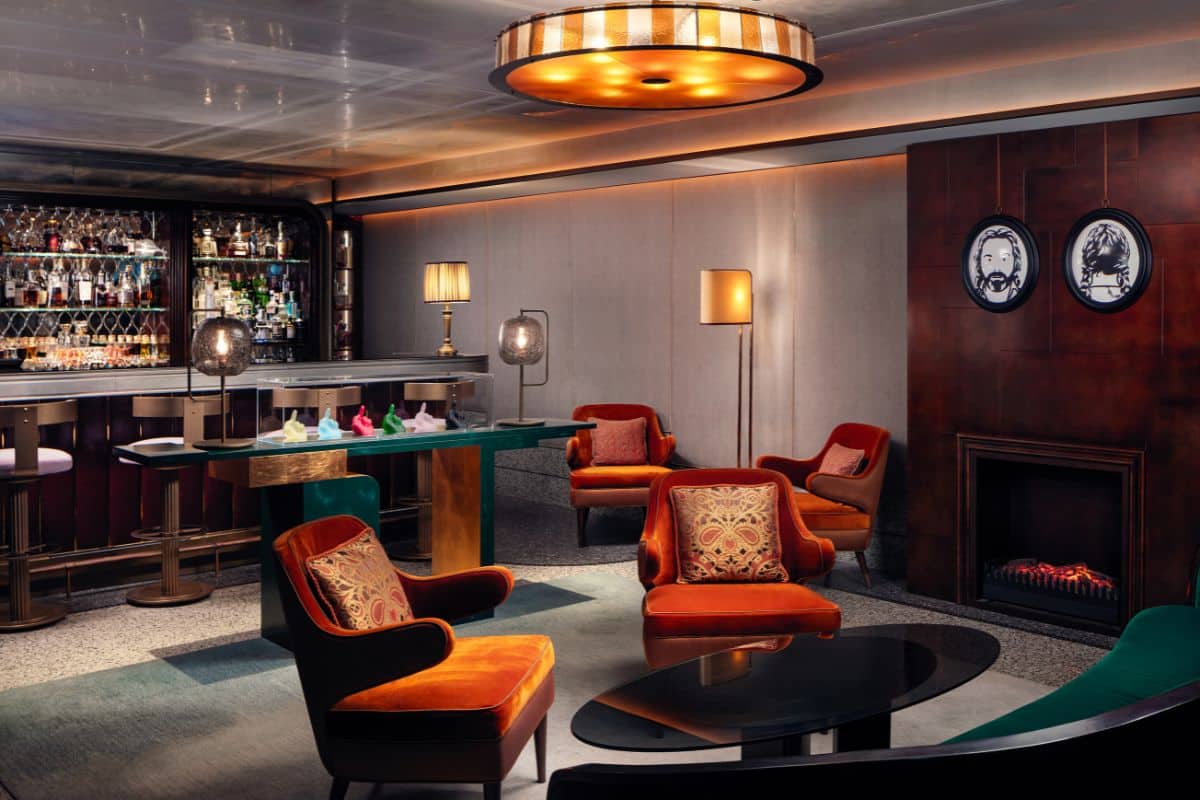
As evening descends over the lagoon, one St. Regis Bar tradition calls guests to the garden: sabrage. It may seem extravagant to slice open a bottle of champagne with your saber as Napoleon was rumored to do in victory or defeat. Now every St. Regis worldwide upholds this ritual, a favorite of the Astor family.
After this touch of Gilded Age glamour, it’s time to step into the present at the Arts Bar, inspired by Carlo Scarpa, Venice’s preeminent modern architect working from the 1940s until his death in the 1970s. Like Walther and Astor before him, Scarpa seamlessly blended the contemporary and traditional. Scarpa’s touch is everywhere—from the ceiling to the bar’s logo.
Each cocktail on the Arts Bar menu pays homage to an artist connected to Venice from Scarpa to Dali to Warhol to Monet, and others. All are served in their own bespoke glass designed by the team and made in Murano—another nod to the city’s history of craftsmanship.
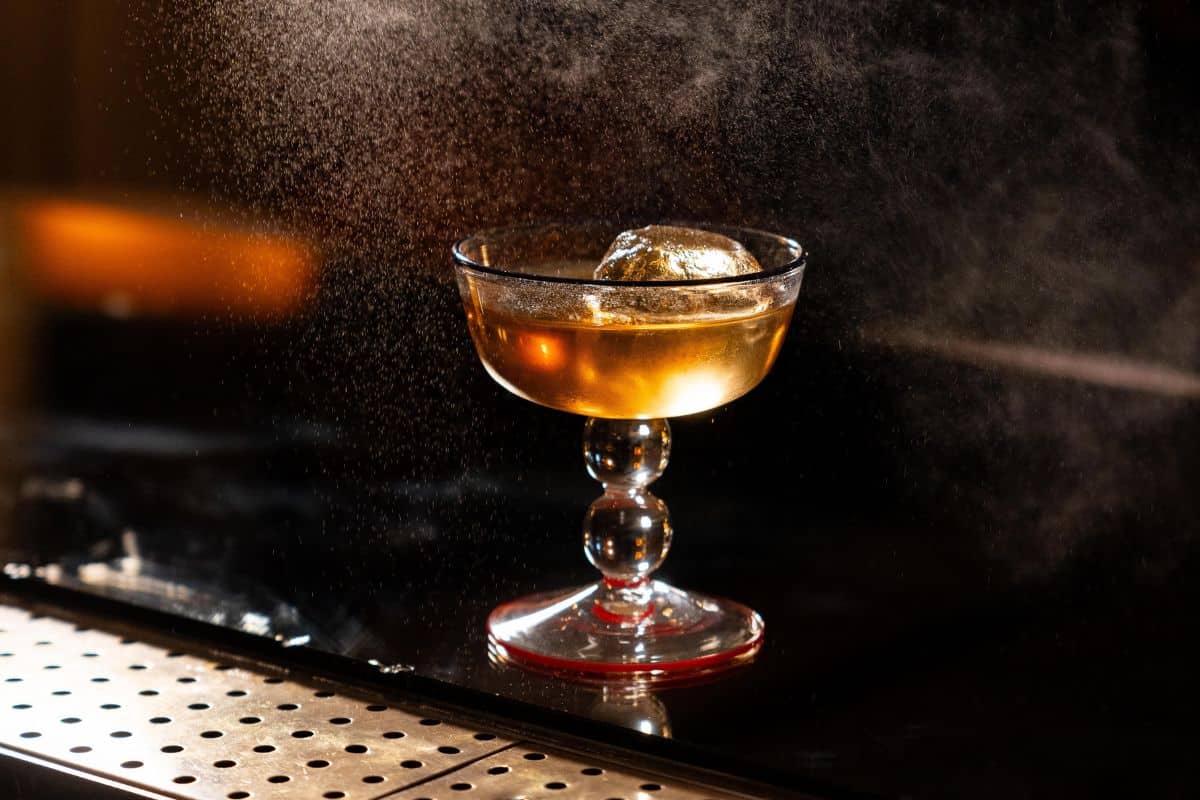
Oriental Shapes
Scarpa’s cocktail is called Oriental Shapes, employing Japanese whiskey to echo his love for the country and Amaro Cipriani directly from Venice. Inspired by the architect’s Tomba Brion found outside of Venice, the glass features two interlocking rings, one covered with blue mosaics and the other with red mosaics. Looking directly into the glass and moving it in front of you, the two circles connect just like in the tomb.
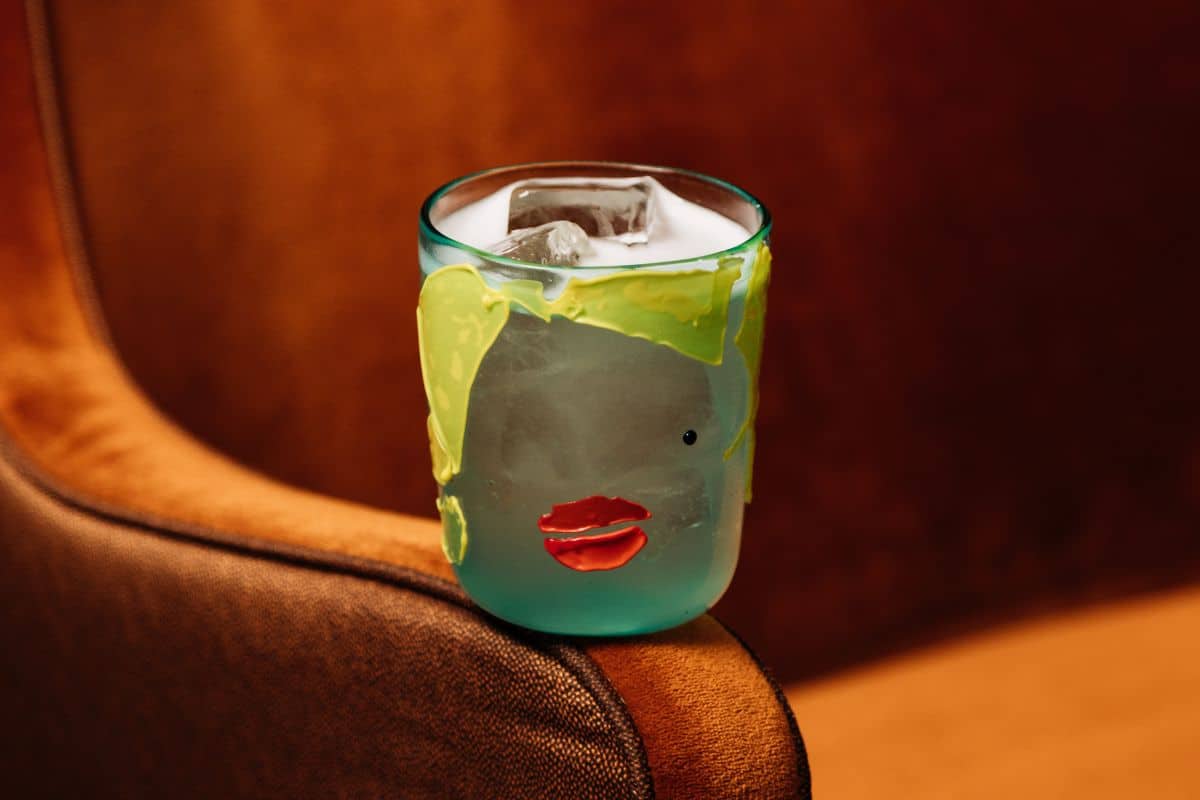
Silver Dreams
Not to be missed is the Silver Dream—a tribute to Andy Warhol’s “Shots Marilyn” series, the cocktail combines vodka (Warhol’s favorite spirit), popcorn syrup (a homage to cinema), and champagne (Marilyn Monroe’s drink of choice). Designed by Mariapia Bellis of Berengo Studio, the cocktail’s glass features a lipstick kiss, immortalizing Marilyn’s signature style.
Silver Dreams
Not to be missed is the Silver Dream—a tribute to Andy Warhol’s “Shots Marilyn” series, the cocktail combines vodka (Warhol’s favorite spirit), popcorn syrup (a homage to cinema), and champagne (Marilyn Monroe’s drink of choice). Designed by Mariapia Bellis of Berengo Studio, the cocktail’s glass features a lipstick kiss, immortalizing Marilyn’s signature style.
At the heart of The St. Regis Venice’s bars, beyond their stunning setting and wonderful cocktails, is its team. Their creativity, dedication, and warmth transform every visit, whether your first or five hundredth, into a gift.
As the last light lingers over the lagoon and you relax in the garden, raising a glass to those who shaped this legendary place, it’s clear why the St. Regis Bar and the Arts Bar are the beating heart of the hotel.
“It’s where all the people gather to celebrate…a bit of togetherness, the bar brings everyone together”
Giacomo Padovan, Bar Team
At the heart of The St. Regis Venice’s bars, beyond their stunning setting and wonderful cocktails, is its team. Their creativity, dedication, and warmth transform every visit, whether your first or five hundredth, into a gift.
As the last light lingers over the lagoon and you relax in the garden, raising a glass to those who shaped this legendary place, it’s clear why the St. Regis Bar and the Arts Bar are the beating heart of the hotel.
“It’s where all the people gather to celebrate…a bit of togetherness, the bar brings everyone together”
Giacomo Padovan, Bar Team
The St. Regis Venice Bar Team
Facundo Gallegos, Director of Food & Beverage; Ludwig Negri, Bars Manager and the rest of the fabulous team: Francesco Rossetto, Riccardo Lodovichi, Nicola Giacomazzo, David DoNascimiento, Alessandro Pellegrini, Simone Zanovello, Francesco Portesan, Salvatore Valerioti, Giacomo Padovan, Manuel Sitta, Alvise Serramonti, Elia Contri, Ilia Nemsadze, Alessandro Berti, and Matteo Miele!
The St. Regis Venice Bar Team
Facundo Gallegos, Director of Food & Beverage; Ludwig Negri, Bars Manager and the rest of the fabulous team: Francesco Rossetto, Riccardo Lodovichi, Nicola Giacomazzo, David DoNascimiento, Alessandro Pellegrini, Simone Zanovello, Francesco Portesan, Salvatore Valerioti, Giacomo Padovan, Manuel Sitta, Alvise Serramonti, Elia Contri, Ilia Nemsadze, Alessandro Berti, and Matteo Miele!
Susan L. Schwartz
Susan L. Schwartz is the award-winning creator of A Lush Life Manual and host of the Lush Life Podcast. She writes widely on drinks and travel, leads London and Venice Cocktail Tours, and has been recognised with multiple industry awards.