


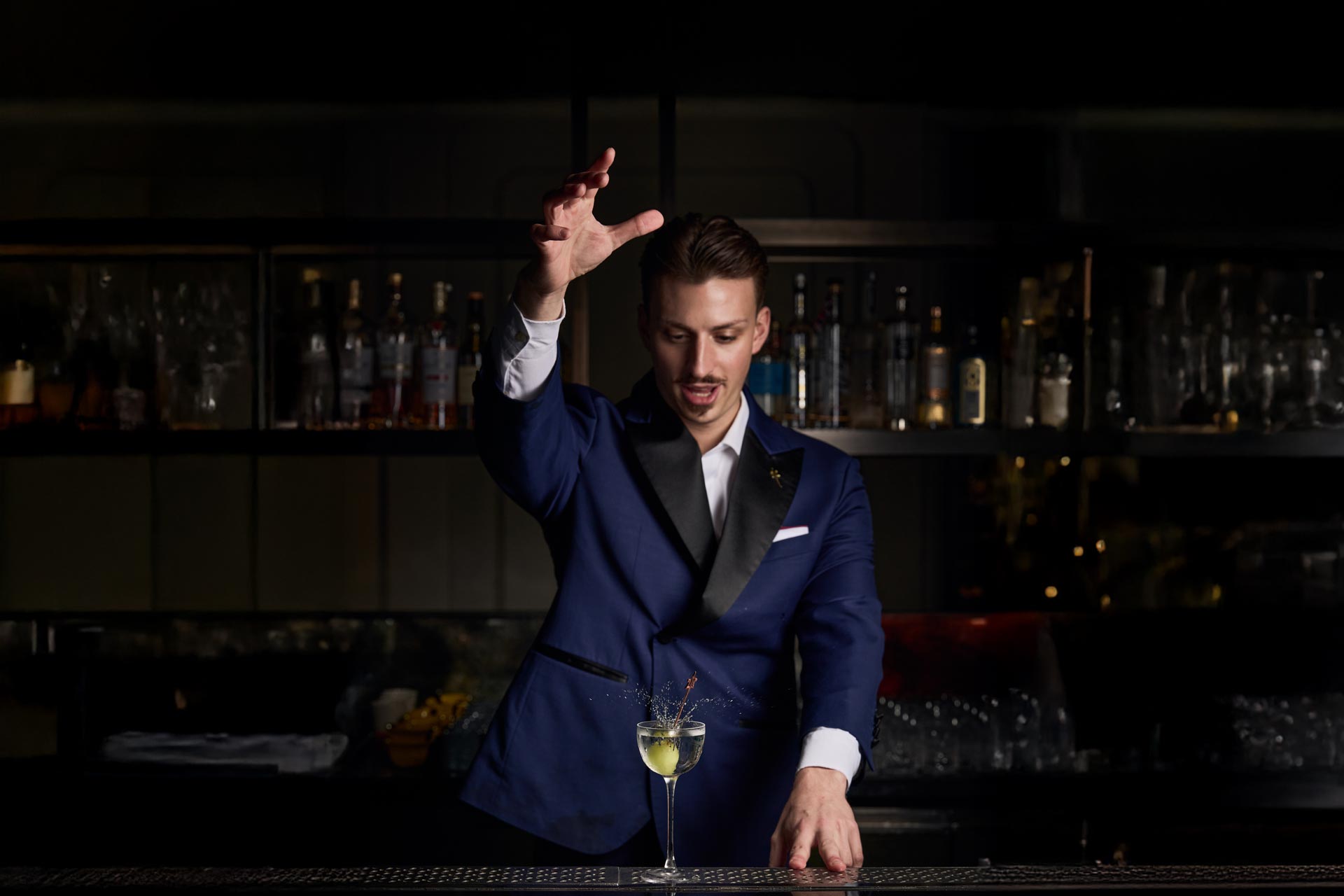
DarkSide’s Marco Maiorano on innovation, culture, and craft
Marco Maiorano
DarkSide’s Marco Maiorano on innovation, culture, and craft
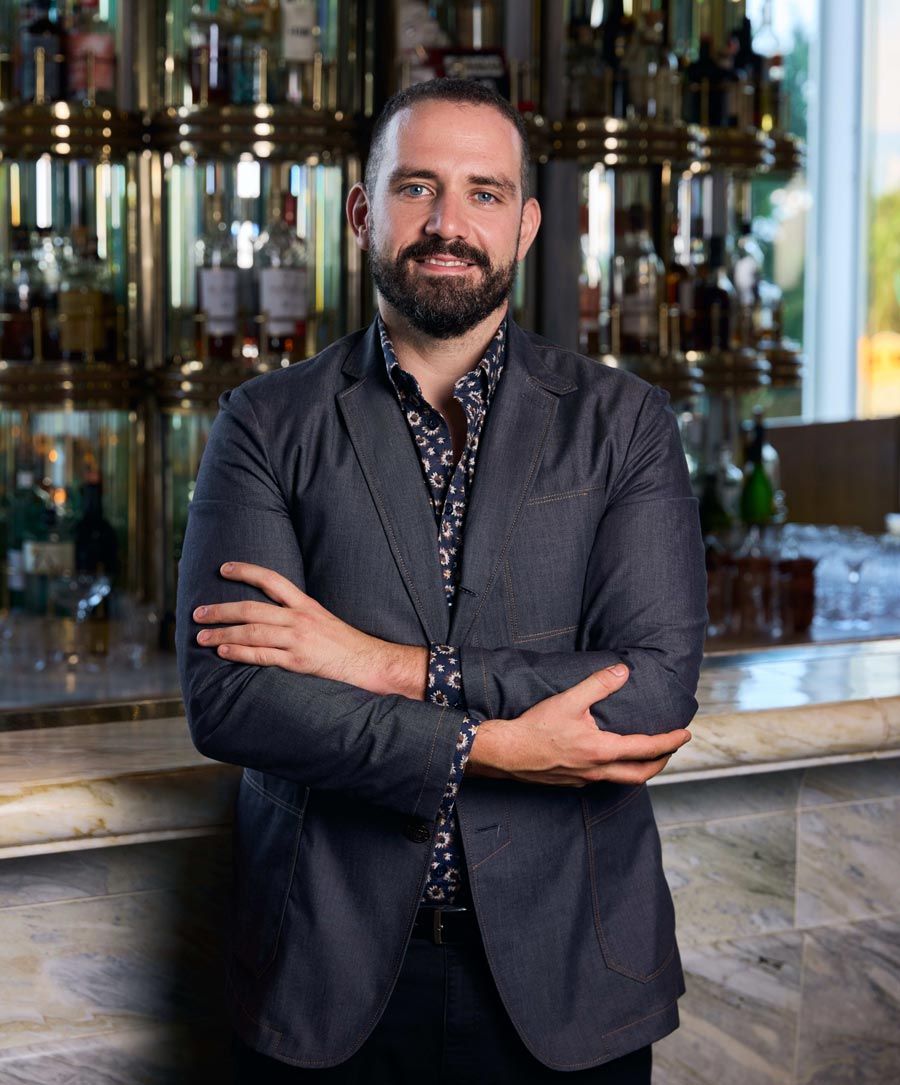
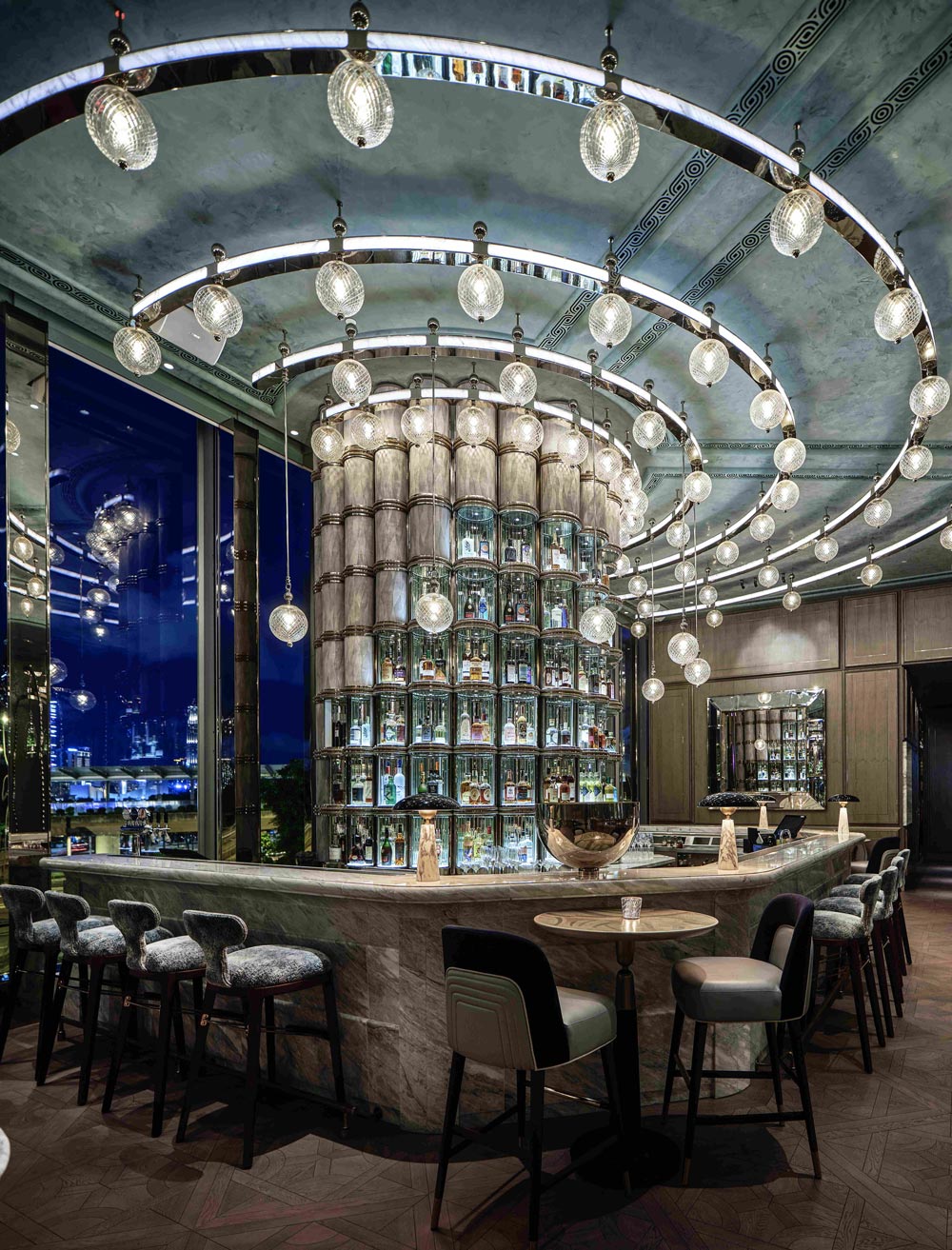
At DarkSide Hong Kong, cocktails are just the starting point. For Bar Manager Marco Maiorano, the focus is on blending classic technique with innovation—shaped by his time at The Connaught Bar and Scarfes Bar. In this interview, Maiorano shares how he builds a strong team, evolves the craft, and uses the bar to reflect Hong Kong’s culture.
What first drew you to bartending, and when did you know it would become a serious career?
Hospitality is in my heritage—my paternal family has been running hospitality businesses for decades. When I began my journey, I worked across different roles, from the floor to the kitchen. Bartending became the perfect balance between creativity and direct guest interaction. After my first year in London, when I started my career in the hotel industry, I truly fell in love with the work. Over time, it became clear to me that this wasn’t just a step, it was the career I wanted.
You honed your skills at The Connaught and Scarfes Bar. What lessons, if any, carried over into the way you approach your work at DarkSide? And how do you carry those lessons forward without simply repeating what worked before?
Both The Connaught and Scarfes Bar were more than workplaces, they were an academy. Even though each bar has a different identity, they shared core values: discipline, hard work, team collaboration, innovation, and genuine hospitality. These five pillars are exactly what I pass to my team at DarkSide. My goal is not to replicate what worked before, but to carry over the principles—then apply them to DarkSide’s own vision and style.
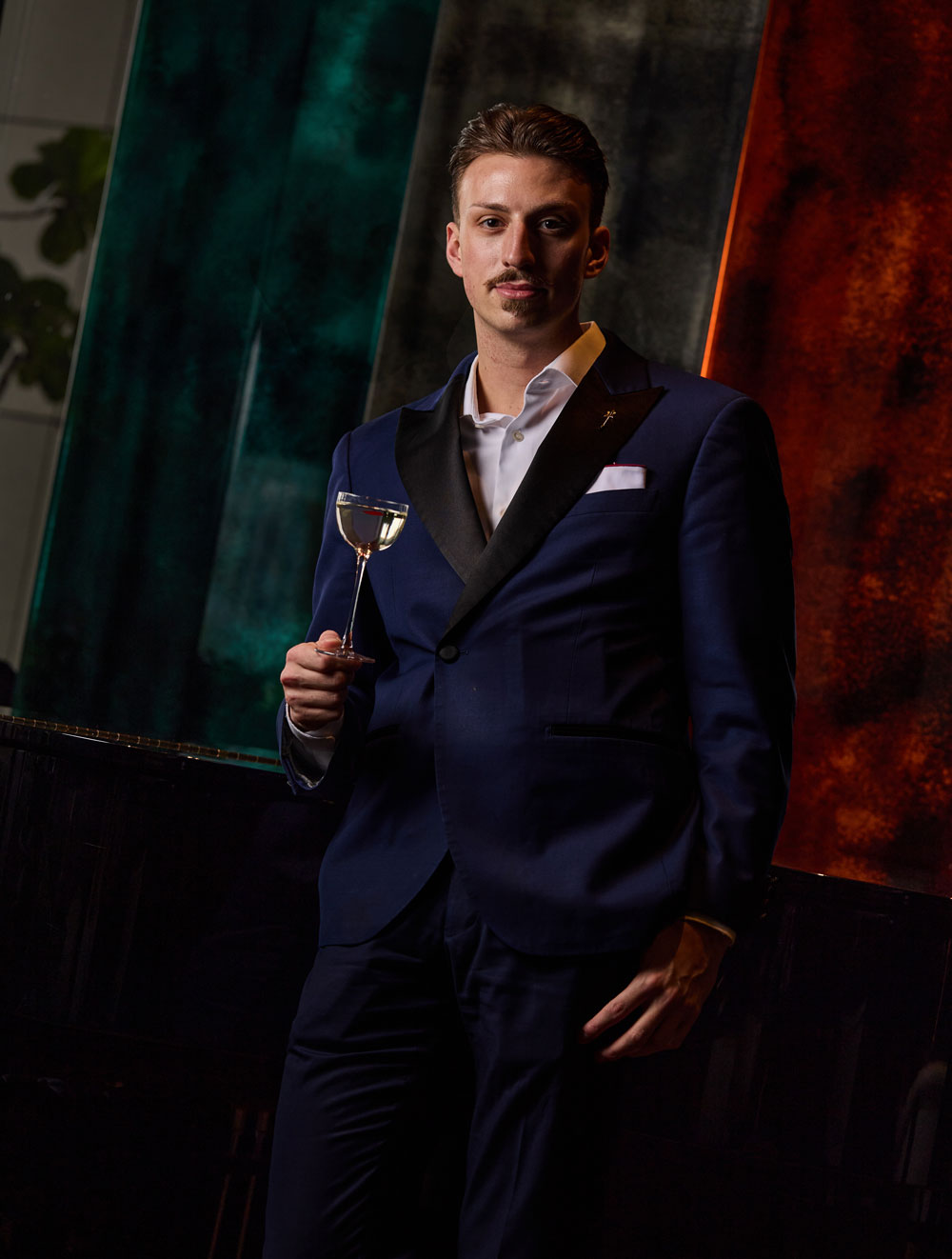
You are known for your innovation. Why is innovation important to you, and how do you incorporate it into your craft?
Innovation matters because our world keeps changing: guest palates evolve, expectations shift, and cultural trends influence how people want to experience drinks. As leaders, we must stay curious and adapt. At DarkSide, innovation shows up in how we study new flavours, techniques, and presentation styles, while keeping the foundations of classic bartending strong. For me, it’s also personal: innovation provides constant stimulation and helps me keep building professionalism and a clearer bar identity.
How did you make your way from a little hotel in Cornwall to The American Bar at The Savoy?
When I got serious about bartending, I had to figure out how to learn the business. But how do you learn the business when there is no schooling for it? There was no bartending school back then. There were a few books, but they weren’t very good. I decided to go to a bar where I could learn and somebody with experience could teach me.
I went to the Savoy Hotel American Bar, and I talked to Joe Gilmore, the head bartender then. I said, ‘I love the bar, it’s going to be my future, and I want to learn.’ I don’t know why, but he told me to come back at 9:00 Monday morning. I’m the luckiest guy on this planet.
So, in 1964 I joined the Savoy Group where I ended up spending 39 years, 22 of which were in The American Bar. First, I worked with Joe for a couple of months as a sommelier at Stones Chop House (also owned by the Savoy Group). Then I was asked to open the new Pebble Bar at Stones as Head Barman with my brother and stayed there until 1981.
“This was the best time of my life.”
Your work is often described as restrained and precise rather than flashy. Is this your natural inclination or an intentional decision? If the latter, why?
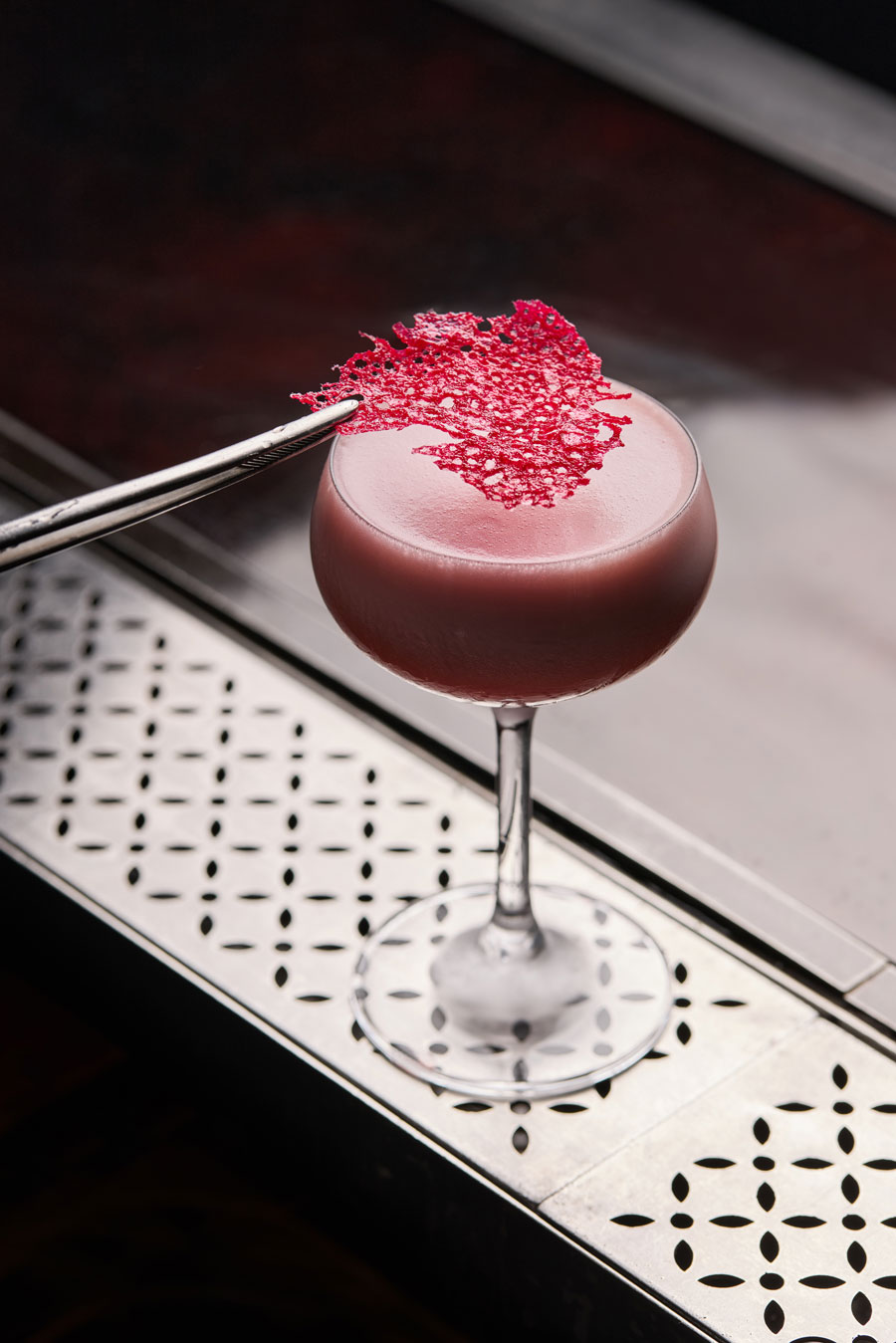
Our new menu, DarkSide, is inspired by the street market. When I arrived in Hong Kong, I was impressed by how the city preserves its own culture and heritage while evolving into one of the most modern and developed metropolises. We support local businesses through collaborations and materials, such as handmade ceramics, neon-inspired design elements, leather details, instant noodles, and hydroponic farming. The drink programme becomes a platform to celebrate Hong Kong’s makers and to build a stronger local network through creativity.
As Bar Manager, how do you balance creativity with leadership—ensuring your team develops their own voice while maintaining a consistent standard of excellence?
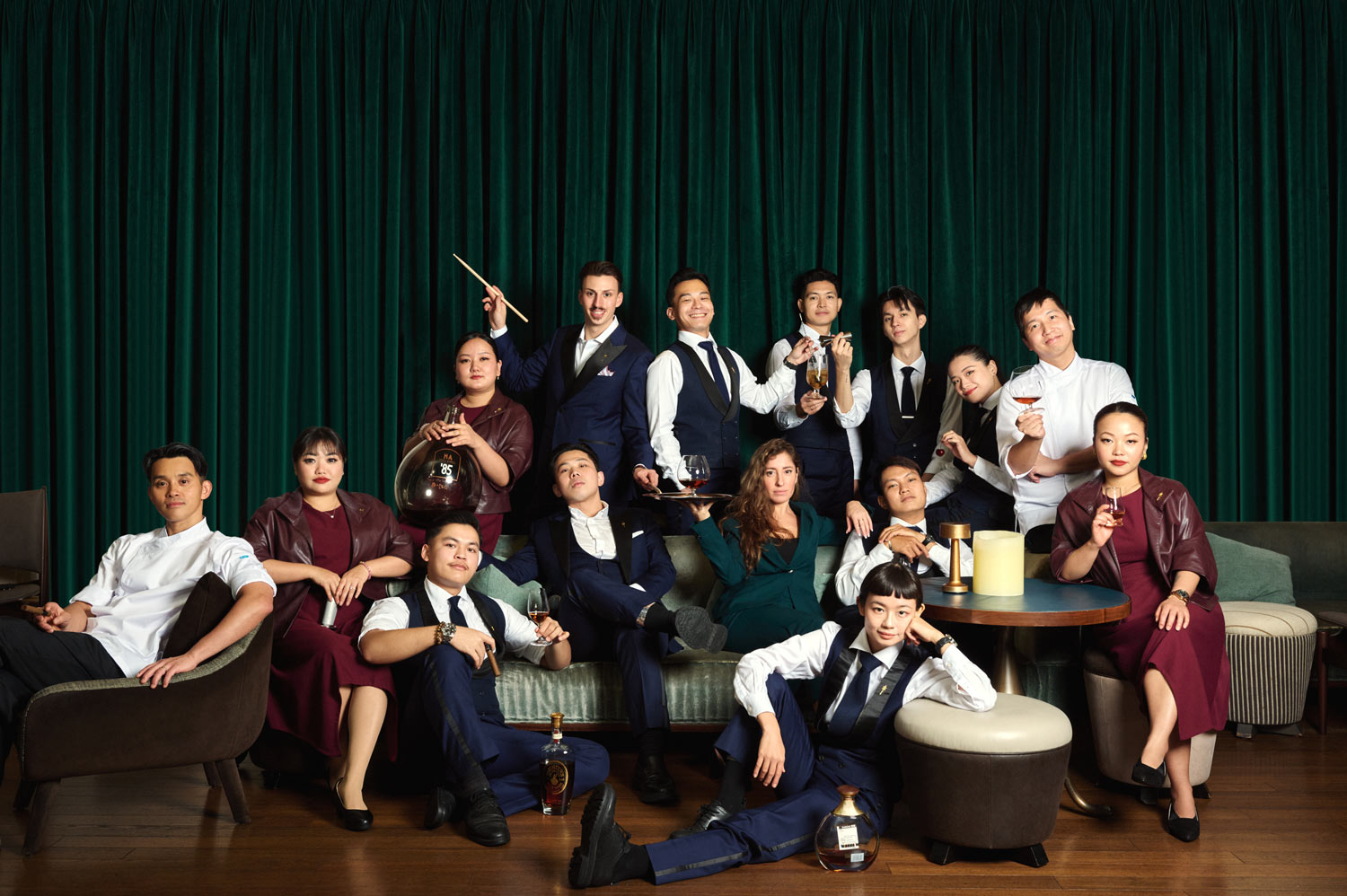
Leadership starts with clarity. In my first year at DarkSide, my main goal was to give the team a clear direction and shared understanding of our vision. Aligning everyone around the same target is essential to maintain consistent excellence. For menu creation, I involve the team throughout the full process, from concept to execution. I work with each team member individually, encouraging creativity and providing the support they need, while ensuring that every contribution aligns with the overall menu picture and quality standards.
What advice would you give to someone aspiring to be an exceptional bartender in a luxury establishment, especially early in their career?
My advice is simple: explore the unknown and don’t be afraid to make mistakes. In the beginning, mistakes are not failures, they’re lessons. The best growth comes from experimentation, learning fast, and improving with every service.

Nicole Bump
Nicole is a seasoned content strategist and writer with 15+ years of experience turning complex ideas into compelling stories. As founder of Bump Inbound, she helps brands connect with audiences through thoughtful strategy, sharp planning, and standout writing.
Get Inspired
Be the first to learn about our exclusive events and updates you’ll actually want to read.
Get Inspired
Be the first to learn about our exclusive events and updates you’ll actually want to read


An interview with ARGO's Jonathan Gabbay
Jonathan Gabbay
Discipline, luxury, and legacy—an interview with ARGO’s Jonathan Gabbay
Jonathan Gabbay has built his career inside some of the world’s most exacting hospitality environments—spaces where excellence isn’t an aspiration but an expectation. Now Beverage Manager at ARGO bar (Hong Kong), he brings a distinctly European sensibility shaped by global experience and a deep respect for the craft’s foundations. Guided by the belief that “alone we are nothing; together we create magic,” Gabbay approaches bartending as both a collective pursuit and a personal discipline. In this conversation, he shares how mentorship, cultural fluency, and a commitment to grounded creativity continue to shape his leadership and his vision for modern luxury hospitality.
What first drew you to bartending, and when did you know it would become a serious career?
I started my journey in hospitality school, where I first explored the kitchen before moving into service. I quickly realized how much I valued human connection, the ability to interact, read people, and create moments for them. My move to Paris was the true turning point. Experiencing Harry’s Bar for the first time gave me my first glimpse of what this craft could really be: a blend of culture, technique, and storytelling. It was there that I understood it was a career I wanted to dedicate myself to.
You committed to hotel bars at a time when many ambitious bartenders were gravitating toward standalone cocktail bars and competitions. What did you see in hotel bars that made you believe this was where the deepest craft lived?
For me, hotel bars offer a depth and complexity that is hard to match. You’re not just making cocktails; you’re part of the guests’ journeys. You meet people from every corner of the world, each bringing their own expectations, rhythms, and cultural nuances. Hotel bars also demand consistency, discretion, and a service philosophy rooted in hospitality rather than performance. That balance, between craft, etiquette, and emotional intelligence, is where I felt the richest expression of the profession lived.
You’ve traveled extensively and worked in bars around the world. Which experiences stayed with you most once you returned behind your own bar, and how did they influence the way you work?
My time working with Ashish Sharma (behind Trigona opening) had a profound impact on me. He has an incredible ability to balance structure and creativity, and he taught me the value of discipline behind the bar, precision in preparation, respect for ingredients, and the importance of leading by example. Traveling also opened my eyes to how differently guests behave around the world, and how a great bartender adapts without ever losing their identity. That combination, Ashish’s influence and global exposure, deeply shaped the way I host and the standards I hold myself to.
How did you make your way from a little hotel in Cornwall to The American Bar at The Savoy?
When I got serious about bartending, I had to figure out how to learn the business. But how do you learn the business when there is no schooling for it? There was no bartending school back then. There were a few books, but they weren’t very good. I decided to go to a bar where I could learn and somebody with experience could teach me.
I went to the Savoy Hotel American Bar, and I talked to Joe Gilmore, the head bartender then. I said, ‘I love the bar, it’s going to be my future, and I want to learn.’ I don’t know why, but he told me to come back at 9:00 Monday morning. I’m the luckiest guy on this planet.
So, in 1964 I joined the Savoy Group where I ended up spending 39 years, 22 of which were in The American Bar. First, I worked with Joe for a couple of months as a sommelier at Stones Chop House (also owned by the Savoy Group). Then I was asked to open the new Pebble Bar at Stones as Head Barman with my brother and stayed there until 1981.
“This was the best time of my life.”
Your work is often described as restrained and precise rather than flashy. Is this your natural inclination or an intentional decision? If the latter, why?
It’s a bit of both. I naturally gravitate toward clean, focused execution, but it’s also a deliberate choice. Flashiness can distract from what truly matters: balance, flavor, and the guest experience. I prefer to let the drink, the moment, and the hospitality speak for themselves. Precision creates trust, and once that trust is established, the guest relaxes, and the experience becomes far more meaningful.
You’ve been quoted saying, “Creativity feels strongest when it’s grounded.” What do you mean by that?
To me, creativity has power only when it’s built on solid foundations, technique, knowledge, and respect for the classics. When you understand the rules deeply, you can break them with purpose rather than improvization. Grounded creativity means innovation that still feels familiar, accessible, and thoughtful. It’s not about surprising for the sake of surprise, it’s about elevating what already works.
You’ve spent much of your career with the Four Seasons. What about the organization keeps you there? And what does it demand of you as a bartender?
Four Seasons offers something rare in luxury hospitality: freedom paired with trust. The bar is not treated as a simple amenity but as an essential part of the guest experience. What the organization demands in return is discipline, integrity, and a deep sense of responsibility to uphold the standards guests expect, not only in the drinks we serve, but in the way we host. It’s a place where excellence isn’t optional; it’s the baseline.
The Champagne Bar at The Surf Club earned significant international recognition during your tenure. What were the most important factors behind that success?
The success came from the strong connection we built with the local industry. We were able to highlight the magic of the venue while “de‑sacralizing” it—yes, it was a glamorous and historic space, but we made it genuinely accessible. Miami was also rising on the global stage at that time, and the energy of the city amplified our presence. All these elements combined created a place people wanted to visit not just once, but again and again.
What lessons, if any, carried over into the way you approach your work at Argo and how do you carry those lessons forward without simply repeating what worked before?
Every bar has its own identity, and it’s important to respect that. The lesson I brought with me is to listen carefully, to the team, to the guests, and to the rhythm of the space. Rather than replicating past successes, I focus on adapting what I’ve learned to this new environment: the discipline, the guest-centric thinking, the attention to detail. The goal is not to copy but to translate.
In these first few months at Argo, what opportunities are you beginning to see for shaping the bar over time?
Argo is already in a fantastic place. The team has been together for years and they execute their craft beautifully. I’m not here to reinvent the bar, but to become part of the machine, to help carry the legacy forward, support the team, maintain high standards, and be a strong host. My role is to elevate what already works, not to replace it.
What advice would you give to someone aspiring to be an exceptional bartender in a luxury establishment—especially early in their career?
Master your classics. Don’t expect to travel the world after two years—greatness takes time. Listen to your mentors, stay humble, observe everything, and be patient. Luxury hospitality is built on small details, emotional intelligence, and consistency.
“If you care about the craft and the people in front of you, the rest will follow.”
Jonathan Gabbay
Nicole Bump
Nicole is a seasoned content strategist and writer with 15+ years of experience turning complex ideas into compelling stories. As founder of Bump Inbound, she helps brands connect with audiences through thoughtful strategy, sharp planning, and standout writing.
Get Inspired
Be the first to learn about our exclusive events and updates you’ll actually want to read.
Get Inspired
Be the first to learn about our exclusive events and updates you’ll actually want to read
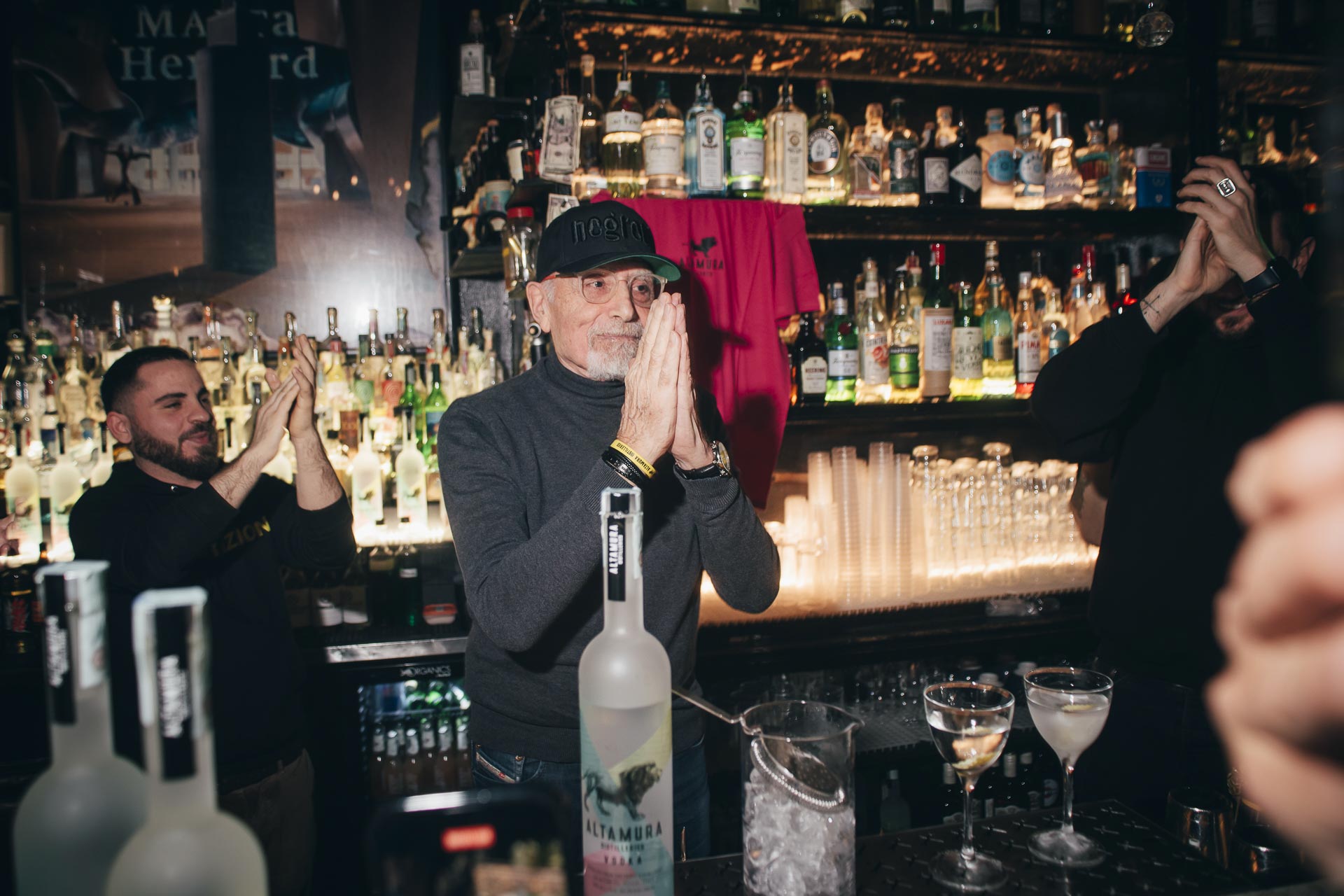
From accidental bartender to Savoy legend: the journey of Peter Dorelli
From accidental bartender to Savoy legend
The journey of Peter Dorelli
Best known for his decades at The American Bar at The Savoy, Peter Dorelli combines old-world hospitality with a flair for storytelling, training generations of bartenders to see—not just serve—their guests. His journey from a young Italian newcomer to one of London’s most celebrated barmen is as charming as it is unexpected.
How did you get started in bartending?
I came from a family of bankers in Italy, but I knew I did not want to be a banker. When I turned 18, I said ‘Get me out of here, I’m drowning! Let’s try England.’ My visa restricted me to working in a hotel or in hospitality, so in 1958 I became a resident handyman at a hotel in Cornwall owned by a married couple.
The husband who owned the hotel was responsible for running the bar, but he was very often drunk by 12:30 or 1:00. One day, he told me, ‘Peter, you go and take care of the bar.’ I said, ‘Me? I don’t know drinks. I hardly speak English! What do you want me to do?’ He said there were books in the bar I could look at and it would be no problem.
Within a half an hour a lovely lady came in carrying a poodle. She sat down and asked for a whiskey sour. I asked myself, ‘What the hell is a whiskey sour?’. Thankfully, at that moment, the woman made a funny noise, and when she put the dog down, she was wet. She asked me to watch her poodle while she went to change, which gave me time to look up the cocktail in the bar books! I made the whiskey sour, and it was rubbish. It was disgusting. But I tried again, added a little more sugar, adjusted a bit, and it wasn’t too bad. When the woman came back and tried it, she said it was the best whiskey sour of her life! And that was my first cocktail.
I had tried everything in the hotel, from kitchen porter to chambermaid to concierge to ironing curtains. The head chambermaid said I was the best bed maker! I learned all about banquets and restaurants. But as soon as I entered the bar, I said, ‘That’s me! I think I can have a decent life here, a wonderful life if I want to.’
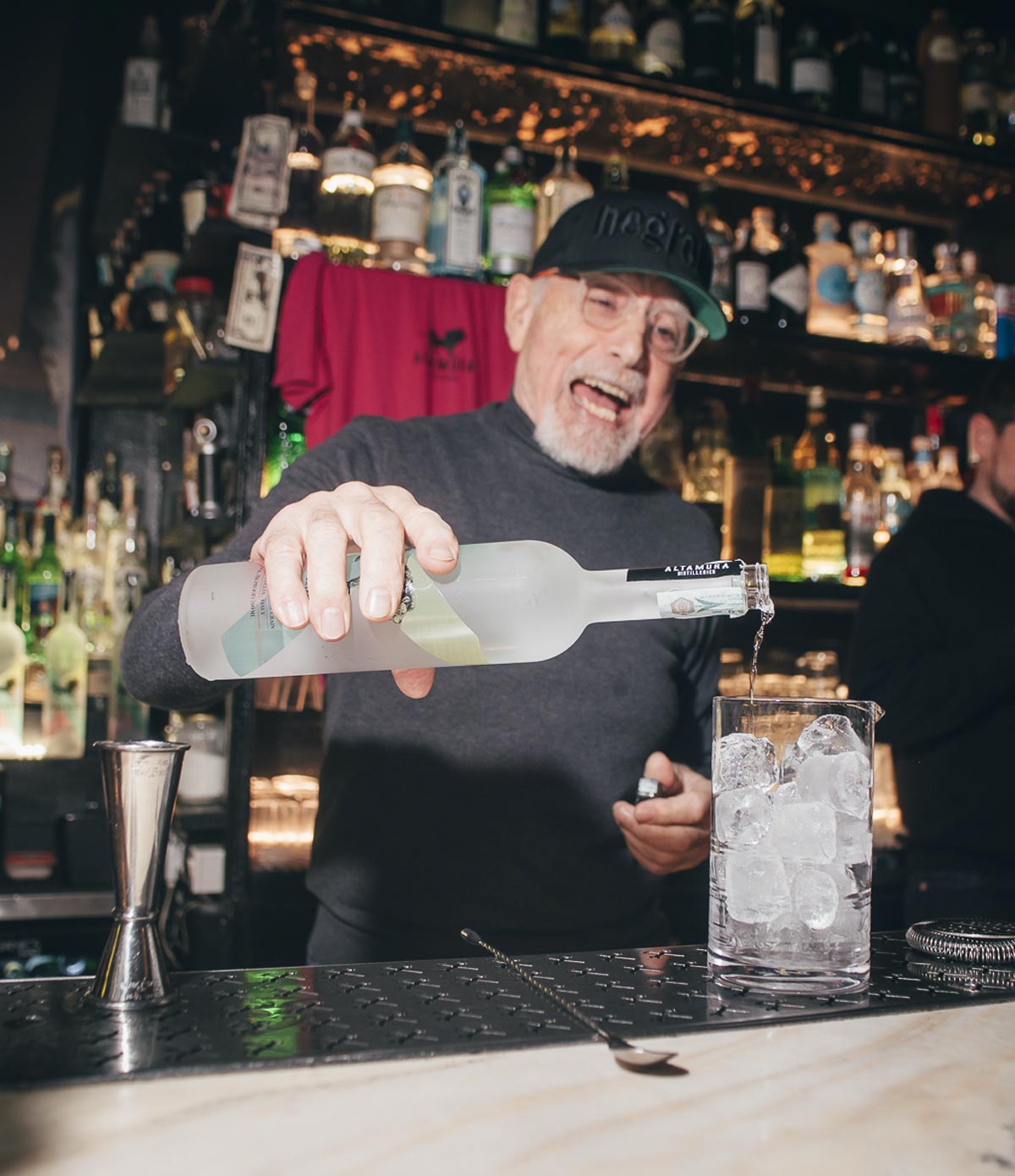
How did you make your way from a little hotel in Cornwall to The American Bar at The Savoy?
When I got serious about bartending, I had to figure out how to learn the business. But how do you learn the business when there is no schooling for it? There was no bartending school back then. There were a few books, but they weren’t very good. I decided to go to a bar where I could learn and somebody with experience could teach me.
I went to the Savoy Hotel American Bar, and I talked to Joe Gilmore, the head bartender then. I said, ‘I love the bar, it’s going to be my future, and I want to learn.’ I don’t know why, but he told me to come back at 9:00 Monday morning. I’m the luckiest guy on this planet.
So, in 1964 I joined the Savoy Group where I ended up spending 39 years, 22 of which were in The American Bar. First, I worked with Joe for a couple of months as a sommelier at Stones Chop House (also owned by the Savoy Group). Then I was asked to open the new Pebble Bar at Stones as Head Barman with my brother and stayed there until 1981.
“This was the best time of my life.”
The Pebble Bar was close to Wardour Street, which is famous for the film industry. Our space was upstairs, so it became a bit of a hiding place for all sorts of famous people. Bars then used to open at 11:00, close at 3:00, then reopen at 5:30 until closing at 11:00.
How did you make your way from a little hotel in Cornwall to The American Bar at The Savoy?
When I got serious about bartending, I had to figure out how to learn the business. But how do you learn the business when there is no schooling for it? There was no bartending school back then. There were a few books, but they weren’t very good. I decided to go to a bar where I could learn and somebody with experience could teach me.
I went to the Savoy Hotel American Bar, and I talked to Joe Gilmore, the head bartender then. I said, ‘I love the bar, it’s going to be my future, and I want to learn.’ I don’t know why, but he told me to come back at 9:00 Monday morning. I’m the luckiest guy on this planet.
So, in 1964 I joined the Savoy Group where I ended up spending 39 years, 22 of which were in The American Bar. First, I worked with Joe for a couple of months as a sommelier at Stones Chop House (also owned by the Savoy Group). Then I was asked to open the new Pebble Bar at Stones as Head Barman with my brother and stayed there until 1981.
“This was the best time of my life.”
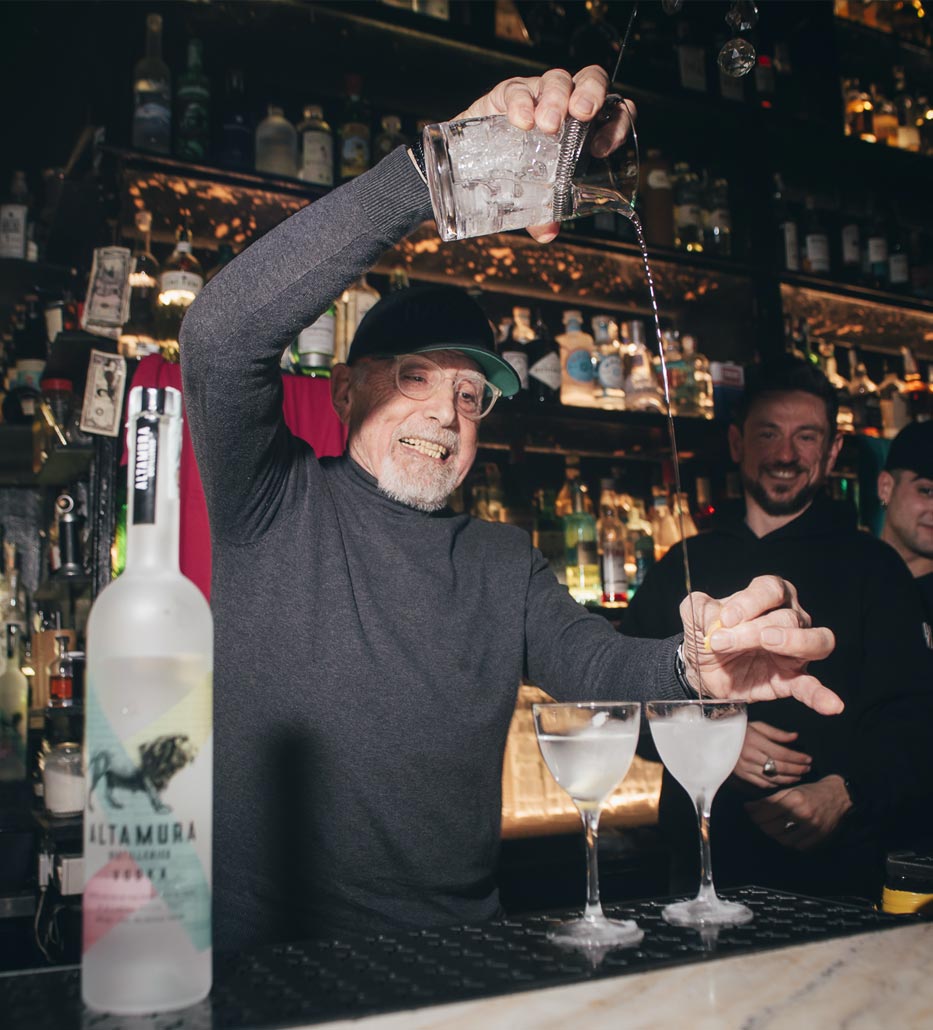
All the people in the West End would go to have a coffee and play cards while the bar was closed. I was able to close the door upstairs but serve the people still inside.
One day, Kenneth More came by and asked for a drink, so I told him to help himself. He asked, ‘Can I do that?’. Alec Guinness wanted a white wine spritzer, and I told him the same thing. I got the same response: ‘Can I do that?’. I answered, ‘Of course, I’ll show you.’ That started everything. They loved doing their own drinks, and they all kept coming back!
“When the company sold the Pebble Bar, I moved to The American Bar at The Savoy”
I started as Assistant Head Barman, and I became Head Barman/Bar Manager in 1984. I retired from the role in 2003 at age 63.
How did you make your mark at The Savoy?
As a hotel bar, The American Bar was a totally different world than a restaurant bar. You have to be classic, careful, and very knowledgeable. You cannot afford a complaint. Guys will spend a thousand pounds a night for a room. If you upset them, the general manager won’t like you at all! One of the things that made me successful as a bartender at the Pebble Bar and The American Bar was learning body language. It’s the most important thing in a bar. Everybody in hospitality should know it. It tells you everything you need to know before you even speak.
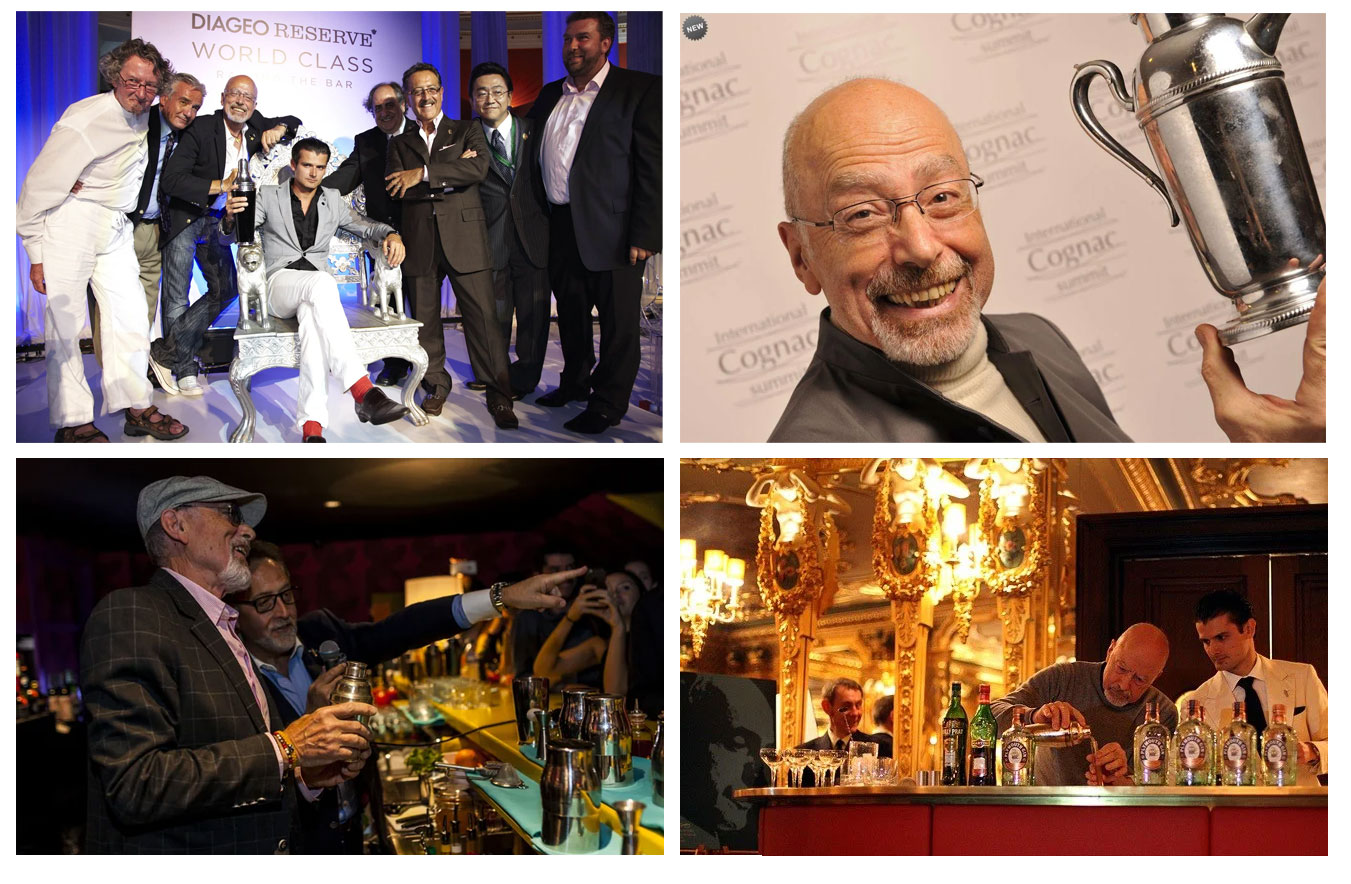
At The American Bar, people come in three steps above you. You have a clear view of the person. You can see if they are heavy-footed, hunched, or tense—this person probably had a busy, stressful day. The first thing would be to put them at ease and remove any decision making. I would seat them and offer a complementary glass of champagne to help them relax. If they were waiting for someone to join them to perhaps go to the theatre or celebrate a special occasion, I would suggest a bottle of champagne on ice. This is all from an awareness of body language.
I also taught everyone at The American Bar how to see and to capture an up-to-date vision of what was going on, rather than relying on memory alone. It was unconventional training. I would tell them to look around the bar carefully. They would look, and then I’d ask…
‘What’s on table 9?’
They would often respond there were menus on the table, but there were no menus because I had removed them! This sort of training taught all the bartenders to notice everything.
What advice do you have for bartenders who want to follow in your footsteps?
I advise using the Three Rs as a measure of success as a bartender: reorder, return, recommend.
Once your guest has a cocktail, does he reorder it? The British rarely ever complain about their drinks because they don’t want to upset you, but if a guest reorders the same thing, you can tell that they like it. Does your guest return? If he comes back, he likes the drinks and likes the atmosphere.
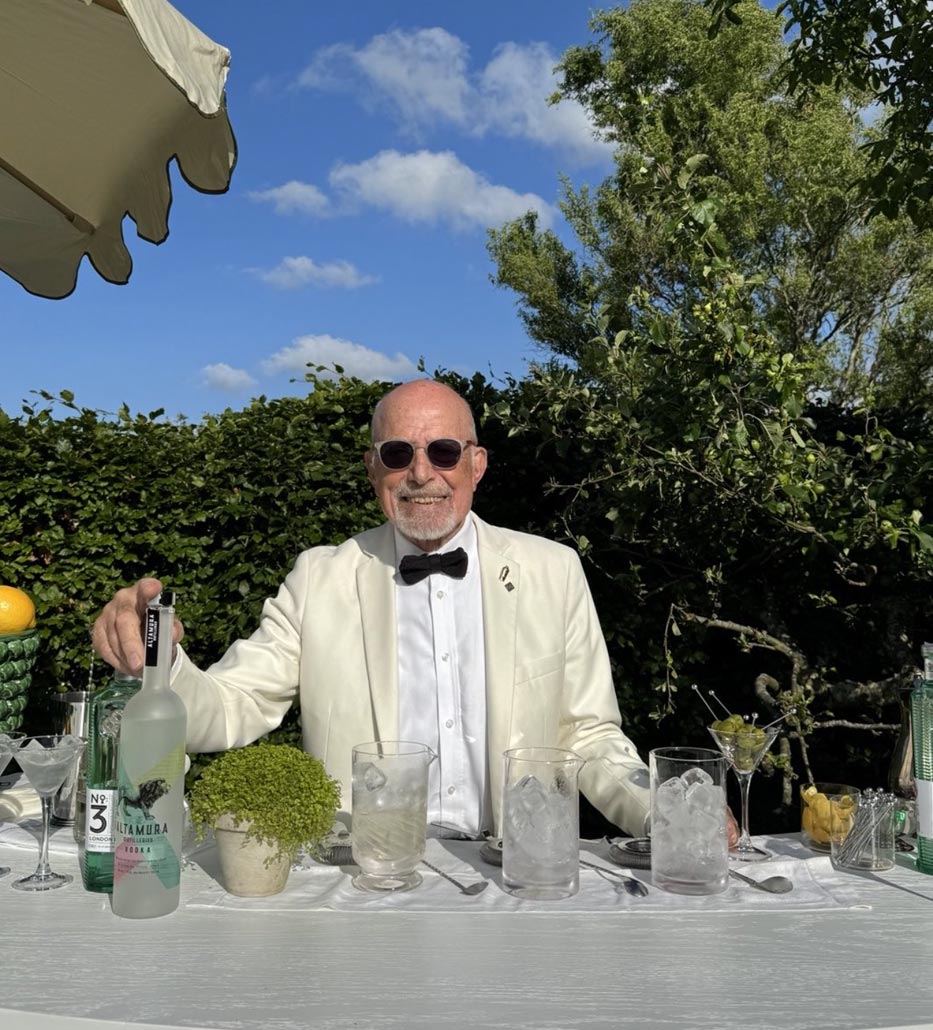
Maybe you created a wonderful moment that he loved. And most importantly, does your guest recommend you to his friends? Word of mouth is very powerful. The American Bar is an icon. It’s an institution. One of the most exciting things for me was when guests weren’t just recommending The American Bar, they were saying,
“Let’s go see Peter at The American Bar.”
Also, if you enjoy bartending, don’t look at it as a job. It has to be a lifestyle, and you must enjoy it with a passion so there is no waste of energy. Passion feeds the energy needed for creativity and your artistic skills. Remember always that the bar is a theatre.
Sometimes young people would come to me at The American Bar and say, ‘I’m looking for a job.’ I would tell them, ‘There’s the door.’ Why? Because bartending is not a job. Most days, you will spend 12 or more hours at work. If you look at these hours as a job, you will waste your life and your energy.
“You must truly love the work, or it is not the right career for you.”
Peter Dorelli
Nicole Bump
Nicole is a seasoned content strategist and writer with 15+ years of experience turning complex ideas into compelling stories. As founder of Bump Inbound, she helps brands connect with audiences through thoughtful strategy, sharp planning, and standout writing.
Get Inspired
Be the first to learn about our exclusive events and updates you’ll actually want to read.
Get Inspired
Be the first to learn about our exclusive events and updates you’ll actually want to read
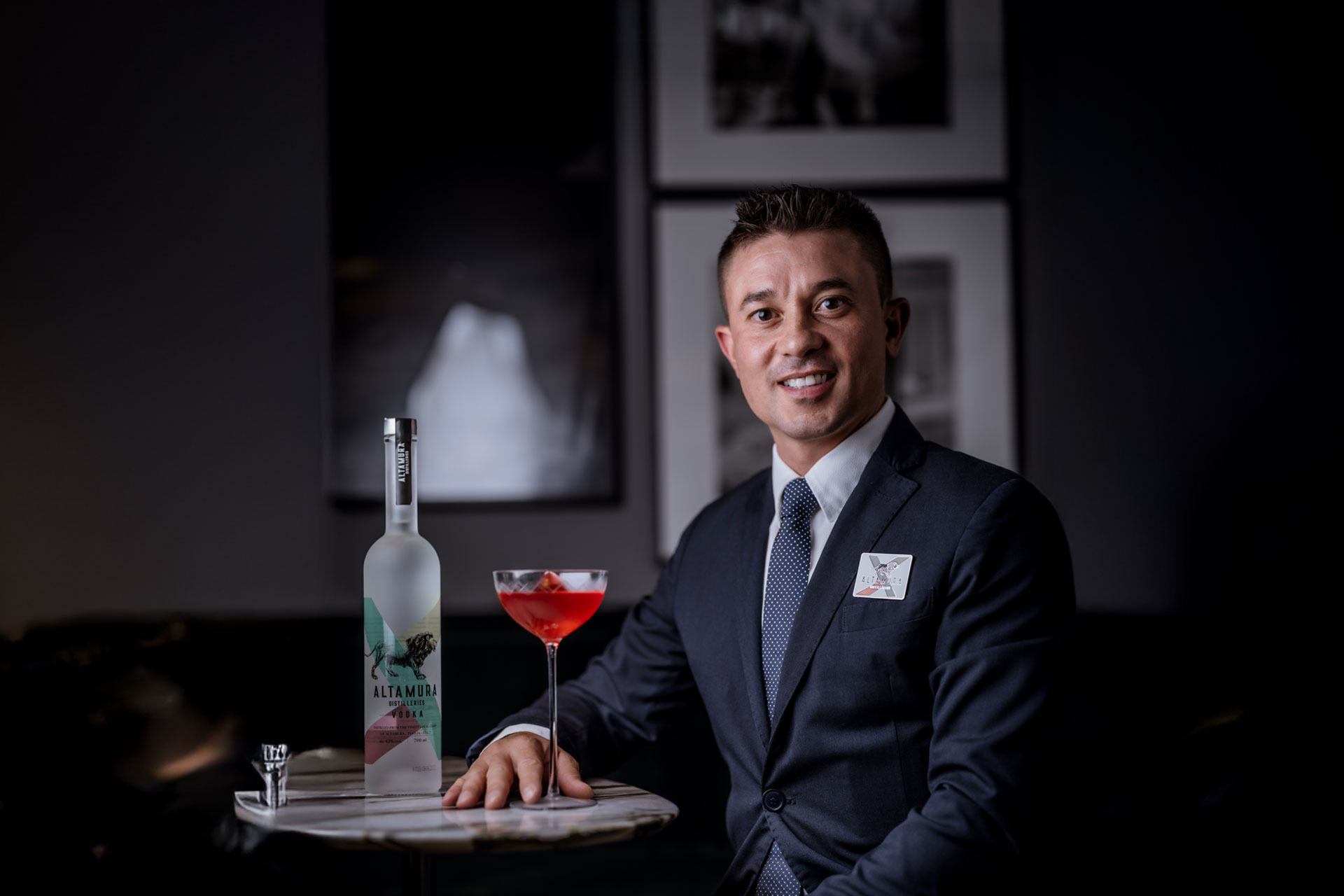
Crafting Stories in Every Sip: An Interview with Antonio Ferrara
Crafting Stories in Every Sip
An Interview with Antonio Ferrara of The Bar at Aman Venice
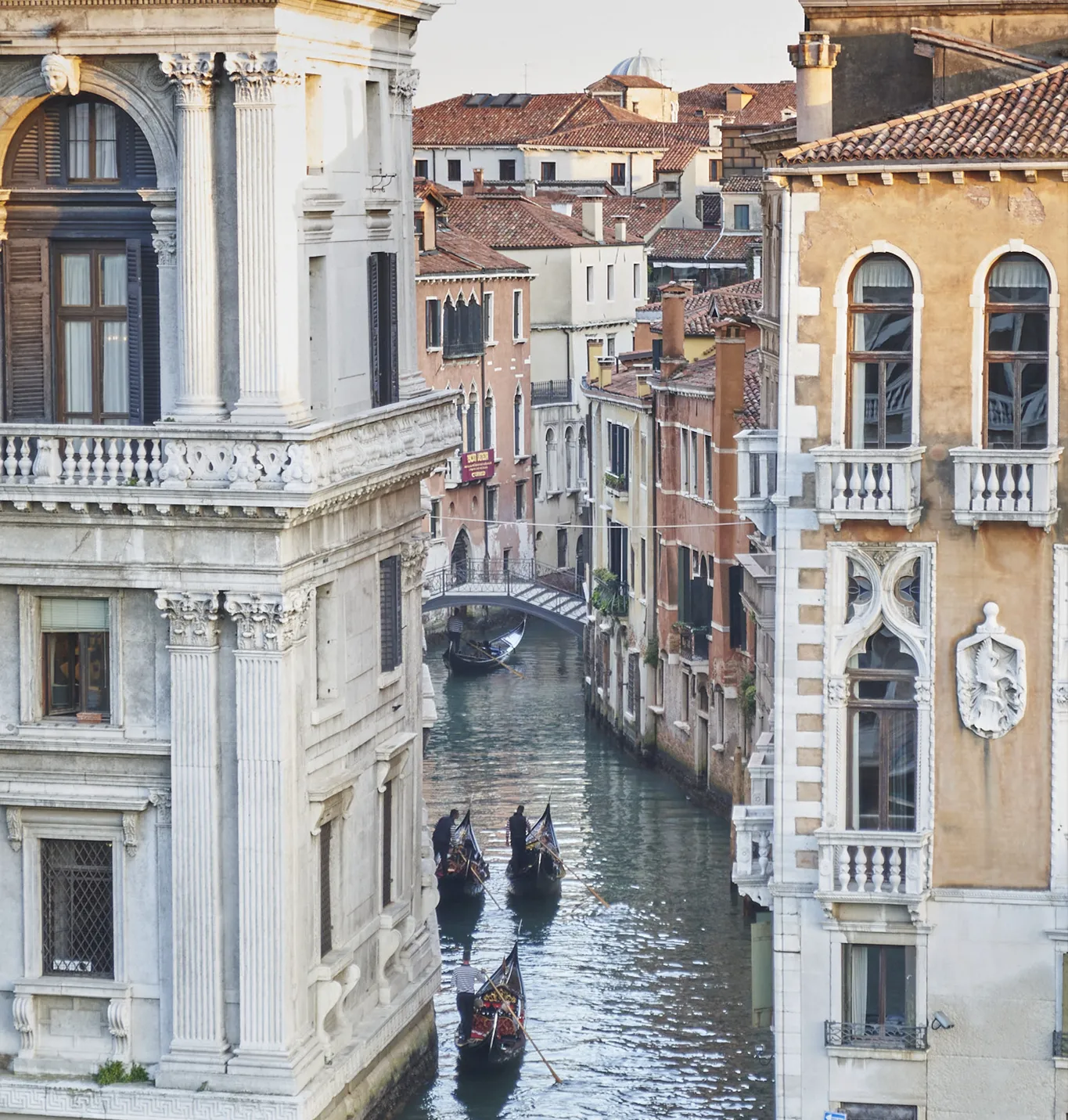
Antonio Ferrara doesn’t just serve cocktails—he creates experiences. As the head of The Bar at the Aman Venice, he draws inspiration from the palazzo’s history, transforming its art and architecture into drinks that tell a story. His approach is rooted in generosity, hospitality, and a deep respect for detail. In this interview, Antonio reflects on the early inspirations that drew him to bartending, the impact of his mentor, and how he and his team bring Aman’s philosophy to life behind the bar.
What first drew you to bartending, and when did you know it would become a serious career for you?
I’ve always been drawn to the world of elegance and hospitality. When I first stepped into a luxury hotel bar, I was completely captivated by the atmosphere. My manager at the time was the person I aspired to become—I still remember his way of speaking, his presence, and his undeniable expertise.
I’ve read that you had a mentor named Giorgio. How did he help shape the bartender you are today?
Yes, exactly—the person who gave me my foundation is Giorgio Fadda. He always taught me everything he knew and often told me that his goal was to give me all the knowledge possible so that the quality of the bar team would be excellent. He was never jealous or possessive of his skills, but always generous, supportive, and kind.
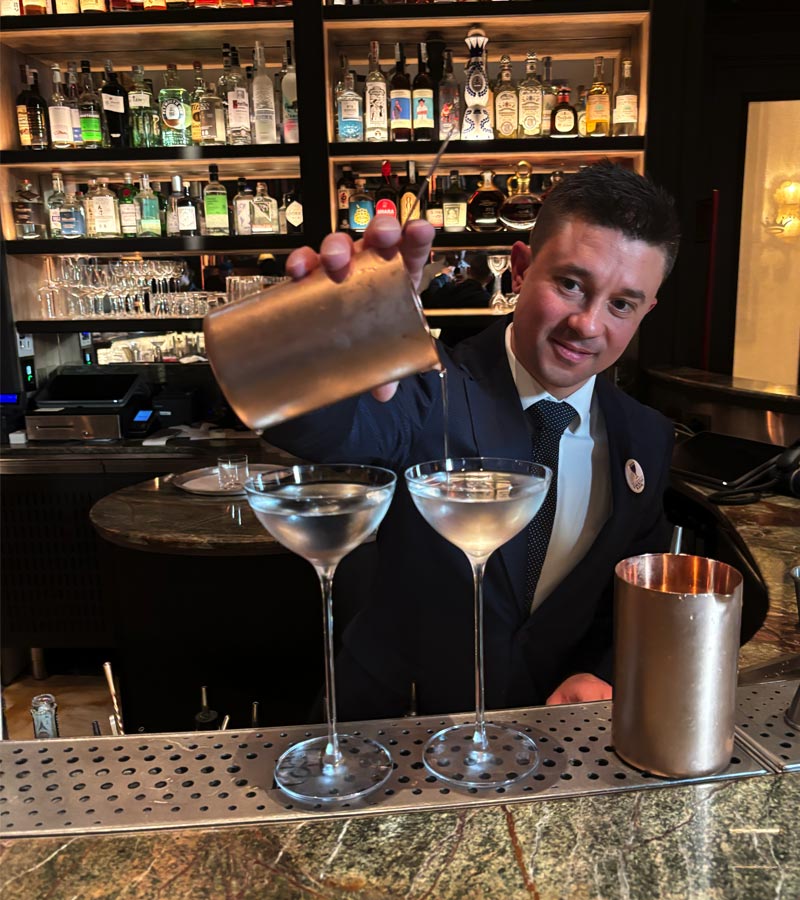
What brought you to The Bar at Aman Venice?
I joined Aman because I wanted to be part of a great project. At Aman, there is a strong focus on taking care of the guest—the goal is not just to serve my drink, but to offer a truly unique experience.
“Why Aman? I wanted to be part of a great project”
You’ve led The Bar to win many awards—what did it take to get there?
Winning awards is a great source of pride for me and the bar team. The work behind the scenes has been both demanding and exciting. Since we are a hotel, our goal is always to offer a unique experience. The real challenge has been adapting Aman’s philosophy to the bar—understanding how far we can push ourselves while still staying true to our identity.
You are known for your innovative cocktail menus. What makes your menus so innovative?
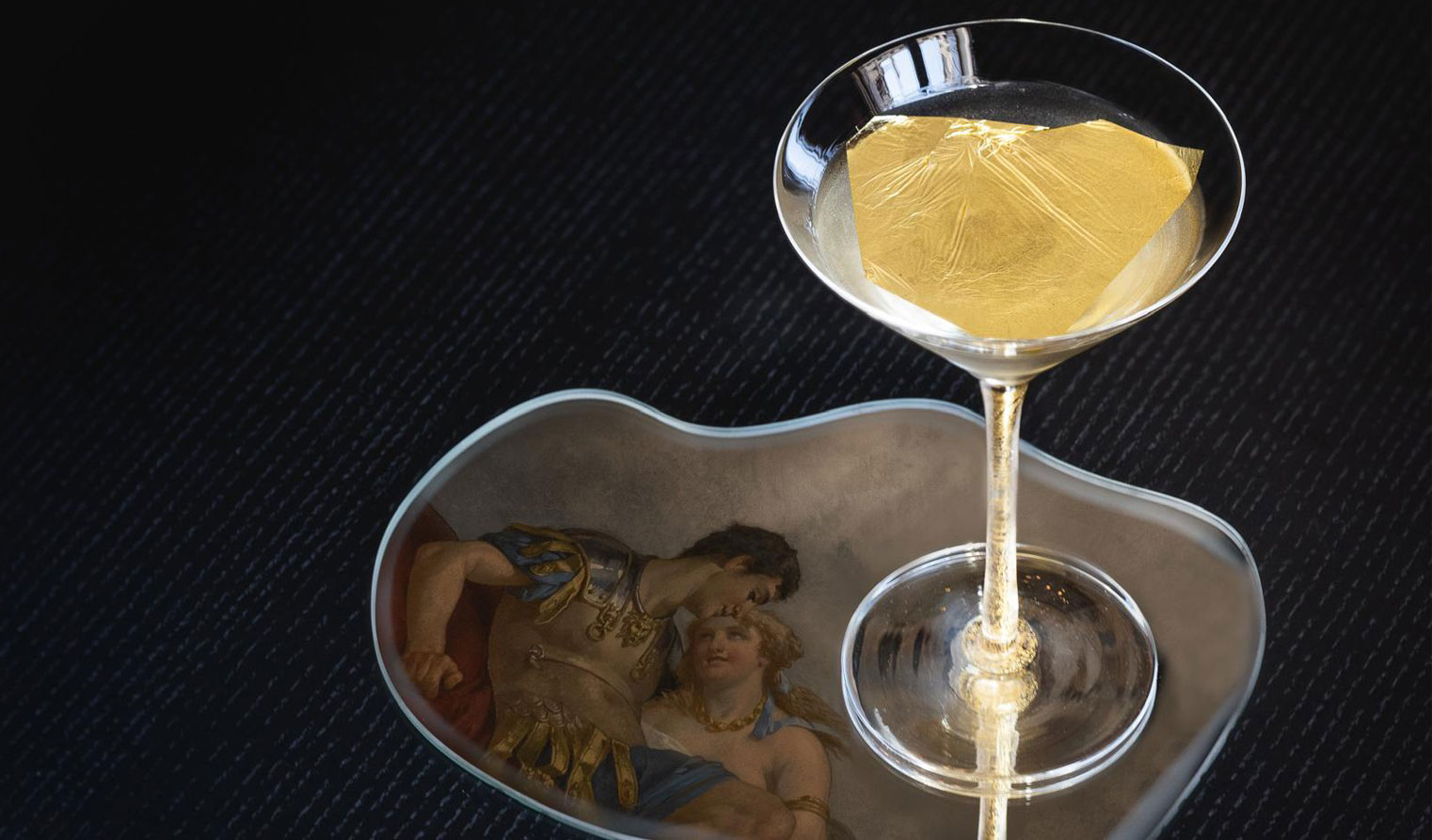
Thank you very much. Together with the team, we strive to highlight the essence of our palazzo. By studying our “home” in detail, we’re able to express who we are through our cocktails. For example, our latest drink list is inspired by the rooms of the palazzo, where we tell the stories and meanings behind the various frescoes.
Tell me about the inspiration behind the Indomitable.
How did the idea come about?
Indomitable was created in honor of a very brave and powerful woman: Maria Maddalena Aldobrandini Papadopoli, the wife of Papadopoli, who lived in our Palazzo around 1850. She wanted to protest the Austro-Hungarian political and military occupation and chose to be portrayed in a large painting wearing a dark blue velvet dress—the same color worn by the political resistance. In the painting, emphasis is also placed on her white petticoat. At that time, in the 1800s, washing machines didn’t exist, so nobles would discard dirty clothing. A white skirt would get dirty easily and be thrown away. But she was wealthy and wanted to show it. The meaning of the painting is twofold:
“You are not welcome in my home”
“Be careful, I’m very rich”
You’ve said you like to focus on the experience each guest has with their cocktail. Can you share how you craft that experience?
Yes, exactly—the details make all the difference, and most importantly, it’s essential to understand the guest’s needs. This allows you to personalize the experience based on who you have in front of you. Hospitality plays a key role in this, as it provides the foundation to start a conversation with the guest. For example, there are many guests who enjoy talking—they sit at the counter and look for interaction. I remember one evening when I was talking about Venice Cocktail Week, and the guests, intrigued, started asking me lots of questions. To my surprise, they came back a few days later just to experience the Venice Cocktail Week!
I hear you enjoy using fermentation with your cocktails. Why do you like it, and can you give me an example of a drink you created using fermentation?
Yes, we use fermentation to create more complex non-alcoholic cocktails. We had a twist on a spiced Tepache on the menu, made with a variety of spices and herbs from the Venetian lagoon. We really enjoy working with fermentation because it brings a unique acidity and complexity of flavor that’s sometimes hard to replicate.
You’ve led The Bar to win many awards—what did it take to get there?
Winning awards is a great source of pride for me and the bar team. The work behind the scenes has been both demanding and exciting. Since we are a hotel, our goal is always to offer a unique experience. The real challenge has been adapting Aman’s philosophy to the bar—understanding how far we can push ourselves while still staying true to our identity.
You are known for your innovative cocktail menus. What makes your menus so innovative?
Thank you very much. Together with the team, we strive to highlight the essence of our palazzo. By studying our “home” in detail, we’re able to express who we are through our cocktails. For example, our latest drink list is inspired by the rooms of the palazzo, where we tell the stories and meanings behind the various frescoes.
Nicole Bump
Nicole is a seasoned content strategist and writer with 15+ years of experience turning complex ideas into compelling stories. As founder of Bump Inbound, she helps brands connect with audiences through thoughtful strategy, sharp planning, and standout writing.
Behind the Atrium Bar: An Interview with Edoardo Sandri
Behind the Atrium Bar
An Interview with Edoardo Sandri
Before he became the heart of the Atrium Bar at the Four Seasons Hotel Firenze, Edoardo Sandri dreamed of being a professional boxer. But a chance encounter with a tequila sunrise—and a bar full of energy and possibility—set him on a very different path. Today, with more than two decades of experience and a deep passion for his work, Edoardo has helped shape one of Italy’s most iconic hotel bars into a destination for locals and world travelers alike. In this interview, Edoardo shares what sets the Atrium Bar apart, tells the story behind his Folies Bergère cocktail, and offers advice about real life as an exceptional bartender.
What first drew you to bartending, and when did you know it would be a serious career?
I started bartending 22 years ago, after high school. I actually wanted to be a professional boxer, but that wasn’t in the cards for me. Bartending caught my eye one night when I was at a club and I noticed a bartender making a tequila sunrise—it’s just tequila, orange juice and grenadine, but I liked the dramatic visual effect. The next day, I went to the library and checked out some books on drinks and bars to start my education.
I don’t really think about my career much, or the future in general, because it gives me anxiety. I just started out taking many courses, like flair and acrobatic bartending. I realized it was a job I would be sticking with around 2008, which was when I began working at the Four Seasons Hotel Firenze Atrium Bar. I started to think, “Yeah, this could be a good place for me, a good career.”
What sets the Atrium Bar apart from other bars that you’ve worked at?
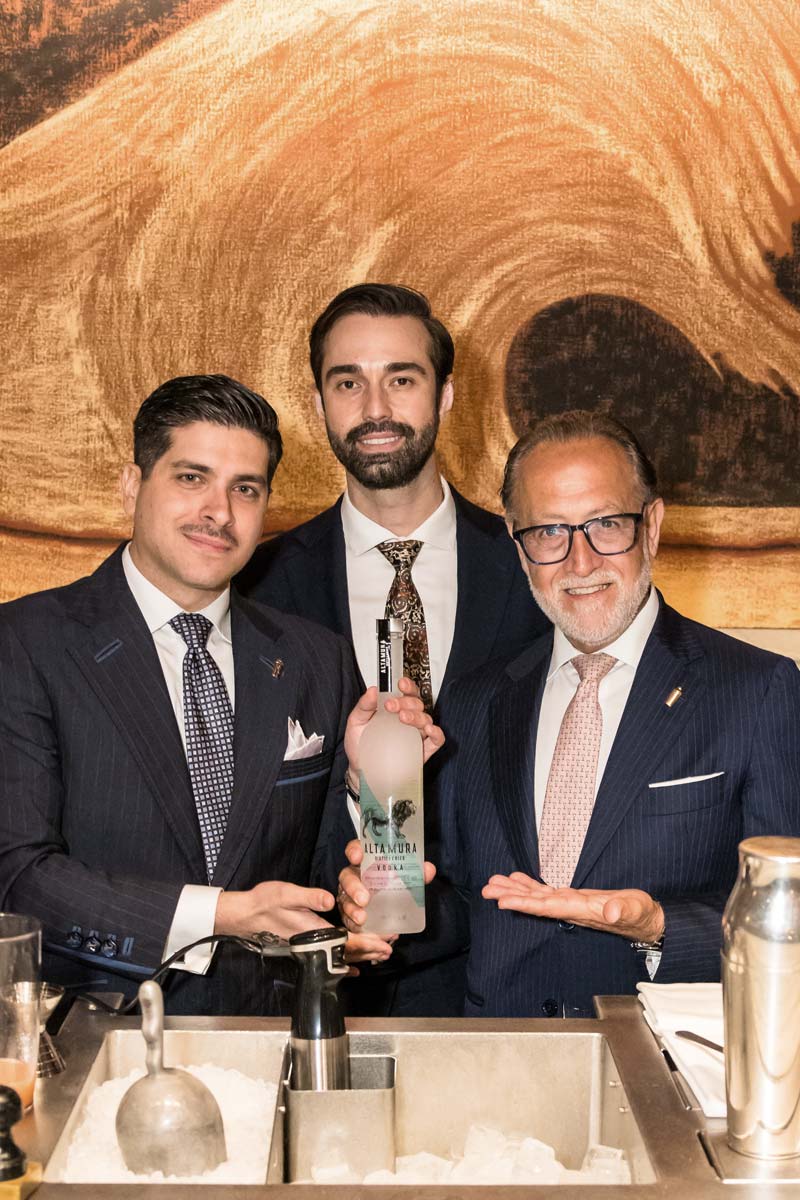
For me, it’s the most beautiful bar in the world, but I might be biased (I also say my daughter is the most beautiful kid in the world!). I’ve been here for 17 years, so it’s an important part of my life and my career. I’ve traveled a lot during these years—for example, to many events with Altamura, where I showcase how we use Altamura vodka. Every time I represent the Atrium Bar, I’m extremely proud to do so. At the beginning, around 2008 to 2010, we mostly served hotel guests. We would get calls from others in town asking, “Is it possible to visit for an aperitivo?” It wasn’t common in Italy to just go enjoy a Negroni inside a hotel. We would respond…
“Yes, madam, of course” or “Yes, sir, please do”
What sets the Atrium Bar apart from other bars that you’ve worked at?
For me, it’s the most beautiful bar in the world, but I might be biased (I also say my daughter is the most beautiful kid in the world!). I’ve been here for 17 years, so it’s an important part of my life and my career. I’ve traveled a lot during these years—for example, to many events with Altamura, where I showcase how we use Altamura vodka. Every time I represent the Atrium Bar, I’m extremely proud to do so. At the beginning, around 2008 to 2010, we mostly served hotel guests. We would get calls from others in town asking, “Is it possible to visit for an aperitivo?” It wasn’t common in Italy to just go enjoy a Negroni inside a hotel. We would respond…
“Yes, madam, of course” or “Yes, sir, please do”
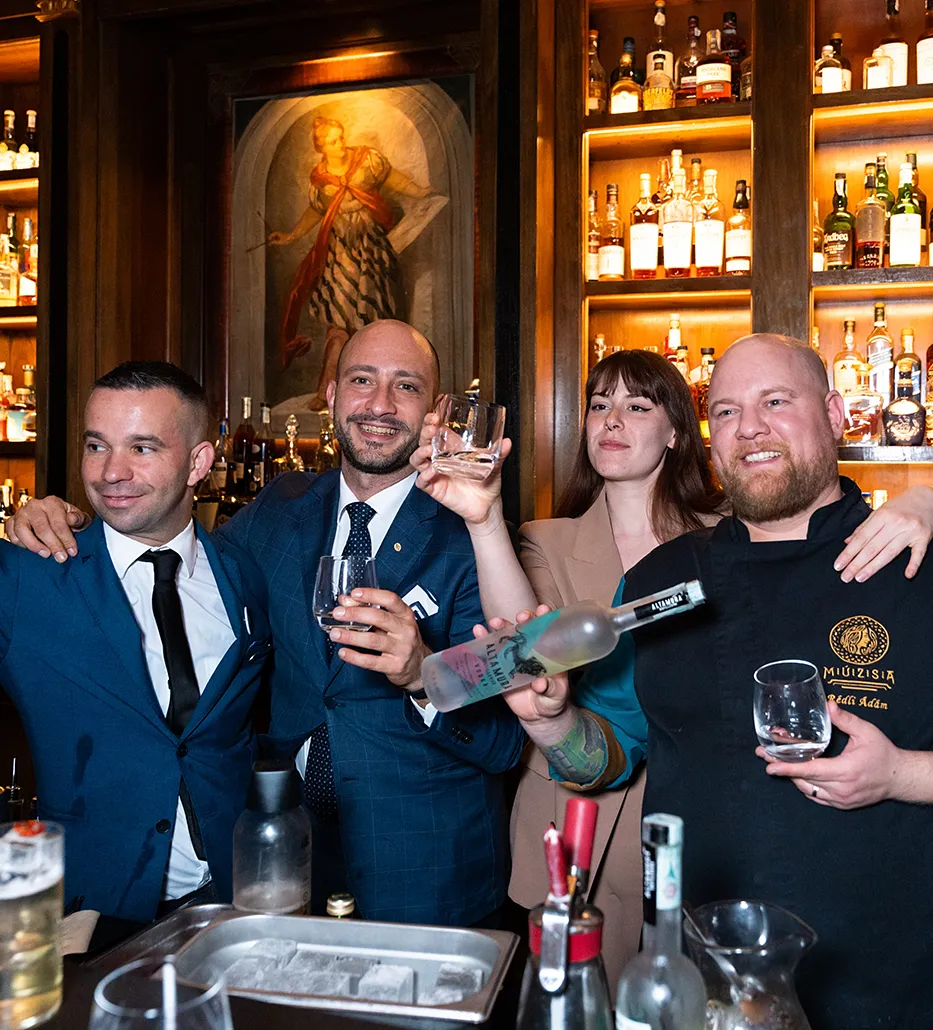
Many people therefore credit us with opening the doors of our bar and others to the Florentine people. As a result, I may have one table with hotel guests who are spending 10,000 euros per night for their room, and the next table over there’s a Florentine guy like me that’s just drinking a cocktail. We are inclusive for all people, and I like this mix.
Your current menu features Sips of History.
Can you tell me about the inspiration behind these cocktails and how they came about?
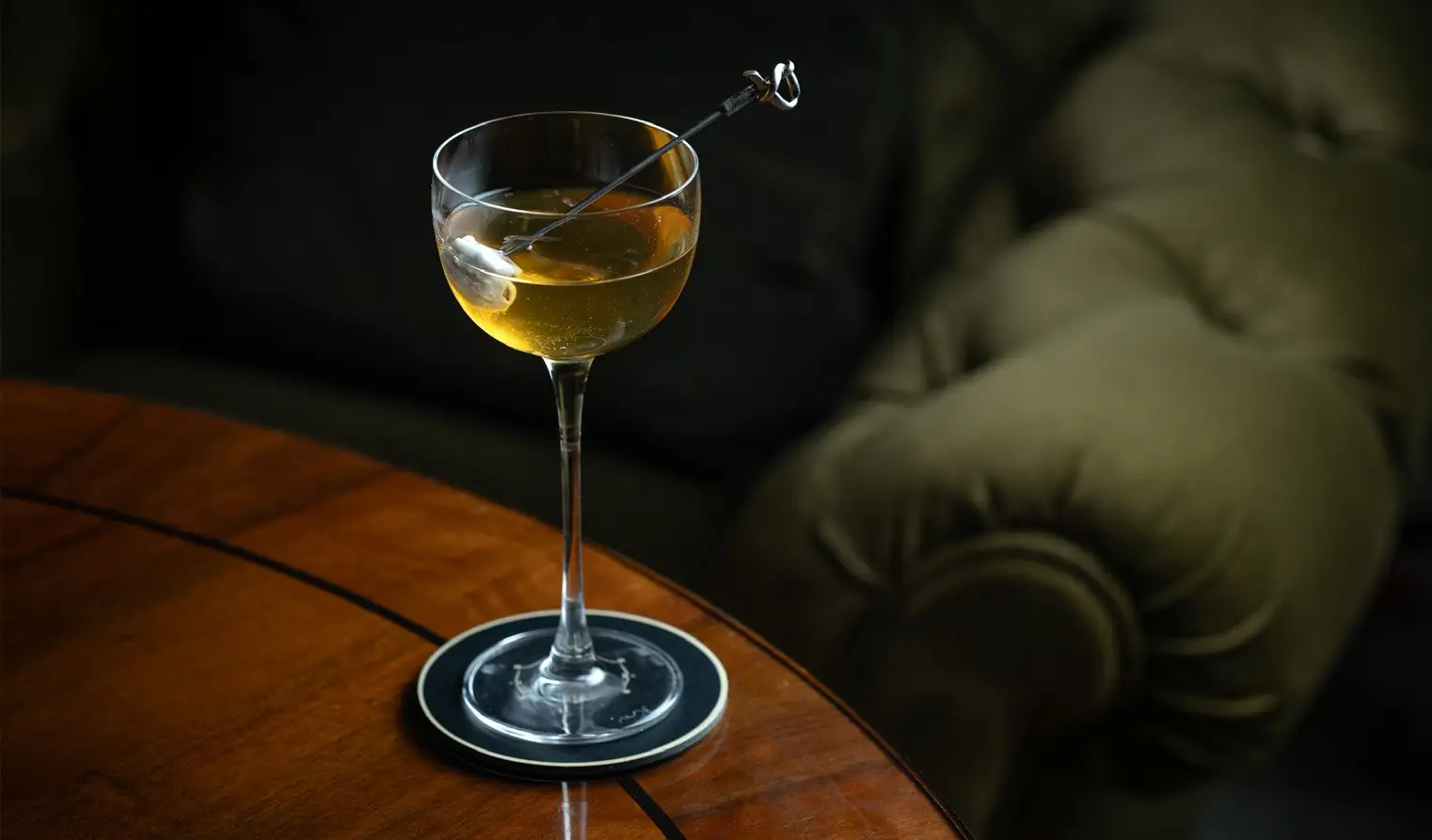
Creating this menu was an exciting journey for us. It features eight iconic drinks from the 19th century, and each is designed to reflect a specific time, place, and the people who lived it. It’s our way of bringing those moments to life with a modern twist—every drink is an invitation to connect with history.
The Folies Bergère is one of those iconic cocktails on the menu. Which pieces of history does it represent?
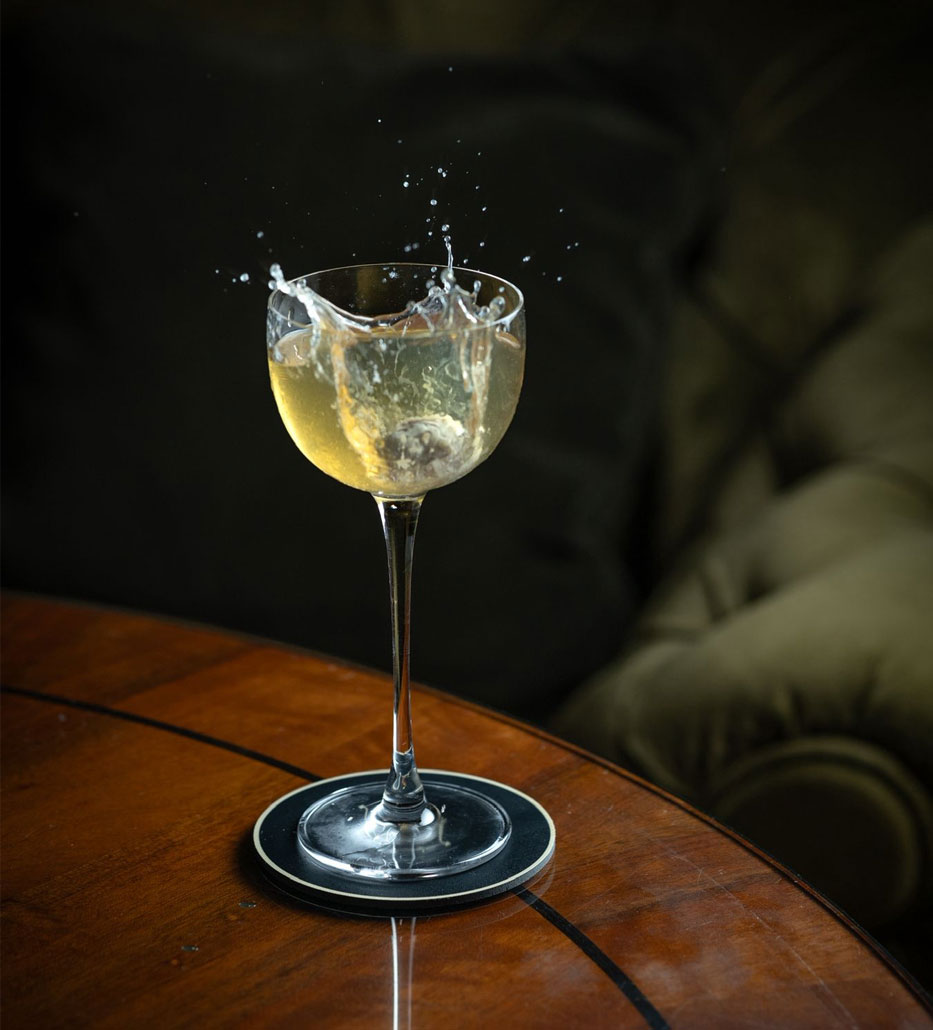
The Folies Bergère is our Sips of History take on the classic Rob Roy (which is the scotch brother of the Manhattan). We named the cocktail after the popular French theater where one of the dancers famously wore a banana skirt during her performances in the 1920s. Our Folies Bergère cocktail therefore features banana juice, as well as Altamura Vodka, smoky almonds to replace the smoky taste of the scotch, and Americano Bianco. The creation is both elegant and fun, evoking the energy and glamour of late nights in theatres and café-concerts.
When you’re developing a new drink, where do you usually begin—flavor, theme, ingredient, or something else?
I usually start with an overarching concept. The concept could be based on history, a flavor, an experience—and once I choose the concept we all like best, then we will work on the drinks. For example, I’m thinking about the menu for 2026 now, and I have several concepts in the running.
“Florence and the whole of Italy are classic places, and the Four Seasons Hotel Firenze is a classic hotel, so I use a lot of serious, classic concepts.”
But I like to alternate years with more fun and creative ideas, too. About seven or eight years ago, we were making drinks with an old tool from the 17th and 18th centuries called a loggerhead, which was an iron rod used to heat the cocktails—a bit like Jerry Thomas’s Blue Blazer. I’ve used nitro for many years as a technique, and also for chilling glasses.
A decade or more ago, I think most hotel bars and other bars in Italy were a bit boring. We’ve contributed a bit to elevating that experience, making the hotel bar more fun.
What do you think makes a bartender memorable…what makes Edoardo memorable? And what advice do you have for aspiring bartenders?
I’m just Edoardo. I’m not an actor, I’m not a superstar, I’m just the father of my daughter. I’m a good guy, and I’m passionate about my job. I dedicate a lot of time to growing the bar, not my career. I’m not too worried about being memorable. It’s a great career with so many opportunities—career opportunities, and also life opportunities, meeting people, making friends. But you have to try to find some balance between your work and the rest of your life.
“When you master both mixology and hospitality together, you can call yourself a great bartender”
Nicole Bump
Nicole is a seasoned content strategist and writer with 15+ years of experience turning complex ideas into compelling stories. As founder of Bump Inbound, she helps brands connect with audiences through thoughtful strategy, sharp planning, and standout writing.
Get Inspired
Be the first to learn about our exclusive events and updates you’ll actually want to read.
Get Inspired
Be the first to learn about our exclusive events and updates you’ll actually want to read
What Aspiring Bartenders Can Learn from The Maestro
The Maestro Salvatore Calabrese
What Aspiring Bartenders Can Learn from The Maestro
If you dream of leaving your mark behind the bar, there’s no better mentor than Salvatore Calabrese. Known around the world as The Maestro, Calabrese is more than just a master mixologist—he’s a true craftsman of hospitality. In our interview, The Maestro shares lessons, stories, and philosophies that shaped his journey, offering advice and inspiration for becoming a master of your own bartending career.
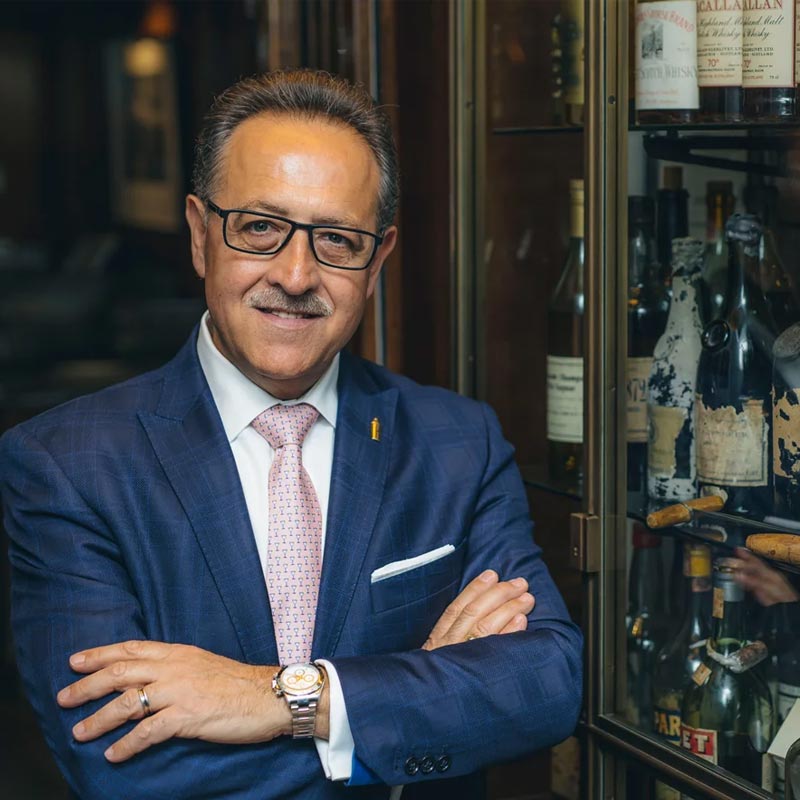
How did your early experiences in a hotel bar shape your career in hospitality?
As a young boy, I worked in a charming, little bar in our area called Hotel Reginna on my summer holidays. This is where I encountered my very first mentor, Signor Raffaello, who really showed me the way. I learned from him that if you look after your home and you care for the people who come to your home, they will feel good and they will enjoy visiting. The same goes for the place you work. I also learned to be highly particular. I’ve always been quite eccentric, doing things in particular ways. One of my first duties at Hotel Reginna, when I was 11 years old, was to slice bread for breakfast for the restaurant—and each slice had to be the same. I was so particular that I even developed a mold to make sure each slice was the perfect width. From an early age, I learned to be very fussy. There are things you must do in your work, so you might as well do them properly.
Can you give an example of how you’ve looked after the people in your home, your bars?
The well-known story of the DUKES Martini, which I created in 1985, is a great example. A particular guest stayed at the hotel for a week, and each day, he would come to the bar, asking for a martini that was very dry and very cold. Of course, the challenge was that I could make it colder by stirring it more, but that would cause dilution. He would say, “Yes, this is cold enough, but it’s not dry enough.” He was a two-martini man, so I would stir his second a bit less, and he would say…
“Yes, this is dry enough, but it’s not cold enough”
Can you give an example of how you’ve looked after the people in your home, your bars?
The well-known story of the DUKES Martini, which I created in 1985, is a great example. A particular guest stayed at the hotel for a week, and each day, he would come to the bar, asking for a martini that was very dry and very cold. Of course, the challenge was that I could make it colder by stirring it more, but that would cause dilution. He would say, “Yes, this is cold enough, but it’s not dry enough.” He was a two-martini man, so I would stir his second a bit less, and he would say…
“Yes, this is dry enough, but it’s not cold enough”
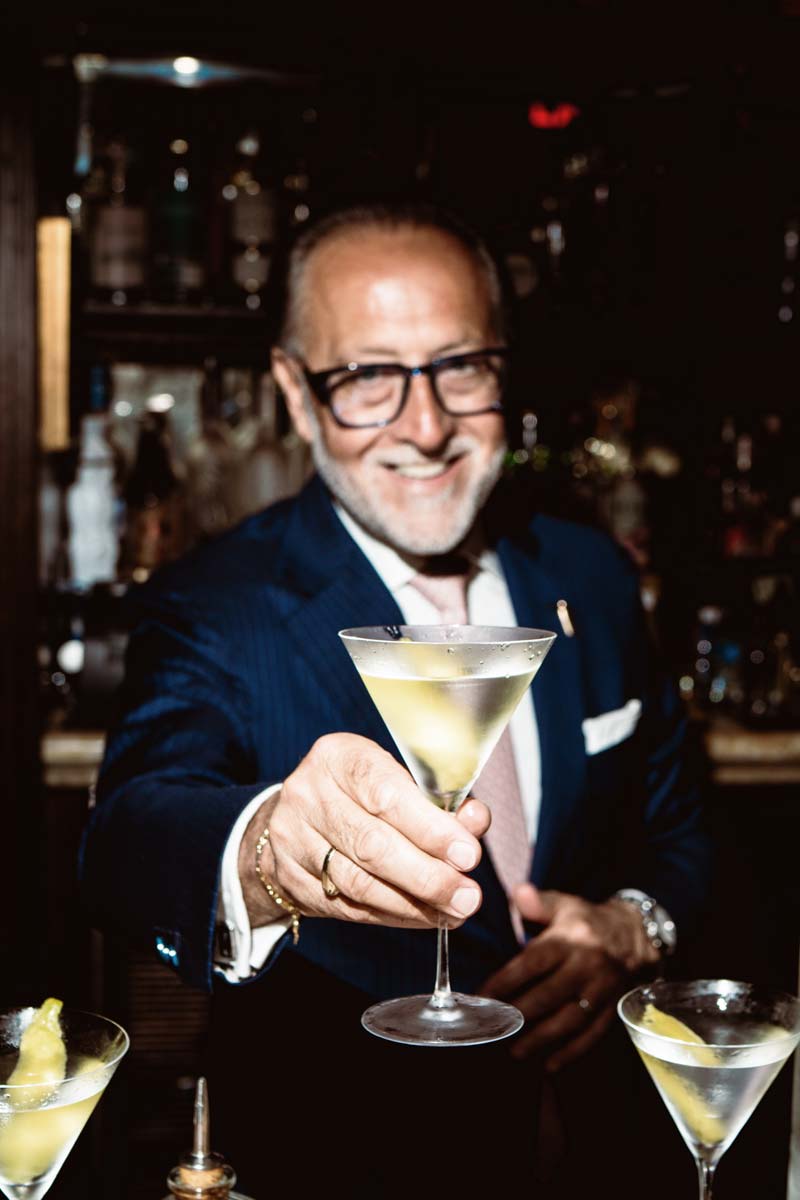
This went on for three days and was turning into my own little nightmare. If you care about what you do, then your task is always to fulfill the expectation of the person that is in front of you. Eventually, it occurred to me to put a bottle of gin and two glasses in the freezer. And when my guest returned on the fifth day, I took the gin and a glass from the freezer. Don’t ask me why, but I chose to pour it directly in the glass and lay the vermouth on top with a dash bottle. He finished the drink without complaint and ordered another. He took one sip, and left the bar.

A few hours later, he came back down and introduced himself as Stanton Delaplane, a famous journalist. He said, “Salvatore, I enjoyed your martini so much that I wrote a little article about it.” And the article said, “If you ever go to London, you must make a stop at the DUKES Bar, where Salvatore will make you the best martini on the planet. This martini really brought me to the world stage because everybody started to come to the DUKES to have this unique martini. If I hadn’t cared, if I didn’t figure out how to fulfill the expectation of this person, maybe I wouldn’t be here talking to you.
You’re also famous for creating the Breakfast Martini.
What inspired this cocktail?
In those days, I finished work later and later, and every morning, my wife would say to me, “Why don’t you have some breakfast, it will give you energy.” But every morning, I refused. One particular morning, I must have looked worse than ever, and she presented me with some toast with marmalade, commanding me to eat it. Now we all know, if you’re a smart man, you obey your wife. And while I had tasted marmalade before, 1996 was the golden age of cocktail making, and the taste was playing on my tongue. I used to play with all kinds of different things to elevate the cocktail experience, from using better spirits to playing with flavors like balsamic vinegar, truffle, garlic. In that moment, when my wife gave me the toast, I noticed the marmalade—it was quite bitter and tangy with a hint of sweetness. I kidnapped the marmalade, and I took it to work, daydreaming about what I should use with this marmalade to make a cocktail.
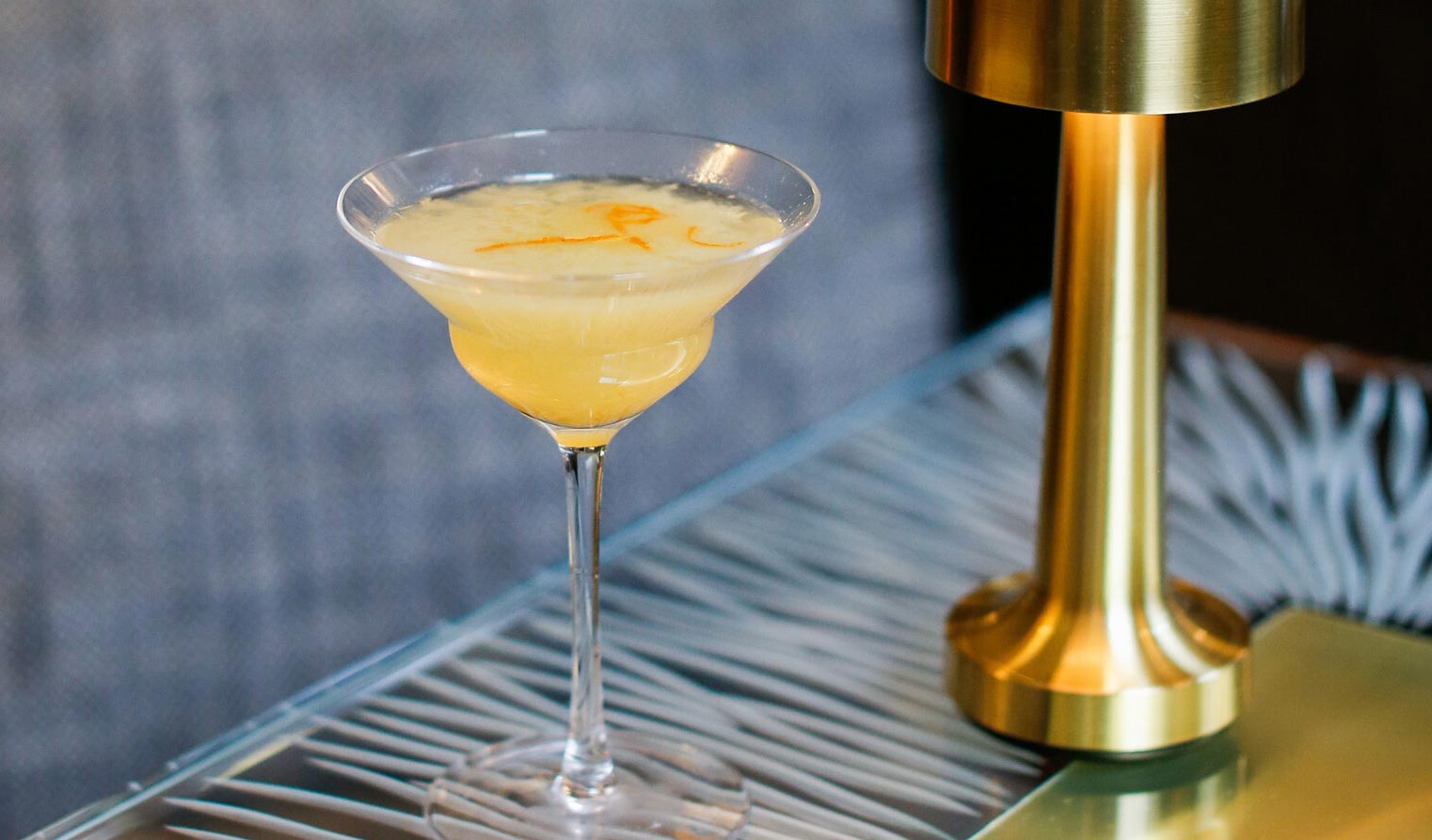
Obviously, orange marmalade is quite an English thing, so it had to be an English heritage. I chose gin. Then I wanted a bit of sweetness, but not sweetness from a gum syrup—something more refined, like Cointreau, was the perfect combination. Finally, a hint of citrus with the teaspoon of marmalade. By the time I arrived at work, my cocktail was already created. But what was more clever was the name: Breakfast Martini. People are intrigued when they see it on the menu. But I got in trouble with my wife the next day because the marmalade wasn’t there for her usual breakfast.
How can aspiring bartenders today go about being different when so much has been done already?
Everything has been done already. What makes the difference is the way you do it. For example, I’m sure plenty of my predecessors have had the idea to sell very old spirits, but I sell them differently. I associate the vintage with specific historical events, which also came about at DUKES.
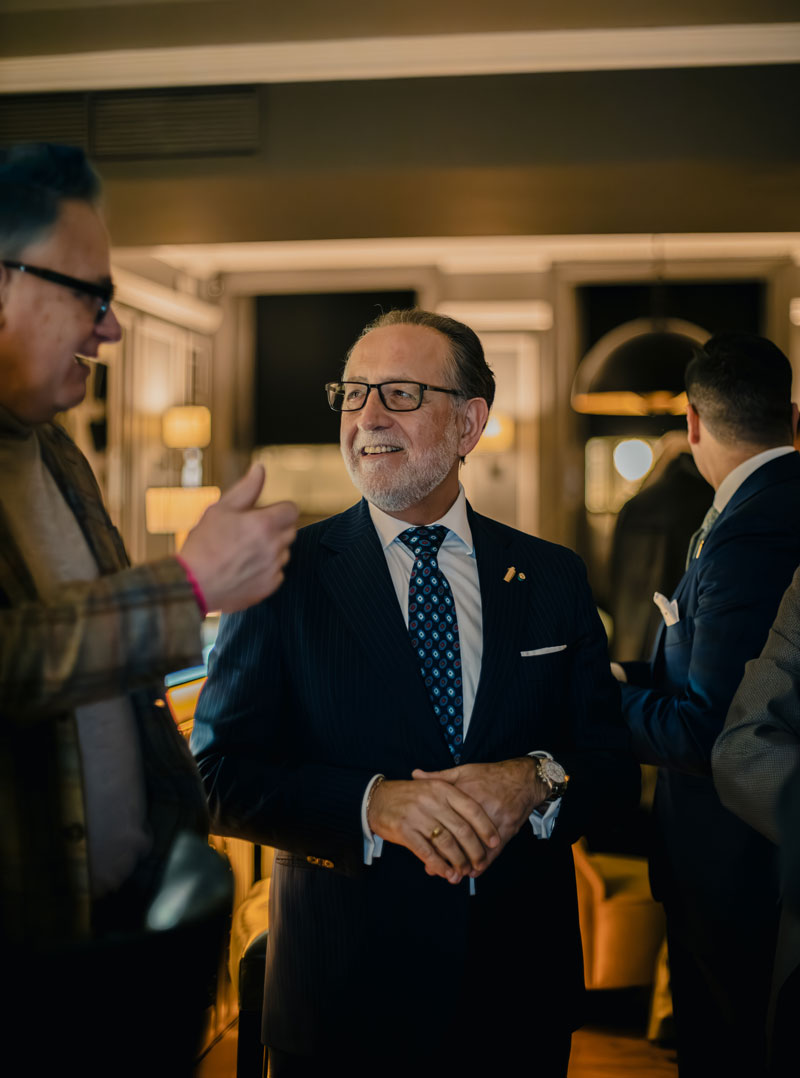
DUKES was a very small bar—just a tiny room with six tables—where I could not generate much revenue through quantity. If I wanted to make more money, I needed to create quality. I thought, “Well, I have all this history around me. How can we be part of history?” We can see history, we can touch it, we can feel it, we can read it. But one thing no one really thought about was tasting history, which gave me the idea to develop and sell Liquid History.
You are not just buying a cognac from 1812, you are buying a cognac from the time Tchaikovsky composed his 1812 Overture. From the time the British set fire to Washington, D.C. From the time Napoleon was retreating from Moscow. I became the crazy Italian guy who sells Liquid History—and I took that little bar from £400 or £500 a week, up to £10,000 a table. There is always a way to be different.
There’s a lot of pressure today to stand out—flair bartending, crazy garnishes, social media. What actually matters if you want to be great?
If you want to be great in this field, don’t just think about mixology. Making a great drink is an art, but many people can learn it. What truly made me is the art of hospitality. Your job is to make your guests feel at home. Stevie Wonder came to my bar quite a few times, for example, and I started to understand his palate—he loved a bubble with something sweet. I created a champagne cocktail for him and called it the Champagne Wonder. He enjoyed it so much that he had several. Another time, I had my pianist playing the piano in my bar, and I noticed that Steve was rocking his head listening to the music. I asked him if he would like to play, and he said, “Yes, I would love to!” So, he stood up, and I took him to the piano, and he started to play—for over half an hour. He was enjoying himself. He was at home.
“When you master both mixology and hospitality together, you can call yourself a great bartender”
Nicole Bump
Nicole is a seasoned content strategist and writer with 15+ years of experience turning complex ideas into compelling stories. As founder of Bump Inbound, she helps brands connect with audiences through thoughtful strategy, sharp planning, and standout writing.