


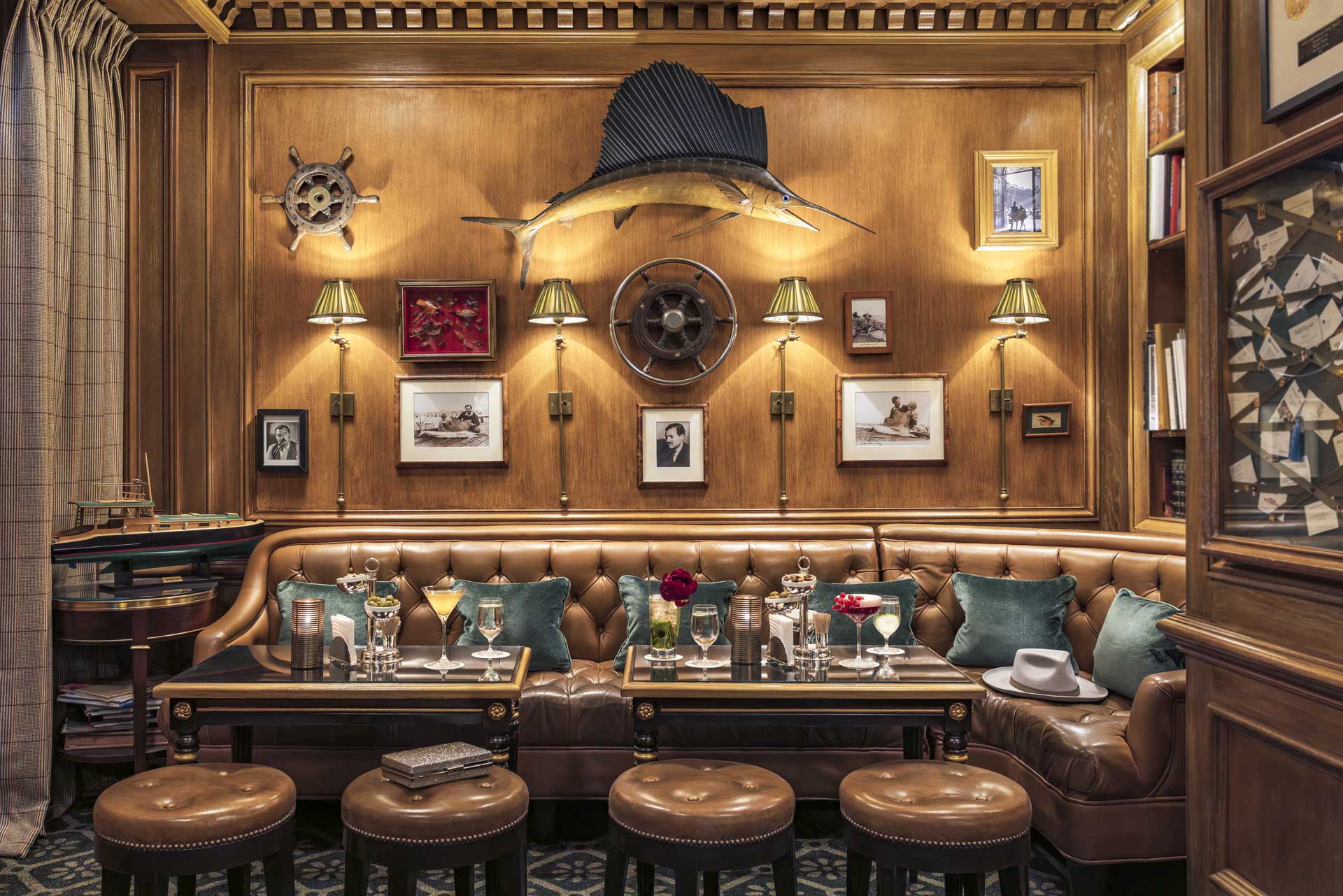
Bar Hemingway: History, myth and the making of a legend
Bar Hemingway
Bar Hemingway:
History, myth and the making of a legend
Ernest Hemingway’s name, spirit, and stories are stitched into every corner of this eponymous bar. To understand why, you have to trace the evolution of the Hotel Ritz Paris’s bars—through reinvention, wartime drama, and the vision of one of the greatest bartenders of our time.
Bar Hemingway history: The origin
The Ritz Paris opened its doors in 1898, instantly setting a new standard for luxury hospitality. The hotel added the Le Café Parisien bar in 1921, but per social norms of the era, women weren’t welcome.
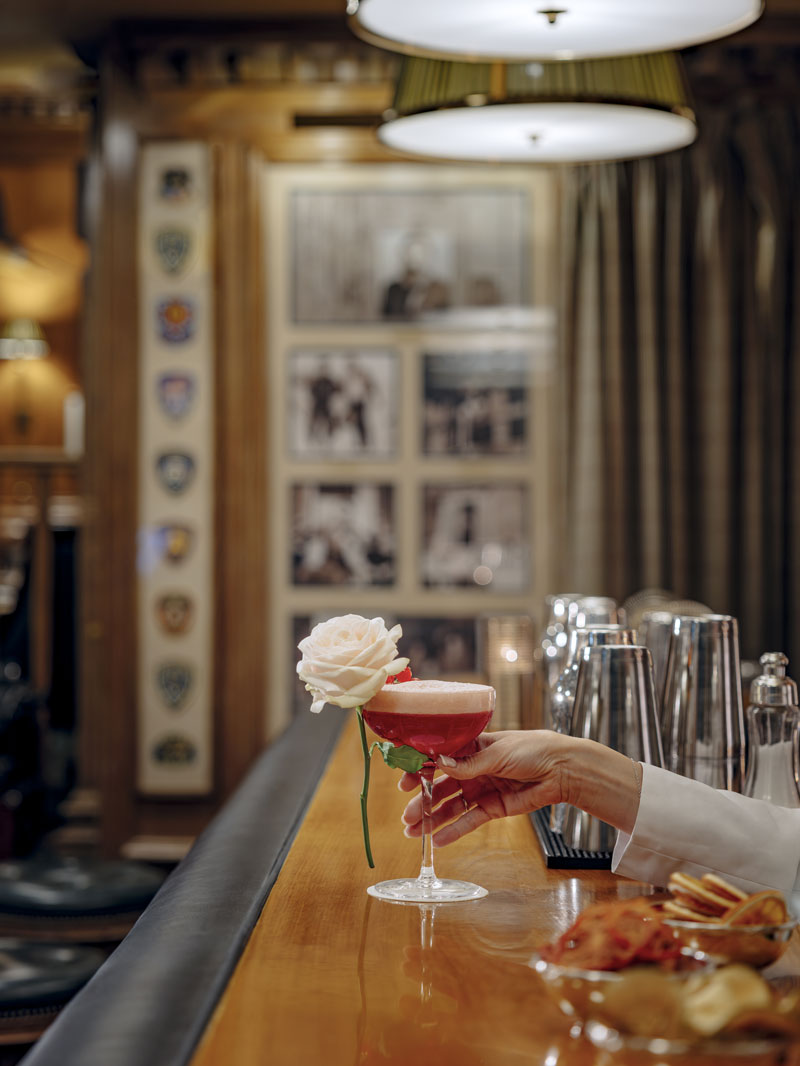
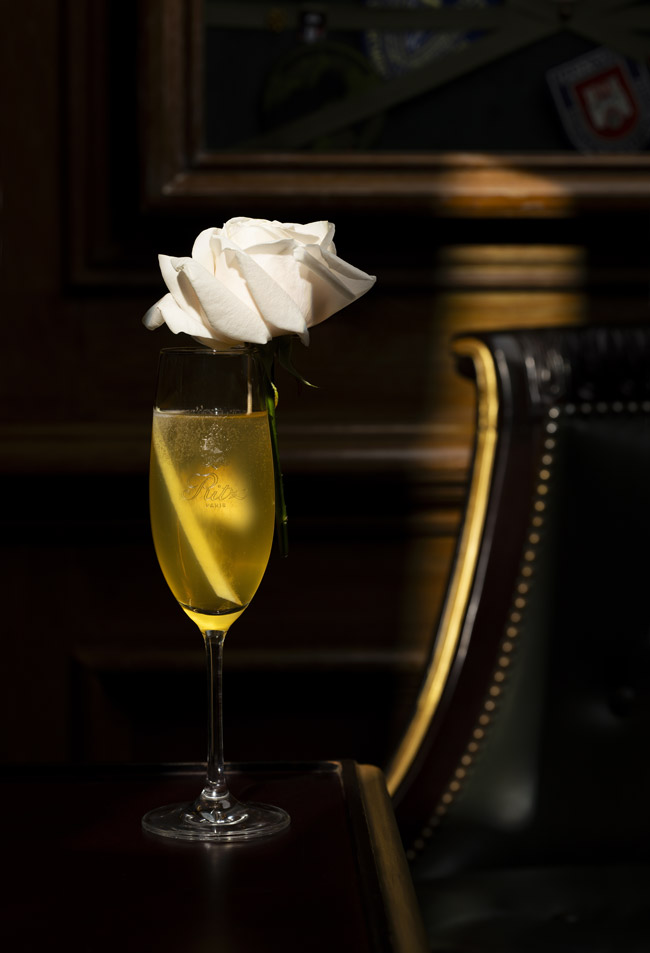
Instead, César Ritz created a ladies bar at the Ritz, just off the main lounge—a daring innovation at the time—to accommodate women while their husbands drank across the hall. Drinks here were often adorned with roses or orchids, a flourish meant to appeal to its fashionable female clientele.
About fifteen years later, the mood shifted. In 1936, as social rules loosened, the Ritz Hotel reinvented this waiting room as Le Petit Bar. No longer off-limits, it welcomed both men and women into its intimate space.
Ernest Hemingway became a regular, using the bar both as a place to drink and as a perch for writing. He was known to stretch tabs beyond his means, often relying on friends like F. Scott Fitzgerald and his wife Zelda to cover the bill.
Bertin’s Bar
As Le Petit Bar found its stride in the 1930s, it became defined not just by its guests but by its barman: Bernard Azimont (affectionately known as Bertin). Charismatic and attentive, Bertin tended the Ritz bar for an astonishing 48 years. His warmth made the snug bar a home for regulars, to the point that it was widely known simply as Bertin’s Bar.
Guests came not only for cocktails but for Bertin himself—a bartender whose personality was as essential to the room as its wood-paneled walls.
Bertin’s tenure stretched through decades of social change, from the glamorous prewar years to the darker days of the occupation. When he finally retired in 1974, an era ended with him, and the bar’s energy drained away.
By 1979, in a last-ditch attempt to revive business, the Ritz rebranded its Le Petit Bar as Bar Hemingway with the blessing of the Hemingway family. Unfortunately, it didn’t take. By 1982, the bar was shuttered.
Colin Peter Field revives Bar Hemingway
The revival came in 1994, when the Ritz entrusted a young Englishman named Colin Field, bartender, to reopen the forgotten room. Starting with just four tables, Field reinvented Bar Hemingway as something entirely new: a jewel box of a bar that blended high craft with warm conversation.
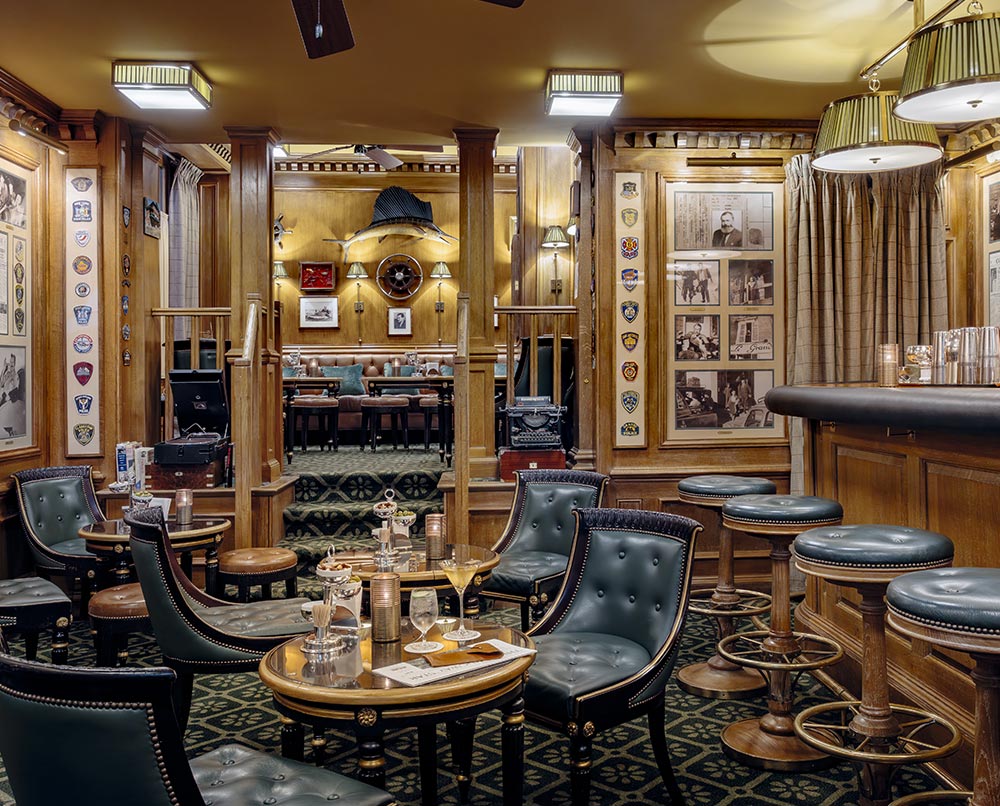
Demand quickly grew, and by 1997 the bar expanded into the neighboring concierge quarters, today holding nine tables and just 35 seats.
Field didn’t just put Bar Hemingway back on the map; he made it a global destination. Named “Best Head Bartender in the World” by the likes of Forbes and Travel & Leisure, he attracted celebrities, diplomats, and aspiring bartenders alike.
“People are my total influence. It’s not about the cocktail—it’s about the person.”
Colin Peter Field, Former Head Bartender
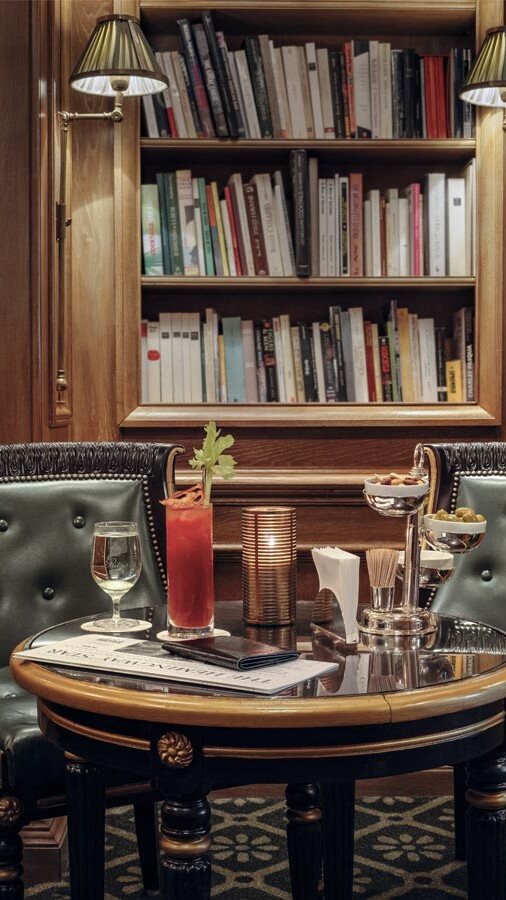
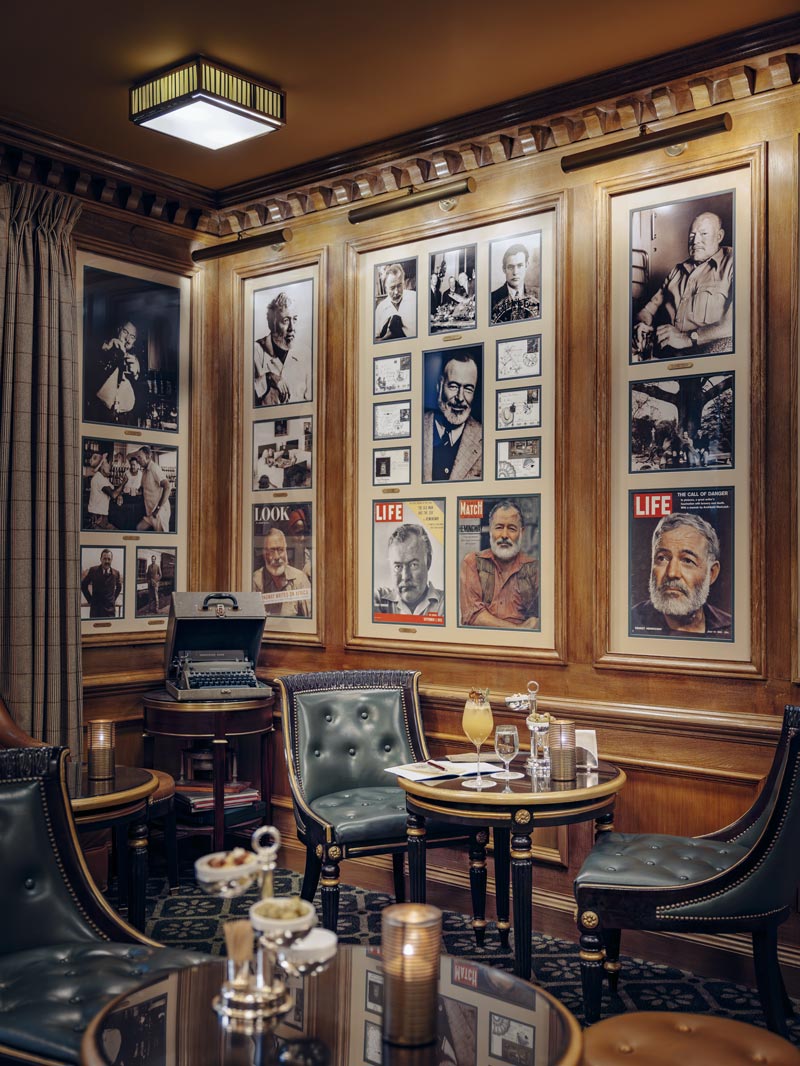
Field is also responsible for much of the ambiance at the Hemingway Bar. While many visitors assume the myriad historical items adorning the space belonged to Hemingway, most came from Field’s personal collection—including fishing rods and reels, a World War I biplane propeller, as well as photographs, letters, and memorabilia tied to Hemingway. Kate Moss even donated a vintage typewriter in homage to Hemingway.
Bar Hemingway’s storied cocktails
Field’s two most famous creations became synonymous with Bar Hemingway.
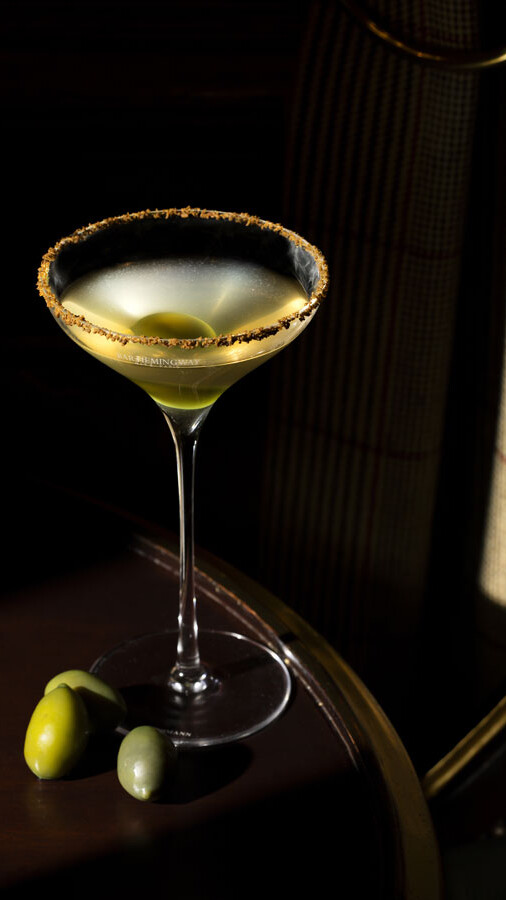
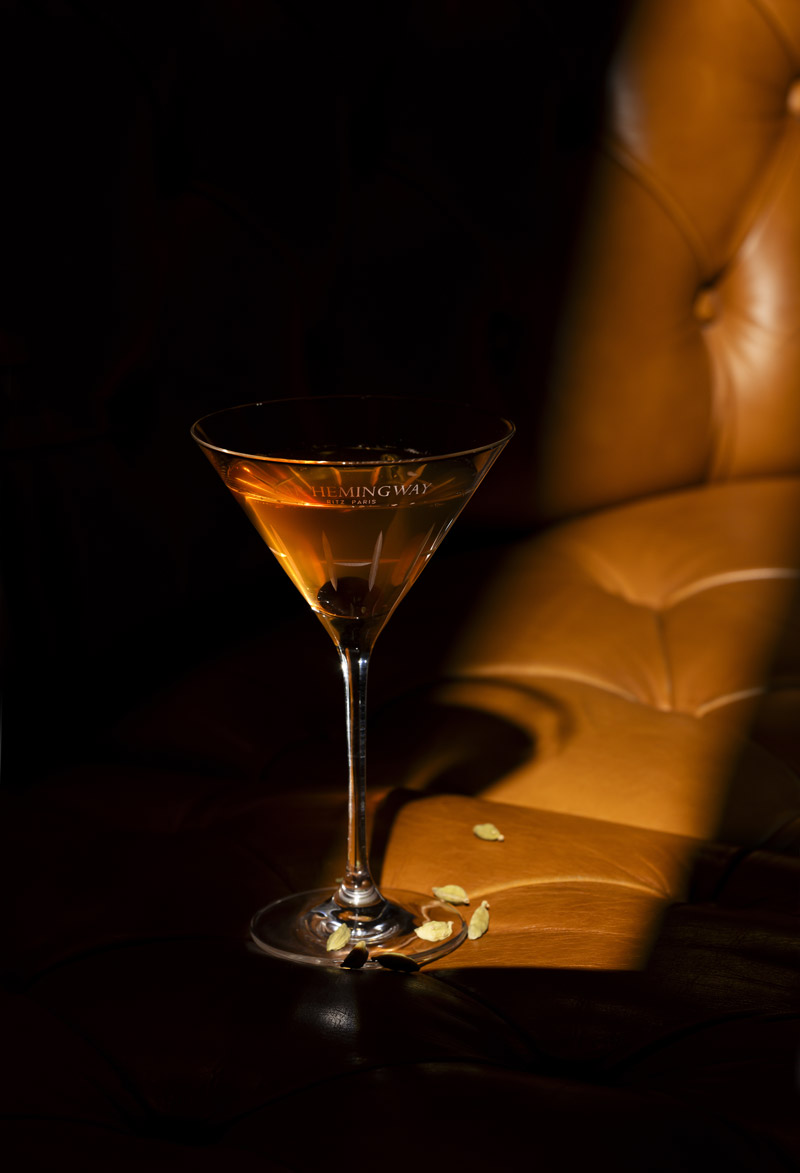
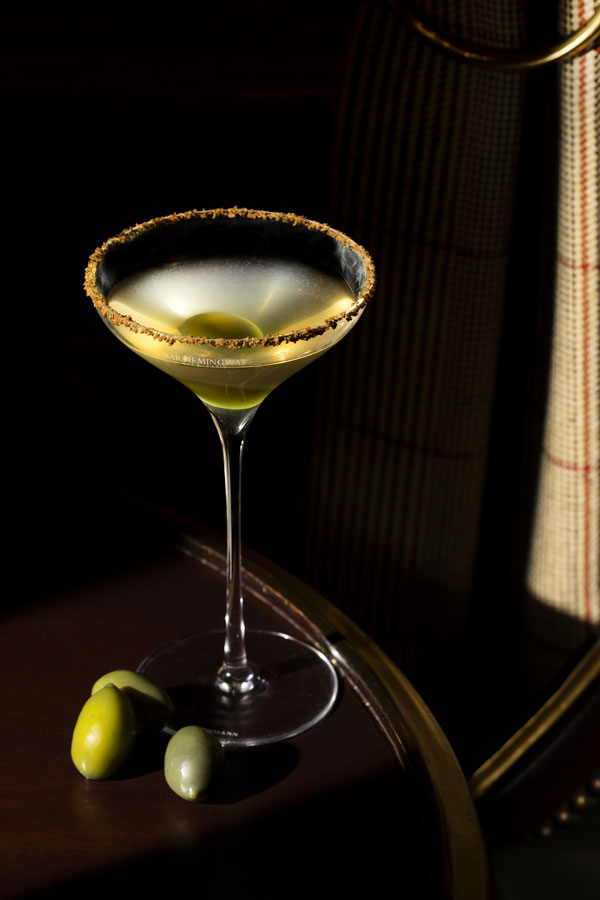
The Clean Dirty Martini, served at –24°C in custom-designed crystal, tastes intensely of picoline olives, thanks to an ice cube made of olive juice. The exact recipe, however, remains a closely guarded secret. “How I make it, I’m not telling,” Field once teased. “It’s a secret”.
Field’s personal favorite, however, is the Serendipity, a refreshing mix of Calvados, fresh mint, apple juice, and Champagne.
“My desert island cocktail would be the Serendipity… probably my all-round favorite.”
Colin Peter Field
Former Head Bartender
A legacy passed on
When the Ritz underwent a $400 million renovation in the 2010s, Bar Hemingway alone remained untouched, its charm too sacred to disturb.
What bartenders can take away
Bar Hemingway is a lesson in intimacy, storytelling, and service. Its reputation isn’t built on square footage or showmanship, but on the way a bartender can make a room—no matter how small—feel like the center of the world.
As Field explained: “I want you to go out of the bar and say, I just had a good time. That’s really what we’re doing.”
Bar Hemingway’s history shows that legends aren’t inherited; they’re made behind the bar, one guest and one glass at a time.
History, myth and the making of a legend
Ernest Hemingway’s name, spirit, and stories are stitched into every corner of this eponymous bar. To understand why, you have to trace the evolution of the Hotel Ritz Paris’s bars—through reinvention, wartime drama, and the vision of one of the greatest bartenders of our time.
Bar Hemingway history: The origin
The Ritz Paris opened its doors in 1898, instantly setting a new standard for luxury hospitality. The hotel added the Le Café Parisien bar in 1921, but per social norms of the era, women weren’t welcome.
Instead, César Ritz created a ladies bar at the Ritz, just off the main lounge—a daring innovation at the time—to accommodate women while their husbands drank across the hall. Drinks here were often adorned with roses or orchids, a flourish meant to appeal to its fashionable female clientele.
About fifteen years later, the mood shifted. In 1936, as social rules loosened, the Ritz Hotel reinvented this waiting room as Le Petit Bar. No longer off-limits, it welcomed both men and women into its intimate space.
Ernest Hemingway became a regular, using the bar both as a place to drink and as a perch for writing. He was known to stretch tabs beyond his means, often relying on friends like F. Scott Fitzgerald and his wife Zelda to cover the bill.
Hemingway’s “liberation” of the Ritz
The Ritz fell under Nazi control during World War II, and its bars became watering holes for German officers. Legend has it that as Paris was liberated in 1944, Hemingway—then a war correspondent—drove up to the Ritz in a jeep mounted with a machine gun. He burst into the hotel and declared he was there to liberate the Ritz. Upon learning the Germans had already fled, he promptly ordered 51 dry martinis for himself and the men with him.
The image of Hemingway famously “liberating” the bar is one of hospitality’s most enduring tales (even if parts of it may veer into myth).
Bertin’s Bar
As Le Petit Bar found its stride in the 1930s, it became defined not just by its guests but by its barman: Bernard Azimont (affectionately known as Bertin). Charismatic and attentive, Bertin tended the Ritz bar for an astonishing 48 years. His warmth made the snug bar a home for regulars, to the point that it was widely known simply as Bertin’s Bar.
Guests came not only for cocktails but for Bertin himself—a bartender whose personality was as essential to the room as its wood-paneled walls.
Bertin’s tenure stretched through decades of social change, from the glamorous prewar years to the darker days of the occupation. When he finally retired in 1974, an era ended with him, and the bar’s energy drained away.
By 1979, in a last-ditch attempt to revive business, the Ritz rebranded its Le Petit Bar as Bar Hemingway with the blessing of the Hemingway family. Unfortunately, it didn’t take. By 1982, the bar was shuttered.
The image of Hemingway famously “liberating” the bar is one of hospitality’s most enduring tales (even if parts of it may veer into myth).
Colin Peter Field revives Bar Hemingway
Colin Peter Field revives Bar Hemingway
The revival came in 1994, when the Ritz entrusted a young Englishman named Colin Field, bartender, to reopen the forgotten room. Starting with just four tables, Field reinvented Bar Hemingway as something entirely new: a jewel box of a bar that blended high craft with warm conversation.
Demand quickly grew, and by 1997 the bar expanded into the neighboring concierge quarters, today holding nine tables and just 35 seats.
Field didn’t just put Bar Hemingway back on the map; he made it a global destination. Named “Best Head Bartender in the World” by the likes of Forbes and Travel & Leisure, he attracted celebrities, diplomats, and aspiring bartenders alike.
“People are my total influence. It’s not about the cocktail—it’s about the person.”
Colin Peter Field, Former Head Bartender
Field is also responsible for much of the ambiance at the Hemingway Bar. While many visitors assume the myriad historical items adorning the space belonged to Hemingway, most came from Field’s personal collection—including fishing rods and reels, a World War I biplane propeller, as well as photographs, letters, and memorabilia tied to Hemingway. Kate Moss even donated a vintage typewriter in homage to Hemingway.
Bar Hemingway’s storied cocktails
Field’s two most famous creations became synonymous with Bar Hemingway.
The Clean Dirty Martini, served at –24°C in custom-designed crystal, tastes intensely of picoline olives, thanks to an ice cube made of olive juice. The exact recipe, however, remains a closely guarded secret. “How I make it, I’m not telling,” Field once teased. “It’s a secret”.
Field’s personal favorite, however, is the Serendipity, a refreshing mix of Calvados, fresh mint, apple juice, and Champagne.
“My desert island cocktail would be the Serendipity… probably my all-round favorite.”
Colin Peter Field, Former Head Bartender
A legacy passed on
When the Ritz underwent a $400 million renovation in the 2010s, Bar Hemingway alone remained untouched, its charm too sacred to disturb.
What bartenders can take away
Bar Hemingway is a lesson in intimacy, storytelling, and service. Its reputation isn’t built on square footage or showmanship, but on the way a bartender can make a room—no matter how small—feel like the center of the world. As Field explained:
“I want you to go out of the bar and say, I just had a good time. That’s really what we’re doing.”
Bar Hemingway’s history shows that legends aren’t inherited; they’re made behind the bar, one guest and one glass at a time.

Nicole Bump
Nicole is a seasoned content strategist and writer with 15+ years of experience turning complex ideas into compelling stories. As founder of Bump Inbound, she helps brands connect with audiences through thoughtful strategy, sharp planning, and standout writing.

The Knickerbocker Martini: Recipe and Origin Story
The Knickerbocker Martini
The Knickerbocker Martini: Recipe and Origin Story
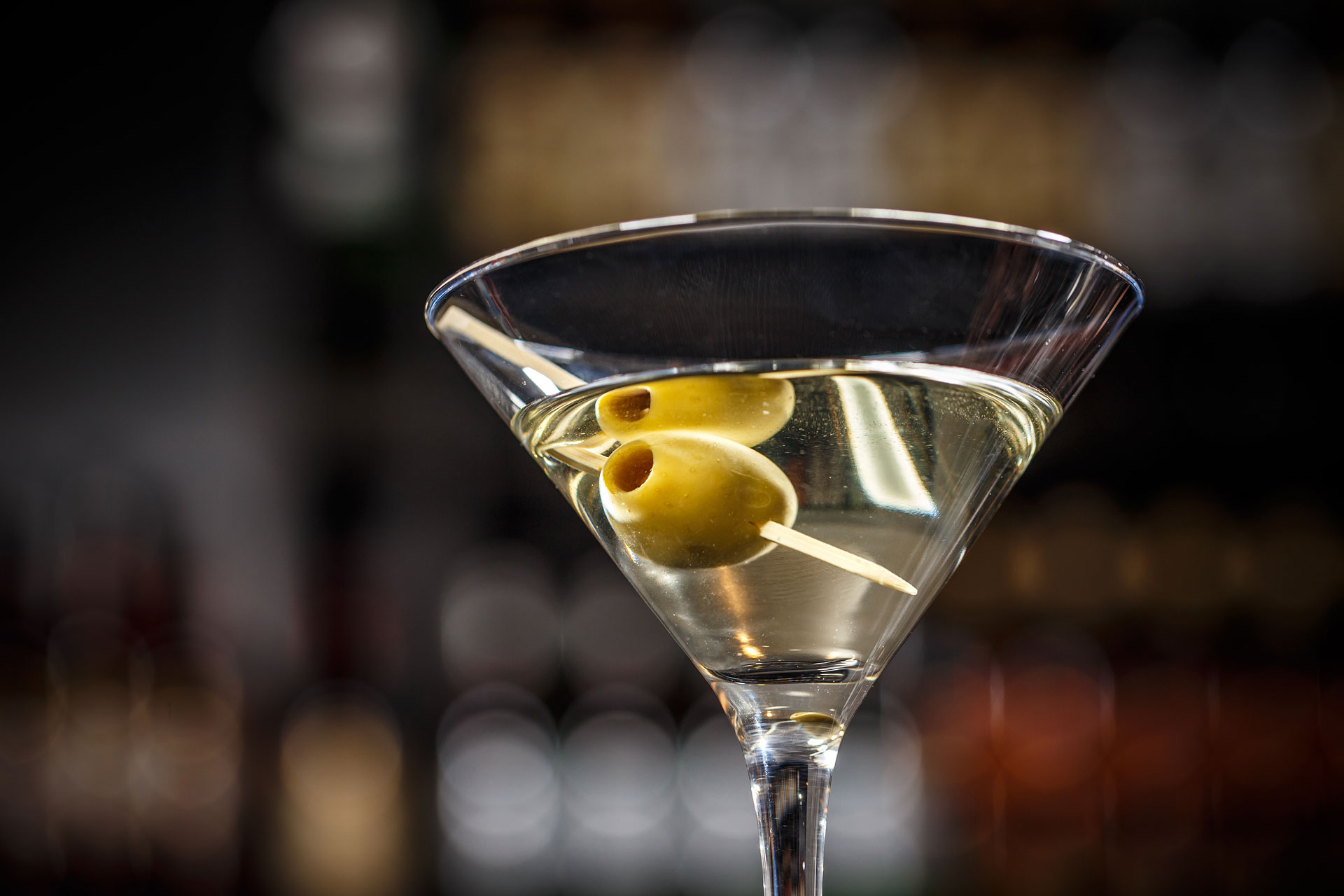
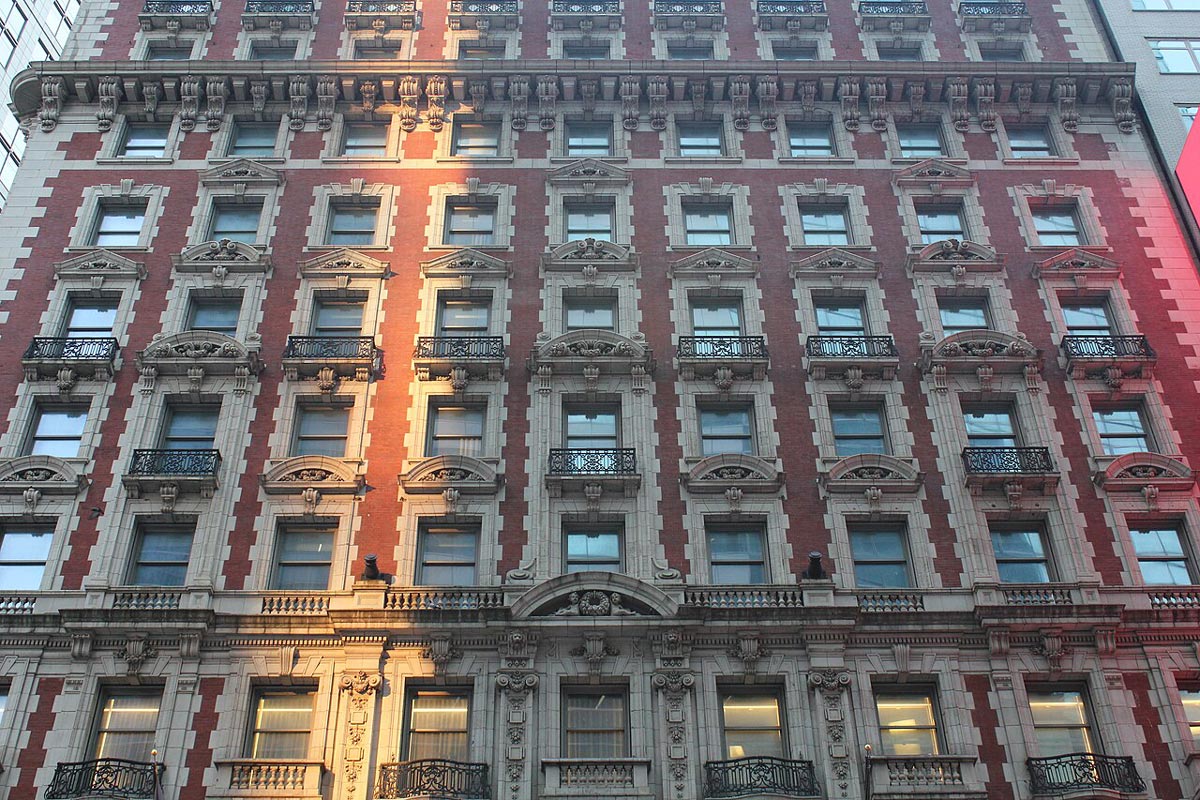
The Knickerbocker Martini, created at New York City’s Knickerbocker Hotel, is often hailed as the first dry martini. Whether that claim is true depends on whom you ask. Few cocktails have inspired so much debate over so few ingredients, and the dry martini’s origin story is packed with competing recipes, rival bartenders, and strong opinions. While the Knickerbocker may not have been the first to mix gin and dry vermouth, it helped define a cocktail that would become one of the most enduring drinks in history.
Who invented the dry martini?
By the time the Knickerbocker Martini appeared in 1912, bartenders had already spent a decade experimenting with drier combinations of gin and vermouth. To understand how the modern dry martini came to be, it helps to trace the cocktail’s evolution through a handful of influential recipes.
- 1880s: About 30 years prior in the, cocktail enthusiasts enjoyed the Martinez Cocktail, a sweeter cousin to the martini, made with Old Tom gin, sweet vermouth, and maraschino liqueur.
- 1900: Around the turn of the century, American bartender Harry Johnson published Bartender’s Manual. The manual included the Marguerite Cocktail, the first-recorded recipe using Plymouth gin and dry French vermouth. This recipe served as the blueprint for the modern dry martini.
- 1904: Frank Newman, a bartender at the Ritz Paris, published the book American-Bar, which contained the first-recorded recipe explicitly titled Dry Martini Cocktail.
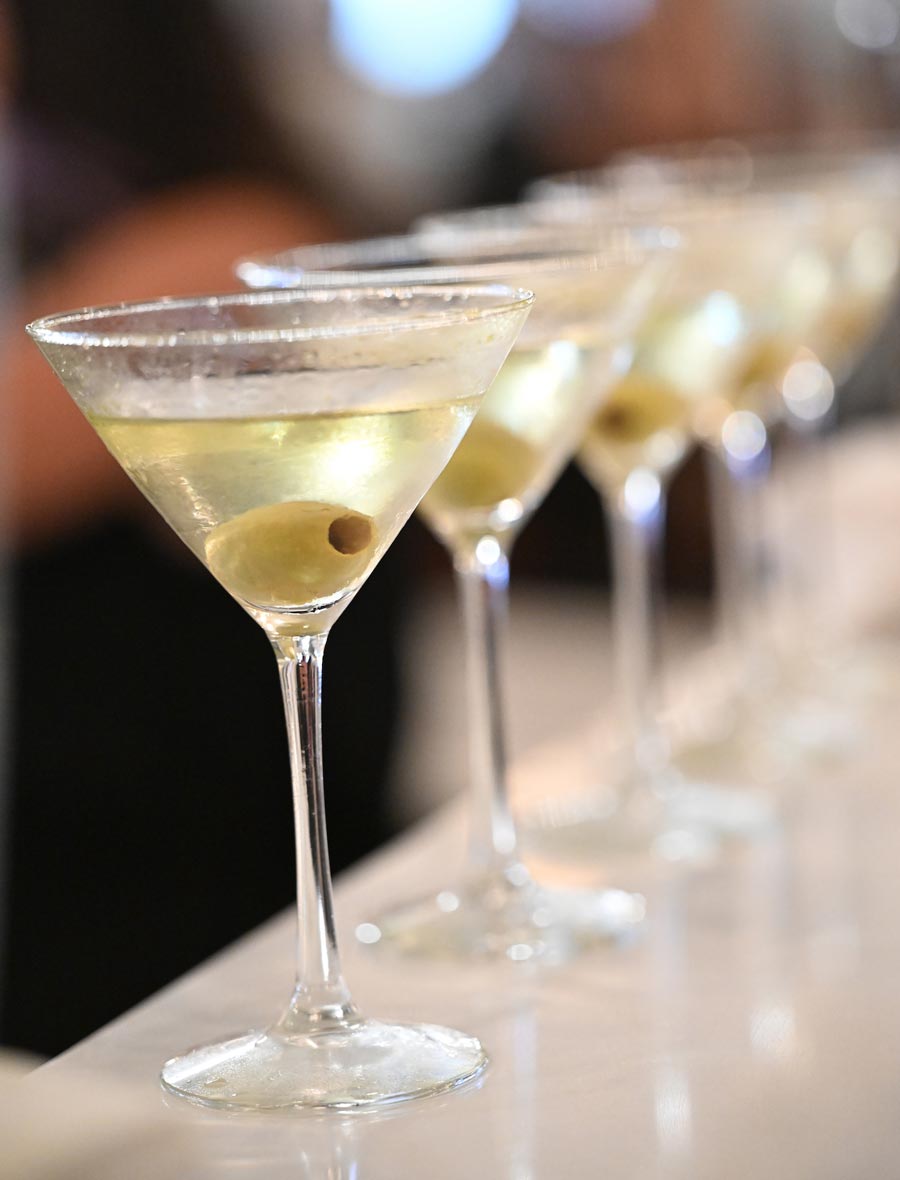
- 1912: Bartender Martini di Arma di Taggia at New York’s Knickerbocker Hotel mixed what is often called the first dry martini, combining gin, dry vermouth, and bitters. The recipe came to be known as the Knickerbocker Martini—or the Knickerbocker Dry Martini.
Knickerbocker Martini to modern day
Regardless of which came first, none of these earlier recipes quite resembles what we’ve come to expect from a dry martini today. The modern, almost pure-gin versions are very different from the original proportions, which leaned closer to a 2:1 or even 50/50 ratio. The following historical versions of the dry martini track its evolution from a smooth, equal-parts drink to an ultra-dry classic.
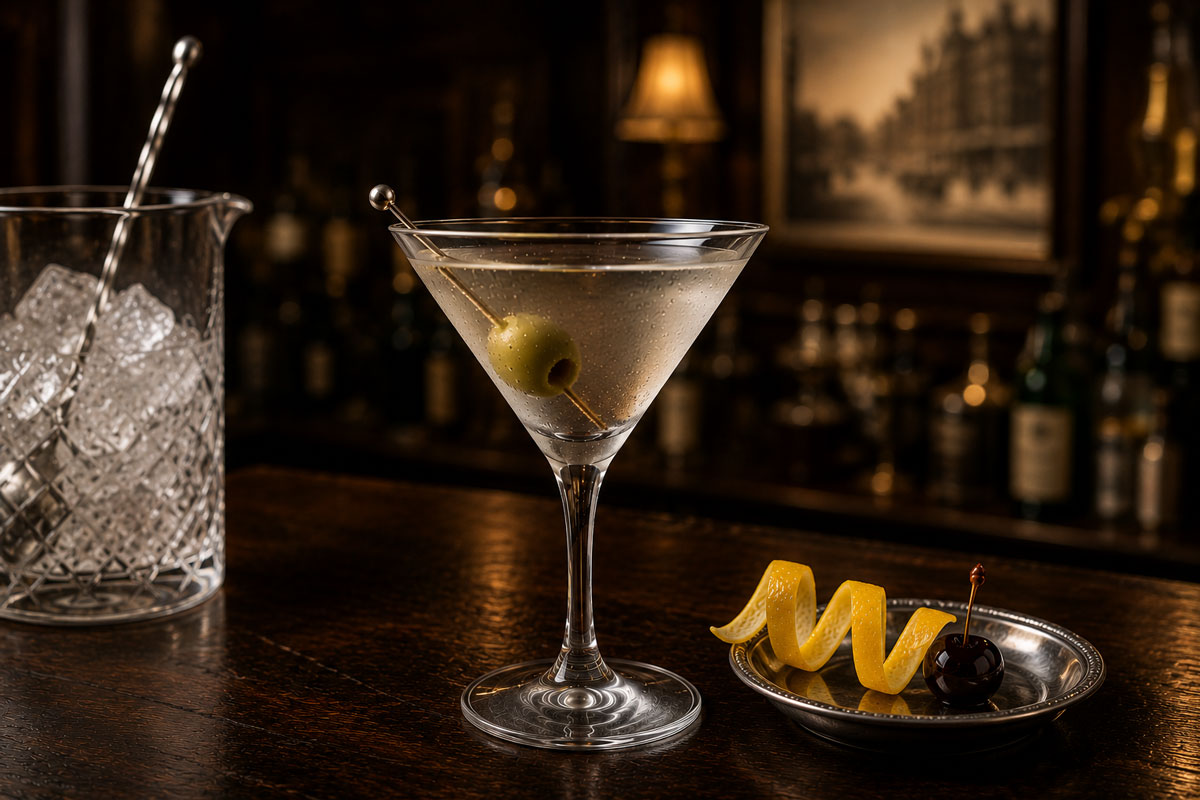
1. Frank Newman’s 1904 dry martini cocktail
This early French recipe relies on a high volume of vermouth and a splash of citrus liqueur to balance the spirit.
Ingredients:
- 1.5 oz London dry gin
- 1.5 oz dry vermouth
- 3 dashes Angostura or orange bitters
- Lemon twist, cherry, or olive for garnish
Preparation:
- Stir all ingredients with ice until freezing cold.
- Strain into a chilled glass.
- Garnish as desired.
1. Frank Newman’s 1904 dry martini cocktail
This early French recipe relies on a high volume of vermouth and a splash of citrus liqueur to balance the spirit.
Ingredients:
- 1.5 oz London dry gin
- 1.5 oz dry vermouth
- 3 dashes Angostura or orange bitters
- Lemon twist, cherry, or olive for garnish
Preparation:
- Stir all ingredients with ice until freezing cold.
- Strain into a chilled glass.
- Garnish as desired.
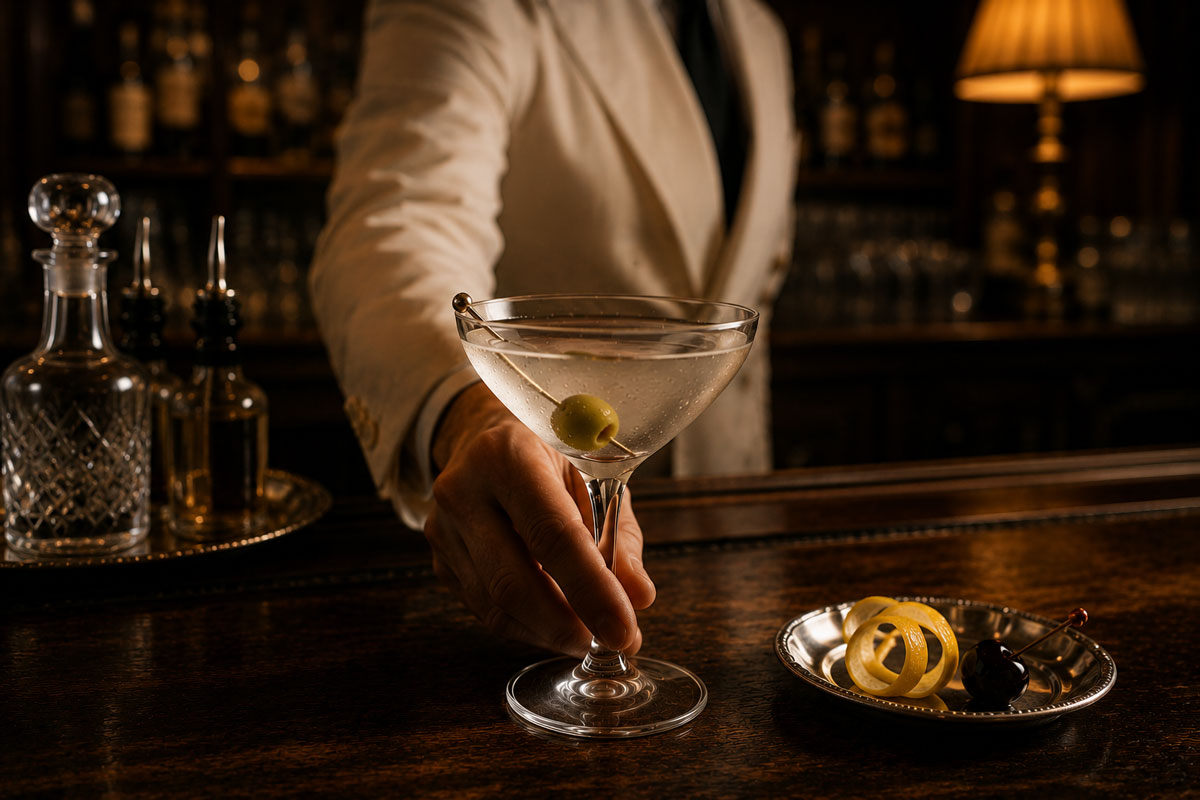
2. The 1912 Knickerbocker Martini recipe
While the Knickerbocker Hotel was one of the hottest bars in New York City at the time, the original Knickerbocker Martini recipe is hard to come by. The strongest historical evidence points to a 50/50 gin-to-dry-vermouth ratio with orange bitters, which is much closer to Frank Newman’s 1904 recipe than to the ultra-dry martinis that came later.
Ingredients:
- 1.5 oz London dry gin
- 1.5 oz dry vermouth
- 2 dashes orange bitters
- Lemon twist or olive for garnish
Preparation:
- Stir thoroughly with cracked ice.
- Strain into a coupe glass.
- Garnish with a single green olive.
2. The 1912 Knickerbocker Martini recipe
While the Knickerbocker Hotel was one of the hottest bars in New York City at the time, the original Knickerbocker Martini recipe is hard to come by. The strongest historical evidence points to a 50/50 gin-to-dry-vermouth ratio with orange bitters, which is much closer to Frank Newman’s 1904 recipe than to the ultra-dry martinis that came later.
Ingredients:
- 1.5 oz London dry gin
- 1.5 oz dry vermouth
- 2 dashes orange bitters
- Lemon twist or olive for garnish
Preparation:
- Stir thoroughly with cracked ice.
- Strain into a coupe glass.
- Garnish with a single green olive.
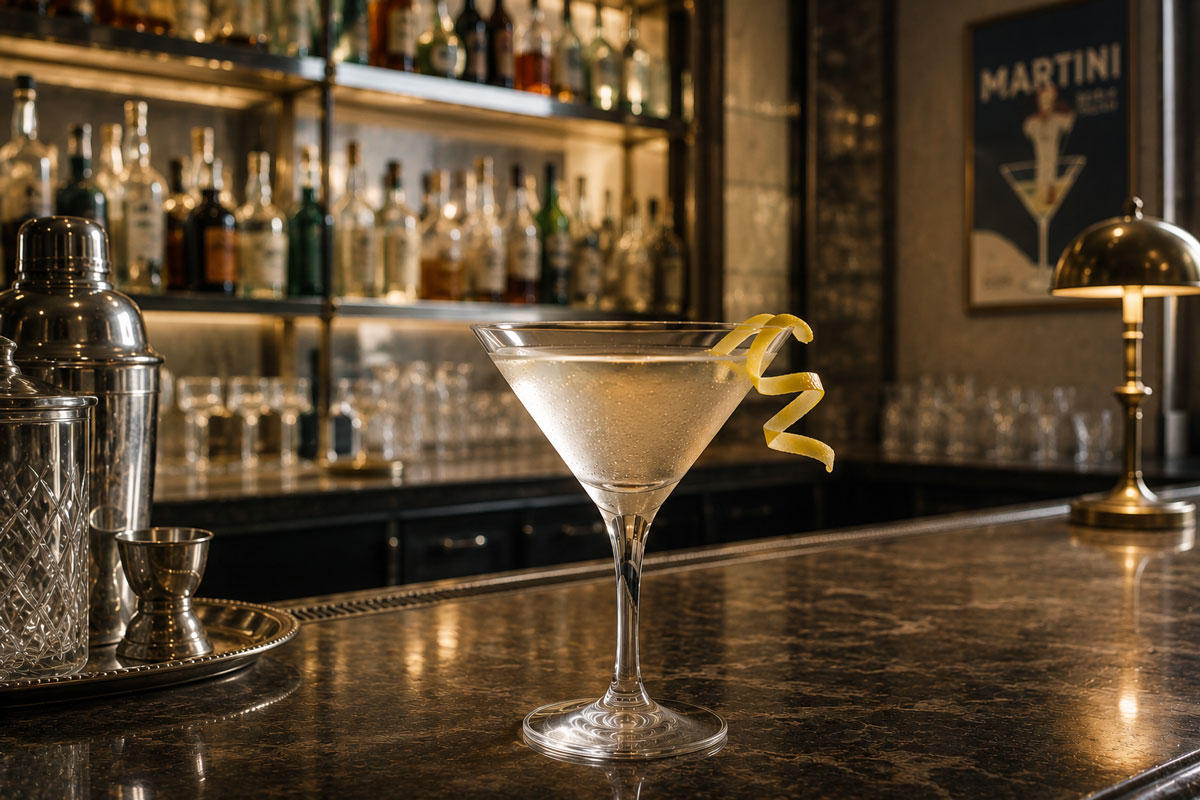
3. The modern “bone dry” martini
The bone dry martini arrived in the around the 1950s, reflecting evolving tastes in mid-century America. This dry martini recipe reduces vermouth to a whisper, letting the gin completely dominate.
Ingredients:
- 2.5 oz high-proof London dry gin
- 1 splash dry French vermouth
Preparation:
- Coat the inside of a chilled martini glass with vermouth and discard the excess liquid.
- Shake or stir the gin rapidly with ice until ice-cold.
- Strain into the rinsed glass.
- Garnish with an olive or a lemon twist.
3. The modern “bone dry” martini
The bone dry martini arrived in the around the 1950s, reflecting evolving tastes in mid-century America. This dry martini recipe reduces vermouth to a whisper, letting the gin completely dominate.
Ingredients:
- 2.5 oz high-proof London dry gin
- 1 splash dry French vermouth
Preparation:
- Coat the inside of a chilled martini glass with vermouth and discard the excess liquid.
- Shake or stir the gin rapidly with ice until ice-cold.
- Strain into the rinsed glass.
- Garnish with an olive or a lemon twist.
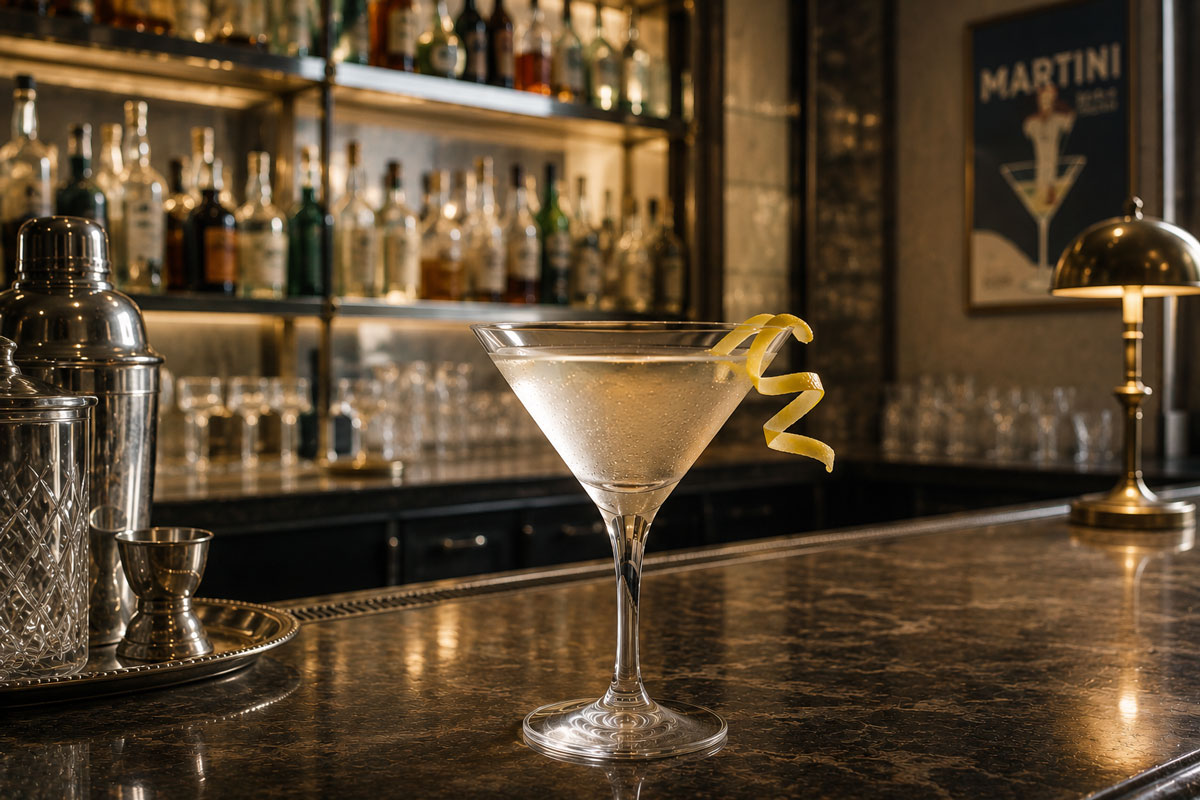
4. The Knickerbocker Martini recipe today
Today, the Knickerbocker hotel serves what is essentially a Perfect Martini—using both dry and sweet vermouth—which bridges the gap between the sweeter pre-martini cocktails and the ultra-dry versions that became popular later.
Ingredients:
- 2 oz London dry or Tanqueray No. Ten gin
- 3/4 oz dry vermouth
- 1/2 oz sweet vermouth
- 1 dash orange bitters
- 1 dash citrus bitters
- Lemon peel for garnish
Preparation:
- Add all ingredients to a mixing glass with ice.
- Stir until thoroughly chilled.
- Strain into a chilled martini glass.
- Garnish with a lemon peel.
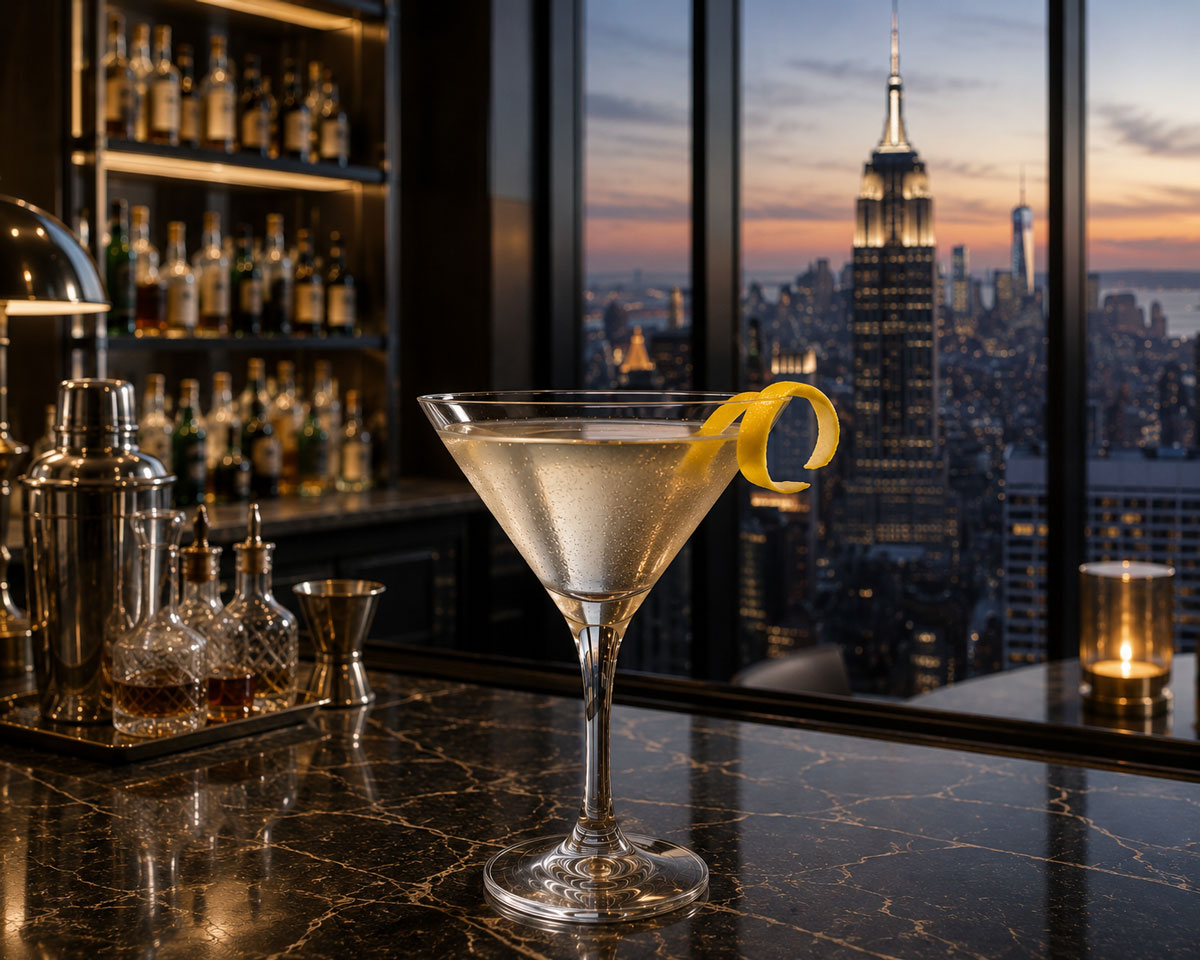
4. The Knickerbocker Martini recipe today
Today, the Knickerbocker hotel serves what is essentially a Perfect Martini—using both dry and sweet vermouth—which bridges the gap between the sweeter pre-martini cocktails and the ultra-dry versions that became popular later.
Ingredients:
- 2 oz London dry or Tanqueray No. Ten gin
- 3/4 oz dry vermouth
- 1/2 oz sweet vermouth
- 1 dash orange bitters
- 1 dash citrus bitters
- Lemon peel for garnish
Preparation:
- Add all ingredients to a mixing glass with ice.
- Stir until thoroughly chilled.
- Strain into a chilled martini glass.
- Garnish with a lemon peel.
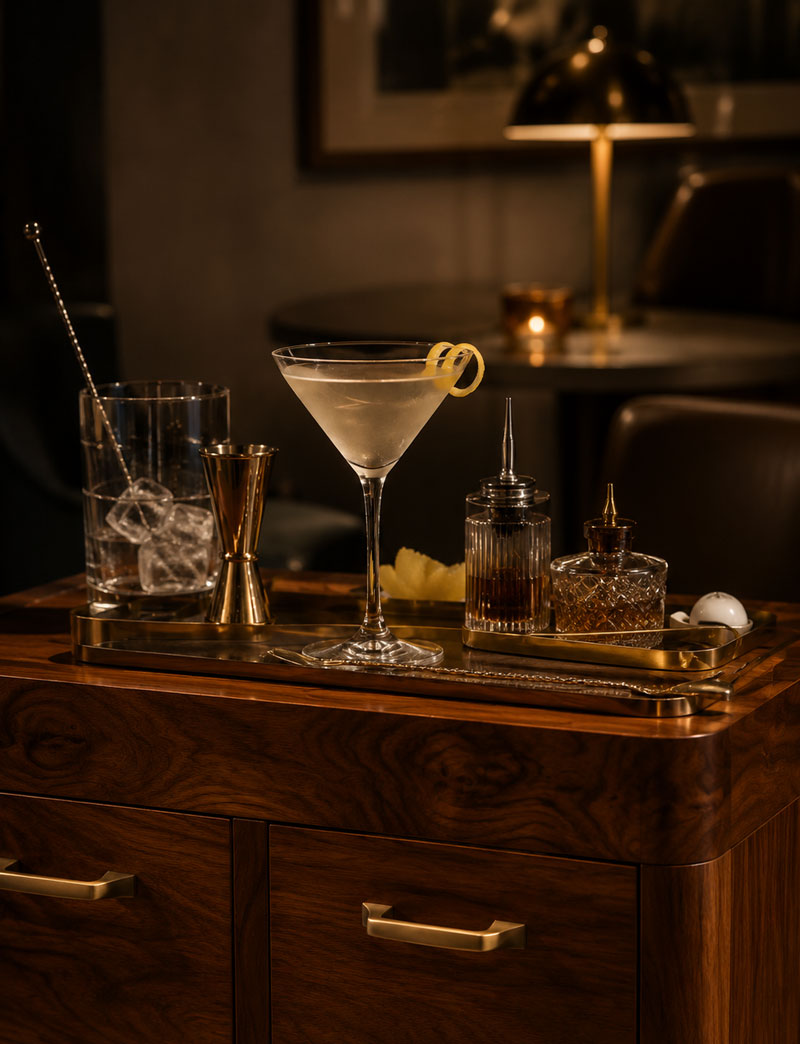
The Knickerbocker Martini, tableside
More than a century after helping define the dry martini, the Knickerbocker Hotel continues to celebrate the cocktail with its signature tableside martini service at the Martini Lounge.
Rather than arriving pre-made from behind the bar, each martini is prepared and finished beside the guest, turning a simple cocktail into a memorable ritual.
The experience emphasizes the details that martini enthusiasts appreciate most: ice-cold glassware, carefully measured ingredients, and a personalized garnish.
The result is equal parts theater and craftsmanship. It’s a fitting tribute to a cocktail whose history has been shaped by generations of bartenders obsessed with perfecting every ounce of gin and vermouth.
A century of refinement
The Knickerbocker Martini reminds us that the dry martini wasn’t born dry—it got there one ounce of vermouth at a time.
While historians may continue to argue over who deserves credit, martini lovers can raise a glass to the generations of bartenders who kept refining the recipe (including our own Altamura Martini).
The Knickerbocker Martini, tableside
More than a century after helping define the dry martini, the Knickerbocker Hotel continues to celebrate the cocktail with its signature tableside martini service at the Martini Lounge. Rather than arriving pre-made from behind the bar, each martini is prepared and finished beside the guest, turning a simple cocktail into a memorable ritual. The experience emphasizes the details that martini enthusiasts appreciate most: ice-cold glassware, carefully measured ingredients, and a personalized garnish. The result is equal parts theater and craftsmanship. It’s a fitting tribute to a cocktail whose history has been shaped by generations of bartenders obsessed with perfecting every ounce of gin and vermouth.
A century of refinement
The Knickerbocker Martini reminds us that the dry martini wasn’t born dry—it got there one ounce of vermouth at a time.
While historians may continue to argue over who deserves credit, martini lovers can raise a glass to the generations of bartenders who kept refining the recipe (including our own Altamura Martini).
Photo Credits
Knickerbocker Hotel, New York:
Epicgenius, via Wikimedia Commons
licensed under CC BY-SA 4.0
Nicole Bump
Nicole is a seasoned content strategist and writer with 15+ years of experience turning complex ideas into compelling stories. As founder of Bump Inbound, she helps brands connect with audiences through thoughtful strategy, sharp planning, and standout writing.
Manhattan Bar Singapore: Bringing NYC to Southeast Asia
Manhattan Bar Singapore
Manhattan Bar Singapore:
Bringing NYC to Southeast Asia
Virtù Bar brings Paris to Tokyo.
BKK Social Club transports Latin America to Bangkok.
And Manhattan Bar Singapore exudes the glamor of New York City’s golden age in Southeast Asia. Set in one of the world’s most international cities, the concept feels less like import and more like alignment.
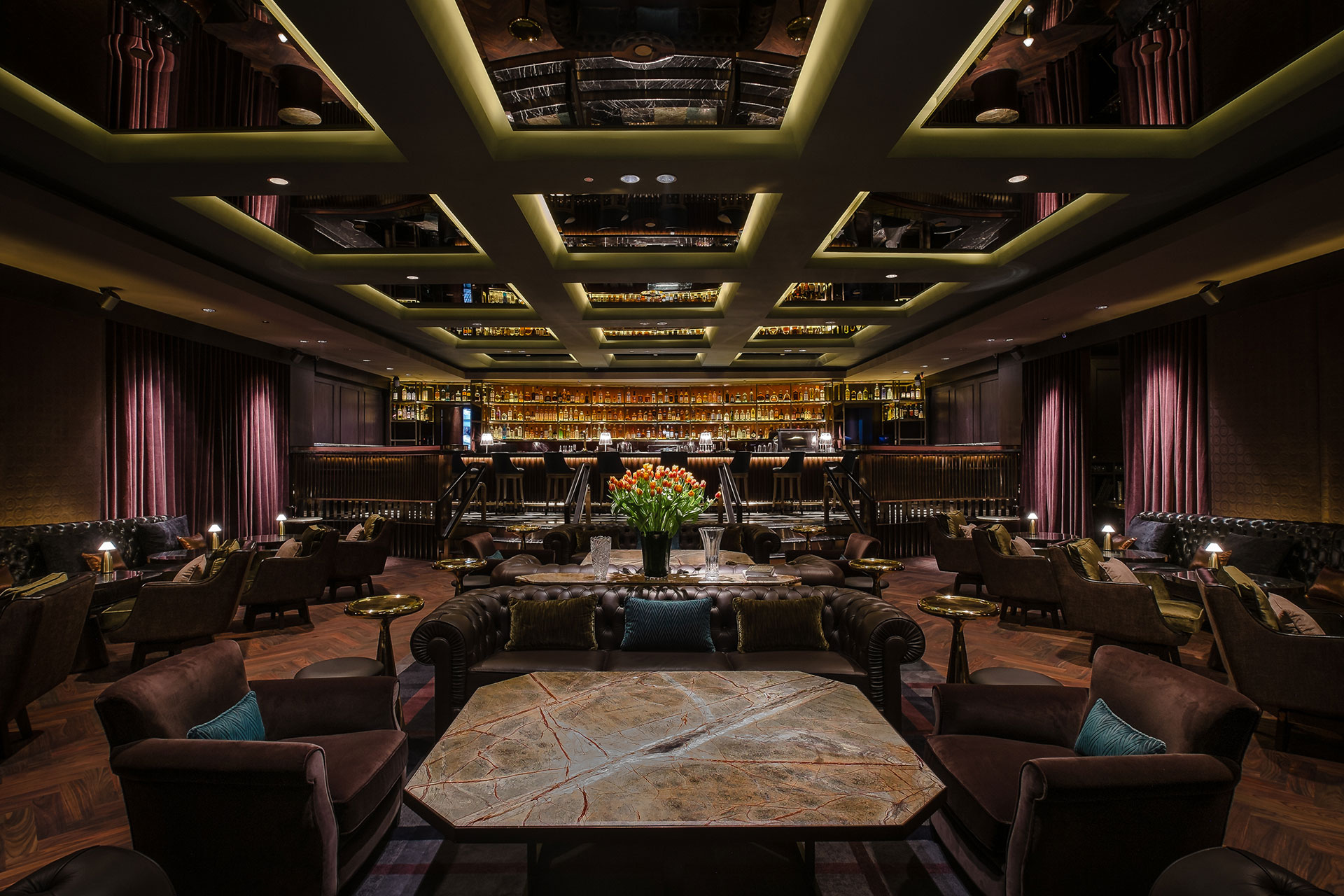
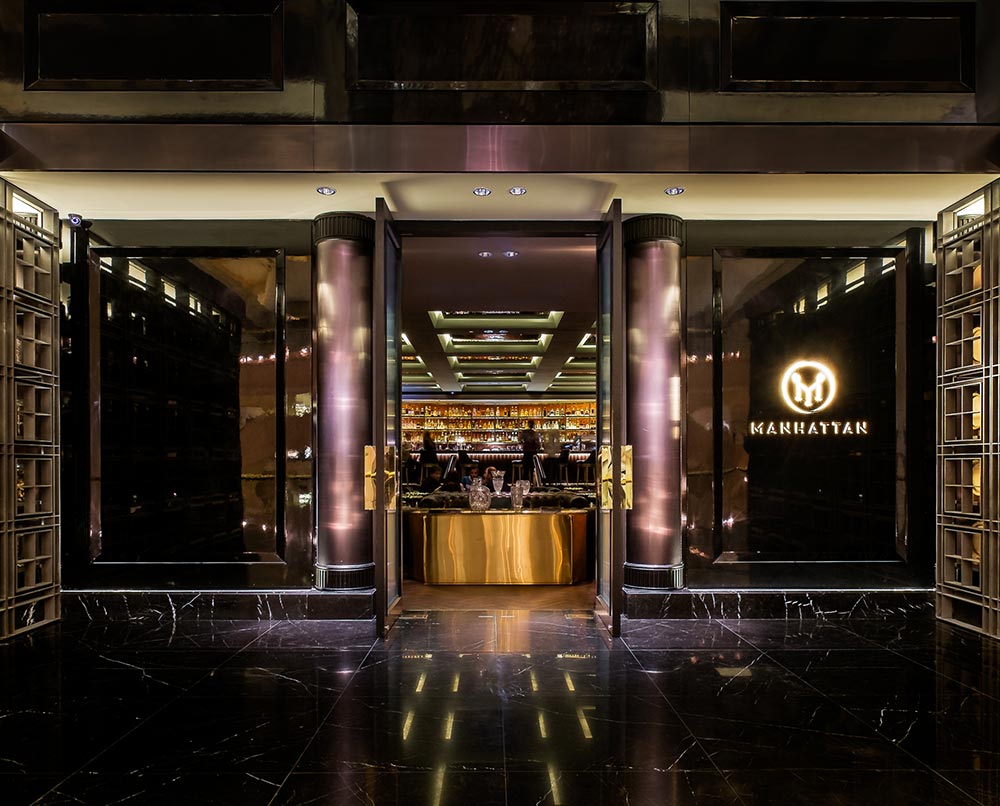
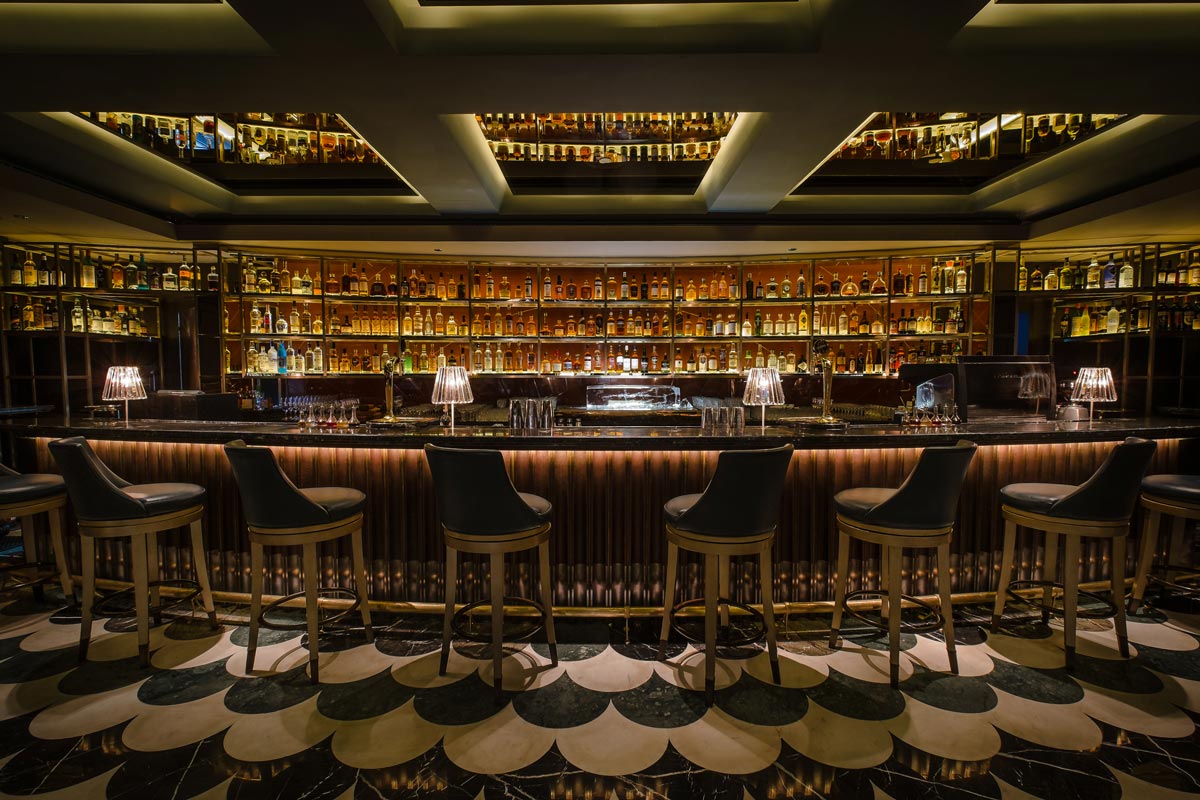
Located in the Conrad Singapore Orchard, Manhattan Bar channels the spirit of a 19th-century New York hotel bar—rich dark wood, polished brass, and plush leather setting the stage for a cocktail program rooted in American heritage.
Known for its in-house rickhouse and a menu that reimagines classic cocktails, Manhattan delivers both spectacle and substance. The result is a transportive experience, where every detail feels like a love letter to old New York.
“The concept of Manhattan bar pays homage to the golden era of cocktails and fine drinking in Manhattan.”
David Nguyen-Luu
Former Bar Manager, Manhattan
World’s first in-hotel rickhouse
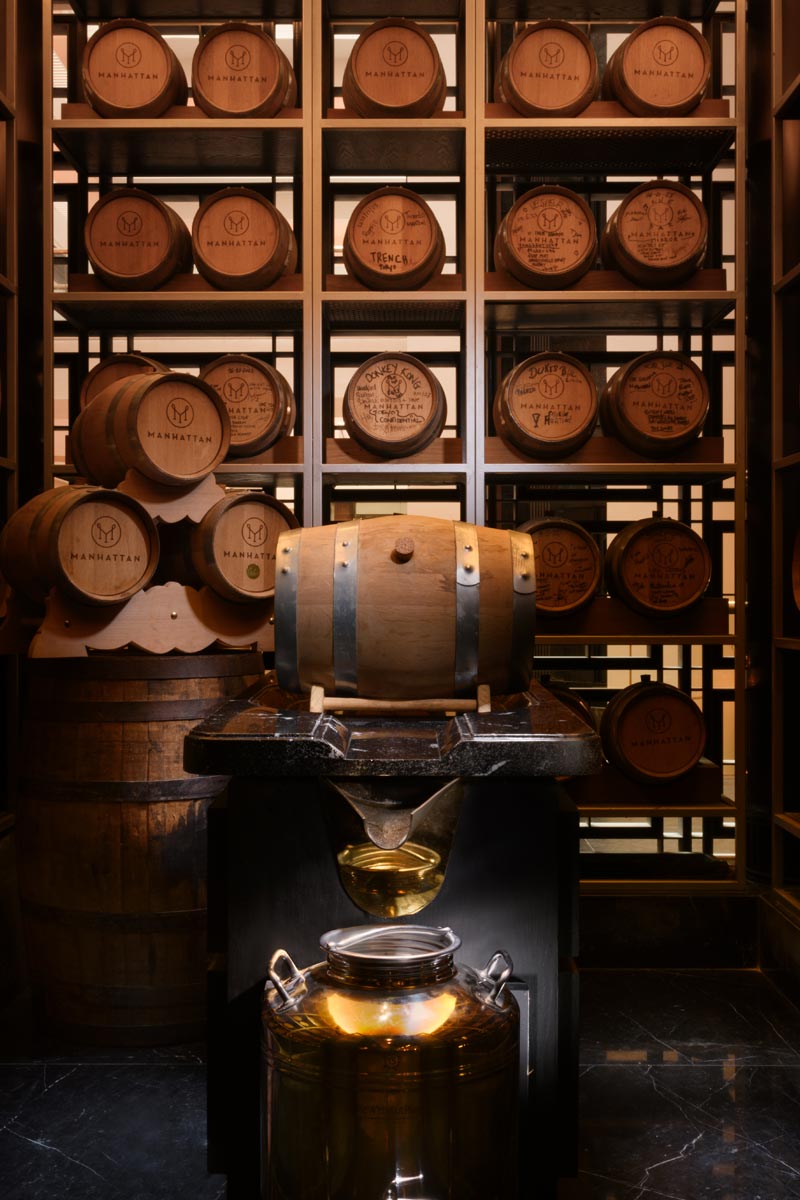
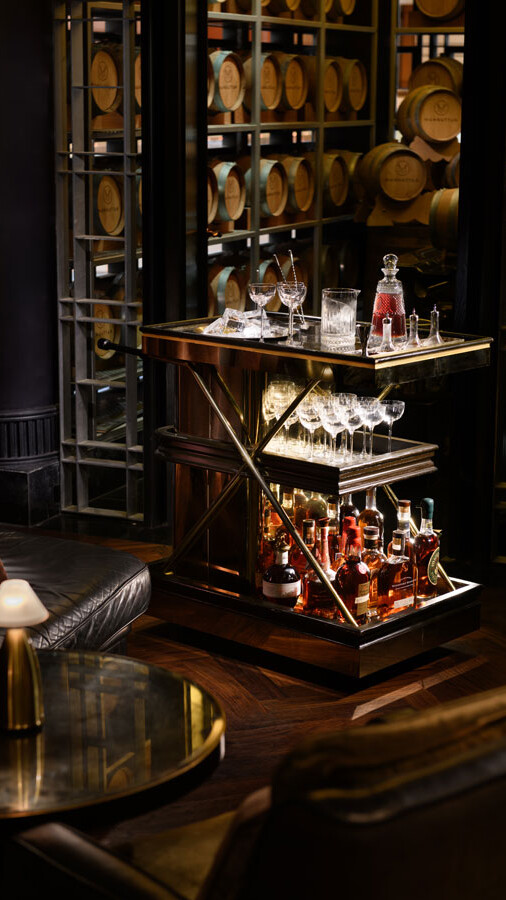
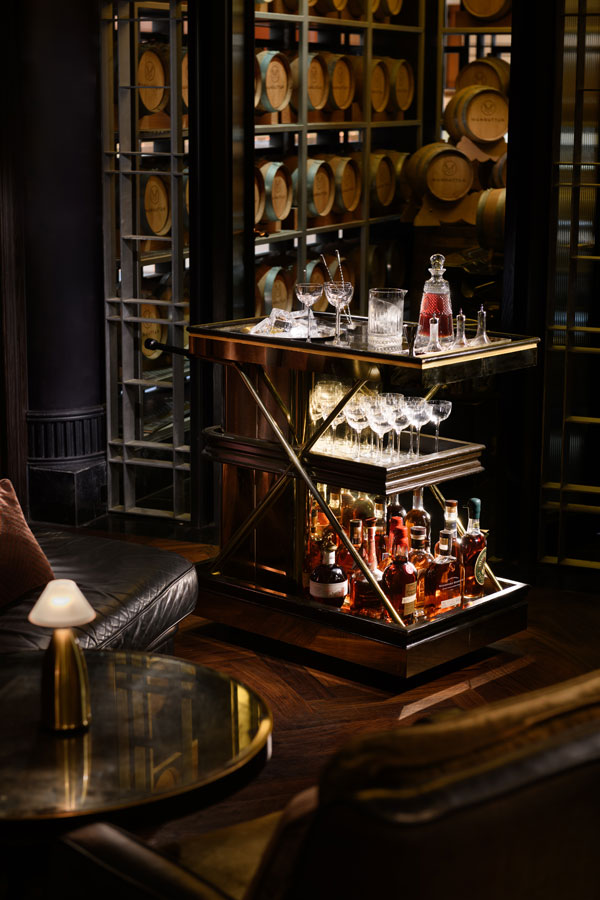
The rickhouse is one of Manhattan Bar’s defining features and one of the most distinctive elements of any cocktail bar in the world. Traditionally, a rickhouse is where whiskey barrels are stored and aged, often in large, climate-influenced warehouses. Manhattan takes that concept and brings it inside the bar, creating a working aging room that’s both functional and theatrical.
Here, rows of small oak barrels are used to age cocktails, spirits, and custom blends on-site. Instead of simply mixing drinks to order, the team pre-batches certain cocktails and lets them mature over time, allowing flavors to integrate, soften, and deepen—much like a fine whiskey. Unsurprisingly, the Manhattan cocktail is obviously a signature offering from the rickhouse.
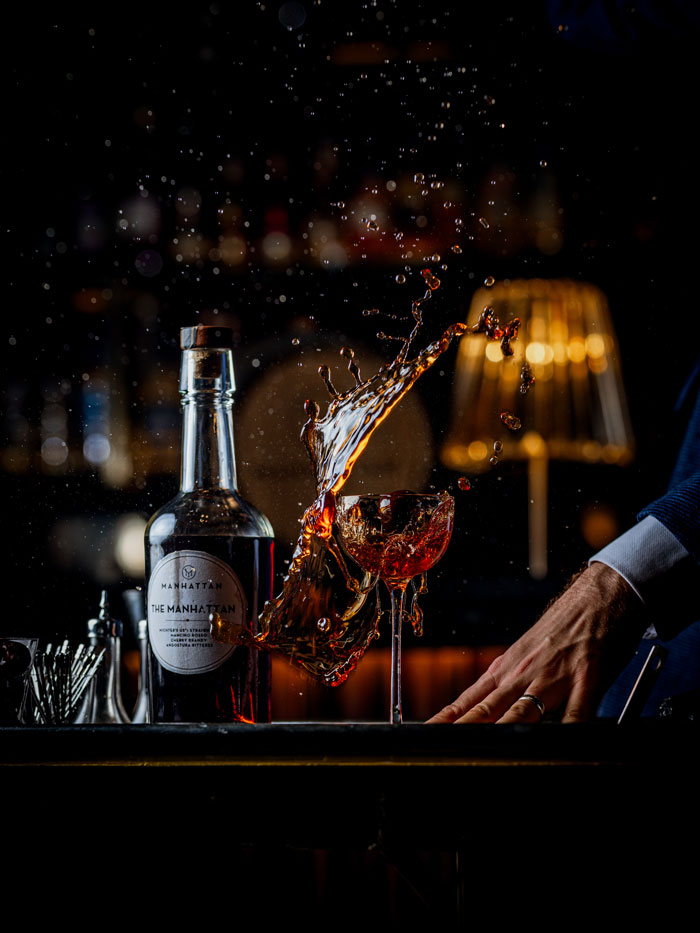
“The Manhattan that we have utilized Michter’s Rye Whiskey vermouth, and our house-made cherry liqueur. We finish it off with Angostura bitters. We place the whole cocktail in the barrel and we let it age for a certain amount of time.”
Gabriel Carlos
Former Assistant Bar Manager
Beyond the barrels, much of what’s poured at Manhattan is built in-house—custom blends, infusions, and components designed to give each drink a distinct point of view.
Located in the Conrad Singapore Orchard, Manhattan Bar channels the spirit of a 19th-century New York hotel bar—rich dark wood, polished brass, and plush leather setting the stage for a cocktail program rooted in American heritage. Known for its in-house rickhouse and a menu that reimagines classic cocktails, Manhattan delivers both spectacle and substance. The result is a transportive experience, where every detail feels like a love letter to old New York.
“The concept of Manhattan bar pays homage to the golden era of cocktails and fine drinking in Manhattan.”
David Nguyen-Luu
Former Bar Manager, Manhattan
Seasons of Manhattan cocktail menu
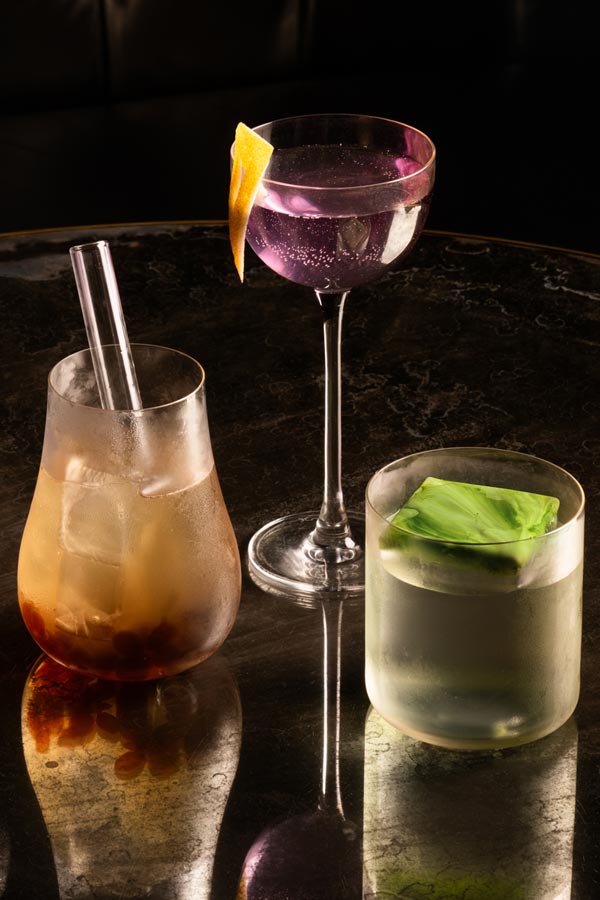
The current Manhattan Bar Singapore menu is inspired by New York City’s four seasons. The menu itself is styled as a desk calendar and features 31 drinks categorized by spring, summer, fall, and winter, as well as special barrel-aged cocktails from the rickhouse.
“Manhattan moves in seasons you can feel. Through New York’s defining culture. Climate. The moments that set the city in motion. At the bar, it all comes together.”
Manhattan Bar
World’s first in-hotel rickhouse
The rickhouse is one of Manhattan Bar’s defining features and one of the most distinctive elements of any cocktail bar in the world. Traditionally, a rickhouse is where whiskey barrels are stored and aged, often in large, climate-influenced warehouses. Manhattan takes that concept and brings it inside the bar, creating a working aging room that’s both functional and theatrical.
Here, rows of small oak barrels are used to age cocktails, spirits, and custom blends on-site. Instead of simply mixing drinks to order, the team pre-batches certain cocktails and lets them mature over time, allowing flavors to integrate, soften, and deepen—much like a fine whiskey. Unsurprisingly, the Manhattan cocktail is obviously a signature offering from the rickhouse.
“The Manhattan that we have utilized Michter’s Rye Whiskey vermouth, and our house-made cherry liqueur. We finish it off with Angostura bitters. We place the whole cocktail in the barrel and we let it age for a certain amount of time.”
Gabriel Carlos
Former Assistant Bar Manager
Beyond the barrels, much of what’s poured at Manhattan is built in-house—custom blends, infusions, and components designed to give each drink a distinct point of view.
Seasons of Manhattan cocktail menu
The current Manhattan Bar Singapore menu is inspired by New York City’s four seasons. The menu itself is styled as a desk calendar and features 31 drinks categorized by spring, summer, fall, and winter, as well as special barrel-aged cocktails from the rickhouse.
“Manhattan moves in seasons you can feel. Through New York’s defining culture. Climate. The moments that set the city in motion. At the bar, it all comes together.”
Manhattan Bar
- In an ode to the all-American rite of spring break, for example, the Seasons of Manhattan menu features a Spring cocktail called Where the Boys Are. Codigo Blanco tequila and Siete Misterios Doba Yej mezcal meet plum, melon, blackberry and citrus. Manhattan describes it as “…a riot of red, a burst of juicy brightness, and a melon splash that recalls the playful chaos of beer pong and coming-of-age rituals.”
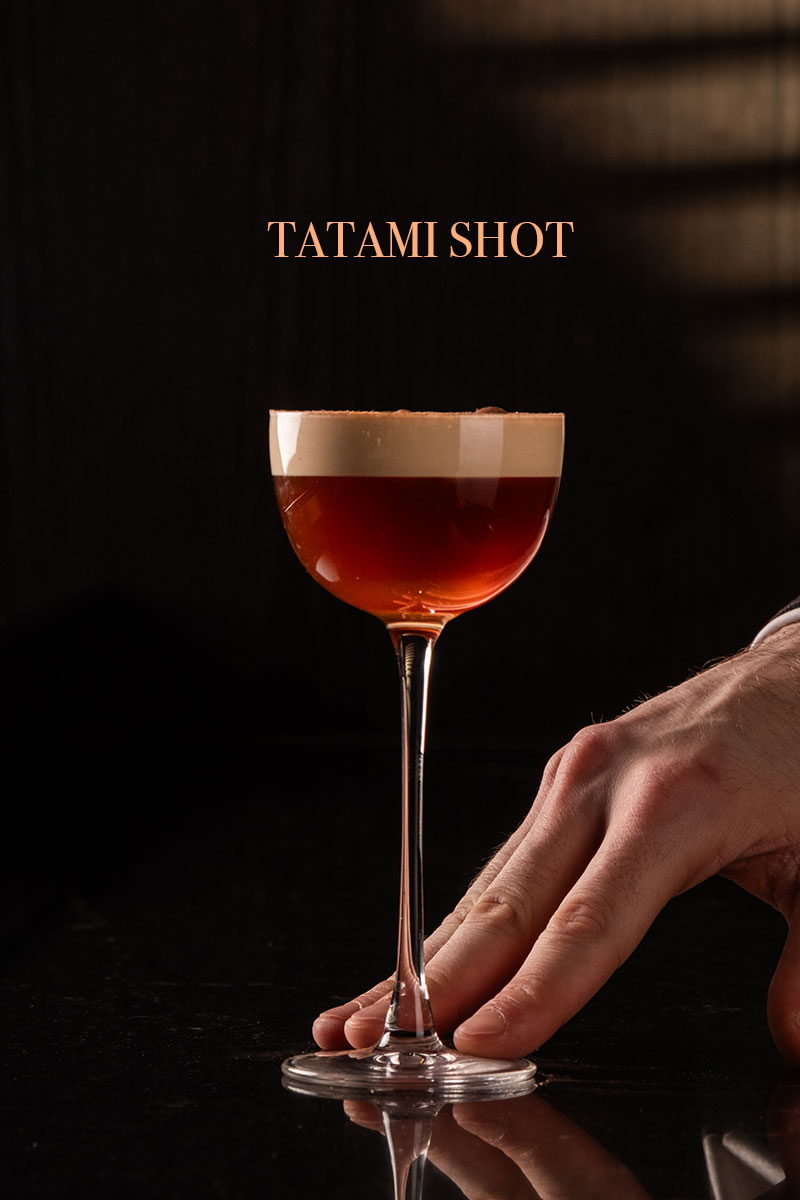
- The Tatami Shot sits in Autumn, honoring Japanese filmmaker Yasujirō Ozu, whose An Autumn Afternoon was screened in New York’s first Film Festival (September, 1963). Sakurao Single Malt Whisky and baijiu meet lemon, mushroom oleo, spiced pear, and bitters beneath espresso foam. Per Manhattan, it’s “…a cocktail that mirrors Ozu’s lens: layered, balanced, gently expressive.”
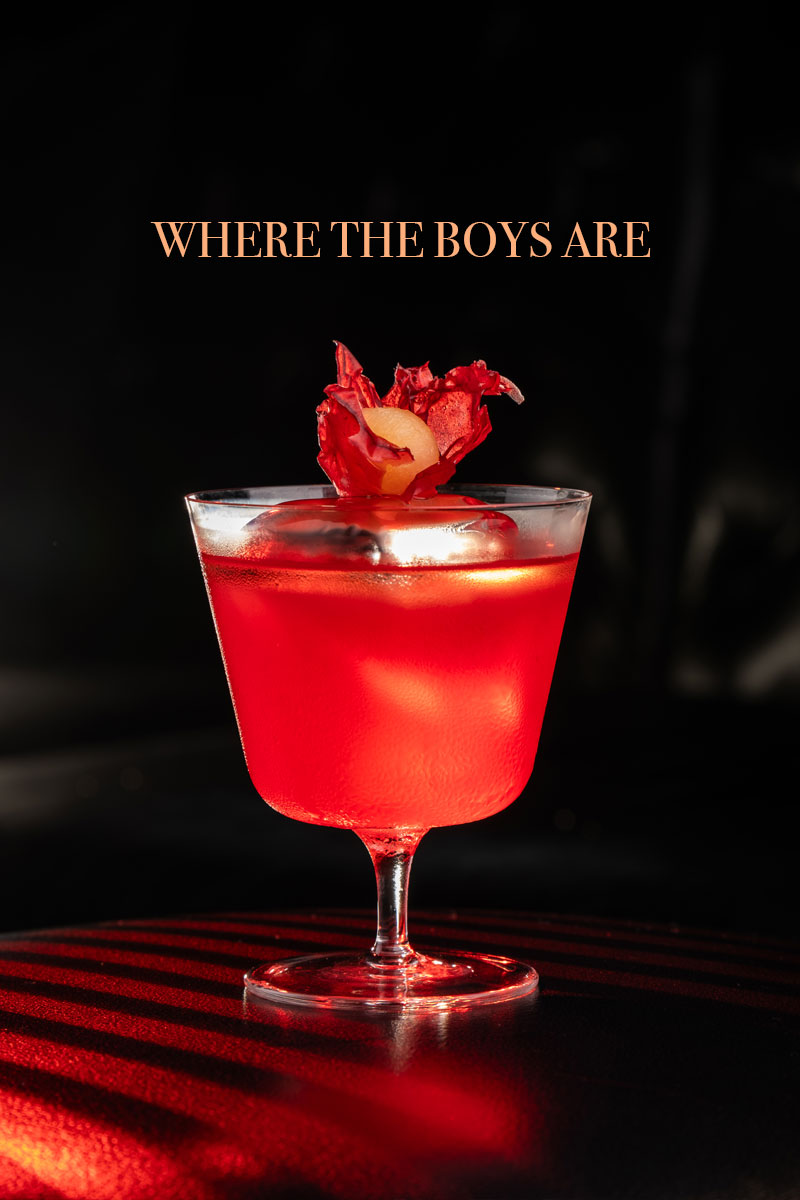
- In an ode to the all-American rite of spring break, for example, the Seasons of Manhattan menu features a Spring cocktail called Where the Boys Are. Codigo Blanco tequila and Siete Misterios Doba Yej mezcal meet plum, melon, blackberry and citrus. Manhattan describes it as “…a riot of red, a burst of juicy brightness, and a melon splash that recalls the playful chaos of beer pong and coming-of-age rituals.”
- The Tatami Shot sits in Autumn, honoring Japanese filmmaker Yasujirō Ozu, whose An Autumn Afternoon was screened in New York’s first Film Festival (September, 1963). Sakurao Single Malt Whisky and baijiu meet lemon, mushroom oleo, spiced pear, and bitters beneath espresso foam. Per Manhattan, it’s “…a cocktail that mirrors Ozu’s lens: layered, balanced, gently expressive.”
Global inspiration from Friends of Manhattan
At Manhattan Bar, the story of New York doesn’t stop at its own menu. Through its Friends of Manhattan series, the bar invites some of the world’s most celebrated bartenders to step behind the bar, transforming it into a rotating stage for global talent.
A few of the celebrated guest bartenders have hailed from:
- The Cocktail Club (Jakarta)
- Long Bar (Shanghai)
- Monkey Thief (New York City)
- To Infinity & Beyond, Vender, Bar Without (Taiwan)
- Happy Accidents Bar (Albuquerque)
- Bar Leone (Hong Kong)
Each collaboration blends Manhattan’s signature, old-world elegance with the distinct style of its guests—resulting in menus that feel both rooted in New York’s cocktail heritage and expanded by international influence. It’s less a takeover and more a dialogue, where techniques, flavors, and perspectives collide.
From global collaboration to cohesive vision
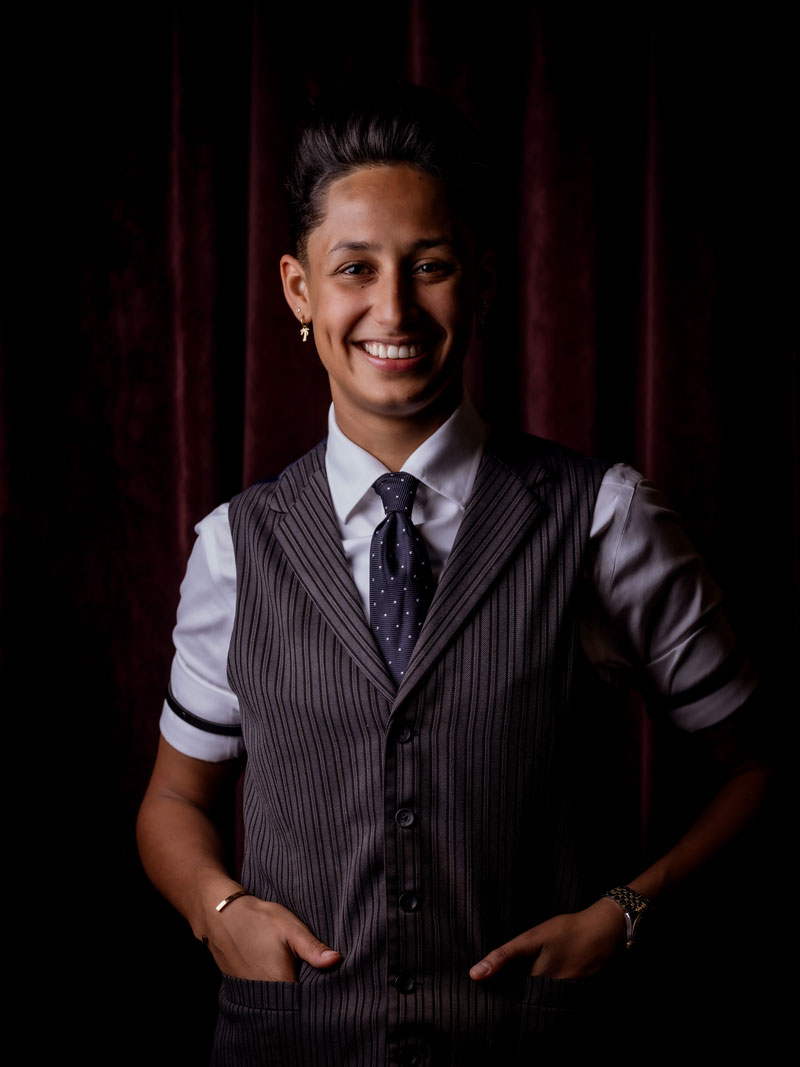
If Friends of Manhattan brings the world into the bar, Zana Möhlmann is the one shaping what it becomes once it’s there. Winner of the 2023 World Young Mixologist Award, Möhlmann became Manhattan Bar’s head bartender in 2024.
With experience across some of Asia’s most respected cocktail programs, Möhlmann brings both technical precision and a global perspective to Manhattan Bar.
Under Möhlmann’s direction, the bar’s many moving parts—the rickhouse, the collaborations, the deep well of American cocktail history—come together into something cohesive. The drinks feel intentional, the experience seamless, and the identity unmistakable.
“I believe that every craft starts with intention. From the way that you present yourself, to how you speak to people, and how you create.”
Zana Mohlmann, Head Bartender, Manhattan
Each collaboration blends Manhattan’s signature, old-world elegance with the distinct style of its guests—resulting in menus that feel both rooted in New York’s cocktail heritage and expanded by international influence. It’s less a takeover and more a dialogue, where techniques, flavors, and perspectives collide.
From global collaboration to cohesive vision
If Friends of Manhattan brings the world into the bar, Zana Möhlmann is the one shaping what it becomes once it’s there. Winner of the 2023 World Young Mixologist Award, Möhlmann became Manhattan Bar’s head bartender in 2024. With experience across some of Asia’s most respected cocktail programs, Möhlmann brings both technical precision and a global perspective to Manhattan Bar. Under Möhlmann’s direction, the bar’s many moving parts—the rickhouse, the collaborations, the deep well of American cocktail history—come together into something cohesive. The drinks feel intentional, the experience seamless, and the identity unmistakable.
“I believe that every craft starts with intention. From the way that you present yourself, to how you speak to people, and how you create.”
Zana Mohlmann, Head Bartender, Manhattan
Nicole Bump
Nicole is a seasoned content strategist and writer with 15+ years of experience turning complex ideas into compelling stories. As founder of Bump Inbound, she helps brands connect with audiences through thoughtful strategy, sharp planning, and standout writing.
DarkSide’s Marco Maiorano on innovation, culture, and craft
Marco Maiorano
DarkSide’s Marco Maiorano on innovation, culture, and craft
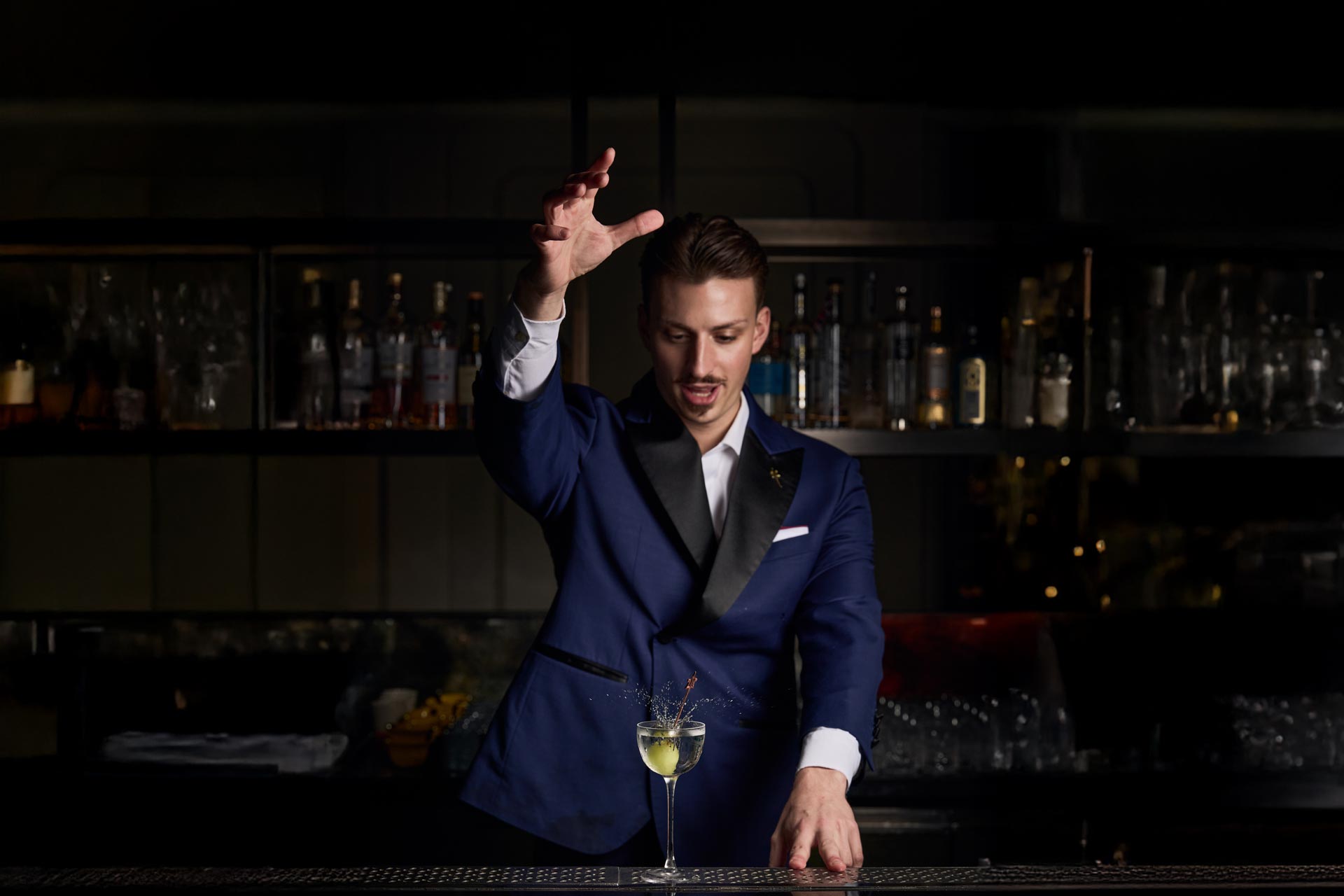
At DarkSide Hong Kong, cocktails are just the starting point. For Bar Manager Marco Maiorano, the focus is on blending classic technique with innovation—shaped by his time at The Connaught Bar and Scarfes Bar. In this interview, Maiorano shares how he builds a strong team, evolves the craft, and uses the bar to reflect Hong Kong’s culture.
What first drew you to bartending, and when did you know it would become a serious career?
Hospitality is in my heritage—my paternal family has been running hospitality businesses for decades. When I began my journey, I worked across different roles, from the floor to the kitchen. Bartending became the perfect balance between creativity and direct guest interaction. After my first year in London, when I started my career in the hotel industry, I truly fell in love with the work. Over time, it became clear to me that this wasn’t just a step, it was the career I wanted.
You honed your skills at The Connaught and Scarfes Bar. What lessons, if any, carried over into the way you approach your work at DarkSide? And how do you carry those lessons forward without simply repeating what worked before?
Both The Connaught and Scarfes Bar were more than workplaces, they were an academy. Even though each bar has a different identity, they shared core values: discipline, hard work, team collaboration, innovation, and genuine hospitality. These five pillars are exactly what I pass to my team at DarkSide. My goal is not to replicate what worked before, but to carry over the principles—then apply them to DarkSide’s own vision and style.
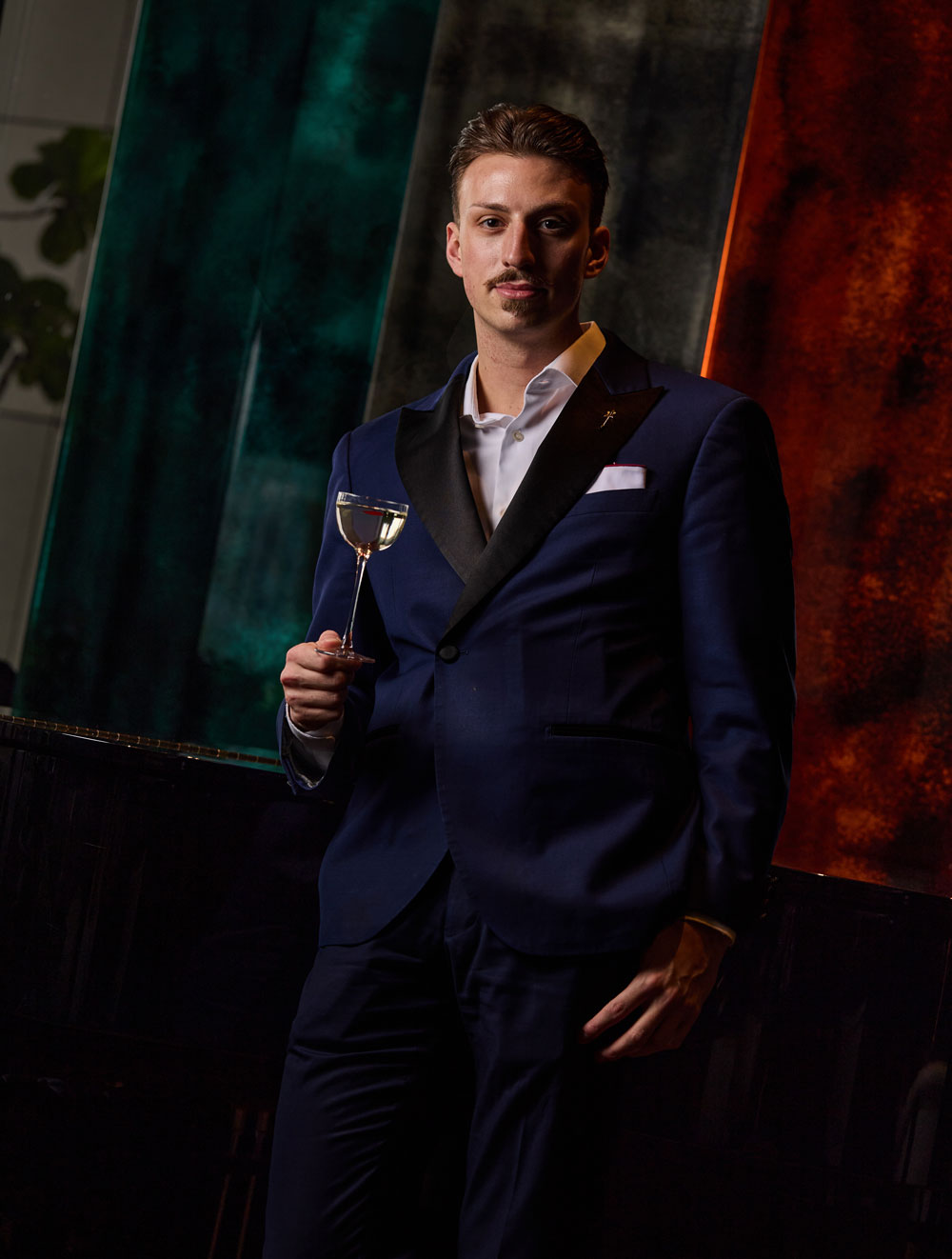
You are known for your innovation. Why is innovation important to you, and how do you incorporate it into your craft?
Innovation matters because our world keeps changing: guest palates evolve, expectations shift, and cultural trends influence how people want to experience drinks. As leaders, we must stay curious and adapt. At DarkSide, innovation shows up in how we study new flavours, techniques, and presentation styles, while keeping the foundations of classic bartending strong. For me, it’s also personal: innovation provides constant stimulation and helps me keep building professionalism and a clearer bar identity.
How did you make your way from a little hotel in Cornwall to The American Bar at The Savoy?
When I got serious about bartending, I had to figure out how to learn the business. But how do you learn the business when there is no schooling for it? There was no bartending school back then. There were a few books, but they weren’t very good. I decided to go to a bar where I could learn and somebody with experience could teach me.
I went to the Savoy Hotel American Bar, and I talked to Joe Gilmore, the head bartender then. I said, ‘I love the bar, it’s going to be my future, and I want to learn.’ I don’t know why, but he told me to come back at 9:00 Monday morning. I’m the luckiest guy on this planet.
So, in 1964 I joined the Savoy Group where I ended up spending 39 years, 22 of which were in The American Bar. First, I worked with Joe for a couple of months as a sommelier at Stones Chop House (also owned by the Savoy Group). Then I was asked to open the new Pebble Bar at Stones as Head Barman with my brother and stayed there until 1981.
“This was the best time of my life.”
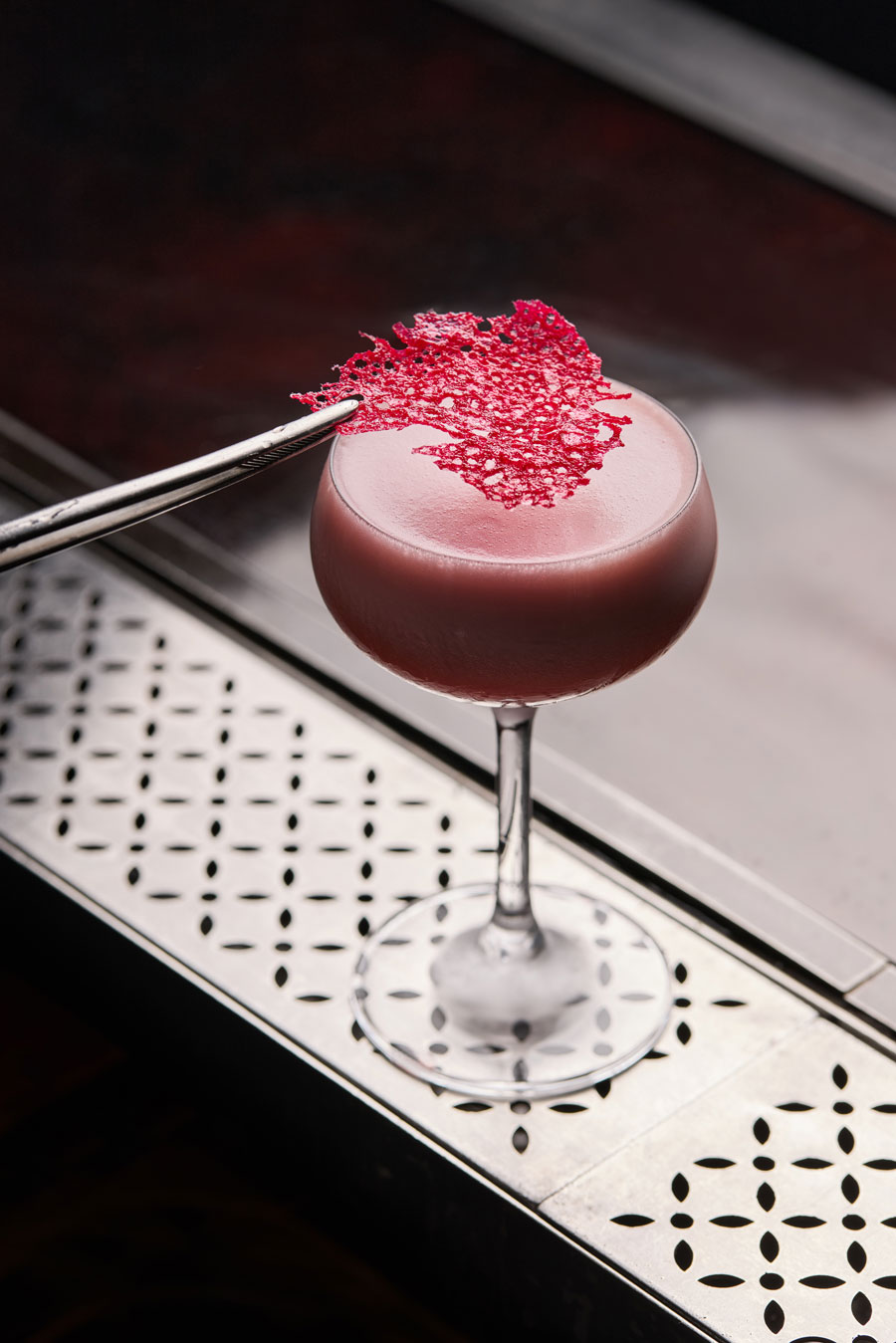
Your work is often described as restrained and precise rather than flashy. Is this your natural inclination or an intentional decision? If the latter, why?
Our new menu, DarkSide, is inspired by the street market. When I arrived in Hong Kong, I was impressed by how the city preserves its own culture and heritage while evolving into one of the most modern and developed metropolises. We support local businesses through collaborations and materials, such as handmade ceramics, neon-inspired design elements, leather details, instant noodles, and hydroponic farming. The drink programme becomes a platform to celebrate Hong Kong’s makers and to build a stronger local network through creativity.
As Bar Manager, how do you balance creativity with leadership—ensuring your team develops their own voice while maintaining a consistent standard of excellence?
Leadership starts with clarity. In my first year at DarkSide, my main goal was to give the team a clear direction and shared understanding of our vision. Aligning everyone around the same target is essential to maintain consistent excellence. For menu creation, I involve the team throughout the full process, from concept to execution. I work with each team member individually, encouraging creativity and providing the support they need, while ensuring that every contribution aligns with the overall menu picture and quality standards.
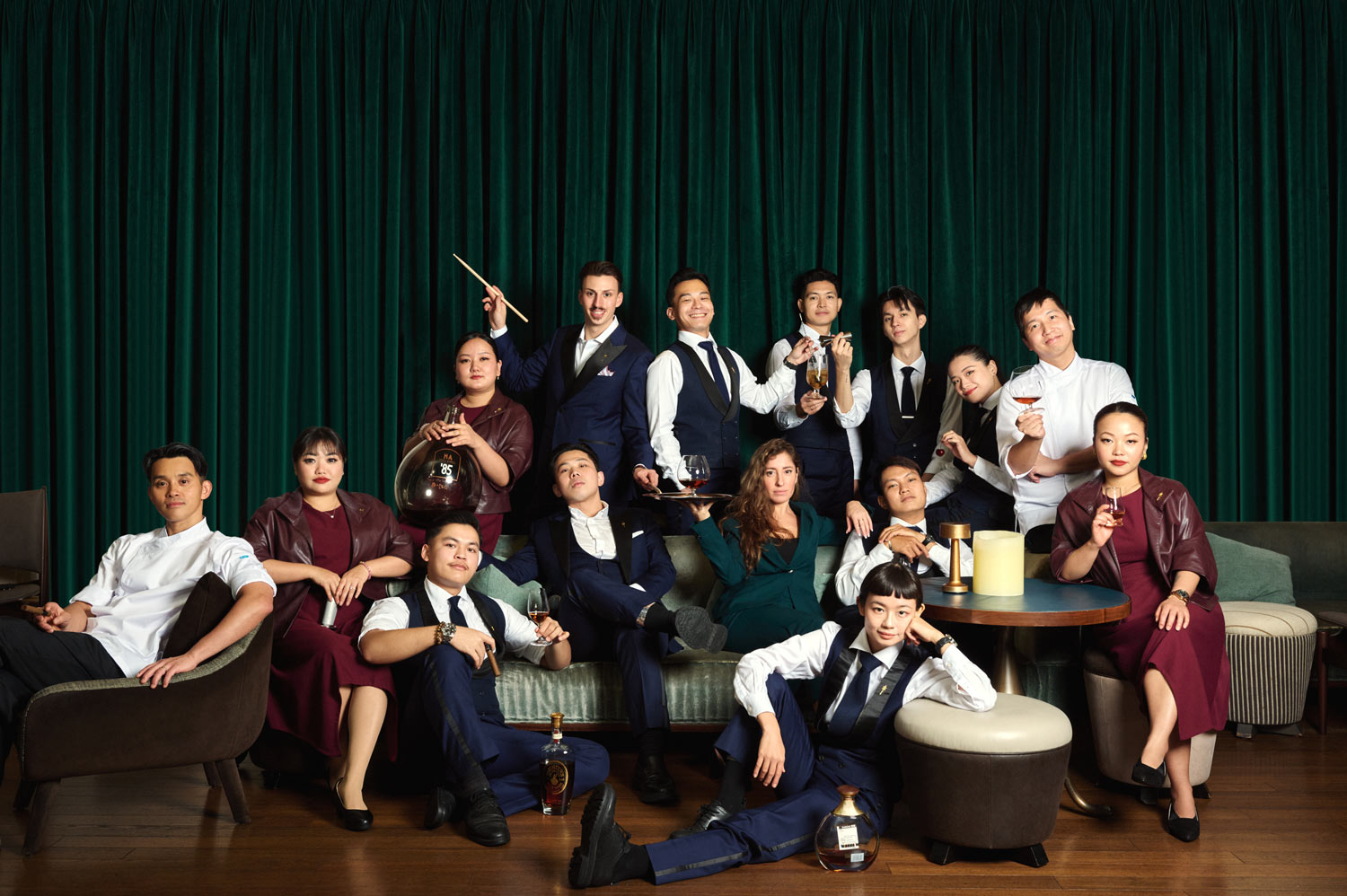
What advice would you give to someone aspiring to be an exceptional bartender in a luxury establishment, especially early in their career?
My advice is simple: explore the unknown and don’t be afraid to make mistakes. In the beginning, mistakes are not failures, they’re lessons. The best growth comes from experimentation, learning fast, and improving with every service.
Nicole Bump
Nicole is a seasoned content strategist and writer with 15+ years of experience turning complex ideas into compelling stories. As founder of Bump Inbound, she helps brands connect with audiences through thoughtful strategy, sharp planning, and standout writing.
Get Inspired
Be the first to learn about our exclusive events and updates you’ll actually want to read.
Get Inspired
Be the first to learn about our exclusive events and updates you’ll actually want to read
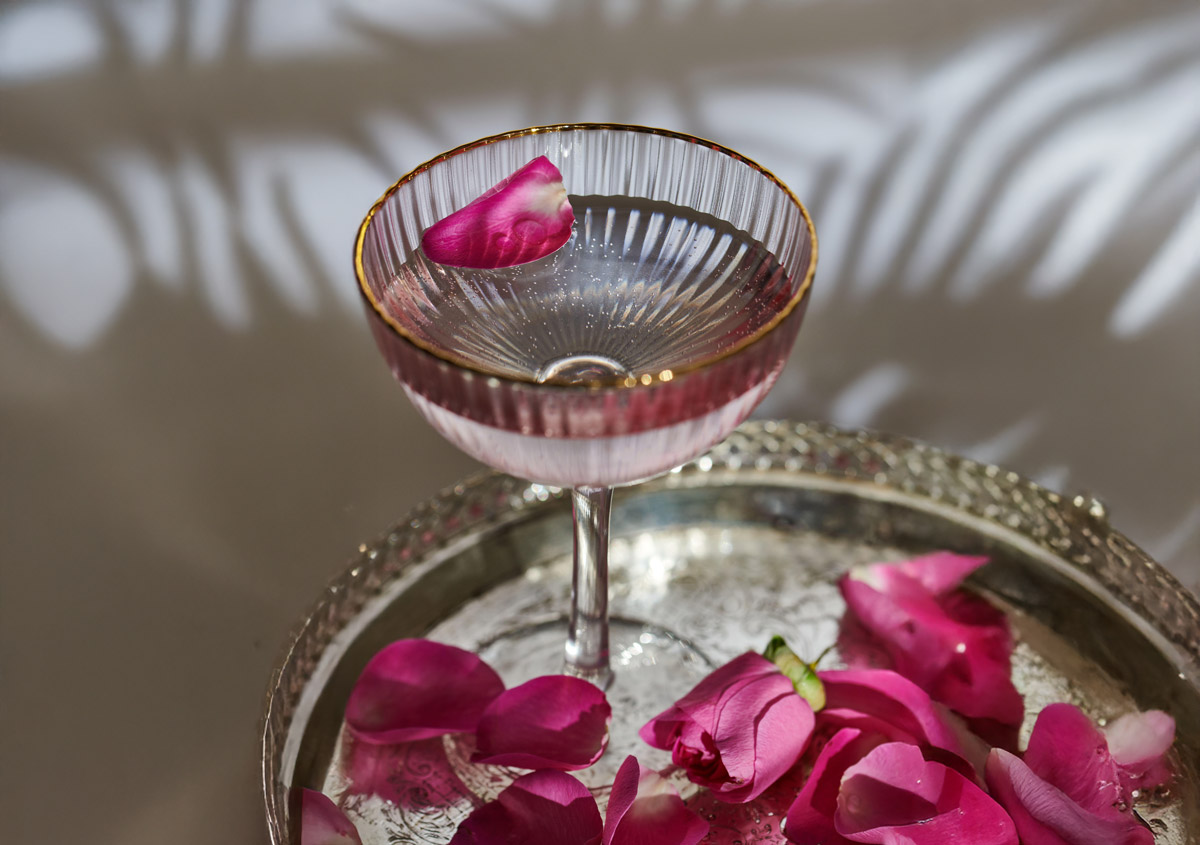
6 sophisticated Champagne cocktails from luxury hotel bars
Champagne cocktails
6 sophisticated Champagne cocktails from luxury hotel bars
Looking for a Champagne cocktail with a little more pizzazz than the traditional mimosa? Look no further. Around the turn of the 20th century, many luxury hotel bars crafted their own Champagne cocktails to celebrate the era’s opulence. These beverages boosted revenue by mixing expensive Champagne with spirits and modifiers to suit refined tastes while setting the standard for modern glamour. Choose one or more of the following sophisticated Champagne cocktails to elevate your next menu.
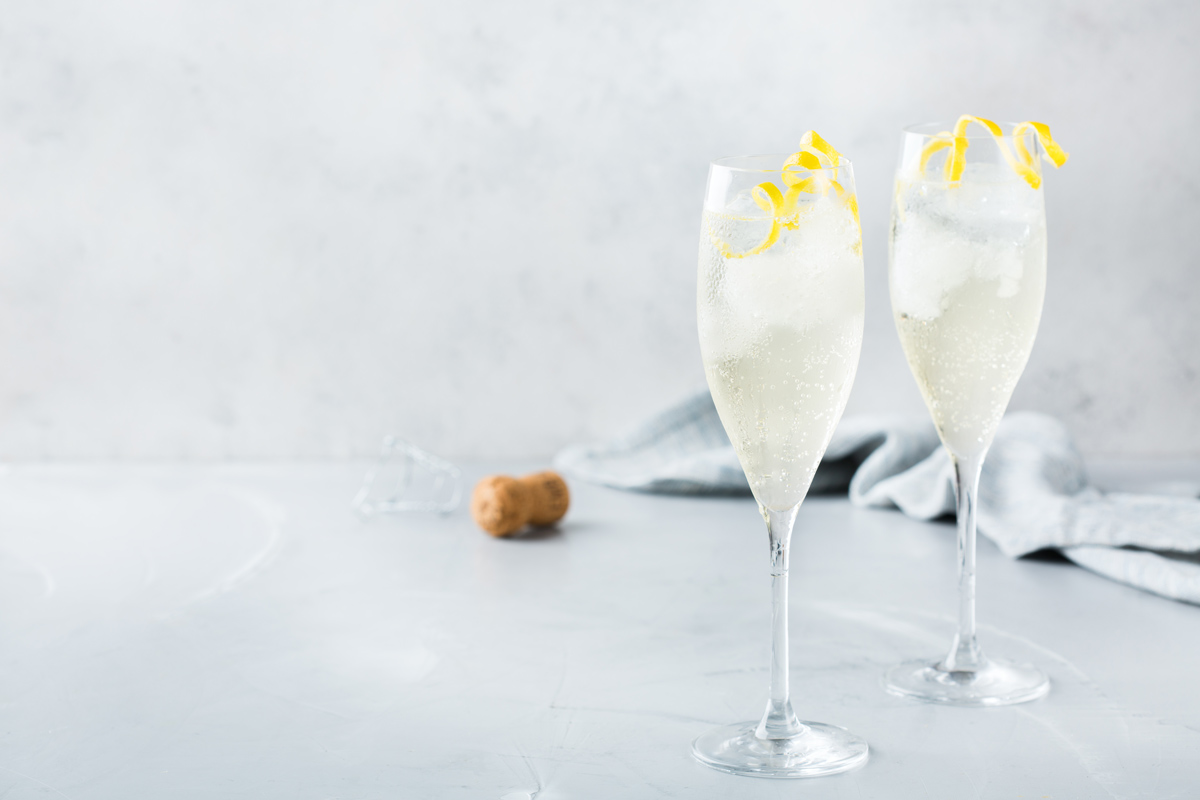
The Ritz 75 (Ritz Paris)
Like the mimosa, the Ritz 75 cocktail originated at the Ritz Paris. The beverage is a signature, citrus-forward variation of the classic French 75 cocktail, refined by bartender Colin Peter Field at Bar Hemingway inside the Ritz. While the original French 75 was invented in Paris around 1915, this specific, modern variation was popularized at the Ritz in the late 20th century.
Ingredients:
- 1.5 oz gin
- 1.5 oz fresh lemon juice
- 1.5 oz fresh mandarin juice
- 1 tsp simple syrup or sugar
- Top with Champagne
- Lime and mandarin wheels/rinds for garnish
Preparation:
- Combine the lemon juice, mandarin juice, and simple syrup in a cocktail shaker.
- Add ice and the gin to the shaker, and shake vigorously.
- Pour the mixture into two Champagne flutes.
- Top with Champagne.
- Garnish with lime and mandarin slices.
The Ritz 75 (Ritz Paris)
Like the mimosa, the Ritz 75 cocktail originated at the Ritz Paris. The beverage is a signature, citrus-forward variation of the classic French 75 cocktail, refined by bartender Colin Peter Field at Bar Hemingway inside the Ritz. While the original French 75 was invented in Paris around 1915, this specific, modern variation was popularized at the Ritz in the late 20th century.
Ingredients:
- 1.5 oz gin
- 1.5 oz fresh lemon juice
- 1.5 oz fresh mandarin juice
- 1 tsp simple syrup or sugar
- Top with Champagne
- Lime and mandarin wheels/rinds for garnish
Preparation:
- Combine the lemon juice, mandarin juice, and simple syrup in a cocktail shaker.
- Add ice and the gin to the shaker, and shake vigorously.
- Pour the mixture into two Champagne flutes.
- Top with Champagne.
- Garnish with lime and mandarin slices.
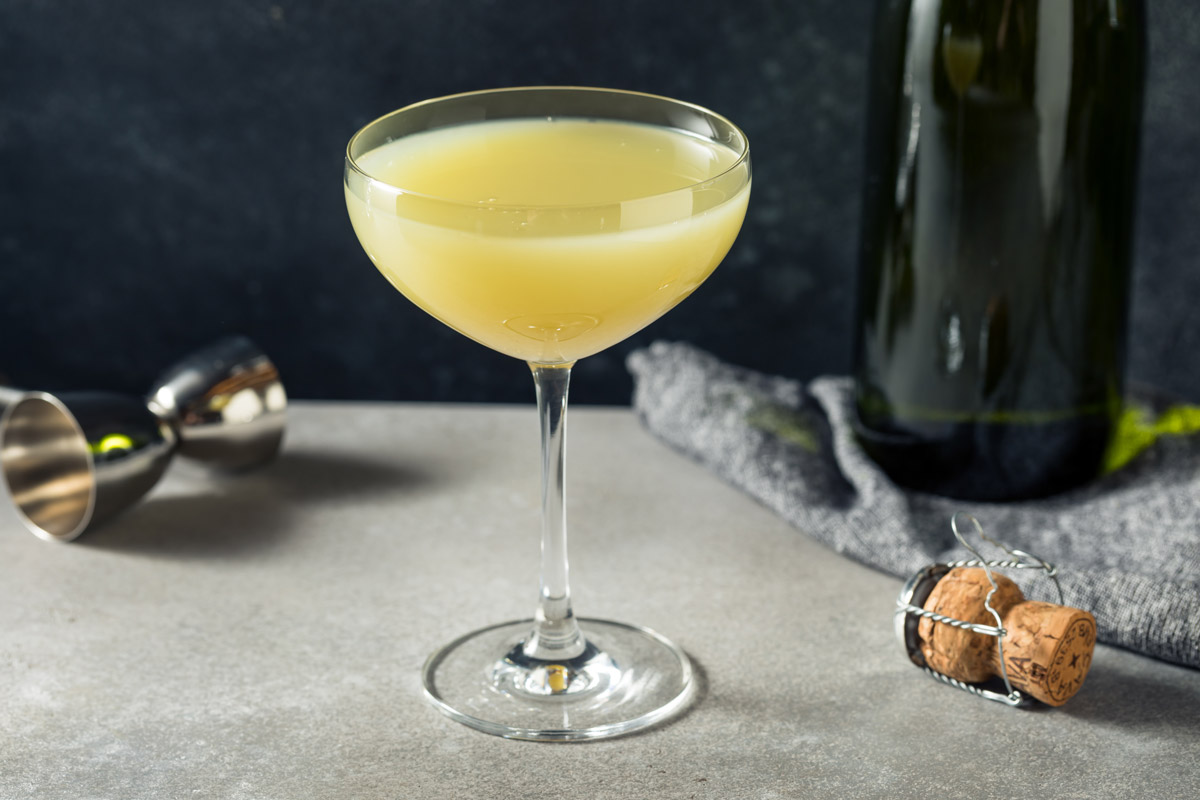
Death in the Afternoon (Bar Hemingway)
Bar Hemingway is well known for the Ritz 75, but fewer are familiar with Death in the Afternoon—a concoction from Ernest Hemingway himself. Created by Hemingway in 1932, this Champagne cocktail is often called “The Hemingway” or “Hemingway Champagne”, and it turns opalescent as the Champagne mixes with absinthe.
Ingredients:
- 1.5 oz absinthe
- 4.5 oz chilled Champagne
- Lemon twist garnish (optional)
Preparation:
- Pour the absinthe into a chilled champagne flute or coupe glass.
- Slowly top with the cold Champagne.
- Per Hemingway, “Drink three to five of these slowly.”
Death in the Afternoon (Bar Hemingway)
Bar Hemingway is well known for the Ritz 75, but fewer are familiar with Death in the Afternoon—a concoction from Ernest Hemingway himself. Created by Hemingway in 1932, this Champagne cocktail is often called “The Hemingway” or “Hemingway Champagne”, and it turns opalescent as the Champagne mixes with absinthe.
Ingredients:
- 1.5 oz absinthe
- 4.5 oz chilled Champagne
- Lemon twist garnish (optional)
Preparation:
- Pour the absinthe into a chilled champagne flute or coupe glass.
- Slowly top with the cold Champagne.
- Per Hemingway, “Drink three to five of these slowly.”
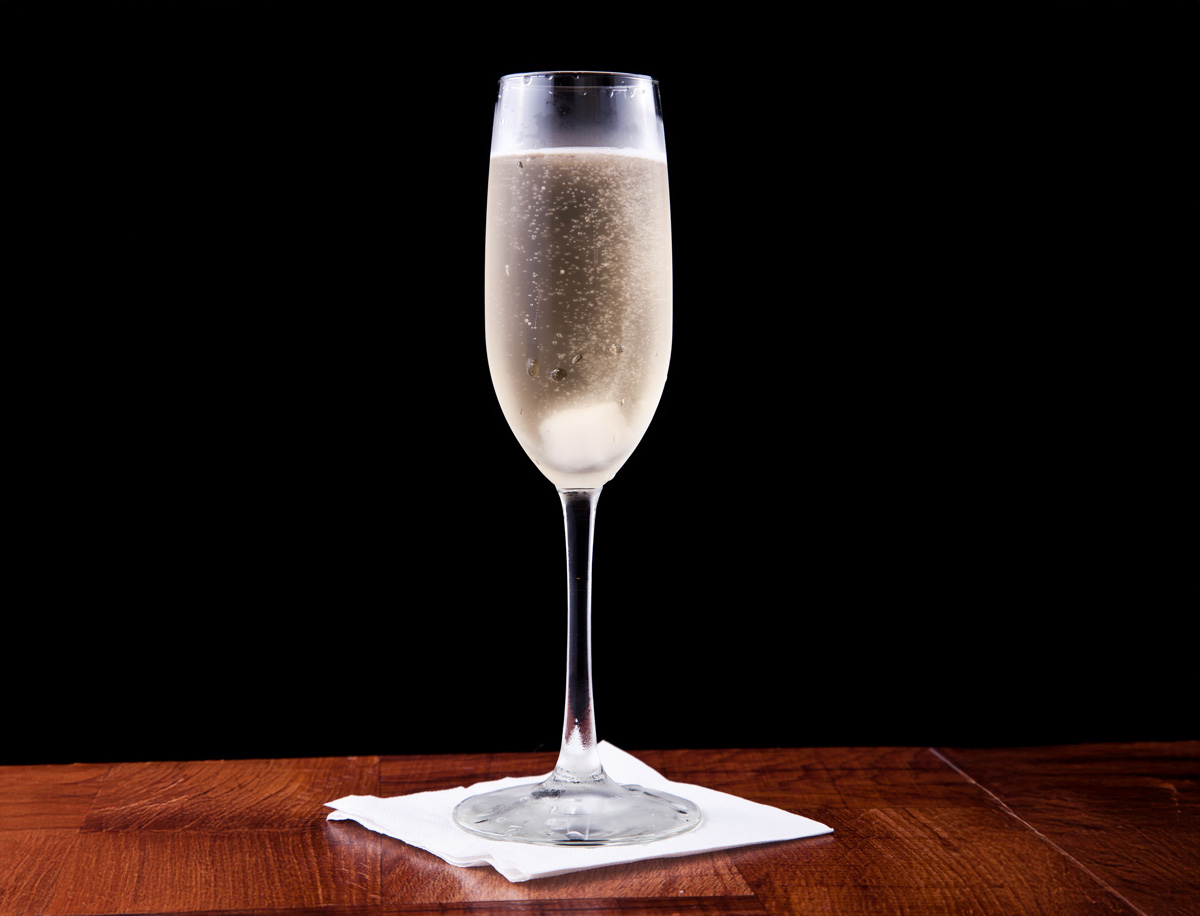
The King’s Champagne Cocktail (King Cole Bar)
The King’s Champagne Cocktail from the King Cole Bar at the St. Regis (New York) is a staple of the historic Manhattan venue, often served alongside their famous Red Snapper Bloody Mary.
Ingredients:
- 1 oz Carpano Antica sweet vermouth
- 1 sugar cube
- Angostura bitters
- 4 oz Champagne
Preparation:
- Soak the sugar cube in Angostura bitters.
- Drop the cube into a champagne flute.
- Add the sweet vermouth.
- Top with chilled Champagne.
The King’s Champagne Cocktail (King Cole Bar)
The King’s Champagne Cocktail from the King Cole Bar at the St. Regis (New York) is a staple of the historic Manhattan venue, often served alongside their famous Red Snapper Bloody Mary.
Ingredients:
- 1 oz Carpano Antica sweet vermouth
- 1 sugar cube
- Angostura bitters
- 4 oz Champagne
Preparation:
- Soak the sugar cube in Angostura bitters.
- Drop the cube into a champagne flute.
- Add the sweet vermouth.
- Top with chilled Champagne.
Fleurissimo (Connaught Bar)
The Fleurissimo cocktail was created at the renowned Connaught Bar at the Connaught Hotel (London). A tribute to Grace Kelly, the drink was inspired by Creed Fleurissimo, the perfume commissioned by Prince Rainier for Grace to wear on her wedding day in 1956. Floral, elegant and unmistakably luxurious, the cocktail combines Champagne with violet liqueur for a delicate, perfumed profile that feels tailor-made for grand occasions.
Ingredients:
- .5 oz Rémy Martin VSOP Cognac
- 1 tsp Crème de Violette
- 1 white sugar cube
- 5 dashes Peychaud’s bitters
- Top with Champagne
- 1 rose petal for garnish
Preparation:
- Soak the sugar cube in Angostura bitters.
- Drop the cube into a champagne flute.
- Add the sweet vermouth.
- Top with chilled Champagne.
Fleurissimo (Connaught Bar)
The Fleurissimo cocktail was created at the renowned Connaught Bar at the Connaught Hotel (London). A tribute to Grace Kelly, the drink was inspired by Creed Fleurissimo, the perfume commissioned by Prince Rainier for Grace to wear on her wedding day in 1956. Floral, elegant and unmistakably luxurious, the cocktail combines Champagne with violet liqueur for a delicate, perfumed profile that feels tailor-made for grand occasions.
Ingredients:
- .5 oz Rémy Martin VSOP Cognac
- 1 tsp Crème de Violette
- 1 white sugar cube
- 5 dashes Peychaud’s bitters
- Top with Champagne
- 1 rose petal for garnish
Preparation:
- Soak the sugar cube in Angostura bitters.
- Drop the cube into a champagne flute.
- Add the sweet vermouth.
- Top with chilled Champagne.
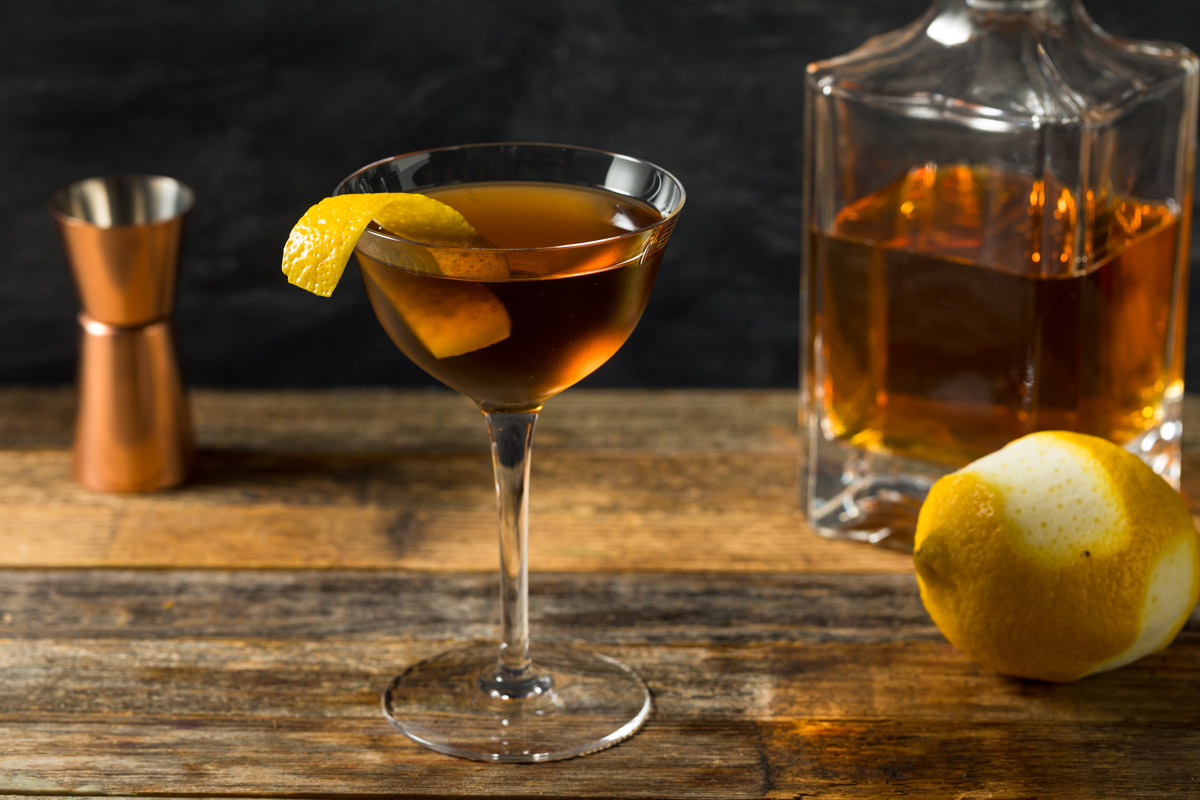
The Boothby (Pied Piper Bar)
The Boothby cocktail was created in the early 1900s by famed bartender William “Cocktail Bill” Boothby at the Pied Piper Bar in the Palace Hotel (San Francisco). Richer and more spirit-forward than many Champagne cocktails, it quickly became a favorite in San Francisco’s grand hotel bar scene during the city’s post-earthquake revival.
Ingredients:
- 1 oz rye whiskey
- 1 oz sweet vermouth
- 2 dashes Angostura bitters
- 2 dashes orange bitters
- Champagne to top
- Lemon twist garnish
Directions
- Combine the rye whiskey, sweet vermouth and bitters in a mixing glass with ice.
- Stir until well chilled.
- Strain into a chilled flute or coupe.
- Top with Champagne.
- Garnish with a lemon twist.
The Boothby (Pied Piper Bar)
The Boothby cocktail was created in the early 1900s by famed bartender William “Cocktail Bill” Boothby at the Pied Piper Bar in the Palace Hotel (San Francisco). Richer and more spirit-forward than many Champagne cocktails, it quickly became a favorite in San Francisco’s grand hotel bar scene during the city’s post-earthquake revival.
Ingredients:
- 1 oz rye whiskey
- 1 oz sweet vermouth
- 2 dashes Angostura bitters
- 2 dashes orange bitters
- Champagne to top
- Lemon twist garnish
Directions
- Combine the rye whiskey, sweet vermouth and bitters in a mixing glass with ice.
- Stir until well chilled.
- Strain into a chilled flute or coupe.
- Top with Champagne.
- Garnish with a lemon twist.
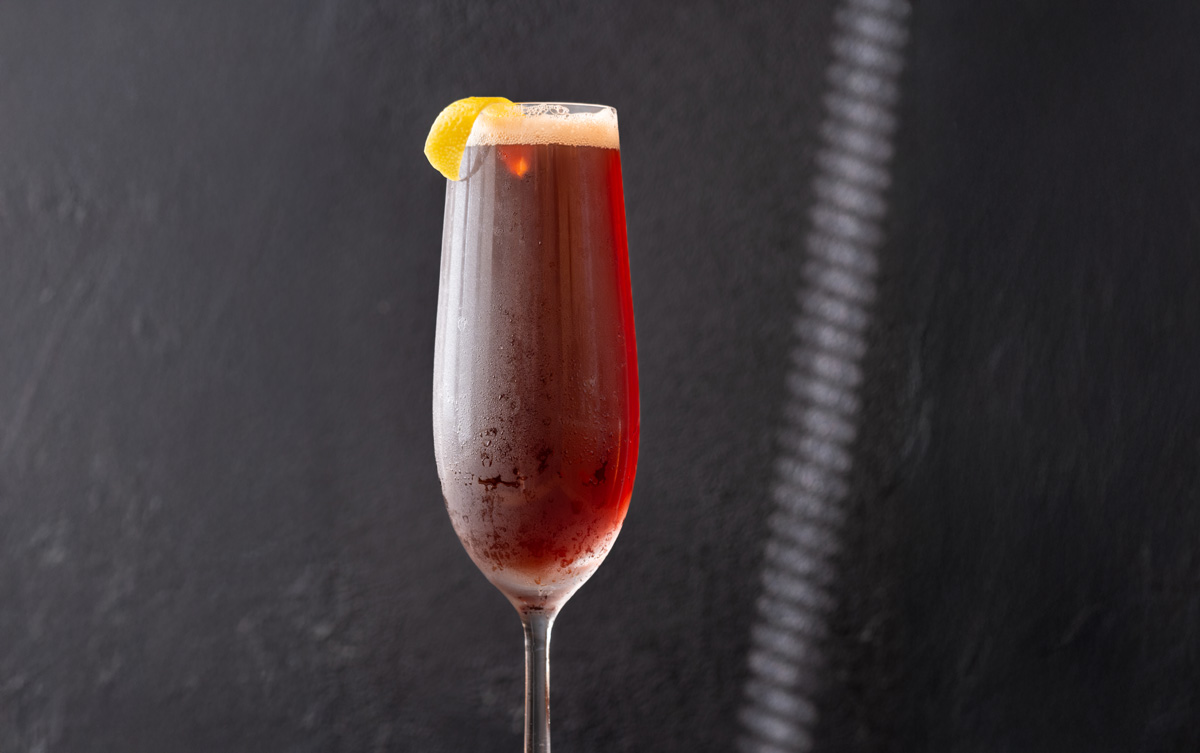
The Seelbach (Seelbach Hilton)
As the story goes, the Seelbach cocktail originated at The Seelbach Hotel (Louisville) in the early 1900s. Rumor had it that in 1917, a bartender accidentally spilled Champagne into a guest’s Manhattan, creating a perfect mixture—but this story is pure fiction. In reality, the Seelbach was created in 1995 by bartender Adam Seger and marketed as a pre-Prohibition recipe to intrigue guests and boost the hotel’s reputation. Despite its dubious origins, the Seelbach still brings together both Kentucky heritage and luxury hotel sophistication in a single glass.
Ingredients:
- 1 oz. bourbon
- .5 oz. triple sec
- 7 dashes Peychaud’s bitters
- 3 dashes of Angostura bitters
- 5 oz. Champagne
- Orange peel garnish
Preparation:
- Fill a mixing glass with ice.
- Add bourbon, triple sec, and bitters.
- Stir for 30 seconds until well-chilled.
- Strain into a champagne flute.
- Top with sparkling wine.
- Express oils from an orange twist, then add as garnish.
The Seelbach (Seelbach Hilton)
As the story goes, the Seelbach cocktail originated at The Seelbach Hotel (Louisville) in the early 1900s. Rumor had it that in 1917, a bartender accidentally spilled Champagne into a guest’s Manhattan, creating a perfect mixture—but this story is pure fiction. In reality, the Seelbach was created in 1995 by bartender Adam Seger and marketed as a pre-Prohibition recipe to intrigue guests and boost the hotel’s reputation. Despite its dubious origins, the Seelbach still brings together both Kentucky heritage and luxury hotel sophistication in a single glass.
Ingredients:
- 1 oz. bourbon
- .5 oz. triple sec
- 7 dashes Peychaud’s bitters
- 3 dashes of Angostura bitters
- 5 oz. Champagne
- Orange peel garnish
Preparation:
- Fill a mixing glass with ice.
- Add bourbon, triple sec, and bitters.
- Stir for 30 seconds until well-chilled.
- Strain into a champagne flute.
- Top with sparkling wine.
- Express oils from an orange twist, then add as garnish.
Want to branch beyond Champagne?
Luxury hotel bars have also been the birthplace of cocktails like the Vieux Carré, Rob Roy, Hank Panky, and Singapore Sling.
Nicole Bump
Nicole is a seasoned content strategist and writer with 15+ years of experience turning complex ideas into compelling stories. As founder of Bump Inbound, she helps brands connect with audiences through thoughtful strategy, sharp planning, and standout writing.
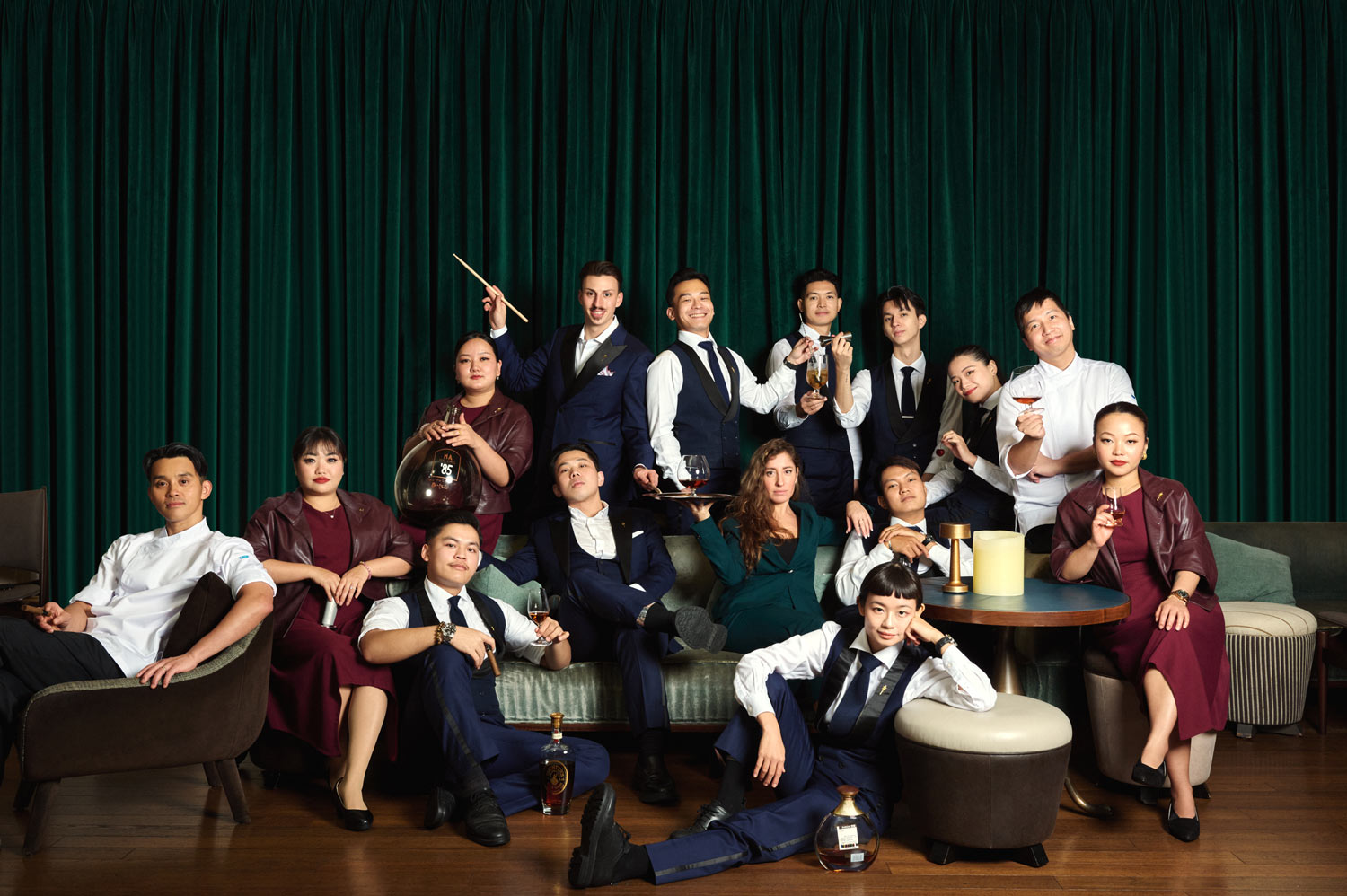
DarkSide Hong Kong—Rosewood’s timeless yet innovative jazz bar
Darkside Hong Kong
DarkSide Hong Kong—Rosewood’s timeless yet innovative jazz bar
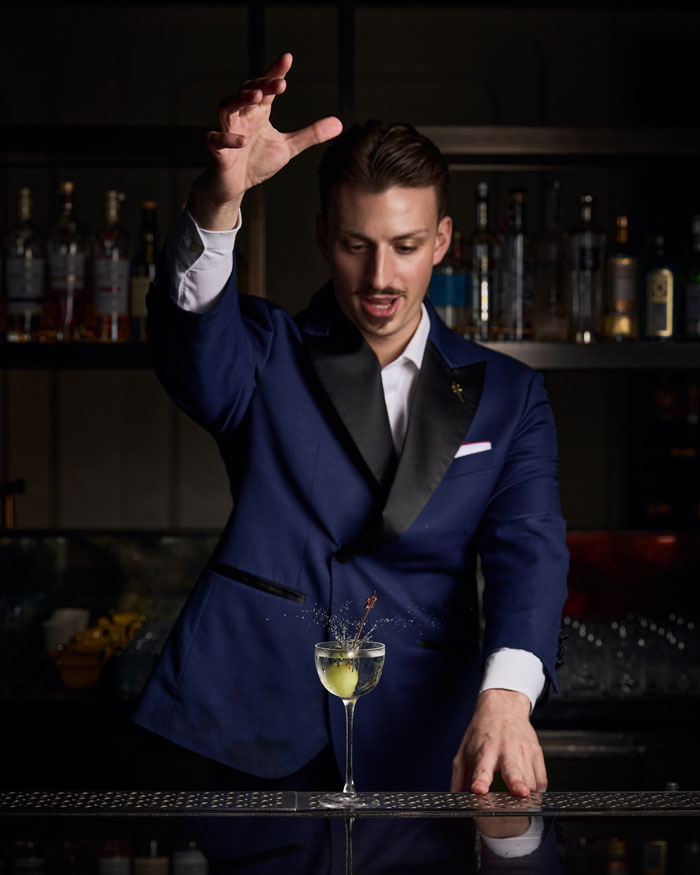
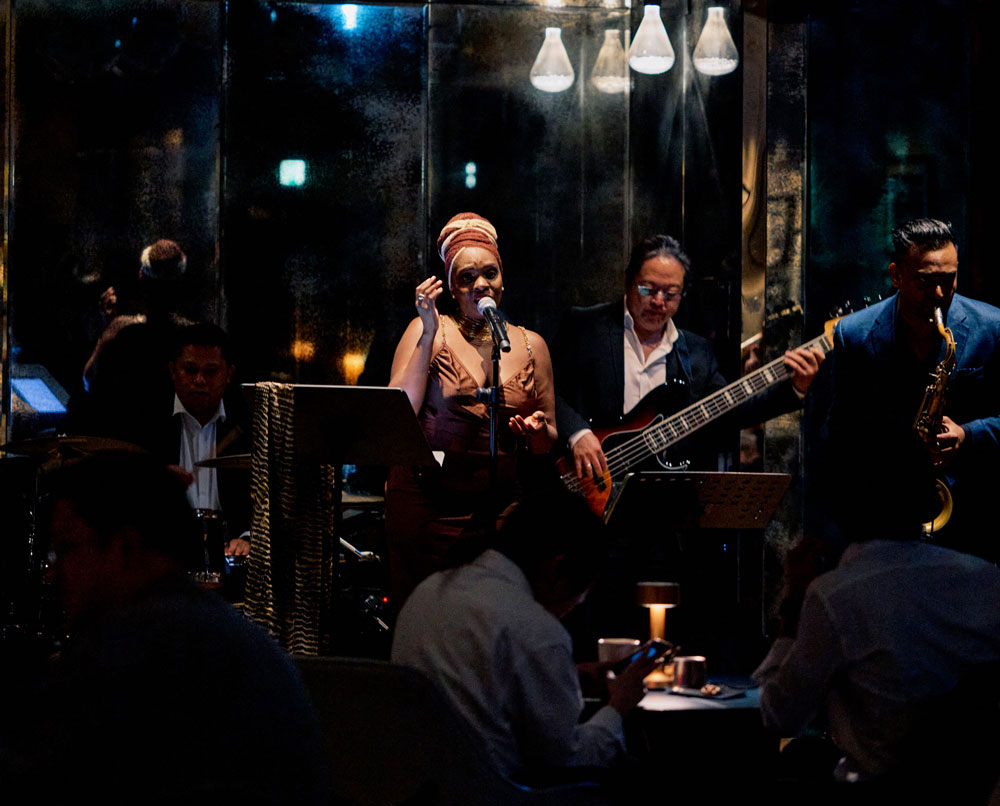
Keys are checked, strings adjusted, and a quiet nod exchanged among the team. As the live band steps onto the small stage, music fills the room at DarkSide, the sophisticated jazz bar inside the Rosewood Hong Kong in Tsim Sha Tsui, Kowloon.
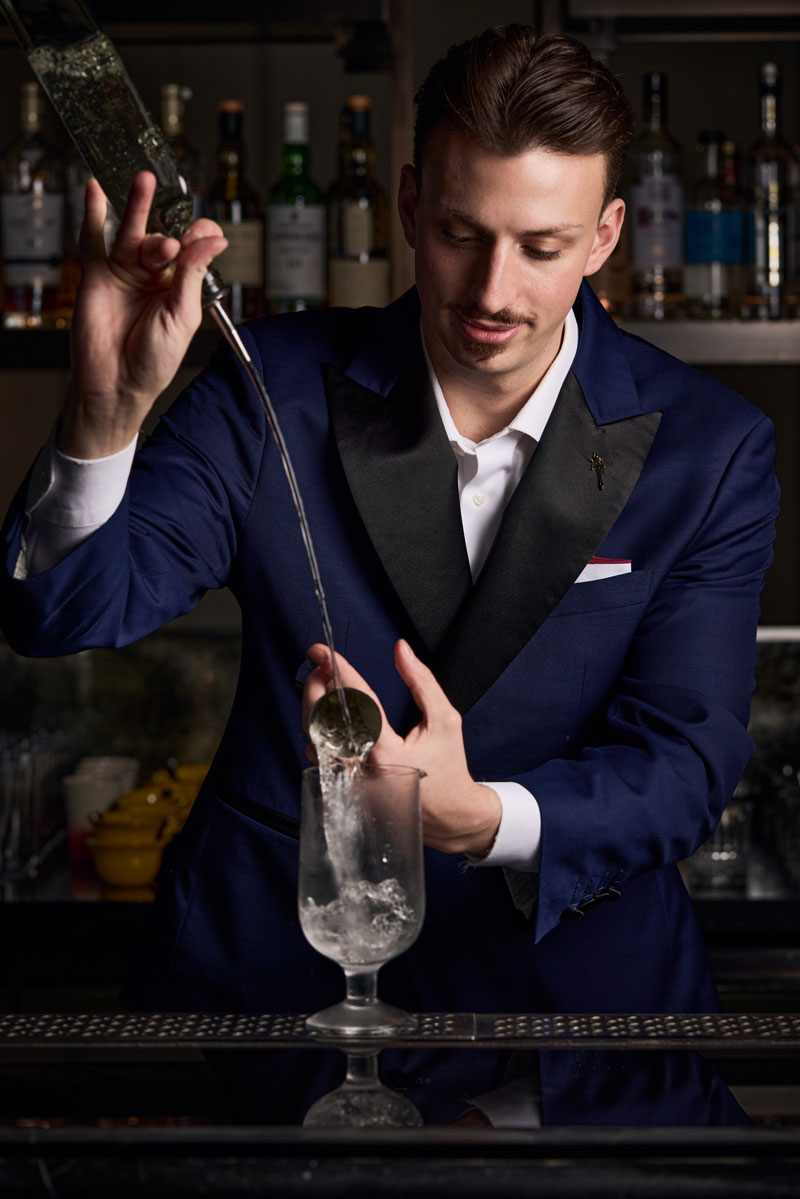
The bar’s name nods to Kowloon’s historic identity as the “dark side” of Victoria Harbor—a district shaped by maritime trade, cultural exchange, and a nightlife once known for its shadowed glamour. DarkSide channels that layered past, blending East and West much like Kowloon has for generations.
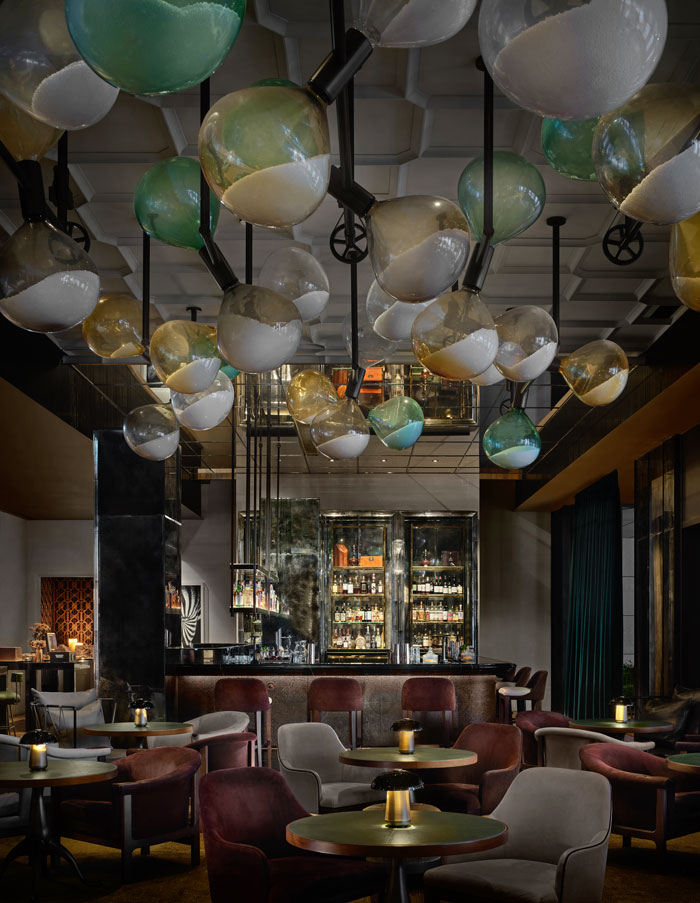
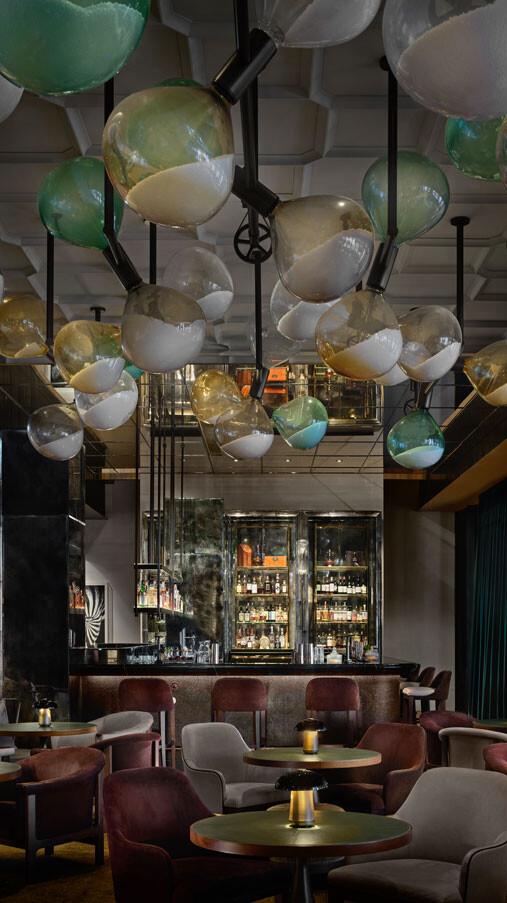
“We capture Kowloon’s spirit through design and ritual rather than a literal theme. Guests encounter black and white Hong Kong portraiture, an artwork of glass hours in motion on the ceiling symbolizing the importance of time, and a mood that feels timeless and cinematic,”
Marco Maiorano
Bar Manager
Cocktails with a soundscape
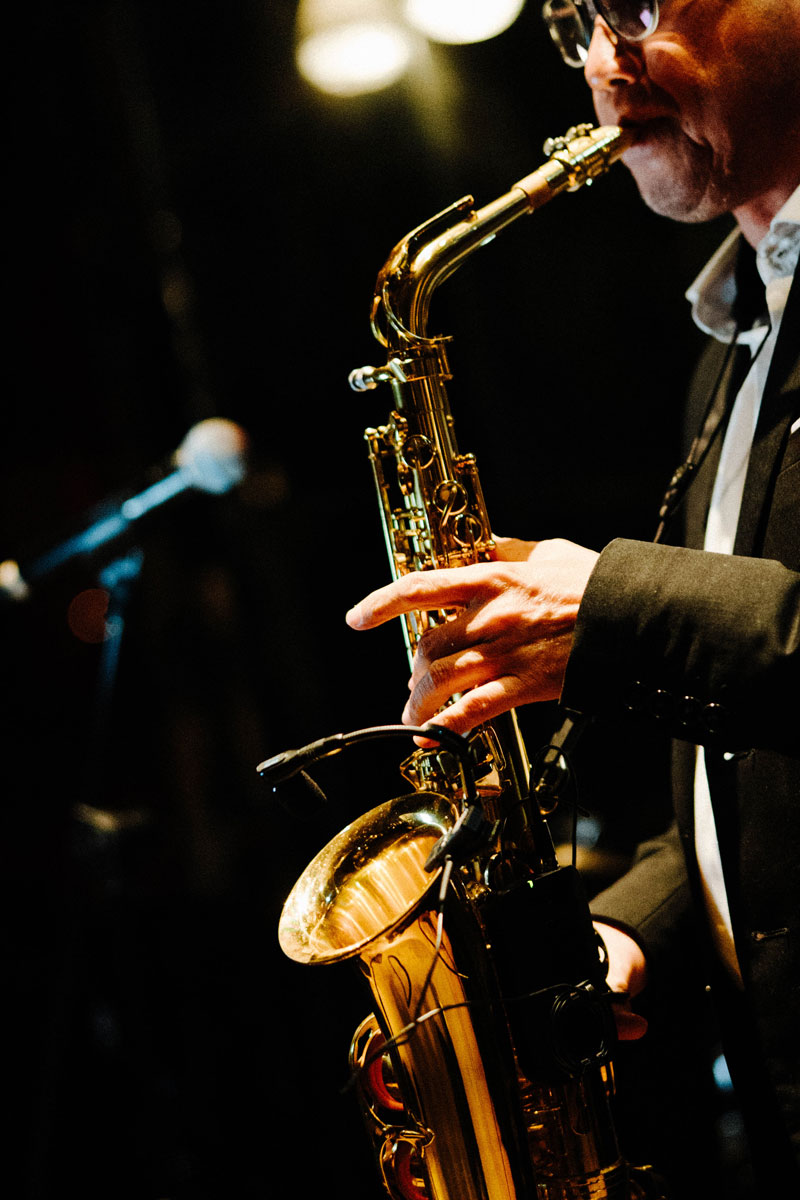
DarkSide Hong Kong is known for its sultry jazz performances, creating an immersive soundscape that shapes the guest experience and reinforces a sense of old-world sophistication. The venue features live shows most evenings, typically performed by a resident ensemble and often featuring guest musicians—like vocalist Mirella Toussaint, a standout talent from The Voice France.
DarkSide’s decadent interior is also jazz-era-inspired, interpreted through a modern luxury hotel lens. Guests enjoy plush, club-style seating, low, ambient lighting, and a dark, intimate palette—all paying atmospheric homage to the spirit of the 1920s jazz age.
“The music becomes part of the storytelling—it adds a sense of timeless elegance, and it helps guests feel relaxed from the moment they arrive, like they’ve entered a private world where everything moves at a comfortable pace” says Maiorano.
The bar’s name nods to Kowloon’s historic identity as the “dark side” of Victoria Harbor—a district shaped by maritime trade, cultural exchange, and a nightlife once known for its shadowed glamour. DarkSide channels that layered past, blending East and West much like Kowloon has for generations.
“We capture Kowloon’s spirit through design and ritual rather than a literal theme. Guests encounter black and white Hong Kong portraiture, an artwork of glass hours in motion on the ceiling symbolizing the importance of time, and a mood that feels timeless and cinematic,”
Marco Maiorano
Bar Manager
Bespoke selection of rare spirts
The jazz-age concept isn’t just about live music and velvet banquettes. It’s about a time when cognac was king, fortified wines were standard pre-dinner fare, and whisky was sipped slowly (not shot).
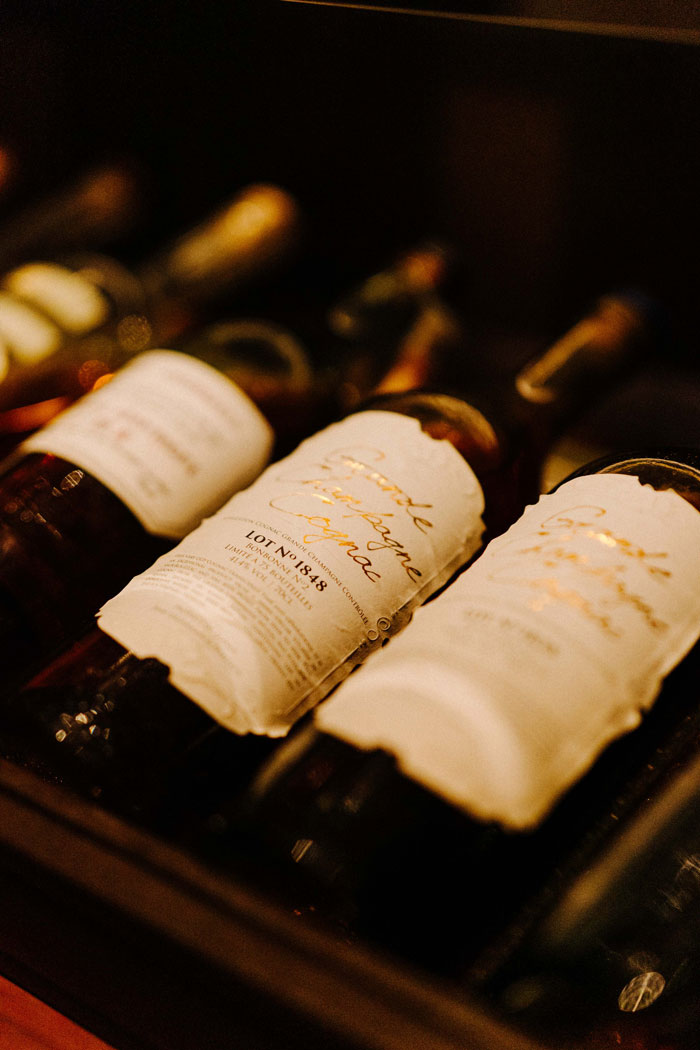
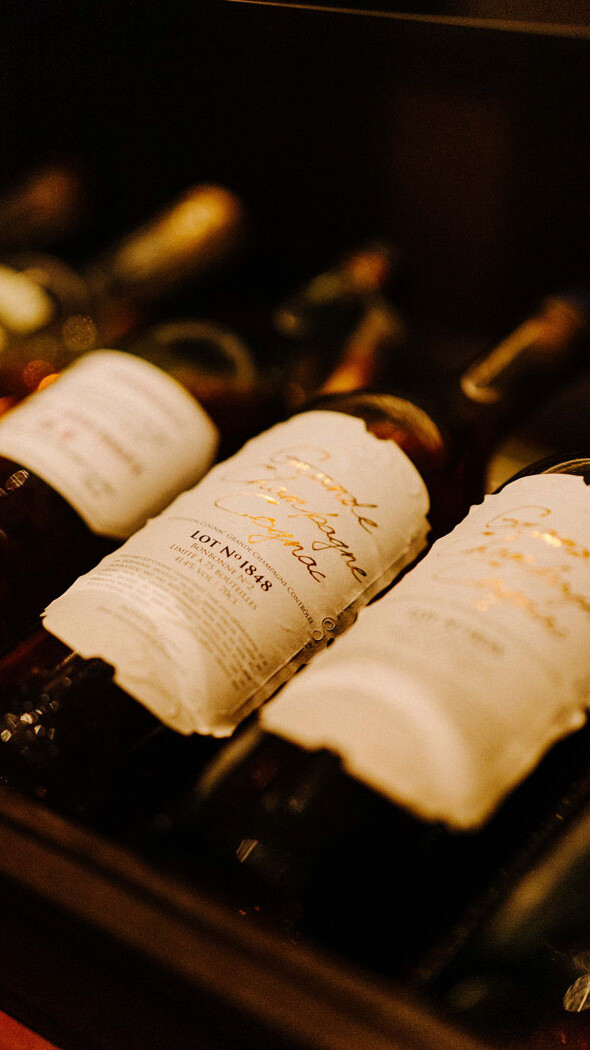
The DarkSide bar boasts an extensive library of rare, aged spirits, including exclusive casks of single-harvest tawny port from 1969 and Grande Champagne cognac aged in oak. These rare spirits aren’t just a luxury flex—they anchor DarkSide in a period when drinking was deliberate, musical, and steeped in ritual.
Cocktails with a soundscape
DarkSide Hong Kong is known for its sultry jazz performances, creating an immersive soundscape that shapes the guest experience and reinforces a sense of old-world sophistication. The venue features live shows most evenings, typically performed by a resident ensemble and often featuring guest musicians—like vocalist Mirella Toussaint, a standout talent from The Voice France.
DarkSide’s decadent interior is also jazz-era-inspired, interpreted through a modern luxury hotel lens. Guests enjoy plush, club-style seating, low, ambient lighting, and a dark, intimate palette—all paying atmospheric homage to the spirit of the 1920s jazz age.
“The music becomes part of the storytelling—it adds a sense of timeless elegance, and it helps guests feel relaxed from the moment they arrive, like they’ve entered a private world where everything moves at a comfortable pace” says Maiorano.
Bespoke selection of rare spirts
The jazz-age concept isn’t just about live music and velvet banquettes. It’s about a time when cognac was king, fortified wines were standard pre-dinner fare, and whisky was sipped slowly (not shot).
The DarkSide bar boasts an extensive library of rare, aged spirits, including exclusive casks of single-harvest tawny port from 1969 and Grande Champagne cognac aged in oak. These rare spirits aren’t just a luxury flex—they anchor DarkSide in a period when drinking was deliberate, musical, and steeped in ritual.
New life for forgotten favorites
DarkSide’s cocktail program also complements the bar’s old-world glamour with a menu that often revolves around classics from bygone eras. The current Forgotten Classics menu, for example, features eight drinks guests may have missed out on by a few decades (or more).
Maiorano and team revitalize these Forgotten Classics with modern techniques and local ingredients. In doing so, they reflect the same exchange of ideas that has long defined Kowloon itself—global influences interpreted through a distinctly local lens. A few guest favorites include:
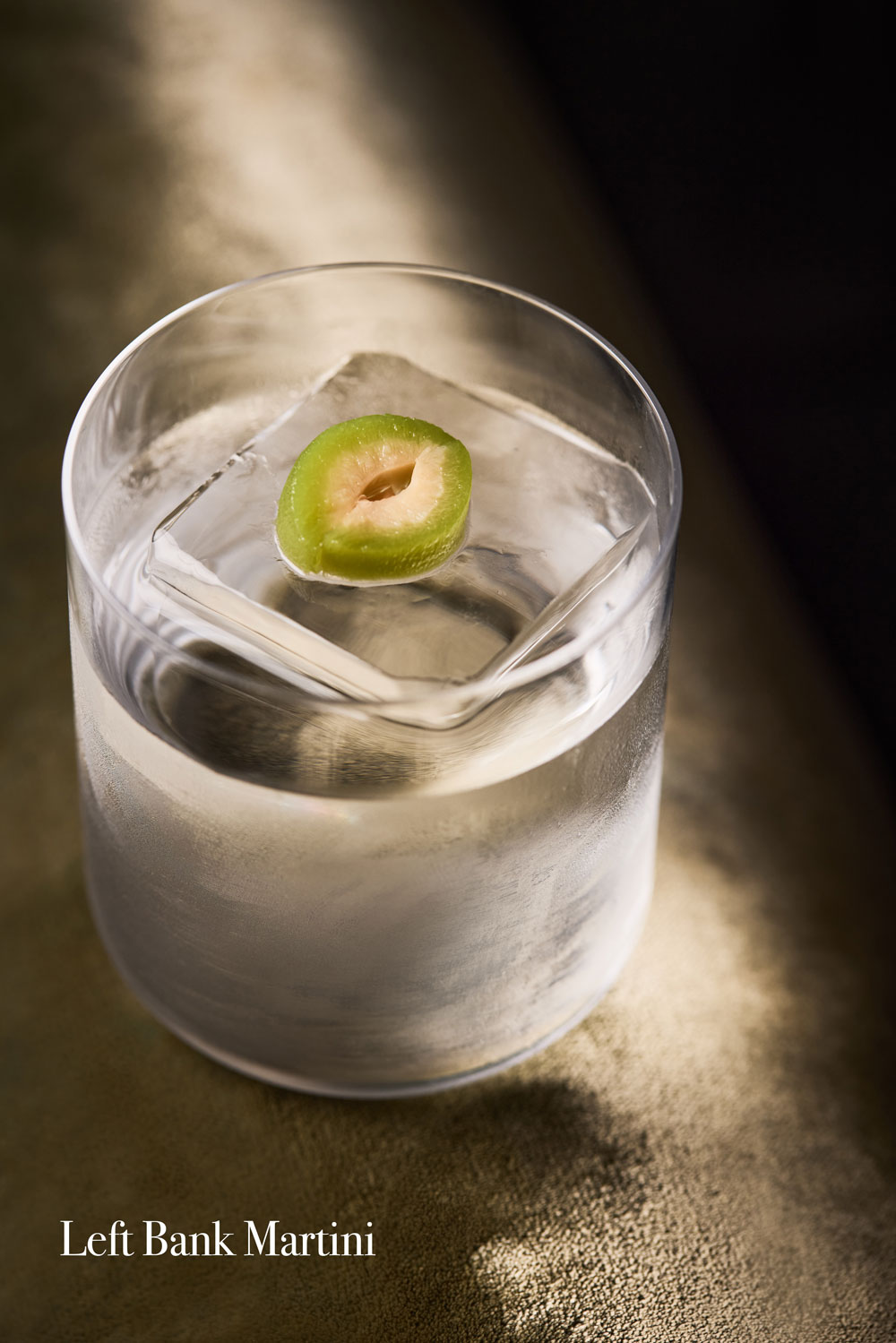
- Left Bank Martini—A twist on the classic Martini, created at London’s Cabinet Room in 2006. DarkSide Bar’s Left Bank Martini balances gin, St. Germain, and chardonnay.
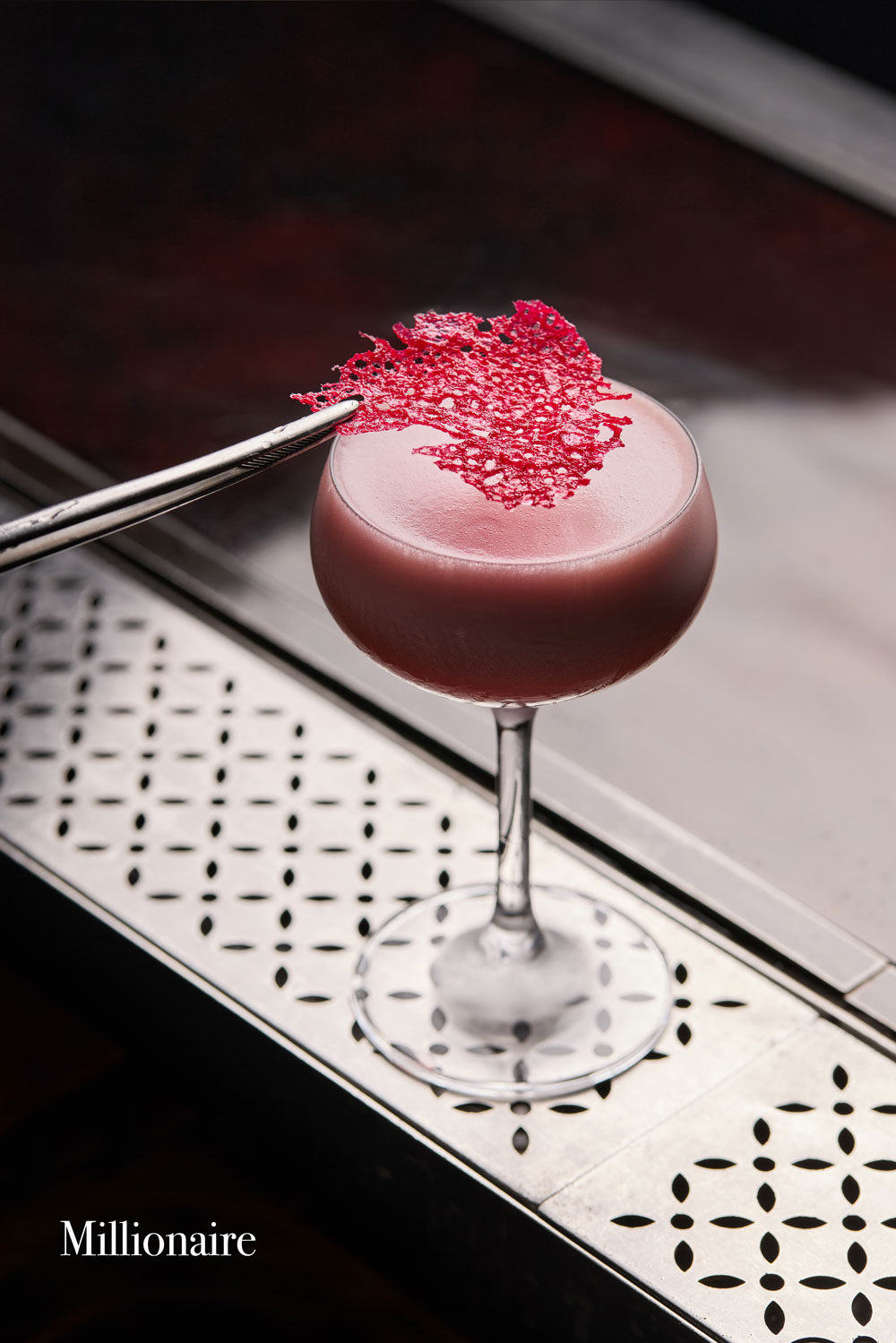
- Millionaire—First appearing in 1914 within the pages of Jacques Straub’s Manual of Mixed Drinks, DarkSide’s modern take on the Millionaire is a tribute to the golden age of cocktails. It artfully blends whisky, orange liqueur, berries, and a hint of nutmeg.
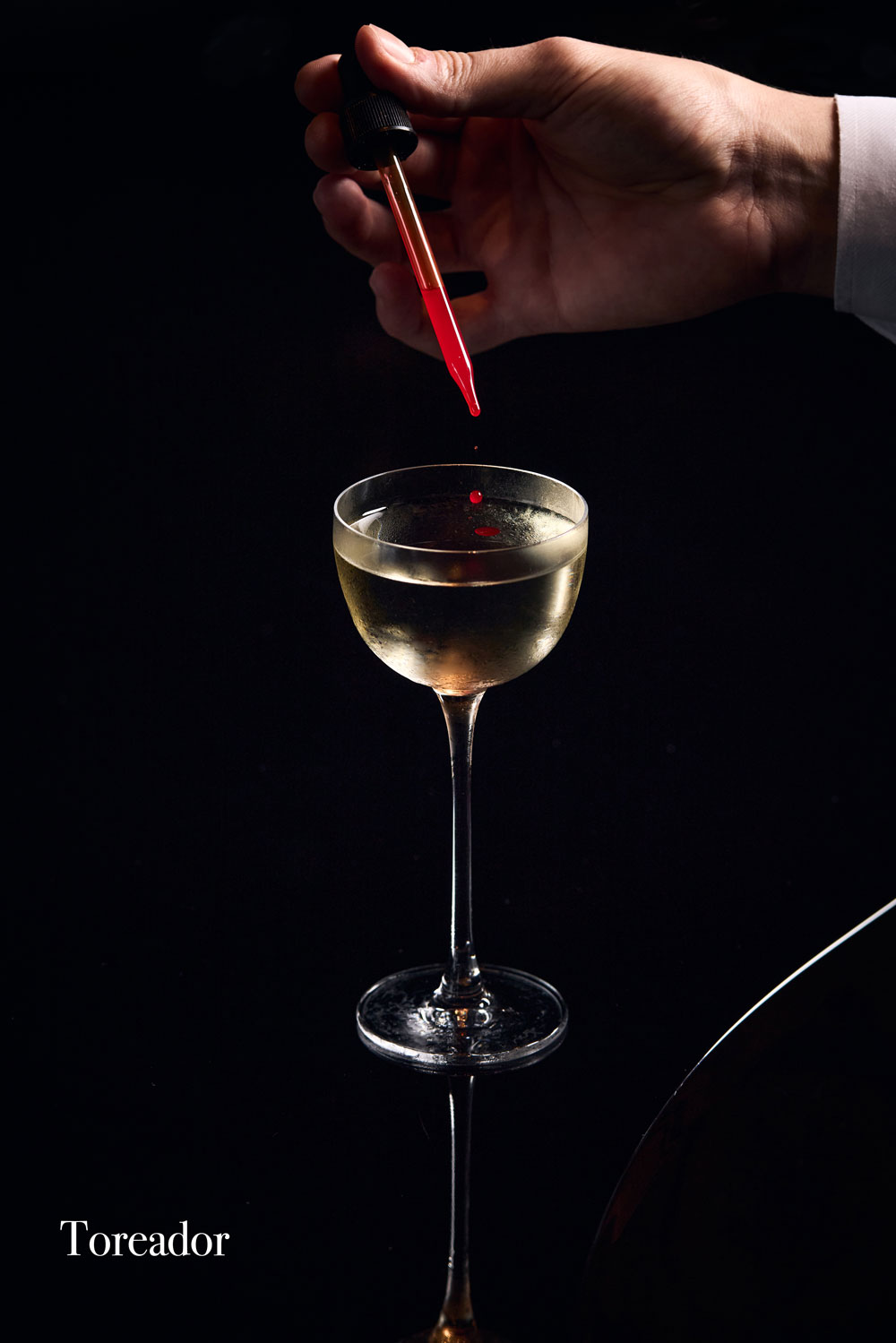
- Toreador—Originally created in the early 1900s as a nod to Spain’s legendary bullfighters, DarkSide reimagined the Toreador cocktail with tequila, apricot, verjus and saline. It’s finished with a drop of saffron oil.
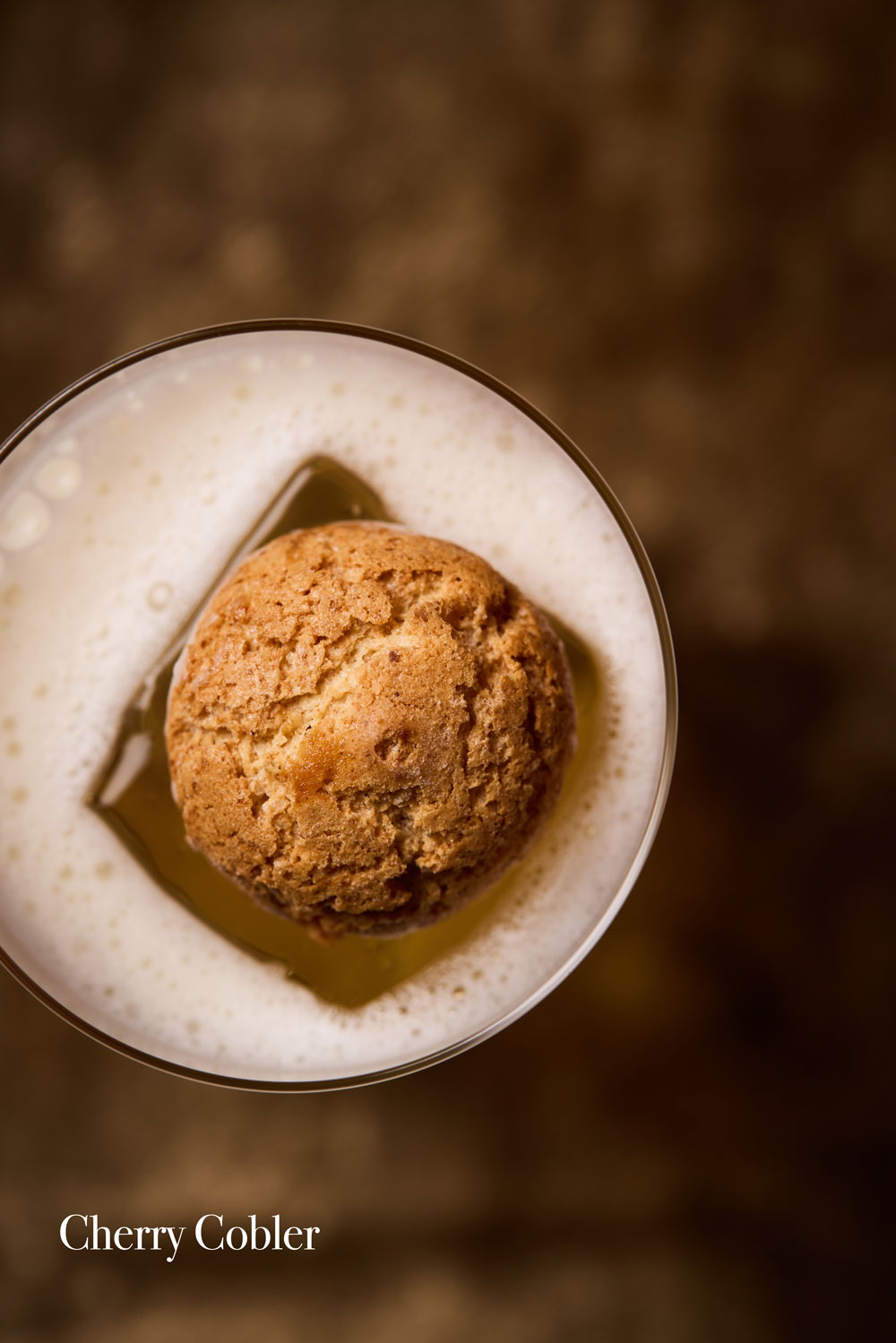
Maiorano’s favorite Forgotten Classic is the Sherry Cobbler:
“Our modern take focuses on structure and texture while keeping the soul of the original. We prepare it in a shaken style using Oloroso sherry, PX, Macallan 12 Year Old, and a touch of fresh pineapple juice to create a lighter, fluffier texture. We also use clear ice to help maintain body and temperature for longer. Finally, we garnish with amaretto, which beautifully complements the cocktail’s nutty notes.”
- Left Bank Martini—A twist on the classic Martini, created at London’s Cabinet Room in 2006. DarkSide Bar’s Left Bank Martini balances gin, St. Germain, and chardonnay.
- Millionaire—First appearing in 1914 within the pages of Jacques Straub’s Manual of Mixed Drinks, DarkSide’s modern take on the Millionaire is a tribute to the golden age of cocktails. It artfully blends whisky, orange liqueur, berries, and a hint of nutmeg.
- Toreador—Originally created in the early 1900s as a nod to Spain’s legendary bullfighters, DarkSide reimagined the Toreador cocktail with tequila, apricot, verjus and saline. It’s finished with a drop of saffron oil.
Maiorano’s favorite Forgotten Classic is the Sherry Cobbler:
“Our modern take focuses on structure and texture while keeping the soul of the original. We prepare it in a shaken style using Oloroso sherry, PX, Macallan 12 Year Old, and a touch of fresh pineapple juice to create a lighter, fluffier texture. We also use clear ice to help maintain body and temperature for longer. Finally, we garnish with amaretto, which beautifully complements the cocktail’s nutty notes.”
Earning a standing ovation
DarkSide has earned acclaim on the international bar scene, including long-standing placements on Asia’s 50 Best Bars list and awards from local critics for its cocktail program and overall experience. But DarkSide’s acclaim is not built on atmosphere alone—Maiorano explains it’s the result of consistency.
He says the biggest contributors for DarkSide have been:
- Strong service culture and genuine hospitality
- Creativity and innovation in the bar program
- A clear identity that feels authentic, not generic
- Team discipline and collaboration, from training to execution
“Our focus is to continue raising the bar with both product and experience, while staying true to the DarkSide vision,” Maiorano explains. “I truly believe our return to the list should be a consequence of our hard work, not a target to pursue.”
Success through harmony
In the end, DarkSide’s success is about harmony. Jazz sets the tempo, rare spirits add depth, Forgotten Classics provide structure. And at the center of it all is a team attuned to the subtle shifts of the room. In a district long defined by movement—of ships, of cultures, of ideas—DarkSide finds its rhythm. It blends history and modernity as seamlessly as the city that surrounds it. And like any great performance, what guests remember isn’t just what was played. It’s how it made them feel.
Nicole Bump
Nicole is a seasoned content strategist and writer with 15+ years of experience turning complex ideas into compelling stories. As founder of Bump Inbound, she helps brands connect with audiences through thoughtful strategy, sharp planning, and standout writing.
Martini service: why luxury hotel bars serve tableside
Martini Service
Martini service: why luxury hotel bars serve tableside
Long before craft cocktails became trendy again, luxury hotels in the early 1900s turned drink service into a form of theater. Bartenders wheeled ornate carts through dining rooms, mixing cocktails tableside as guests watched the ritual unfold. The martini—clean, elegant, and endlessly customizable—was perfectly suited to this style of service. Today, some of the world’s most luxurious hotel bars are reviving that tradition with martini trolleys that bring the cocktail directly to the guest. Equal parts hospitality, ritual, and visual spectacle, tableside martini service blends old-world glamour with modern mixology—creating an experience that feels as timeless as the drink itself.
Which hotel bars serve tableside martinis?
Several luxury hotel bars offer theatrical, tableside martini service, often crafted and served from customized bar carts or martini trolleys. Some of these renowned spots include:
- The Connaught Bar at The Connaught Hotel (London)
- Martini Lounge at The Knickerbocker (New York City)
- The Aman Bar at Aman Venice (Venice)
- DUKES Bar at DUKES Hotel (London)
- Bar Longhi and the Riva Lounge at The Gritti Palace (Venice)
- The Penrose Room at The Broadmoor (Colorado Springs)
The Connaught Bar is particularly famous for its sleek, black martini trolley, which allows guests to build a martini exactly to their tastes. Gin or vodka? Dry, wet, or somewhere in between? Connaught guests choose from bitters like lavender, tonka bean, and Dr. Ago (a signature blend of ginseng and bergamot, named for Head Bartender Ago Perrone). The bartender then gently stirs the cocktail in the air, raising the mixing glass high above the rim and letting the stream cascade into a chilled coupe.
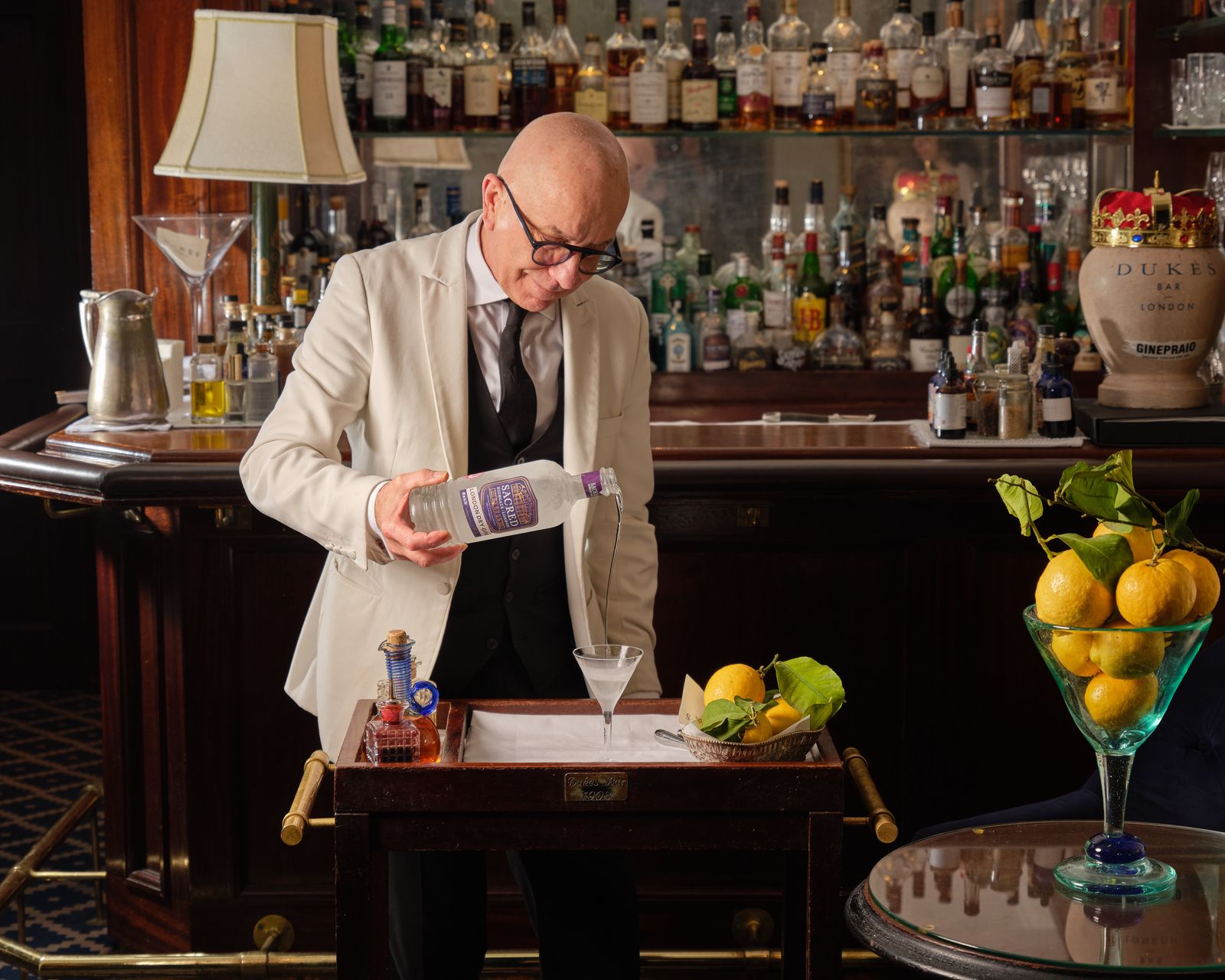
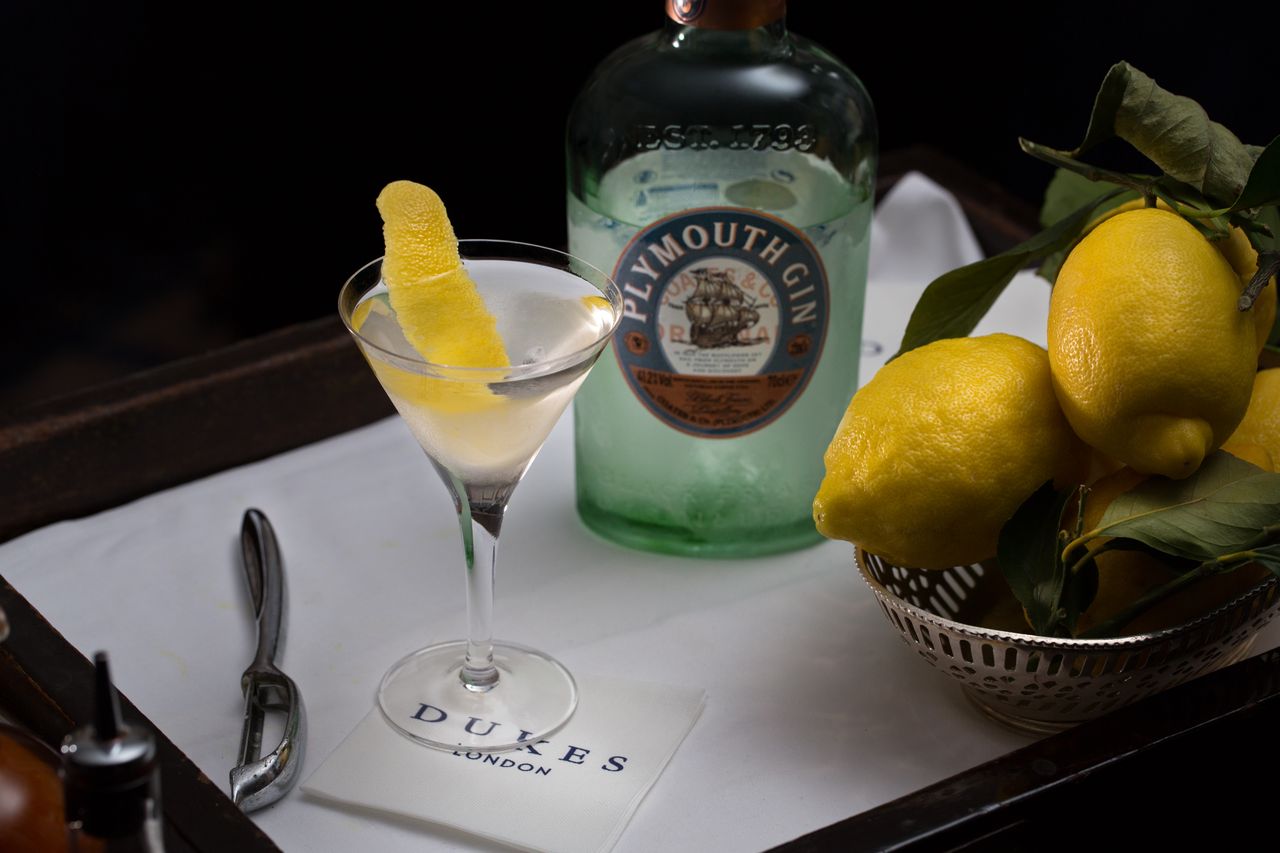
DUKES Bar is also well known for its custom-designed rosewood trolley. The bartender rinses a chilled glass with vermouth, adds gin straight from the freezer, and garnishes with an organic Amalfi lemon twist for a burst of essential oils. The resulting martini is so potent that DUKES is also known for its two-martini limit.
The Aman Bar does not have a martini trolley but instead provides a curated experience where cocktails are shaken or stirred directly at the table, offering a dramatic and interactive start to the evening. Guests enjoy classic martinis with a twist—like the Wild Fennel Martini—or fully customized cocktails.
“Our idea is to replicate our philosophy of ‘feeling at home’,” explains Antonio Ferrara Bar Manager at Aman. “We imagine creating the same atmosphere in your home, with our tray bar, together with your friends or partner, to enjoy an aperitivo. The location may be different, but the feeling remains the same.”
The Connaught Bar is particularly famous for its sleek, black martini trolley, which allows guests to build a martini exactly to their tastes. Gin or vodka? Dry, wet, or somewhere in between? Connaught guests choose from bitters like lavender, tonka bean, and Dr. Ago (a signature blend of ginseng and bergamot, named for Head Bartender Ago Perrone). The bartender then gently stirs the cocktail in the air, raising the mixing glass high above the rim and letting the stream cascade into a chilled coupe.
DUKES Bar is also well known for its custom-designed rosewood trolley. The bartender rinses a chilled glass with vermouth, adds gin straight from the freezer, and garnishes with an organic Amalfi lemon twist for a burst of essential oils. The resulting martini is so potent that DUKES is also known for its two-martini limit.
The Aman Bar does not have a martini trolley but instead provides a curated experience where cocktails are shaken or stirred directly at the table, offering a dramatic and interactive start to the evening. Guests enjoy classic martinis with a twist—like the Wild Fennel Martini—or fully customized cocktails.
“Our idea is to replicate our philosophy of ‘feeling at home’,” explains Antonio Ferrara Bar Manager at Aman. “We imagine creating the same atmosphere in your home, with our tray bar, together with your friends or partner, to enjoy an aperitivo. The location may be different, but the feeling remains the same.”
Why the martini trolley works
For hotel bars already defined by high-touch service, the martini trolley and other methods of tableside service add a layer of luxury. It is interactive, highly personal, and visually compelling enough to turn one guest’s drink order into a moment the whole room notices.
It creates a personal connection
Tableside martini service gives bartenders and guests a rare one-on-one exchange. Rather than simply placing a finished cocktail on the table, the bartender guides the guest through the experience in real time.
“In order to be memorable, the guest needs to feel [like] the protagonist of the moment,” says Giorgio Bargiani, Assistant Director of Mixology at The Connaught. “The guest is not just the spectator. It’s not just a chef’s table situation. [We] provide them choices, [and] put them in charge of what they’re drinking.”
It allows true personalization
That interaction also makes customization feel more meaningful. The guest is not just selecting from a menu but helping shape the drink in front of them, choosing the base spirit, level of dryness, bitters, or garnish.
Mariantonietta Varamo, Bar and Restaurant Manager at DUKES London hotel, explains, “…you enter a ‘Martini bubble’ once the trolley is beside your table, with a skilled bartender guiding you through the varied choices, carefully listening to your preferences, much like a tailor measuring you for a suit or dress.”
It delivers the ideal temperature
A martini trolley is not just about presentation. Many carts are equipped with heavy-duty chillers that keep both glassware and spirits at extremely low temperatures, helping bars achieve a level of cold that is difficult to replicate during fast-paced service behind the bar.
Alessandro Palazzi, Head Bartender at DUKES, explains, “The martini, wherever you drink, however you drink it, temperature is the most important because it’s all alcohol. So we freeze the glass and we freeze the spirits. So the first note that will come to your nose is the citrus.”
It gives the bar a built-in spectacle
There is also the undeniable visual appeal. Martini service by trolley creates a sense of drama that guests naturally want to photograph, film, and share. That visibility can become a draw in itself.
Evan Sewell, beverage director at Capolinea at Signia by Hilton, explains, “The martini cart has actually brought people in on its own—several guests have visited specifically because they saw it on Instagram.”
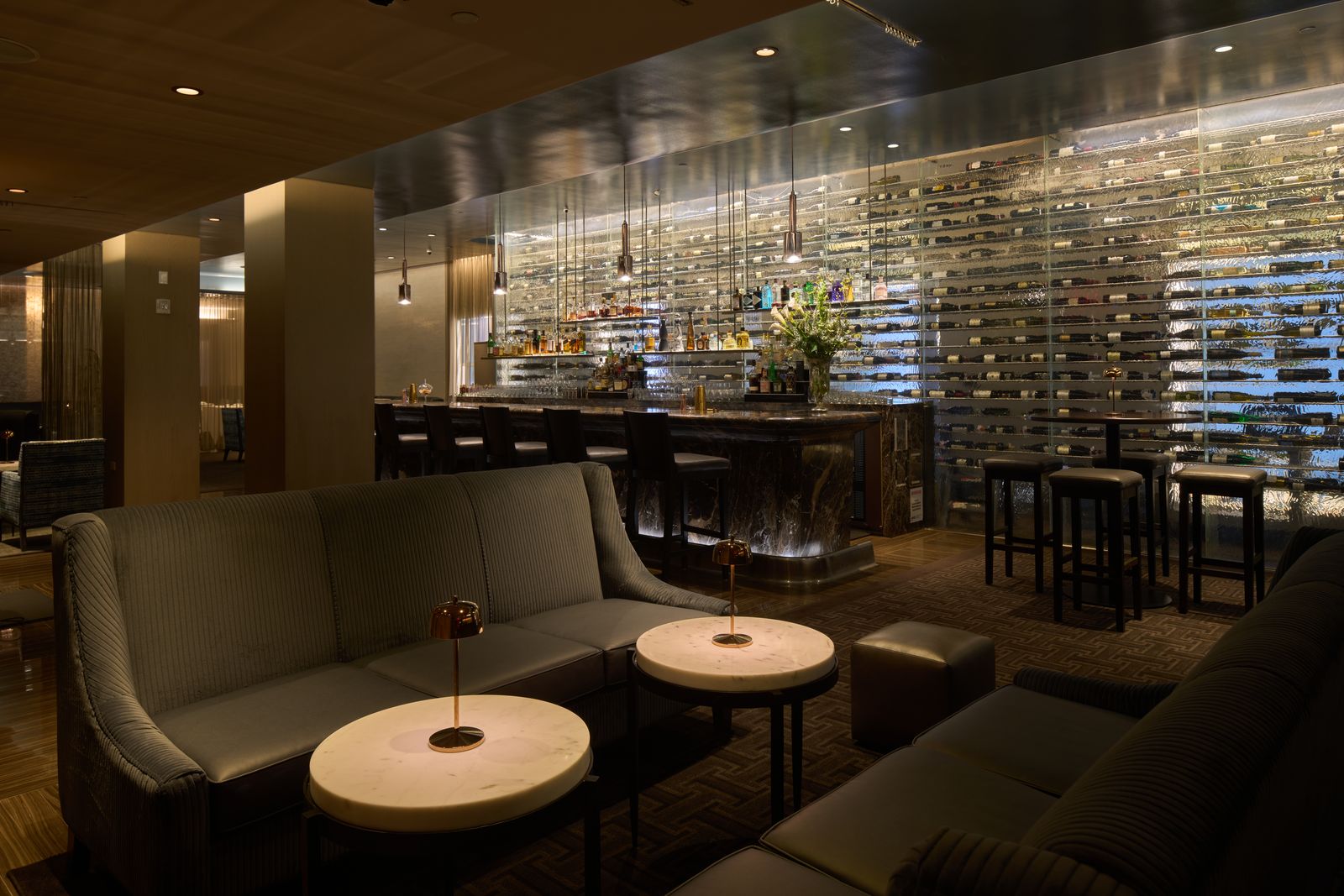
How hotel bars make tableside service succeed
Of course, successful martini trolley service takes more than a beautiful cart. The trolley may be the centerpiece, but execution depends on staffing, logistics, and a concept that feels true to the bar itself. The Knickerbocker’s Martini Lounge leans into this especially well. Its martini cart features a plaque declaring, “The original dry martini was first crafted at the Knickerbocker Hotel in 1912,” tying the service directly to the property’s own lore. That kind of connection helps the experience feel rooted in something more meaningful than mere trend.
How hotel bars make tableside service succeed
Of course, successful martini trolley service takes more than a beautiful cart. The trolley may be the centerpiece, but execution depends on staffing, logistics, and a concept that feels true to the bar itself. The Knickerbocker’s Martini Lounge leans into this especially well. Its martini cart features a plaque declaring, “The original dry martini was first crafted at the Knickerbocker Hotel in 1912,” tying the service directly to the property’s own lore. That kind of connection helps the experience feel rooted in something more meaningful than mere trend.
Start with the right team
Not every bartender is suited to tableside service. The role requires technical skill, polish, and a sense of timing. The best trolley bartenders can personalize the drink, answer questions, and share details that enrich the experience without overwhelming the guest. “Your team is key,” says Varamo. “You must find the right bartenders who have the skills of a maître d’ and the ability to move a trolley with grace.”
Think through the logistics
The romance of tableside service also requires careful operational planning. How will the trolley move through a full room? What happens when several tables request it at once? Busy bars may need multiple carts, backup glassware, and a clear service system to keep the experience smooth rather than slow.
Make it your own
The strongest martini trolleys do not feel copied from somewhere else. When Perrone created the Connaught martini trolley, he drew inspiration from DUKES as well as The Dorchester’s tableside gin and tonic service, but he emphasizes the importance of adaptation over imitation. “Finding inspiration doesn’t mean to copy and paste what other people do,” he says. “It works for them, but take bits and bobs. Translate it, iterating what works for you, for your guest, and keep the pillar of authenticity very strong. Make it relevant to the style of the bar.”
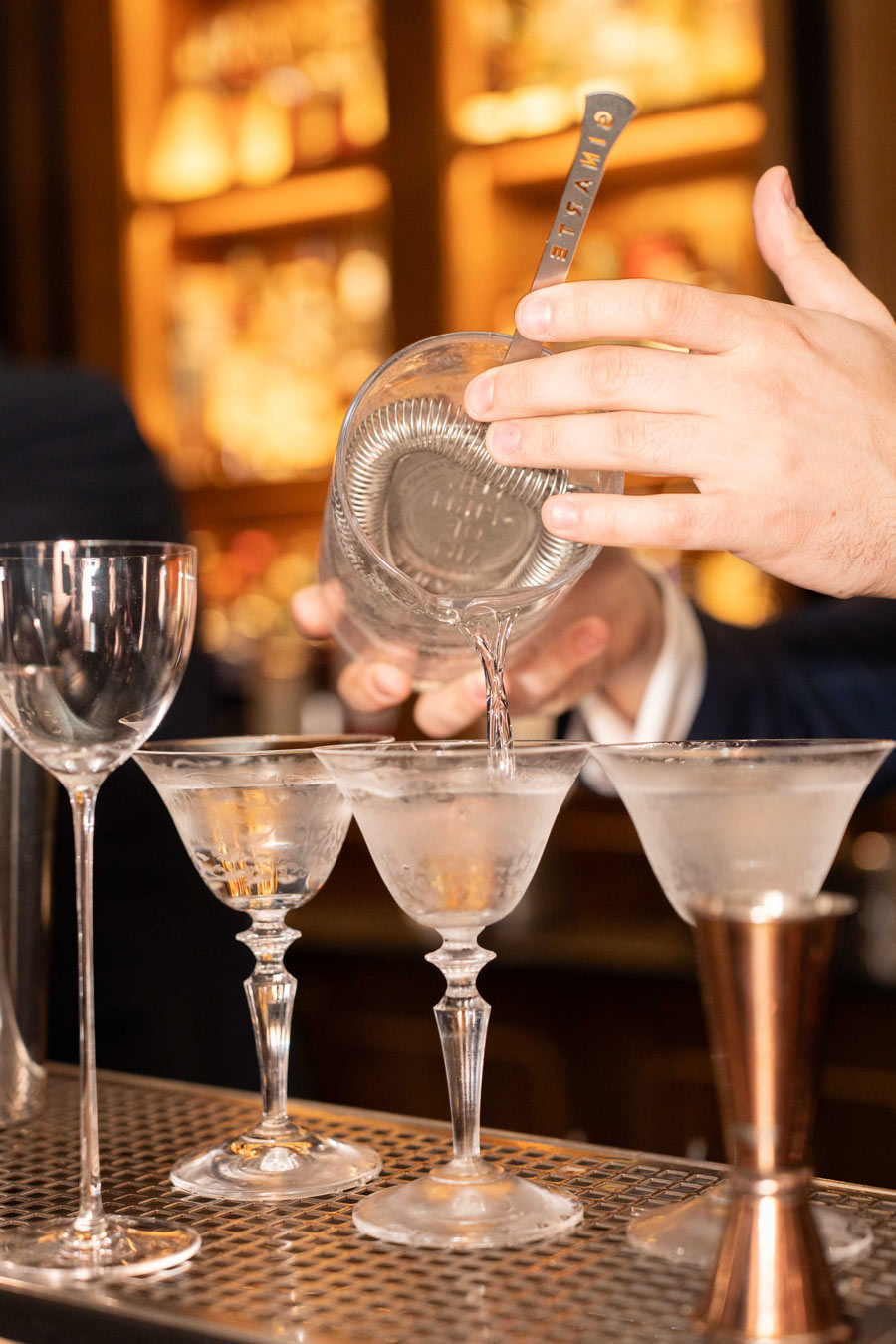
Why tableside martini service endures
At its core, the martini trolley is about more than convenience. It’s about ceremony. By bringing the mixing glass, frozen spirits, and personalization directly to the table, luxury hotels recreate the sense of occasion that defined cocktail culture in the early 20th century. In an era when so many drinks are ordered quickly and consumed just as fast, the martini cart slows things down. It turns a simple cocktail into a ritual—and gives today’s hotel bars a compelling way to revive the glamour, theater, and deliberate hospitality that first made them legendary.
Why tableside martini service endures
At its core, the martini trolley is about more than convenience. It’s about ceremony. By bringing the mixing glass, frozen spirits, and personalization directly to the table, luxury hotels recreate the sense of occasion that defined cocktail culture in the early 20th century. In an era when so many drinks are ordered quickly and consumed just as fast, the martini cart slows things down. It turns a simple cocktail into a ritual—and gives today’s hotel bars a compelling way to revive the glamour, theater, and deliberate hospitality that first made them legendary.
Nicole Bump
Nicole is a seasoned content strategist and writer with 15+ years of experience turning complex ideas into compelling stories. As founder of Bump Inbound, she helps brands connect with audiences through thoughtful strategy, sharp planning, and standout writing.
Get Inspired
Be the first to learn about our exclusive events and updates you’ll actually want to read.
Get Inspired
Be the first to learn about our exclusive events and updates you’ll actually want to read
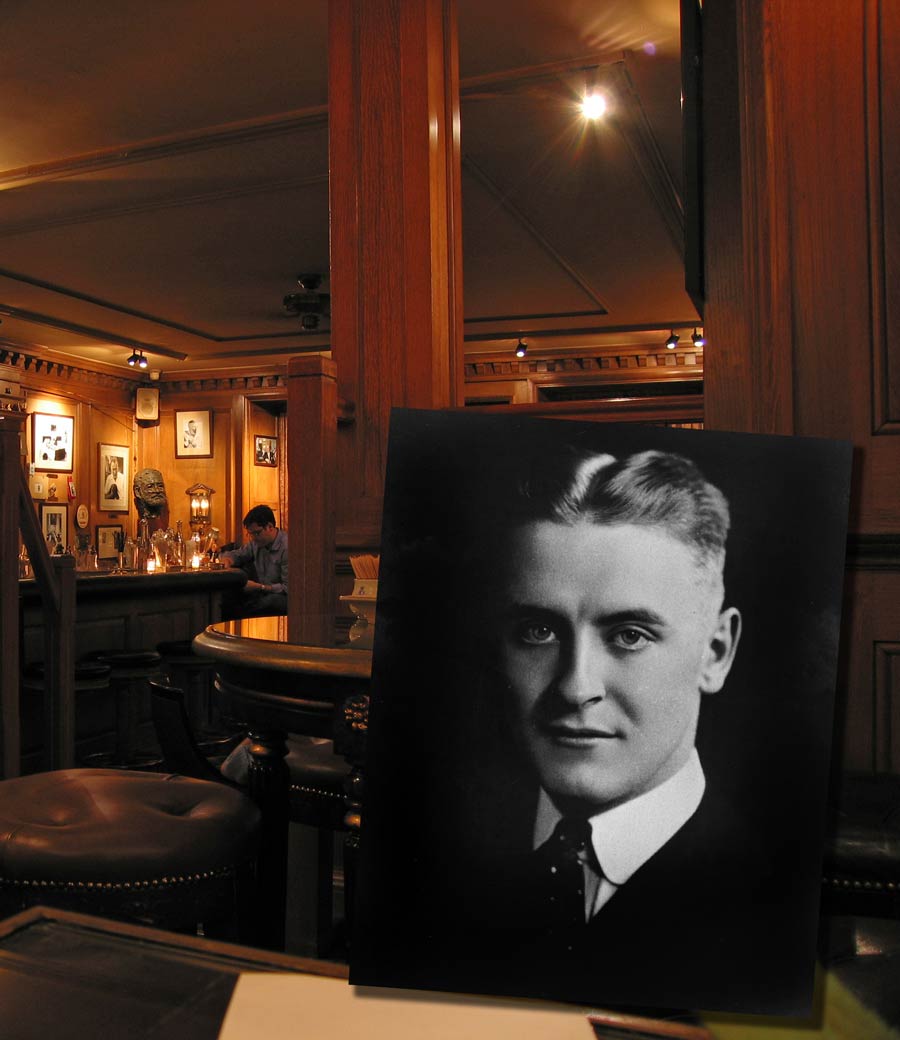
Where writers drank: 3 hotel bars behind literary history
Where writers drank
Where writers drank
3 hotel bars behind literary history
Writers in the early 1900s didn’t just happen to gather in hotel bars—it made perfect sense given how they lived, worked, and socialized at the time. Whether traveling for assignment, chasing inspiration, or avoiding distraction at home, hotels provided a home base complete with a room, meals, and mail service. And the hotel bar became the living room. The conversations, collaborations, and characters in a handful of these hotel bars left a lasting imprint on literary history.
Hemingway and the Ritz Paris bar
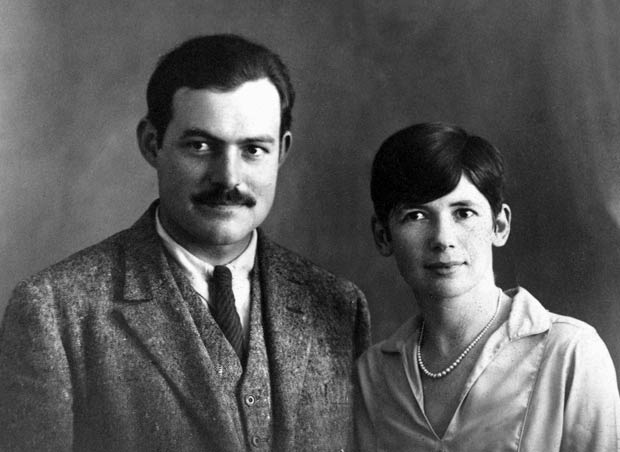
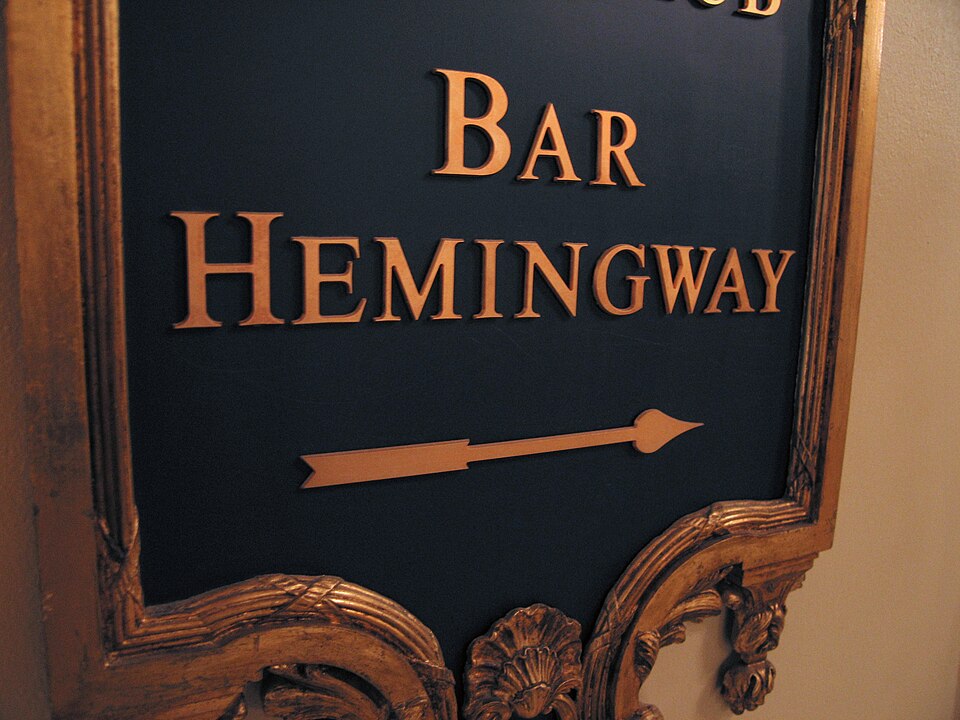
Hemingway and the Ritz Paris bar
Hemingway began writing his posthumously published memoir, A Moveable Feast, based on notes he found tucked away in valises he had left at the Ritz years earlier. Titles like Black Ass at the Cross Roads, Indian Country and the White Army, The Monument, and The Bubble Reputation were reportedly inspired by Hemingway’s later visits to the Ritz. Hemingway was so fond of the establishment, he once wrote, “When I dream of an afterlife in heaven, the action always takes place at the Ritz Paris”. Today, Hemingway’s love for the Ritz is memorialized through Bar Hemingway, Le Petit Bar renamed and revived in his honor.
Capote, Williams, Faulkner and the Carousel Bar
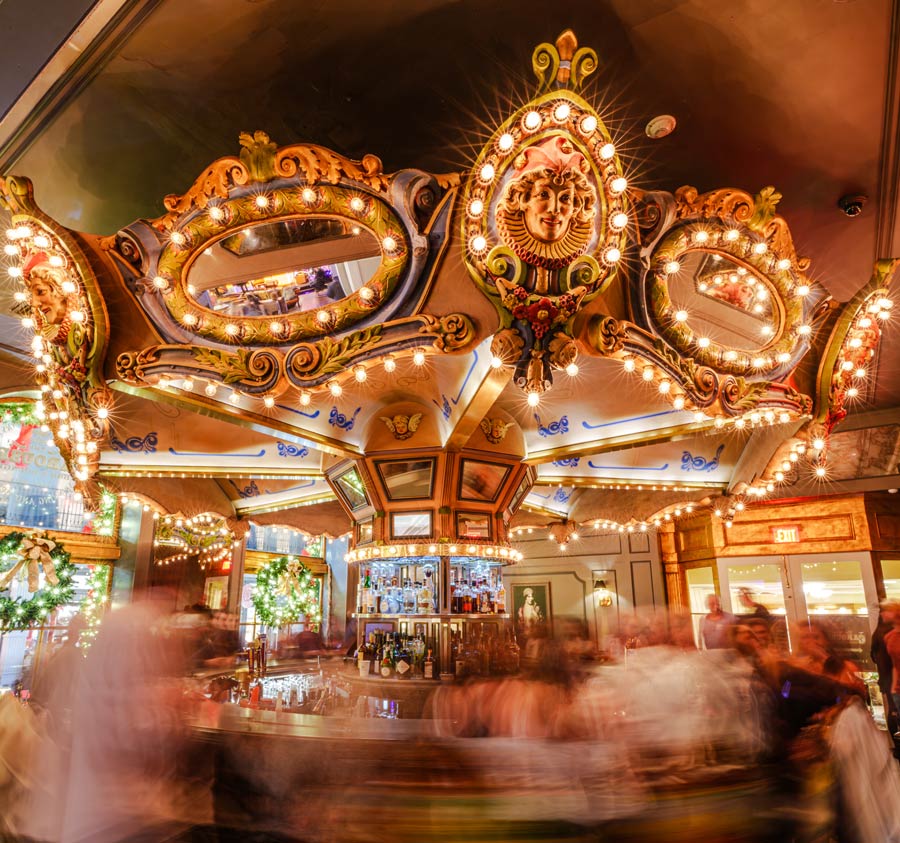
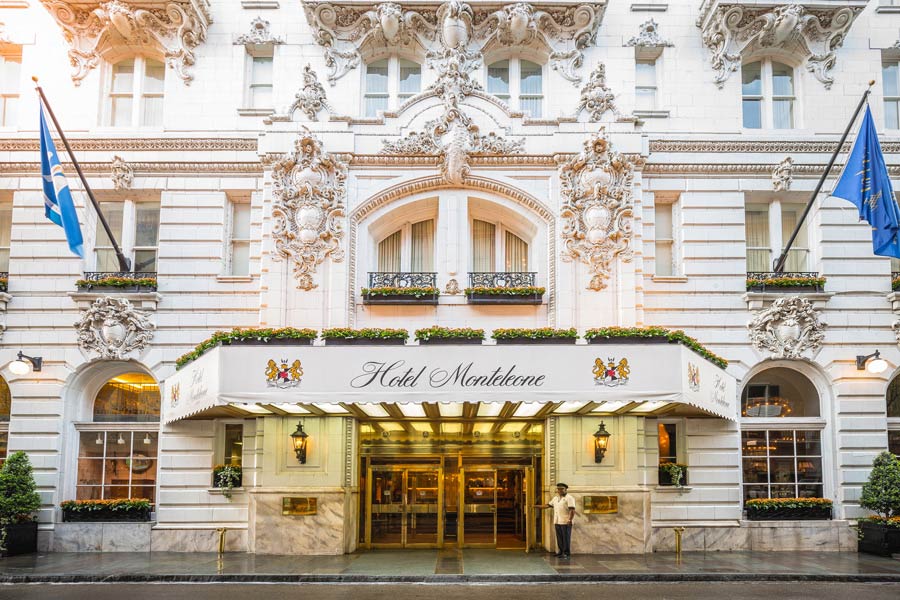
Capote, Williams, Faulkner and the Carousel Bar
William Faulkner first visited Hotel Monteleone for his 1929 honeymoon—before the Carousel Bar existed—and he wrote The Sound and the Fury, one of his most famous novels, during this stay. Faulkner returned to the hotel repeatedly over the next few decades and was known to enjoy drinks at the Carousel. While the bar is famous for the Vieux Carré cocktail, Faulkner was known to prefer a mint julep (light on sugar). Today, guests at Hotel Monteleone can choose to overnight in literary suites dedicated to the likes of Capote, Williams, Faulkner, and other famous writers.
‘The Vicious Circle’ and the Algonquin Hotel
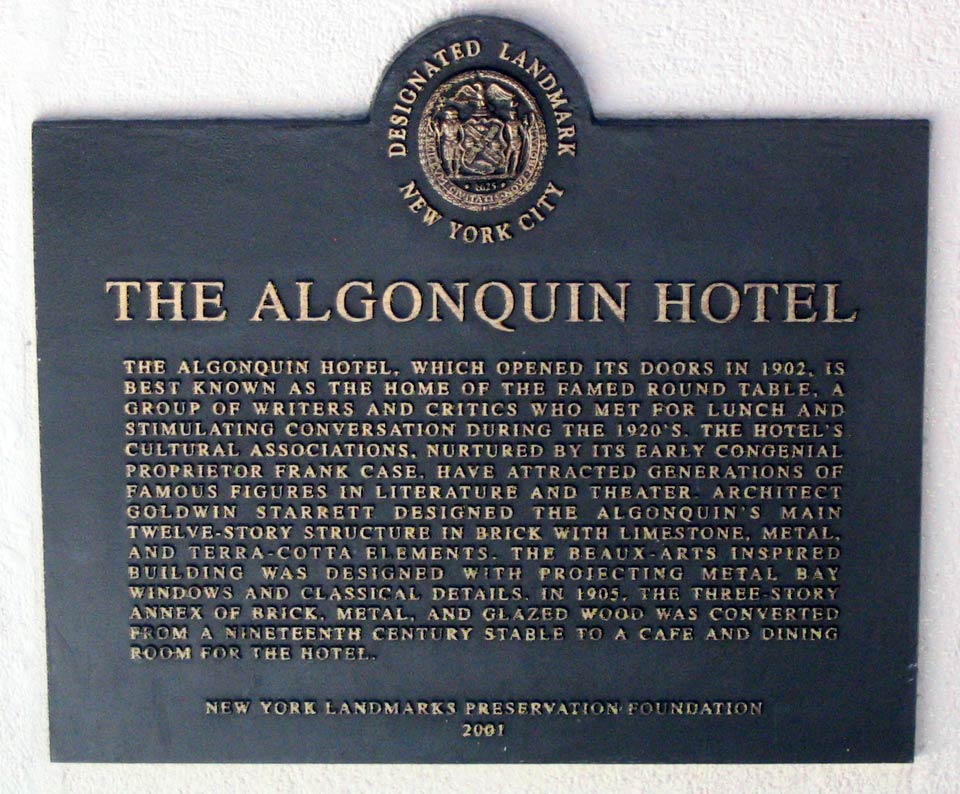
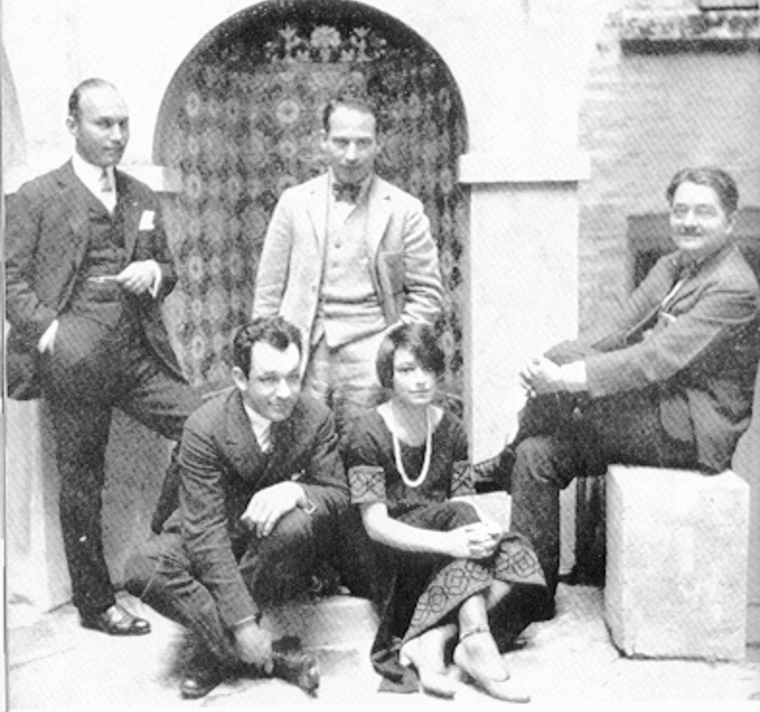
Colleagues dubbed the group the Algonquin Round Table, due to where the group sat in the Pergola Room (subsequently renamed the Oak Room). The group met daily for over a decade, often drawing spectators, and witticisms from these lunches were widely published. Round Table discussions helped galvanize careers of several members—Harold Ross, for instance, launched The New Yorker in 1925, often hiring Dorothy Parker for contributions. As America entered the Depression, the Vicious Circle largely disbanded. But like the Carousel Bar at Hotel Monteleone, the Oak Room at The Algonquin Hotel was designated a National Literary Landmark, and a painting of the group hangs there today.
‘The Vicious Circle’ and the Algonquin Hotel
Colleagues dubbed the group the Algonquin Round Table, due to where the group sat in the Pergola Room (subsequently renamed the Oak Room). The group met daily for over a decade, often drawing spectators, and witticisms from these lunches were widely published. Round Table discussions helped galvanize careers of several members—Harold Ross, for instance, launched The New Yorker in 1925, often hiring Dorothy Parker for contributions. As America entered the Depression, the Vicious Circle largely disbanded. But like the Carousel Bar at Hotel Monteleone, the Oak Room at The Algonquin Hotel was designated a National Literary Landmark, and a painting of the group hangs there today.
Literature still lingers
Across Paris, New Orleans, and New York, these hotel bars offered more than a place to drink. They created the conditions for creative life to happen. Writers found community, conversation, and character within their walls, often blurring the line between observation and participation.
Today, the settings remain—polished, preserved, and in some cases, reimagined—but the stories linger as much as the cocktails. Pull up a seat, and you’re not just ordering a drink. You’re stepping into the same rooms where infamous pieces of literature once took shape.
Literature still lingers
Across Paris, New Orleans, and New York, these hotel bars offered more than a place to drink. They created the conditions for creative life to happen. Writers found community, conversation, and character within their walls, often blurring the line between observation and participation.
Today, the settings remain—polished, preserved, and in some cases, reimagined—but the stories linger as much as the cocktails. Pull up a seat, and you’re not just ordering a drink. You’re stepping into the same rooms where infamous pieces of literature once took shape.
Photo Credits
Bar Hemingway Ritz2 – Author: Pablo Sanchez
Ernest and Pauline Hemingway, Paris, 1927 – Wikimedia Commons – Author: unattributed
Algonquin Round Table – Wikimedia Commons – Author: unattributed
Algonquin Hotel Landmark Sign – New York Landmarks Preservation Foundation at the Algonquin Hotel in Manhattan – Author: NoTalkMan
Carousel Bar – Courtesy of Carousel Bar & Lounge in Hotel Monteleone
Hotel Monteleone Exterior – Courtesy of Carousel Bar & Lounge in Hotel Monteleone
Nicole Bump
Nicole is a seasoned content strategist and writer with 15+ years of experience turning complex ideas into compelling stories. As founder of Bump Inbound, she helps brands connect with audiences through thoughtful strategy, sharp planning, and standout writing.

An interview with ARGO's Jonathan Gabbay
Jonathan Gabbay
Discipline, luxury, and legacy—an interview with ARGO’s Jonathan Gabbay
Jonathan Gabbay has built his career inside some of the world’s most exacting hospitality environments—spaces where excellence isn’t an aspiration but an expectation. Now Beverage Manager at ARGO bar (Hong Kong), he brings a distinctly European sensibility shaped by global experience and a deep respect for the craft’s foundations. Guided by the belief that “alone we are nothing; together we create magic,” Gabbay approaches bartending as both a collective pursuit and a personal discipline. In this conversation, he shares how mentorship, cultural fluency, and a commitment to grounded creativity continue to shape his leadership and his vision for modern luxury hospitality.
What first drew you to bartending, and when did you know it would become a serious career?
I started my journey in hospitality school, where I first explored the kitchen before moving into service. I quickly realized how much I valued human connection, the ability to interact, read people, and create moments for them. My move to Paris was the true turning point. Experiencing Harry’s Bar for the first time gave me my first glimpse of what this craft could really be: a blend of culture, technique, and storytelling. It was there that I understood it was a career I wanted to dedicate myself to.
You committed to hotel bars at a time when many ambitious bartenders were gravitating toward standalone cocktail bars and competitions. What did you see in hotel bars that made you believe this was where the deepest craft lived?
For me, hotel bars offer a depth and complexity that is hard to match. You’re not just making cocktails; you’re part of the guests’ journeys. You meet people from every corner of the world, each bringing their own expectations, rhythms, and cultural nuances. Hotel bars also demand consistency, discretion, and a service philosophy rooted in hospitality rather than performance. That balance, between craft, etiquette, and emotional intelligence, is where I felt the richest expression of the profession lived.
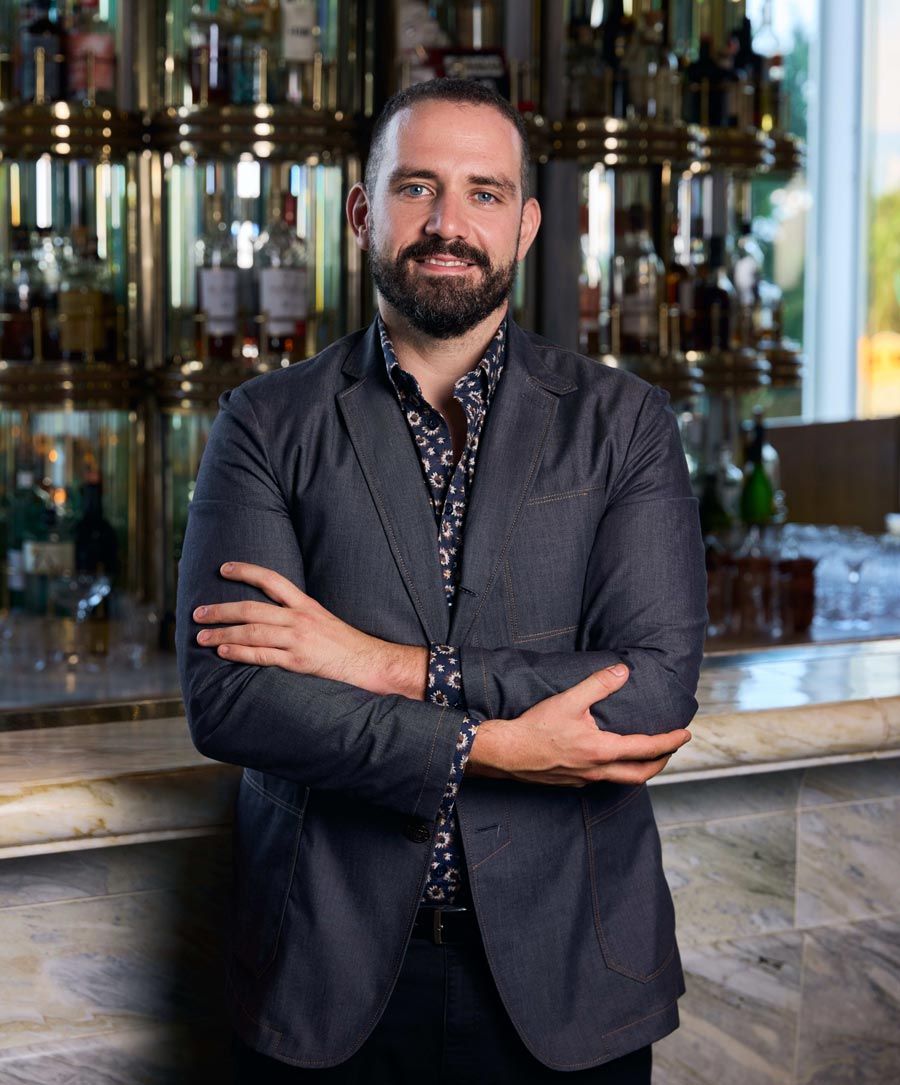
You’ve traveled extensively and worked in bars around the world. Which experiences stayed with you most once you returned behind your own bar, and how did they influence the way you work?
My time working with Ashish Sharma (behind Trigona opening) had a profound impact on me. He has an incredible ability to balance structure and creativity, and he taught me the value of discipline behind the bar, precision in preparation, respect for ingredients, and the importance of leading by example. Traveling also opened my eyes to how differently guests behave around the world, and how a great bartender adapts without ever losing their identity. That combination, Ashish’s influence and global exposure, deeply shaped the way I host and the standards I hold myself to.
How did you make your way from a little hotel in Cornwall to The American Bar at The Savoy?
When I got serious about bartending, I had to figure out how to learn the business. But how do you learn the business when there is no schooling for it? There was no bartending school back then. There were a few books, but they weren’t very good. I decided to go to a bar where I could learn and somebody with experience could teach me.
I went to the Savoy Hotel American Bar, and I talked to Joe Gilmore, the head bartender then. I said, ‘I love the bar, it’s going to be my future, and I want to learn.’ I don’t know why, but he told me to come back at 9:00 Monday morning. I’m the luckiest guy on this planet.
So, in 1964 I joined the Savoy Group where I ended up spending 39 years, 22 of which were in The American Bar. First, I worked with Joe for a couple of months as a sommelier at Stones Chop House (also owned by the Savoy Group). Then I was asked to open the new Pebble Bar at Stones as Head Barman with my brother and stayed there until 1981.
“This was the best time of my life.”
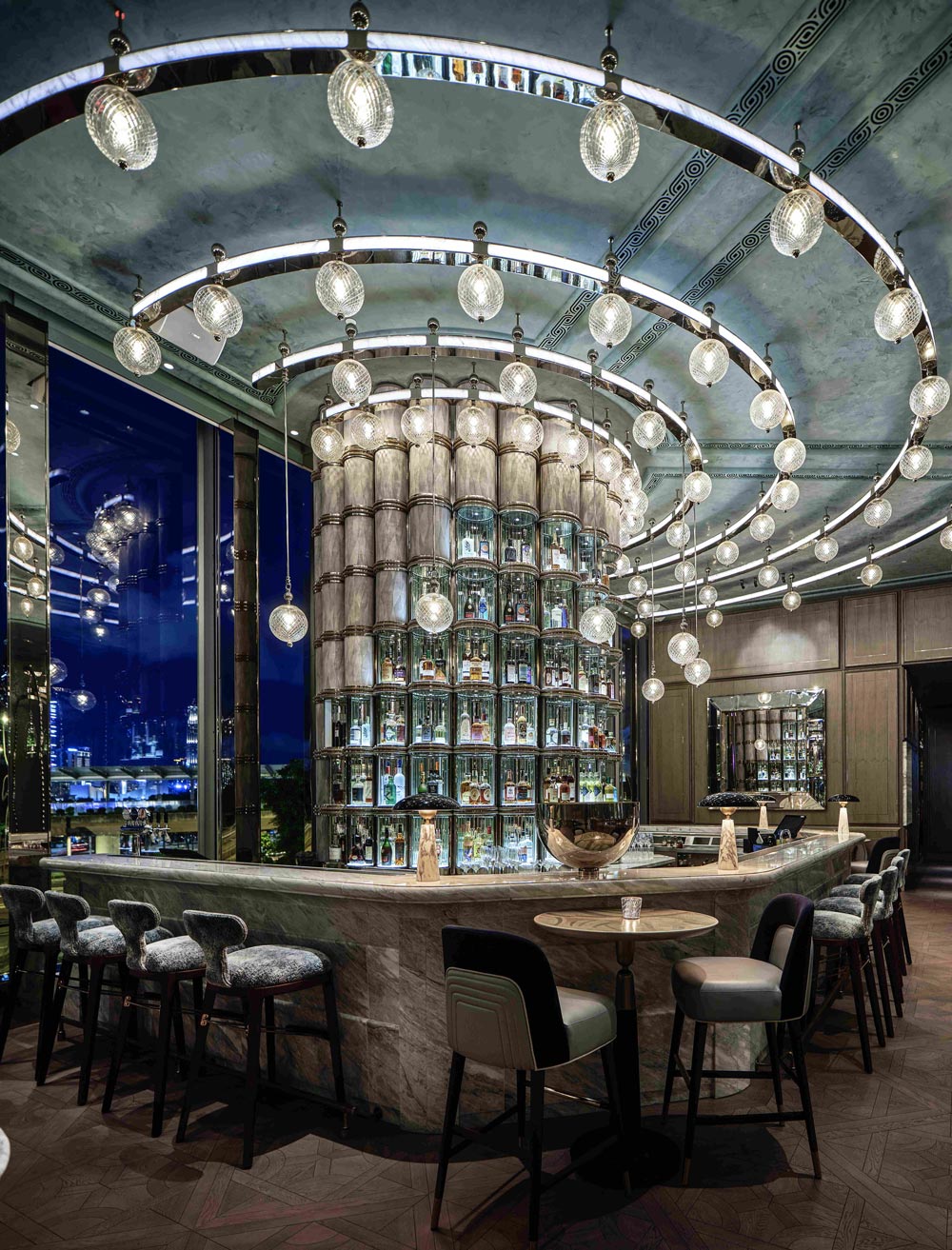
Your work is often described as restrained and precise rather than flashy. Is this your natural inclination or an intentional decision? If the latter, why?
It’s a bit of both. I naturally gravitate toward clean, focused execution, but it’s also a deliberate choice. Flashiness can distract from what truly matters: balance, flavor, and the guest experience. I prefer to let the drink, the moment, and the hospitality speak for themselves. Precision creates trust, and once that trust is established, the guest relaxes, and the experience becomes far more meaningful.
You’ve been quoted saying, “Creativity feels strongest when it’s grounded.” What do you mean by that?
To me, creativity has power only when it’s built on solid foundations, technique, knowledge, and respect for the classics. When you understand the rules deeply, you can break them with purpose rather than improvization. Grounded creativity means innovation that still feels familiar, accessible, and thoughtful. It’s not about surprising for the sake of surprise, it’s about elevating what already works.
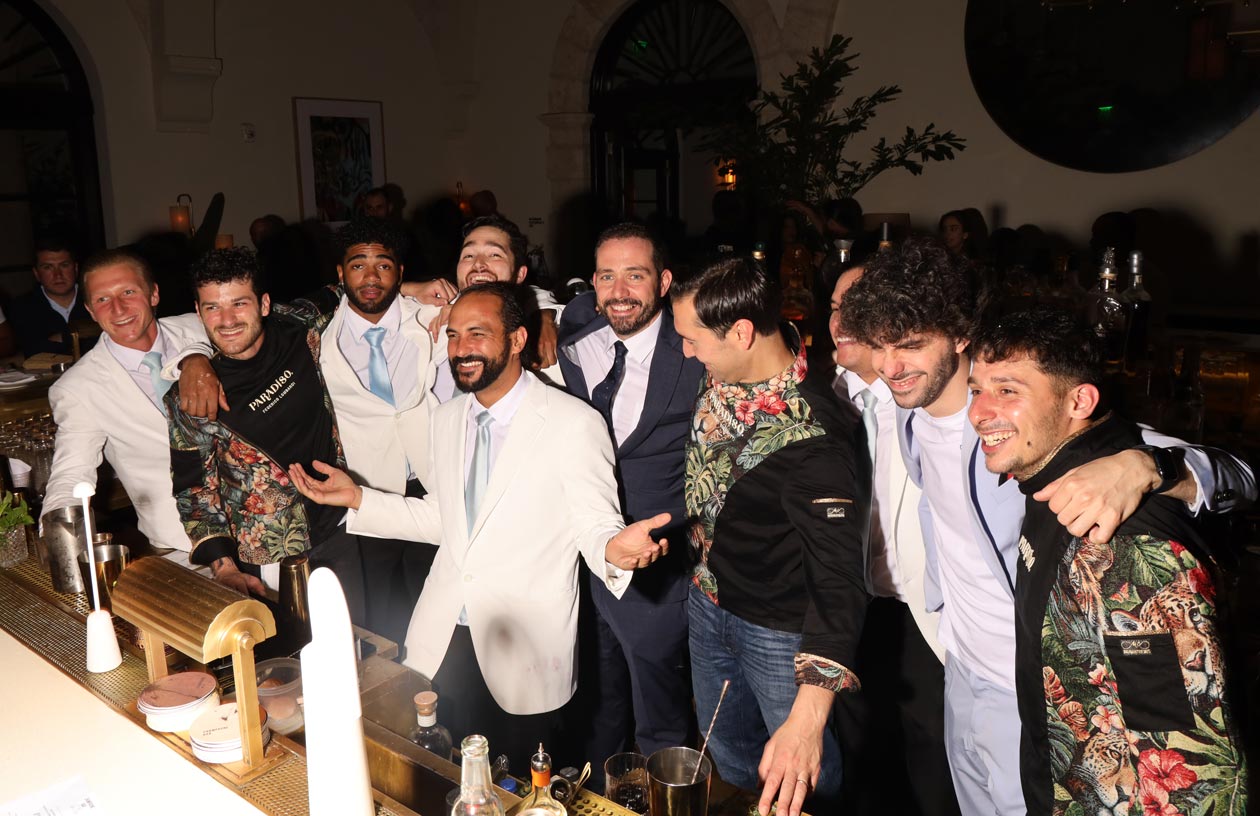
You’ve spent much of your career with the Four Seasons. What about the organization keeps you there? And what does it demand of you as a bartender?
Four Seasons offers something rare in luxury hospitality: freedom paired with trust. The bar is not treated as a simple amenity but as an essential part of the guest experience. What the organization demands in return is discipline, integrity, and a deep sense of responsibility to uphold the standards guests expect, not only in the drinks we serve, but in the way we host. It’s a place where excellence isn’t optional; it’s the baseline.
The Champagne Bar at The Surf Club earned significant international recognition during your tenure. What were the most important factors behind that success?
The success came from the strong connection we built with the local industry. We were able to highlight the magic of the venue while “de‑sacralizing” it—yes, it was a glamorous and historic space, but we made it genuinely accessible. Miami was also rising on the global stage at that time, and the energy of the city amplified our presence. All these elements combined created a place people wanted to visit not just once, but again and again.
What lessons, if any, carried over into the way you approach your work at Argo and how do you carry those lessons forward without simply repeating what worked before?
Every bar has its own identity, and it’s important to respect that. The lesson I brought with me is to listen carefully, to the team, to the guests, and to the rhythm of the space. Rather than replicating past successes, I focus on adapting what I’ve learned to this new environment: the discipline, the guest-centric thinking, the attention to detail. The goal is not to copy but to translate.
In these first few months at Argo, what opportunities are you beginning to see for shaping the bar over time?
Argo is already in a fantastic place. The team has been together for years and they execute their craft beautifully. I’m not here to reinvent the bar, but to become part of the machine, to help carry the legacy forward, support the team, maintain high standards, and be a strong host. My role is to elevate what already works, not to replace it.
What advice would you give to someone aspiring to be an exceptional bartender in a luxury establishment—especially early in their career?
Master your classics. Don’t expect to travel the world after two years—greatness takes time. Listen to your mentors, stay humble, observe everything, and be patient. Luxury hospitality is built on small details, emotional intelligence, and consistency.
“If you care about the craft and the people in front of you, the rest will follow.”
Jonathan Gabbay
Nicole Bump
Nicole is a seasoned content strategist and writer with 15+ years of experience turning complex ideas into compelling stories. As founder of Bump Inbound, she helps brands connect with audiences through thoughtful strategy, sharp planning, and standout writing.
Get Inspired
Be the first to learn about our exclusive events and updates you’ll actually want to read.
Get Inspired
Be the first to learn about our exclusive events and updates you’ll actually want to read
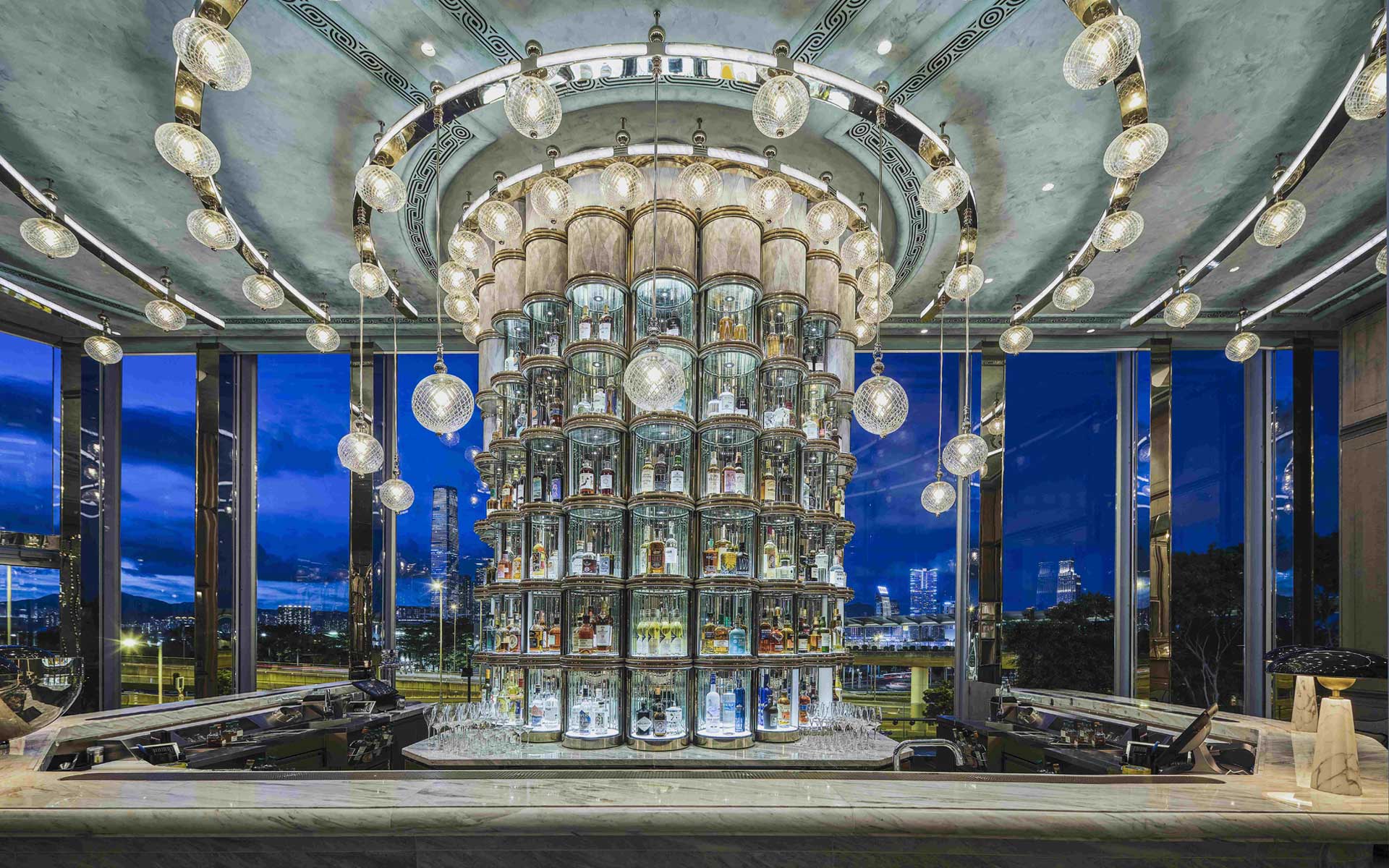
Argo Bar Hong Kong: Winning acclaim for the Four Seasons
Argo Bar Hong Kong
Argo Bar Hong Kong: Winning acclaim for the Four Seasons
Only four years old—and already renowned as one of the world’s best bars. How has an establishment as young as Argo Bar Hong Kong already drawn such levels of international acclaim? The perfect mix of atmosphere, experience, and innovation.
Lush textures,
whimsical touches
Argo Bar Hong Kong, situated in the Four Seasons, is designed like a modern conservatory or lifesize terrarium, with floor-to-ceiling glass windows, mirrored surfaces, pastel hues, and lush, layered textures. The focal point is a dramatic central column of spirits—almost a tree-like display of bottles. Critics have called the space a “visual triumph”, amplifying the stunning harbor view with mirrored reflections. But the designers also included whimsical touches, such as hand-crafted paper insects to add artistry and surprise.
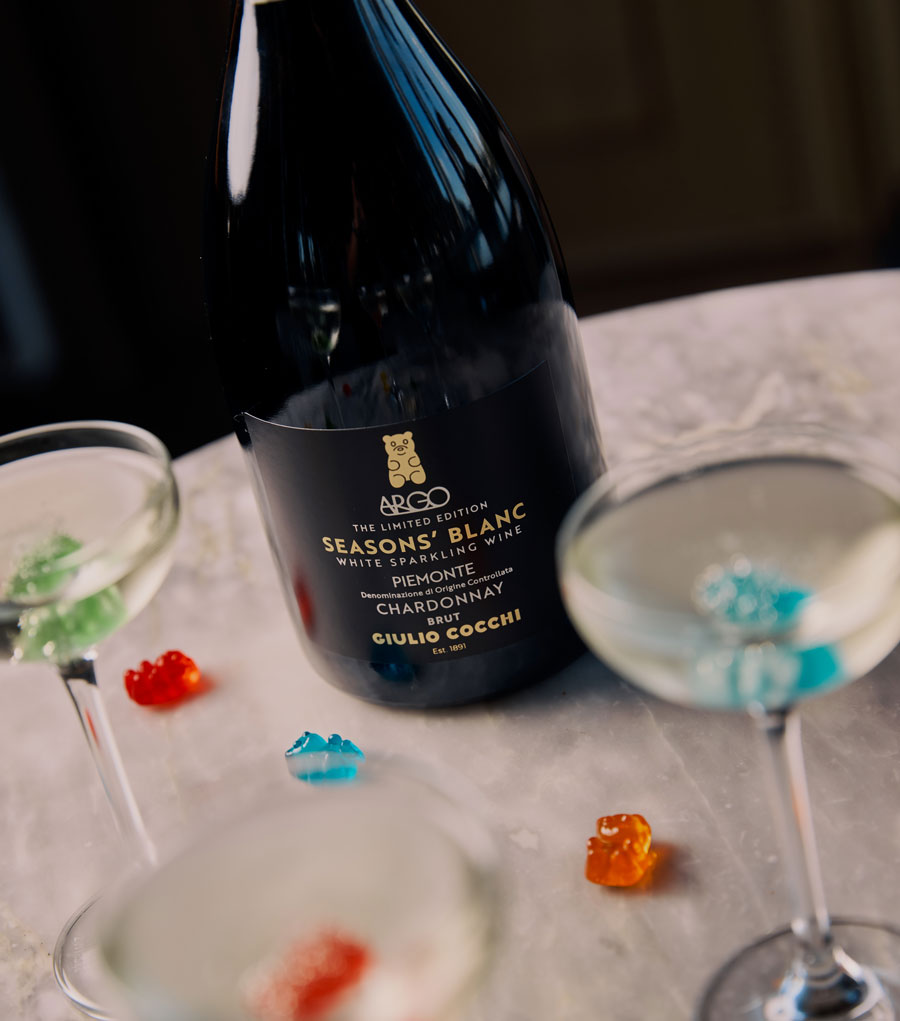
More fun than formal
The vibe of the Argo Bar is intended to evolve from a relaxed lobby bar in the daytime to a more dramatic cocktail lounge by night. Regardless of the time of day, former Beverage Manager Federico Balzarini said the staff aims to make the experience more fun than formal. A perfect example is the Argo Bar’s welcome beverage—a champagne cocktail garnished with colorful gummy bears.
“[I] can safely say there is no bar like Argo… if you told me a few years ago I’d be craving bubbles and gummy bears, I’d have raised an eyebrow or three. Mixing fun and formal in a Four Seasons is no easy feat. Well done to the team creating such an experience.”
Sam Gilani
The London Boozehound &
Founder of the Bartender’s Edit
Lush textures, whimsical touches
Argo Bar Hong Kong, situated in the Four Seasons, is designed like a modern conservatory or lifesize terrarium, with floor-to-ceiling glass windows, mirrored surfaces, pastel hues, and lush, layered textures. The focal point is a dramatic central column of spirits—almost a tree-like display of bottles. Critics have called the space a “visual triumph”, amplifying the stunning harbor view with mirrored reflections. But the designers also included whimsical touches, such as hand-crafted paper insects to add artistry and surprise.
More fun than formal
The vibe of the Argo Bar is intended to evolve from a relaxed lobby bar in the daytime to a more dramatic cocktail lounge by night. Regardless of the time of day, former Beverage Manager Federico Balzarini said the staff aims to make the experience more fun than formal.
A perfect example is the Argo Bar’s welcome beverage—a champagne cocktail garnished with colorful gummy bears.
“[I] can safely say there is no bar like Argo… if you told me a few years ago I’d be craving bubbles and gummy bears, I’d have raised an eyebrow or three. Mixing fun and formal in a Four Seasons is no easy feat. Well done to the team creating such an experience.”
Sam Gilani
The London Boozehound &
Founder of the Bartender’s Edit
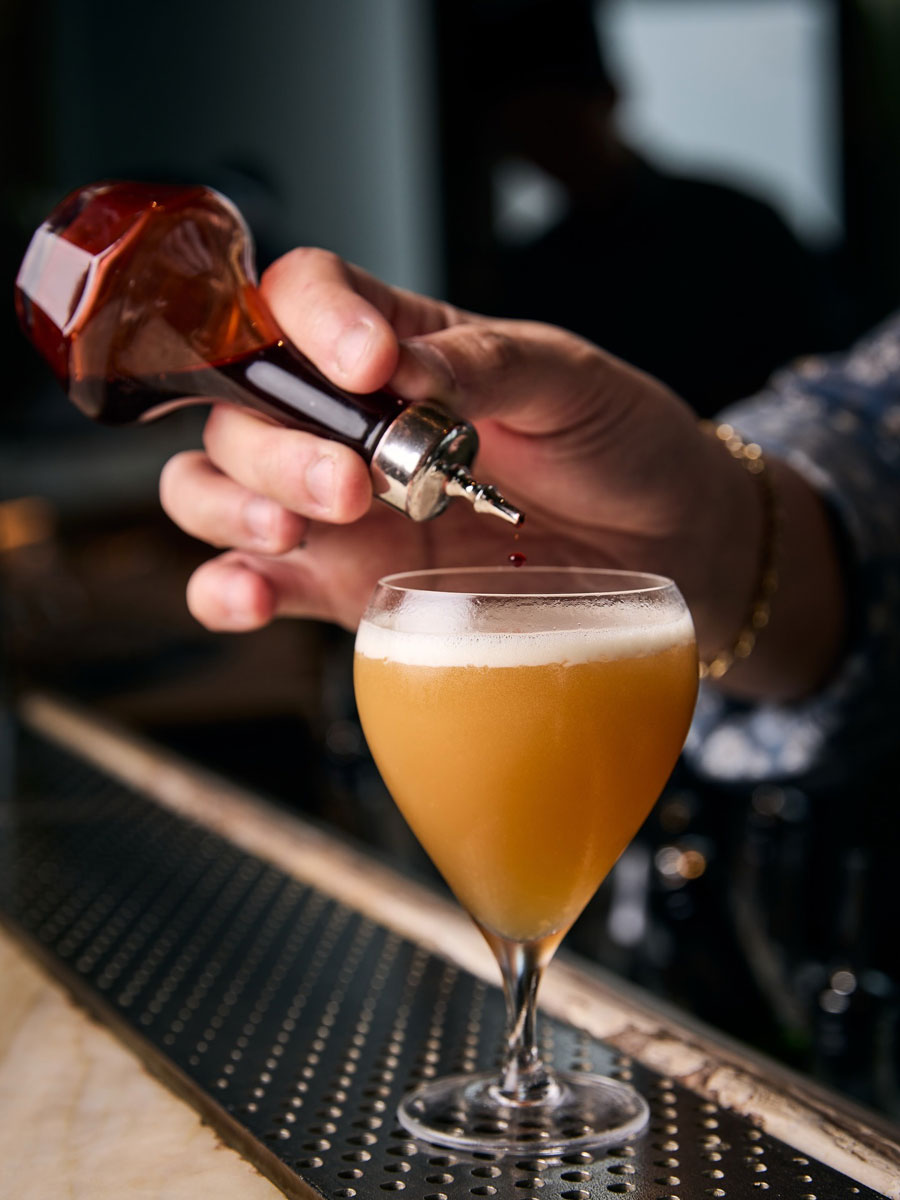
Innovation and boundary-pushing mixology
Argo Bar Hong Kong was named after the mythical Greek ship that sailed Jason and the Argonauts to the Golden Fleece, a nod to the bar’s quest for the extraordinary. The name evokes a sense of adventure and discovery, representing the bar’s goal of sourcing and creating innovative beverages.
One such innovation is a series of unique cocktails featuring Asian-sourced ingredients which risk becoming a luxury thanks to climate change. Centering ingredients like cacao and kumquat, this line of libations begs patrons to consider the question: ‘What will we be sipping on when scarcity impacts future cocktail crafting?’
Other Argo innovations include their own twists on classic cocktails. For example, the “Not A Vieux Carré” offers a “boldly sweet, tropical, and raisin-forward” alternative to the modern cognac sour-style Vieux Carré, a signature drink from the Carousel Bar in Hotel Monteleone.
Innovation and boundary-pushing mixology
Argo Bar Hong Kong was named after the mythical Greek ship that sailed Jason and the Argonauts to the Golden Fleece, a nod to the bar’s quest for the extraordinary. The name evokes a sense of adventure and discovery, representing the bar’s goal of sourcing and creating innovative beverages.
One such innovation is a series of unique cocktails featuring Asian-sourced ingredients which risk becoming a luxury thanks to climate change. Centering ingredients like cacao and kumquat, this line of libations begs patrons to consider the question: ‘What will we be sipping on when scarcity impacts future cocktail crafting?’
Other Argo innovations include their own twists on classic cocktails. For example, the “Not A Vieux Carré” offers a “boldly sweet, tropical, and raisin-forward” alternative to the modern cognac sour-style Vieux Carré, a signature drink from the Carousel Bar in Hotel Monteleone.
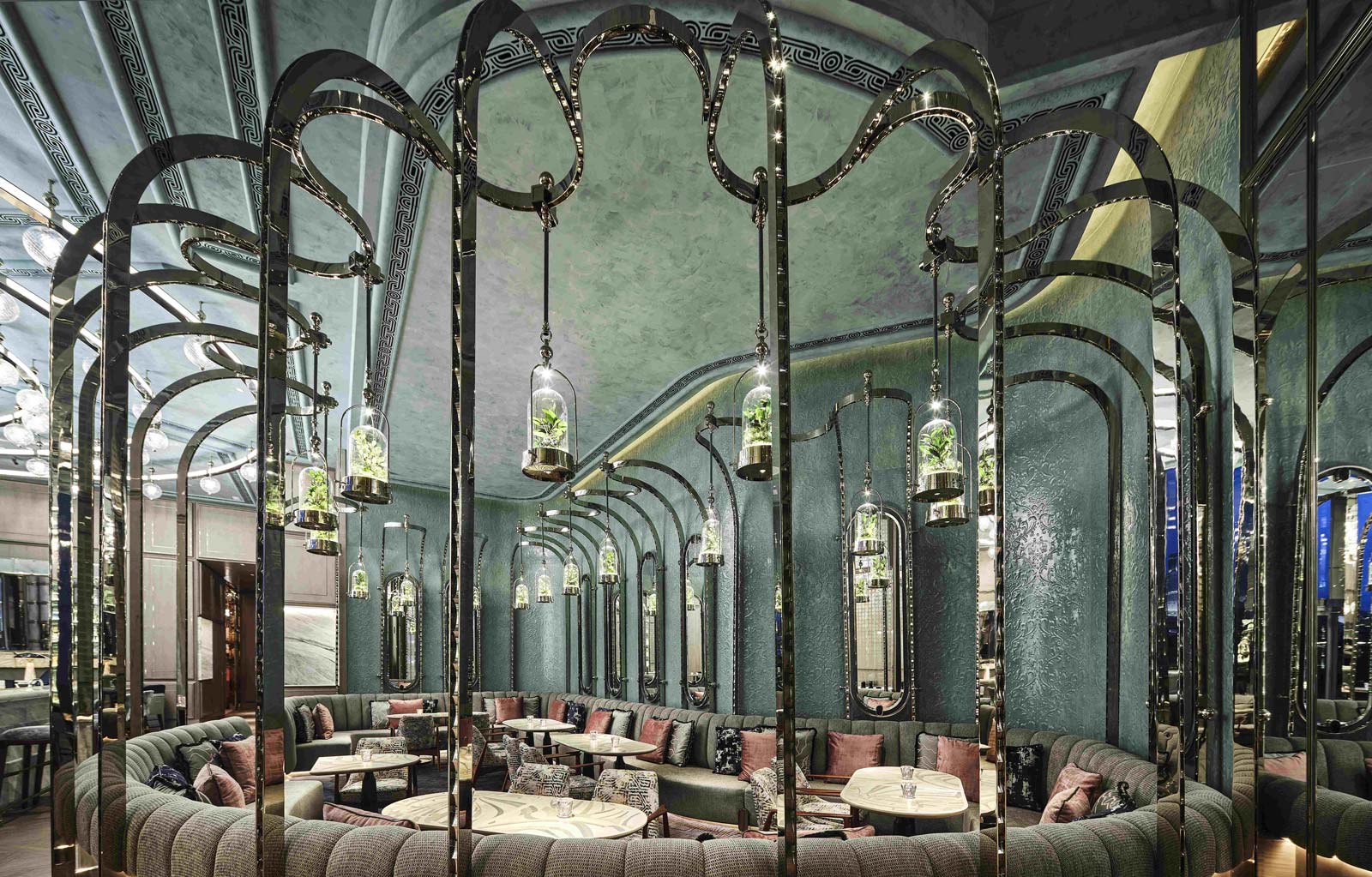
Racking up global recognition
Argo’s atmosphere, experience, and innovation have not gone unnoticed. The establishment has been collecting commendations since it opened in 2021 under Beverage Manager Lorenzo Antinori. Before joining Argo Bar, Antinori helped lead the Caprice Bar’s cocktail program—also situated in Four Seasons Hong Kong—to #10 in Asia’s 50 Best Bars (2021).
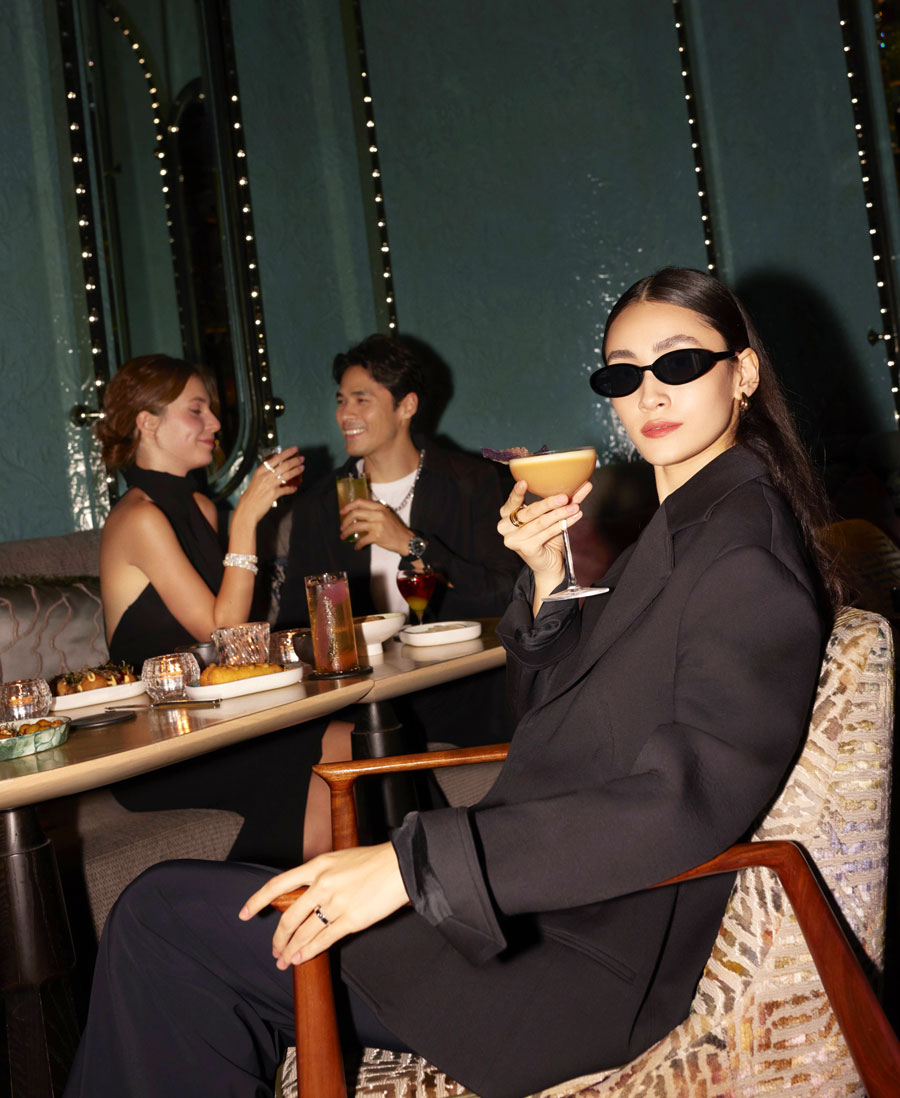
Racking up global recognition
Argo’s atmosphere, experience, and innovation have not gone unnoticed. The establishment has been collecting commendations since it opened in 2021 under Beverage Manager Lorenzo Antinori. Before joining Argo Bar, Antinori helped lead the Caprice Bar’s cocktail program—also situated in Four Seasons Hong Kong—to #10 in Asia’s 50 Best Bars (2021).
Thanks to both Antinori’s and Balzarini’s leadership, Argo Bar has been repeatedly recognized as one of Asia’s 50 Best Bars from 2022 onward, most recently earning #11 in 2025. The establishment has even been named one of the World’s Best Bars, coming in at #56 this year.
When Federico Balzarini took over as Beverage Manager in 2023, he also brought experience with accolades. Balzarini was part of the award-winning team that earned the American Bar at The Savoy first place in The World’s 50 Best Bars (2017).
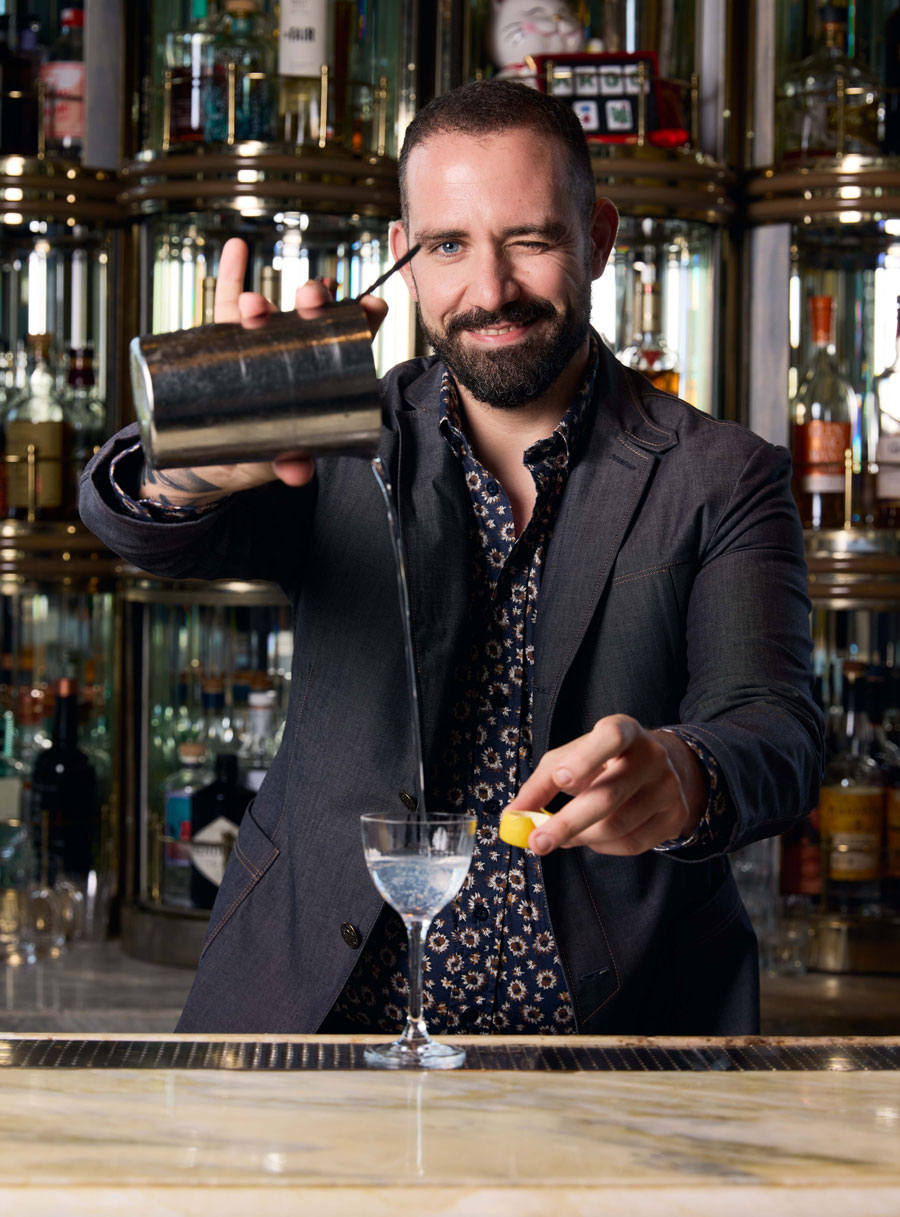
John Gabbay, who made his name at The Champagne Bar (Four Seasons, Miami), was recently announced as Argo Bar’s latest beverage lead. Will he help Argo Bar continue to climb the World’s Best list?
“Argo is already in a fantastic place. The team has been together for years and they execute their craft beautifully. I’m not here to reinvent the bar, but to become part of the machine, to help carry the legacy forward, support the team, maintain high standards, and be a strong host. My role is to elevate what already works, not to replace it.”
John Gabbay, who made his name at The Champagne Bar (Four Seasons, Miami), was recently announced as Argo Bar’s latest beverage lead. Will he help Argo Bar continue to climb the World’s Best list?
“Argo is already in a fantastic place. The team has been together for years and they execute their craft beautifully. I’m not here to reinvent the bar, but to become part of the machine, to help carry the legacy forward, support the team, maintain high standards, and be a strong host. My role is to elevate what already works, not to replace it.”
Nicole Bump
Nicole is a seasoned content strategist and writer with 15+ years of experience turning complex ideas into compelling stories. As founder of Bump Inbound, she helps brands connect with audiences through thoughtful strategy, sharp planning, and standout writing.