


Virtù Tokyo: Exuding a true French–Japanese identity
Virtù Tokyo
Virtù Tokyo: Exuding a true French–Japanese identity
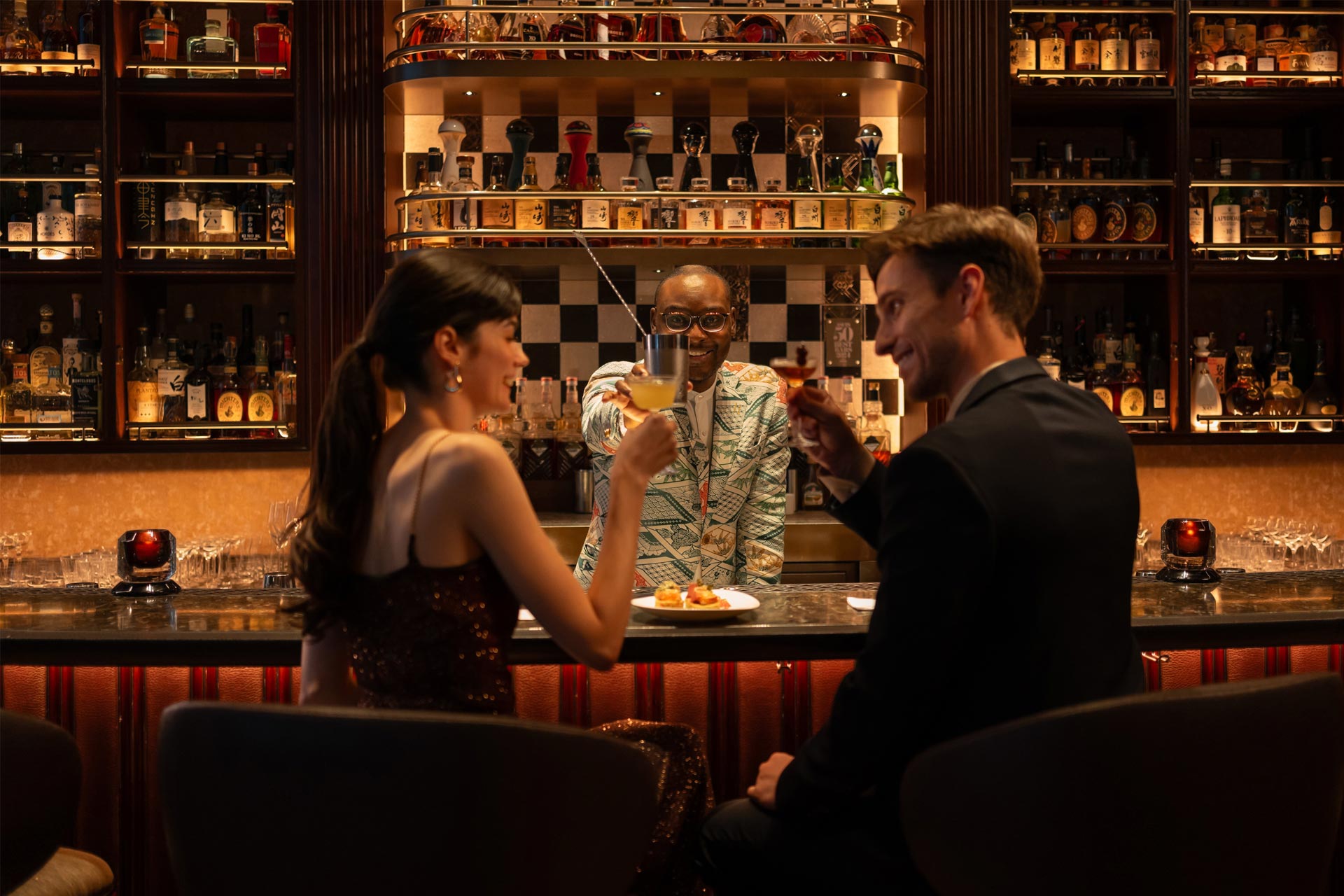
Crowning the Four Seasons Hotel Tokyo, Virtù Bar has risen to international acclaim by artfully blending French spirits with Japanese precision and tradition. Virtù Tokyo has become a destination for cocktail enthusiasts seeking elegant, spirit-forward drinks to enjoy alongside stunning views of the city and the Imperial Palace. But Virtù’s French-Japanese identity is not just a fun theme for the bar—it’s a true identity blended into every aspect of the establishment, from the cocktail program to the decor, the exacting hospitality to the unique, locally-sourced ingredients.
“Paris meets Tokyo. It’s East meets West. Put them together and voilà, we make magic.”
Keith Motsi – Head Bartender
Artfully blended ambiance
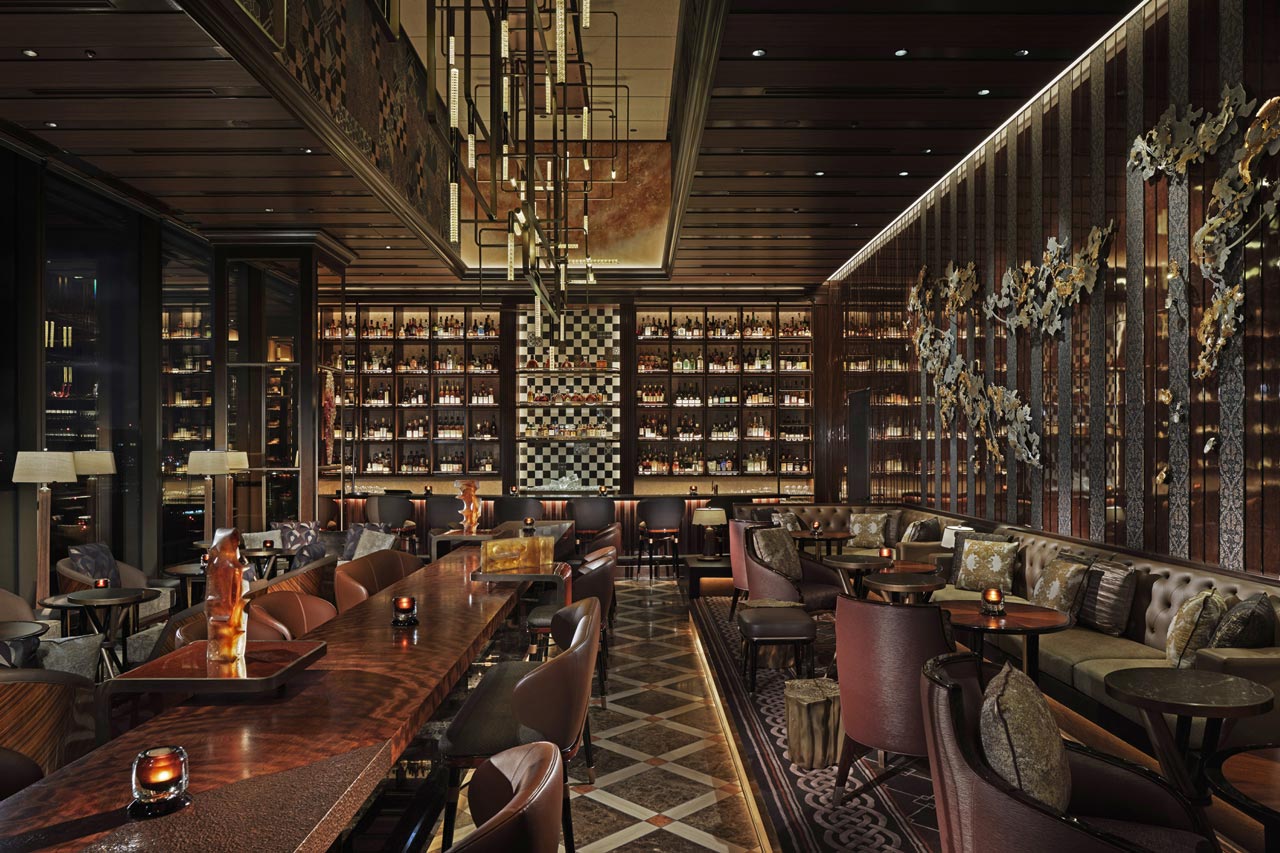
Enter Virtù Bar through a bookshelf-lined hall and immediately find yourself immersed in opulence. The French Art Deco-inspired space features plush seating, polished dark marble, and gleaming brass accents, all designed to evoke the glamor of a 1920s Parisian salon. And yet, Japanese elements are subtly incorporated in the artwork, statuary, textiles, and overall craftsmanship.
“The atmosphere of Virtù can be felt as soon as you step inside, with its warm colors and the collaboration pieces of 16 artists from Tokyo and Paris throughout the space.”
McHayla Killoran – Bar Manager
Artfully blended ambiance
Enter Virtù Bar through a bookshelf-lined hall and immediately find yourself immersed in opulence. The French Art Deco-inspired space features plush seating, polished dark marble, and gleaming brass accents, all designed to evoke the glamor of a 1920s Parisian salon. And yet, Japanese elements are subtly incorporated in the artwork, statuary, textiles, and overall craftsmanship.
“The atmosphere of Virtù can be felt as soon as you step inside, with its warm colors and the collaboration pieces of 16 artists from Tokyo and Paris throughout the space.”
McHayla Killoran – Bar Manager
East meets West cocktail program
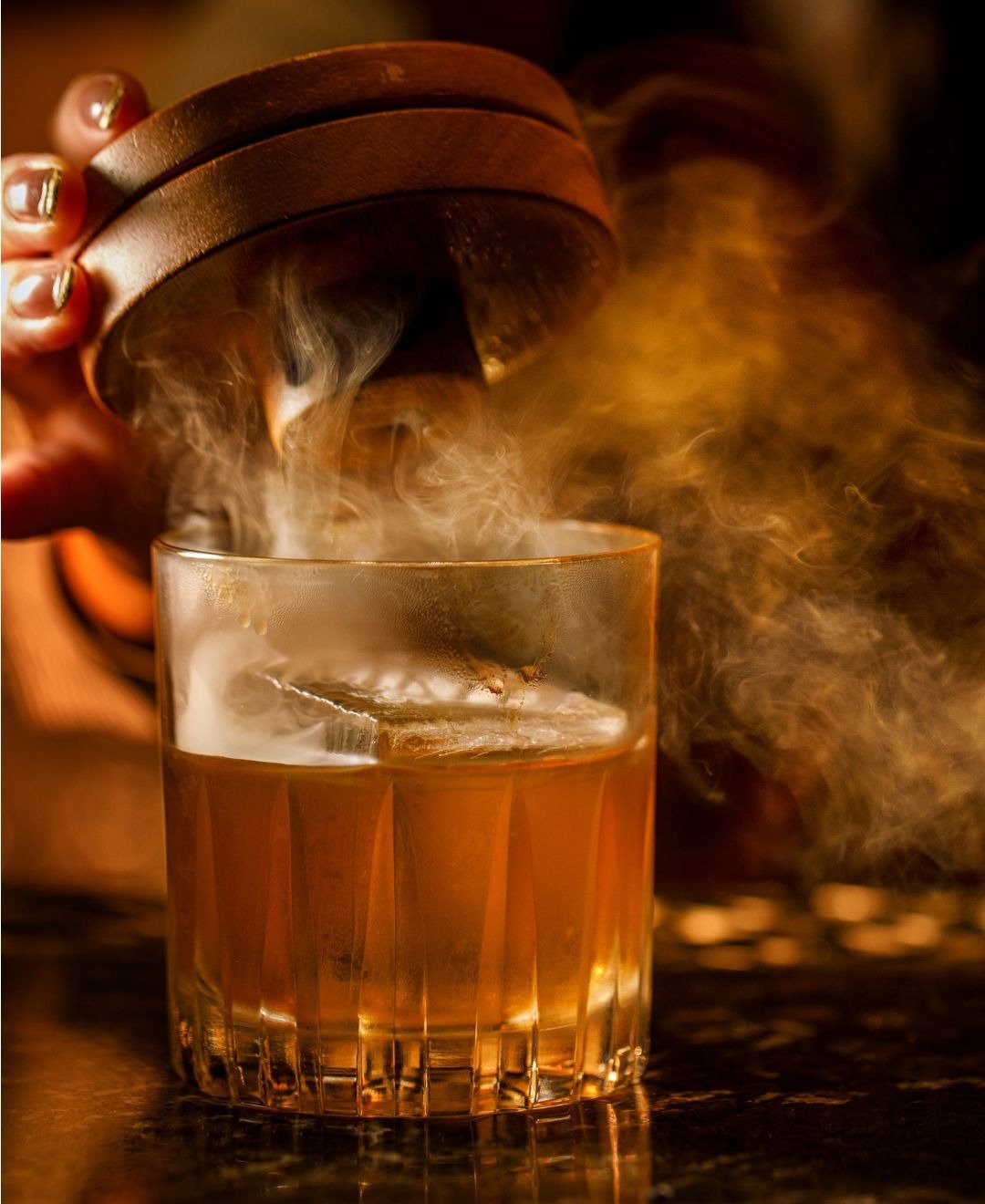
The signature cocktails at Virtù Bar Tokyo celebrate both French spirits and Japanese ingredients in unexpected ways. A few guest favorites include:
- Smoked Ume Fashioned—House brandy umeshu (plum wine), Japanese whisky and hinoki bitters create a smoky, refined twist on an Old Fashioned.
- Yuzu Nagi—Yuzu-infused gin (or mezcal), cognac, yuzu juice and liqueur with yuzu bitters blend into a bright, citrus-forward beverage.
- Thé Hoji Épicé—Hojicha (roasted green tea) vodka and liqueur, aromatic bitters, ginger beer and cranberries transform to be both spicy and tea-inspired.
East meets West cocktail program
The signature cocktails at Virtù Bar Tokyo celebrate both French spirits and Japanese ingredients in unexpected ways. A few guest favorites include:
- Smoked Ume Fashioned—House brandy umeshu (plum wine), Japanese whisky and hinoki bitters create a smoky, refined twist on an Old Fashioned.
- Yuzu Nagi—Yuzu-infused gin (or mezcal), cognac, yuzu juice and liqueur with yuzu bitters blend into a bright, citrus-forward beverage.
- Thé Hoji Épicé—Hojicha (roasted green tea) vodka and liqueur, aromatic bitters, ginger beer and cranberries transform to be both spicy and tea-inspired.
A new level of locality
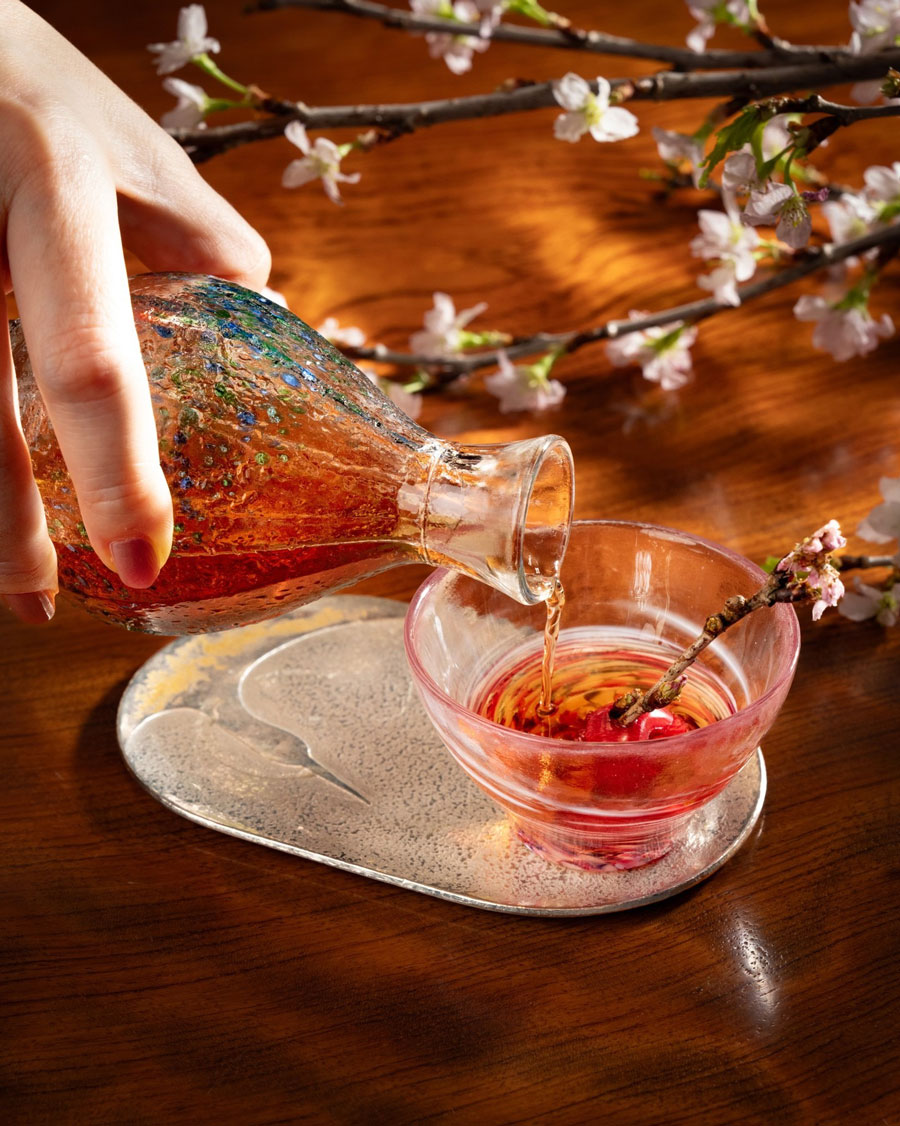
In addition to house signatures, the hotel bar’s menu often features a range of seasonal or classic riffs, such as the Sakura Sazerac, a combination of rye, cognac, Japanese absinthe and cherry blossom bitters.
And when the team at Virtù can’t find exactly the right ingredients for their cocktail creations, they make them. In collaboration with Hiyori, a local boutique winery, Virtù recently launched a collection of their own vermouths, as well as a signature tonic water.
“The light, the soil, the view, it’s all part of the blend. We couldn’t find a vermouth that spoke to the flavors we work with, so we made one—with casts that breathe this air, with herbs that grow under the same sun as Kochu grapes, with tonic extracts that don’t shout, they whisper.”
Graham Kimura – Assistant Head Bartender
A new level of locality
In addition to house signatures, the hotel bar’s menu often features a range of seasonal or classic riffs, such as the Sakura Sazerac, a combination of rye, cognac, Japanese absinthe and cherry blossom bitters.
And when the team at Virtù can’t find exactly the right ingredients for their cocktail creations, they make them. In collaboration with Hiyori, a local boutique winery, Virtù recently launched a collection of their own vermouths, as well as a signature tonic water.
“The light, the soil, the view, it’s all part of the blend. We couldn’t find a vermouth that spoke to the flavors we work with, so we made one—with casts that breathe this air, with herbs that grow under the same sun as Kochu grapes, with tonic extracts that don’t shout, they whisper.”
Graham Kimura – Assistant Head Bartender
The Japanese art of hospitality
Virtù Tokyo is perhaps most famous for its world-class hospitality. “Hospitality to us means an act of being selfless” says Motsi. The team embraces the Japanese concepts of omotenashi and kaizen. With roots in Japan’s ancient tea ceremonies, omotenashi means giving oneself up unto others to provide a selfless level of service. Kaizen encourages ongoing, incremental improvements.The concepts come to life at Virtù even before the first drink.
Staff greet guests warmly and quickly assess the best place for them in the space—whether that’s a cozy corner for quiet conversation, a seat at the bar for a solo traveler, or a table suited to a group’s vibe. The service then flows seamlessly so guests never have to signal for attention. Glasses are topped up, menus presented, and needs anticipated in a way that feels natural rather than performative.
The Japanese art of hospitality
Virtù Tokyo is perhaps most famous for its world-class hospitality. “Hospitality to us means an act of being selfless” says Motsi. The team embraces the Japanese concepts of omotenashi and kaizen. With roots in Japan’s ancient tea ceremonies, omotenashi means giving oneself up unto others to provide a selfless level of service. Kaizen encourages ongoing, incremental improvements.The concepts come to life at Virtù even before the first drink.
Staff greet guests warmly and quickly assess the best place for them in the space—whether that’s a cozy corner for quiet conversation, a seat at the bar for a solo traveler, or a table suited to a group’s vibe. The service then flows seamlessly so guests never have to signal for attention. Glasses are topped up, menus presented, and needs anticipated in a way that feels natural rather than performative.
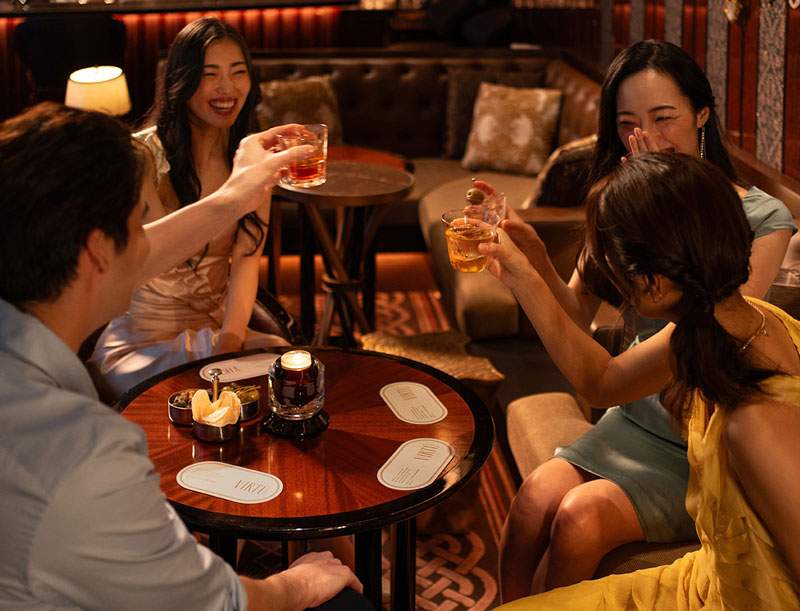
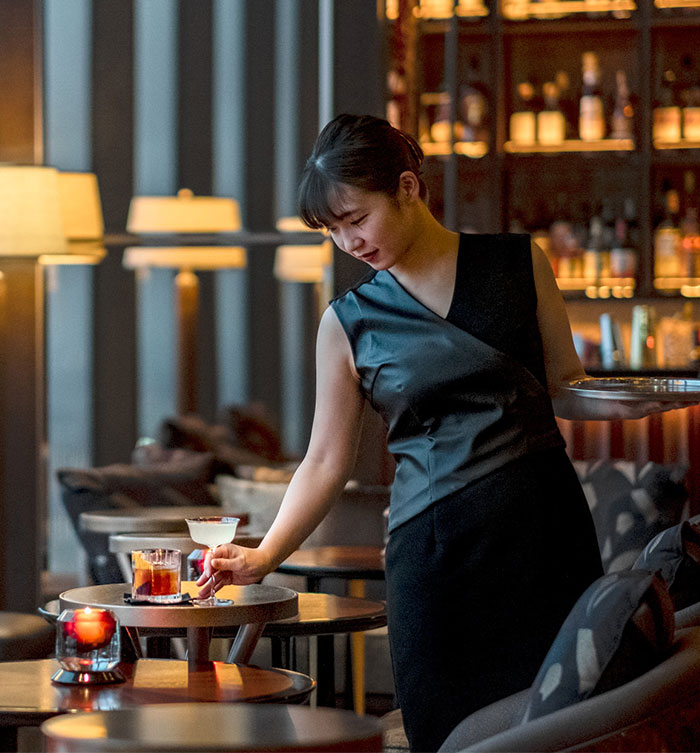
Kimura explains, “We treat everyone that walks through that door like we’ve known them for years. As soon as you walk through that door, you’re part of our family.”
Ever-growing accolades
The perfectly executed French-Japanese identity has earned Virtù Tokyo a variety of impressive accolades since its opening in 2020, including:
-
45th on the
World’s 50 Best Bars (2025)
-
Tatler Asia’s
Best-in-Class Award for Best Service (2025)
-
Michter’s
Art of Hospitality Award (2024)
On receiving Michter’s Art of Hospitality Award, Motsi explained:
“This recognition reflects the heart of our team. We don’t just serve cocktails; we curate exceptional moments that matter.”

Nicole Bump
Nicole is a seasoned content strategist and writer with 15+ years of experience turning complex ideas into compelling stories. As founder of Bump Inbound, she helps brands connect with audiences through thoughtful strategy, sharp planning, and standout writing.

BKK Social Club: Bringing Latin American luxury to Bangkok
BKK Social Club Bangkok
BKK Social Club Bangkok
BKK Social Club
Bringing Latin American luxury to Bangkok
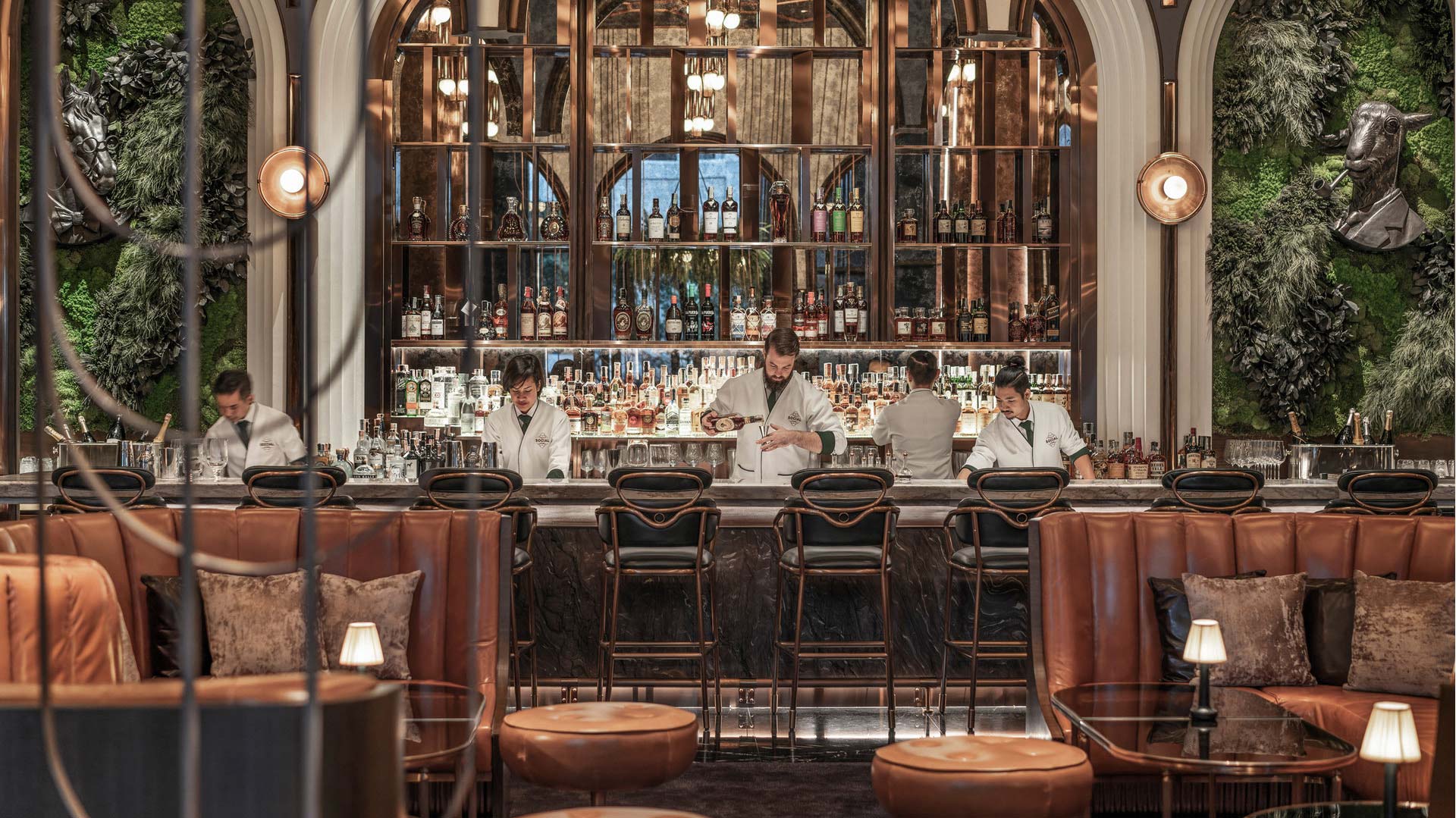
The BKK Social Club (Bangkok) blends cultures and cuisines from opposite ends of the world to create an experience lauded by tourists and Bangkok locals alike. Located in the Four Seasons Hotel Bangkok at Chao Phraya River, this chic, Gatsby-esque hotel bar invites guests to explore the iconic places, personalities, and parties of Latin America.
BKK Social Club: Bringing Latin American luxury to Bangkok
The BKK Social Club (Bangkok) blends cultures and cuisines from opposite ends of the world to create an experience lauded by tourists and Bangkok locals alike. Located in the Four Seasons Hotel Bangkok at Chao Phraya River, this chic, Gatsby-esque hotel bar invites guests to explore the iconic places, personalities, and parties of Latin America.
At the time, the idea of mixing spirits into cocktails was still considered a brash New World invention. The Savoy leaned into the trend, importing American bartending culture, and helped London fall in love with mixed drinks.
“The “American” Bar is a stylistic term. It was putting a flagpole down, saying that this bar is a bar that’s going to serve you cocktails. We are the bar that has maintained that name since the late 19th century, making us Europe’s oldest, or, as I prefer to call us, the longest-standing [American] bar in Europe.”
Declan McGurk
Former Director of Bars at The Savoy
Why Latin America in Bangkok?
World-renowned bartender and Beverage Manager Philip Bischoff explains that design firm AvroKo created the venue in the spirit of 1920s Argentinian Art Nouveau. Bischoff and team embraced and built off the Latin American ambiance. He asked himself…
“…if the design inspiration is Argentine, why not also bring the first culinary journey from that far away?”
So, for the first several years of its existence, the BKK Social Club transported the places, personalities, and parties of Argentina to the banks of the Chao Phraya.
Why Latin America in Bangkok?
World-renowned bartender and Beverage Manager Philip Bischoff explains that design firm AvroKo created the venue in the spirit of 1920s Argentinian Art Nouveau. Bischoff and team embraced and built off the Latin American ambiance. He asked himself…
“…if the design inspiration is Argentine, why not also bring the first culinary journey from that far away?”
So, for the first several years of its existence, the BKK Social Club transported the places, personalities, and parties of Argentina to the banks of the Chao Phraya.
Bangkok Bartenders showcased Argentina’s spirit with storied drinks such as the Evita, honoring the legendary First Lady, Eva ‘Evita’ Perón. The Evita featured layered flavors of pineapple rum, Campari, citrus, and bay leaf, reflecting her layered story. Also popular was the Hand of God, inspired by the late Argentine footballer Diego Maradona, a bold and bittersweet blend of tequila reposado (Olmeca Altos), Campari, and cacao-Malbec cordial.
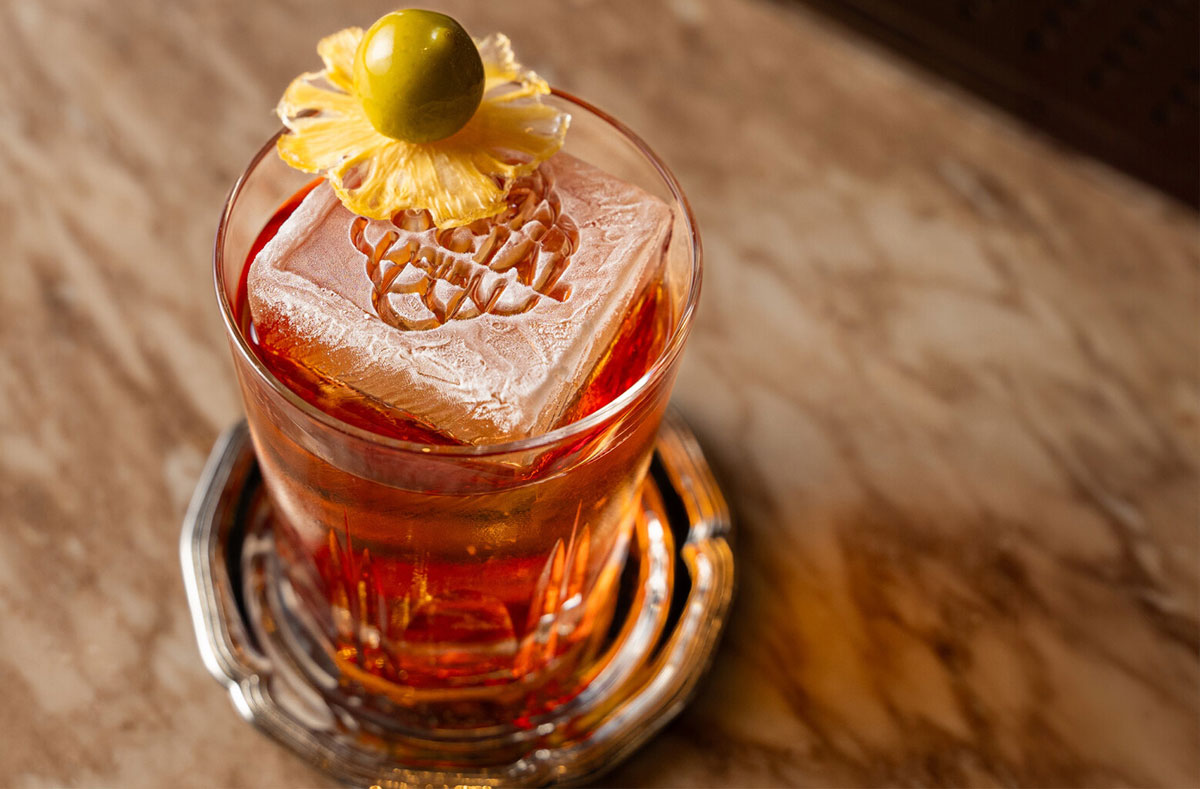
Bangkok Bartenders showcased Argentina’s spirit with storied drinks such as the Evita, honoring the legendary First Lady, Eva ‘Evita’ Perón. The Evita featured layered flavors of pineapple rum, Campari, citrus, and bay leaf, reflecting her layered story. Also popular was the Hand of God, inspired by the late Argentine footballer Diego Maradona, a bold and bittersweet blend of tequila reposado (Olmeca Altos), Campari, and cacao-Malbec cordial.
Moving to Mexico City
In late 2024, Bischoff and team announced a new menu.
“… transitioning from the vibrant essence
of Argentina to the rich cultural
tapestry of Mexico City.”
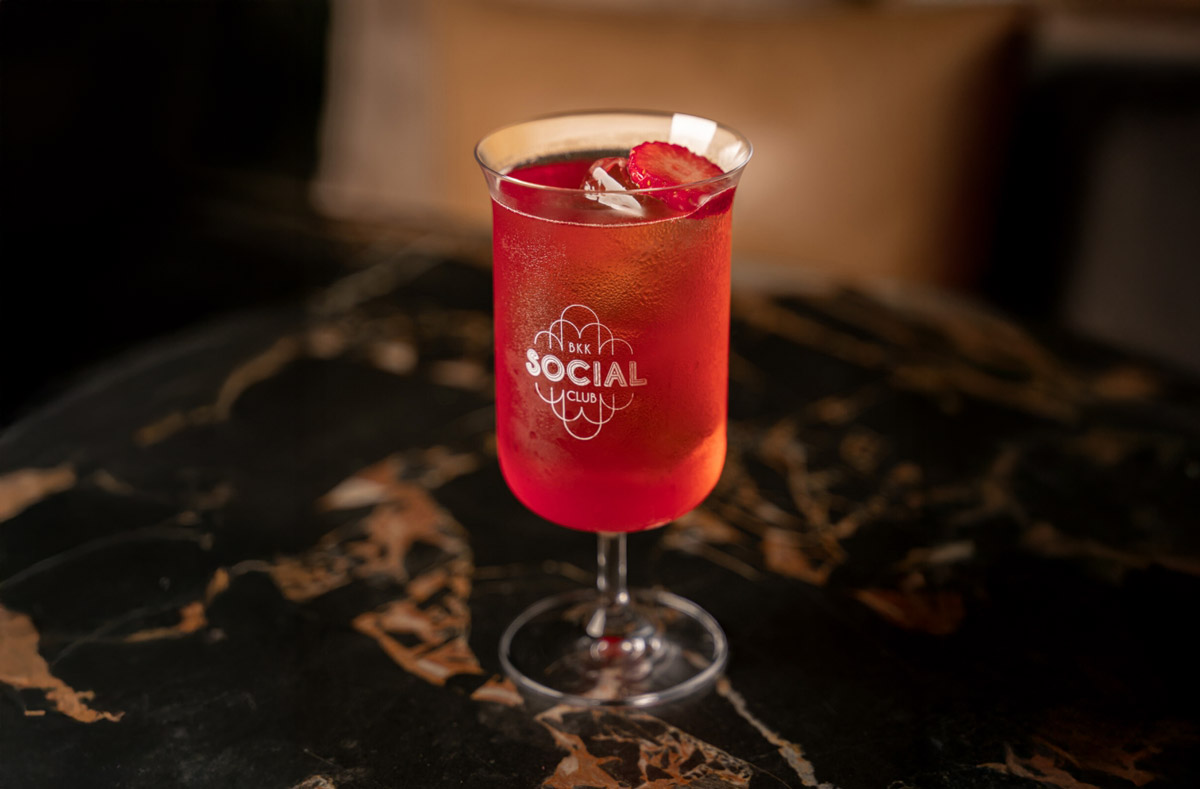
The latest BKK cocktail menu features drinks devoted to telling the stories of and around Mexico City. For example, La Capilla is a reference to the historic La Capilla bar in Tequila, Mexico. Created by Don Javier Delgado Corona, owner of the legendary bar, La Capilla is made from strawberry Cenote Blanco Tequila, Se Busca Mezcal Peach, citrus, sea salt, and Fever Tree Sparkling Pink Grapefruit. Other popular BKK cocktails inspired by Mexico City include:
-
Jimador
For the agave field workers (“jimadores”) of Mexico
-
Lucha Libre
For the fun and spectacle of Mexican wrestling
-
Día de Muertos
A tribute to Mexico’s vibrant celebration
Moving to Mexico City
In 2024, Bischoff and team announced a new menu.
“… transitioning from the vibrant essence of Argentina to the rich cultural tapestry of Mexico City.”
The latest BKK cocktail menu features drinks devoted to telling the stories of and around Mexico City. For example, La Capilla is a reference to the historic La Capilla bar in Tequila, Mexico. Created by Don Javier Delgado Corona, owner of the legendary bar, La Capilla is made from strawberry Cenote Blanco Tequila, Se Busca Mezcal Peach, citrus, sea salt, and Fever Tree Sparkling Pink Grapefruit. Other popular BKK cocktails inspired by Mexico City include:
Jimador
For the agave field workers (“jimadores”) of Mexico
Lucha Libre
For the fun and spectacle of Mexican wrestling
Día de Muertos
A tribute to Mexico’s vibrant celebration
Glitz, glamor and good times
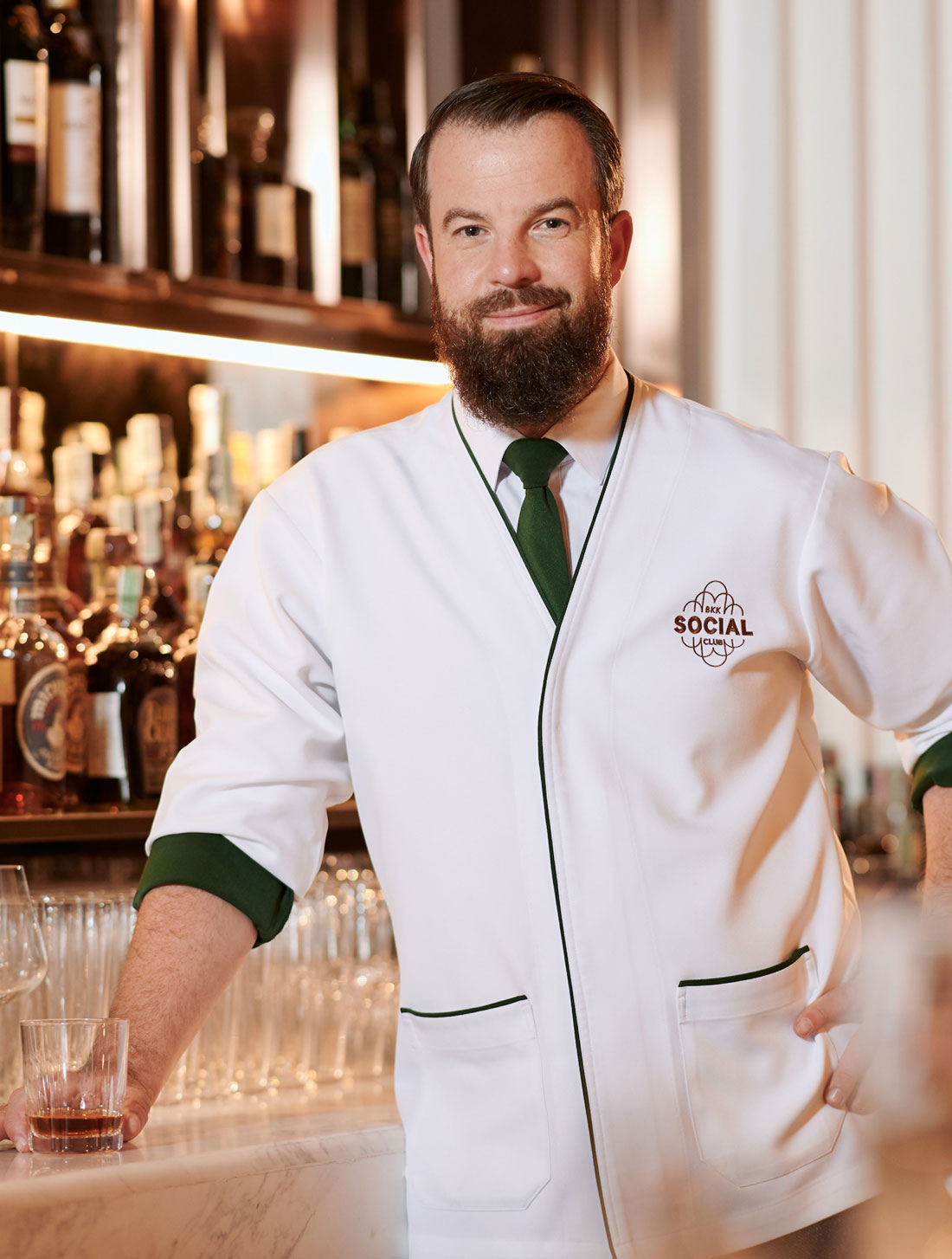
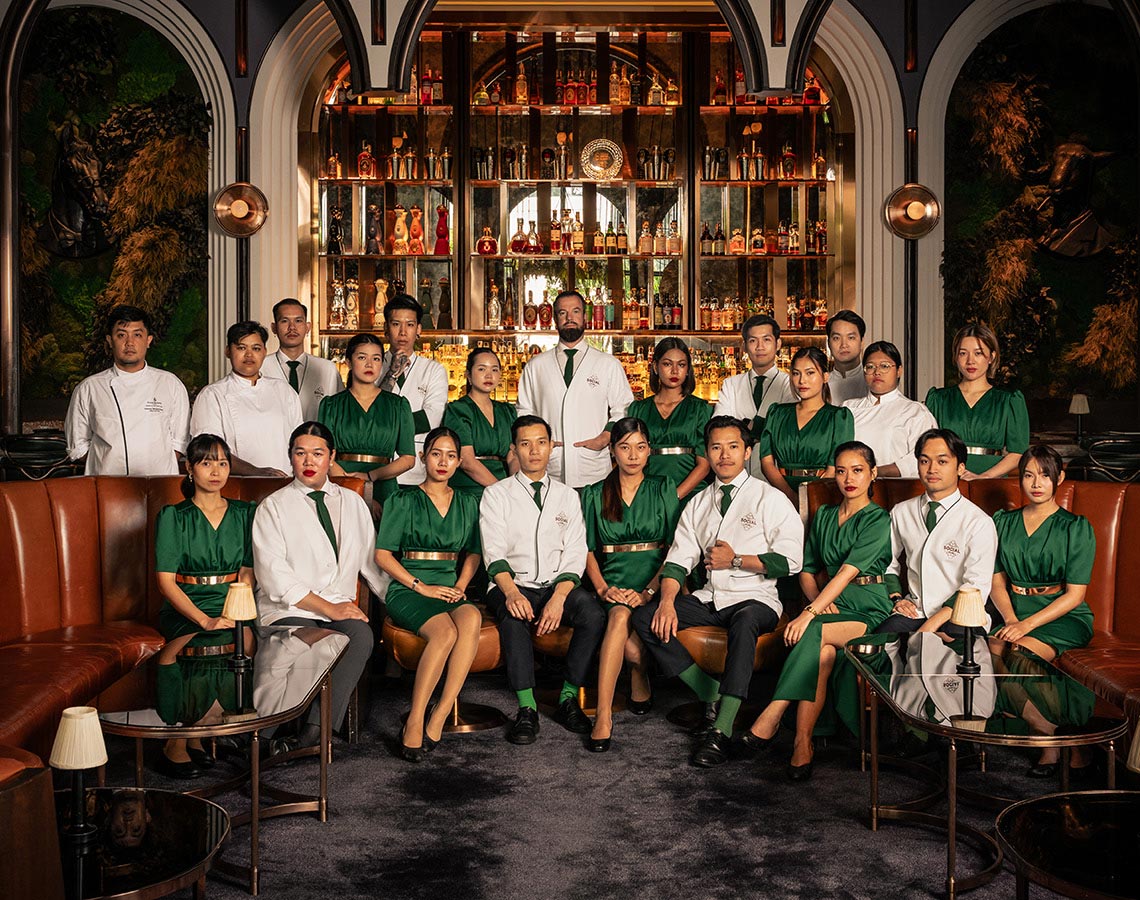
Bischoff once said: “I wanted to create a social hotspot, that was our core focus from the beginning—to create a place for people to feel welcome, get together and celebrate.” Bischoff has undoubtedly succeeded. Not only is the venue recognized as a top bar in Thailand, the BKK Social Club landed at #49 on the list of The World’s 50 Best Bars for 2025. While guests appreciate the timeless vibe, handcrafted cocktails, and lively soundtrack, many BKK Social Club reviews also note the impeccable service:
- “Amazing experience. With creative and original cocktails, delicious bites and meticulous service from Pomelo and Beer, I can easily understand how BKK Social Club got top 12 in the world.” —McCully from Singapore
- “Impeccable service, genuine warmth, and cocktails that deserve their own spotlight. A must-visit if you want your night to feel like a scene from a movie.” —Andreea i from Birmingham, UK
- “Laid-back luxury. Fantastically nice and professional service, extra fun with representation from the Seychelles this evening.” —Phayao13, Stockholm, Sweden
Glitz, glamor and good times
Bischoff once said: “I wanted to create a social hotspot, that was our core focus from the beginning—to create a place for people to feel welcome, get together and celebrate.” Bischoff has undoubtedly succeeded. Not only is the venue recognized as a top bar in Thailand, the BKK Social Club landed at #49 on the list of The World’s 50 Best Bars for 2025. While guests appreciate the timeless vibe, handcrafted cocktails, and lively soundtrack, many BKK Social Club reviews also note the impeccable service:
- “Amazing experience. With creative and original cocktails, delicious bites and meticulous service from Pomelo and Beer, I can easily understand how BKK Social Club got top 12 in the world.” —McCully from Singapore
- “Impeccable service, genuine warmth, and cocktails that deserve their own spotlight. A must-visit if you want your night to feel like a scene from a movie.” —Andreea i from Birmingham, UK
- “Laid-back luxury. Fantastically nice and professional service, extra fun with representation from the Seychelles this evening.” —Phayao13, Stockholm, Sweden
Book via the
Four Seasons app
When in Bangkok, aspiring bartenders shouldn’t miss a stop at the BKK Social Club, which welcomes guests from 5:00 pm to 12:00 am daily. Can you walk in? We wouldn’t recommend it. Instead, make a reservation via the website, call +66 (0)2 032 0885, or book via the Four Seasons app.
What’s next for BKK?
We expect to see a continued evolution of Bischoff and team’s creative and “world-class” cocktail menu. Stay tuned for new cocktails inspired by additional Latin America locales.
Book via the Four Seasons app
When in Bangkok, aspiring bartenders shouldn’t miss a stop at the BKK Social Club, which welcomes guests from 5:00 pm to 12:00 am daily. Can you walk in? We wouldn’t recommend it. Instead, make a reservation via the website, call +66 (0)2 032 0885, or book via the Four Seasons app.
What’s next for BKK?
We expect to see a continued evolution of Bischoff and team’s creative and “world-class” cocktail menu.
Stay tuned for new cocktails inspired by additional Latin America locales.
Photo Credits: Courtesy of Four Seasons Press Room
Nicole Bump
Nicole is a seasoned content strategist and writer with 15+ years of experience turning complex ideas into compelling stories. As founder of Bump Inbound, she helps brands connect with audiences through thoughtful strategy, sharp planning, and standout writing.
Stravinskij Bar: Rome’s inner-city oasis
Stravinskij Bar
Stravinskij Bar: Rome’s inner-city oasis
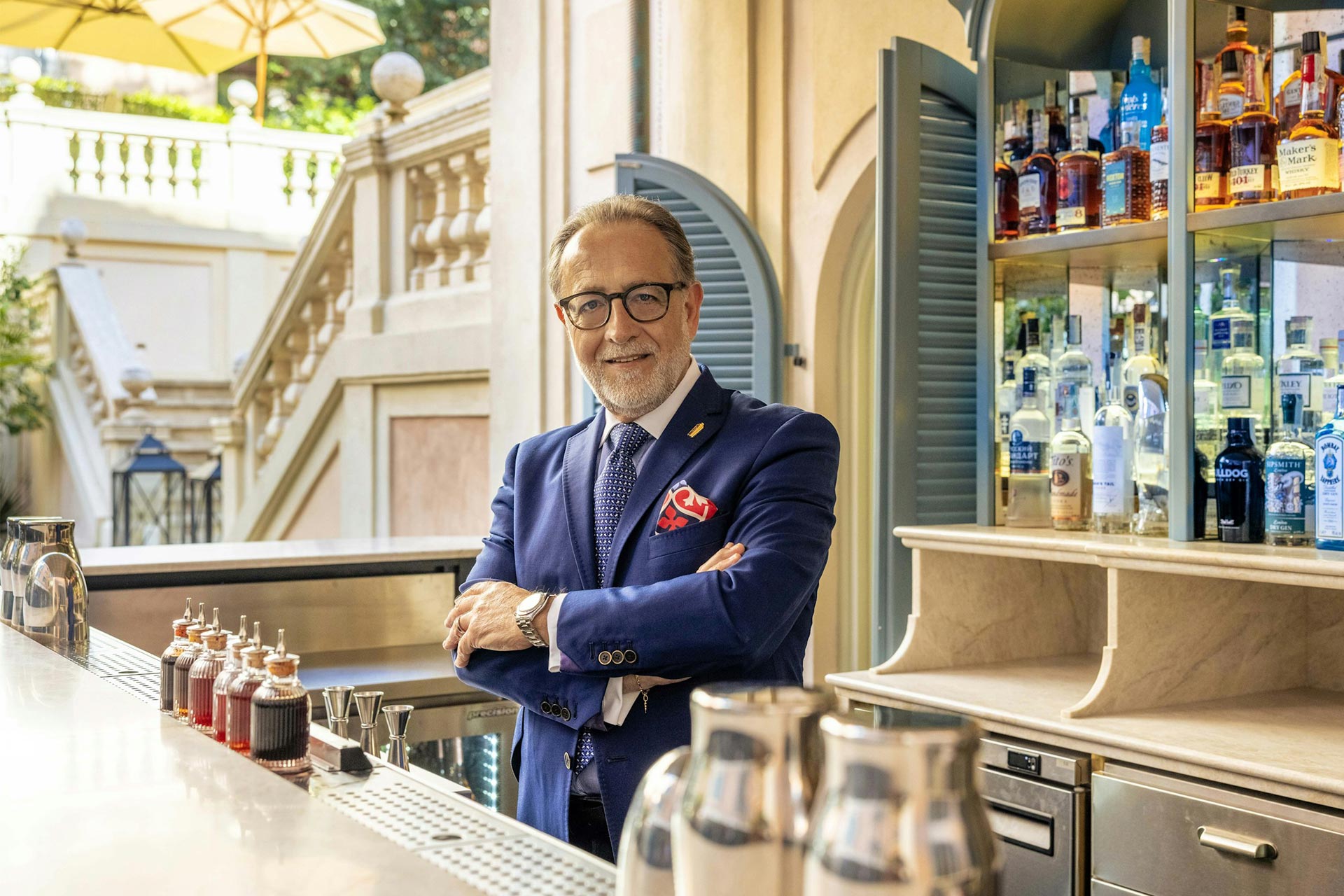
The vibe is polished yet relaxed—linen jackets, low conversation, soft lighting. The Stravinskij Bar at Hotel de Russie offers old-world glamour without stiffness or performance. Named after Russian composer Igor Stravinsky, who was a frequent guest at the hotel, the bar exudes the cultural sophistication of early 20th-century Europe. Today, the venue attracts a mix of globe trotters, well-traveled locals, and serious hotel-bar devotees—visiting to enjoy flawless cocktails in a lush outdoor garden.
“Secret Garden” setting unique to Rome
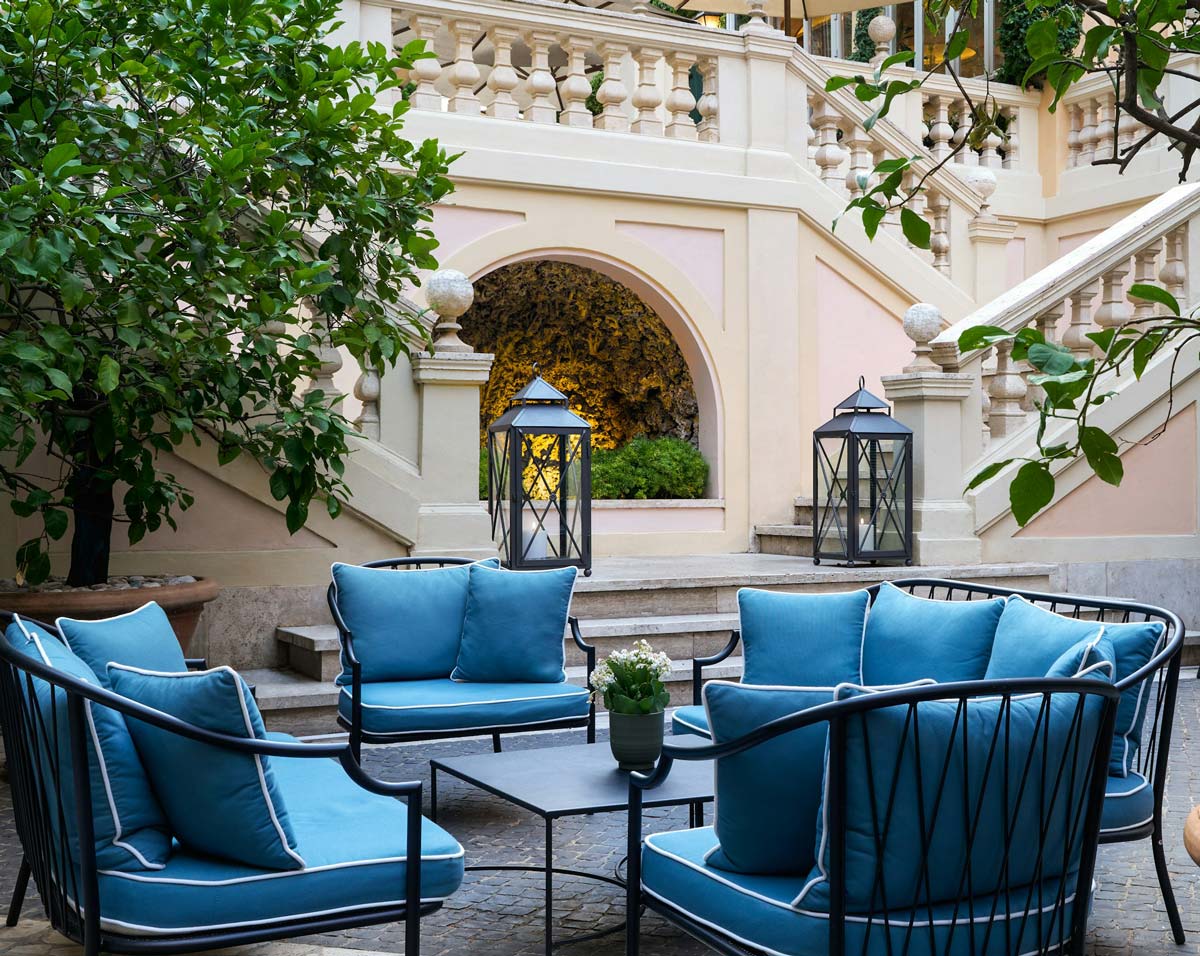
Hotel de Russie calls the Stravinskij Bar an oasis in the historic heart of Rome, and it’s little wonder why—the bar sits inside the hotel’s Secret Garden. In a city where terraces are tight, this rare Roman garden bar feels like a getaway to the countryside, complete with abundant greenery, sculpted hedges, citrus trees, and trickling fountains. Visitors are apt to forget they are only steps from the bustling Spanish Steps. And if summer at Stravinskij Bar is a garden party, the cooler months are more of a cozy, fire-lit salon. This hotel bar is one of the few places in Rome where you can enjoy outdoor cocktails throughout the spring and fall, as well (with glowing heat lamps to keep you warm).
“In the heart of Rome, tucked away from the city buzz, lies our Secret Garden, whose evocative colours, scents, and sounds have served as a natural muse for artists and poets throughout history.”
Stravinkij Bar Menu
“In the heart of Rome, tucked away from the city buzz, lies our Secret Garden, whose evocative colours, scents, and sounds have served as a natural muse for artists and poets throughout history.”
Stravinkij Bar Menu
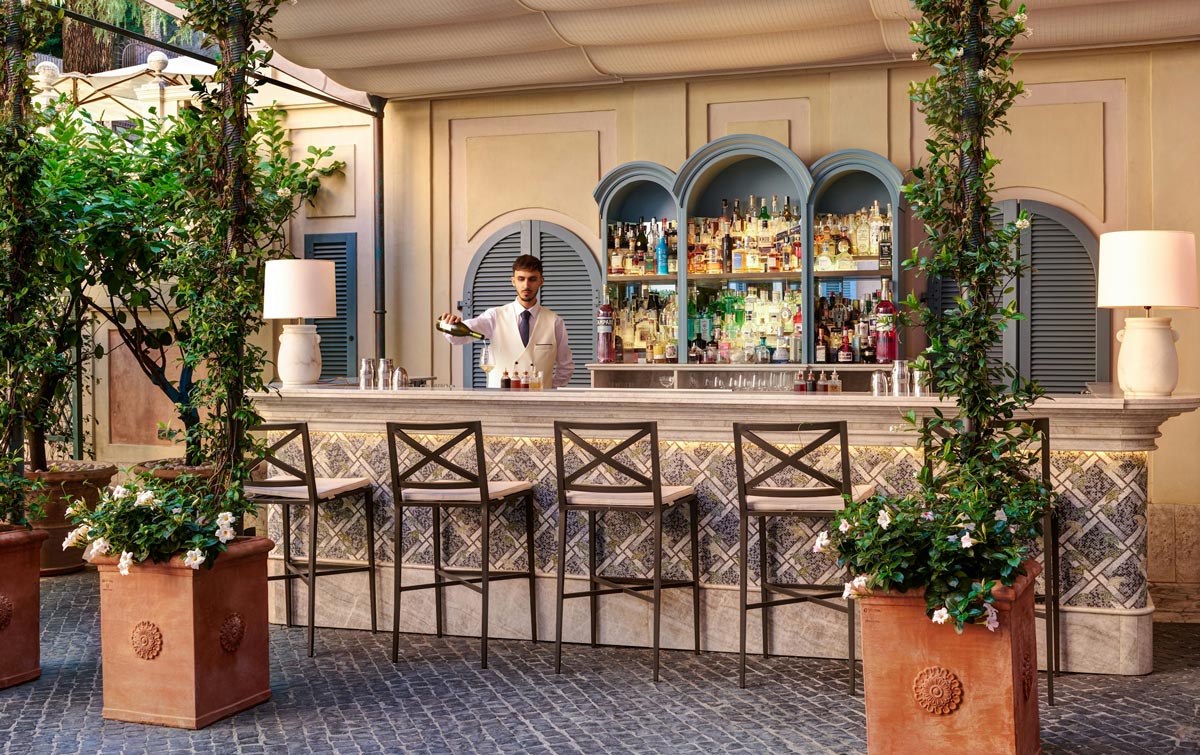
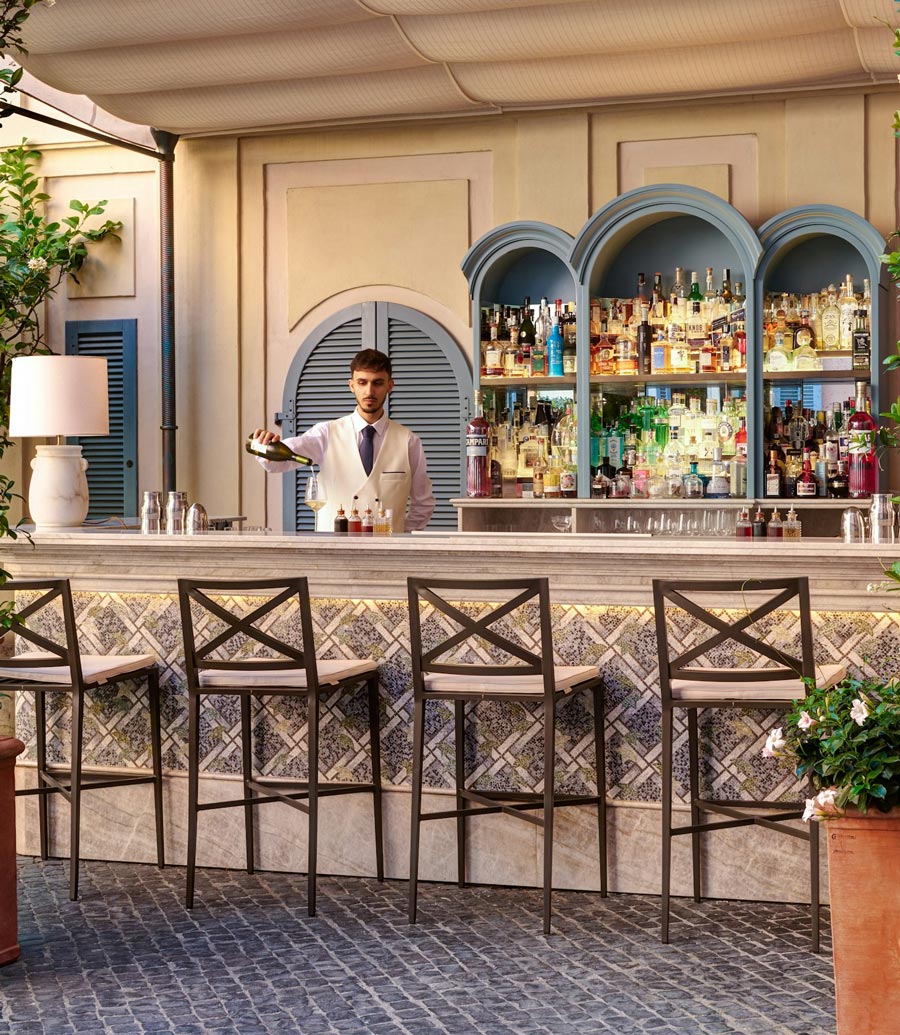
The Maestro’s cocktail menu
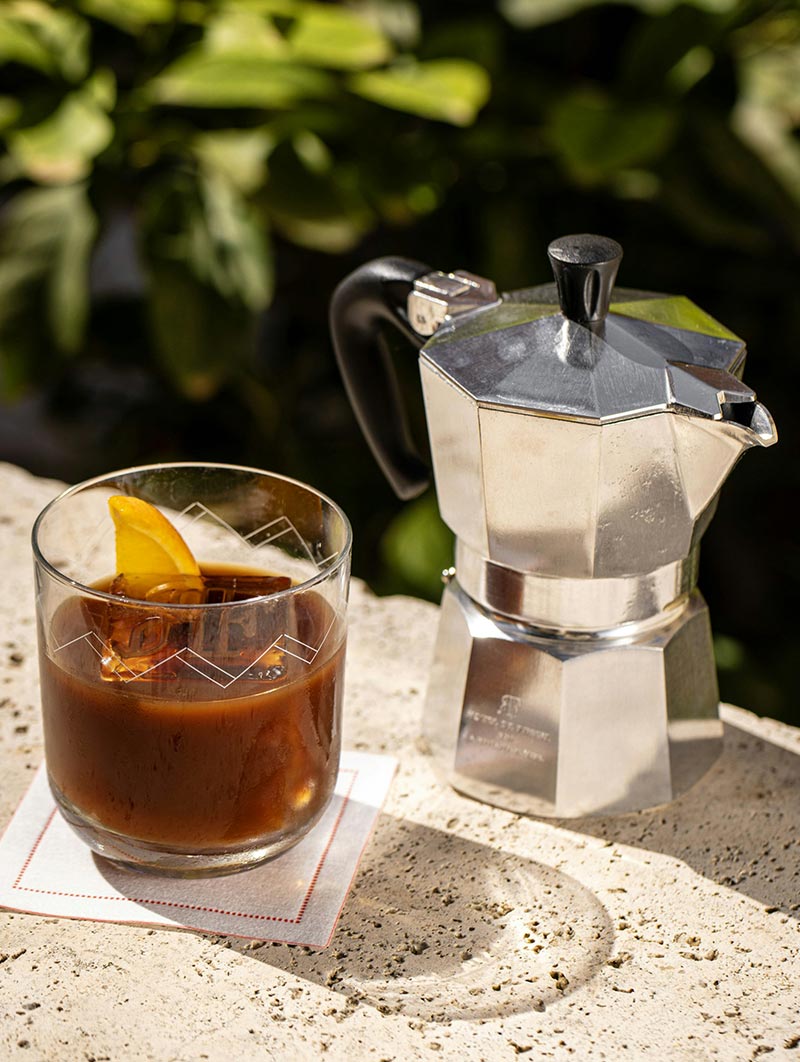
While the Stravinskij Bar has been a long-standing feature in Hotel de Russie, the venue was extensively renovated and reopened in 2024. To accompany its new ambiance, the bar also unveiled a new cocktail menu, designed by the Maestro himself, Salvatore Calabrese. Not only can guests enjoy the Maestro’s famous Breakfast Martini, but they can also enjoy his Negroni Svegliato. Created for Stravinkskij, the Negroni Svegliato is a mix of Calabrese’s two personal favorite beverages—the classic Negroni and an Italian Moka Coffee. The resulting cocktail is quickly becoming a classic in its own right.
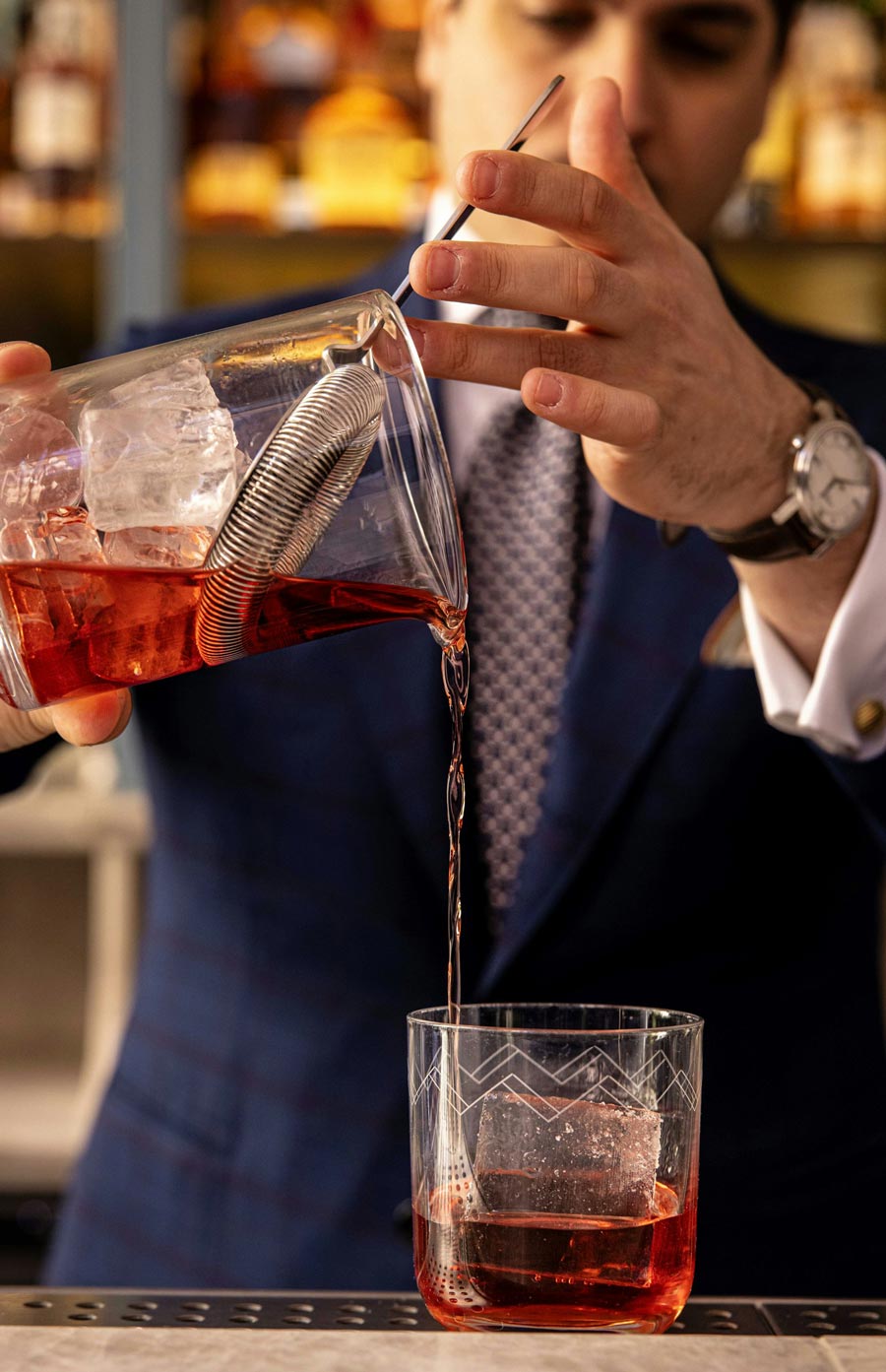
The Stravinskij team is also known for nature-inspired creativity in its cocktails. Calabrese explains, “The new cocktail menu for the Stravinskij Bar was inspired by the natural aromas of the Secret Garden at Hotel de Russie. … Inspired by Stravinskij’s opera The Right of Spring, the cocktail list aims to foster a unique experience through the arts of music and mixology.” The Anima Tellus, for example, is a “journey through flavours and traditions, from Italy’s ancient grains to the sacred rituals of South America, and time-honoured Indian remedies.”
The Maestro’s cocktail menu
While the Stravinskij Bar has been a long-standing feature in Hotel de Russie, the venue was extensively renovated and reopened in 2024. To accompany its new ambiance, the bar also unveiled a new cocktail menu, designed by the Maestro himself, Salvatore Calabrese.
Not only can guests enjoy the Maestro’s famous Breakfast Martini, but they can also enjoy his Negroni Svegliato. Created for Stravinkskij, the Negroni Svegliato is a mix of Calabrese’s two personal favorite beverages—the classic Negroni and an Italian Moka Coffee. The resulting cocktail is quickly becoming a classic in its own right.
The Stravinskij team is also known for nature-inspired creativity in its cocktails. Calabrese explains, “The new cocktail menu for the Stravinskij Bar was inspired by the natural aromas of the Secret Garden at Hotel de Russie. … Inspired by Stravinskij’s opera The Right of Spring, the cocktail list aims to foster a unique experience through the arts of music and mixology.”
The Anima Tellus, for example, is a “journey through flavours and traditions, from Italy’s ancient grains to the sacred rituals of South America, and time-honoured Indian remedies.”
Immaculate classic cocktails
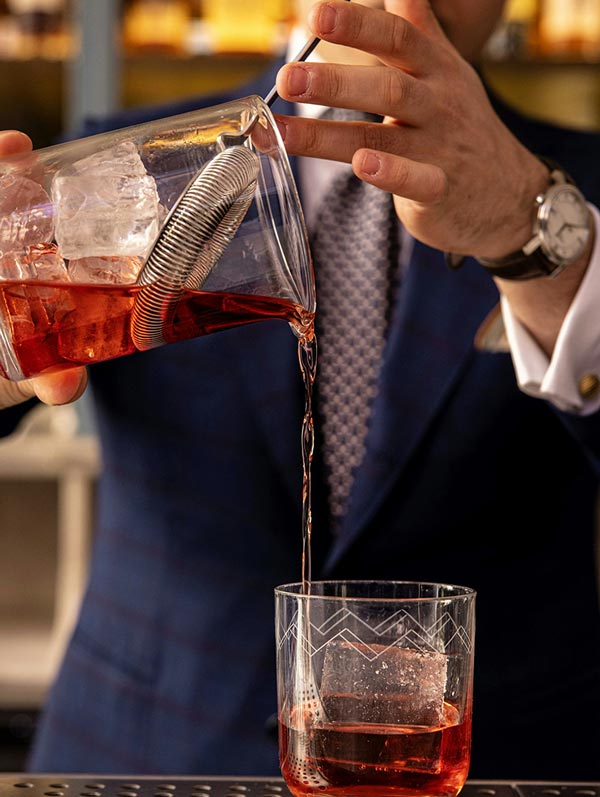
Calabrese isn’t the only master of mixology gracing the Stravinskij Bar—Bar Manager Mattia Capezzuoli is also renowned for his innovative cocktails and impeccable craftsmanship. Capezzuoli and his team eschew theatrics for precision and respect for tradition, which fits right in with Rome’s broader culinary culture. Stravinskij guests enjoy immaculately crafted classics, like:
- Perfectly balanced Negronis
- Crisp Martinis
- Elegant champagne cocktails
Building a name for this hotel bar
Capezzuoli’s craftsmanship hasn’t gone unnoticed—there’s no doubt Stravinskij Bar is now one of the best hotel bars in Rome. In fact, Stravinskij Bar was recently ranked number 94 out of the Top 500 Bars in the World.
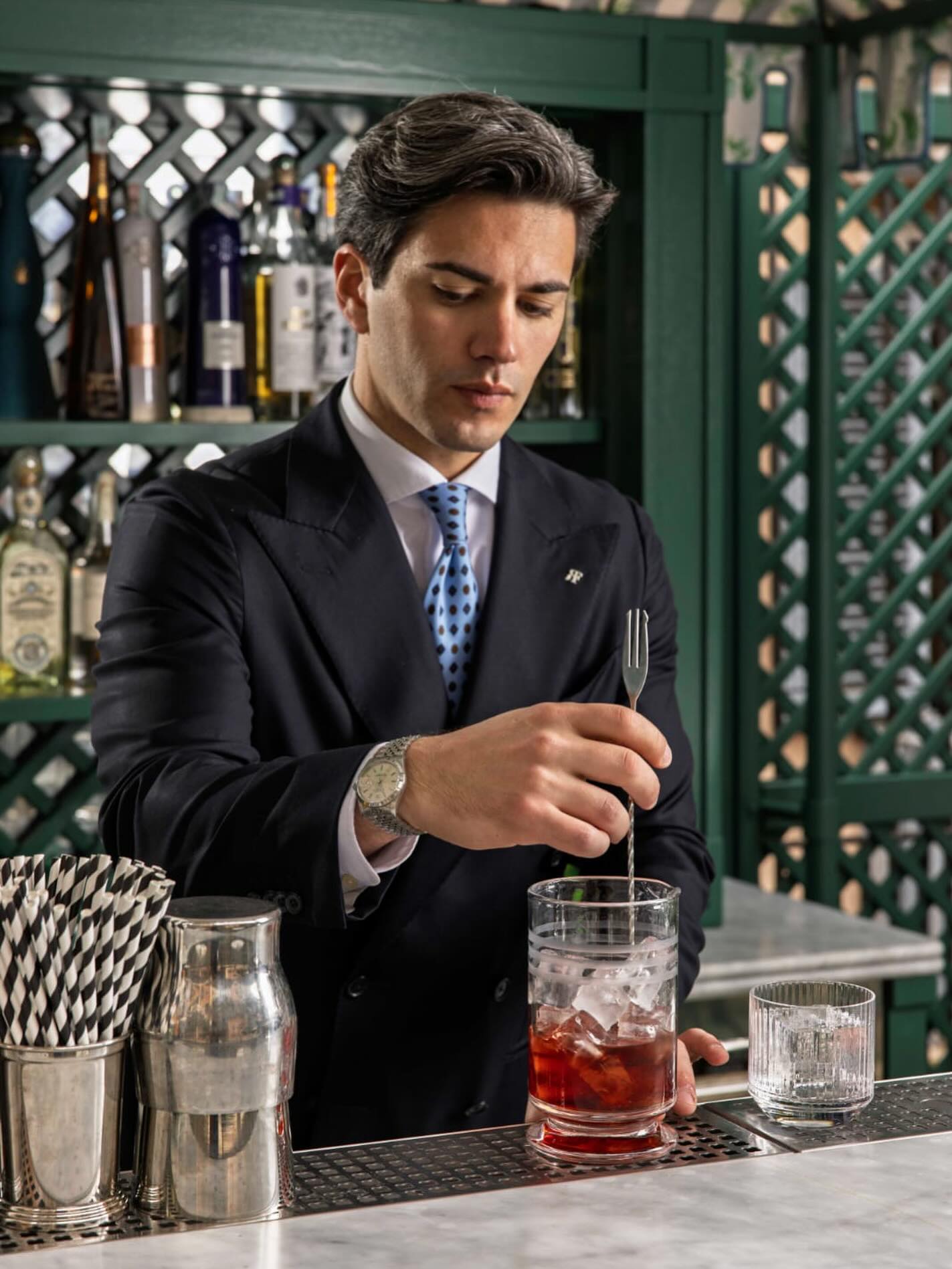
“With passion, perseverance, and an extraordinary team by my side, we set out with a bold goal: to bring the Stravinskij Bar back to the excellence of its golden days and to make it known and respected around the world once again. Today, being ranked number 94 among the Top 500 Bars in the World is a milestone that fills us with immense pride. It’s proof that when hard work meets heart, dreams can truly come to life.”
Mattia Capezzuoli – Bar Manager at Hotel De Russie Rome
“With passion, perseverance, and an extraordinary team by my side, we set out with a bold goal: to bring the Stravinskij Bar back to the excellence of its golden days and to make it known and respected around the world once again. Today, being ranked number 94 among the Top 500 Bars in the World is a milestone that fills us with immense pride. It’s proof that when hard work meets heart, dreams can truly come to life.”
Mattia Capezzuoli
Bar Manager – Hotel De Russie Rome
Nicole Bump
Nicole is a seasoned content strategist and writer with 15+ years of experience turning complex ideas into compelling stories. As founder of Bump Inbound, she helps brands connect with audiences through thoughtful strategy, sharp planning, and standout writing.
Botanist Bar Vancouver: Unrivaled experiential cocktails
Botanist Bar
Botanist Bar
Botanist Bar Vancouver: Unrivaled experiential cocktails
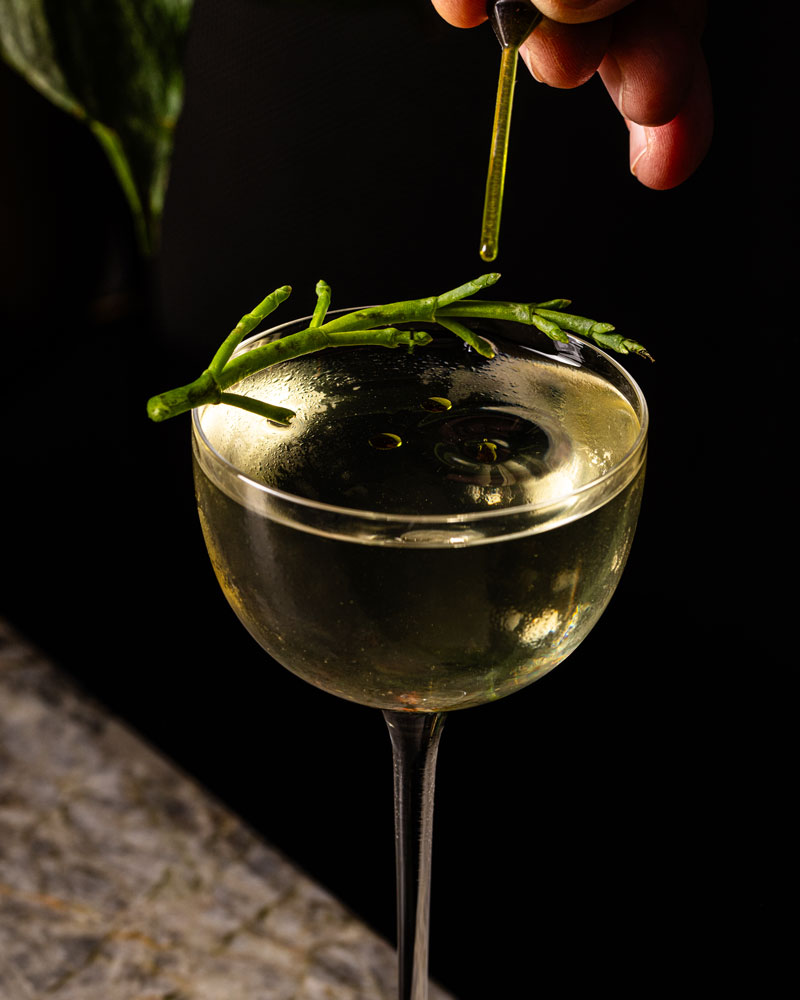
Located in the Fairmont Pacific Rim Hotel, Botanist Bar (Vancouver) is famous for its innovative mixology that blends both nature and science. The menu at this airy, upscale hotel bar pays tribute to the local environment of forests, oceans, and meadows through a cocktail experience guests are eager not only to imbibe—but also add to Instagram.
Botanist Bar Vancouver: Unrivaled experiential cocktails
Located in the Fairmont Pacific Rim Hotel, Botanist Bar (Vancouver) is famous for its innovative mixology that blends both nature and science. The menu at this airy, upscale hotel bar pays tribute to the local environment of forests, oceans, and meadows through a cocktail experience guests are eager not only to imbibe—but also add to Instagram.
‘Dream bar’ built from the ground up
Botanist Bar was built with innovation in its DNA. When Fairmont Pacific Rim decided to completely overhaul its restaurant and bar, they asked Beverage Director Grant Sceney what his dream bar would look like—no limits, no compromises. Sceney envisioned a workspace that blended culinary technique with scientific precision, giving bartenders the tools to experiment as boldly as chefs. As Sceney recalls:
“They asked, ‘If you could build a dream bar, what would you do?’… I wrote down a list: I want a rotovap, a centrifuge. And it all just came back with a big tick.”
That freedom shaped more than just the equipment. It set the stage for Botanist’s now-famous Cocktail Lab and the boundary-pushing, experiential drinks that followed.
‘Dream bar’ built from the ground up
Botanist Bar was built with innovation in its DNA. When Fairmont Pacific Rim decided to completely overhaul its restaurant and bar, they asked Beverage Director Grant Sceney what his dream bar would look like—no limits, no compromises. Sceney envisioned a workspace that blended culinary technique with scientific precision, giving bartenders the tools to experiment as boldly as chefs. As Sceney recalls:
“They asked, ‘If you could build a dream bar, what would you do?’… I wrote down a list: I want a rotovap, a centrifuge. And it all just came back with a big tick.”
That freedom shaped more than just the equipment. It set the stage for Botanist’s now-famous Cocktail Lab and the boundary-pushing, experiential drinks that followed.
Creating in the Cocktail Lab
Inside the glass walls of the Cocktail Lab, located within Botanist Bar, mixologists perfect their craft with equipment more common to a science lab than a traditional bar. Sceney was granted not only his centrifuges and rotary evaporators (rotovaps), the lab also boasts a host of other tools used for distillation, clarification, flavor extraction, and creative infusions.
The Cocktail Lab serves as the creative engine behind Botanist’s experiential cocktail programs, allowing mixologists to combine flavors, aromas, textures, and visual presentations into an engaging sensory journey. By merging culinary technique with scientific tools, the Cocktail Lab has become a benchmark for modern mixology, showing bartenders what’s possible when creativity meets precision. The resulting beverages are equal parts showpiece and storytelling.
Creating in the Cocktail Lab
Inside the glass walls of the Cocktail Lab, located within Botanist Bar, mixologists perfect their craft with equipment more common to a science lab than a traditional bar. Sceney was granted not only his centrifuges and rotary evaporators (rotovaps), the lab also boasts a host of other tools used for distillation, clarification, flavor extraction, and creative infusions.
The Cocktail Lab serves as the creative engine behind Botanist’s experiential cocktail programs, allowing mixologists to combine flavors, aromas, textures, and visual presentations into an engaging sensory journey. By merging culinary technique with scientific tools, the Cocktail Lab has become a benchmark for modern mixology, showing bartenders what’s possible when creativity meets precision.
The resulting beverages are equal parts showpiece and storytelling.
Insta-worthy cocktail experiences
The creations that come out of Botanist’s Cocktail Lab are immersive, Insta-worthy cocktails that have put Botanist Bar on the map. Perhaps the most famous are the Water of Life (Eau de Vie) cocktails, a quartet of elaborate, experiential beverages dreamed up by Sceney and inspired by water’s influence on the Pacific Northwest.
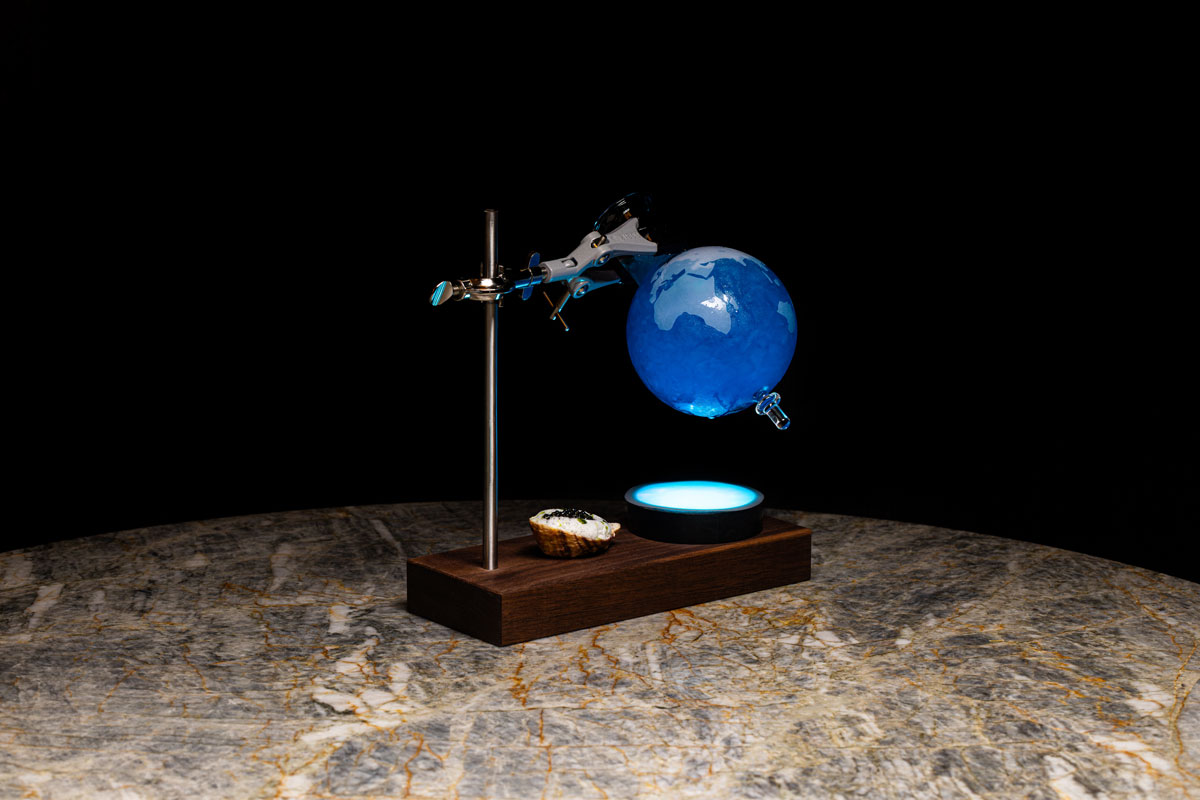
Pale Blue Dot
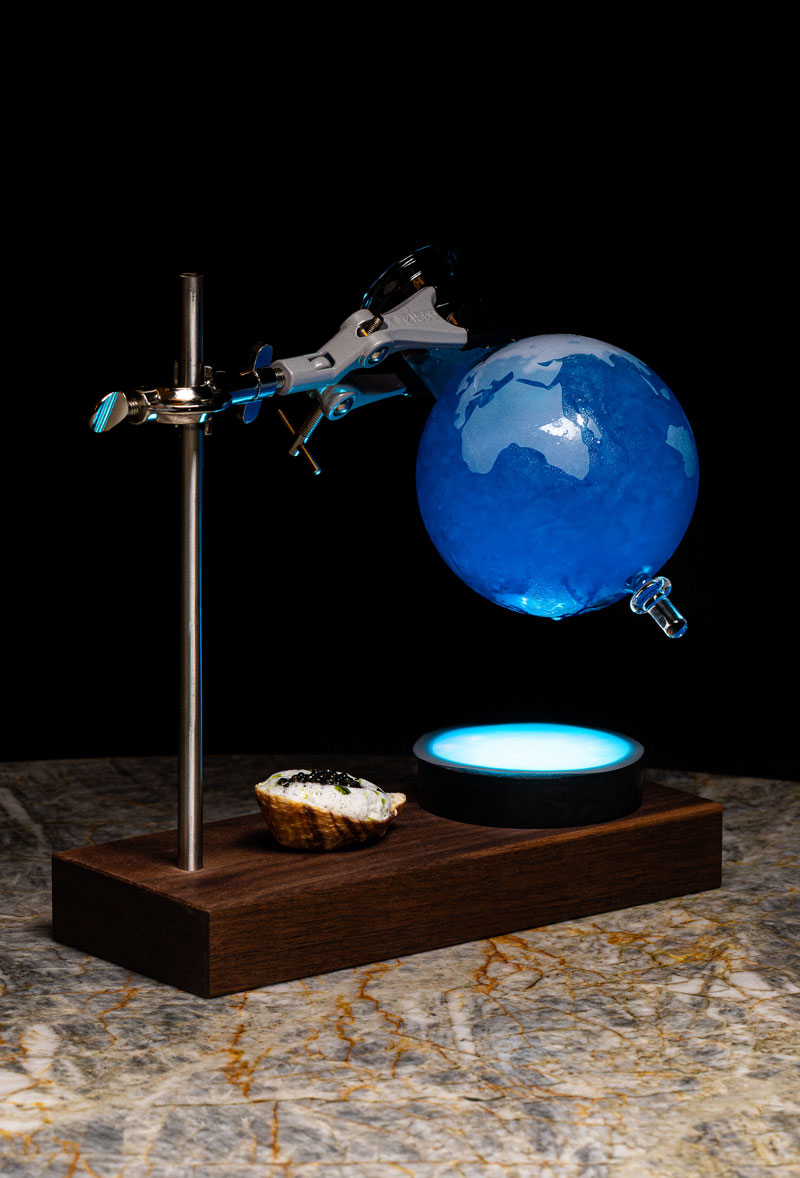
A vibrant blue cocktail made with Pacific Ocean blue algae, oyster shell gin, oyster-leaf distillate, and a lacto-fermented cucumber-pineapple syrup—a tribute to all the water on Earth. Served in a glass resembling a globe, this cocktail creation was named after the famous 1990 photograph taken by Voyager 1, which shows Earth as a tiny point of light from billions of miles away.
Ring of Fire
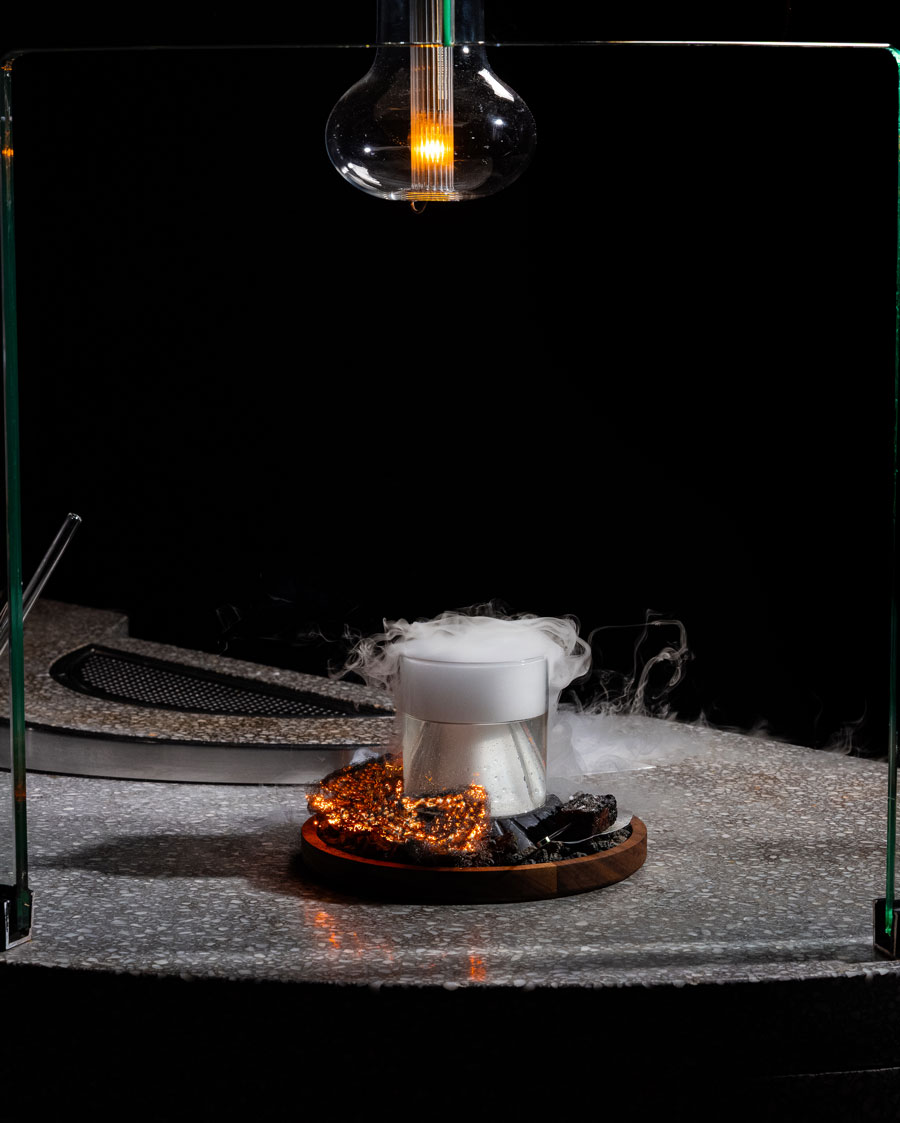
A blend of 12-year rum, Canadian rye whiskey, melon liqueur (yogurt-washed and clarified in a centrifuge) with passionfruit distillate, vanilla and lemon cordial. This cocktail symbolizes the effect of water vapor on the region’s tropical flora and is served in a custom-made glass designed to look like a volcano surrounded. When served, the bartender lights mixture of steel wool and dry ice on fire for a stunning effect, complete with smoke and small sparks of fire.
Raincouver
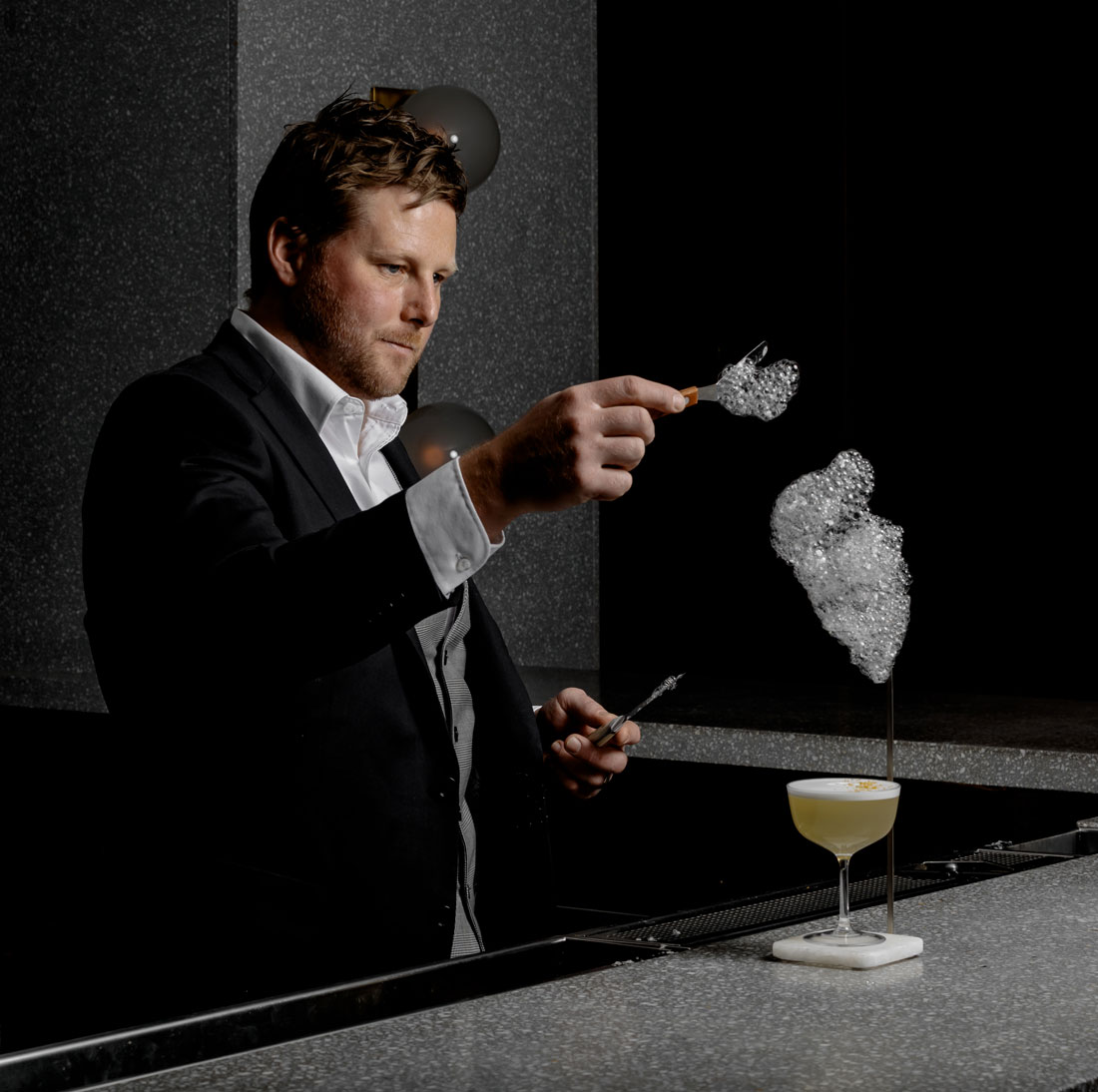
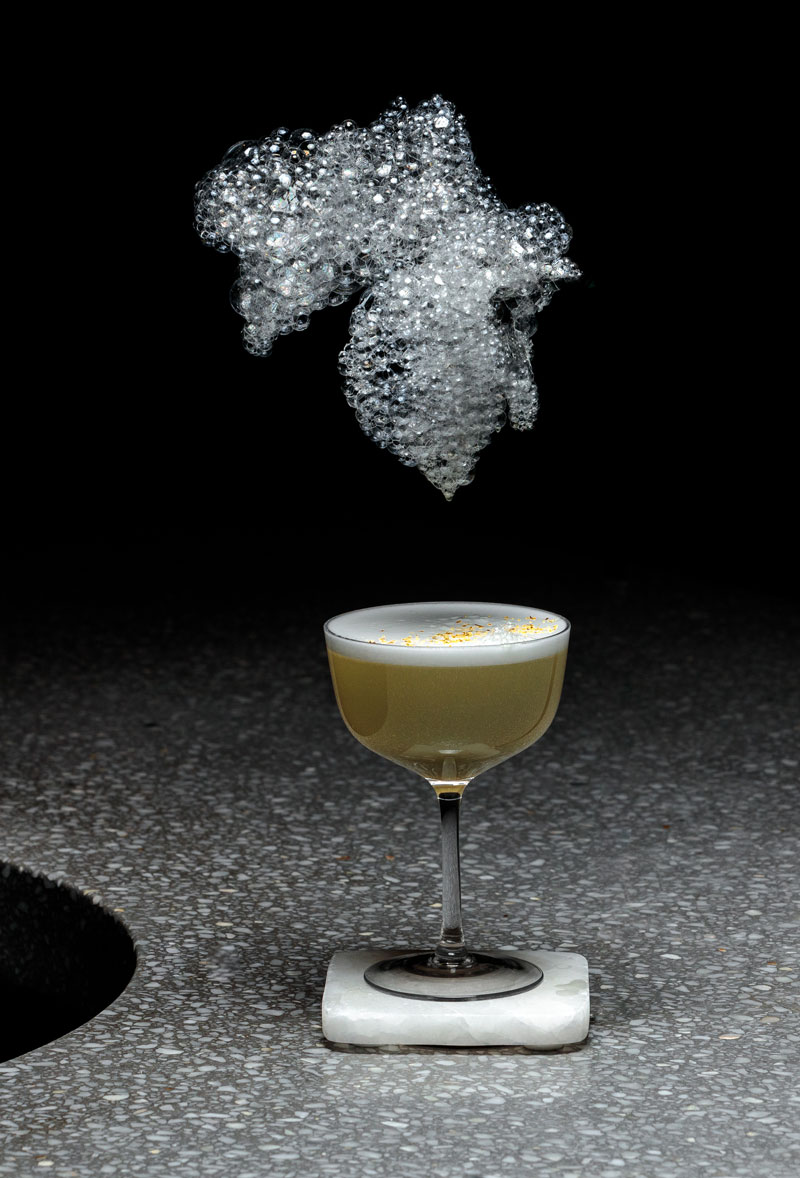
A concoction of vodka, yuzu, pine, aperitif wine, citrus, topped with Perrier, the Raincouver is nod to the region’s plentiful precipitation. The cocktail comes complete with a cloud of vegan foam infused with cherry blossom and pine essence that slowly “rains” over the drink.
Earth’s Energy
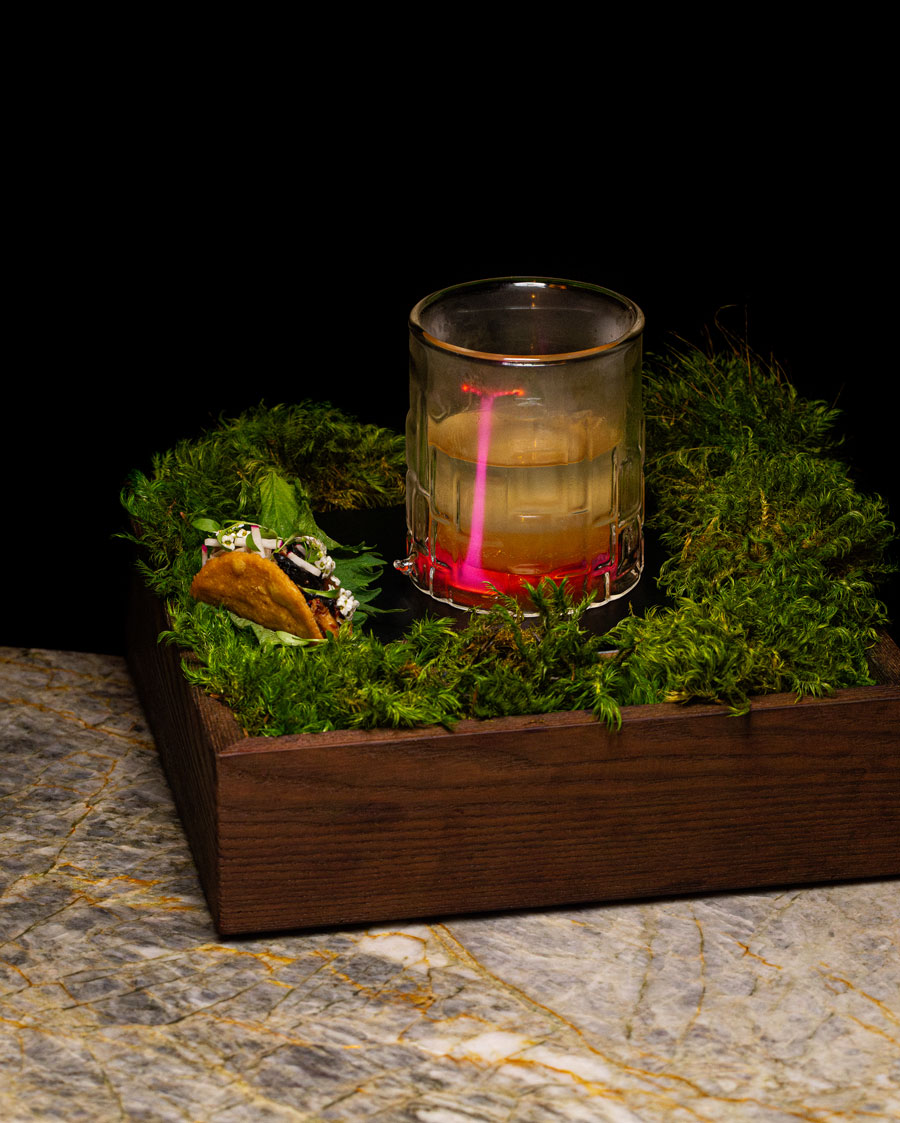
This mix of blanco tequila, local vermouth, amaro chiaro, chamomile-elderflower celebrates the vital role of water in sustaining flora and fauna. The hot-orange creation is served on a wooden box adorned with vegetation. The glass itself responds to touch a la toy plasma ball, and the cocktail’s flavor profile is said to evolve as it changes temperature.
Ring of Fire
A blend of 12-year rum, Canadian rye whiskey, melon liqueur (yogurt-washed and clarified in a centrifuge) with passionfruit distillate, vanilla and lemon cordial.
This cocktail symbolizes the effect of water vapor on the region’s tropical flora and is served in a custom-made glass designed to look like a volcano surrounded.
When served, the bartender lights mixture of steel wool and dry ice on fire for a stunning effect, complete with smoke and small sparks of fire.
Raincouver
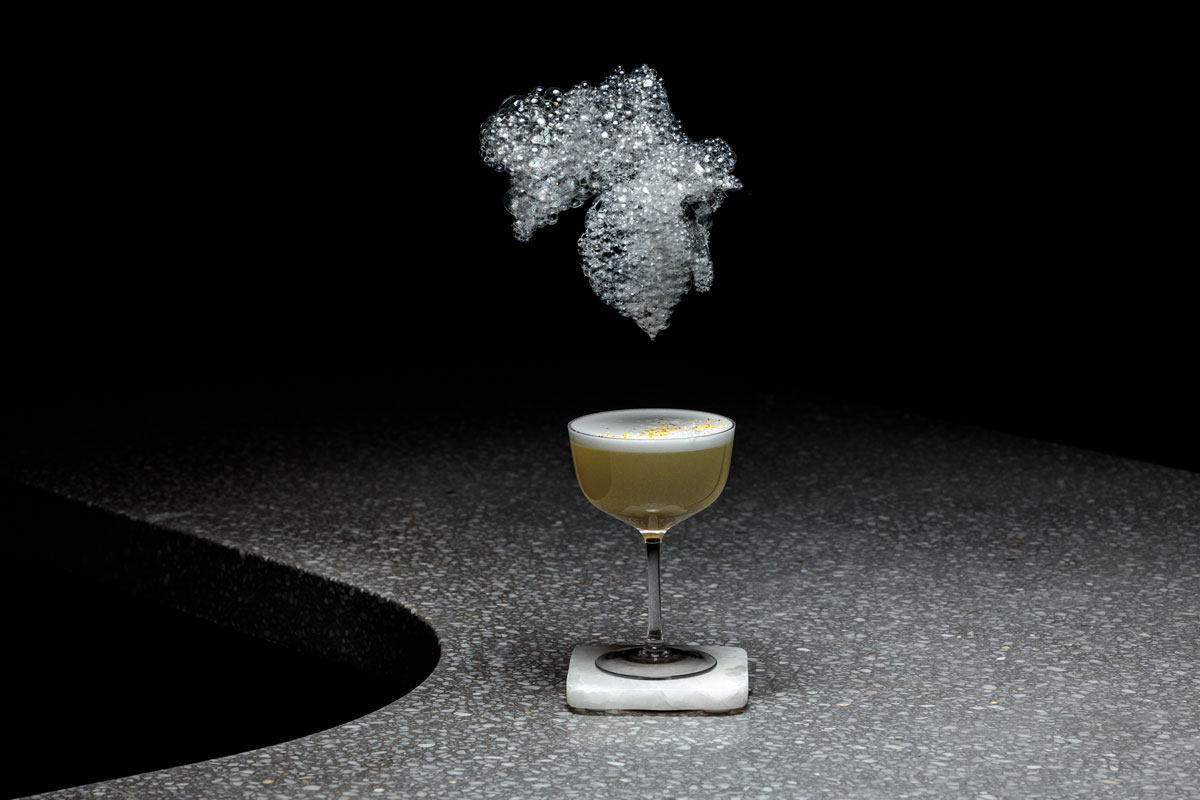
A concoction of vodka, yuzu, pine, aperitif wine, citrus, topped with Perrier, the Raincouver is nod to the region’s plentiful precipitation. The cocktail comes complete with a cloud of vegan foam infused with cherry blossom and pine essence that slowly “rains” over the drink.
Earth’s Energy
This mix of blanco tequila, local vermouth, amaro chiaro, chamomile-elderflower celebrates the vital role of water in sustaining flora and fauna.
The hot-orange creation is served on a wooden box adorned with vegetation. The glass itself responds to touch a la toy plasma ball, and the cocktail’s flavor profile is said to evolve as it changes temperature.
Earning impressive accolades
Botanist’s commitment to innovation has captivated guests and earned global recognition. The bar’s experiential cocktail program, thoughtful design, and boundary-pushing techniques have consistently placed it among the world’s best. In 2025, Botanist Bar placed 26th on the list of North America’s 50 Best Bars, a distinction that underscores its influence on modern mixology and its reputation for redefining what a hotel bar can be.
This recognition follows years of critical acclaim, including a 2022 Exceptional Cocktails Award from MICHELIN Guide Vancouver, and the 2023 Michter’s Art of Hospitality Award. Together, these accolades reinforce what locals and travelers already know: Botanist Bar isn’t just serving cocktails. It’s shaping the future of modern mixology in Vancouver and beyond.
Earning impressive accolades
Botanist’s commitment to innovation has captivated guests and earned global recognition. The bar’s experiential cocktail program, thoughtful design, and boundary-pushing techniques have consistently placed it among the world’s best. In 2025, Botanist Bar placed 26th on the list of North America’s 50 Best Bars, a distinction that underscores its influence on modern mixology and its reputation for redefining what a hotel bar can be.
This recognition follows years of critical acclaim, including a 2022 Exceptional Cocktails Award from MICHELIN Guide Vancouver, and the 2023 Michter’s Art of Hospitality Award. Together, these accolades reinforce what locals and travelers already know: Botanist Bar isn’t just serving cocktails. It’s shaping the future of modern mixology in Vancouver and beyond.
Photo Credits:
Fairmont Pacific Rim
Nicole Bump
Nicole is a seasoned content strategist and writer with 15+ years of experience turning complex ideas into compelling stories. As founder of Bump Inbound, she helps brands connect with audiences through thoughtful strategy, sharp planning, and standout writing.
The Heart of the Hotel: Nimb Hotel, Copenhagen
Nimb Hotel, Copenhagen
This year, in association with Altamura Distilleries, I’ll be exploring some of the world’s most legendary bars—uncovering what makes them the beating heart of the hotel. Our next stop is Copenhagen!
#Episode 5
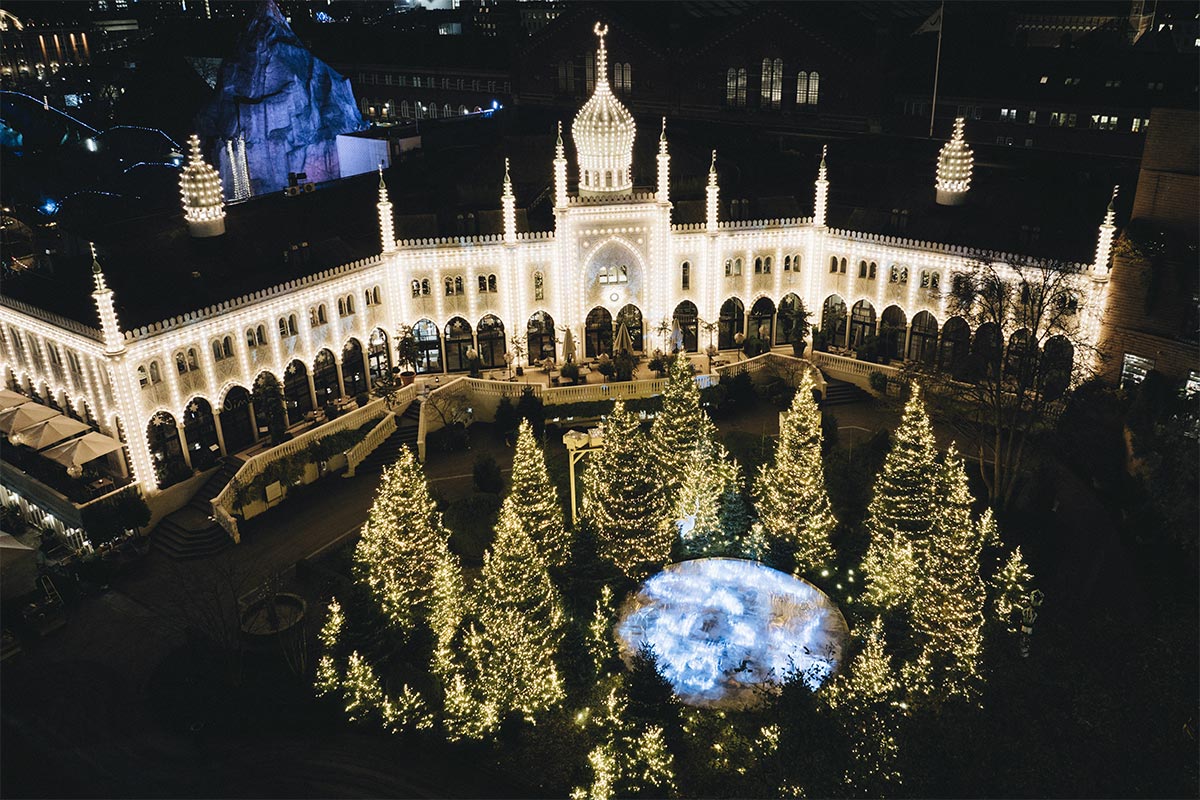
Once upon a time there was a man who dreamt of a garden so magical that it bewitched not only a nation but the world. This garden furnished splendiferous amusements, mystical architecture, and culinary concoctions, promising all who wandered its meandering paths the chance to explore other realms without leaving its magical gates. This gentleman was the famed Georg Carstensen who, after receiving a nod from King Christian VIII, constructed Tivoli Gardens right in the heart of Denmark’s capital city of Copenhagen. Upon opening on August 15, 1843, the public couldn’t help but be enchanted by its Chinese-inspired, peacock decorated Pantomime Theatre; its thrilling one-of-a-kind roller coaster, Rutschebanen; and its domed, market place, The Bazaren, rising up at the edge of the garden.
#Episode 5
Once upon a time there was a man who dreamt of a garden so magical that it bewitched not only a nation but the world. This garden furnished splendiferous amusements, mystical architecture, and culinary concoctions, promising all who wandered its meandering paths the chance to explore other realms without leaving its magical gates. This gentleman was the famed Georg Carstensen who, after receiving a nod from King Christian VIII, constructed Tivoli Gardens right in the heart of Denmark’s capital city of Copenhagen. Upon opening on August 15, 1843, the public couldn’t help but be enchanted by its Chinese-inspired, peacock decorated Pantomime Theatre; its thrilling one-of-a-kind roller coaster, Rutschebanen; and its domed, market place, The Bazaren, rising up at the edge of the garden.
Sadly, that original arched alcazar burned down in 1862, only to be rebuilt a few years later and then subsequently demolished in 1908. In 1909, designed by the Director of Tivoli and architect by trade, Knud Arne PetersenIt, it would rise again like the phoenix – an Arabesque labyrinth filled with unexpected delights.
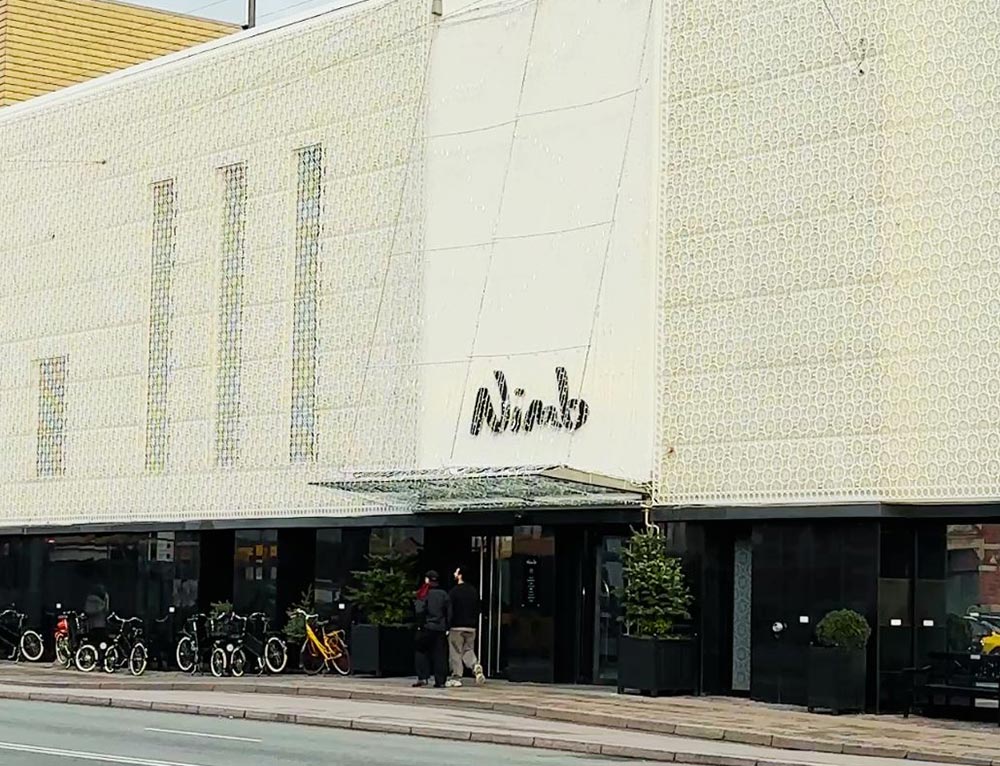
Amongst its many charms was the terrace restaurant overseen by Louisa Nimb, the doyenne of Divan 2, one of the garden’s many eating establishments. Such an impression did she leave that in the decades that followed, the Nimb family name became enmeshed within the very fabric of the building.
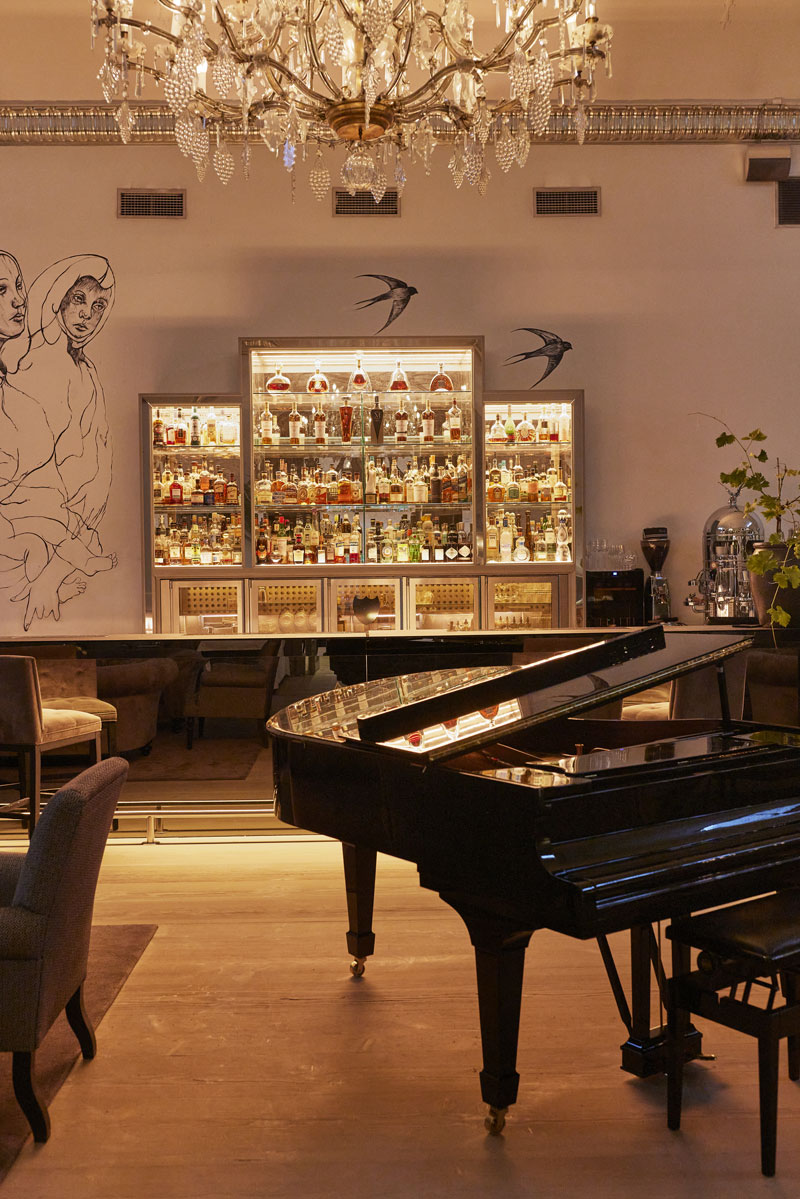
Fast forward more than 100 years and, much like Cinderella’s pumpkin, the Nimb has been gloriously transformed into the sumptuous Nimb Hotel, by not just one but many an international fairy godmother, including Italian architect Matteo Thun, New York-based architects Pei Cobb Freed & Partners, and designer Ian Bader. At its very heart sits the Nimb Bar, led by Damiano Pezzi, a true Wizard of Mixology.
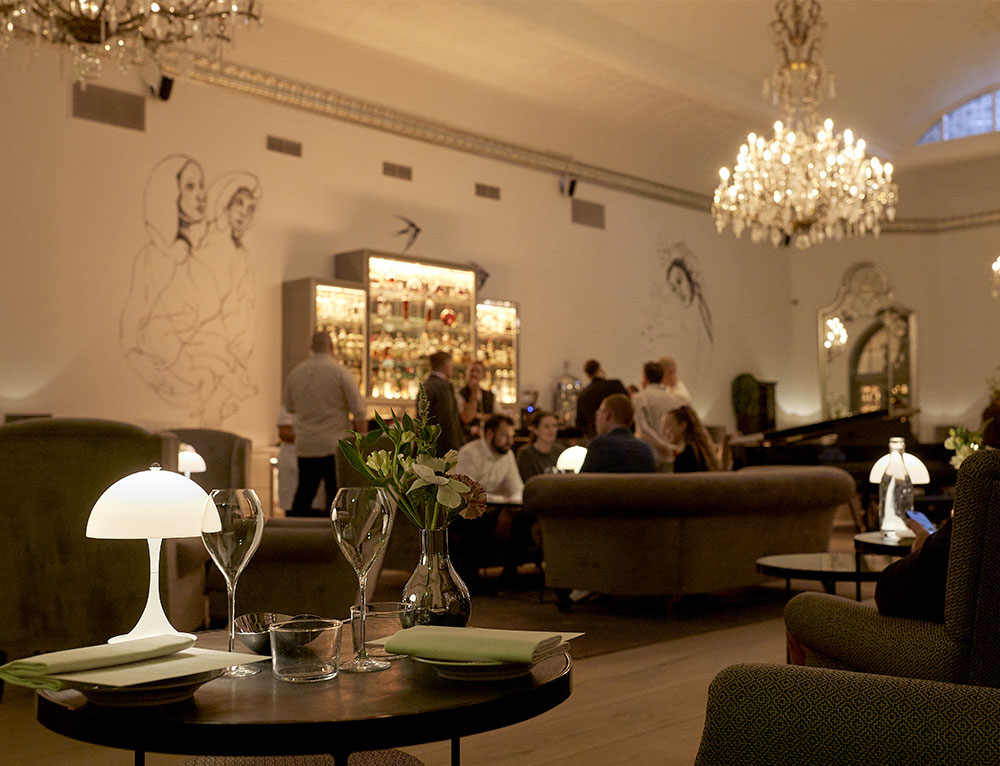
Charged with the task of transforming the Nimb Bar, his first instinct was to bring the garden outside inside. Rather than call on the usual minimalist motif that Scandinavia is famous for, Damiano wanted to infuse his cocktails with the colors of Tivoli.
Sadly, that original arched alcazar burned down in 1862, only to be rebuilt a few years later and then subsequently demolished in 1908. In 1909, designed by the Director of Tivoli and architect by trade, Knud Arne PetersenIt, it would rise again like the phoenix – an Arabesque labyrinth filled with unexpected delights.
Amongst its many charms was the terrace restaurant overseen by Louisa Nimb, the doyenne of Divan 2, one of the garden’s many eating establishments. Such an impression did she leave that in the decades that followed, the Nimb family name became enmeshed within the very fabric of the building.
Fast forward more than 100 years and, much like Cinderella’s pumpkin, the Nimb has been gloriously transformed into the sumptuous Nimb Hotel, by not just one but many an international fairy godmother, including Italian architect Matteo Thun, New York-based architects Pei Cobb Freed & Partners, and designer Ian Bader. At its very heart sits the Nimb Bar, led by Damiano Pezzi, a true Wizard of Mixology.
Charged with the task of transforming the Nimb Bar, his first instinct was to bring the garden outside inside. Rather than call on the usual minimalist motif that Scandinavia is famous for, Damiano wanted to infuse his cocktails with the colors of Tivoli.
“I want the Nimb Bar to be where the lights go lighter, the fire goes brighter, your brain runs wild & your heart gets mightier. Stepping inside our bar, exploring our menu and sipping our cocktails shows the eternal magic and wonder of Tivoli, following you even after your visit, keeping surprising and warming you.”
Damiano Pezzi, Director of Mixology
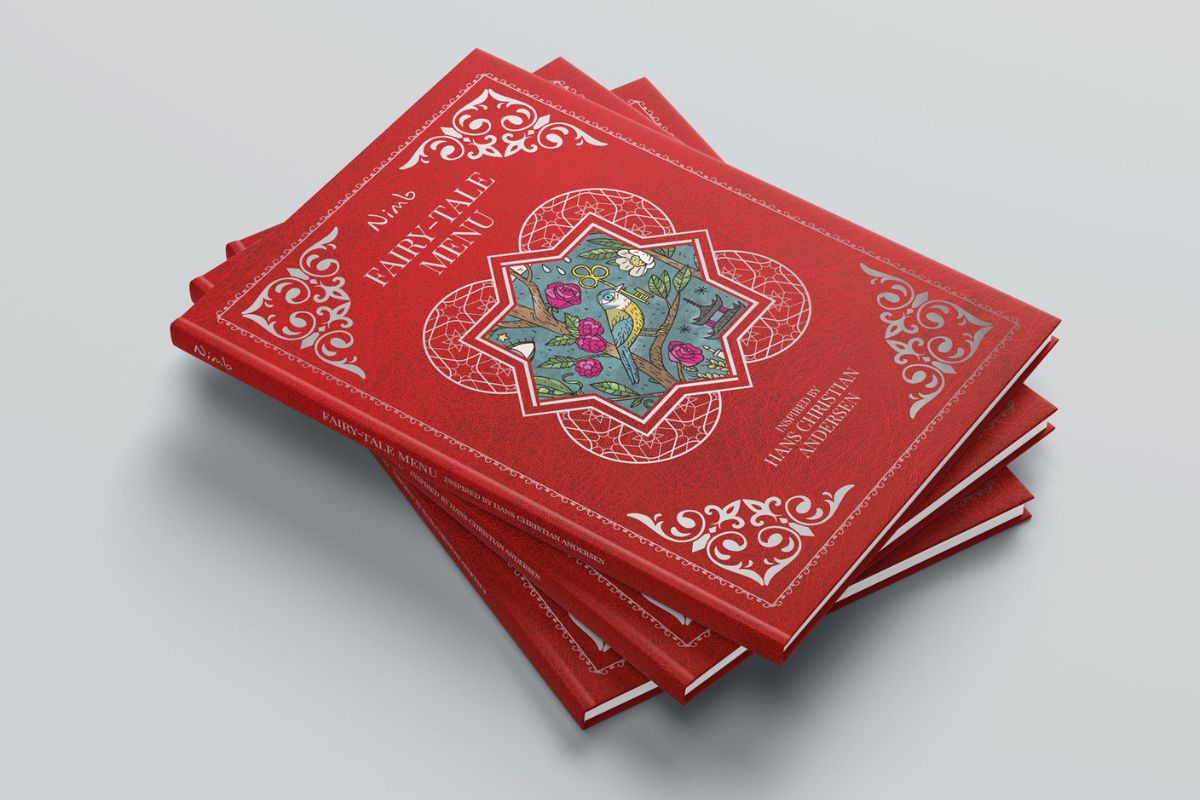
Sitting inside a fairy-tale inspired castle, he chose no other than Hans Christian Andersen, Denmark’s greatest fairy-tale teller, as inspiration for his first menu. Damiano and his team immersed themselves in Andersen’s fairy tales. Finding a plethora of ingredients among its pages – raspberries, figs, walnuts, jams, they cast their spell over those each and everyone, conjuring up cocktails unlike any that had come before.
The Little Red Riding Hood
One such creation was The Nightingale, based on Andersen’s love letter to Tivoli’s Chinese Pavilion, a play on raspberry, gin, violet, pear and lemon delivered in cocktail glass shaped like a bird. The following menu was dedicated to the one and only Arabic classic, One Thousand and One Nights. Its story of The Porter and the Three Ladies served as inspiration for the rum-based cocktail The Humble Feast, with its mazj of lemon, honey, fig jam. walnuts, goat milk and vanilla.
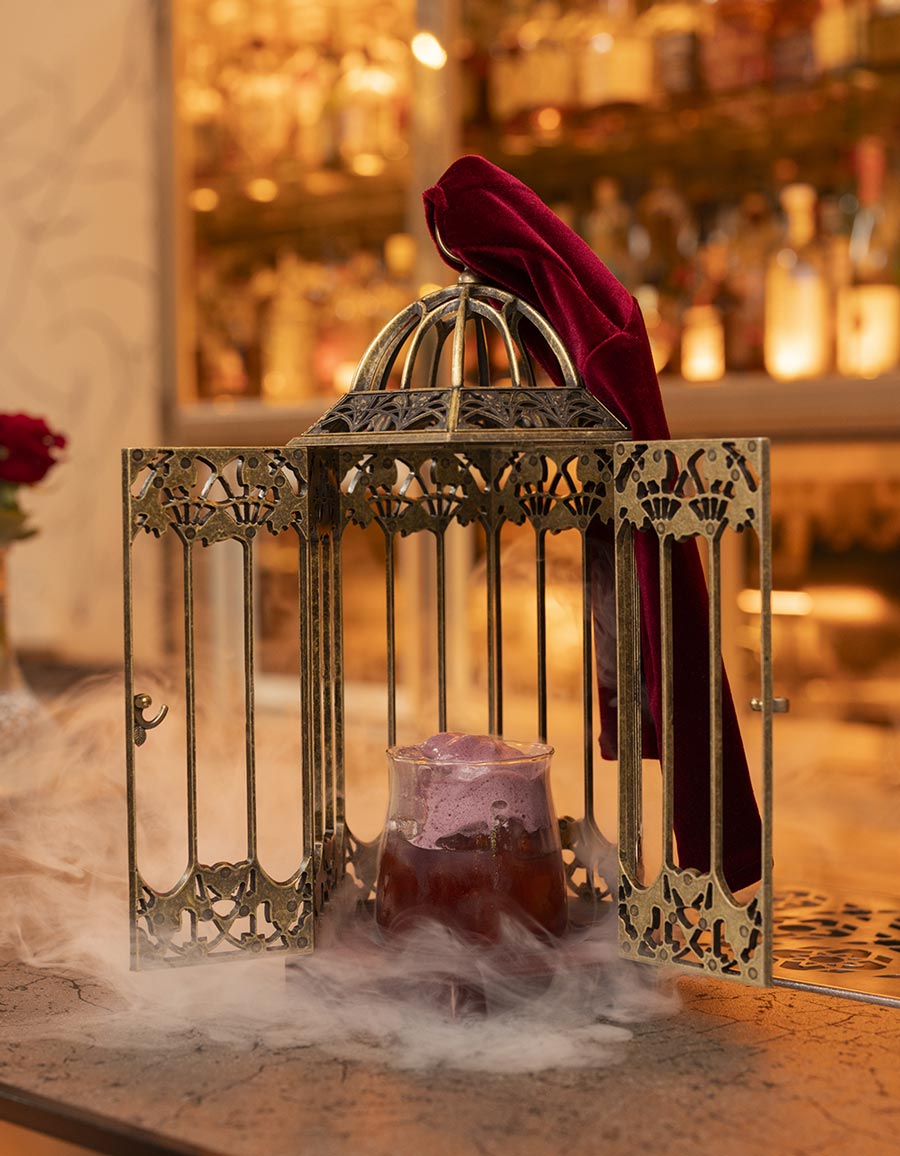
For the third and last of the Fairy-Tale menus, they drew on classic stories, such as Snow White, Beauty and the Beast, and Peter Pan. The tragic tale of sisters Philomela and Procne, transformed into birds by the gods after they took revenge on King Tereus, led to a cocktail mired in “Innocent Blood” – a reduction of sherry and tequila. Painted by Danish artist Cathrine Raben Davidsen, murals of the two both in human form and as birds loom large over the bar.
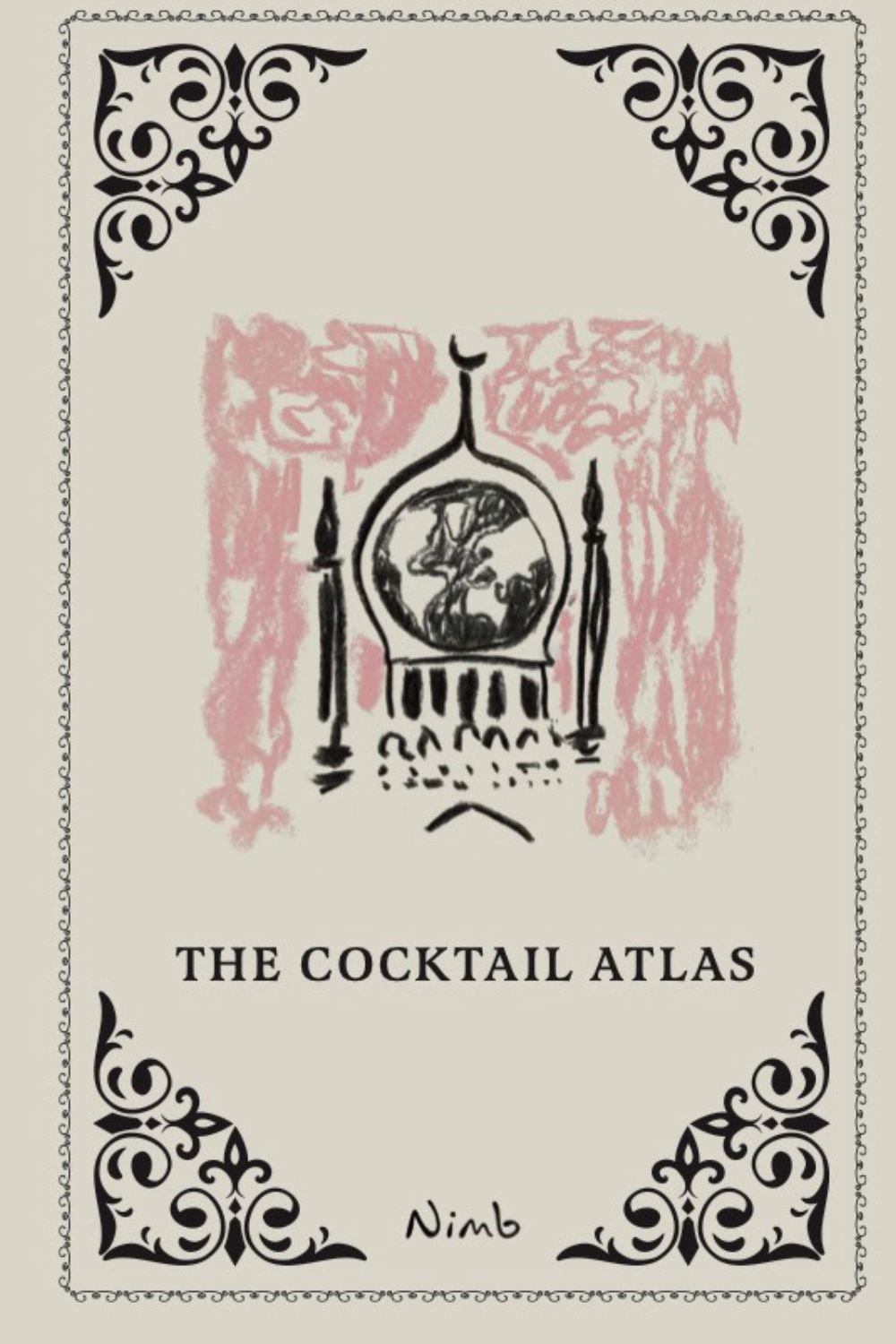
Damiano and his team took their cue from the garden itself for their most recent menu – an invitation to travel without going anywhere. In the 19th century, when few people could travel far, Carstensen brought the world to them. So they took this as a challenge to do the same – crafting The Cocktail Atlas, eighteen iconic destinations you can visit without ever leaving the bar. Hints of those destinations appear in the accompanying drawings and the story of each cocktail is revealed when the drink is served.
“The hotel bar is the silent, beating heart of the establishment. Here, behind the bar counter, the bartender is both historian and healer, offering not just a drink, but a bespoke story for the soul, and transforming the day’s scattered stress into a steady, sip by sip calm.”
Alex Gkountopoulous
Assistant Bar Manager
The Little Red Riding Hood
One of the gorgeous cocktails from the Fairy-Tale Menu
One such creation was The Nightingale, based on Andersen’s love letter to Tivoli’s Chinese Pavilion, a play on raspberry, gin, violet, pear and lemon delivered in cocktail glass shaped like a bird. The following menu was dedicated to the one and only Arabic classic, One Thousand and One Nights. Its story of The Porter and the Three Ladies served as inspiration for the rum-based cocktail The Humble Feast, with its mazj of lemon, honey, fig jam. walnuts, goat milk and vanilla.
For the third and last of the Fairy-Tale menus, they drew on classic stories, such as Snow White, Beauty and the Beast, and Peter Pan. The tragic tale of sisters Philomela and Procne, transformed into birds by the gods after they took revenge on King Tereus, led to a cocktail mired in “Innocent Blood” – a reduction of sherry and tequila. Painted by Danish artist Cathrine Raben Davidsen, murals of the two both in human form and as birds loom large over the bar.
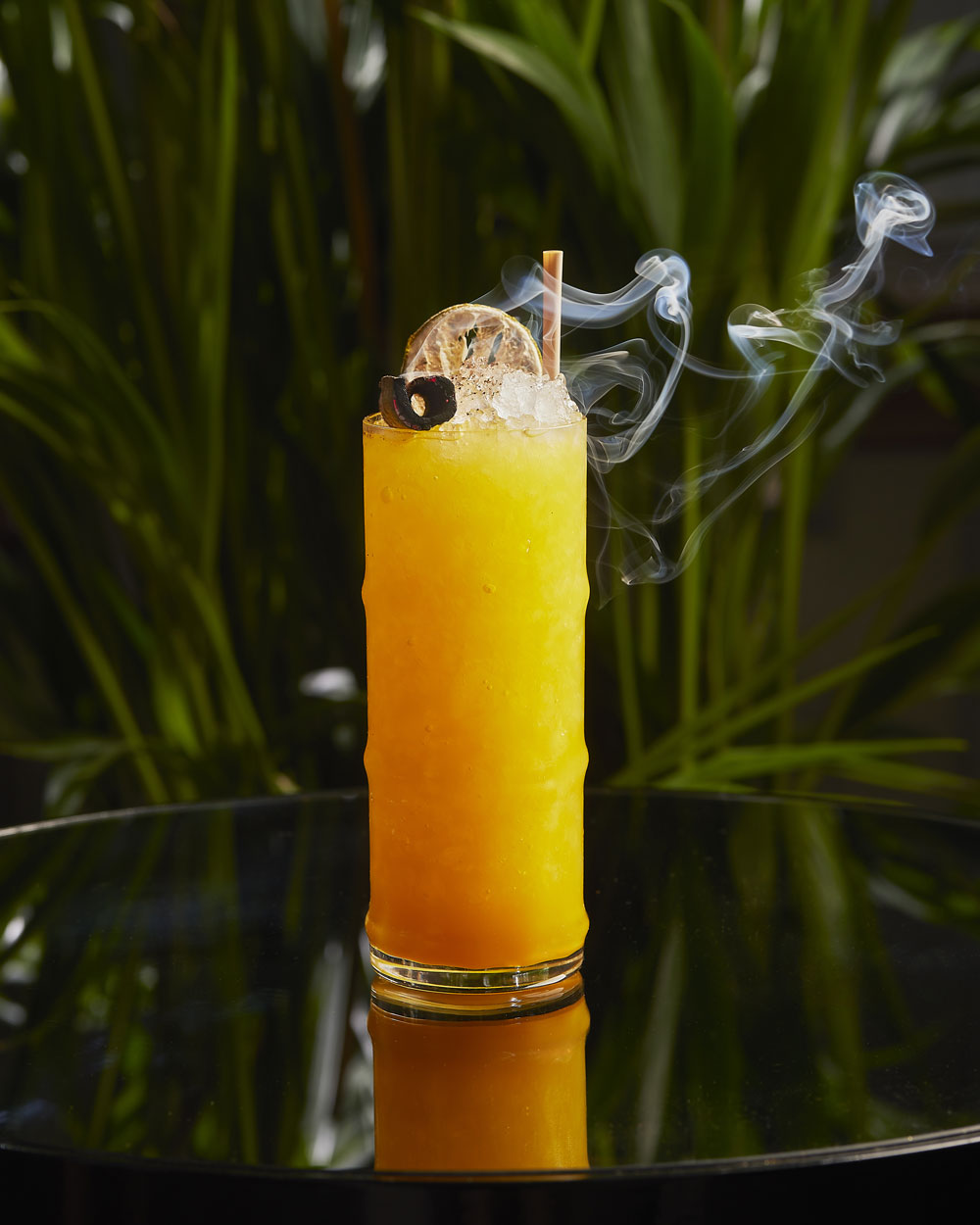
Anaconda Vodoo
There’s the Anaconda Voodoo, a fruity, boozy grog honoring the Rio Grande and Amazonian Forest with a mix of Altamura Distilleries vodka, a bit of cachaça and rum, all infused with carob and topped up with a mix of cantaloupe, melon, lime and mango.
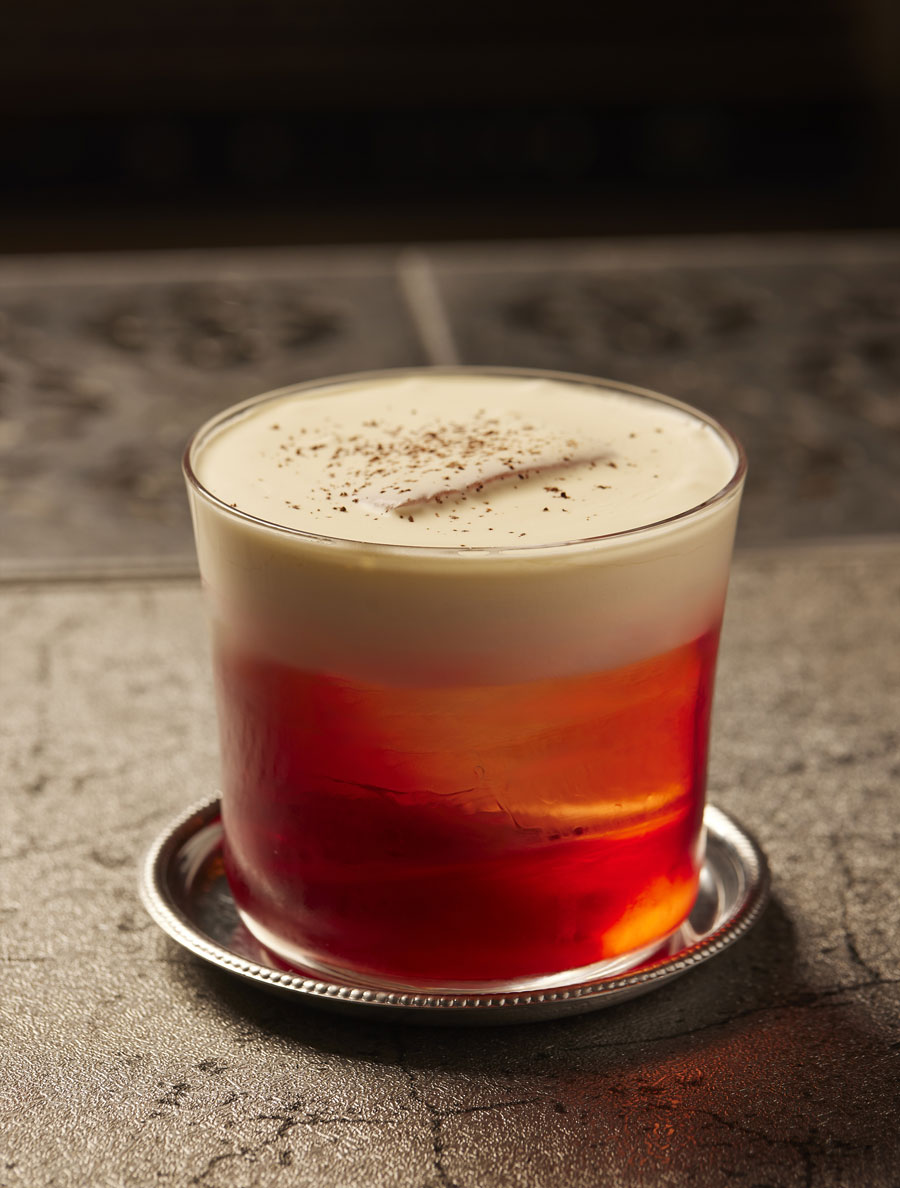
Fløde
There’s the Fløde (cream in Danish) – Damiano’s homage to his adopted home. Here he transforms the American Old Fashioned into Denmark’s favorite dessert, rødgrød med fløde (red berries with cream). Danish whiskey is cut with some bourbon and Irish whiskey, then infused with homegrown strawberries then layered with local cream.
Eclipse
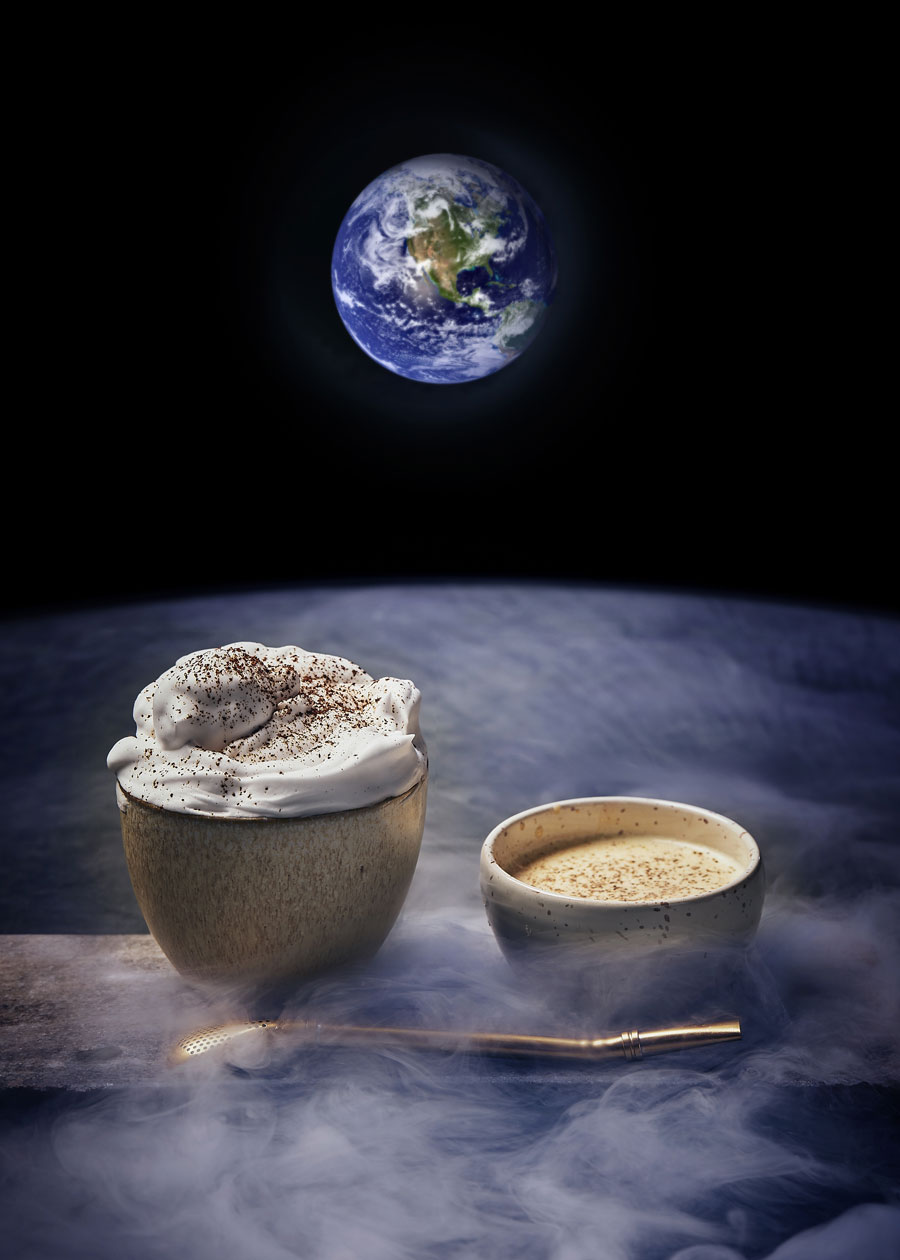
And then there’s the Eclipse, boldly going where no man has before and Damiano’s proudest creation. Inspired by travel to the moon, this cognac-based cocktail is both hot-and-cold and crafted from hotel leftovers – croissant, butter, and coffee. Two drinks appear, both made from the same recipe, but mysteriously, their texture is not the same. One represents the dark side of the moon – cold and mysterious, the other the bright side – warm and comforting.
“The Nimb Bar is the social hub of the hotel, where for a little moment you leave your problems and daily struggles at the entrance, to relax and become part of the true soul of the hotel, his workers and his guests.”
Ilias Giannoulis, Floor Manager
Each sip is a journey, a story, a fairy tale experience, surely what Georg Carstensen would have in mind. The magic begins from the moment a guest arrives at the Nimb Bar which sits at the heart of the Nimb Hotel in the heart of Tivoli Gardens in the heart of Denmark’s capital city. How does it end, you may ask, why, happily ever after of course!
Damiano and his team took their cue from the garden itself for their most recent menu – an invitation to travel without going anywhere. In the 19th century, when few people could travel far, Carstensen brought the world to them. So they took this as a challenge to do the same – crafting The Cocktail Atlas, eighteen iconic destinations you can visit without ever leaving the bar. Hints of those destinations appear in the accompanying drawings and the story of each cocktail is revealed when the drink is served.
“The hotel bar is the silent, beating heart of the establishment. Here, behind the bar counter, the bartender is both historian and healer, offering not just a drink, but a bespoke story for the soul, and transforming the day’s scattered stress into a steady, sip by sip calm.”
Alex Gkountopoulous, Assistant Bar Manager
Anaconda Vodoo
There’s the Anaconda Voodoo, a fruity, boozy grog honoring the Rio Grande and Amazonian Forest with a mix of Altamura Distilleries vodka, a bit of cachaça and rum, all infused with carob and topped up with a mix of cantaloupe, melon, lime and mango.
Fløde
There’s the Fløde (cream in Danish) – Damiano’s homage to his adopted home. Here he transforms the American Old Fashioned into Denmark’s favorite dessert, rødgrød med fløde (red berries with cream). Danish whiskey is cut with some bourbon and Irish whiskey, then infused with homegrown strawberries then layered with local cream.
Eclipse
And then there’s the Eclipse, boldly going where no man has before and Damiano’s proudest creation. Inspired by travel to the moon, this cognac-based cocktail is both hot-and-cold and crafted from hotel leftovers – croissant, butter, and coffee. Two drinks appear, both made from the same recipe, but mysteriously, their texture is not the same. One represents the dark side of the moon – cold and mysterious, the other the bright side – warm and comforting.
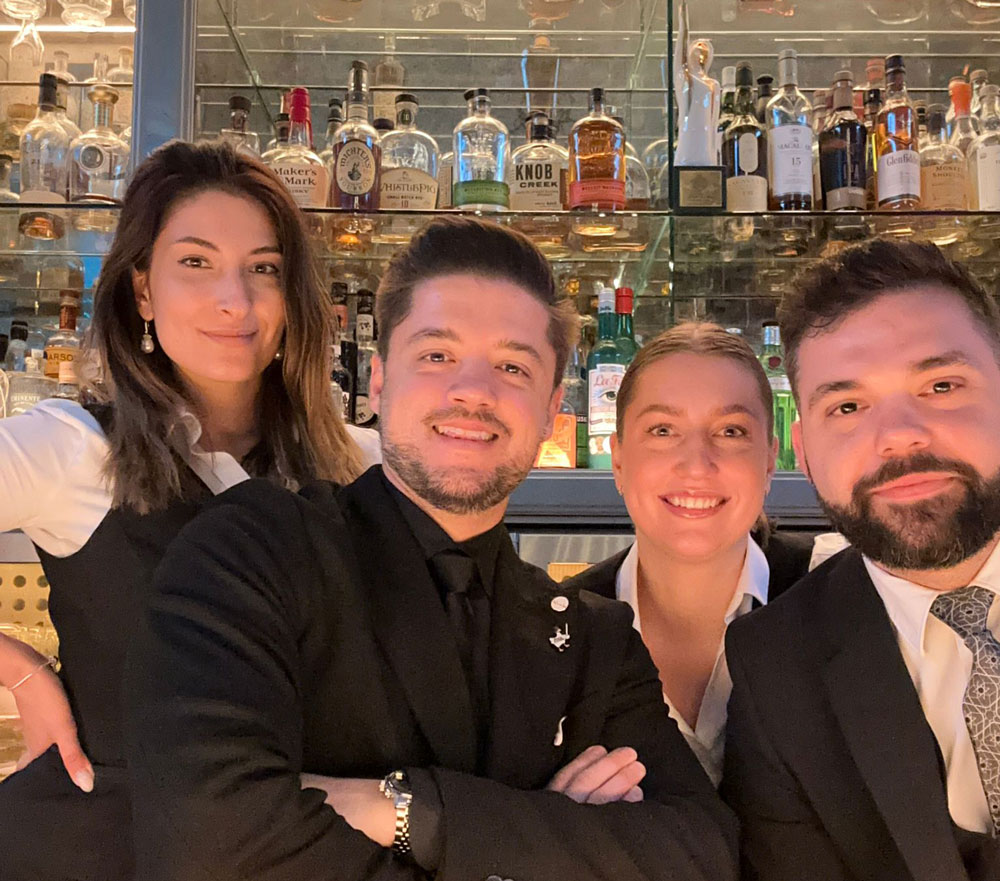
Nimb Bar Team
From left to right: Effrosyni Drakouli, Waitress; Damiano Pezzi, Director of Mixology; Enrika Akilanaite, Bartender; and Ilias Giannoulis, Floor Manager.
The Nimb Bar is the social hub of the hotel, where for a little moment you leave your problems and daily struggles at the entrance, to relax and become part of the true soul of the hotel, his workers and his guests.
Ilias Giannoulis, Floor ManageR
Each sip is a journey, a story, a fairy tale experience, surely what Georg Carstensen would have in mind. The magic begins from the moment a guest arrives at the Nimb Bar which sits at the heart of the Nimb Hotel in the heart of Tivoli Gardens in the heart of Denmark’s capital city. How does it end, you may ask, why, happily ever after of course!
Nimb Bar Team
From left to right: Effrosyni Drakouli, Waitress; Damiano Pezzi, Director of Mixology; Enrika Akilanaite, Bartender; and Ilias Giannoulis, Floor Manager.

Susan L. Schwartz
Susan L. Schwartz is the award-winning creator of A Lush Life Manual and host of the Lush Life Podcast. She writes widely on drinks and travel, leads London and Venice Cocktail Tours, and has been recognised with multiple industry awards.

Carousel Bar history: 75+ years of cocktails with a spin
75+ years of cocktails with a spin
75+ years of cocktails with a spin
Carousel Bar history
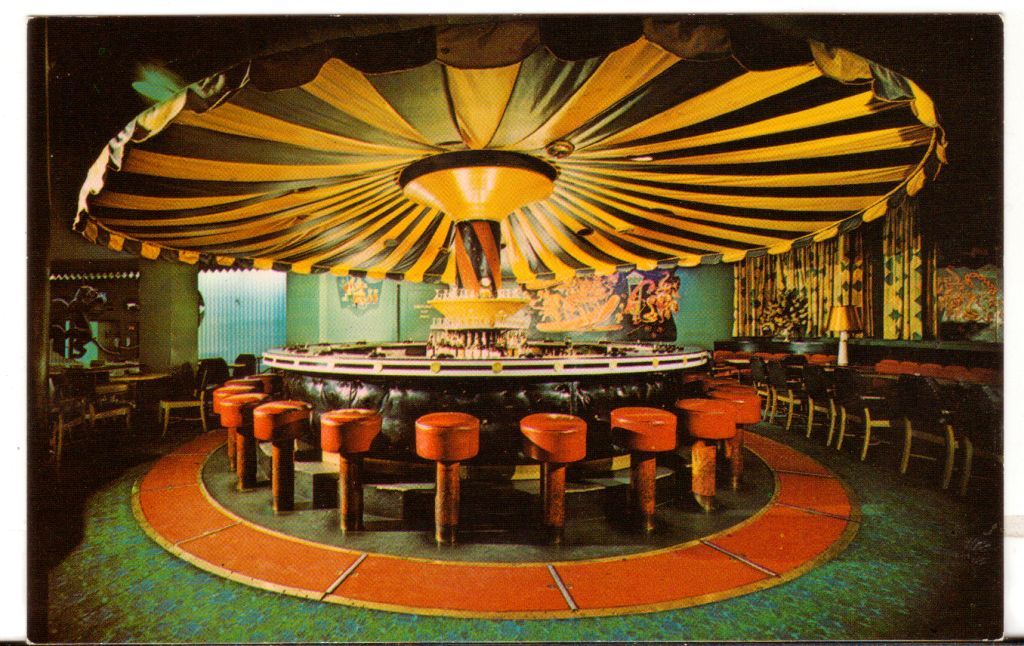
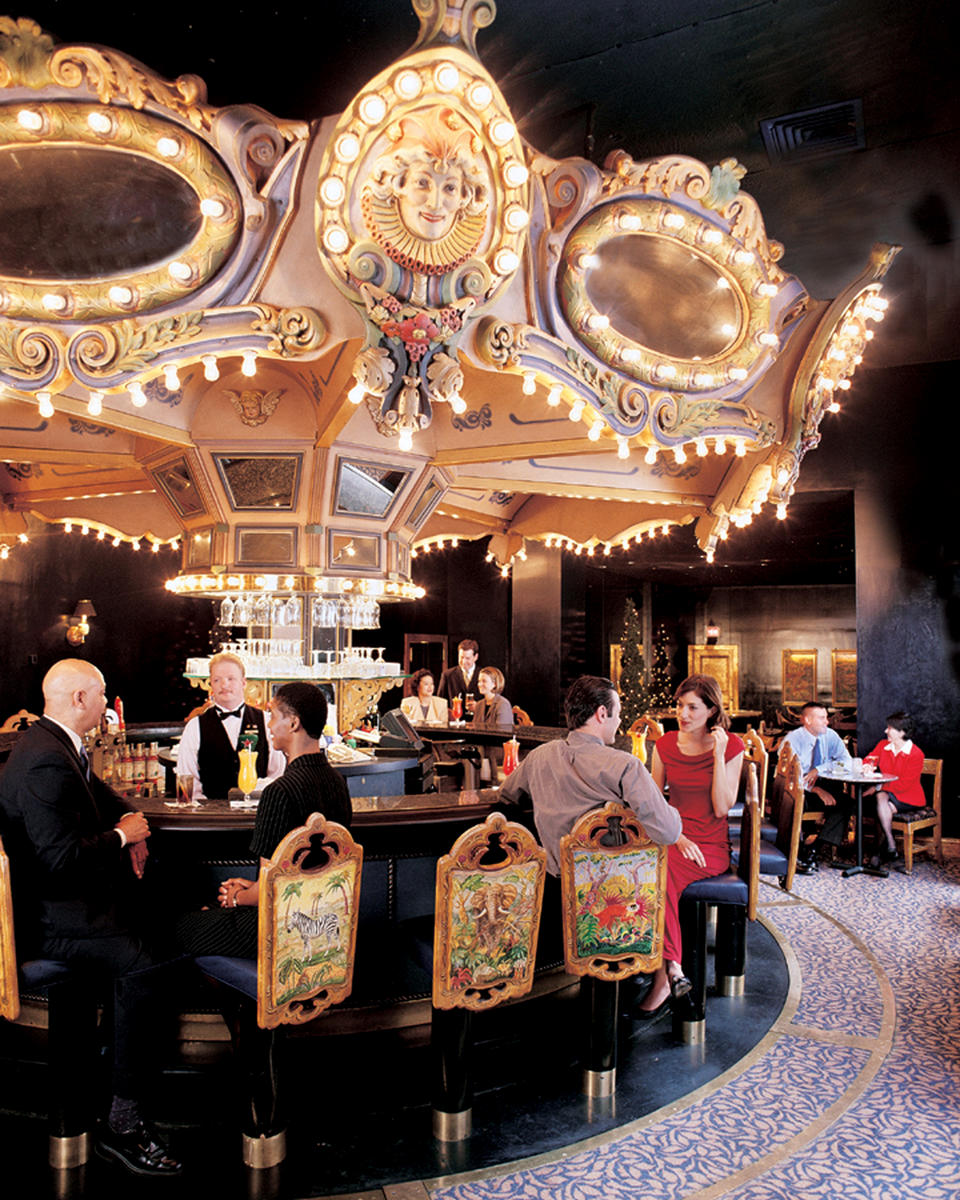
It’s the only carousel you have to be 21+ to ride—if you’re lucky enough to grab one of its 25 seats. The Carousel Bar in Hotel Monteleone has been delighting visitors to New Orleans with its famous revolving bar since 1949.
But the history of the Carousel Bar actually began a decade prior.
Carousel Bar history
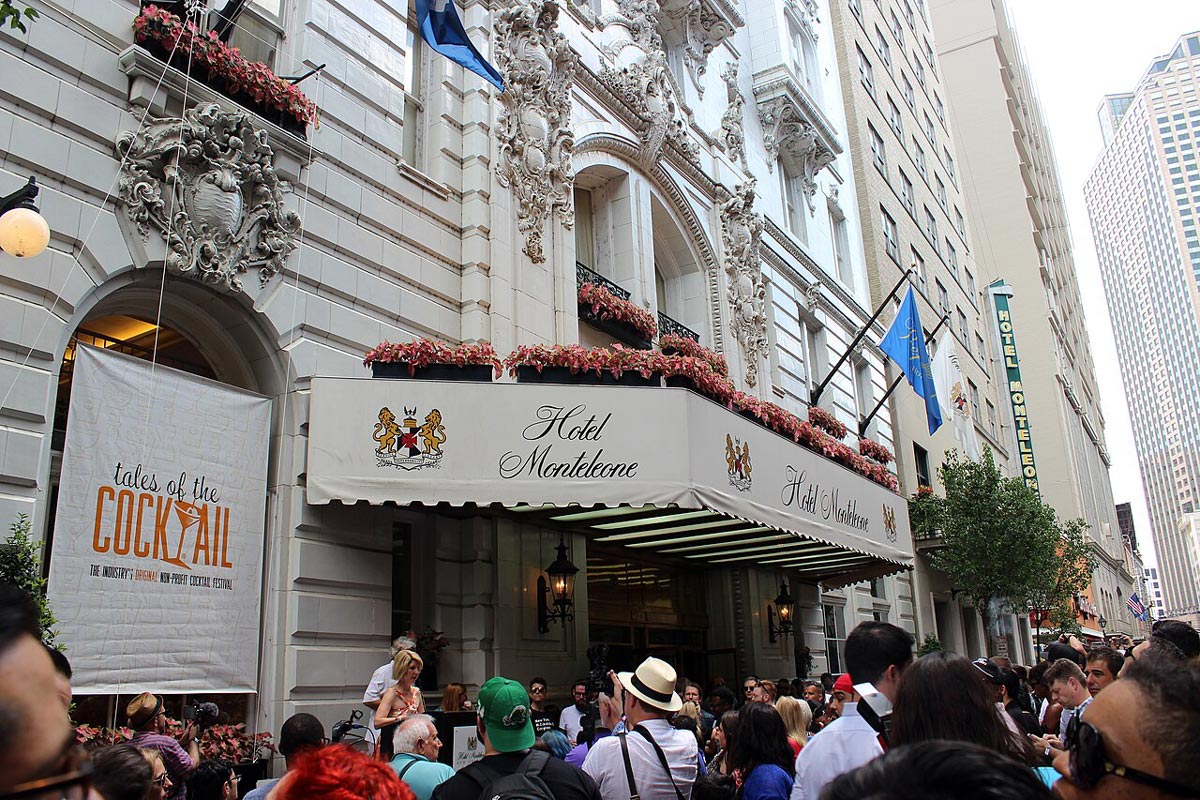
It’s the only carousel you have to be 21+ to ride—if you’re lucky enough to grab one of its 25 seats. The Carousel Bar in Hotel Monteleone has been delighting visitors to New Orleans with its famous revolving bar since 1949.
But the history of the Carousel Bar actually began a decade prior.
From the Swan Room to circling seats
Before the spinning bar in New Orleans turned its first circle, the Monteleone was already a hot spot. The Swan Room, a swanky supper club opened in 1938, hosted performers like Liberace and Andy Griffith and drew New Orleans society. Like the Waldorf Astoria’s Peacock Alley, Hotel Monteleone’s Swan Room was a place to see and be seen.
A decade later, the hotel unveiled a bar that redefined spectacle: 25 stools circling slowly on 2,000 steel rollers powered by a quarter-horsepower motor. Built adjacent to the Swan Room, the Carousel Bar was designed to look like a whimsical carnival ride, with a red-and-white striped canopy and stools that carried guests in a slow circle around the room (one rotation every 15 minutes).
The effect was equal parts playful and glamorous, an amusement-park ride recast for grown-ups, where cocktails replaced cotton candy and the slow spin of the stools made even an ordinary drink feel like part of the show.
From the Swan Room to circling seats
Before the spinning bar in New Orleans turned its first circle, the Monteleone was already a hot spot. The Swan Room, a swanky supper club opened in 1938, hosted performers like Liberace and Andy Griffith and drew New Orleans society. Like the Waldorf Astoria’s Peacock Alley, Hotel Monteleone’s Swan Room was a place to see and be seen.
A decade later, the hotel unveiled a bar that redefined spectacle: 25 stools circling slowly on 2,000 steel rollers powered by a quarter-horsepower motor. Built adjacent to the Swan Room, the Carousel Bar was designed to look like a whimsical carnival ride, with a red-and-white striped canopy and stools that carried guests in a slow circle around the room (one rotation every 15 minutes).
The effect was equal parts playful and glamorous, an amusement-park ride recast for grown-ups, where cocktails replaced cotton candy and the slow spin of the stools made even an ordinary drink feel like part of the show.
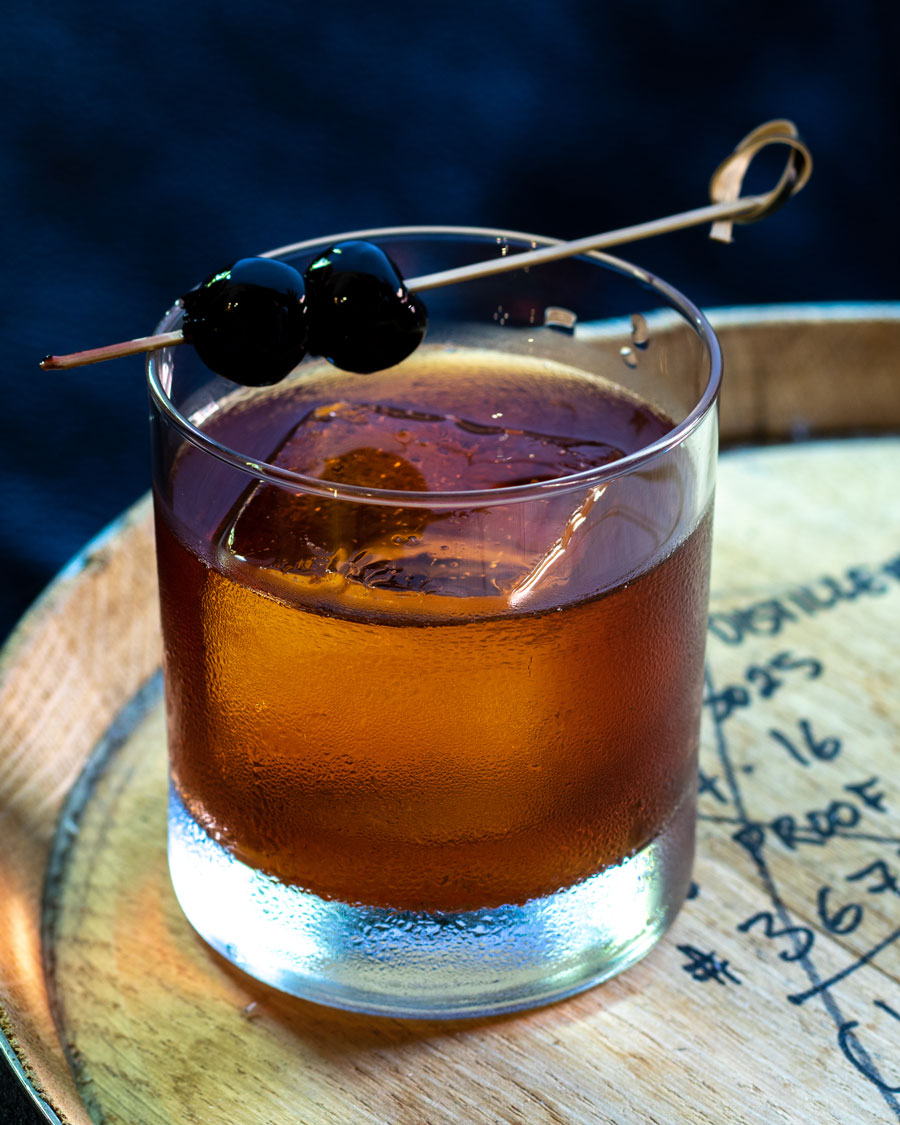
Signature sips from Carousel Bar history
Every legendary bar has a drink (or two) it calls its own. At the Carousel, that starts with the Vieux Carré, created in the 1930s by the Monteleone’s head bartender Walter Bergeron.
Inspired by the French Quarter’s cultural mix, it blends rye whiskey, cognac, sweet vermouth, Bénédictine, and bitters—a cocktail that tastes like New Orleans history in a glass. While Bergeron invented the Vieux Carré before the Carousel Bar was born, patrons still consider it to be home to the strong, spirit-forward cocktail.
The Carousel has also given the world The Goody, a rum-and-citrus concoction from the 1950s, while pouring countless Sazeracs and Ramos Gin Fizzes (classics that keep the Crescent City’s cocktail culture spinning).
Even Britain’s royals have made their mark. The American Bar served the beverages at Queen Elizabeth II’s 1953 coronation ball at The Savoy, and for her Diamond Jubilee in 2012, bartenders filled an entire fountain with celebratory punch.
Signature sips from Carousel Bar history
Every legendary bar has a drink (or two) it calls its own. At the Carousel, that starts with the Vieux Carré, created in the 1930s by the Monteleone’s head bartender Walter Bergeron.
Inspired by the French Quarter’s cultural mix, it blends rye whiskey, cognac, sweet vermouth, Bénédictine, and bitters—a cocktail that tastes like New Orleans history in a glass. While Bergeron invented the Vieux Carré before the Carousel Bar was born, patrons still consider it to be home to the strong, spirit-forward cocktail.
The Carousel has also given the world The Goody, a rum-and-citrus concoction from the 1950s, while pouring countless Sazeracs and Ramos Gin Fizzes (classics that keep the Crescent City’s cocktail culture spinning).
Even Britain’s royals have made their mark. The American Bar served the beverages at Queen Elizabeth II’s 1953 coronation ball at The Savoy, and for her Diamond Jubilee in 2012, bartenders filled an entire fountain with celebratory punch.
Behind the Carousel Bar
Working here takes athleticism. As longtime bar manager Marvin Allen explains: “Once you get used to it and know the guests are spinning around you, it’s no different than a regular bar. The biggest challenge is getting in and out, which you have to jump over”. There’s no entrance or exit to the bar, so bartenders literally vault the bar to start their shift. According to Allen, when you can’t make the jump, it’s time to retire.
How to get a seat at the Carousel Bar
If you’re looking to live a piece of the Carousel Bar’s history, you’ll have to plan strategically. With only 25 stools circling the famous rotating bar, seats are some of the most coveted in the French Quarter. Here’s how to up your chances:
- Arrive early: The Carousel Bar opens at 11:00 AM, and this is your best shot at grabbing a stool before the crowd sets in.
- Aim for the lull: Mid-afternoon (around 2:00–4:00 PM) is usually quieter than evenings or weekends.
- Be patient: Once guests land a carousel seat, they often stay for hours, so expect to wait.
If the stools are full, the adjoining lounge offers booths, tables, and nightly piano music. You’ll still get the Carousel atmosphere—just without the spin.
How to get a seat at the Carousel Bar
If you’re looking to live a piece of the Carousel Bar’s history, you’ll have to plan strategically. With only 25 stools circling the famous rotating bar, seats are some of the most coveted in the French Quarter. Here’s how to up your chances:
- Arrive early: The Carousel Bar opens at 11:00 AM, and this is your best shot at grabbing a stool before the crowd sets in.
- Aim for the lull: Mid-afternoon (around 2:00–4:00 PM) is usually quieter than evenings or weekends.
- Be patient: Once guests land a carousel seat, they often stay for hours, so expect to wait.
If the stools are full, the adjoining lounge offers booths, tables, and nightly piano music. You’ll still get the Carousel atmosphere—just without the spin.
The Carousel’s ongoing reinvention and lasting legacy
The Carousel has reinvented itself several times throughout the years without losing its magic. In 1992, management replaced the carousel’s circus-tent design with a central hub that more closely resembles a traditional carousel, adorned with carved jesters and lit by a fiber-optic ‘night sky’.
Another major renovation in 2011 expanded the lounge with a chandeliered ceiling and new color scheme, while keeping the iconic carousel intact. Through it all, the ride has kept turning—slow enough to savor your drink, quick enough to remind you this isn’t just a bar, it’s an experience.
“When I started here, the Carousel was an icon, but it wasn’t the worldwide icon that it is now. People rediscovered us and made it the destination bar that it is, for locals and for worldwide visitors.”
Marvin Allen – Bar Manager
The Carousel’s ongoing reinvention and lasting legacy
The Carousel has reinvented itself several times throughout the years without losing its magic. In 1992, management replaced the carousel’s circus-tent design with a central hub that more closely resembles a traditional carousel, adorned with carved jesters and lit by a fiber-optic ‘night sky’.
Another major renovation in 2011 expanded the lounge with a chandeliered ceiling and new color scheme, while keeping the iconic carousel intact. Through it all, the ride has kept turning—slow enough to savor your drink, quick enough to remind you this isn’t just a bar, it’s an experience.
“When I started here, the Carousel was an icon, but it wasn’t the worldwide icon that it is now. People rediscovered us and made it the destination bar that it is, for locals and for worldwide visitors.”
Marvin Allen – Bar Manager
Nicole Bump
Nicole is a seasoned content strategist and writer with 15+ years of experience turning complex ideas into compelling stories. As founder of Bump Inbound, she helps brands connect with audiences through thoughtful strategy, sharp planning, and standout writing.
Photo Credits
Wikimedia Commons
Will Shenton
Chris.j.cook
COLOURPICTURE PUBLISHERS INC.
The Heart of the Hotel: Hilton Stucky Molino Venice
Hilton Stucky Molino Venice
This year, in association with Altamura Distilleries, I’ll be exploring some of the world’s most legendary bars—uncovering what makes them the beating heart of the hotel. Our next stop is Venice!
Episode #4
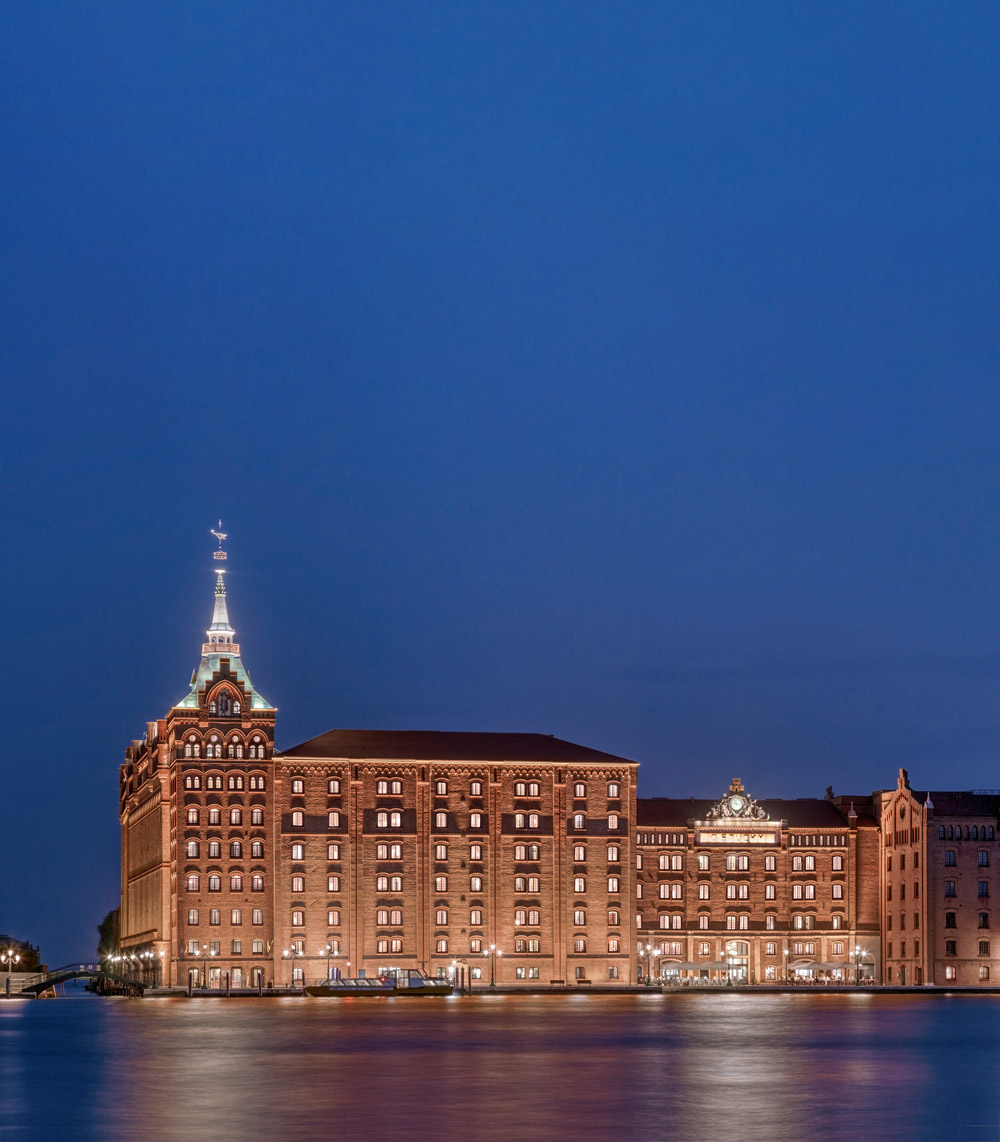
There are very few places in Venice where you can follow the sun’s entire journey from dawn to dusk. The Skyline Bar, way up on the ninth floor of the Hilton Molino Stucky, is one of those. Every day without fail, the sun awakens in the East over the Basilica of San Pietro di Castello (the city’s first official cathedral until 1807). Then it slowly waves goodbye to the lagoon as it disappears over the mainland’s western shores. All of which you can experience from this ethereal aerie.
Hilton Stucky Molino Venice
There are very few places in Venice where you can follow the sun’s entire journey from dawn to dusk. The Skyline Bar, way up on the ninth floor of the Hilton Molino Stucky, is one of those. Every day without fail, the sun awakens in the East over the Basilica of San Pietro di Castello (the city’s first official cathedral until 1807). Then it slowly waves goodbye to the lagoon as it disappears over the mainland’s western shores. All of which you can experience from this ethereal aerie.
It’s no wonder that the bar’s visionary manager, Valentina Mircea, came to ask herself when creating her first signature cocktail menu: how does this spectacular sky taste?
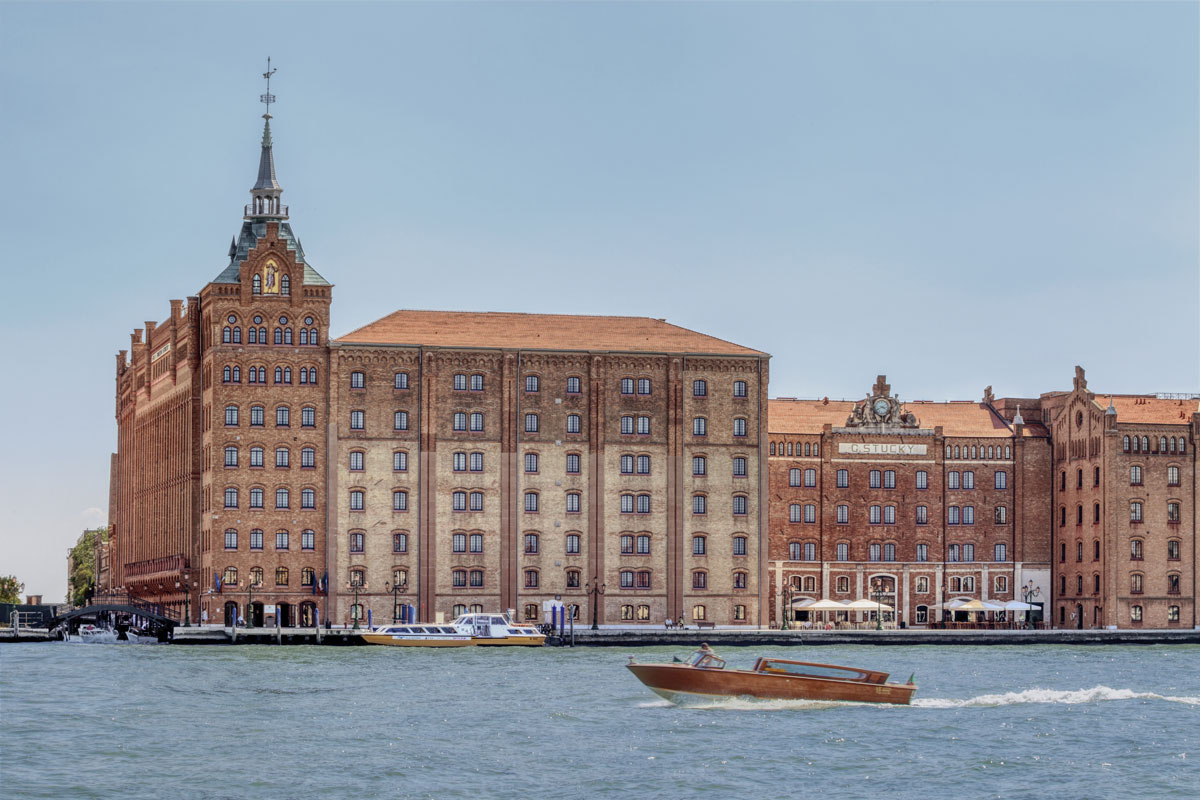
People usually come to Venice to be surrounded by the marvelous Gothic, Renaissance and Baroque palaces that line the Grand Canal. It’s not often that the first stop is the 19th century, brooding, former flour mill found on the neighboring island of Giudecca.
This wonder of industrial design with its state-of-the-art machines once cranking out 50 tons of flour daily was the brain child of Venetian born Giovanni Stucky. By 1895, Giovanni had carved out a slice of Guidecca with a complex of over ten buildings and more than 1500 workers producing enough Super Stucky Pasta to feed the nation. Sadly it ceased operations in 1955 and the factory lay abandoned for decades.
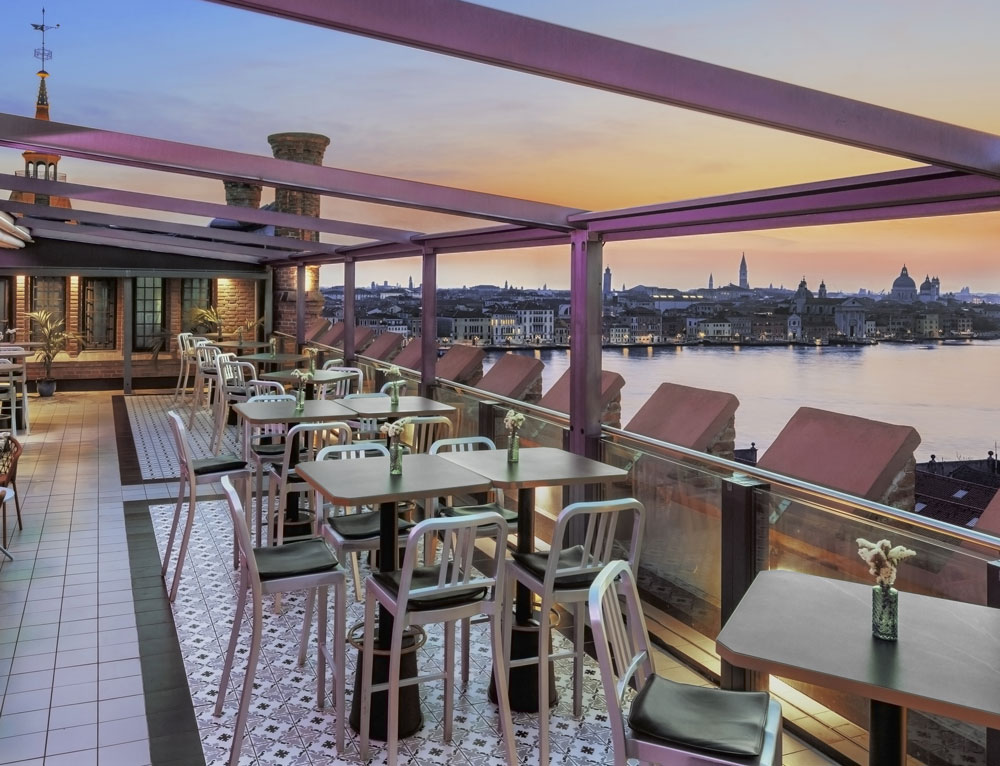
When it did reopen as the Hilton Molino Stucky hotel in 2007, the Skyline Bar did not yet exist. A ceiling had to be made with a retractable roof and glass panels for windows, all to showcase its incredible setting. Tables look out in all directions with the sky open above them. There is not a bad seat in the house.
Which brings us back to Valentina asking herself: how do I distill this marvelous view into the individual cocktails that will make up my menu – The Skies of Venice?
Valentina wanted each drink to mirror a shade of the Venetian sky, as well as have “a touch of wonder, a dash of playfulness, and, of course, sustainability at its heart.” With this set of instructions, she and her team created a collection of cocktails as captivating as the cielo veneziano.
It’s no wonder that the bar’s visionary manager, Valentina Mircea, came to ask herself when creating her first signature cocktail menu: how does this spectacular sky taste?
People usually come to Venice to be surrounded by the marvelous Gothic, Renaissance and Baroque palaces that line the Grand Canal. It’s not often that the first stop is the 19th century, brooding, former flour mill found on the neighboring island of Giudecca.
This wonder of industrial design with its state-of-the-art machines once cranking out 50 tons of flour daily was the brain child of Venetian born Giovanni Stucky. By 1895, Giovanni had carved out a slice of Guidecca with a complex of over ten buildings and more than 1500 workers producing enough Super Stucky Pasta to feed the nation. Sadly it ceased operations in 1955 and the factory lay abandoned for decades.
When it did reopen as the Hilton Molino Stucky hotel in 2007, the Skyline Bar did not yet exist. A ceiling had to be made with a retractable roof and glass panels for windows, all to showcase its incredible setting. Tables look out in all directions with the sky open above them. There is not a bad seat in the house.
Which brings us back to Valentina asking herself: how do I distill this marvelous view into the individual cocktails that will make up my menu – The Skies of Venice?
Valentina wanted each drink to mirror a shade of the Venetian sky, as well as have “a touch of wonder, a dash of playfulness, and, of course, sustainability at its heart.” With this set of instructions, she and her team created a collection of cocktails as captivating as the cielo veneziano.
“To me, the bar is the heart of the hotel — it’s where I see life happen in real time. Every cocktail, every conversation, every smile reminds me why I fell in love with hospitality. This is where emotion meets artistry.”
Valentina Mircea, Skyline Bar Manager
Venetian Lagoon
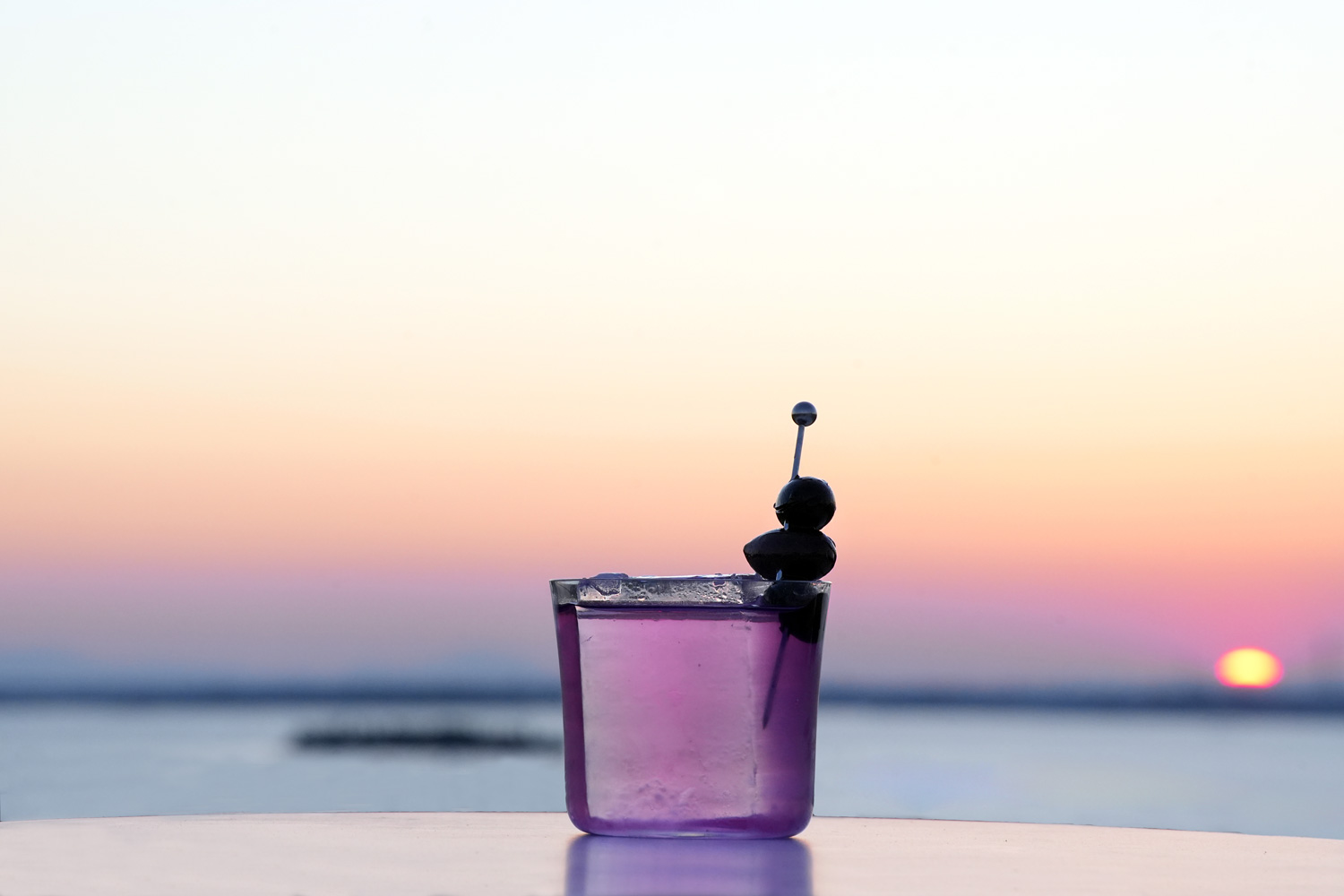
Joining Valentina were team members Alan Cesco and Arselinda Lugjaj in capturing that elusive time of day when the Venetian sky suddenly turns purple. This haunting hue happens only twice a day; first when the city is slowly awakened by the sun and when waves of purple run through the clouds bidding the sun good-night.
To Valentina, this fleeting moment was both savory and serene, reminding her of the Kalamata olives she nibbled on during childhood summers spent in Greece. Inspired by this memory and the love of her favorite cocktail, the Negroni, she and her team built the Venetian Lagoon.
They began with local Gin dei Sospiri, distilled with samphire and other botanicals found in the lagoon, added Luxardo Bianco to provide balance, and two vermouths, Lillet and Noilly Prat. To find the distinctive color they were searching for, they infused it all with purple cabbage. The result was pure Venice in violet!
Venetian Lagoon
Joining Valentina were team members Alan Cesco and Arselinda Lugjaj in capturing that elusive time of day when the Venetian sky suddenly turns purple. This haunting hue happens only twice a day; first when the city is slowly awakened by the sun and when waves of purple run through the clouds bidding the sun good-night.
To Valentina, this fleeting moment was both savory and serene, reminding her of the Kalamata olives she nibbled on during childhood summers spent in Greece. Inspired by this memory and the love of her favorite cocktail, the Negroni, she and her team built the Venetian Lagoon.
They began with local Gin dei Sospiri, distilled with samphire and other botanicals found in the lagoon, added Luxardo Bianco to provide balance, and two vermouths, Lillet and Noilly Prat. To find the distinctive color they were searching for, they infused it all with purple cabbage. The result was pure Venice in violet!
The bar is a natural meeting place. It’s where people are most likely to reveal who they truly are. Encounters between guests from all corners of the world happen every day, creating a unique space for connection. Here, customers feel pampered, and the bar can even feel a bit like their own living room. Bartenders and waiters often become the people guests confide in, sharing stories, plans, and thoughts. In many ways, we act a little like therapists—listening, engaging, and creating memorable human moments.
Alan Cesco, Head Bartender
Crimson Flame
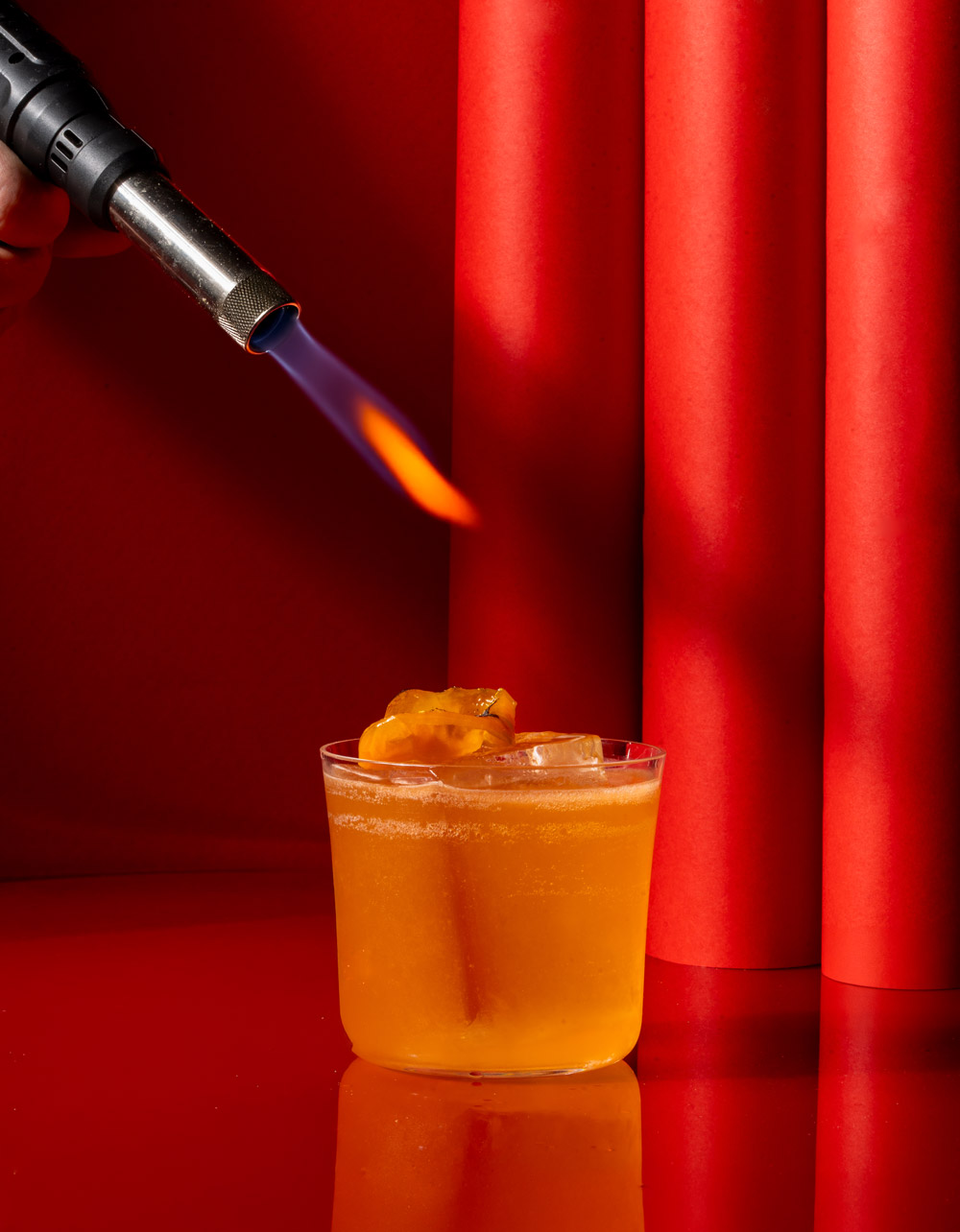
For the Crimson Flame, Arselinda was seduced by the midday sun – red hot and burning bright. Not a surprise, given that her hair is also as scarlet as the fiery ingredient she wanted to explore – pepper. Her goal was to reveal its hidden sweetness, mixing two Havana Rums, a 3 year-old with its fresh, fruity notes and the richness of the 7 year old dark rum, matured in ex-Bourbon barrels.
She also added a touch of passion fruit and freshly squeezed orange juice, plus the all important pepper syrup, made in house to extract its natural sweetness, not its usual spiciness. Still if it is a bite you are looking for, you can have a choice of garnish – a caldo candied pepper or keep it sweet with the dolce orange candy.
“In my opinion, the bar is the heart of the hotel because it’s where everything comes together. Guests relax, chat, and enjoy the view and atmosphere. You can feel the energy of the place—the service, the cocktails, the music, the team’s smiles—all of it contributes to a memorable experience. In a way, the soul of the hotel begins at the bar, because it’s where people immediately feel at ease.”
Arselinda Lugjaj, Waitress
Crimson Flame
For the Crimson Flame, Arselinda was seduced by the midday sun – red hot and burning bright. Not a surprise, given that her hair is also as scarlet as the fiery ingredient she wanted to explore – pepper. Her goal was to reveal its hidden sweetness, mixing two Havana Rums, a 3 year-old with its fresh, fruity notes and the richness of the 7 year old dark rum, matured in ex-Bourbon barrels.
She also added a touch of passion fruit and freshly squeezed orange juice, plus the all important pepper syrup, made in house to extract its natural sweetness, not its usual spiciness. Still if it is a bite you are looking for, you can have a choice of garnish – a caldo candied pepper or keep it sweet with the dolce orange candy.
“In my opinion, the bar is the heart of the hotel because it’s where everything comes together. Guests relax, chat, and enjoy the view and atmosphere. You can feel the energy of the place—the service, the cocktails, the music, the team’s smiles—all of it contributes to a memorable experience. In a way, the soul of the hotel begins at the bar, because it’s where people immediately feel at ease.”
Arselinda Lugjaj, Waitress
She also added a touch of passion fruit and freshly squeezed orange juice, plus the all important pepper syrup, made in house to extract its natural sweetness, not its usual spiciness. Still if it is a bite you are looking for, you can have a choice of garnish – a caldo candied pepper or keep it sweet with the dolce orange candy.
“In my opinion, the bar is the heart of the hotel because it’s where everything comes together. Guests relax, chat, and enjoy the view and atmosphere. You can feel the energy of the place—the service, the cocktails, the music, the team’s smiles—all of it contributes to a memorable experience. In a way, the soul of the hotel begins at the bar, because it’s where people immediately feel at ease.”
Arselinda Lugjaj, Waitress
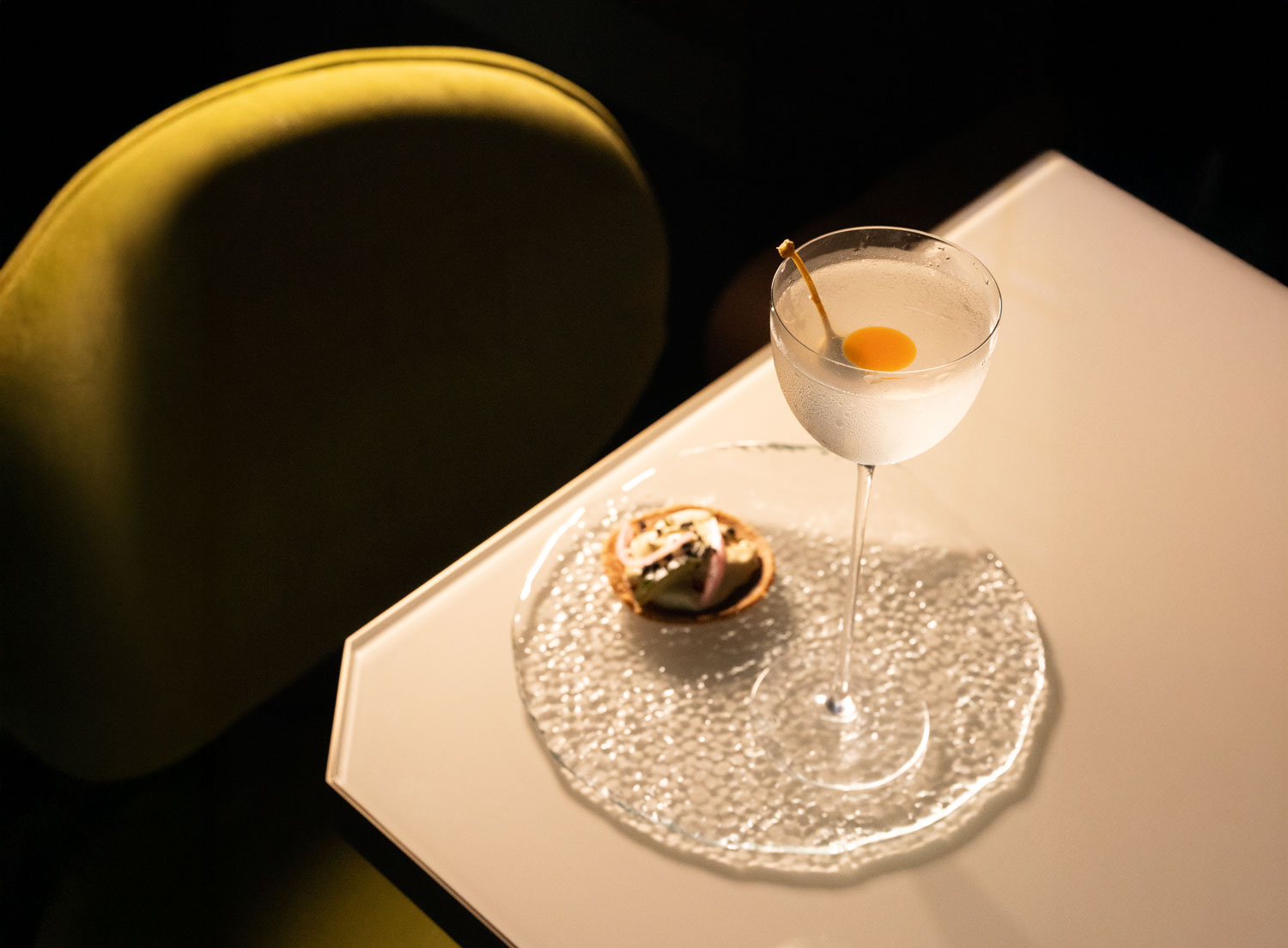
Junior bartender Bernadetta Mele created a cocktail that pulls together the entire Venice sky in one glass. It was a cocktail inspired by tradition, both Venetian and Pugliese, the region where Bernadetta was born. She chose the humble dish of Acqua Sale (water salt) as inspiration. This fisherman’s favorite is un intreccio di cucumbers, tomatoes, onions, capers, and other leftover vegetables found at home. The star of the show is stale bread, which is dipped in olive oil and salt and eaten with the above veggies.
Lilith
From that, she constructed a martini-style cocktail with Pugliese-born Altamura Distilleries Vodka as its base spirit. Then she macerated vermouth with bread which brought forward a subtle buttery flavor. She then strained the liquid and used the leftover bread as a foundation for the garnish, a very Venetian cicchetto of onion pickled with a cucumber shrub, a caper and a few drops of tomato oil.
Guests of the bar are invited to pick their favorite flavors and the team will match your palette with a color of the sky, actually not only the color – the seasons, the senses, and the sentiments. As Valentina puts it most eloquently, “What you taste is not just liquid in a glass, but our team’s passion, our stories and our bond with the guests who share the skies with us.”
Junior bartender Bernadetta Mele created a cocktail that pulls together the entire Venice sky in one glass. It was a cocktail inspired by tradition, both Venetian and Pugliese, the region where Bernadetta was born. She chose the humble dish of Acqua Sale (water salt) as inspiration. This fisherman’s favorite is un intreccio di cucumbers, tomatoes, onions, capers, and other leftover vegetables found at home. The star of the show is stale bread, which is dipped in olive oil and salt and eaten with the above veggies.
Lilith
From that, she constructed a martini-style cocktail with Pugliese-born Altamura Distilleries Vodka as its base spirit. Then she macerated vermouth with bread which brought forward a subtle buttery flavor. She then strained the liquid and used the leftover bread as a foundation for the garnish, a very Venetian cicchetto of onion pickled with a cucumber shrub, a caper and a few drops of tomato oil.
Guests of the bar are invited to pick their favorite flavors and the team will match your palette with a color of the sky, actually not only the color – the seasons, the senses, and the sentiments. As Valentina puts it most eloquently, “What you taste is not just liquid in a glass, but our team’s passion, our stories and our bond with the guests who share the skies with us.”
“The bar is where hospitality becomes human. It’s where guests are greeted, listened to, and cared for—not just served. It’s a place of connection, conversation, and shared moments. Here, the hotel’s warmth and personality come alive, and guests feel seen, welcomed, and part of something memorable.”
Diego D’Angelo, Assistant Venue Manager
Although I know that the geographical centre of Venice lies closer to the Rialto Bridge, I’d argue that its heart has moved southwest to the end of the island of Giudecca. Here with the views stretching in every direction, the skies overlooking Venice’s wondrous buildings and watery lagoon, a bar team building every cocktail like the famous architects who designed this extraordinary city, all in a former mill that once produced enough pasta to feed most of Italy – I would say those are reasons enough to call the Skyline Bar, not just the heart of the Hilton Molino Sticky, but of Venice itself.
“The bar is where hospitality becomes human. It’s where guests are greeted, listened to, and cared for—not just served. It’s a place of connection, conversation, and shared moments. Here, the hotel’s warmth and personality come alive, and guests feel seen, welcomed, and part of something memorable.”
Diego D’Angelo, Assistant Venue Manager
Although I know that the geographical centre of Venice lies closer to the Rialto Bridge, I’d argue that its heart has moved southwest to the end of the island of Giudecca. Here with the views stretching in every direction, the skies overlooking Venice’s wondrous buildings and watery lagoon, a bar team building every cocktail like the famous architects who designed this extraordinary city, all in a former mill that once produced enough pasta to feed most of Italy – I would say those are reasons enough to call the Skyline Bar, not just the heart of the Hilton Molino Sticky, but of Venice itself.
The bar is where people meet and socialise. It’s a crucible of stories, experiences, and cultures, where guests discover new tastes and try new things. It’s also where most interactions with staff happen, and where new memories are made. Guests may not remember our names or faces, but they will remember how they felt, because of the bar’s intimate and welcoming nature.
Edoardo Fraioli, Senior Bartender
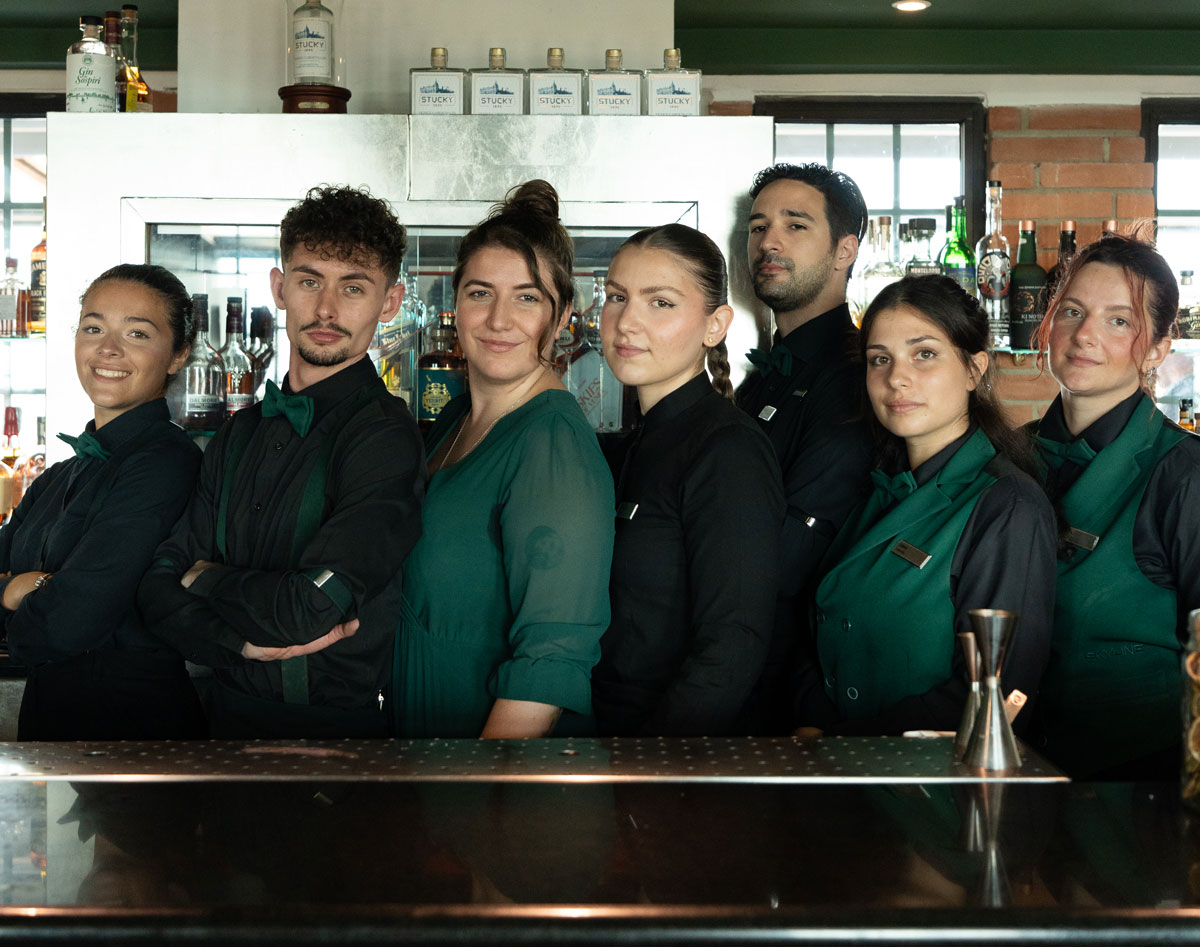
The Hilton Molino Stucky Venice Bar Team
Thank you to the whole bar team: Valentina Andrada Mircea, Bar Manager; Diego D’Angelo, Assistant Venue Manager; Alan Cescon, Head Bartender; Edoardo Fraioli, Senior Bartender; Bernardetta Mele, Junior Bartender; Mattia Latino, Host; and Arselinda Lugjaj, Waitress.
The bar is not just a place to grab a drink; but a cultural hub where people meet, share emotions, exchange ideas and celebrate everything from small wins to life’s biggest moments. Therefore, the bar makes moments to remember for its guests, and when these are paired with delicious creations and service with smile, they tend to stay for long time. And that is what we strive to do at the Skyline.
Xhuljano Nukaj, F&D Manager
The Hilton Molino Stucky Venice Bar Team
Thank you to the whole bar team: Valentina Andrada Mircea, Bar Manager; Diego D’Angelo, Assistant Venue Manager; Alan Cescon, Head Bartender; Edoardo Fraioli, Senior Bartender; Bernardetta Mele, Junior Bartender; Mattia Latino, Host; and Arselinda Lugjaj, Waitress.
The bar is not just a place to grab a drink; but a cultural hub where people meet, share emotions, exchange ideas and celebrate everything from small wins to life’s biggest moments. Therefore, the bar makes moments to remember for its guests, and when these are paired with delicious creations and service with smile, they tend to stay for long time. And that is what we strive to do at the Skyline.
Xhuljano Nukaj, F&D Manager
Susan L. Schwartz
Susan L. Schwartz is the award-winning creator of A Lush Life Manual and host of the Lush Life Podcast. She writes widely on drinks and travel, leads London and Venice Cocktail Tours, and has been recognised with multiple industry awards.

American Bar at the Savoy: Where cocktail history lives on
Where cocktail history lives on
American Bar at the Savoy
Opened around 1893, the American Bar at The Savoy Hotel London is the longest standing cocktail bar in the city. Designed to cater to audiences from the myriad nearby theaters in London’s West End, the atmosphere is very much that of a piano bar—lively, colorful, and jovial.
But the name raised eyebrows in Victorian-era London. Why “American”?
American Bar at the Savoy
Opened around 1893, the American Bar at The Savoy Hotel London is the longest standing cocktail bar in the city. Designed to cater to audiences from the myriad nearby theaters in London’s West End, the atmosphere is very much that of a piano bar—lively, colorful, and jovial.
But the name raised eyebrows in Victorian-era London. Why “American”?


At the time, the idea of mixing spirits into cocktails was still considered a brash New World invention. The Savoy leaned into the trend, importing American bartending culture, and helped London fall in love with mixed drinks.
“The “American” Bar is a stylistic term. It was putting a flagpole down, saying that this bar is a bar that’s going to serve you cocktails. We are the bar that has maintained that name since the late 19th century, making us Europe’s oldest, or, as I prefer to call us, the longest-standing [American] bar in Europe.”
Declan McGurk
Former Director of Bars at The Savoy
At the time, the idea of mixing spirits into cocktails was still considered a brash New World invention. The Savoy leaned into the trend, importing American bartending culture, and helped London fall in love with mixed drinks.
“The “American” Bar is a stylistic term. It was putting a flagpole down, saying that this bar is a bar that’s going to serve you cocktails. We are the bar that has maintained that name since the late 19th century, making us Europe’s oldest, or, as I prefer to call us, the longest-standing [American] bar in Europe.”
Declan McGurk
Former Director of Bars at The Savoy
Ada Coleman and the Hanky Panky
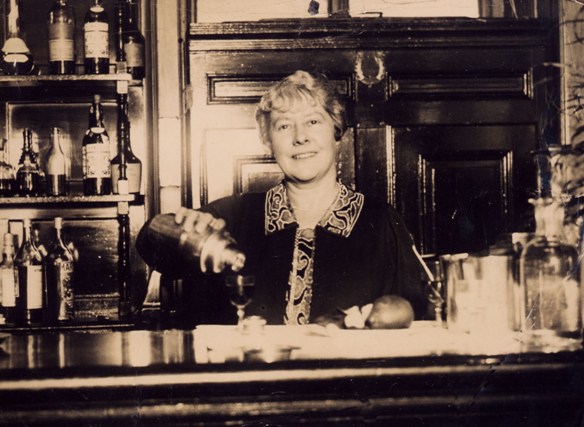
Behind the marble bar in the early 1900s stood Ada “Coley” Coleman, the first female head bartender at The Savoy. Known as a brilliant host as much as a master of her craft, she served everyone from Mark Twain to Charlie Chaplin. Her legacy is a single sip: the Hanky Panky cocktail. Created for actor Sir Charles Hawtrey, the drink combined gin, sweet vermouth, and Fernet-Branca. Hawtrey famously took a sip and exclaimed…
“By Jove, that’s the real Hanky Panky!”
A classic was born.
Ada Coleman and the Hanky Panky
Behind the marble bar in the early 1900s stood Ada “Coley” Coleman, the first female head bartender at The Savoy. Known as a brilliant host as much as a master of her craft, she served everyone from Mark Twain to Charlie Chaplin. Her legacy is a single sip: the Hanky Panky cocktail. Created for actor Sir Charles Hawtrey, the drink combined gin, sweet vermouth, and Fernet-Branca. Hawtrey famously took a sip and exclaimed…
“By Jove, that’s the real Hanky Panky!”
A classic was born.
Harry Craddock and the Savoy Cocktail Book
When Ada retired in the 1920s, she trained her successor, Henry “Harry” Craddock, to carry the torch. Fleeing Prohibition-era America, he brought showmanship and precision to the American Bar. His Savoy Cocktail Book (1930) remains one of the most important cocktail collections ever printed, with recipes for enduring classics like the White Lady, Corpse Reviver #2, and the perfectly balanced Dry Martini. Harry Craddock can also be credited with bringing the white jacket to the American Bar’s bartenders, a tradition that continues to this day. Craddock even left a little magic buried in the building. He cemented one of his cocktail shakers—full of a (formerly) fresh White Lady cocktail—into the foundations of The Savoy.

Harry Craddock and the Savoy Cocktail Book
When Ada retired in the 1920s, she trained her successor, Henry “Harry” Craddock, to carry the torch. Fleeing Prohibition-era America, he brought showmanship and precision to the American Bar. His Savoy Cocktail Book (1930) remains one of the most important cocktail collections ever printed, with recipes for enduring classics like the White Lady, Corpse Reviver #2, and the perfectly balanced Dry Martini. Harry Craddock can also be credited with bringing the white jacket to the American Bar’s bartenders, a tradition that continues to this day. Craddock even left a little magic buried in the building. He cemented one of his cocktail shakers—full of a (formerly) fresh White Lady cocktail—into the foundations of The Savoy.
A stage for icons
The American Bar has never been just about drinks. It has always been about moments, and there are many historic, cultural, and political moments of note throughout the years at The Savoy’s infamous bar.
- George Gershwin introduced Rhapsody in Blue to Britain here in 1923, a performance broadcast live on BBC radio.
- Winston Churchill revealed to friends over dinner in 1940 that he was stepping in as Prime Minister.
- Frank Sinatra visited The Savoy and the American Bar regularly, often enjoying a very cold Beefeater gin martini on the rocks with a twist of lemon.
- Neil Armstrong visited after his moon landing in 1969, prompting the creation of the Moonwalk cocktail in his honor.
Even Britain’s royals have made their mark. The American Bar served the beverages at Queen Elizabeth II’s 1953 coronation ball at The Savoy, and for her Diamond Jubilee in 2012, bartenders filled an entire fountain with celebratory punch.
A stage for icons
The American Bar has never been just about drinks. It has always been about moments, and there are many historic, cultural, and political moments of note throughout the years at The Savoy’s infamous bar.
- George Gershwin introduced Rhapsody in Blue to Britain here in 1923, a performance broadcast live on BBC radio.
- Winston Churchill revealed to friends over dinner in 1940 that he was stepping in as Prime Minister.
- Frank Sinatra visited The Savoy and the American Bar regularly, often enjoying a very cold Beefeater gin martini on the rocks with a twist of lemon.
- Neil Armstrong visited after his moon landing in 1969, prompting the creation of the Moonwalk cocktail in his honor.
Even Britain’s royals have made their mark. The American Bar served the beverages at Queen Elizabeth II’s 1953 coronation ball at The Savoy, and for her Diamond Jubilee in 2012, bartenders filled an entire fountain with celebratory punch.
“That was hard work actually. We filled up the fountain with 360 liters of Diamond Jubilee punch, as we call it. Fresh fruit, everything freshly squeezed all night long. So, we didn’t sleep all night long because we had to fill up the fountain.”
Erik Lorincz – Former Head Bartender
Reinventing tradition
From Coleman to Lorincz, each head bartender has added a new chapter to the story. Peter Dorelli—a Roman-born bartender and head of the American Bar from 1984 to 2003—became one of the most iconic figures in modern mixology. Dorelli crafted many notable cocktails, including the 1889er to celebrate the Savoy Hotel’s centenary, and the Millennium commemorating the end of the 20th century.
In 2017, under Lorincz’s care, the American Bar London was crowned The World’s Best Bar, cementing its status as both guardian of history and leader of innovation.
Today, under head bartender Angelo Sparvoli, the team continues to blend reverence for the classics with daring new creations.
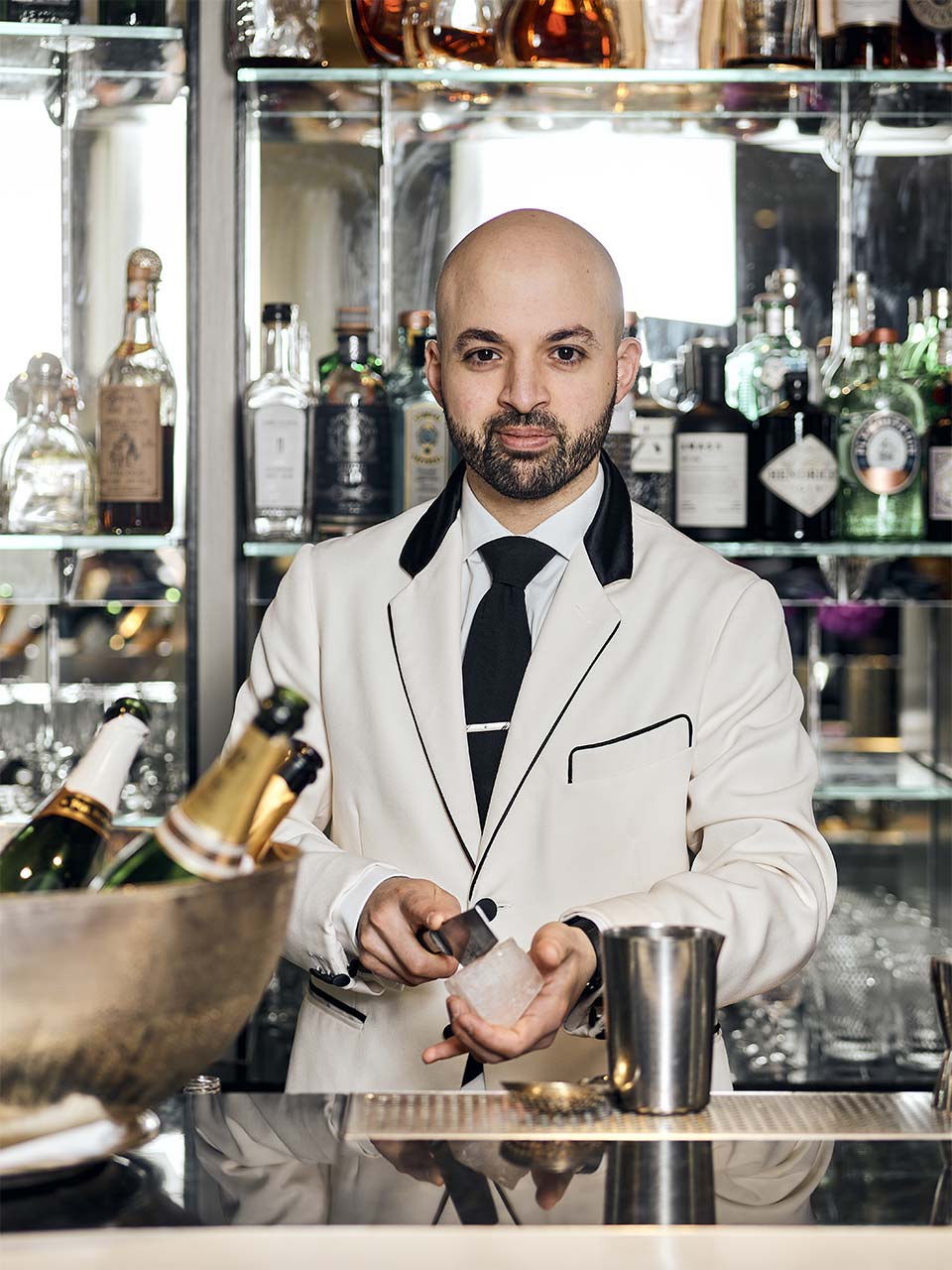
Reinventing tradition
From Coleman to Lorincz, each head bartender has added a new chapter to the story. Peter Dorelli—a Roman-born bartender and head of the American Bar from 1984 to 2003—became one of the most iconic figures in modern mixology. Dorelli crafted many notable cocktails, including the 1889er to celebrate the Savoy Hotel’s centenary, and the Millennium commemorating the end of the 20th century.
In 2017, under Lorincz’s care, the American Bar London was crowned The World’s Best Bar, cementing its status as both guardian of history and leader of innovation.
Today, under head bartender Angelo Sparvoli, the team continues to blend reverence for the classics with daring new creations.
Why the American Bar still matters
For over 135 years, the American Bar has been more than a hotel bar—it’s been a school of artistry, a stage for history, and a beacon for bartenders worldwide. Every cocktail tells a story, and every bartender who steps behind the marble counter knows they’re part of a living legacy.
“Every single day, we come to work in the bar with the greatest legacy of them all. This must provide inspiration to make our mark on this great institution, ensuring history continues to be written and guests talk about the ever-famous American Bar.”
Declan McGurk – Former Director of Bars at The Savoy
Why the American Bar still matters
For over 135 years, the American Bar has been more than a hotel bar—it’s been a school of artistry, a stage for history, and a beacon for bartenders worldwide. Every cocktail tells a story, and every bartender who steps behind the marble counter knows they’re part of a living legacy.
“Every single day, we come to work in the bar with the greatest legacy of them all. This must provide inspiration to make our mark on this great institution, ensuring history continues to be written and guests talk about the ever-famous American Bar.”
Declan McGurk – Former Director of Bars at The Savoy
Photo Credits: Savoy Media Hub, Jack Hardy, Wikimedia Commons
Nicole Bump
Nicole is a seasoned content strategist and writer with 15+ years of experience turning complex ideas into compelling stories. As founder of Bump Inbound, she helps brands connect with audiences through thoughtful strategy, sharp planning, and standout writing.
The Heart of the Hotel: 1 Hotel Mayfair
1 Hotel Mayfair
Bar is the Heart of the Hotel
This year, in association with Altamura Distilleries, I’ll be exploring some of the world’s most legendary bars—uncovering what makes them the beating heart of the hotel. Our next stop is LONDON!
Episode #3
“My Dearest Friend, I have just happened upon the most extraordinary establishment – a marvel of modernity with a touch of the outside, but inside. And the bar – oh, the bar! – serves the most contemporary of cocktails with hosts so welcoming that I found it quite impossible to tear myself away. You must visit the next time you are in London – as to omit such a delight would be quite unthinkable. Ever yours, Susan”
I can imagine that letter finding its way into a mail pouch heading west from this very corner of Berkeley Street and Piccadilly – the departure point for the coaches of the Western Mail in the 18th century. Even so, that missive hardly begins to capture what’s unfolding behind the doors of 3 Berkeley Street, London – the home of 1 Hotel Mayfair.
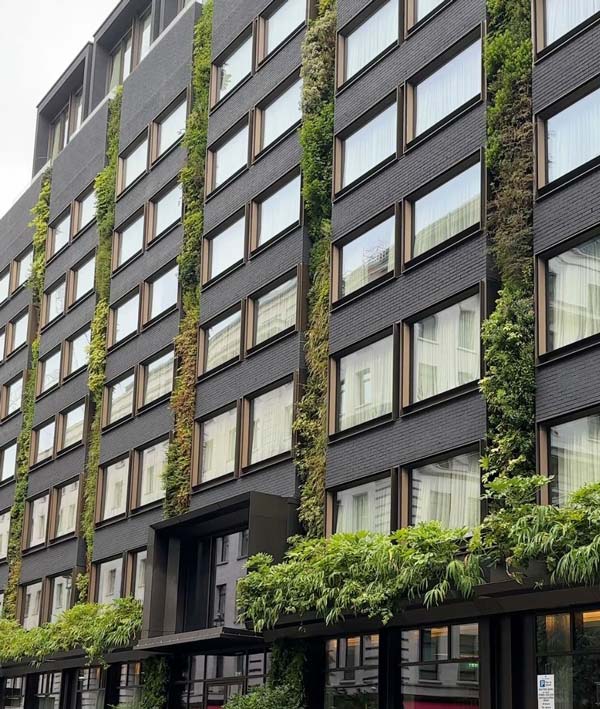
Unless you have been living under a rock, you’ll have heard that since the launch of its first property in Miami in 2015, the 1 Hotel brand has spent the past decade rewriting the rules of what a luxury hotel can be. 1 Hotel Mayfair, its first in Europe, continues that mission, proving that caring for the earth need not be an excuse.
Step inside the lobby, and you are immediately greeted by a rainforest above and a stone partition in front – a clue that you might not be in your usual city hotel. The Spanish moss-covered chandelier is actually a 4-four-meter-wide living work of art, created by Patrick Nadeau – misted daily to keep it verdant and vibrant.
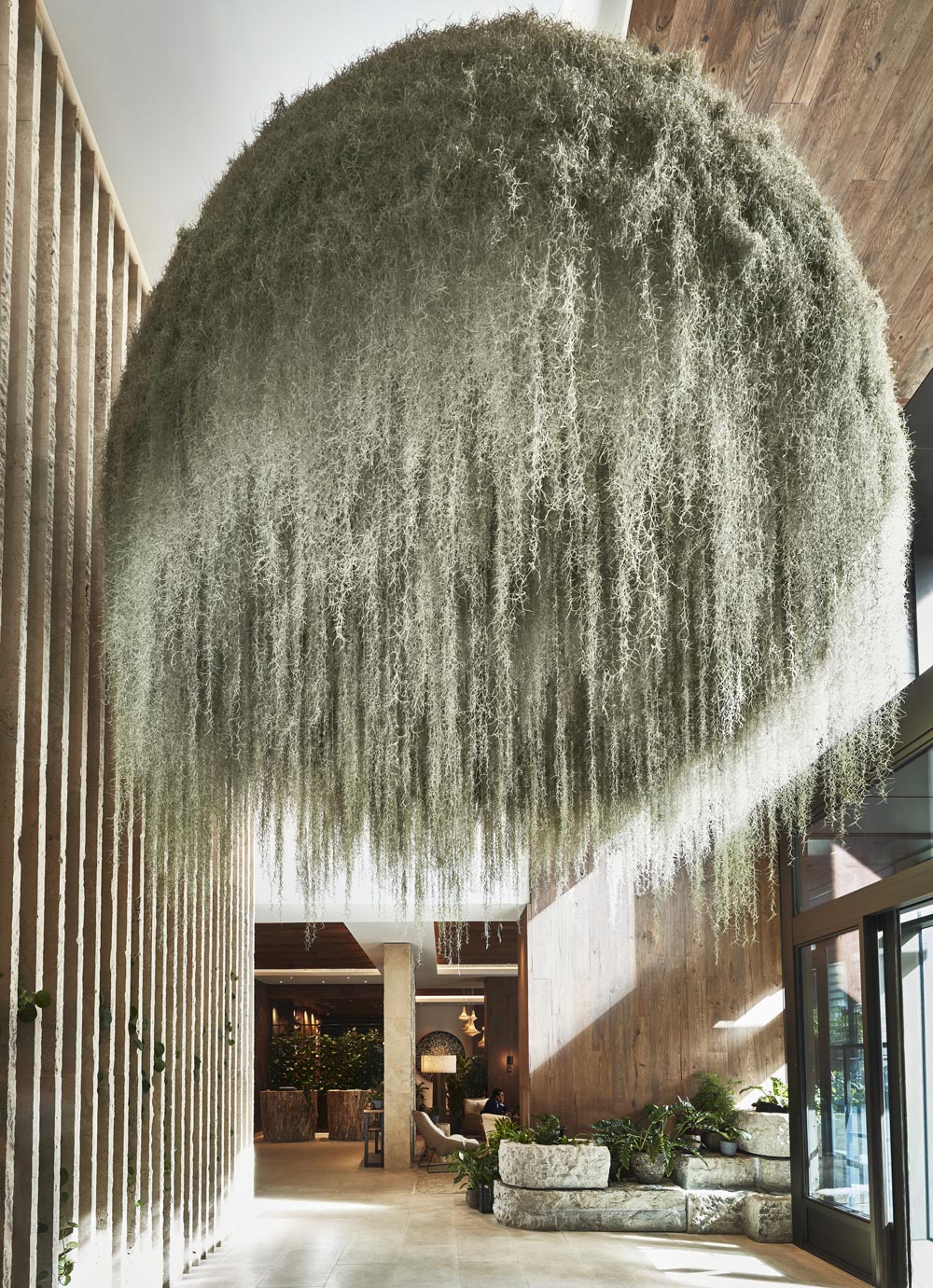
The decorative masonry, along with almost every visible stone feature, was salvaged from the former hotel. In renovating, the goal was to keep at least 80% of the original building. Even the rock you might have been living under might make an appearance here.
Sitting adjacent to reception, their bar, Dover Yard, just can’t be ignored. From its opening at 11:00 AM until late in the evening, it entices with the sounds of merriment within. Filled with the familiar elements found throughout the hotel – natural light steaming through its large windows, chic upcycled wood tables, and lush greenery – what’s happening behind the bar is truly where the hotel’s philosophy manifests in liquid form.
“The bar is where the energy flows most freely. It’s full of warmth and character but still relaxed enough for guests to truly unwind and lean into a little boozy indulgence. At Dover Yard, we make everyone feel right at home. Cozy vibes, great drinks, and just enough magic to make you want to come back for one more round (or three)”
Giulio Guarini, Director of Bars
Each cocktail is a masterpiece of reclamation and innovation. With a bar program led by Giulio Guarini, Director of Bars, it was always going to be. Before the hotel even opened, he and his team, including Bars Manager Marco Grisafi and Head Bartender Daniele Mondelli began work on a program founded on two intrinsic pillars: respecting seasonality and repurposing ingredients.
Sitting adjacent to reception, their bar, Dover Yard, just can’t be ignored. From its opening at 11:00 AM until late in the evening, it entices with the sounds of merriment within. Filled with the familiar elements found throughout the hotel – natural light steaming through its large windows, chic upcycled wood tables, and lush greenery – what’s happening behind the bar is truly where the hotel’s philosophy manifests in liquid form.
“The bar is where the energy flows most freely. It’s full of warmth and character but still relaxed enough for guests to truly unwind and lean into a little boozy indulgence. At Dover Yard, we make everyone feel right at home. Cozy vibes, great drinks, and just enough magic to make you want to come back for one more round (or three)”
Giulio Guarini, Director of Bars
Each cocktail is a masterpiece of reclamation and innovation. With a bar program led by Giulio Guarini, Director of Bars, it was always going to be. Before the hotel even opened, he and his team, including Bars Manager Marco Grisafi and Head Bartender Daniele Mondelli began work on a program founded on two intrinsic pillars: respecting seasonality and repurposing ingredients.
At its most basic, seasonality is utilizing fruit in its peak season. Here it’s much more multi-faceted. First finding fruit at its ripest and then preserving it for use later in the year. So rather than only using it at one time or during one season, it’s about not only embracing what’s available but also, more importantly, creating something new with it.
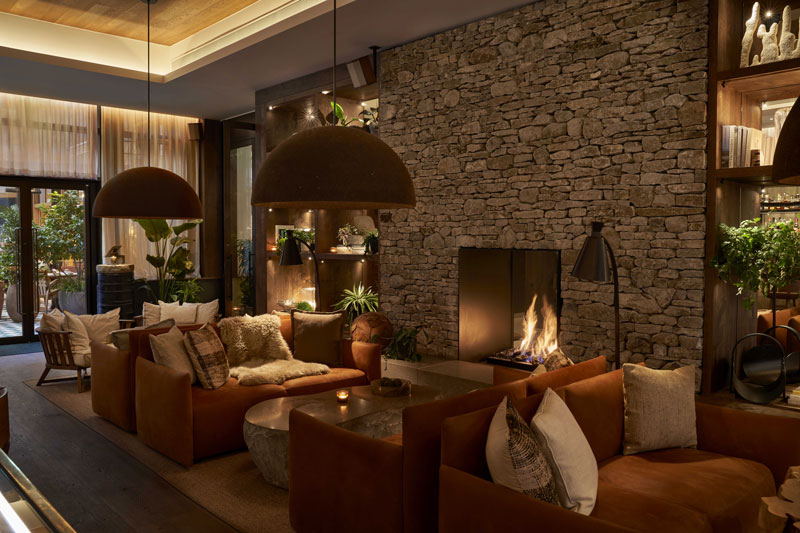
Take THE COSMOPOLITAN (Rose Current) which is sweetened with cherry mead and rose syrup, both made with cherries and roses picked at the height of their season and preserved for use in cocktails, then combined with Altamura Distilleries Vodka, Mirabeau One Day rose, Mancino Bianco Amaranto, and Silk Road Fenju Rose.
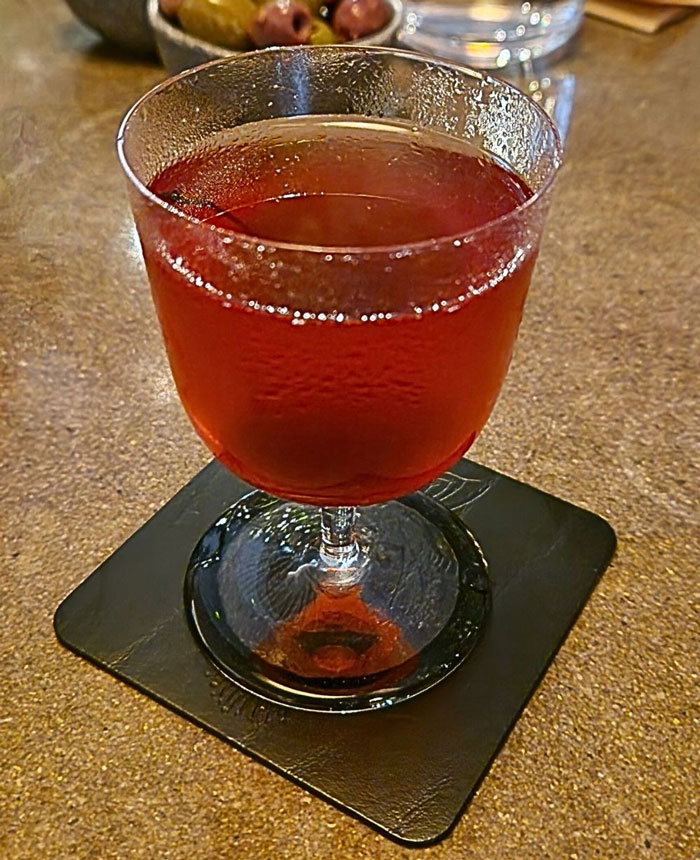
“We’re right in the middle of all the venues, welcoming everyone—from in-house guests and restaurant diners to walk-ins off the street. It’s all about the vibe we create from the beginning to the end of each shift. Early on, guests swing by for meetings or a casual drink, and then. Once the DJ kicks off. the energy shifts. The atmosphere transforms into something special, with amazing service, cool people, incredible cocktails, and our food selection tying it all together into a truly unique experience”
Marco Grisafi, Bars Manager
Making the decision to respect seasonality, also means distancing themselves from certain ingredients, like passion fruit. In the UK, the carbon footprint that comes with them is huge. Limes are not too far behind, and the team has almost eliminated the use of them entirely. Using some lime is essential, but in much smaller amounts.
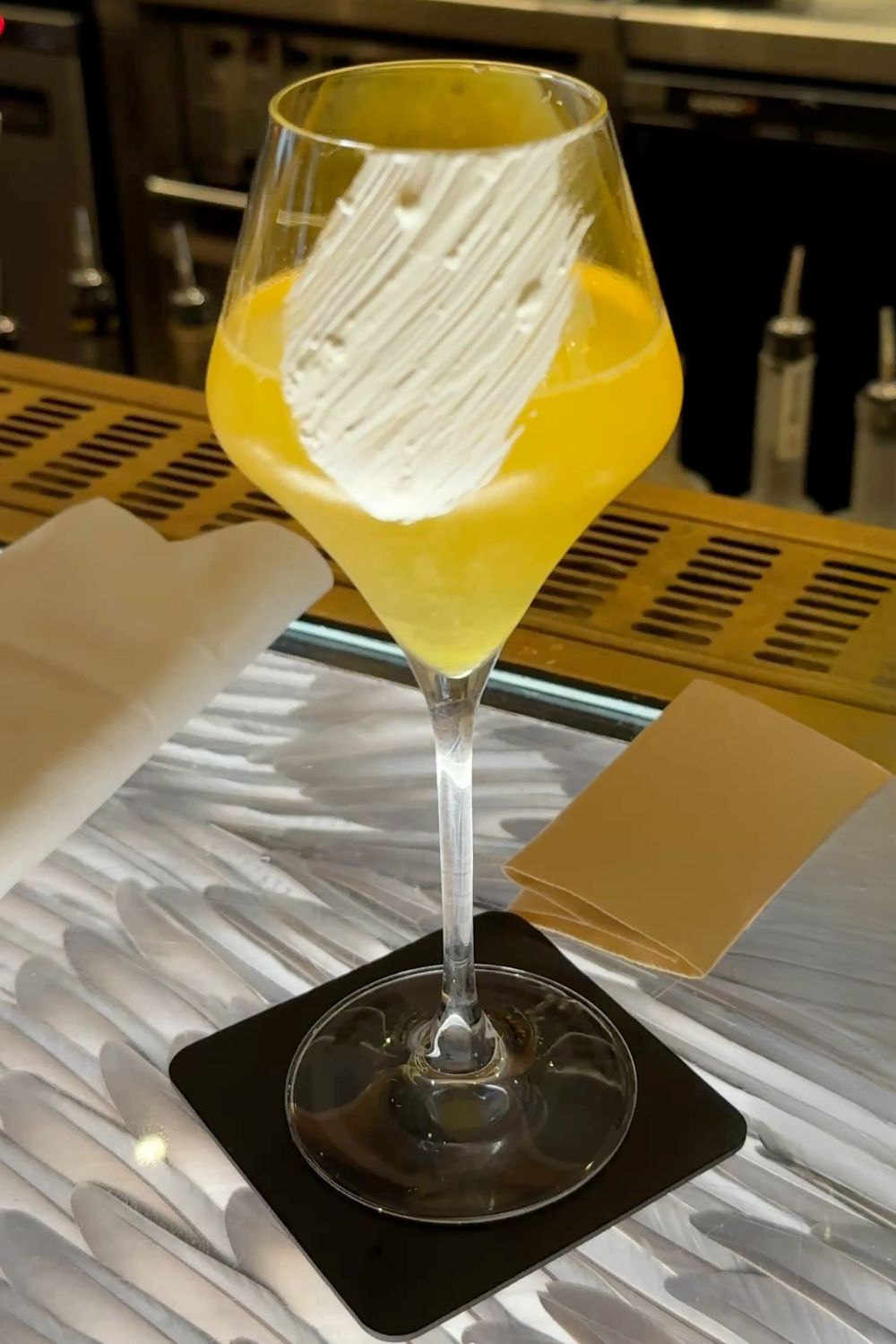
The Passionfruit Martini
In their place, they substitute verjus, aka sour grape, which is widely produced in the UK. Using their expertise in flavor profiling, they can create the same lime experience with local ingredients. So THE PASSIONFRUIT MARTINI (Sunflare) contains no passion fruit! It’s sweetened with gooseberries and apples instead, then the Eminente Claro Rum and champagne. A little bit of magic!
As for their second pillar – repurposing ingredients – it all began with a croissant! As 1 Hotel Mayfair serves breakfast, it sees its fair share of leftovers. The challenge? What to do with all those pastries? Giulio and his team’s solution was to let them harden and dissolve them, creating a mulled croissant syrup. This invention flavors THE ESPRESSO MARTINI (Breaking Grounds).
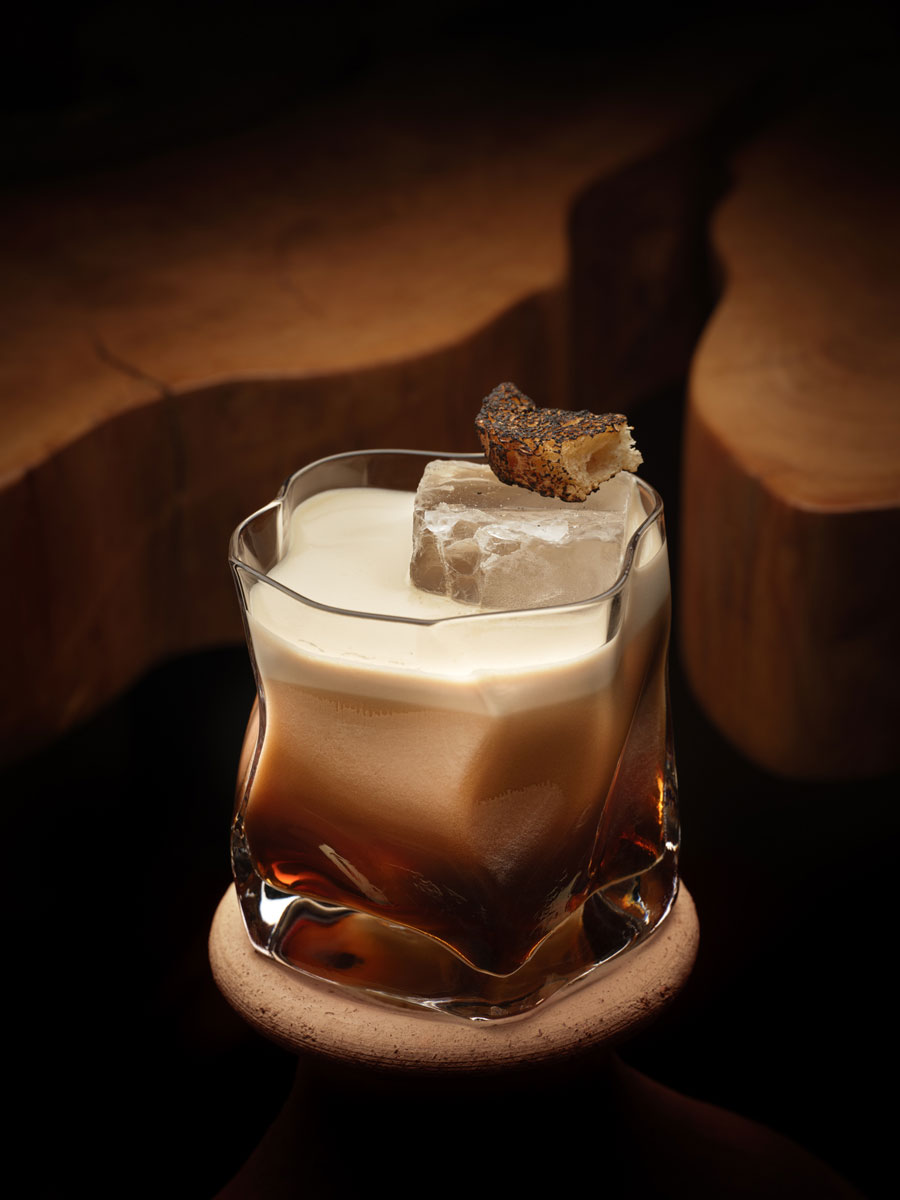
The Highball
THE HIGHBALL (Not A Guinness) is ingenuity in action. Last Christmas, with only two barrels of Guinness left in stock and none in stores, Giulio had no idea where he was going to get the rest. Later that night, he actually dreamt he had made his own Guinness. The next morning, he was determined he would make the dream a reality. After much research, he found the answer in the fermentation of bread of which the hotel had plenty! But how could you make fermented bread resemble Guinness? That’s when he discovered Kvass – an old Central European recipe for a low alcohol beverage originally made from rye bread. Most importantly, depending on the bread used, it was black in color!! Add blackberry, ginger mead, and Fielden Rye – he had his Christmas miracle! He has even invented a way for its head to rise up just like real Guinness. How does it work? That’s Giulio’s secret.
“Dover Yard is where the party finds its pulse—I get to greet everyone from suits to sneakers and watch the night bloom from chilled chats to full-on vibes. It’s not just a bar, it’s where the hotel comes alive!”
Sarah Serrai, Hostess
Every one of these cocktails fit beautifully in this year’s menu. For their first year, the Seed to Sips menu followed the journey of a plant from a seed to glass in four chapters – seeds and roots, sprouts, leaves and flowers, and, finally, fruit.
For this second year, they wanted to elevate the program. During a trip to the USA, they were introduced to regenerative farming. Inspired by the magic that happens with little human intervention, they worked to convey this message in their new menu, dedicating it to the regenerative forces in nature.
“As soon as you step into 1 Hotel Mayfair, it’s Dover Yard that welcomes you: not just a meeting point, but a crossroads of experiences where guests, travellers, and Londoners gather around a shared vision of sustainable, elegant, and vibrant hospitality”
Daniele Mondelli, Head Bartender Dover Yard
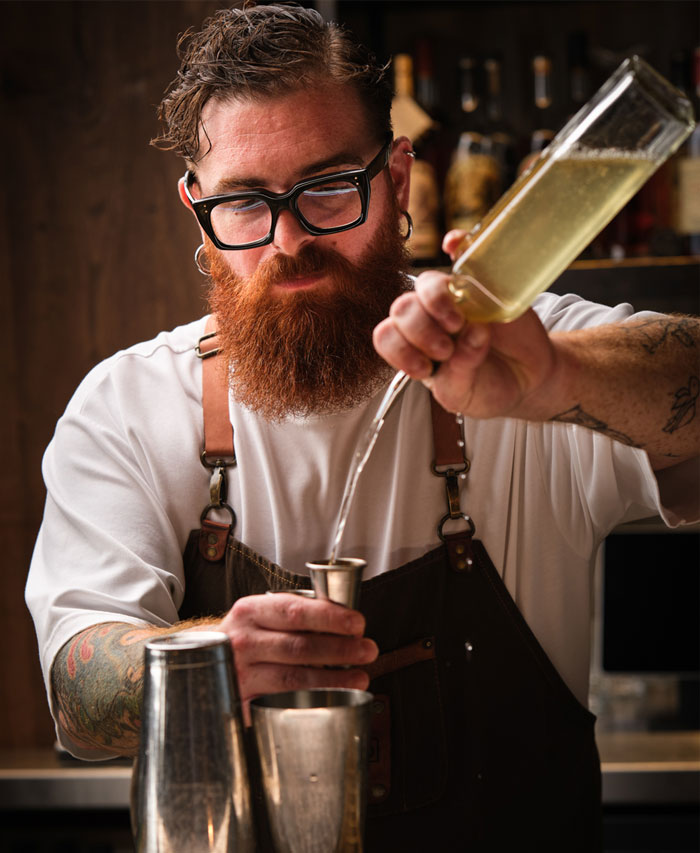
The menu begins with Elemental Flames, the force of destruction that takes place before regeneration begins. Next, Earthly Revival begins the rehealing process with new growth. Celestial Flows is dedicated to the movement of the winds which spread seeds, then Aqua Vitae, celebrating water, the source of all regenerative forces.
The whole team is 100% behind the program and as passionate as the day they began, most of whom are still in situ. Their synergy has even inspired guests to want to collaborate. One is musician Ed Sheeran. He was so taken with what they were achieving that he too wanted to join forces.
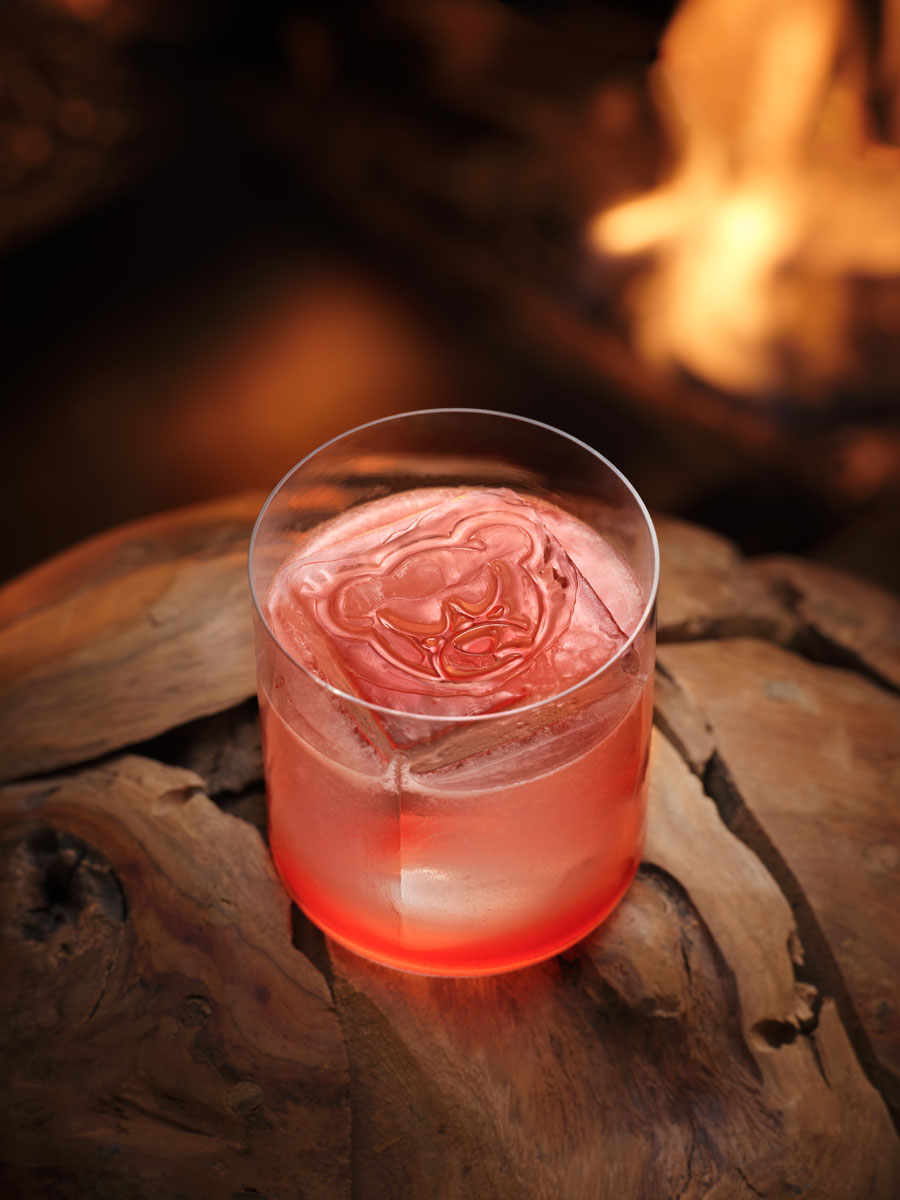
The Margarita
Their idea emerged over a plate of Dover Yard fried chicken & honey hot sauce. A discussion about what hot sauces go well with chicken led to the creation of one of their most popular cocktails on the menu, THE MARGARITA (Tingly Jam). Not only do the ingredients include Ed’s own hot sauce, Tingly Ted’s, but beurre noisette, chicken breading, poblano peppers, sour grape and Casamigos Blanco Tequila, as well.
Don’t be confused by the two names listed for each cocktail. Although the team puts a lot of effort into creating the name and the story behind each cocktail, they totally understand sometimes you just want to choose one you recognize. So first they list the classic cocktail it most represents and then its own individual name. Of course, they are always happy to share their stories if you wish.
“From day one, Dover Yard was conceived and received as Mayfair’s extended living room. Regulars and neighbours come and go, often greeting the team like old friends; thrilled to reconnect. New comers are made to feel at home very quickly, too. Led by Giulio, Marco, and Mo, the team brings warmth, creativity, and a spirit of genuine hospitality that gives the space its unmistakable charm. It’s truly special to witness the rhythm of life at Doveryard from tranquil mornings flowing into lively, energetic evenings. It’s one of my favourite spots in the hotel, and I couldn’t be prouder of what our team has accomplished over the past two years”
Francois Xavier Schoeffer (GM)
In the same vein, to simply call the Dover Yard a bar misses the point. Each cocktail represents a cell in the living breathing organism that is the 1 Hotel Mayfair, making it the literal heart of the hotel. With every cocktail shared, their story is being told.
And how is that story conveyed in today’s vernacular, maybe a bit like this?
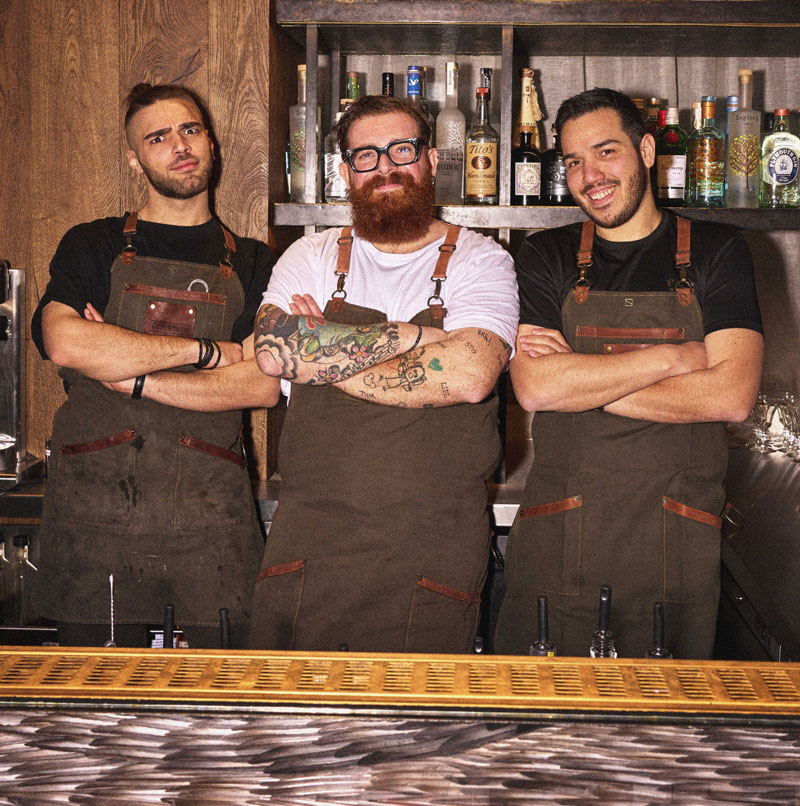
“Babe, Stop everything! I’ve just discovered the most utterly chic spot. Think effortless indoor-outdoor elegance with a seriously elevated vibe. And the bar? Serving cutting-edge cocktail – genuinely 10/10 and equally as fabulous as their mission – doing what they can to help the world. The team were absolute stars; so warm and attentive, I felt completely at home. Popped in for one and somehow never wanted to leave. You have to go next time you’re in London. Honestly, to miss it would be a crime. It’s truly next level”
🍸♥️ S x
The 1 Hotel MayFair Bar Team
Thank you to the whole bar team: Giulio Guarini, Director of Bars; Marco Grisafi, Bars Manager; Daniele Mondelli, Head Bartender Dover Yard; Mubarek Jakar, Assistant General Manager Dover Yard; Sarah Serrao, hostess; and everyone else!!
Susan L. Schwartz
Susan L. Schwartz is the award-winning creator of A Lush Life Manual and host of the Lush Life Podcast. She writes widely on drinks and travel, leads London and Venice Cocktail Tours, and has been recognised with multiple industry awards.
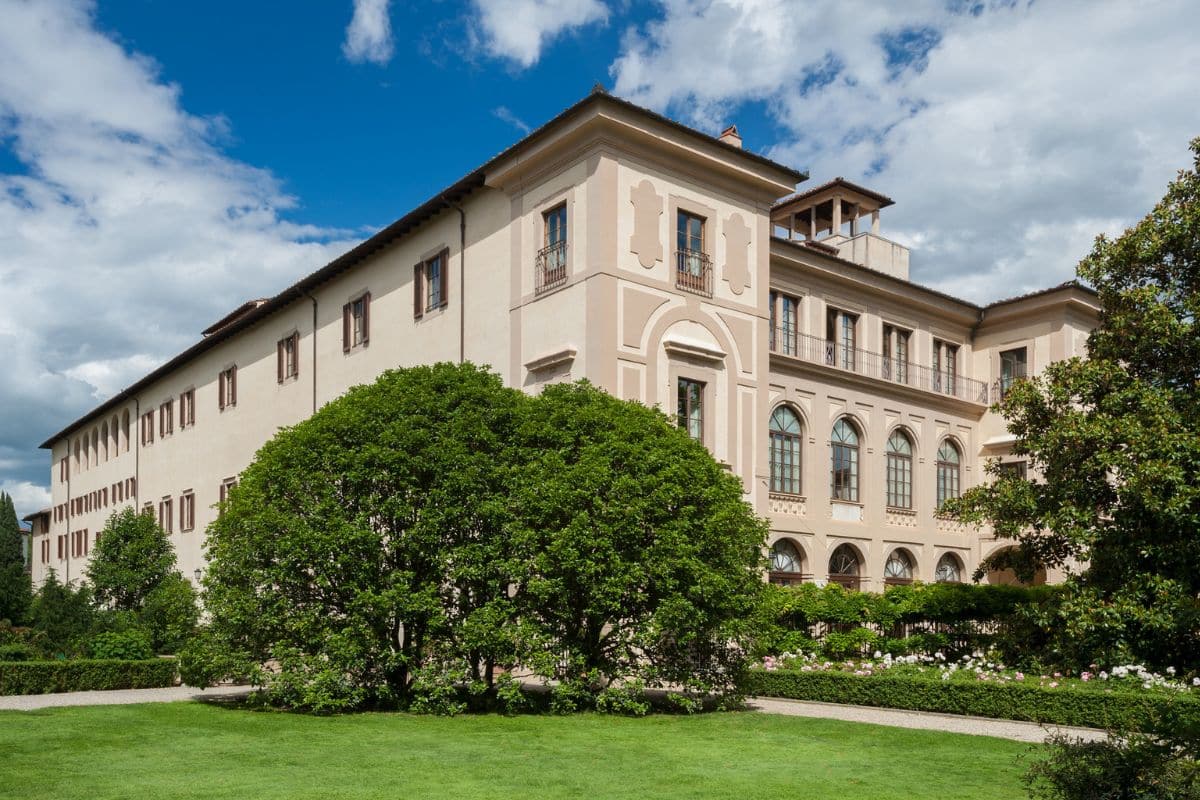
The Heart of the Hotel: Four Seasons Florence
Four Seasons Florence
Bar is the Heart of the Hotel
This year, in association with Altamura Distilleries, I’ll be exploring some of the world’s most legendary bars—uncovering what makes them the beating heart of the hotel. Our next stop is Florence!
Episode #2
Bartolomeo Scala’s motto really should have been Accomodatevi – Please, make yourself comfortable! Of course, I know it was Gradiam—”step-by-step”—literally carved in stone above the door of what was once his home and is now the magnificent Four Seasons Florence. Gradiam may well have been a clever play on his surname (scala meaning ‘ladder’ in Italian) and his remarkable rise from miller’s son to trusted advisor of Florence’s most powerful ruler, Lorenzo de’ Medici. But today, every inch of the building he designed is an invitation to accomodatevi-no more so than its two bars – the Atrium Bar and Berni’s.
It’s easy to be swept away by the sheer beauty of the Four Seasons Florence. Spanning nearly an entire block between Via Giuseppe Giusti and Piazza Donatello, its scale hints at the grandeur within—yet nothing quite prepares you for the splendor that awaits behind its historic walls.
Like many Italian cities, Florence keeps many of its treasures hidden away behind plain plastered facades and imposing doors. Unless lucky enough to be invited inside, it’s easy to feel left out. Today, the grand doors of the Four Season Florence stand wide open and beckoning you in are not one, not two, but four inspired takes on the city’s most famous cocktail, the Negroni.
One step inside and you are immediately delighted by the first of the many frescos and bas-reliefs that have survived almost 500 years. Many of these are original to Scala’s time here, while others were added by later residents—most notably the della Gherardesca family, who called this place home for more than three centuries starting in the 17th.
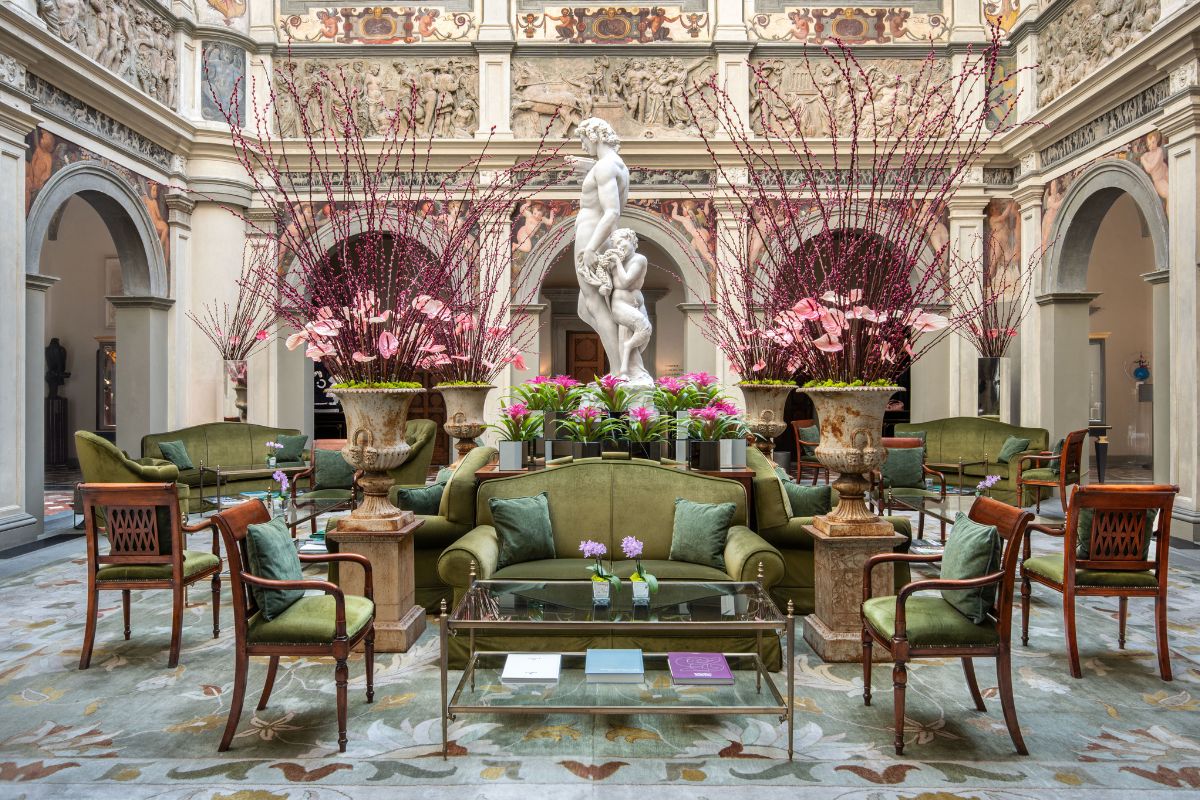
It’s hardly surprising that, living at the height of the Renaissance, Bartolomeo Scala fully embraced its ideals—especially the reverence for classical antiquity. When envisioning his own palazzo, he looked to the past for inspiration. His contemporary, scholar Leon Battista Alberti in his De re aedificatoria—On the Art of Building, wrote…
“In the interior of the villa, the “heart” or “bosom” (“sinum”) of the house, or atrium, is deemed the most important”*
He took this idea and ran with it – creating not one, but two atria. How fitting, then, that I’m now writing a series exploring the bar as the heart of the hotel—and here, the bar bears the fortuitous name of The Atrium Bar.
*Public and Private in the Writings of Leon Battista Alberti by Anne-Marie Sorrenti
It’s hardly surprising that, living at the height of the Renaissance, Bartolomeo Scala fully embraced its ideals—especially the reverence for classical antiquity. When envisioning his own palazzo, he looked to the past for inspiration. His contemporary, scholar Leon Battista Alberti in his De re aedificatoria—On the Art of Building, wrote…
“In the interior of the villa, the “heart” or “bosom” (“sinum”) of the house, or atrium, is deemed the most important”*
He took this idea and ran with it – creating not one, but two atria. How fitting, then, that I’m now writing a series exploring the bar as the heart of the hotel—and here, the bar bears the fortuitous name of The Atrium Bar.
*Public and Private in the Writings of Leon Battista Alberti by Anne-Marie Sorrenti
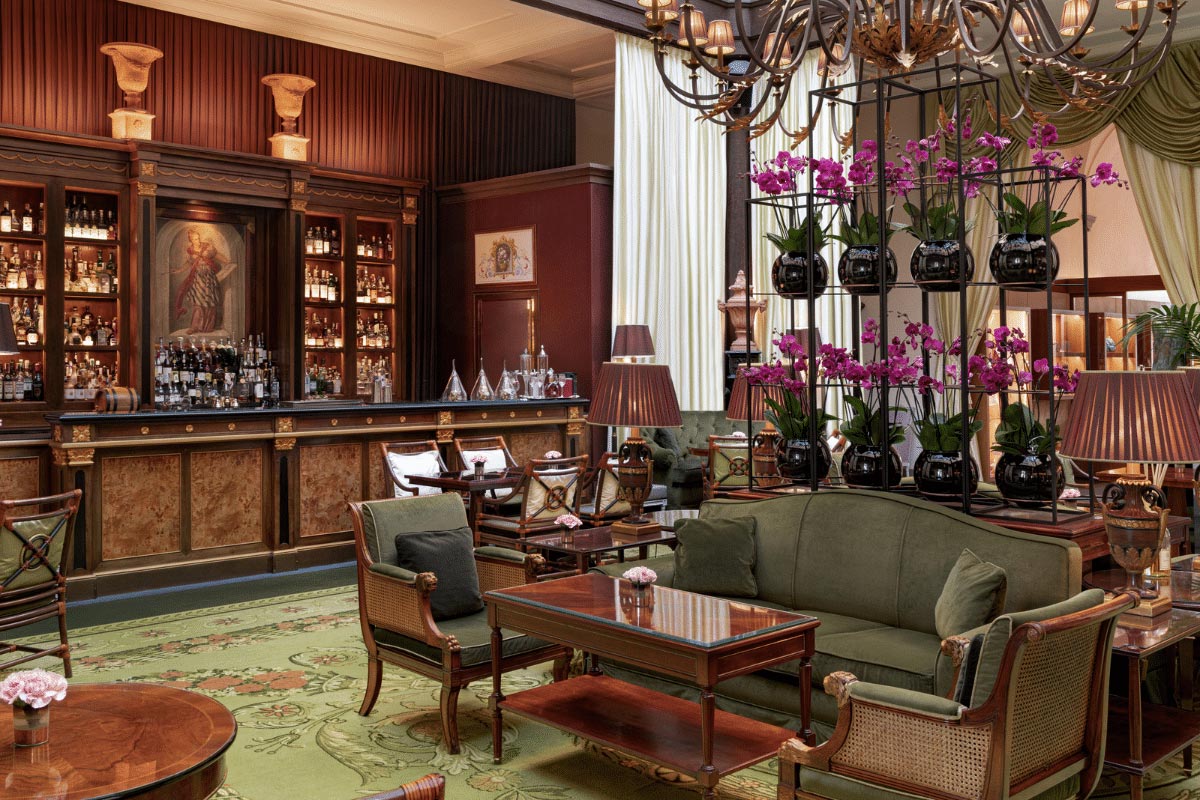
Only one step away from reception through its always open door, the Atrium Bar welcomes all from dawn to dusk—whether in the need of a morning coffee or something stronger. This year, it’s been nominated for the Oscars of the cocktail world: Tales of the Cocktail’s Spirited Award for Best International Hotel Bar 2025. Every glass raised is a toast to Head Mixologist Edoardo Sandri and his remarkable team.
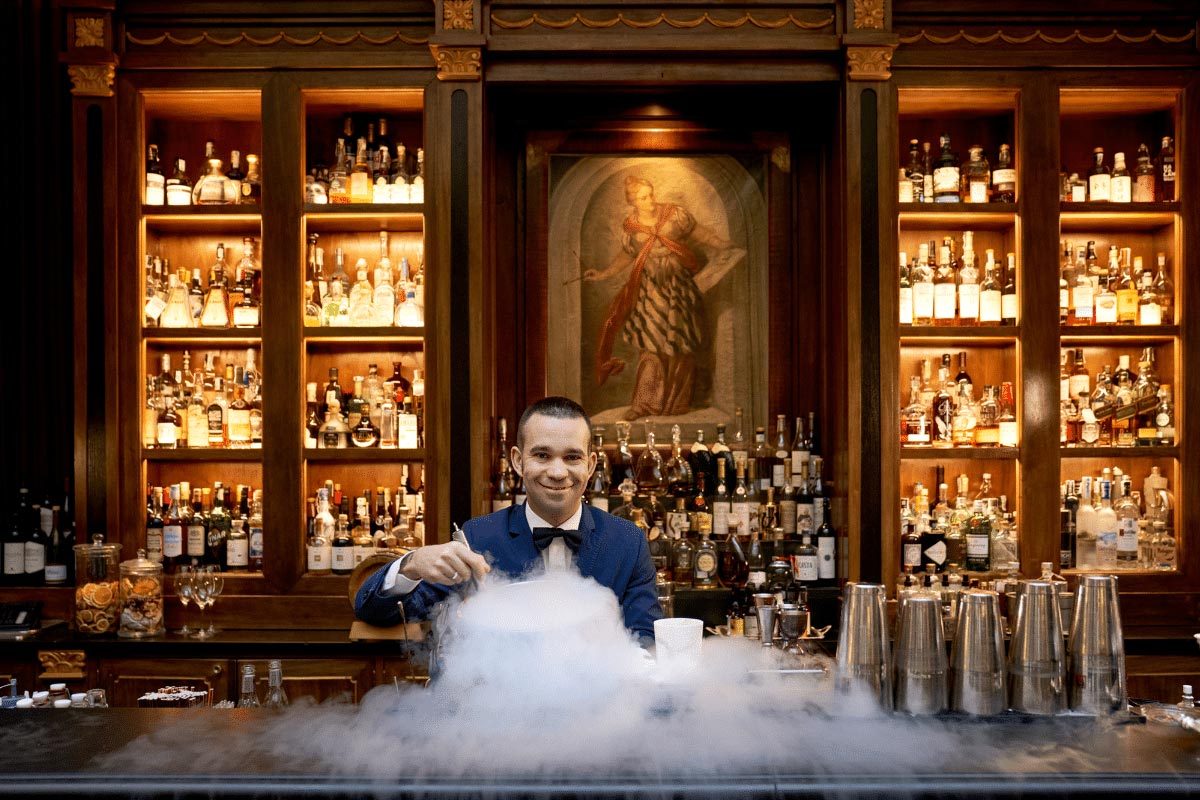
A true Florentine, Edoardo joined the team in December 2008, the same year the hotel officially opened. From the moment he walked through the doors, he knew he’d found his place in the world.
“It was like a lightning bolt. The open layout, the mirror, the ceiling—I felt at home immediately. I didn’t just want to work here. I knew I had to. There are no walls. There are no doors. Everyone is welcome inside this bar, whether you are a hotel guest or coming from outside, we welcome you and want you to feel at home.”
Edoardo Sandri, Head Mixologist, Atrium Bar
Surprisingly, in those early years, it wasn’t always easy to convince locals to step inside. People used to call and ask if they were even allowed to come in for a drink. That all changed with the introduction of Sunday brunch—although an American invention, here at the Atrium Bar it broke down barriers and introduced Fiorentini to a new kind of experience – the hotel bar. Modest though he may be, there’s no doubt the Atrium Bar laid the groundwork for the popularity that hotel bars have now in Florence. Hotel guests required little persuasion. They were lured in not only by the classics, but also by the bar’s imaginative signature cocktails—reminders of just how innovative a truly great drink can be.
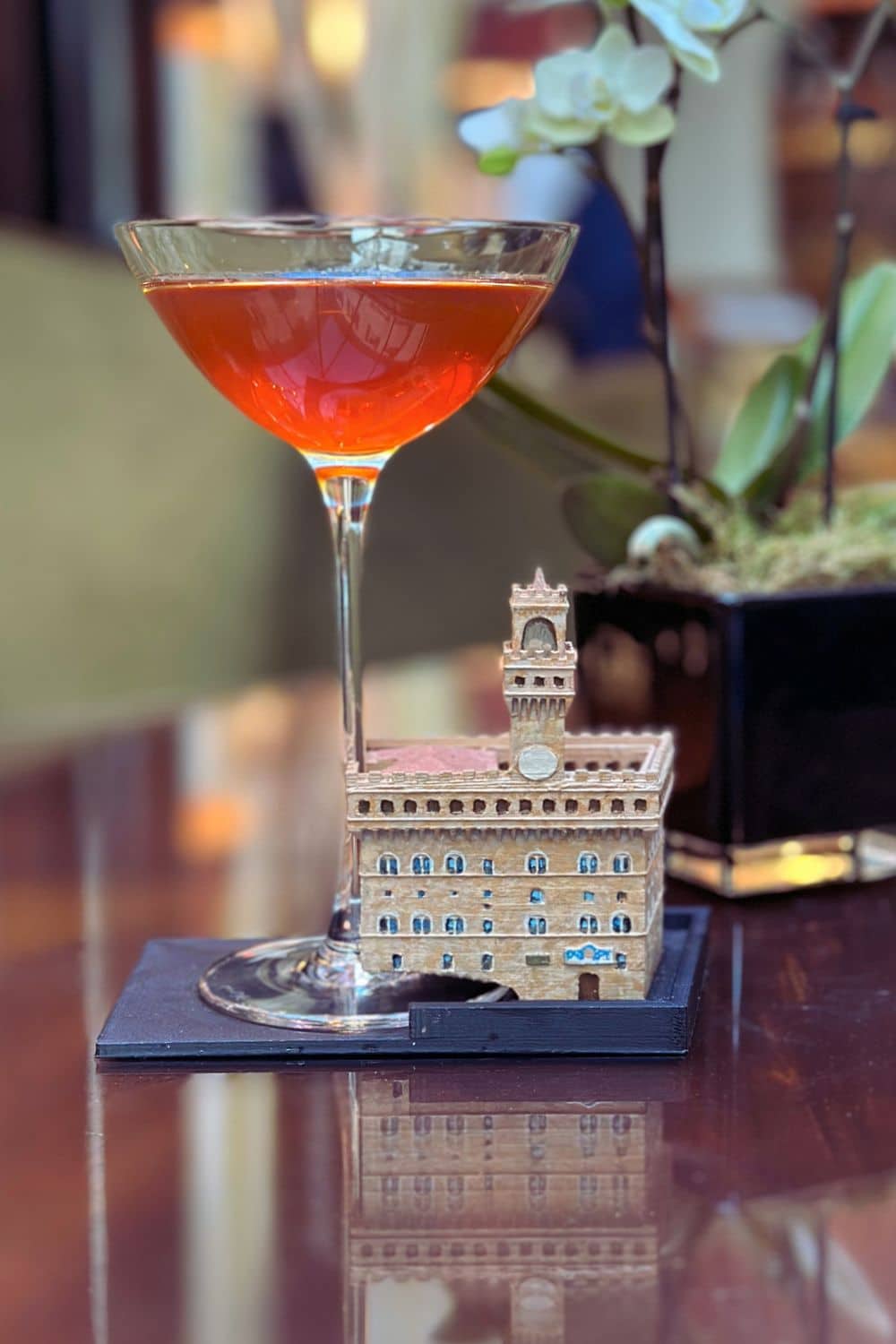
Firenze Capitale
For 2025, the menu’s inventive theme dives into the 19th century, with cocktails that reimagine classics through the lens of the era’s most defining events, figures, and cultural moments. Of course, an homage to the hometown does not go amiss. Firenze Capitale harks back to the time when Florence served as Italy’s capital for six brief years in the 1800s. A twist on the Americano and Champagne Cocktail, it captures the city’s love of coffee and saffron at that time, combining coffee-infused Italian Mancino Vermouth and house-made saffron water kefir. Amaro Santoni adds a floral note of iris—Florence’s iconic symbol. All served in a glass with a mini model of the Palazzo Vecchio taking pride of place.
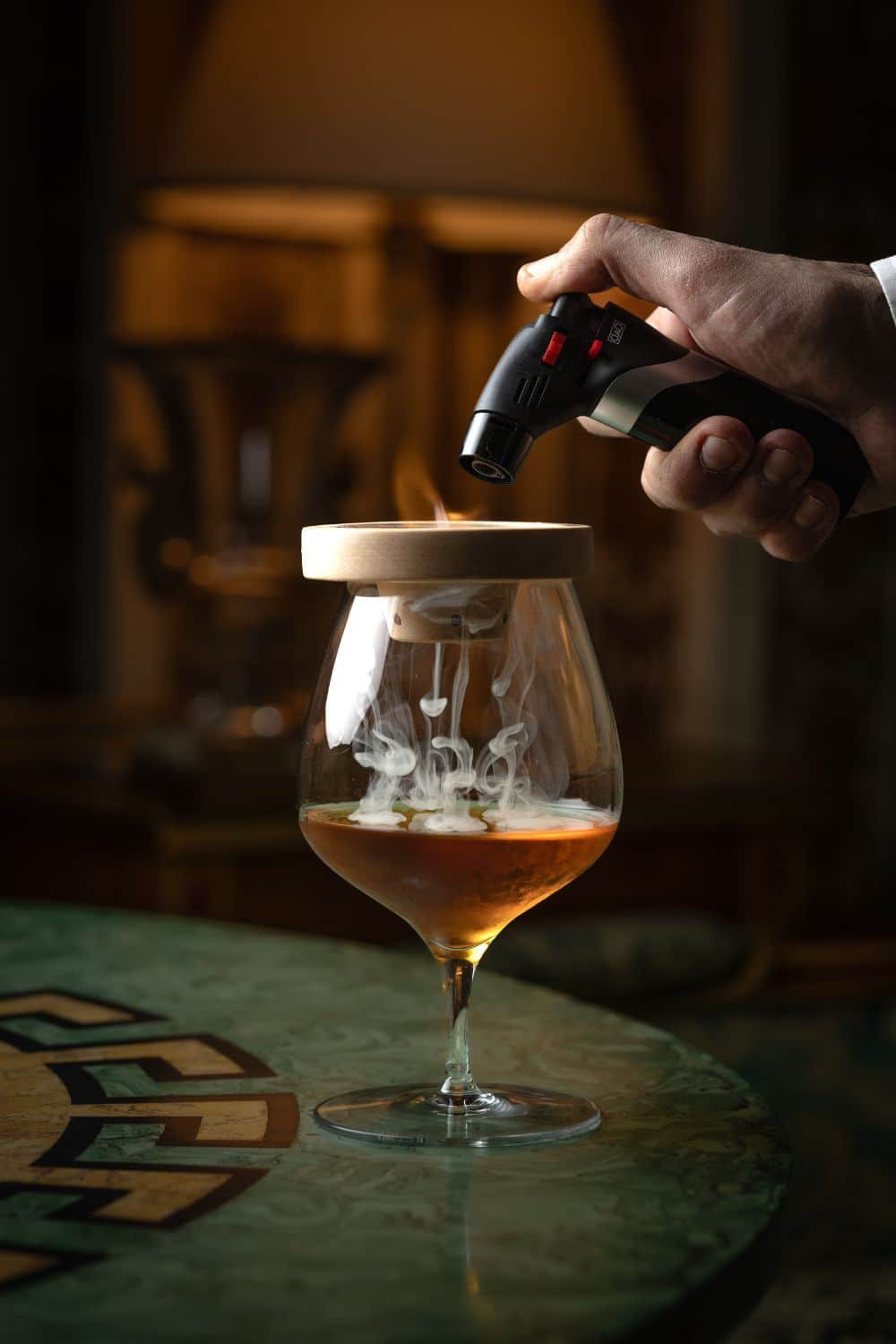
Lira
Another Italian-themed standout is the Lira, a nod to Italy’s dearly missed historic currency. A touch of the dramatic, a rice paper note shaped like the old coin is set aflame on top of the drink, sending up a mist of herbal smoke. Beneath its cognac base, barrel-aged Amaro Lucano Essenza and Artemisia hint at its inspiration – the Sazerac.
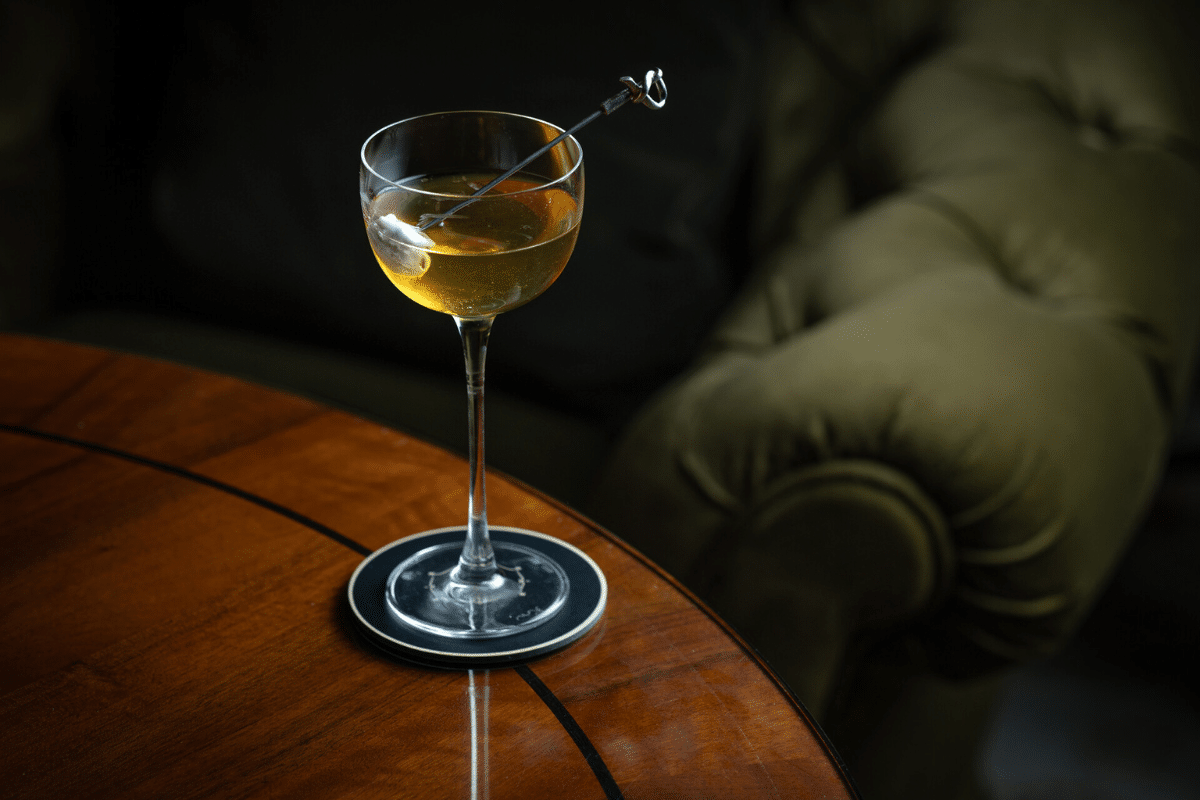
Folies Bergère
There is also a glamorous spin on the Rob Roy. The Folies Bergère pays tribute to Paris’s legendary dance theatre and its star, Josephine Baker. In a full pirouette, its profile does a 360 —Altamura Vodka takes the lead in place of the usual Scotch. A jeté of banana juice evokes her iconic skirt, while coconut oil adds a creamy glissade. Rinomato Americano White—an Italian aperitivo—is en pointe as a graceful substitute for sweet vermouth. It’s finished with a petit pas de deux: a smoky almond that recalls the peaty depth of the original.
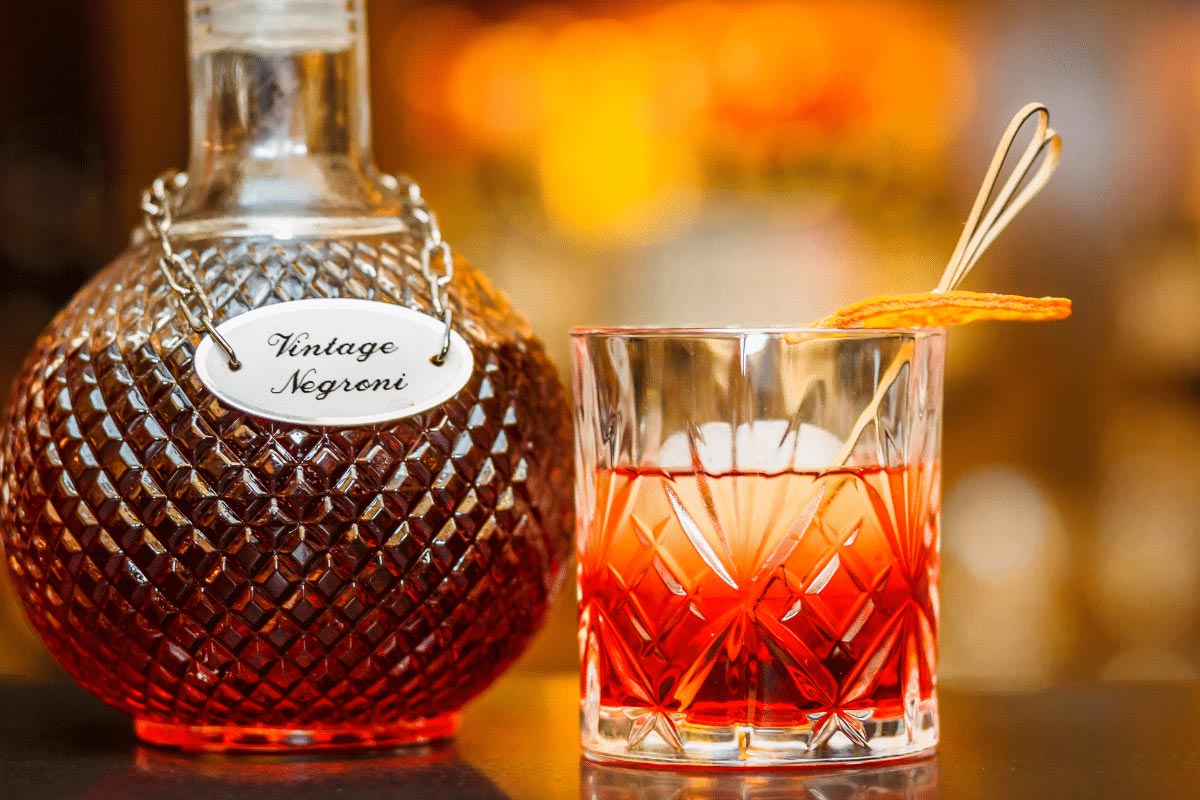
Negronis
And of course, there are the Negronis—the aforementioned four—each reinterpreted by Edoardo and his team:
Vintage: Since 2010, Edoardo has been aging these in barrels and stored at -18°C, always served over a pristine clear ice cube.
Retro: A distillate of Campari—yes, they distill the Campari—removes sugar and dials up the bitterness, balanced with white vermouth, and Plamb, an Italian orange liqueur, then aged in clay for a mineral edge.
Vanguard: Mezcal and bourbon-aged Campari meet Santa Maria Novella’s Alkermes- a favorite of Scala’s friends, the Medicis, in a smoky, spiced tribute to Florence’s most famous drugstore.
Futuro: Made with yogurt and rum, this creamy riff proves there’s no limit to how far a Negroni can go.
After a Negroni or two, you might feel the pull of the stone path leading you through one of central Florence’s largest private gardens. There you will be introduced to The Atrium’s casual cousin – Berni’s.
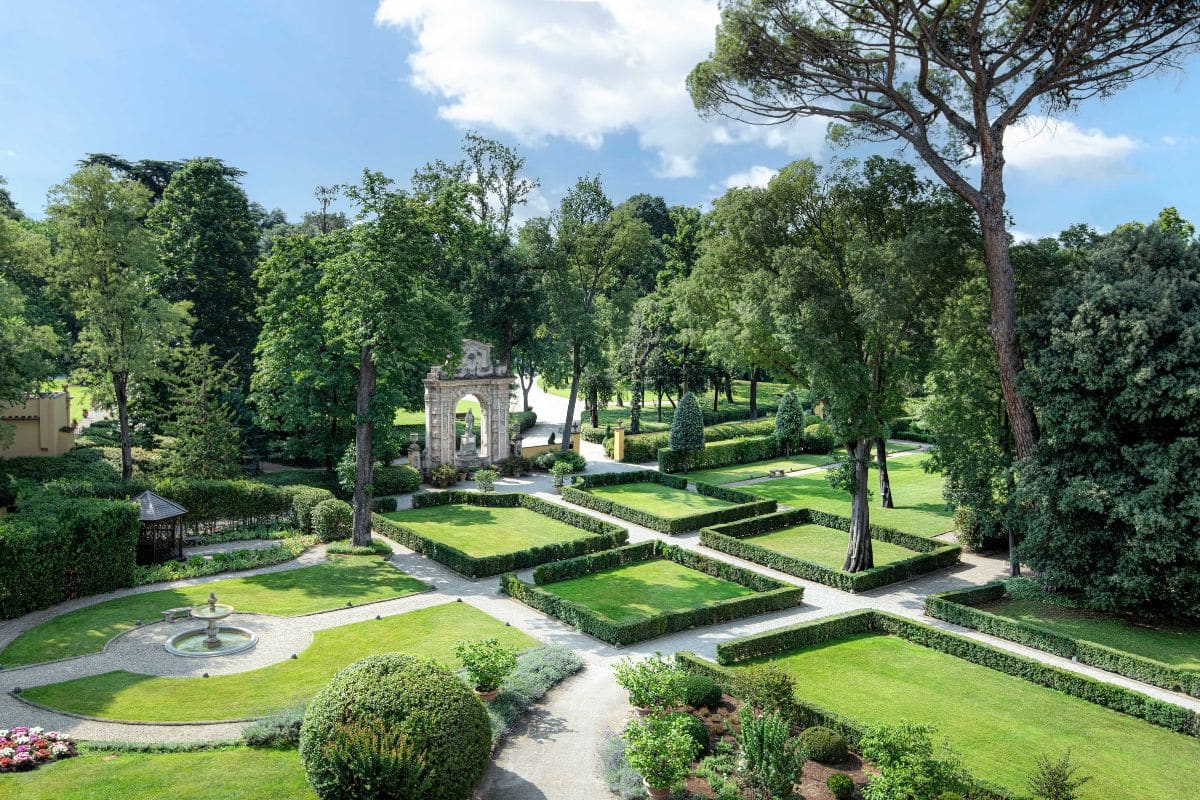
Berni’s is short for Bernardo del Nero, namesake of Palazzo del Nero-now the newest wing of the Four Seasons Florence. Sadly, unlike his neighbor Bartolomeo Scala, Bernardo wasn’t so lucky. He was beheaded after attempting to overthrow the notorious Dominican cleric Savonarola and restore Piero de’ Medici, Lorenzo’s son and sadly known as Piero the Unfortunate, to power in the late 15th century. It’s not quite a political comeback—but it’s certainly a more glamorous ending.
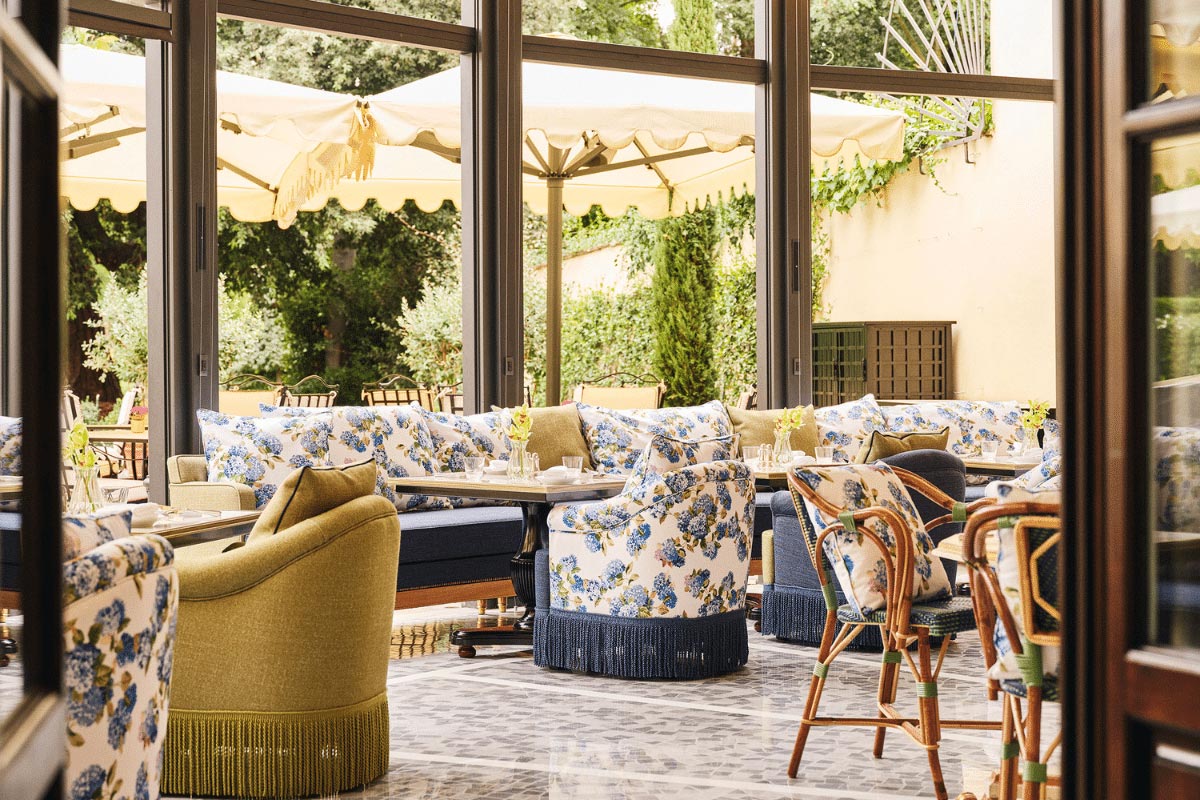
The garden at Berni’s is open year-round, both inside and out, and has an easygoing, casual vibe. The bar team wears khaki jackets and even sneakers. Once again, you can hear Bartolomeo’s battle cry, Accomodatevi!—”Make yourself comfortable.”
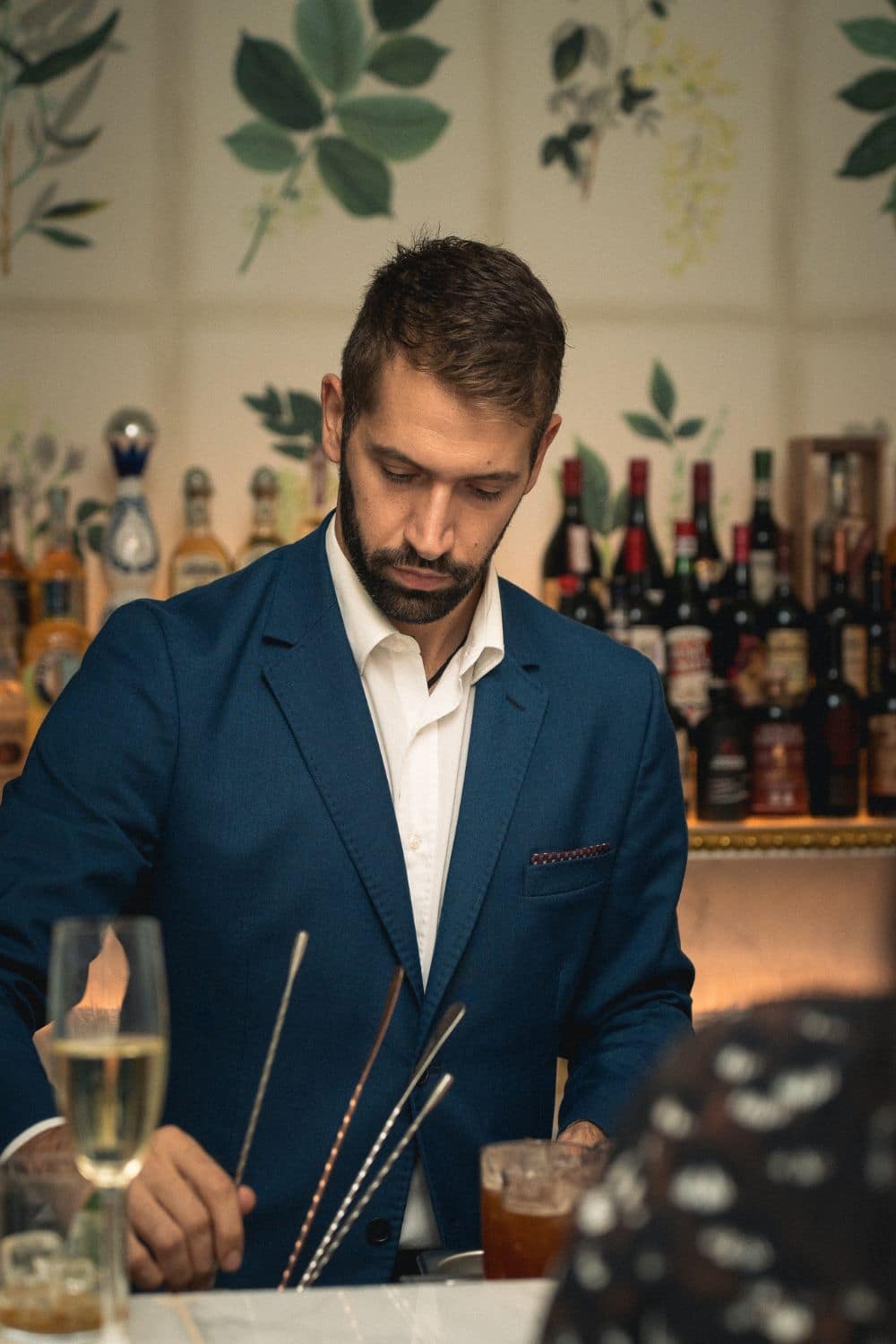
This relaxed approach is underscored by Berni’s Bar Manager, Antonello Palermo, a veteran of the Atrium Bar who was brought on to launch this second bar at the Four Seasons, which opened in September 2024. With the debut of Onde Restaurant in the same Palazzo del Nero—its menu inspired by the flavors of the Tuscan coast—Antonello proposed a cocktail program to match. His vision? Drinks rooted in the history, herbs, and ingredients of Tuscany’s seven islands: Elba, Giglio, Giannutri, Capraia, Pianosa, Montecristo, and Gorgona.
“It’s your first experience at the hotel. When you check in you are asked, “Would you like a drink while you’re waiting? That’s going to be from the bar. You might not go to the restaurant, you might not go to the spa, but for sure you’re gonna have a least a coffee at the bar. It’s a place you pass by at least once.”
Antonello Palermo, Bar Manager, Berni’s Bar
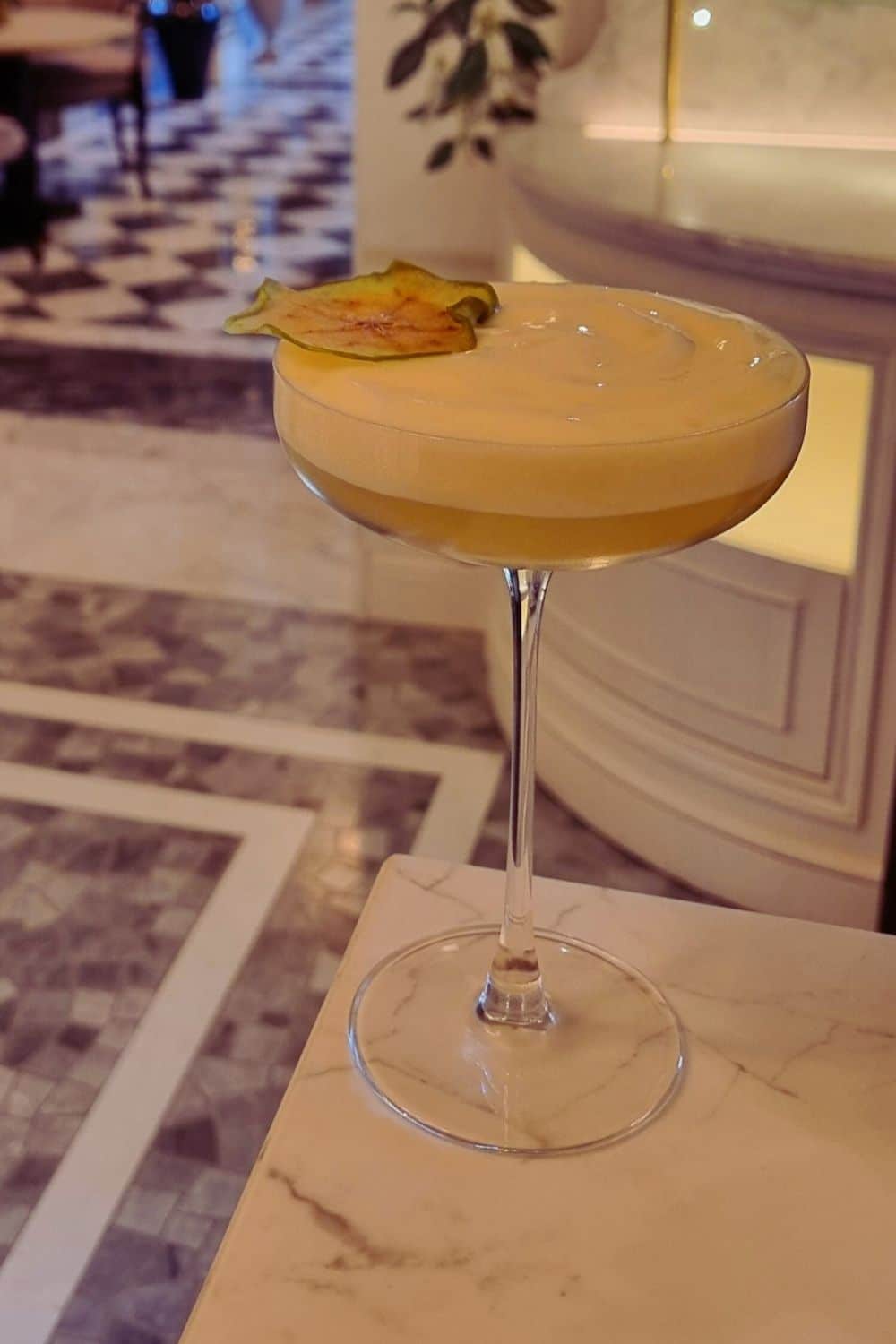
The Elba
One of the most popular drinks on the menu is The Elba, inspired by the island’s storied past. Napoleon was exiled there, and it’s known for its chestnut honey (which may have inspired his use of the bee as a royal symbol), apple orchards, and the many minerals that made it famous, like tourmaline and hematite. Antonello’s riff on a French 75 brings all of that together: chestnut honey, apple juice, and Altamura Vodka are combined with a white vermouth from Mugello, then topped with Champagne and finished with a green apple foam. It’s one of the few originals that’s carried over onto the 2025 menu, which now features cocktails inspired by all nine of Italy’s major islands—including Sardinia and Pantelleria in Sicily.
The Elba
One of the most popular drinks on the menu is The Elba, inspired by the island’s storied past. Napoleon was exiled there, and it’s known for its chestnut honey (which may have inspired his use of the bee as a royal symbol), apple orchards, and the many minerals that made it famous, like tourmaline and hematite. Antonello’s riff on a French 75 brings all of that together: chestnut honey, apple juice, and Altamura Vodka are combined with a white vermouth from Mugello, then topped with Champagne and finished with a green apple foam. It’s one of the few originals that’s carried over onto the 2025 menu, which now features cocktails inspired by all nine of Italy’s major islands—including Sardinia and Pantelleria in Sicily.
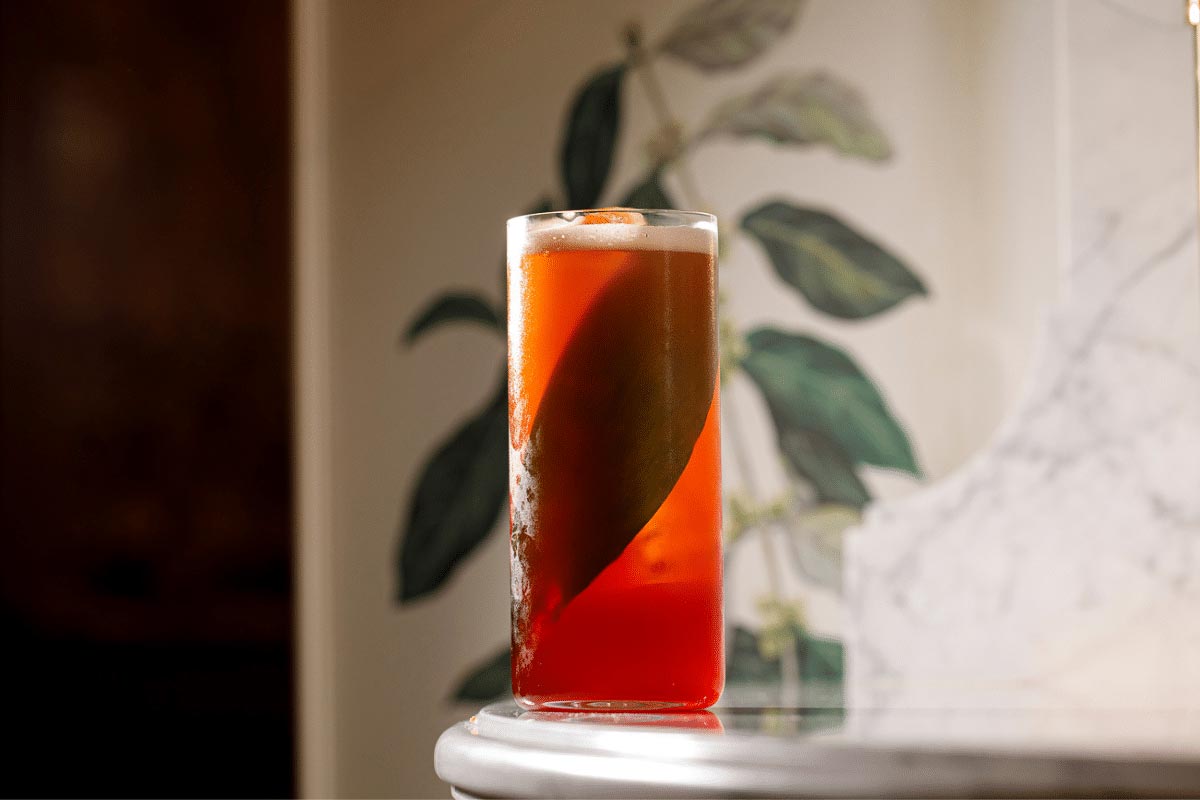
Capraia
A favorite on the original menu was the Capraia, named after the goats (capra) that once roamed the island. Capraia is the only volcanic island of the Tuscan nine. Wild mirto (myrtle) plant runs rampant and is used to make a local liqueur. A smoky take on the Negroni: mezcal replaces gin, mirto liqueur for Campari, Cocchi Dopo Teatro—fortified with Barolo Chinato—adds richness as the vermouth. Lest we forget the island’s most important denizens, it is all clarified with goat yogurt for a silky texture and a touch of salinity, then finished with a mist of basil, also found on the island.
Capraia
A favorite on the original menu was the Capraia, named after the goats (capra) that once roamed the island. Capraia is the only volcanic island of the Tuscan nine. Wild mirto (myrtle) plant runs rampant and is used to make a local liqueur. A smoky take on the Negroni: mezcal replaces gin, mirto liqueur for Campari, Cocchi Dopo Teatro—fortified with Barolo Chinato—adds richness as the vermouth. Lest we forget the island’s most important denizens, it is all clarified with goat yogurt for a silky texture and a touch of salinity, then finished with a mist of basil, also found on the island.
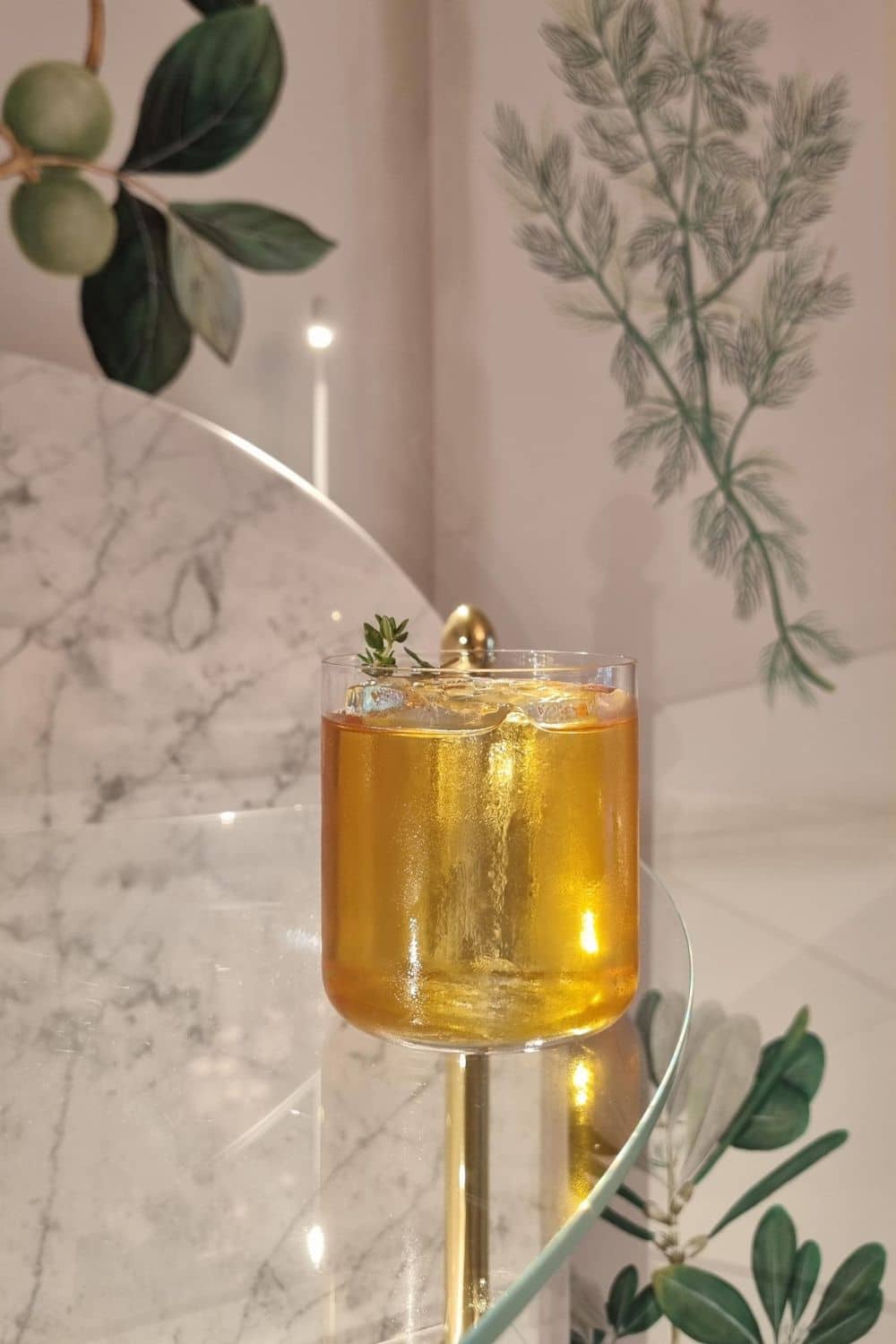
Tremiti
On the new menu, we head down Puglia. A reinterpretation of the Capraia cocktail, the Tremiti pays homage to the bishops who were sent to the islands before ascending to cardinalship. It’s not much of a leap to clock this as a twist on the classic Cardinale – traditionally a mix of gin, Campari, and dry vermouth. On the Tremiti Islands, it wasn’t goats but sheep doing the roaming, so naturally, this version is clarified with sheep’s yogurt instead. The bitter bite comes courtesy of Cynar, a nod to the wild artichokes growing across the island, rounded out with vermouth from Puglia. Oregano—a native herb of the Tremiti—is used to garnish the cocktail, the heady aroma whisks you straight to the sun-soaked heel of Italy with a single sniff.
Tremiti
On the new menu, we head down Puglia. A reinterpretation of the Capraia cocktail, the Tremiti pays homage to the bishops who were sent to the islands before ascending to cardinalship. It’s not much of a leap to clock this as a twist on the classic Cardinale – traditionally a mix of gin, Campari, and dry vermouth. On the Tremiti Islands, it wasn’t goats but sheep doing the roaming, so naturally, this version is clarified with sheep’s yogurt instead. The bitter bite comes courtesy of Cynar, a nod to the wild artichokes growing across the island, rounded out with vermouth from Puglia. Oregano—a native herb of the Tremiti—is used to garnish the cocktail, the heady aroma whisks you straight to the sun-soaked heel of Italy with a single sniff.
So yes—Bartolomeo was right with his Gradiam—step by step, his palazzo has been transformed into the Four Seasons Florence, one of the most dazzling hotels in the world. But it’s the spirit of Accomodatevi that makes the bars the true heart of the hotel. They’re where guests become regulars, locals rediscover their own city, and cocktails transport you from the streets of Florence to the shores of Elba in a single sip—no packing required.
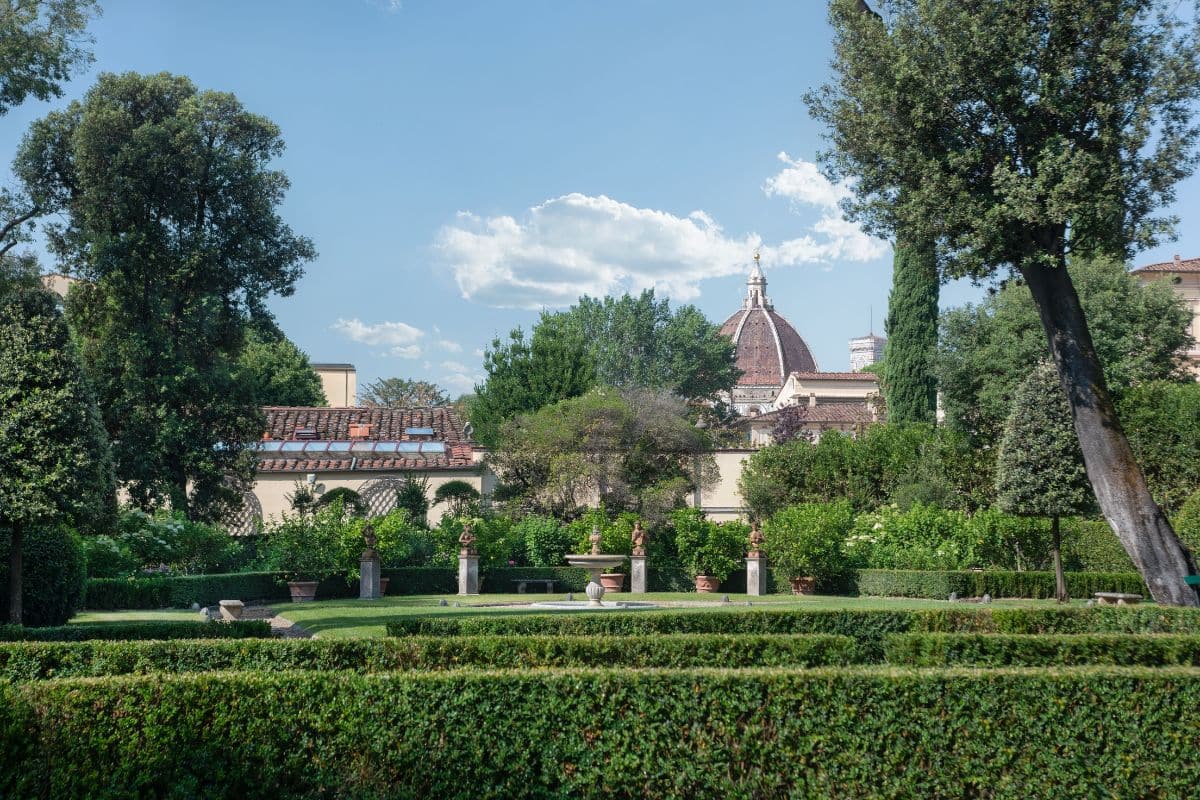
“Atrium Bar is the beating heart of the property — it welcomes and envelops guests from the moment they arrive, offering a menu that blends local flavors with an international twist to create a sense of comfort and belonging. Bar Berni, by contrast, is a niche retreat: a sun-kissed hideaway nestled in our lush garden — a true oasis in the heart of the city that comes alive during aperitivo hour with live music. Together, they play distinct roles in the hotel experience. Atrium Bar sets the tone — lively, inclusive, and vibrant — while Bar Berni invites a slower rhythm, perfect for unwinding, reconnecting, or easing into dinner in a relaxed, green setting. With both, the goal is to make guests feel not just welcomed, but truly at home, wherever they are on their journey.”
Max Musto, General Manager
The partnership between Altamura Distilleries and Four Seasons Hotel Firenze began after the first Cortina Cocktail Weekend in 2022. Since their introduction, the relationship has flourished through exclusive events and curated experiences that highlight the best of both brands.
As Edoardo elegantly describes: “Most vodkas are quite similar, but Altamura is different. It’s not just about the aromatic profile—it’s about the entire experience and what the bottle represents. Altamura feels like a family. Every time I pour Altamura into a glass, I think of Frank, Lorenzo, Steve, Justin, and the others, because I know them well. I love collaborating with them. They’re not just behind a premium brand—they’re premium
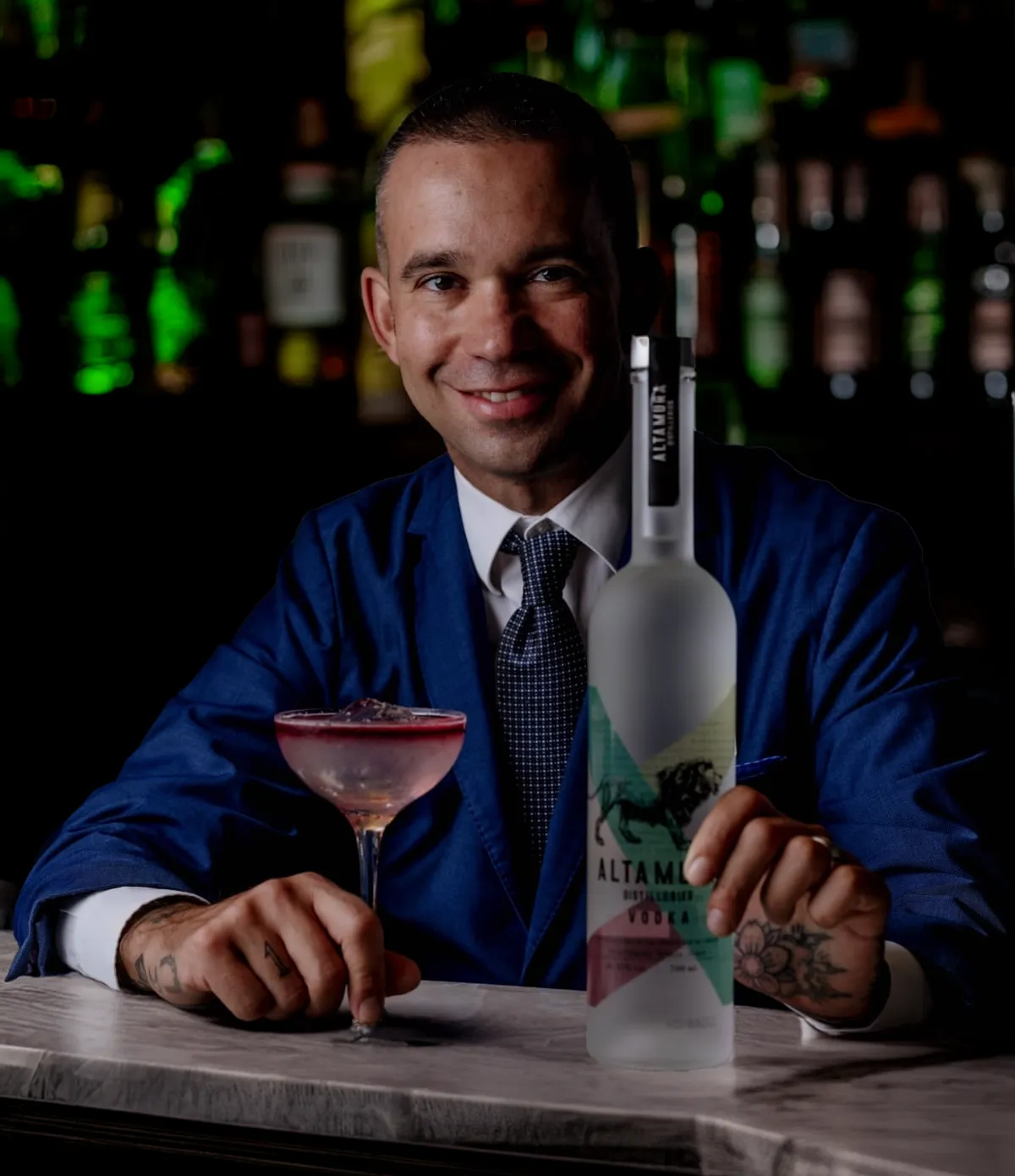
Whether you’re settled into the Atrium Bar with a perfectly aged Negroni or lounging under the trees at Berni’s with something breezy and botanical, your hosts have only one request: Accomodatevi.
The partnership between Altamura Distilleries and Four Seasons Hotel Firenze began after the first Cortina Cocktail Weekend in 2022. Since their introduction, the relationship has flourished through exclusive events and curated experiences that highlight the best of both brands.
As Edoardo elegantly describes: “Most vodkas are quite similar, but Altamura is different. It’s not just about the aromatic profile—it’s about the entire experience and what the bottle represents. Altamura feels like a family. Every time I pour Altamura into a glass, I think of Frank, Lorenzo, Steve, Justin, and the others, because I know them well. I love collaborating with them. They’re not just behind a premium brand—they’re premium
Whether you’re settled into the Atrium Bar with a perfectly aged Negroni or lounging under the trees at Berni’s with something breezy and botanical, your hosts have only one request: Accomodatevi.
Susan L. Schwartz
Susan L. Schwartz is the award-winning creator of A Lush Life Manual and host of the Lush Life Podcast. She writes widely on drinks and travel, leads London and Venice Cocktail Tours, and has been recognised with multiple industry awards.